





Let us pretend, for the next five lines, that the adjective “retrospective” referring to an exhibition is nice to read and above all has some classificatory potential, some determinative value. Well: the “retrospective” exhibition of an artist working a century ago, or further back in time, should be considered all the more successful the more it is able to advance knowledge on that given subject. On how it succeeds, on who is the audience to whom the exhibition is addressed, and above all on what it means to “advance knowledge,” one could convene a day of studyî: let us simplify, and say that many people evaluate the eventual advancement on the basis of the scientific novelties and unpublished items that the exhibition presents to its visitors. It happens, at times, that to justify an exhibition we appeal, with the same eagerness, the same enthusiasm and the same very severe caution as a climber who on a mountain face finds only one footholdsupport to continue his ascent, at the discovery of, say, a half-line payment note that shifts the dating of a work forward or backward by a few months (the example is invented, but it is not so far from the truth). It also happens, fortunately, that an exhibition comes at the conclusion of a season of research that has produced concrete results, or that it is prompted by the discovery of an unpublished work, or a group of unpublished works, that might even change the perception of a period in an artist’s career, or significantly alter what we knew about him. Significantly rarer is the opportunity to be inside an exhibition made up of about seventy pieces, never seen and never studied by anyone. An exhibition that on four halls exhibits only unpublished works. How much enthusiasm should then be raised by the latest exhibition at the Pinacoteca Servolini in Collesalvetti (Alberto Calza Bini. Pittore e architetto tra Roma e Livorno, curated by Francesca Cagianelli), which offers the public practically the entire corpus of Alberto Calza Bini’s Livorno years, hitherto unknown, and for the first time reconstructs his physiognomy as a painter, he who was hitherto known mainly as an architect, as well as that of his wife Irene Gilli, whose artistic activity had similarly fallen into oblivion?
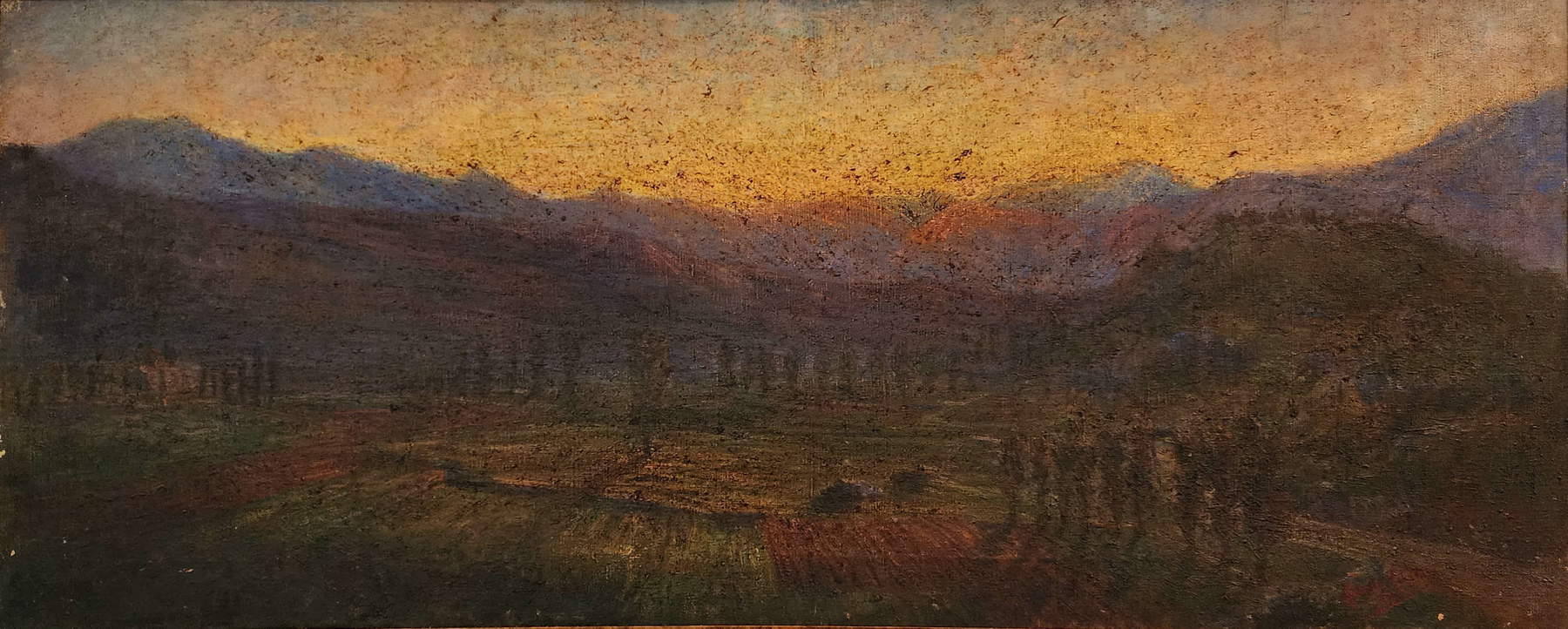
It must be said that for Calza Bini it must have been a parenthesis, to which he probably did not attach much importance in retrospect either. After the seven years he spent in Tuscany, from the year 1906 in which he left Rome to go and teach drawing at the Technical Institute in Livorno, until 1913, when he obtained a professorship in Milan, Alberto Calza Bini would have returned to handling palettes and brushes, at least as far as we know today, on an entirely occasional basis. In Livorno he had said practically all he had to say, and expressed himself with a certain originality, practicing a scratched, synthetic, almost instinctive pointillism (so (at least one would think so when looking at his works), which was as far from the darting, luminous, scientific pointillism of the Grubicyan brand professed by painters such as Benvenuti or Baracchini Caputi, as from that tinged with symbolism that was proper to Nomellini or the first Romiti, and came closer to the rapid and antiquated visions of a Carlo Servolini, for example. Calza Bini’s substantial independence becomes immediately apparent when one compares his production from 1906 onward with the paintings that preceded his move to Livorno, melancholy country landscapes that reflect his interest in the research of theRoman area of Balla and the early Boccioni, artists whom, moreover, Calza Bini had the opportunity to know in his youth and who were his admirers (in the exhibition there is a work, Anima vesperale of 1903, which clearly expresses the ambitions of the young Calza Bini, all taken in these years by a landscape painting charged with spiritual accents).
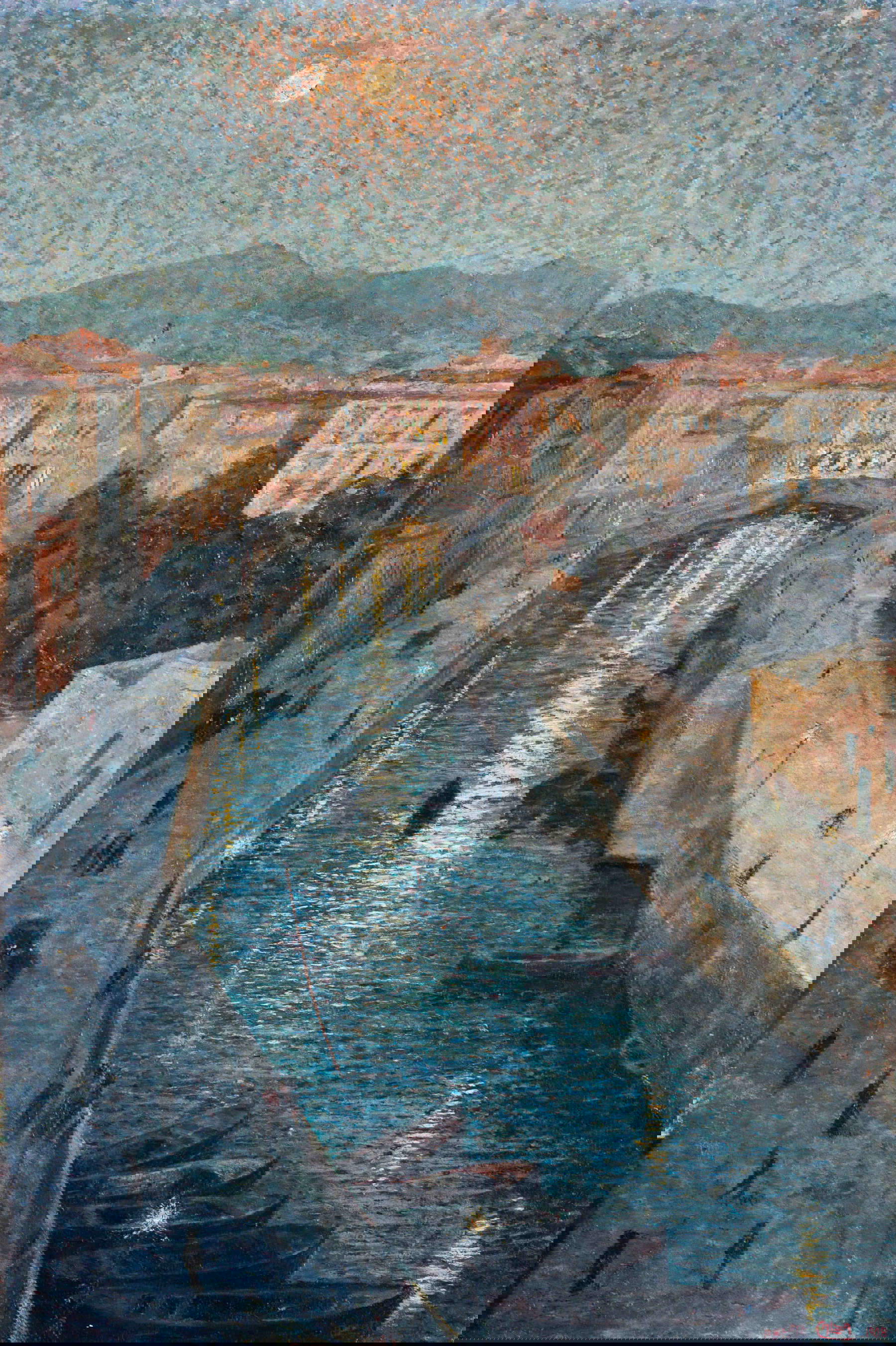
With the move to Leghorn everything would change, and from the first experiments on the port we come to the Fosso reale , which for curator Francesca Cagianelli can be considered Calza Bini’s masterpiece, the summit of his research: a rare view of the Scali d’Azeglio taken from above, “as distant from the urban scenes pervaded by Renato Natali’s shadows,” writes the scholar, “as from the very early Divisionist elaborations of port settings freely set by Gino Romiti on the Grubicyan lexicon in small patches of pictorial surface, but above all foreign to the Labronian vein responding to that ’dissolution’ of the stain,” the work “stages a spectacular tracing of the architectural, social, but above all luminous actuality” of one of the most recognizable views of the city that welcomed the painter who arrived from Rome.
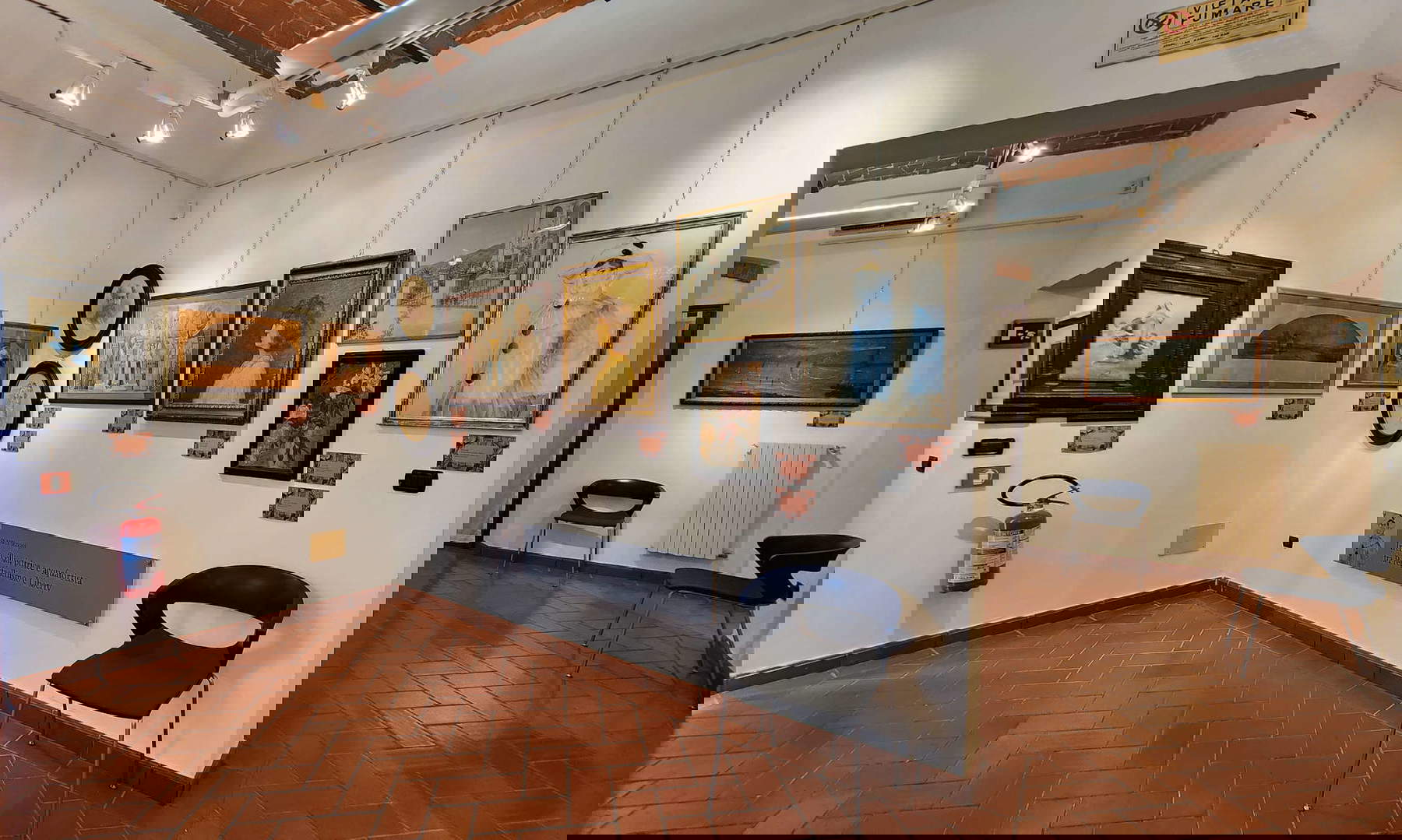
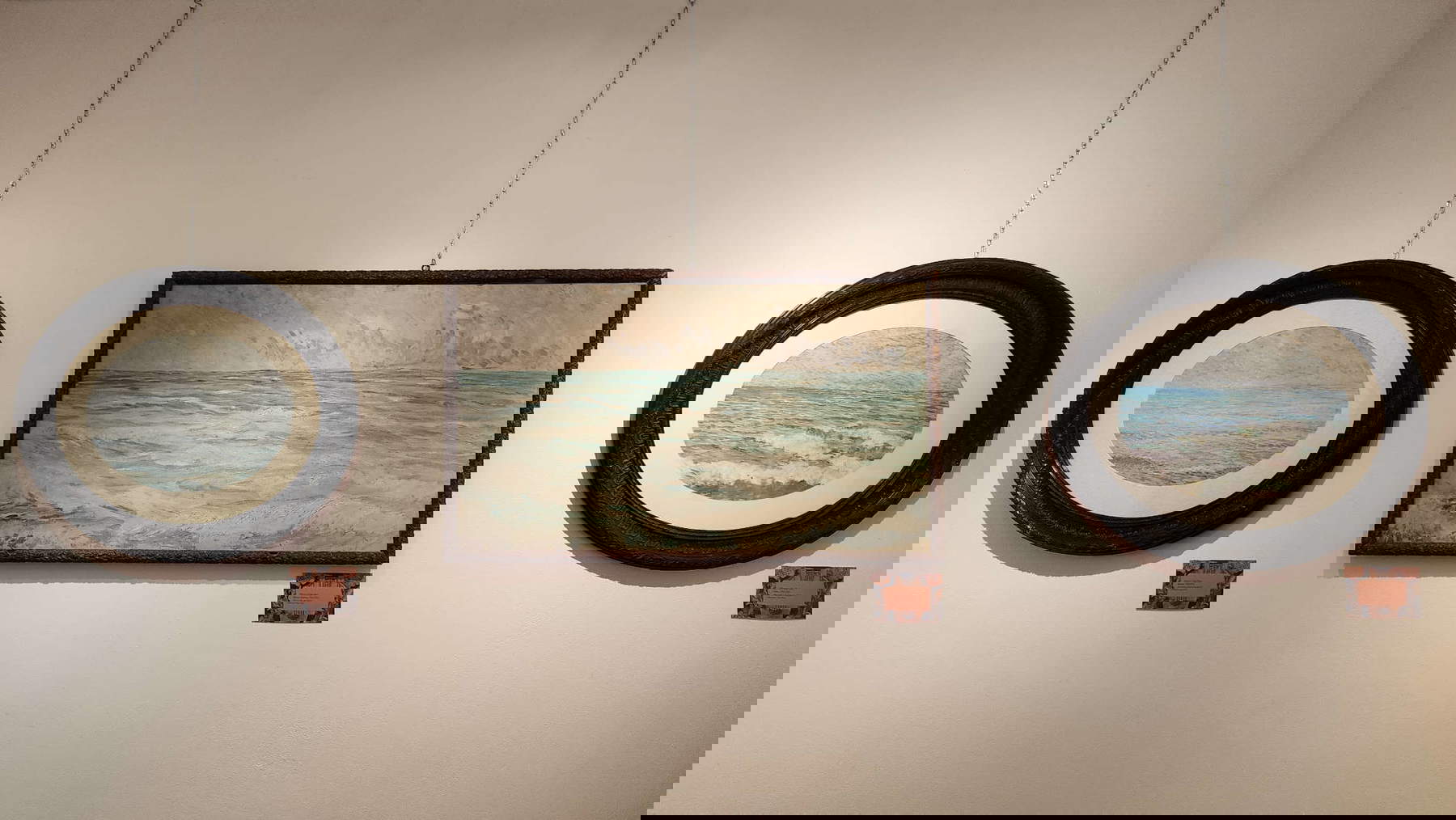
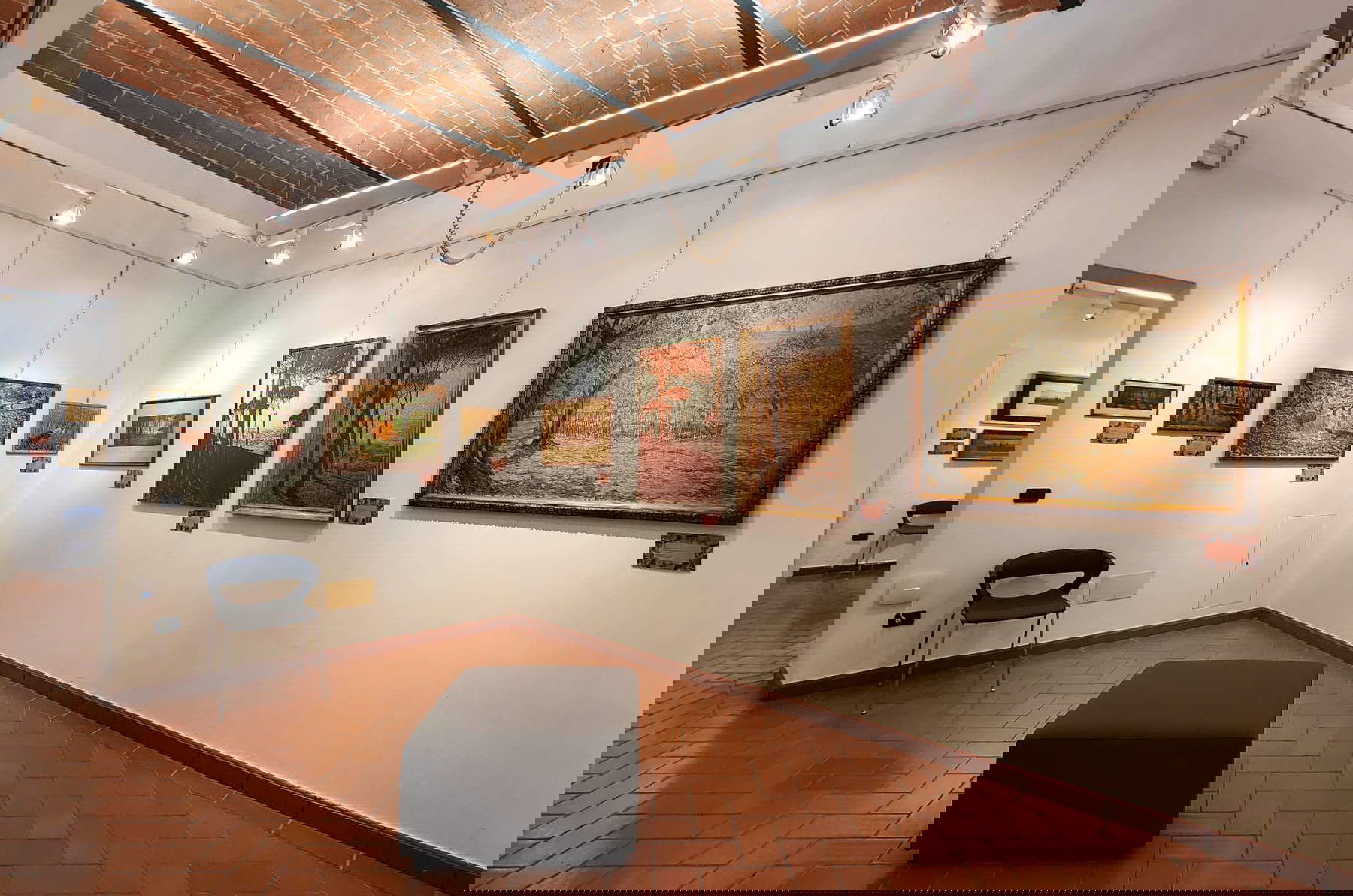
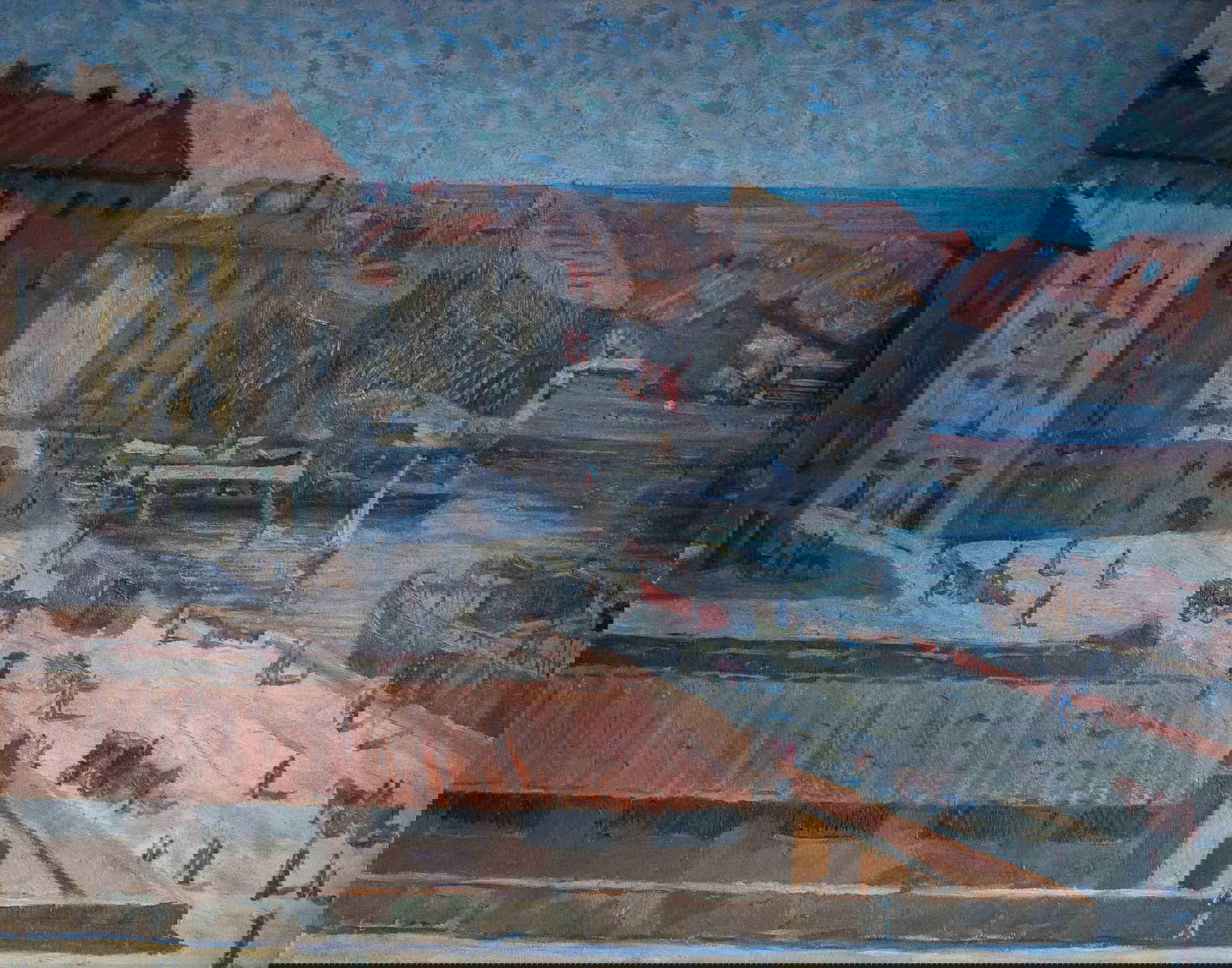
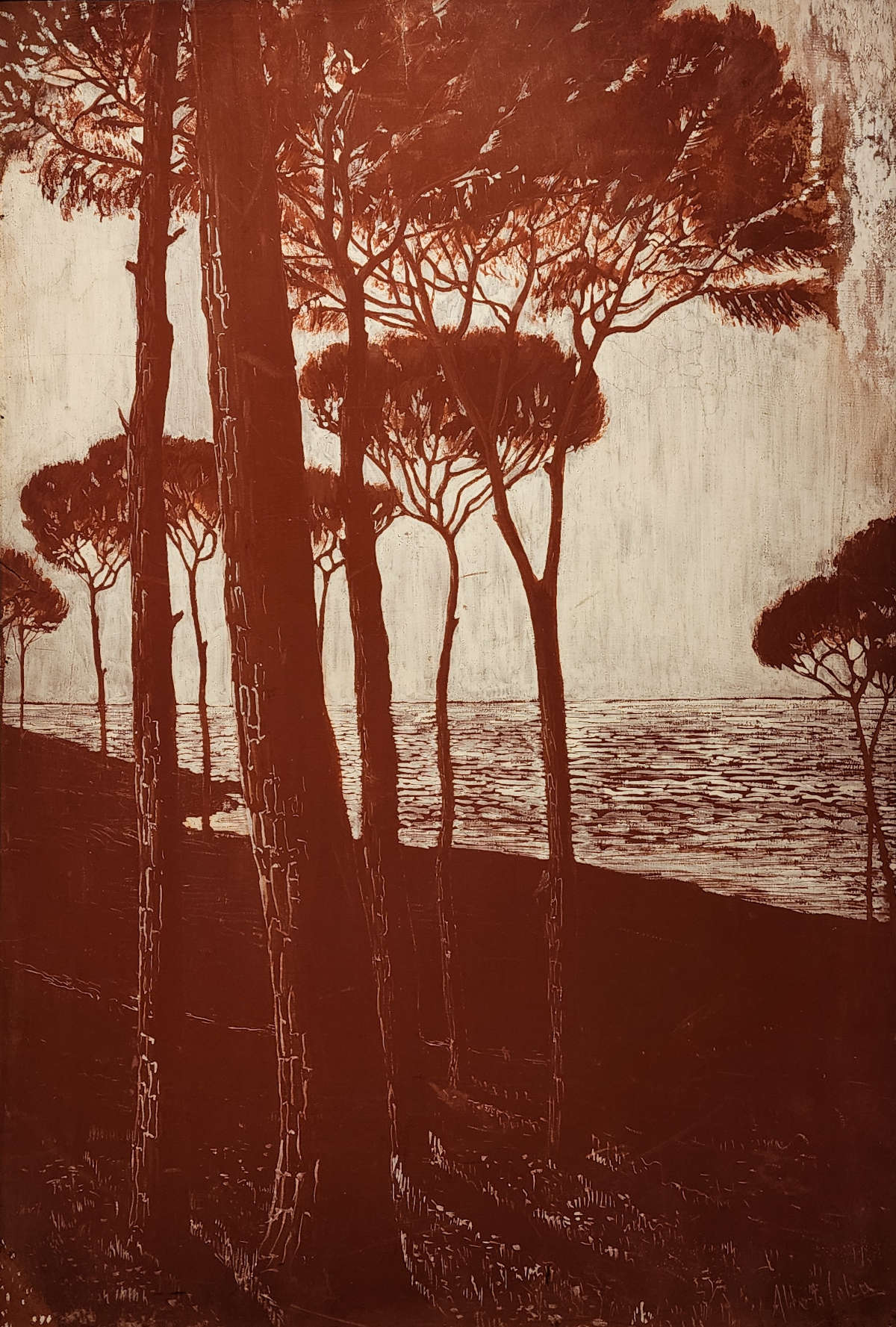
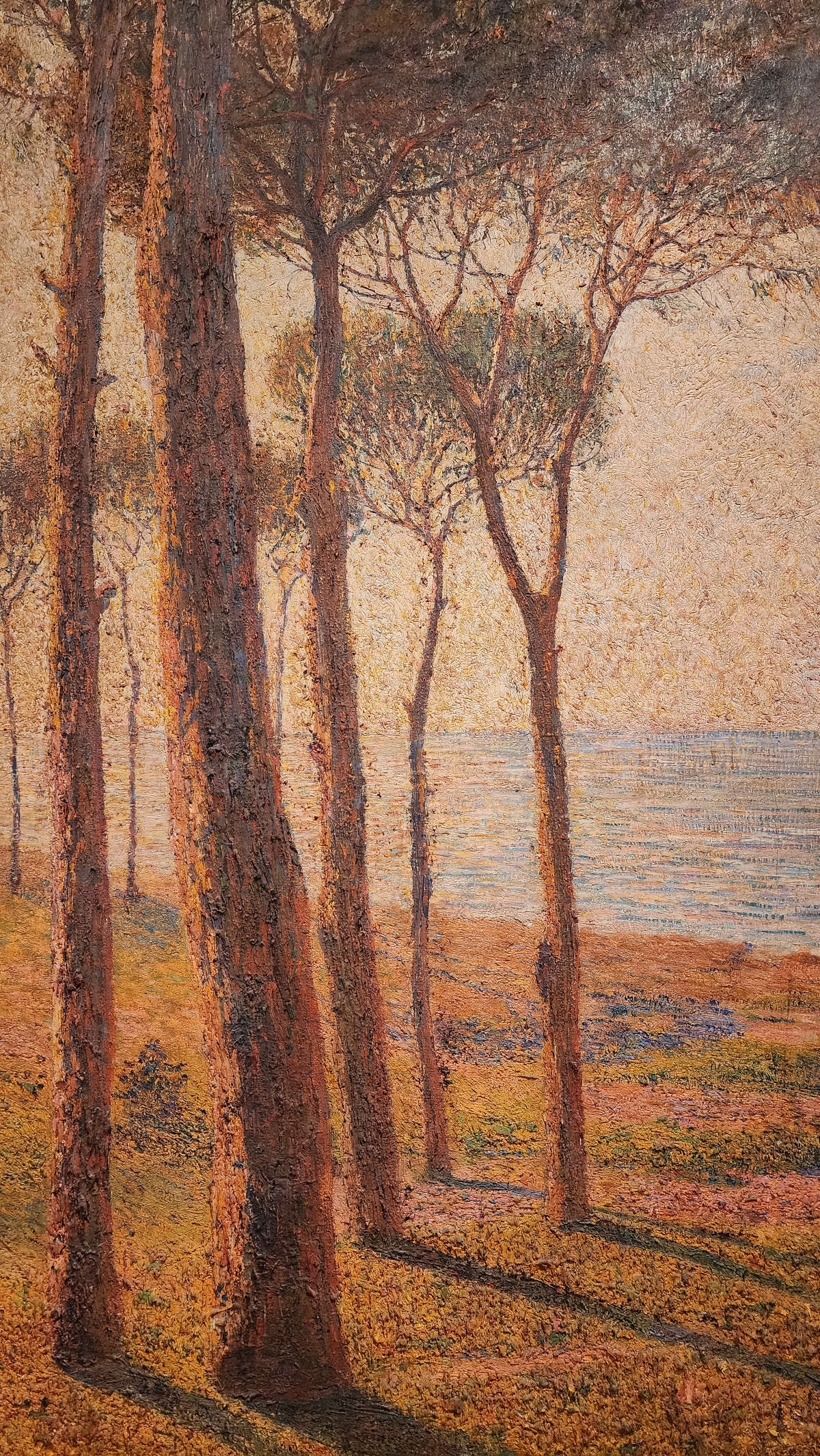
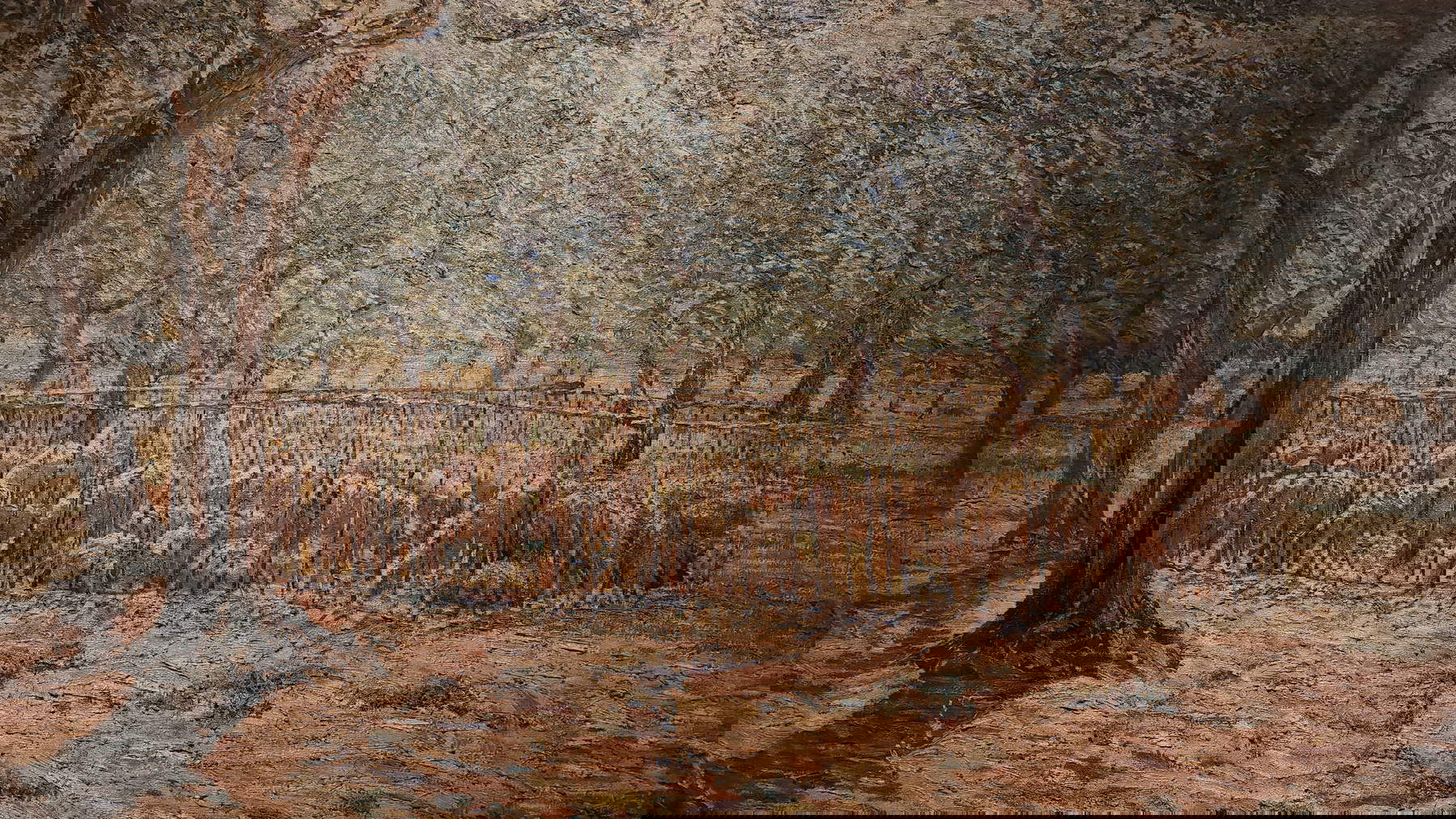
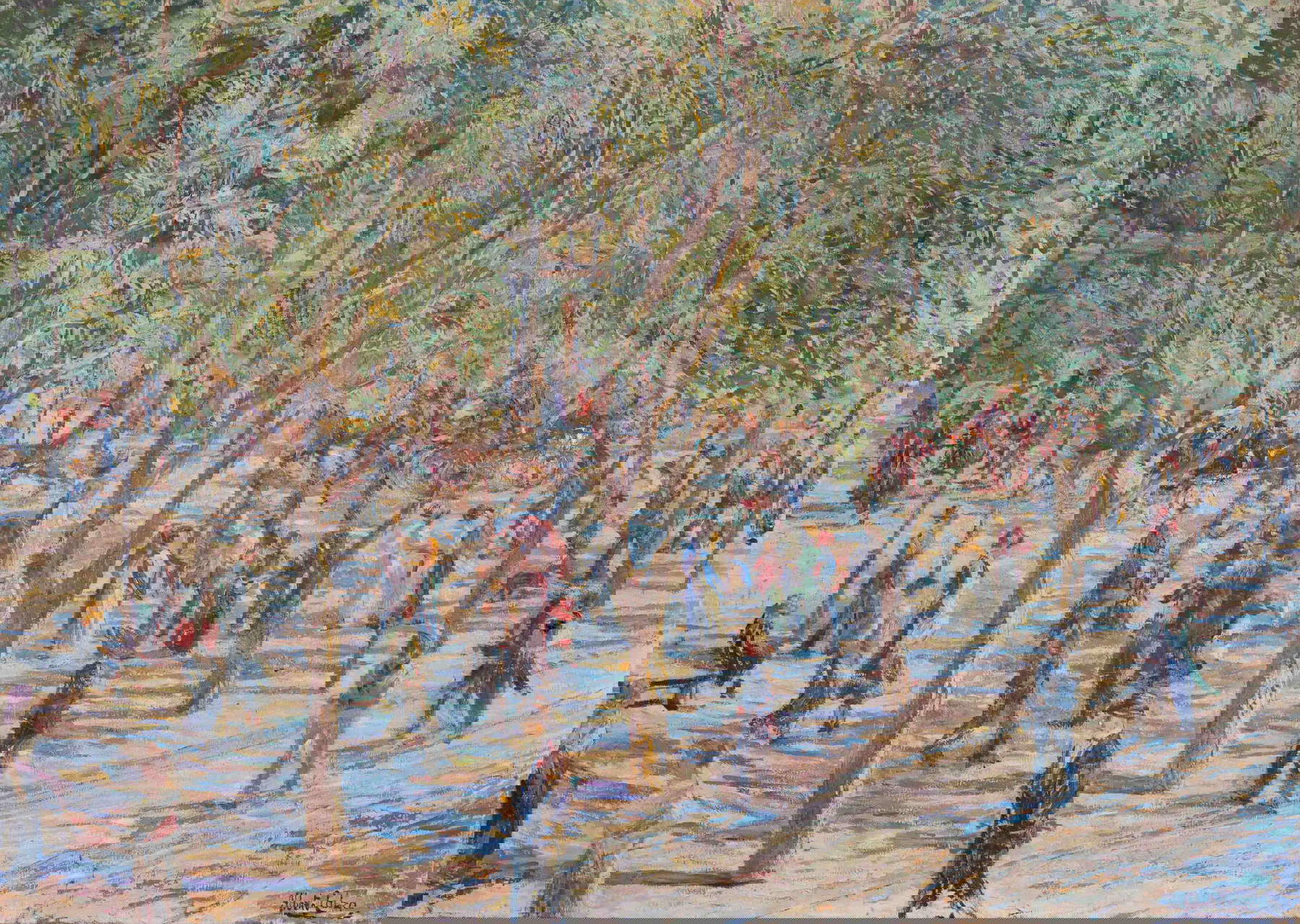
Between this acme of Calza Bini’s experimentalism and the last attestations of his Livorno sojourn, relating above all to his association with Galileo Chini, punctually investigated by Dario Matteoni (just a couple of attestations survive, of which the exhibition gives an account: the enlargement of the Istituto Santo Spirito and the realization of the Villino Paoletti, whose decorations have, moreover, risked being lost, and one can also add a design contribution known from documents, namely theconception of the fittings for the Tuscan Pavilion at the Regional and Ethnographic Exhibition in Rome, organized for the fiftieth anniversary of the Unification of Italy), the artist invariably found space to make his painting take the most diverse paths. One will notice a certain, insistent frequency on urban views: a cordial obsession, that for views of Livorno, which reveals an ingenuity already turned to architectural investigation. Hence, evidently, the recurrence of certain subjects: the Medici port, the shipyards, the Fanale, the train station, even the boats moored in the waters of the Labronian port of call explored with a certain taste for lines, for geometric constructions, for the intertwining of masts, sails, and rigging: a taste that is given to trace even when Calza Bini left the city and indulged in a few trips to the coasts, amid the pine forests. The artist professed himself a “stranger to the city of Livorno, but of its beauties a passionate and jealous lover,” and we must imagine that his feeling was total, that the object of that love was as much the city as its surroundings. And when Calza Bini left the noise for the silence, when his energies were all absorbed by nature, by the pine forests that dot the Tuscan coast, then he was able to imbue his canvases with the brackishness of D’Annunzio’s verses, then one breathes with his paintings the scent of those Tyrrhenian myths that, like all, must have fascinated the Roman artist as well (later, he would also enter into a relationship with D’Annunzio: a postcard, with dedication, that the poet sent to the artist in 1928 is preserved). Thus are to be read his two pinewoods that the Pinacoteca exhibits side by side, one revealing an approach to the pointillism of Baracchini Caputi innervated, however, with Symbolist suggestions (it is attested, towards the middle of Calza Bini’s stay in Livorno, that he frequented the milieu of the Caffè Bardi), and another, the same foreshortening, painted, however, as in negative: a hapax in Calza Bini’s production, almost a fleeting interest in the aesthetics of oriental prints, a quick foray into the japonisme that had at the time captivated the whole of European arts.
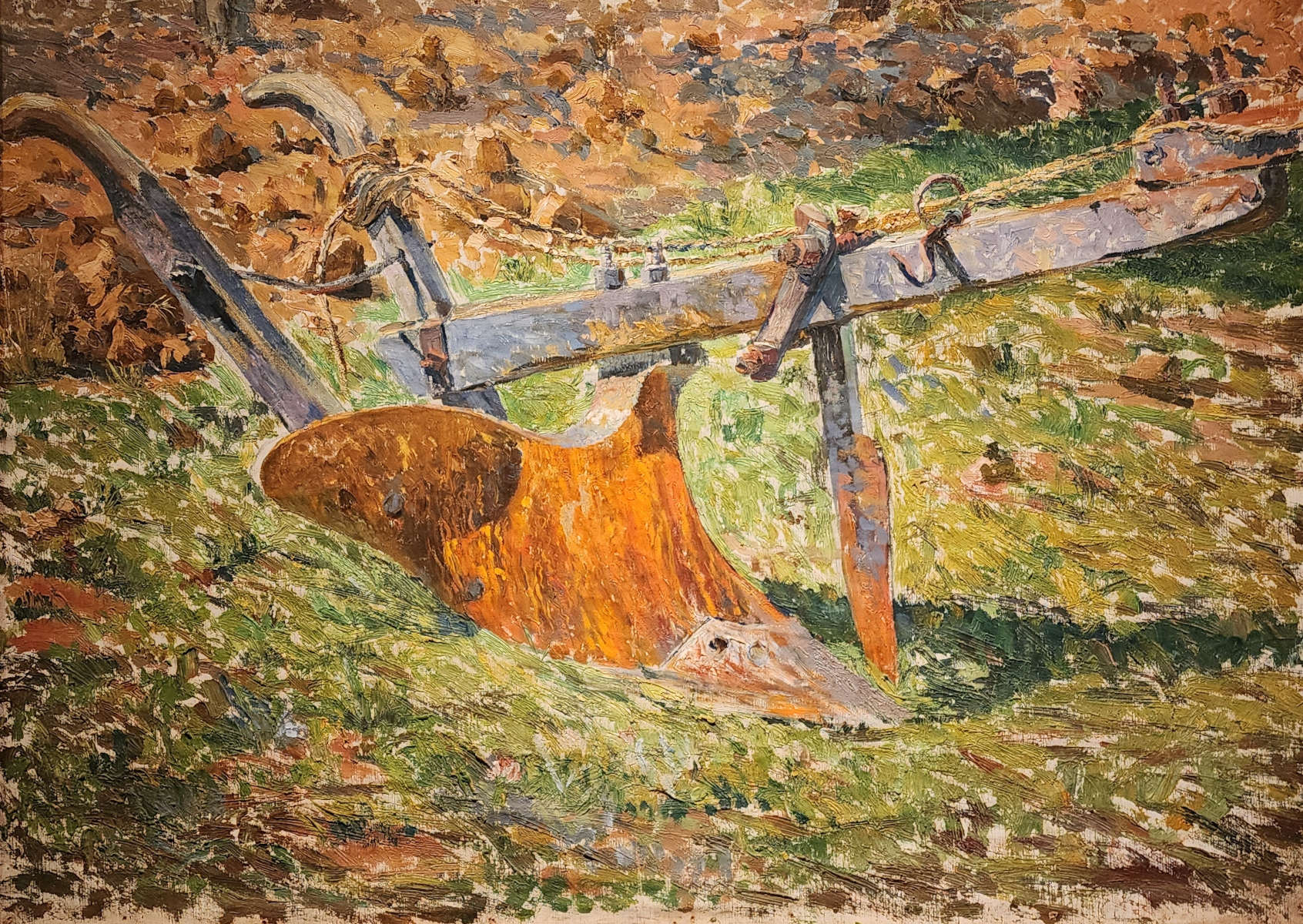
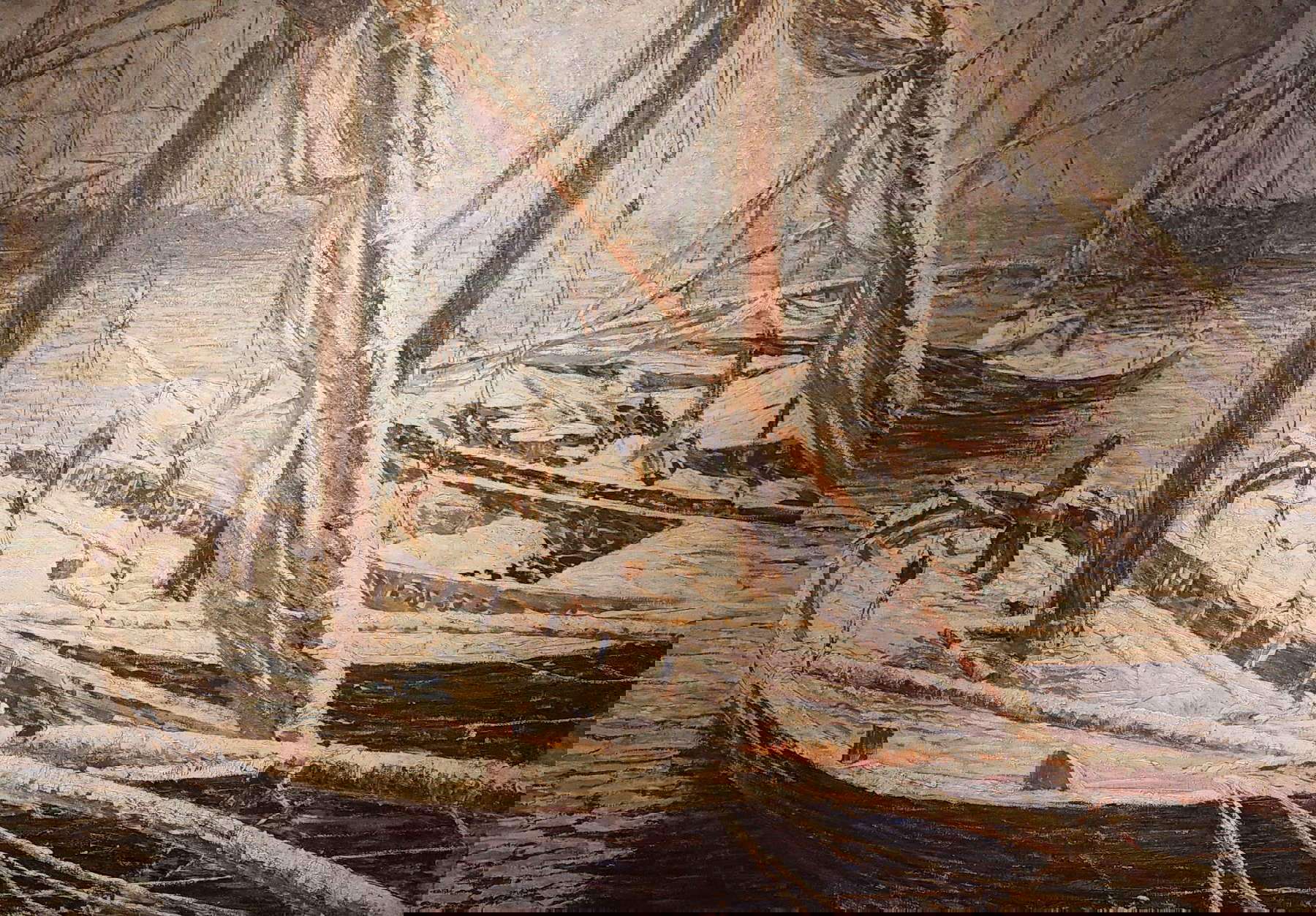
The strong interest in Plinio Nomellini’s art, a sort of falling in love one might say, is then revealed in all the images of the sea and waves that began to appear with insistence towards the end of the Leghorn years and that became, for Calza Bini as for many of the artists of the time, a ground on which to measure solutions to the problem of movement in painting (the “tormenting, pressing problem of movement,” he had called it), a theme ch’was central in the artistic directions of the time, and which would also offer Calza Bini the impulse to paint that Livorno Station which, if one wants to try to hear the echoes of the battles of the Futurists, then is what that comes closest to an idea of dynamism comparable to what Boccioni and Balla had produced before Marinetti’s manifesto, of course without Calza Bini being shaken by the furious subversive charge of the Futurists. That Station was evidently meant to be an experiment, so much so that it was debunked by Giosuè Borsi in his commentary on the 1913 Bagni Pancaldi exhibition (“A view of the Livorno station illuminated by the evening light of the street lamps seems to me false and very far from the intentions of the ’artist’s intentions, and the painting submitted [...], although having here and there some guessed intonation, does not seem to me constructed with sufficient balance between the details and the whole, and is on the other hand executed with a technique rather sloppy than quick and nervous.”). A kind of alternative proposal to futurism, one might think, which did not have happy outcomes, however. It will then perhaps be necessary to find the more resolute and more successful Calza Bini in the central phase of his stay in Livorno, when the painter directs the intense experimentalism of Fosso reale toward a more relaxed and at the same time fiercer, more dazzling, more studied pointillism: see works such as the heated, sunny Oliveta with sheep pen, or theAratro ch’è tutta una sfigliglare di baluginii, or the Barche all’ormeggio con l’esplorazione sulle tonalità del bianco della neve, or even the Passeggiata all’Ardenza “where the previous molecular inclination,” writes Cagianelli, "seems to compact itself into broader drafts, of fauve assonance," approaching in his opinion what, at the same chronological heights, a Ludovico Tommasi was producing.
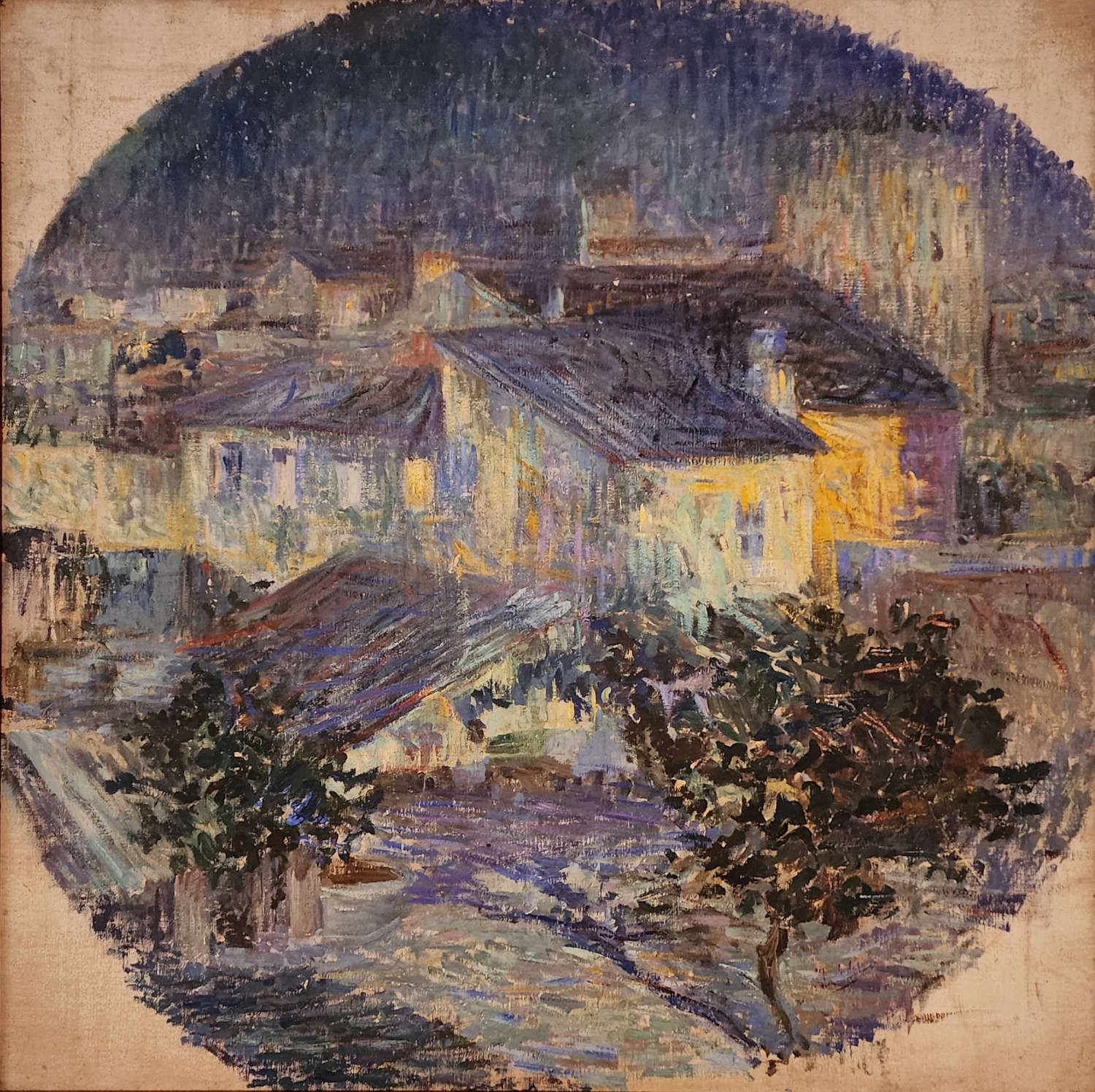
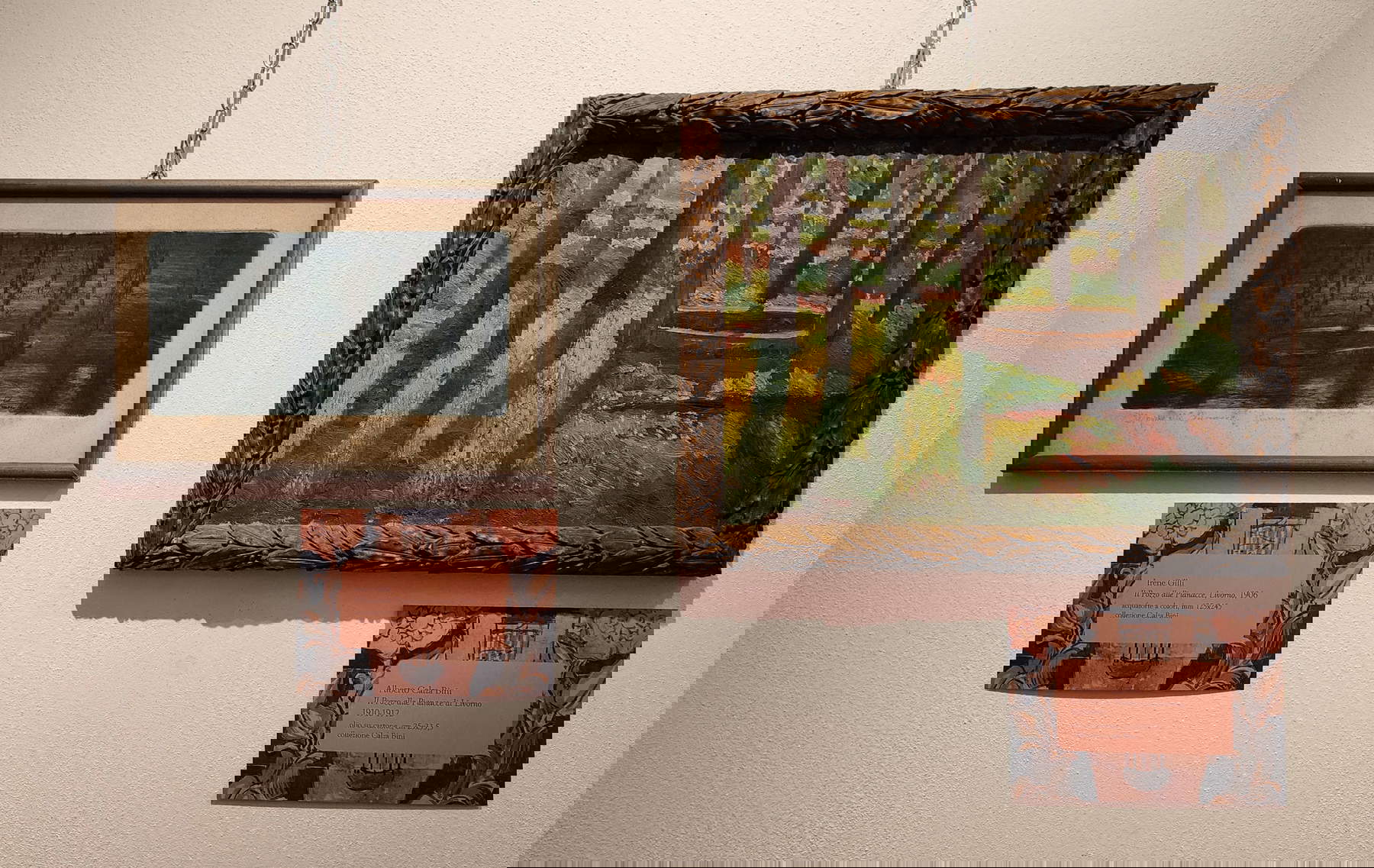
Coming before the close is the section reconstructing the figure of Irene Gilli, an artist of almost opposite temperament from her husband, less feverish and less prone to experimentation but definitely more eclectic, since Irene was able to move from the nocturnal impregnated with symbolism to the fluid bouquets of the most à la page Art Nouveau, from very precise architectural views, with a predilection for ancient buildings, to sacred visions filled with Pre-Raphaelite memories. Flavia Matitti, on the occasion of the exhibition, meticulously reconstructed the painter’s biography: daughter of art (her father, Cavalier Alberto Maso Gilli, was one of the greatest Italian engravers of the second half of the nineteenth century), left at the age of only ten orphaned by her father from whom she could only have learned some first rudiments, she immediately showed a marked inclination for ’art, so much so that she was admitted to the Royal Institute of Fine Arts in Rome when she was only eleven years old, that is, a year earlier than the minimum allowed by law, so much so that for her admission a specific authorization from the Ministry of Public Education was necessary following an application submitted by her mother. Her teacher at the Institute was Domenico Bruschi, an Umbrian painter who had spent a few years in England, falling in love with the Pre-Raphaelites, and on his return had approached Art Nouveau (hence Irene’s interests, almost by osmosis): he would remain her mentor for the duration of her course of study, which ended in 1902, when the girl was eighteen. And already in the school environment, we must assume, she got to know her future husband, three years her senior. Postpone instead to 1903 her first exhibition, and already in 1905 Irene exhibited in Turin, at the exhibition of the local Promotrice Society. In the same year she married Alberto Calza (who at that time had not yet added her paternal surname Bini: she would do so only in 1924), and from then on it would be a continuous succession of exhibitions, not without enjoying some success, until the interruption of her career, in 1916. We do not know the reasons why Irene Gilli stopped exhibiting (though not painting): probably, Matitti imagines, because of family commitments and the growth of her husband’s professional activity, who in the 1920s would abandon painting to devote himself almost exclusively to architecture. We are left, today, with the image of an extraordinarily versatile and precocious painter: curious, to begin with, the watercolors of an excursion to Pompeii, exhibited, moreover, together with the watercolors on the same theme executed by her future husband (two educational trips to the same place, but at slightly different times, which resulted in very similar outcomes). Sensitive to research on formal simplification of French ancestry were certain still lifes, certain studies of composition from her later school years. Delicate, though somewhat weaker, are the Pre-Raphaelite trials, and somewhat conventional the Art Nouveau-oriented floral cascades. Definitely more interesting are his rare Symbolist forays: The etchings of his early Livorno years are unquestionably to be hailed as his best evidence, beginning with the somber, elegiac Pozzo delle Pianacce , which seems almost the translation into images of a nightmare (note, moreover, that in the exhibition it is exhibited alongside her husband’s luminous canvas, with the same view, but by day), and especially Le tre Marie, an admirable etching conceived probably in dialogue with the most refined European symbolism, a meticulous essay in technical virtuosity in rendering the contrast between the backlighting of the three women and the glow of the sunset, of the sun falling behind the three crosses still hoisted on Golgotha, rendered at the moment when the mournful Marys are walking away from Calvary. Little else is on display in the exhibition: it was difficult, after all, to push the search further.
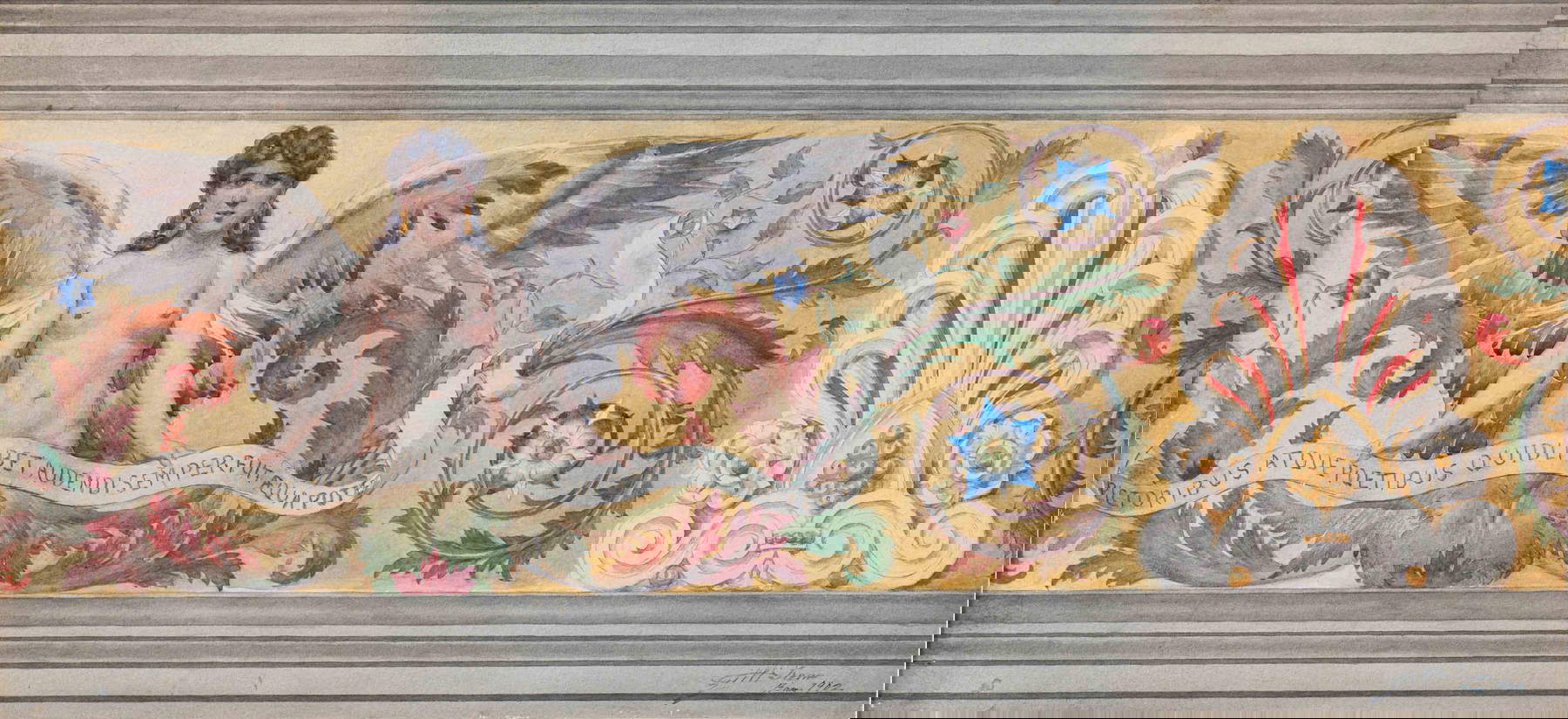
And the same is also true for Alberto Calza Bini. The entirely pioneering nature of an exhibition on an unpublished artist, an artist as yet unknown (we can imagine that the oblivion stems partly from his closeness to Fascism, since he was an architect organic to the regime until the days of its fall and thus affected by damnatio, and partly from theextreme reserve of the heirs, which, if on the one hand has contributed to the preservation, in all its integrity, of the material that has remained in their possession, and thus today opens up to dense and in-depth studies, on the other hand has had the effect of concealing for a long time this extraordinary heritage), has made it necessary to make a drastic choice, for this first exhibition: to bring to Collesalvetti only what was certain, either because it was signed or because it was attested by the papers. Nonetheless, it was necessary to carry out a heavy, long, multi-year study of the material that was all found among the collections of the heirs, divided between Rome, the city of Alberto Calza Bini’sorigin of Alberto Calza Bini, and Calvi dell’Umbria, the village where his father-in-law had some properties later passed on to his daughter and son-in-law, and where the archive with his architectural plans, already the subject of studies in the past (today it is in Rome), was also located.
We cannot say that we have rediscovered a kind of Pellizza da Volpedo hitherto obscured by the caligins of history, but we have certainly recovered a painter we did not know (and who will have to be further investigated, of course, because the material found among the heirs is far more conspicuous than what was presented in the exhibition), and who had more than some merit in the period of maximum exuberance of Divisionist research, more than some merit in finding an autonomous and feverish path, far from any dogmatic adherence. And some merit Alberto Calza Bini also had for Collesalvetti itself: it was he, and it was discovered on the occasion of this exhibition, who had been in charge of the restoration, in 1912, of the Eremo della Sambuca, after the complex had been purchased by another artist, Adolfo Cipriani. The association with Galileo Chini had been expressed there as well, up those hills, despite, Calza Bini lamented, the “uncomfortable access” that prevented “too frequent visits,” and yet it allowed him todevise together with Chini some stained-glass windows, reproduced in the magazine Liburni Civitas, and to save a perilous fresco, believed by him to be from the late 14th century (actually perhaps slightly later), “with the utmost caution and with great love,” after an intense appeal to the superintendence. A fresco that was later torn down for conservation reasons and is now at the Museum of the City of Livorno, among the oldest attestations of the figurative civilization of this portion of the Tyrrhenian Sea. Calza Bini’s resourcefulness in favor of the cultural heritage, a sort of civic activism driven by a very modern sensibility and of which the artist would give proof several times even during his years in Leghorn, was, moreover, totally consistent with his idea of an art that dirozzizes and enlightens (an idea that certainly seems simplistic and anachronistic to us today, but for theera it was very modern), and above all it was consistent with his intentions, with his visions, with his conviction that in the path of art, his words that seem to have been written the day before yesterday, “every period adds to its heritage a new conquest even when it seems to neglect and forget the conquests of the past.” And a new achievement resonates even louder when it ushers in a new field of research, a new history.

The author of this article: Federico Giannini
Nato a Massa nel 1986, si è laureato nel 2010 in Informatica Umanistica all’Università di Pisa. Nel 2009 ha iniziato a lavorare nel settore della comunicazione su web, con particolare riferimento alla comunicazione per i beni culturali. Nel 2017 ha fondato con Ilaria Baratta la rivista Finestre sull’Arte. Dalla fondazione è direttore responsabile della rivista. Nel 2025 ha scritto il libro Vero, Falso, Fake. Credenze, errori e falsità nel mondo dell'arte (Giunti editore). Collabora e ha collaborato con diverse riviste, tra cui Art e Dossier e Left, e per la televisione è stato autore del documentario Le mani dell’arte (Rai 5) ed è stato tra i presentatori del programma Dorian – L’arte non invecchia (Rai 5). Al suo attivo anche docenze in materia di giornalismo culturale all'Università di Genova e all'Ordine dei Giornalisti, inoltre partecipa regolarmente come relatore e moderatore su temi di arte e cultura a numerosi convegni (tra gli altri: Lu.Bec. Lucca Beni Culturali, Ro.Me Exhibition, Con-Vivere Festival, TTG Travel Experience).
Warning: the translation into English of the original Italian article was created using automatic tools. We undertake to review all articles, but we do not guarantee the total absence of inaccuracies in the translation due to the program. You can find the original by clicking on the ITA button. If you find any mistake,please contact us.













 IT
IT FR
FR DE
DE ES
ES CN
CN


