




by Marco Tonelli 15/01/2026



Categories: Exhibition reviews / Disclaimer
Thirty-five years after his first exhibition in New York, Roman artist Paolo Canevari engages in a dialogue with the sacred art of the Pinacoteca di Città di Castello, interweaving historical memory, contemporary violence and worn-out matter in a project of rare intensity. Marco Tonelli's review.

Just over thirty-five years have passed since Paolo Canevari held his first solo exhibition in New York: it was 1989, the 1980s had evaporated, consuming everything or almost everything, Basquiat and Warhol had died of AIDS and overdose (and many others with them), and Haring would serve the same fate a few months later, in February 1990. The young Roman artist was surfing the crest of the last wave of that mythical decade. The Big Apple (now partly eaten up like the logo of the famous Silicon Valley brand) was crucial for an Italian artist who has one of his works in MoMA’s permanent collection, who lived in New York for ten years, married one of the world’s most celebrated female artists, and who in 2007 was invited by Robert Storr (who of MoMA was one of the curators) to the Venice Biennale.
Today the artist divides his time between Rome (his city of origin) and Amelia, an Umbrian city linked to his family where he has a studio and home, not to mention Frosinone where he teaches Sculpture at the Academy of Fine Arts. It is therefore significant that precisely in Umbria, 100 kilometers away from Amelia, Città di Castello has dedicated a personal, and justifiably ambitious, exhibition to him at the Pinacoteca Comunale. Bravo and courageous to envision such a project was Lorenzo Fiorucci, a critic, curator and art historian at the Perugia Superintendency, who had already organized significant exhibitions in the same Pinacoteca in recent years (the last one dedicated to Giulia Napoleone).


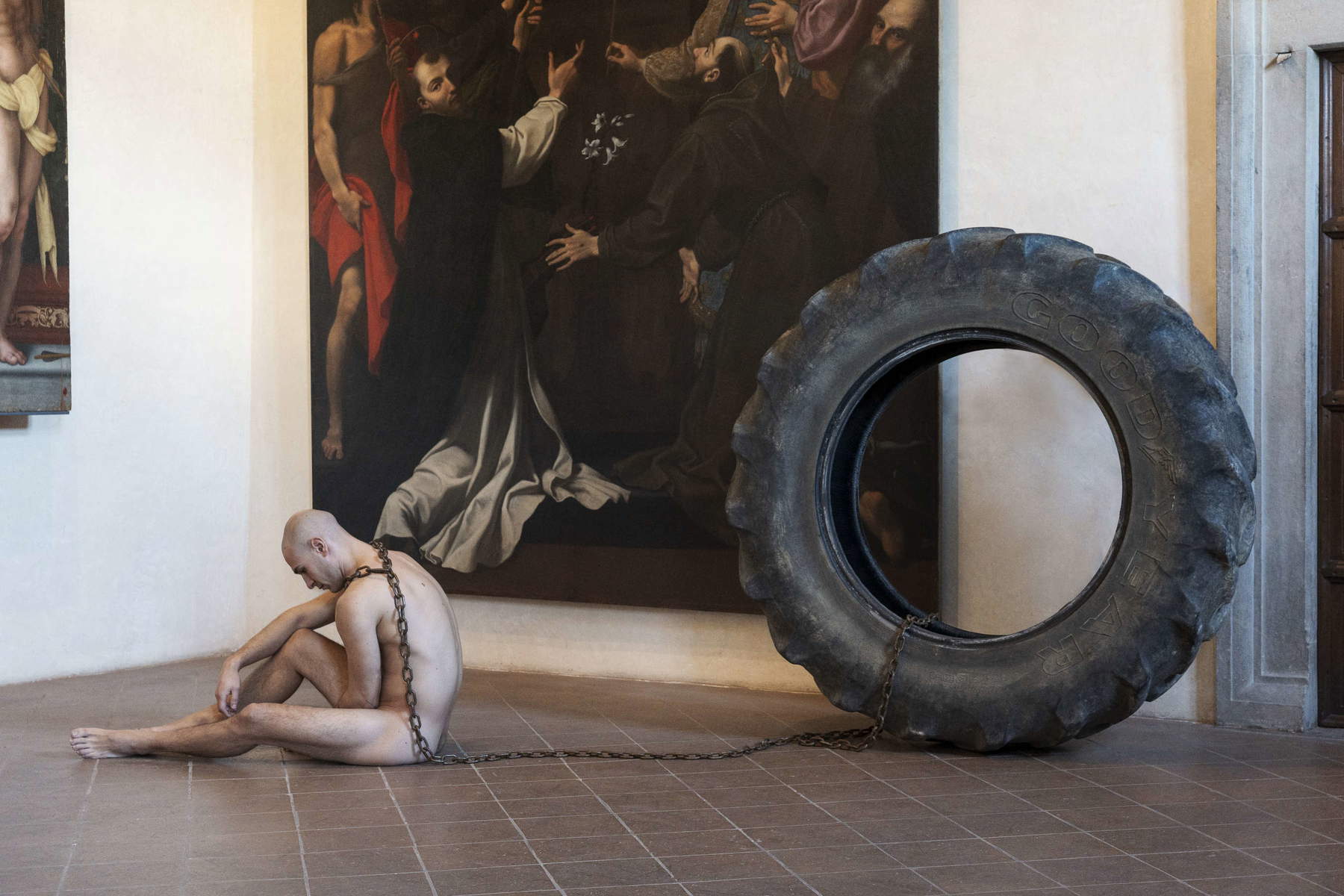
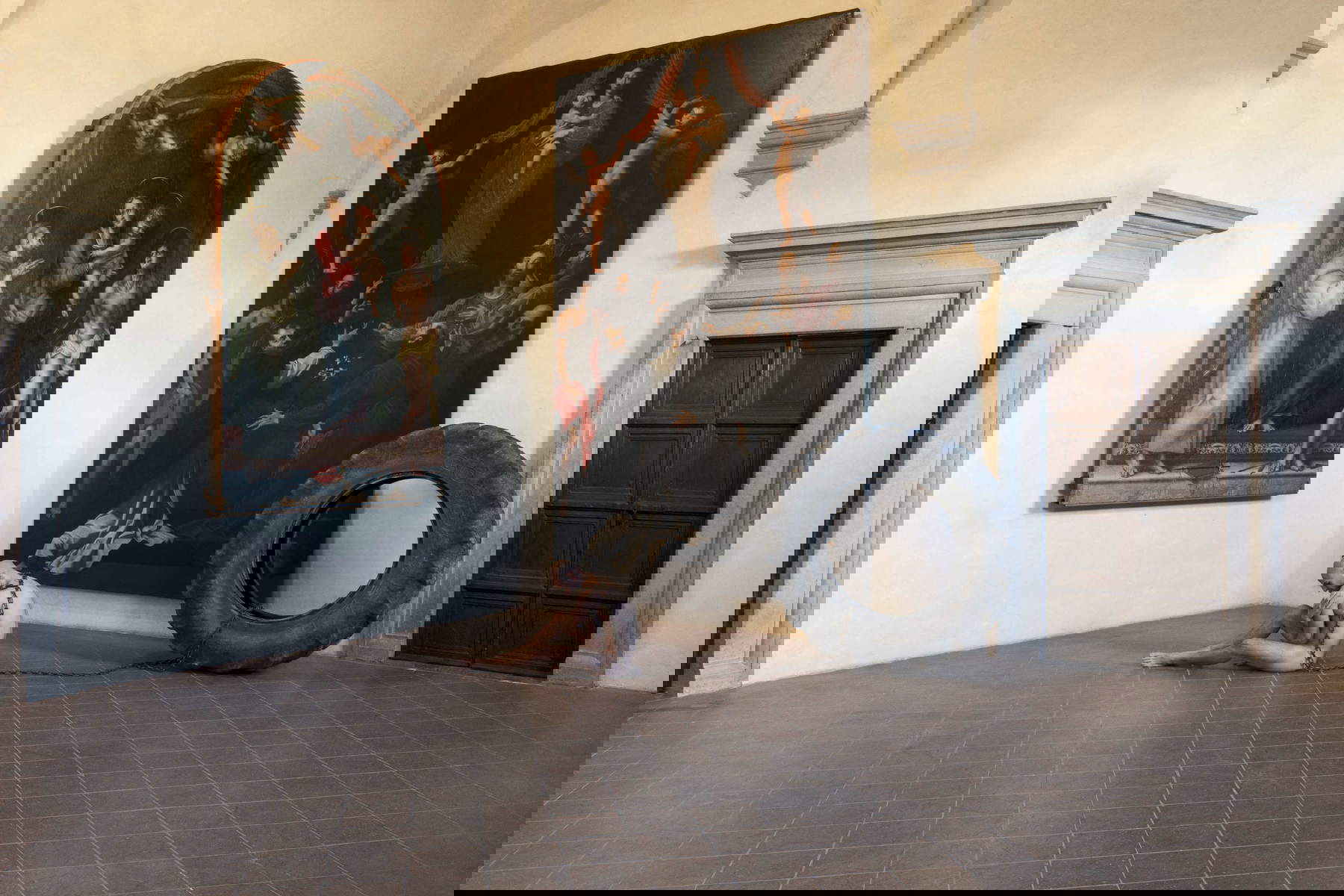
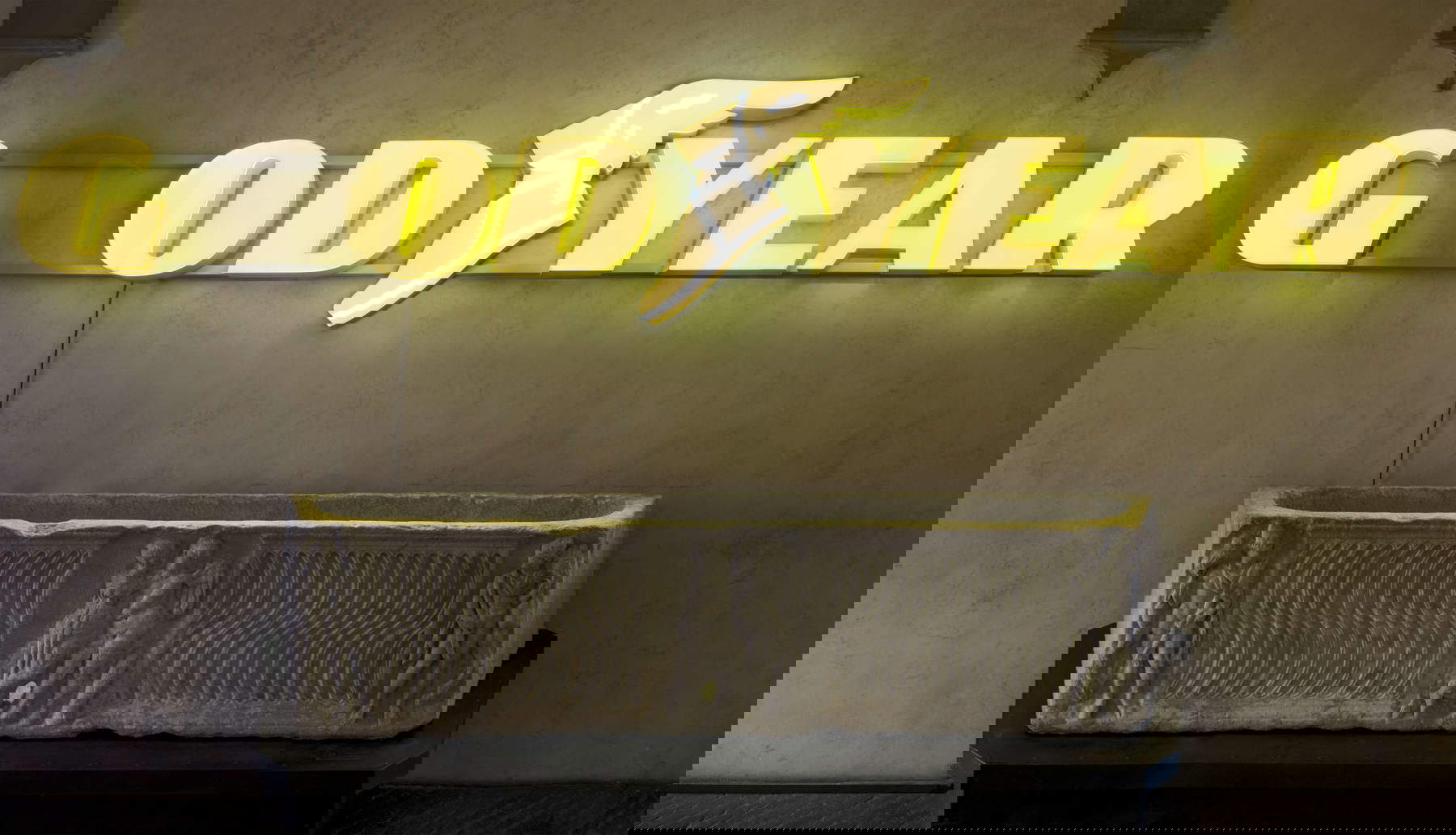
Courageous for Fiorucci to let Canevari dialogue with works of sacred art contained in the Pinacoteca, chaining a nude performer in front of altarpieces and welcoming the viewer with the luminous inscription modified to God Year, a mocking irony with which Canevari synthesizes much of the semantics of his works, a continuous and fierce monument to contemporary memory, reminding us of the war of religion in the name of God, the oil war and the consequences of ’pollution, of the violence of globalization, of the aesthetic use of weapons used parodistically for peacekeeping missions, special military operations, military aid or prevention for common defense.
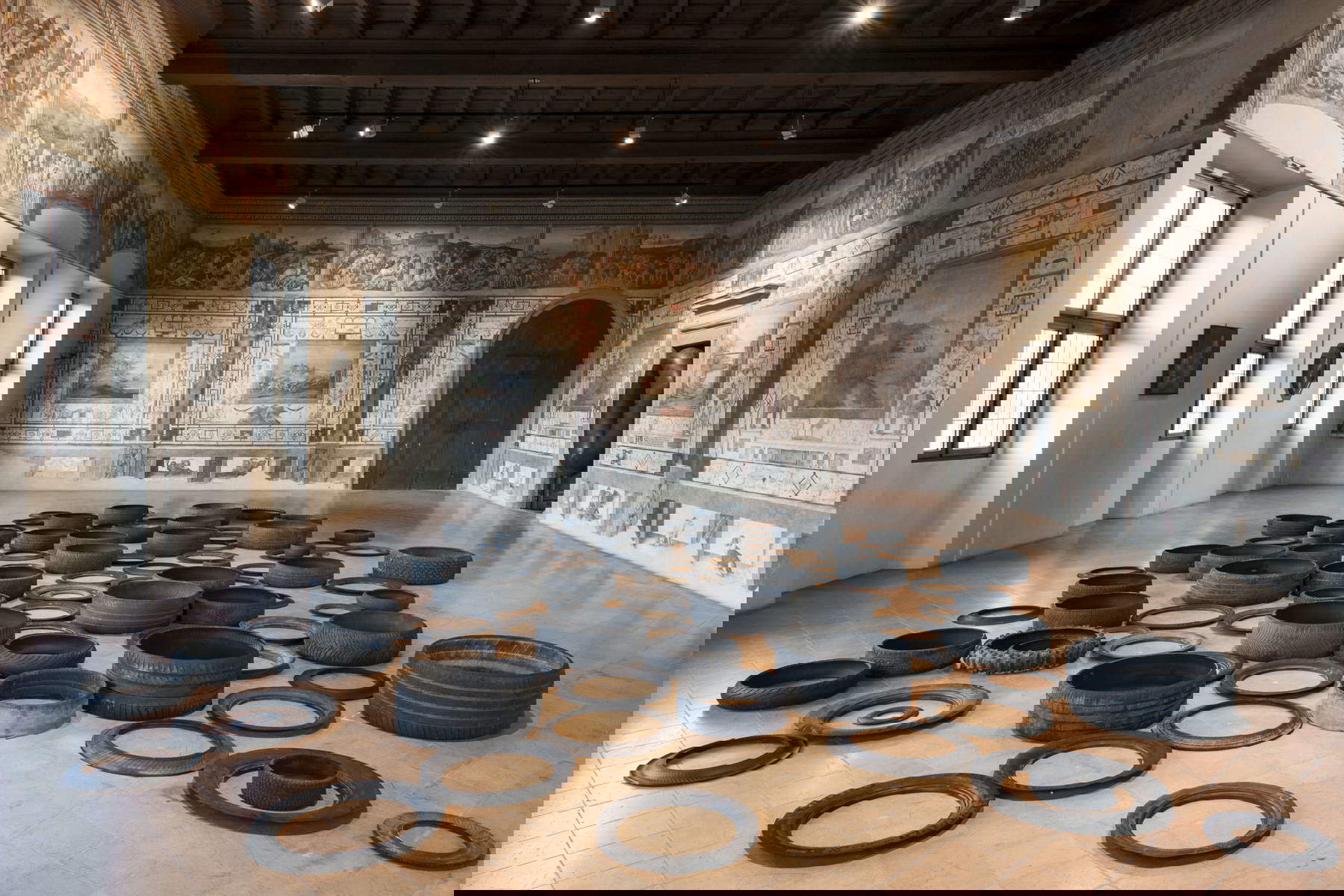
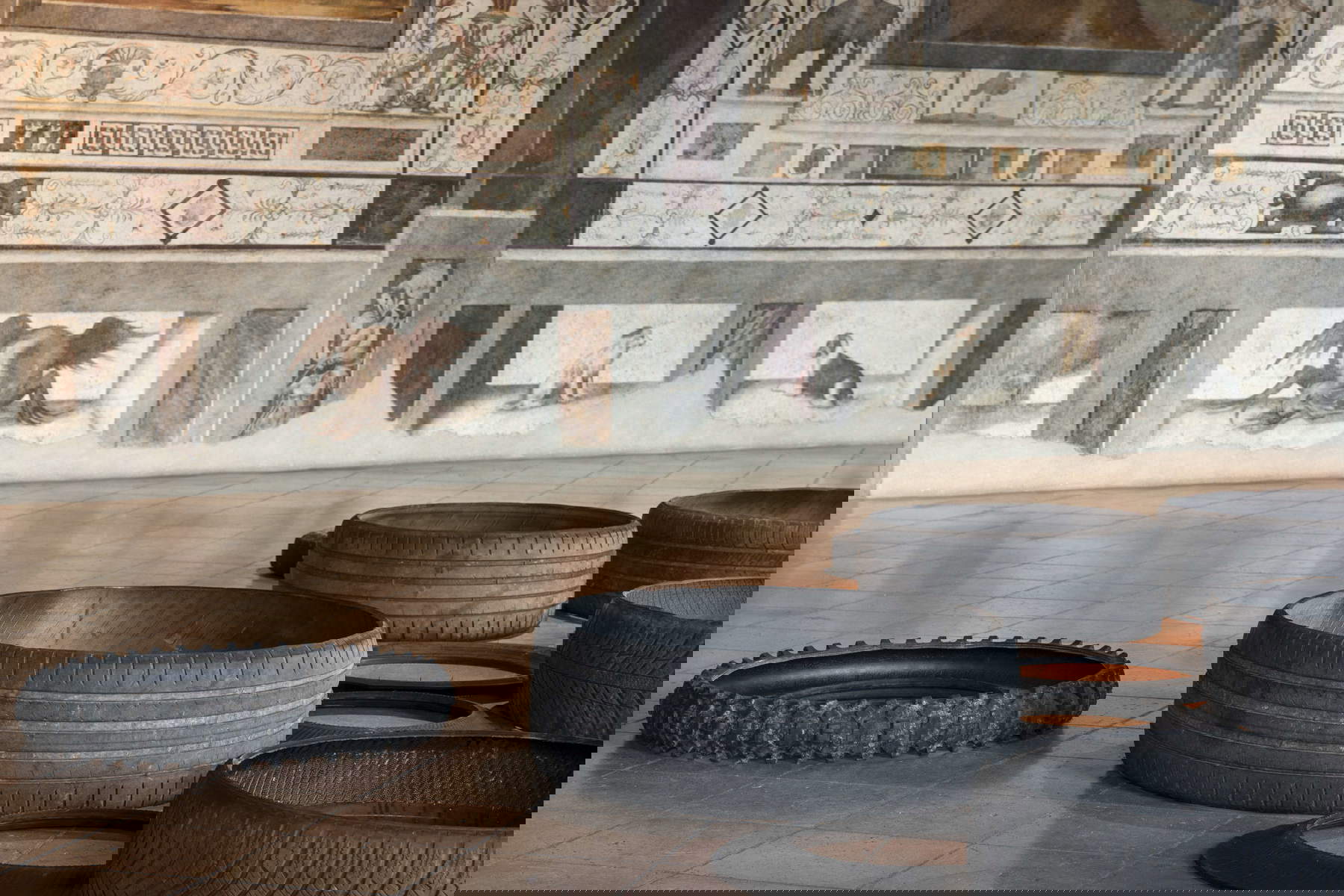
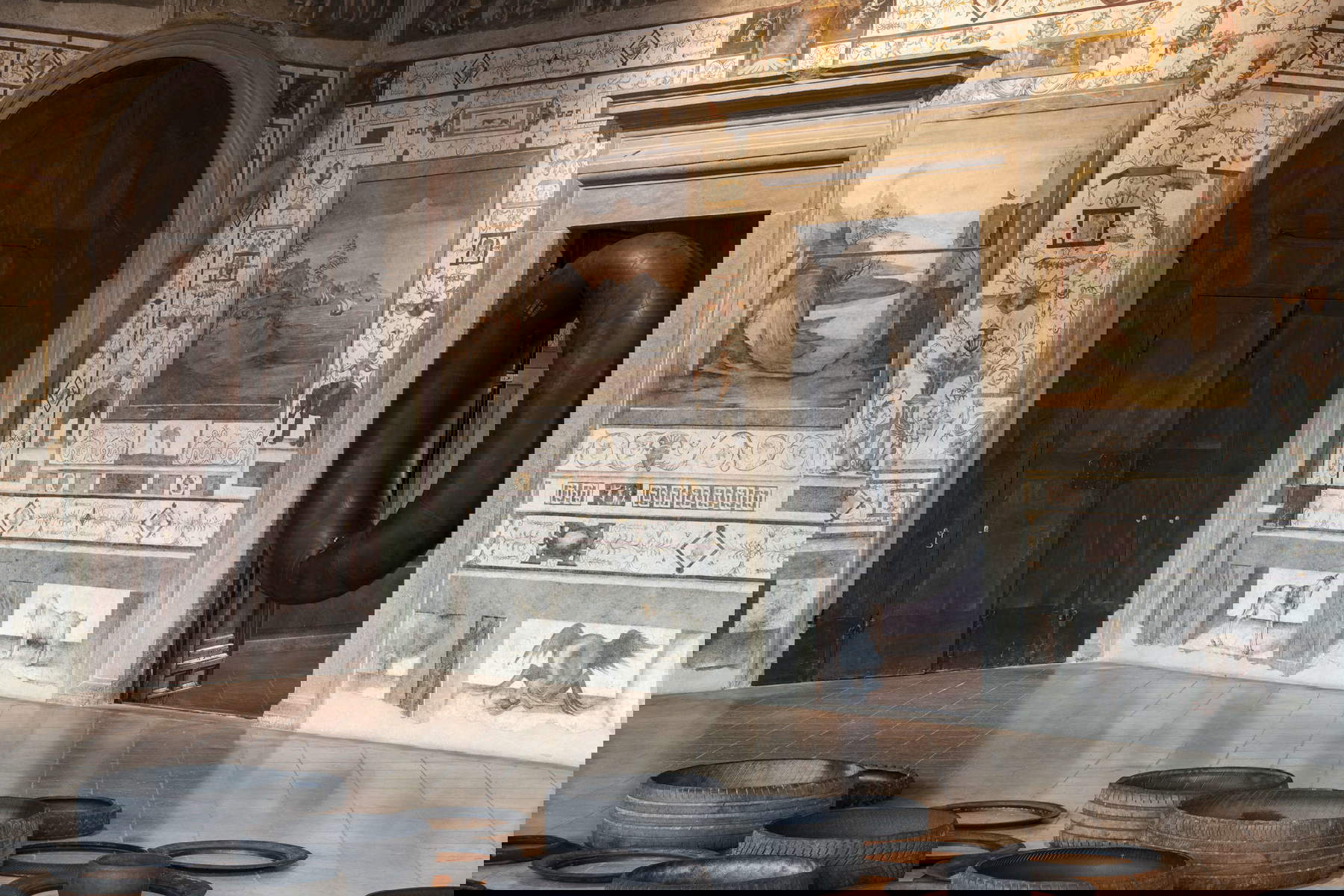
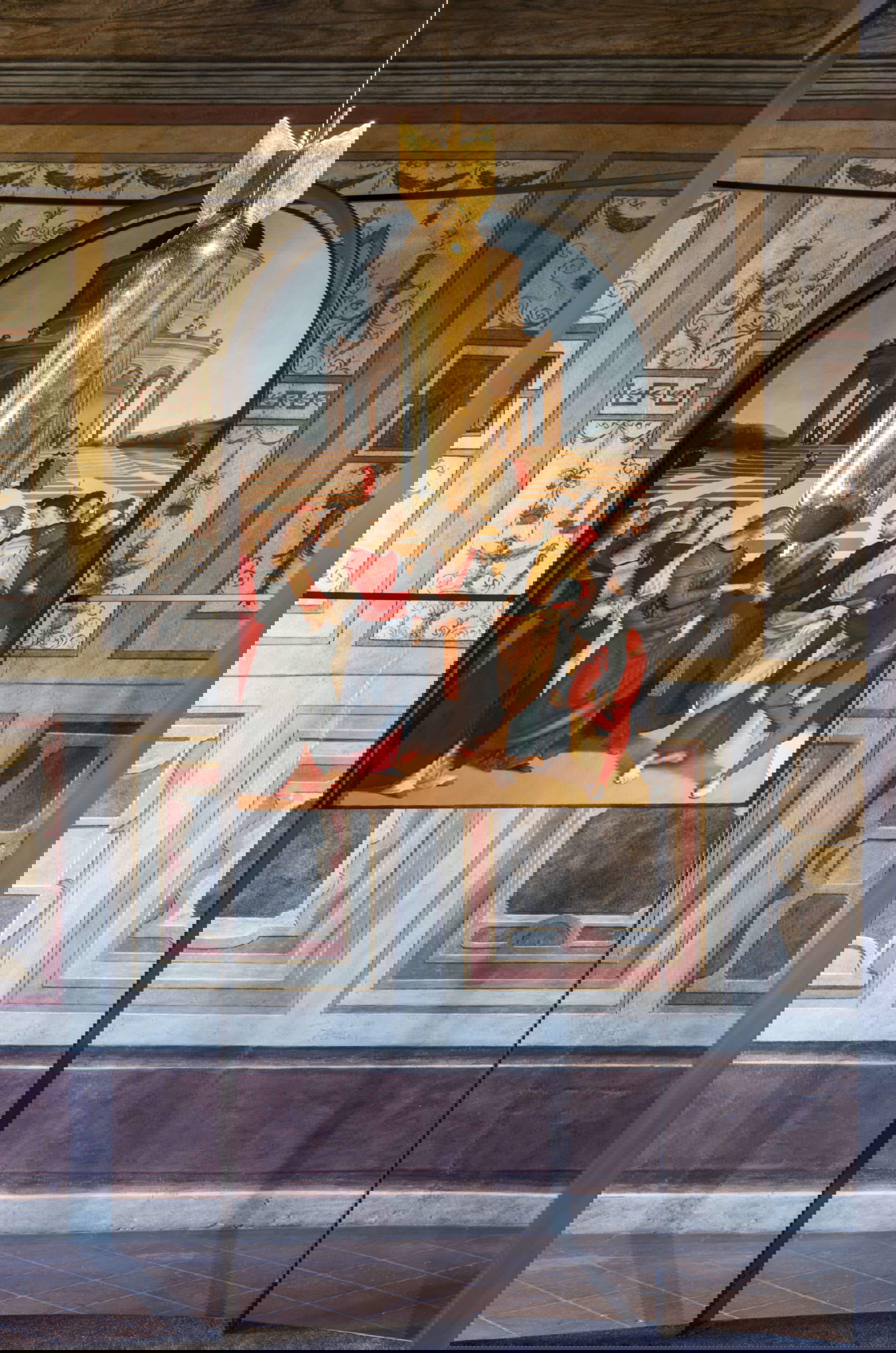
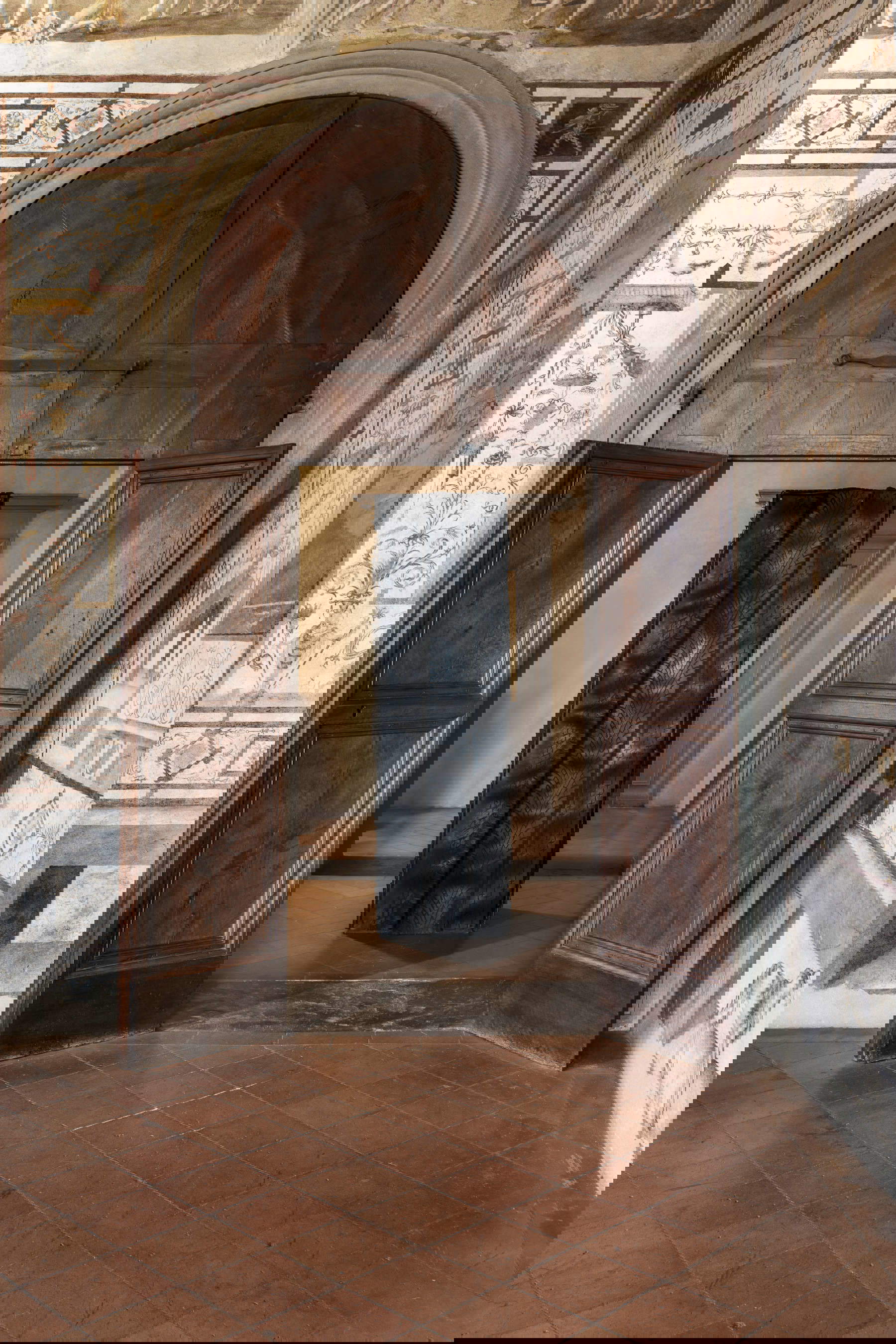
Although this is not the first time that the artist has confronted the historical collection of a museum (he did so in 2010 at the GNAM in Rome and in 2020 at Palazzo Collicola in Spoleto, with an exhibition that received, among the few in Italy, funding from the Ministry’sExhibit program ), this time the operation is truly surgical, to use a term now familiar even in the field of warfare. Punctual, dry, direct comparisons between his works and exhibits, sculptures and paintings and museum spaces, where even what was not expressly made seems so. It is the force of history that Canevari brings in, consciously and unconsciously, in his works, composed exclusively of tires and inner tubes of trucks, cars, motorcycles or tractors. A symbol of trade and migratory routes, of colonialist exploitation (on display is an African feline skin with a tire, reminding us of rubber extracted by force from the Congo), of labor, of geopolitical tragedies, the tire is the hallmark of his works for decades, worn and fleshed out or sliced by hand with care and precision, as in the large site-specific installation in the great hall of the Palazzo frescoed with grotesques and, not even making the point, scenes of wars of ancient times and of great commanders such as Alexander the Great, Scipio, Hannibal and Caesar (it is no coincidence that we are in Palazzo Vitelli nicknamed “alla Cannoniera,” because it was built at a foundry or cannon depot).
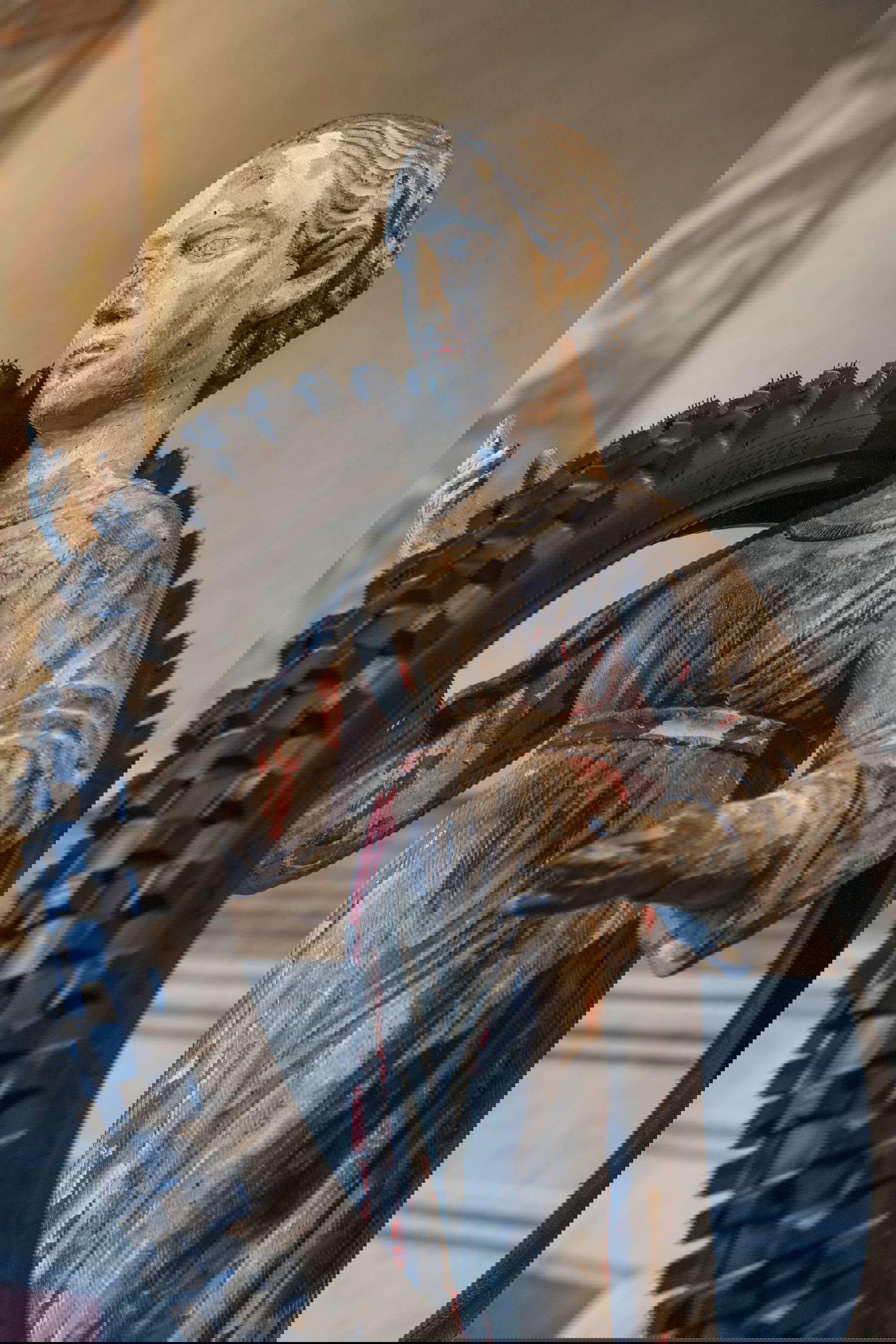
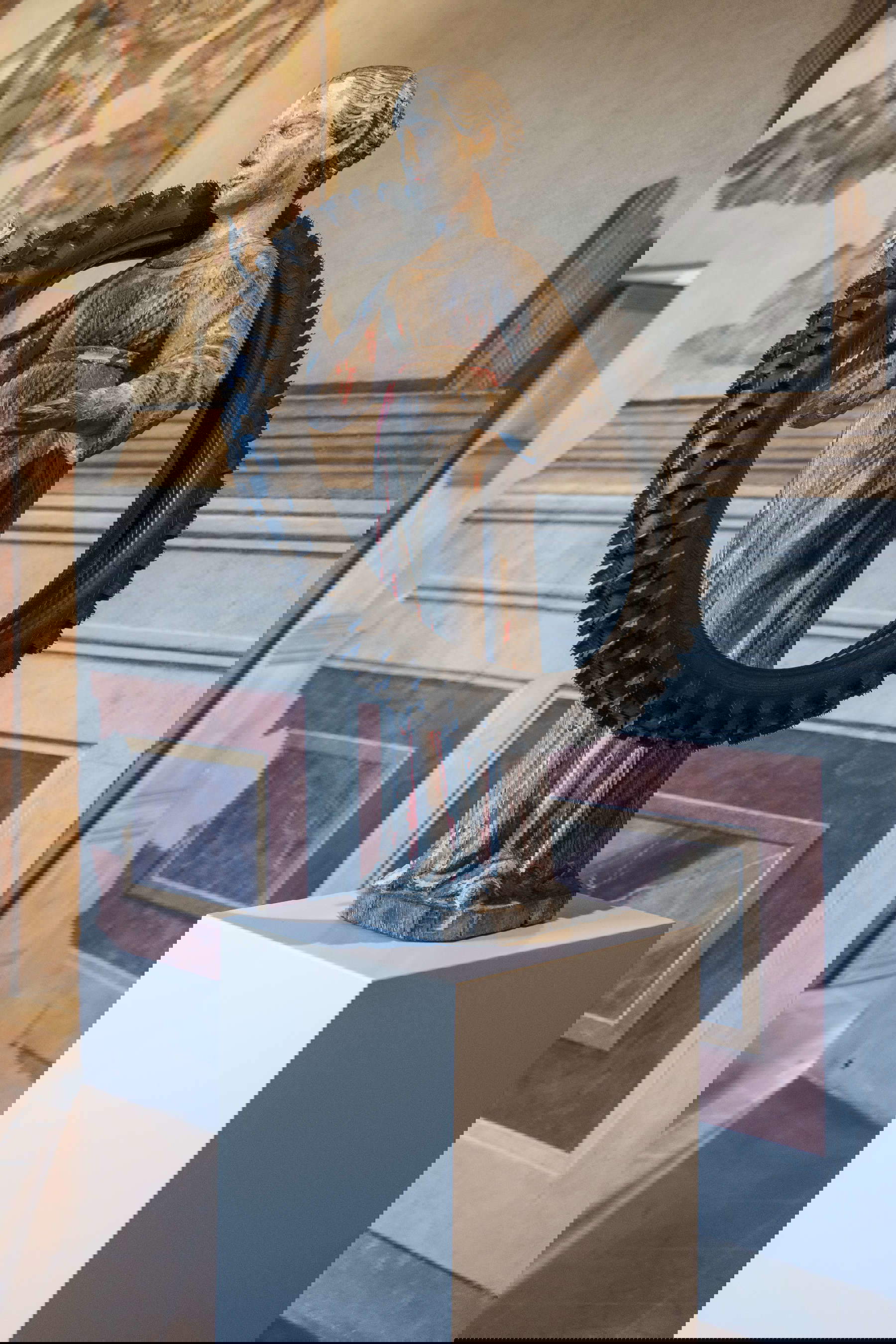
Canevari, even when he wraps ancient wooden statues with tires or adds haloes made of inner tubes to crucifixes and madonnas, never wants to be blasphemous or iconoclastic or provoke anything. Rather, it reinforces the sense of symbol and icon and liberates time crystallized in the ancient artifact, stuck in history and immobilized in the past, onto the stage of our time. Are not the arrows of the crossbows that martyr Signorelli’s Saint Sebastian preserved in the Pinacoteca precisely weapons, the same ones that make a pierced tire a Saint Sebastian of today? Is not the motorcycle wheel, brand new (a rare case in Canevari), a possible metaphor for the virginity of the 14th-century wooden figure that is embraced by it, like the spiked wheel emblem of St. Catherine, also a martyr? Is there not after all, behind much of Christian artistic iconography, a centuries-long history of violence, quartering, torture, murder, from the Crucifixion to the Slaughter of the Innocents to the various saints slaughtered in the most creative and unthinkable ways?
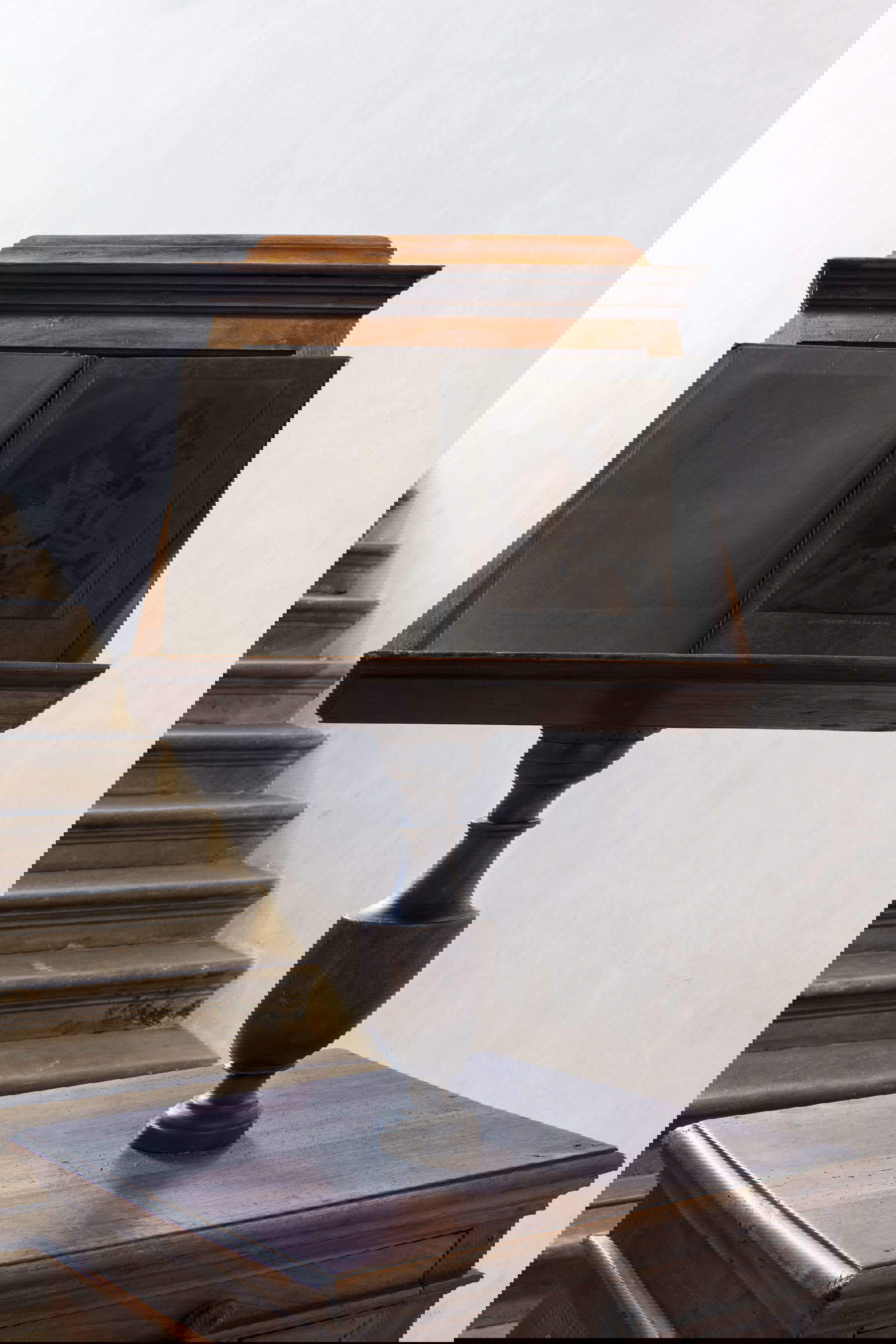
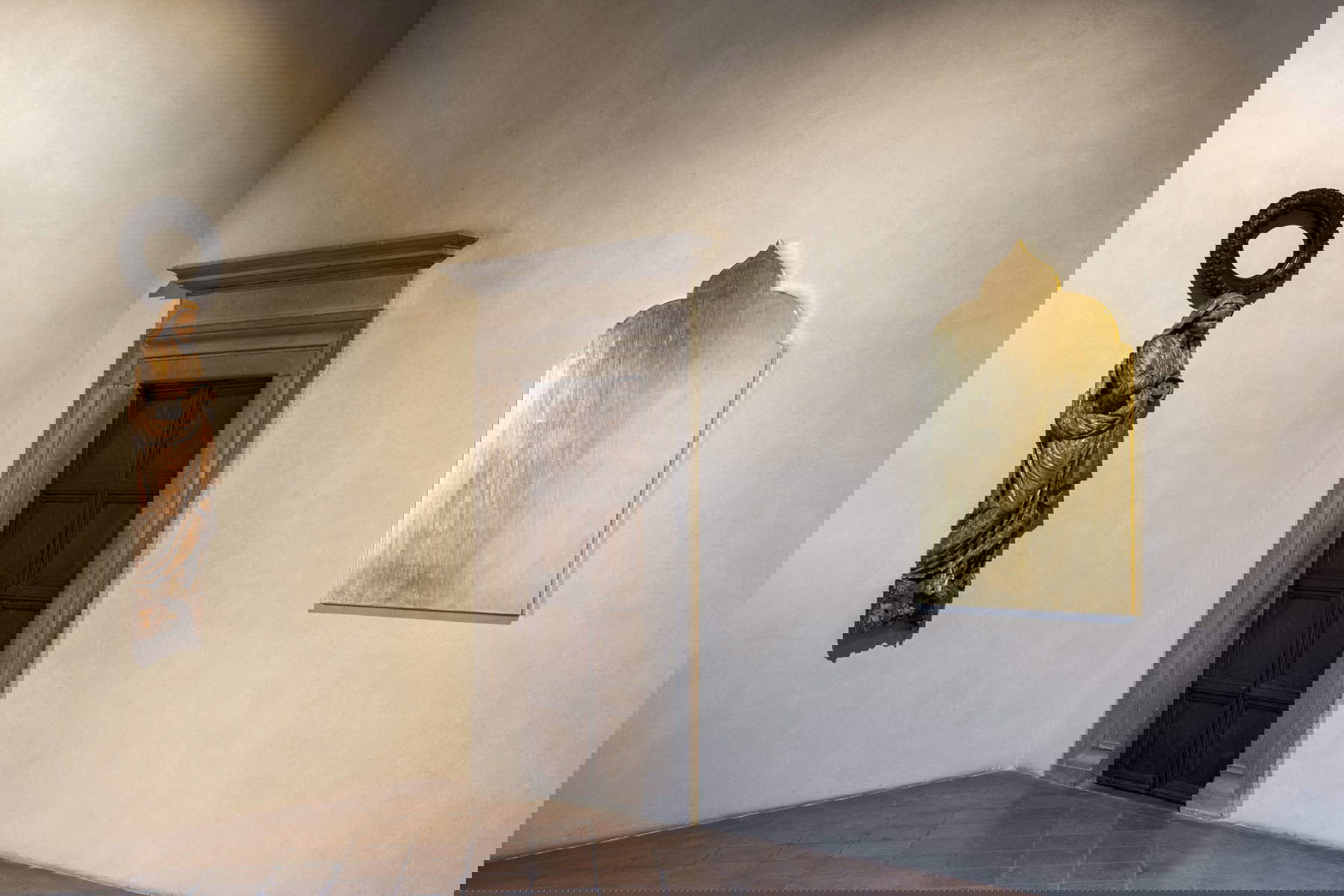
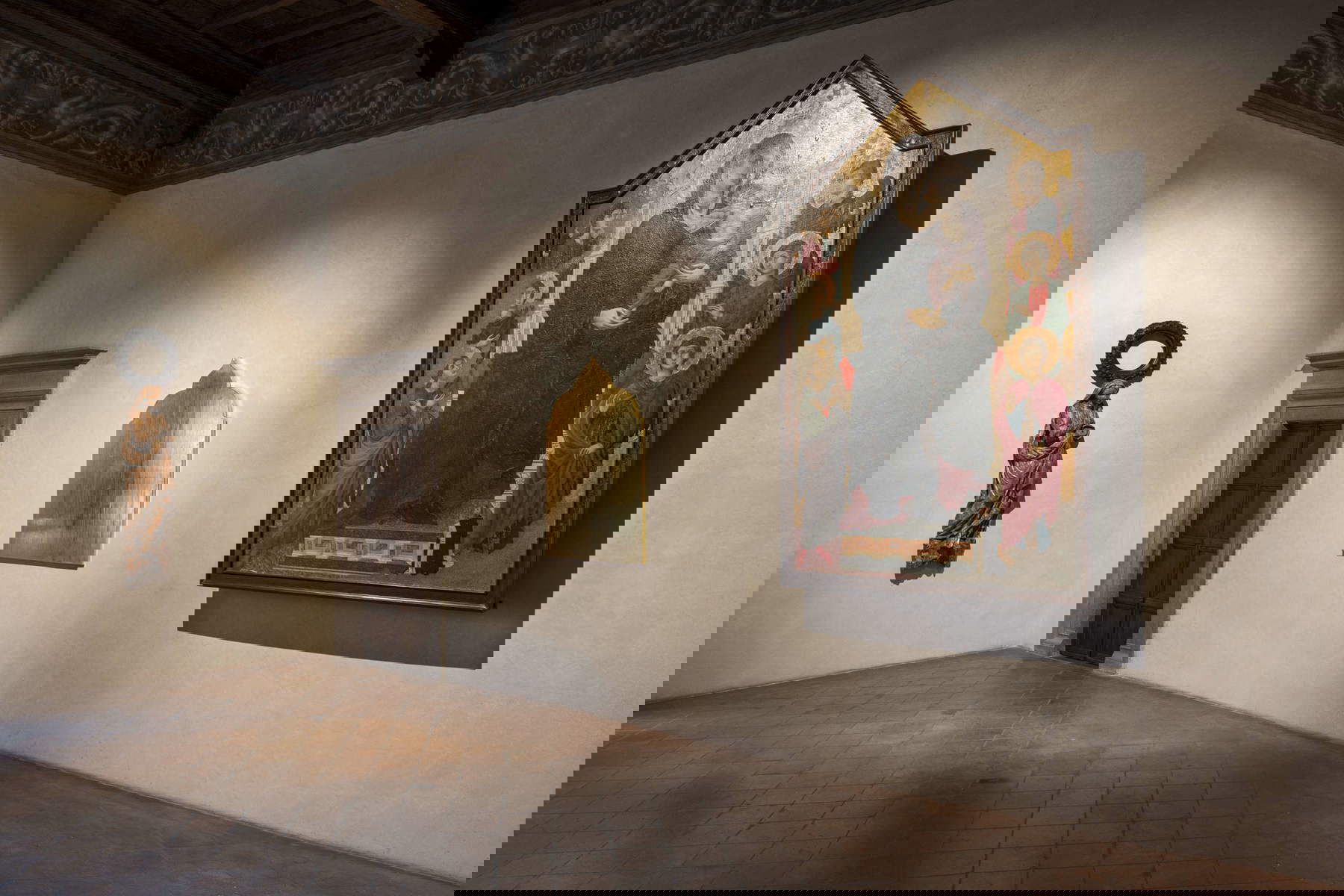
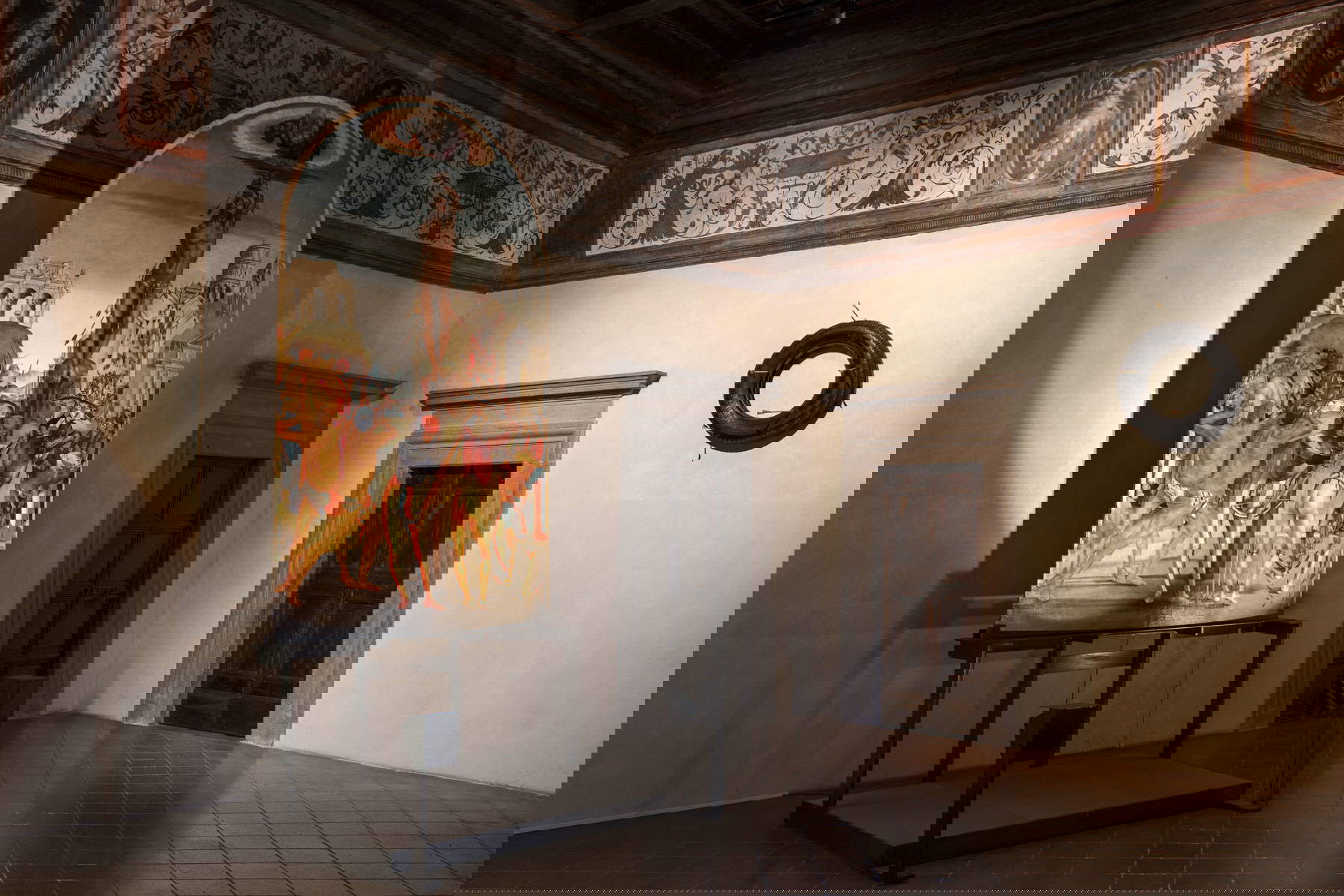
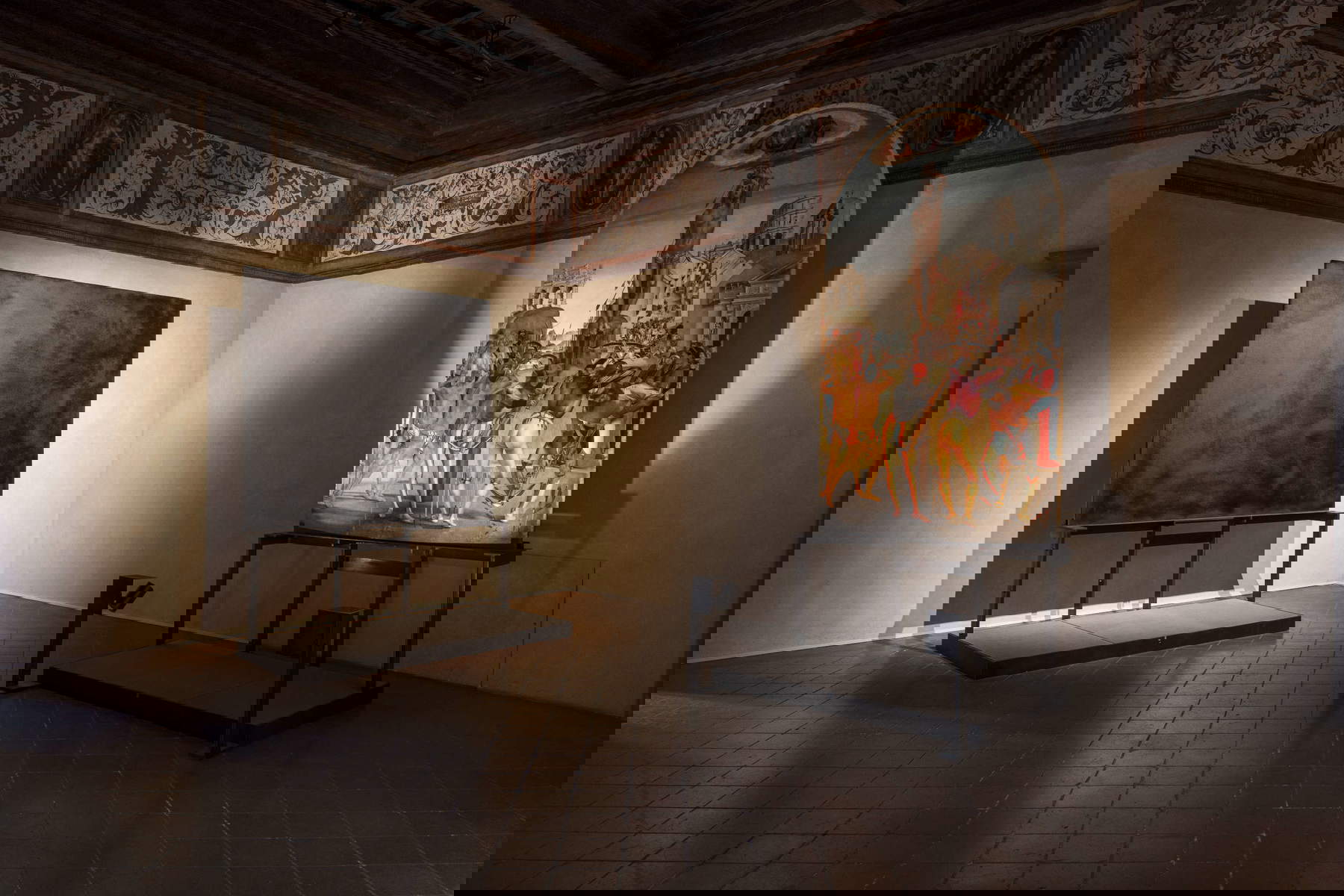
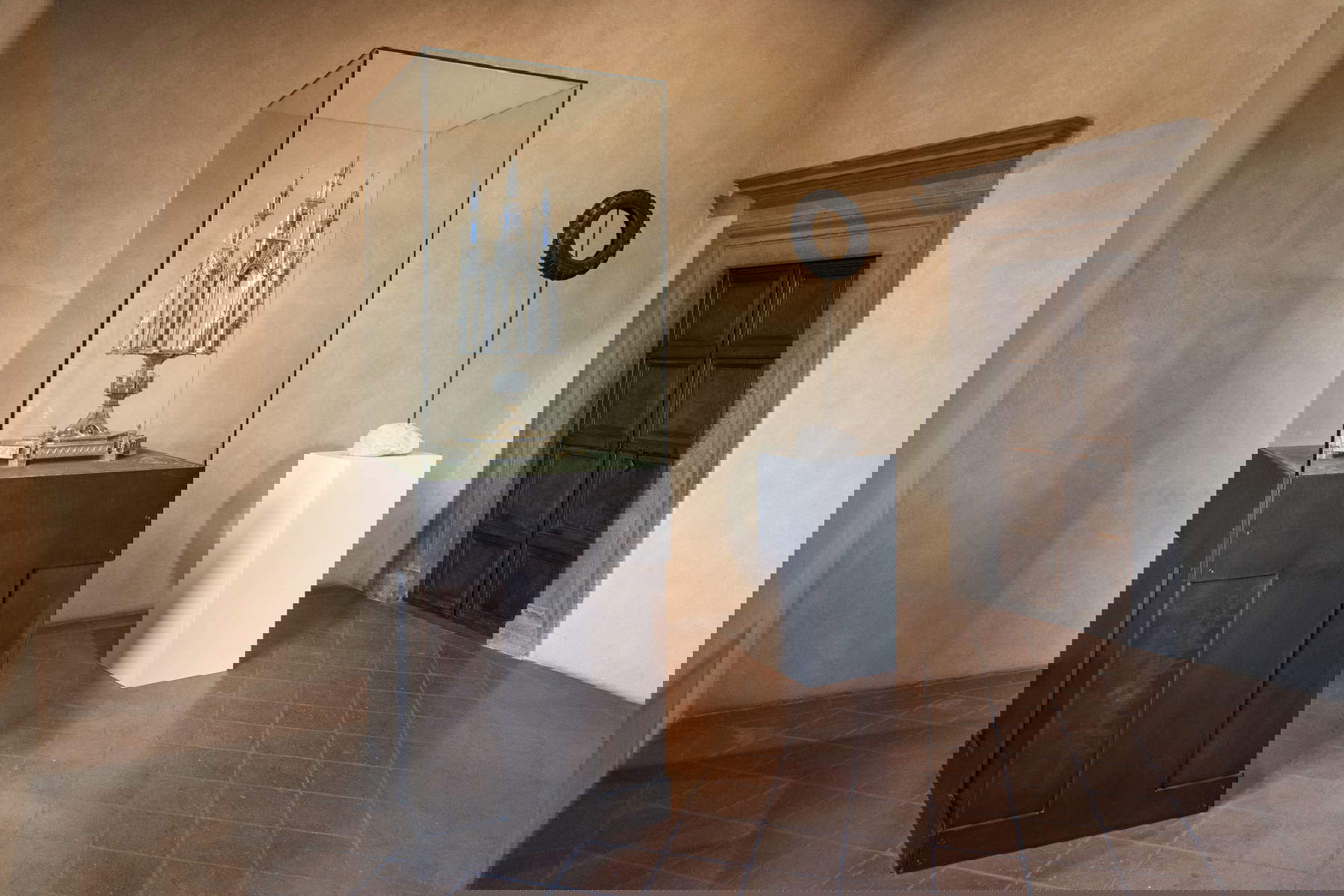
It is this history that Canevari ultimately resurfaces, and when confronted with the same art of the past, the trauma surfaces in an even more cumbersome way. The large black painting made with burnt oil (as is, after all, all of Canevari’s painting) mournfully reproduces the exact dimensions of Raphael’s banner of the Holy Trinity (the Umbrian artist’s earliest documented work), preserved in the Pinacoteca, now under restoration and ready to leave for an exhibition at the MET in New York, while a disco bomb coquettishly projects (it is hung from a horsehair that passes for a wedding ring) its golden reflections right in front of a reproduction of Raphael’s The Marriage of the Virgin, which was originally in Città di Castello and is now at the Pinacoteca di Brera.
A certain form of spirituality also seems to surface in Canevari’s works, sincere but at the same time linked to global and transcontinental contexts, as in the large gold panels that recall Byzantine, medieval and especially Eastern spirituality. That all this takes place in Città di Castello, just a few steps away from Palazzo Albizzini and a few more from the Seccatoi that contain Alberto Burri’s amazing collection, becomes even more significant. The use of black (and gold) and worn and frayed material cannot help but reconnect, overpoweringly, Canevari’s aesthetic to that of Burri. And if we think of the combustions enacted in numerous videos such as Burning Mein Kampf or Ring of Fires made by Canevari during the 2000s (of which a significant anthology, also unpublished if you will, is punctually screened in the exhibition), the framework of direct reference with the great artist born in Città di Castello in 1915 is completed. It is precisely in the video works, moreover, that another Canevari emerges, capable of taking into account process, time and its circularity, context, really letting destructive and regenerative elements act at the same time. It is no coincidence that it is precisely one of his video works, fierce, ruthless, Bouncing Skull of 2007 (shown in the video selection), that entered the MoMA collection.
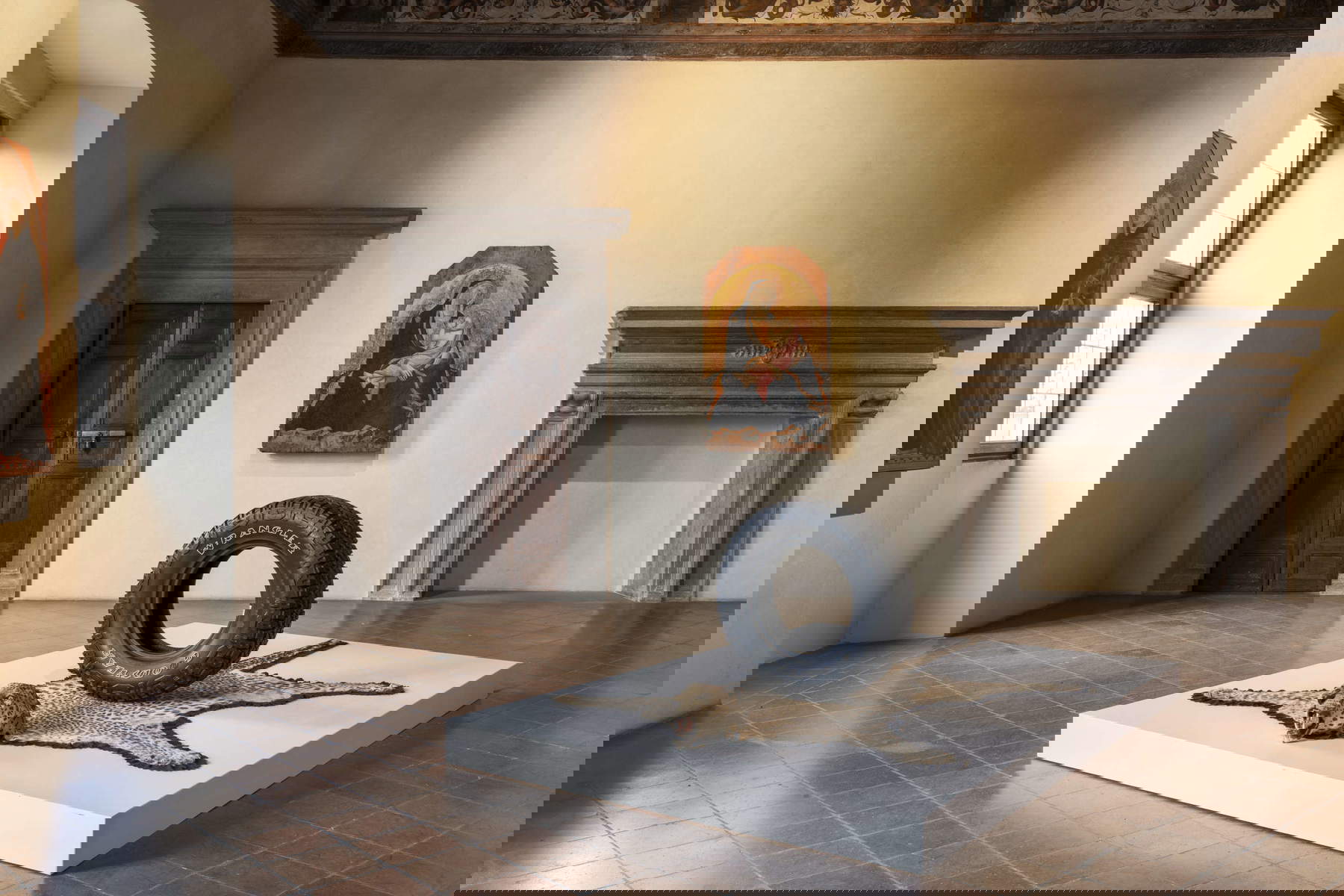
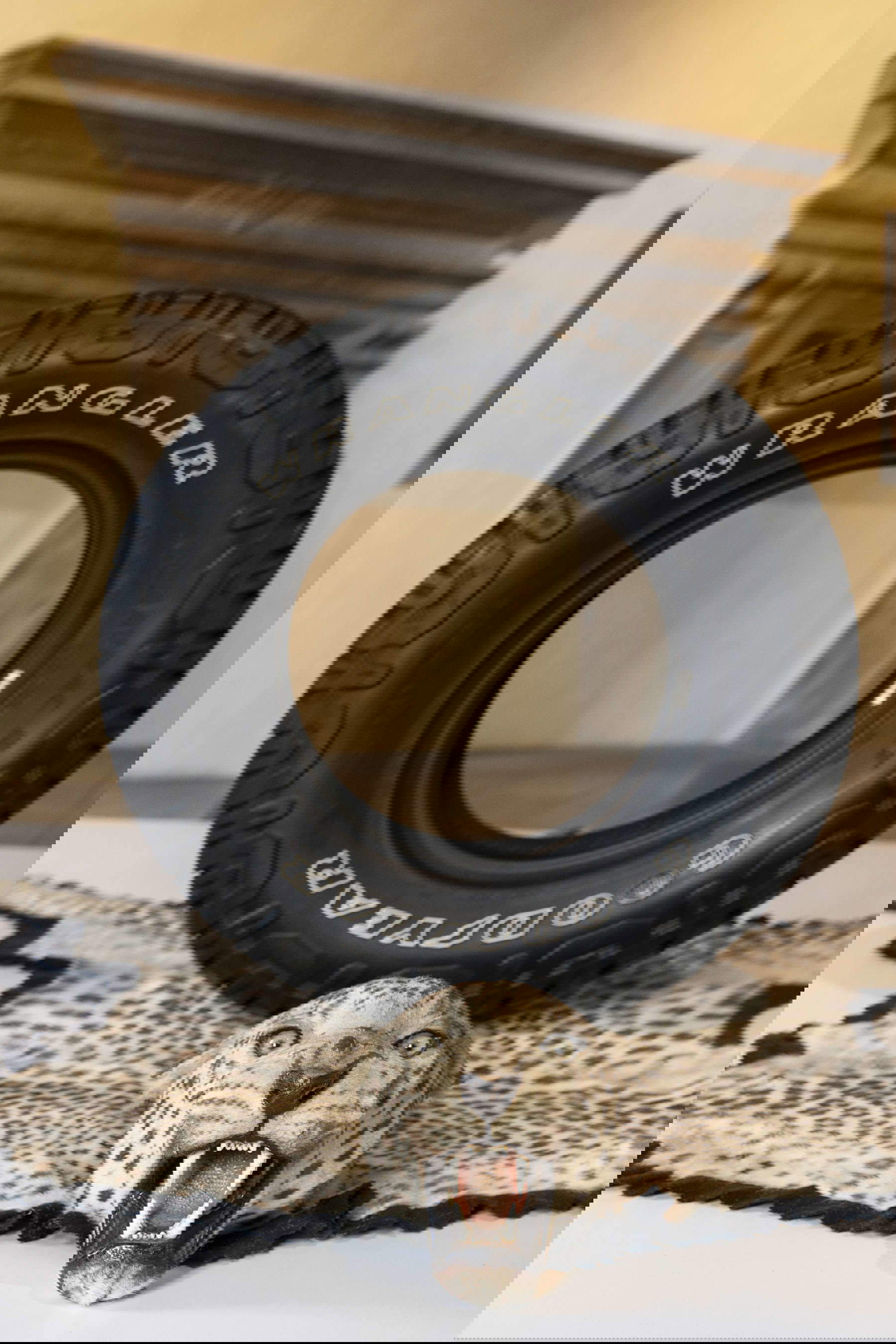
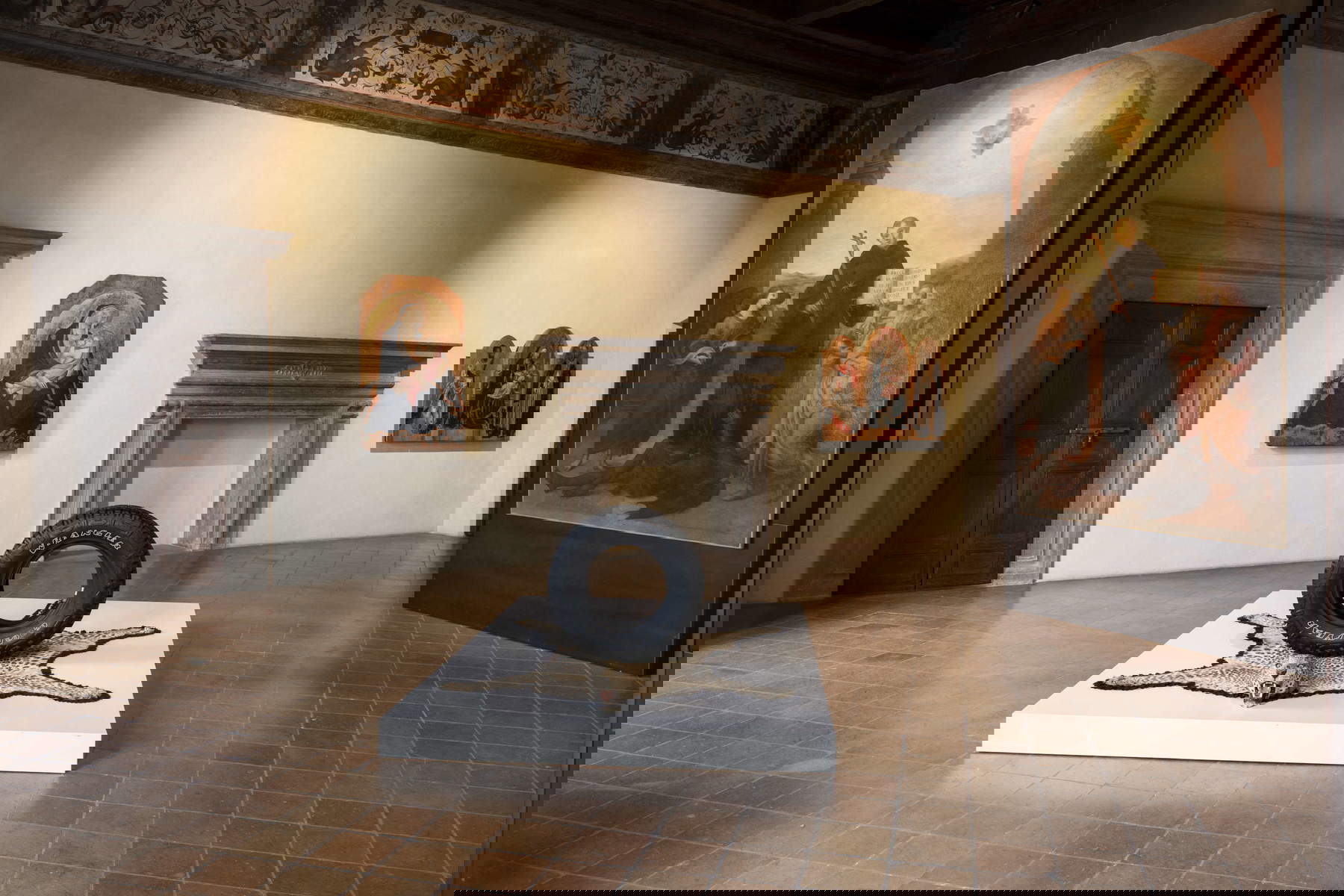
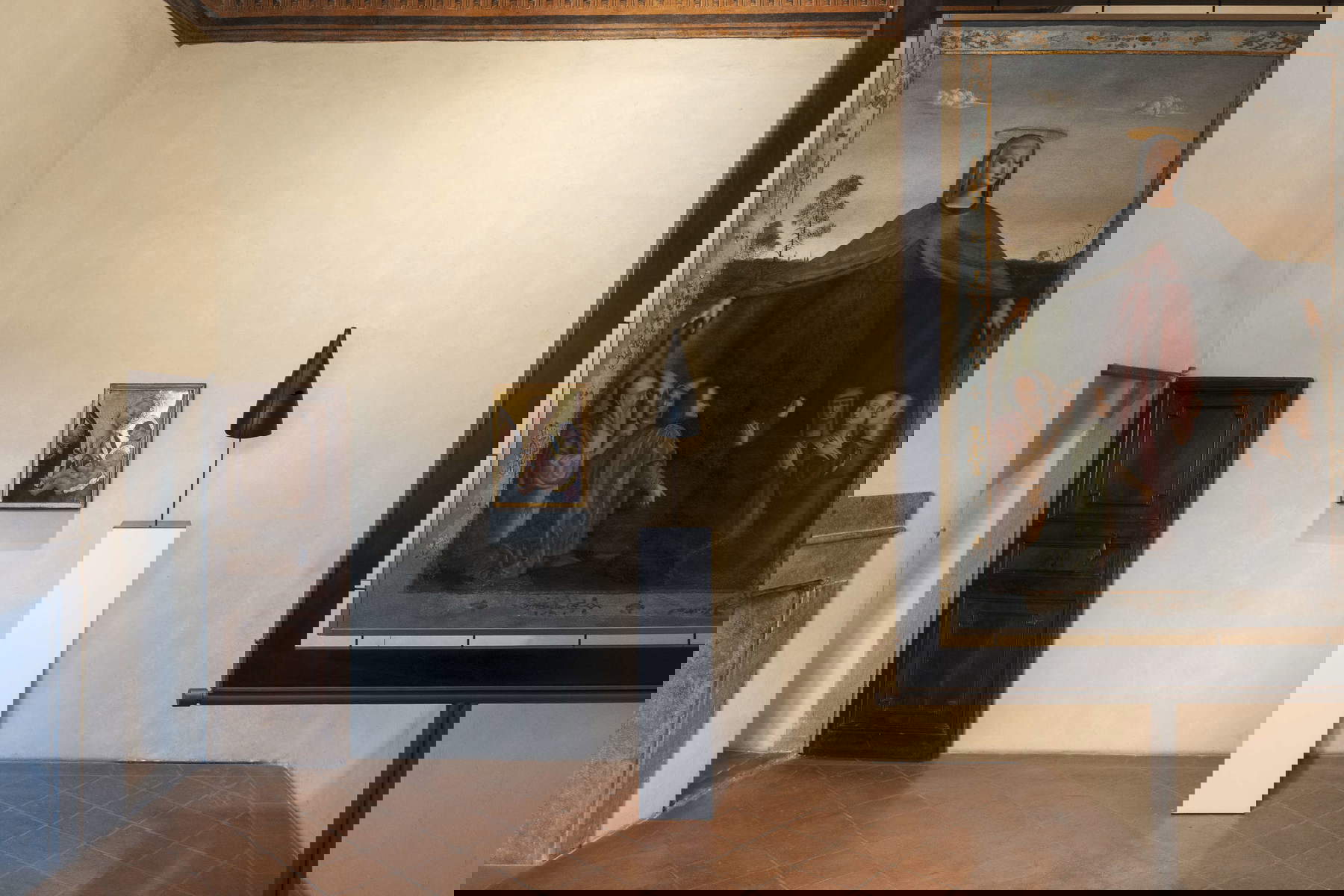
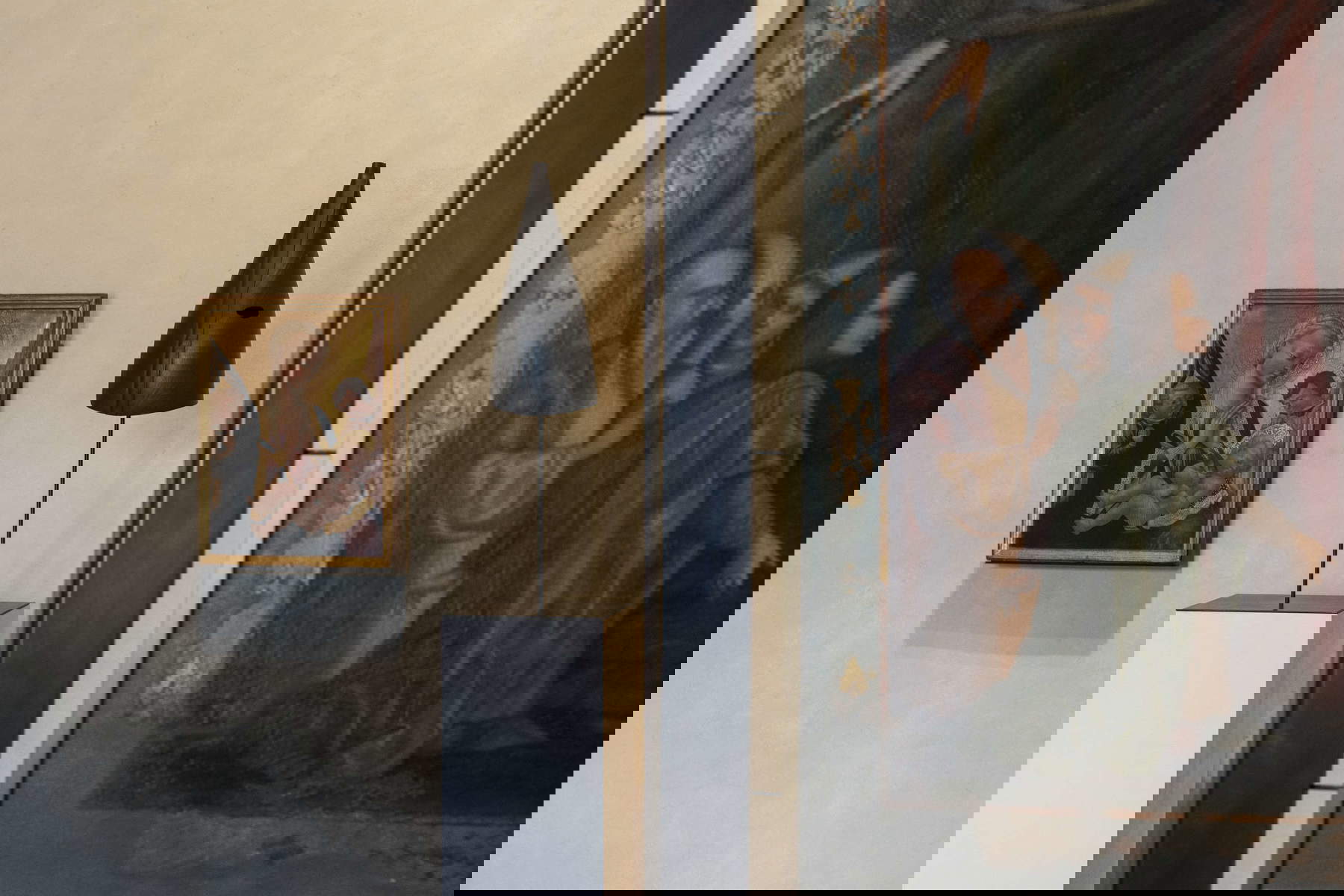
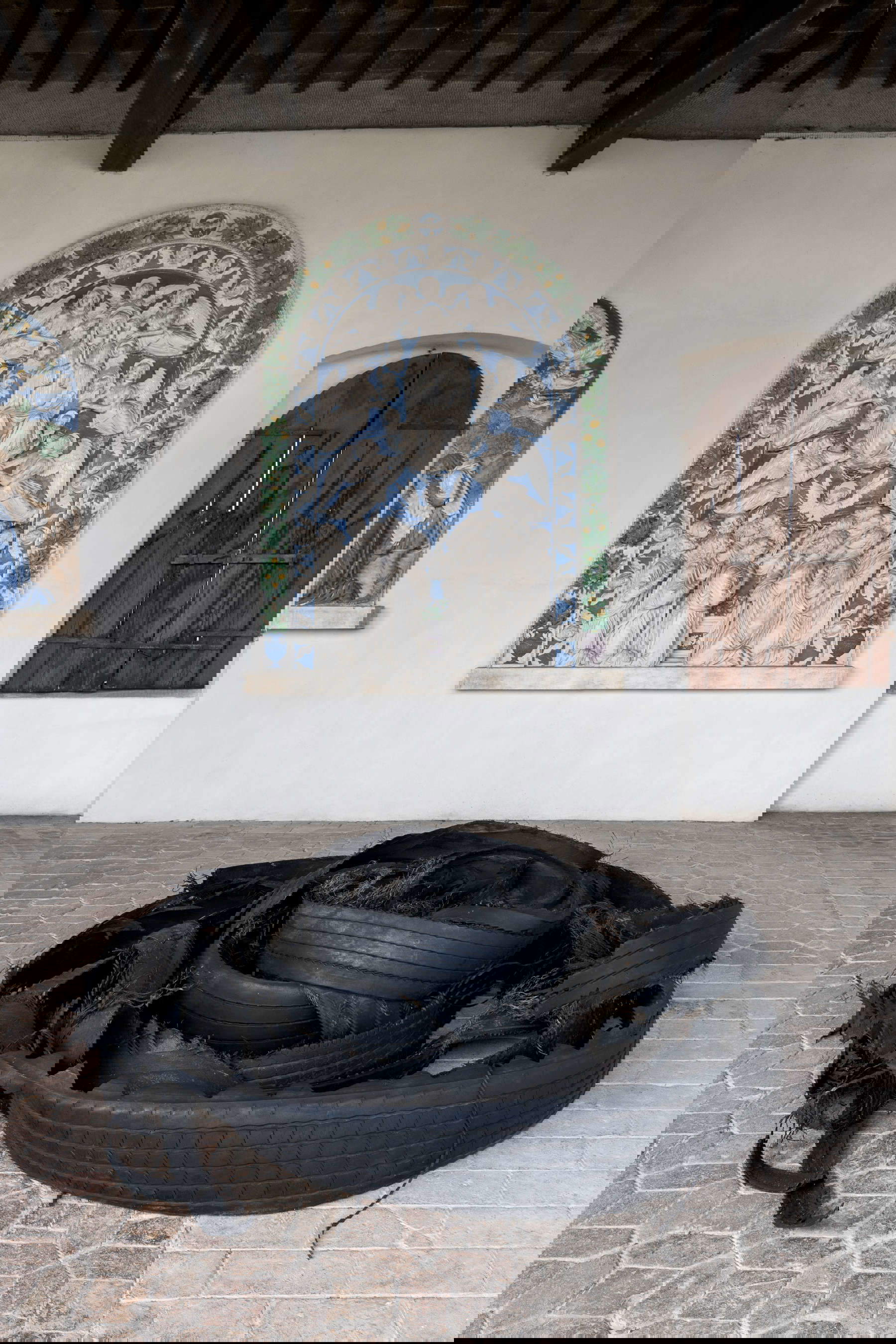
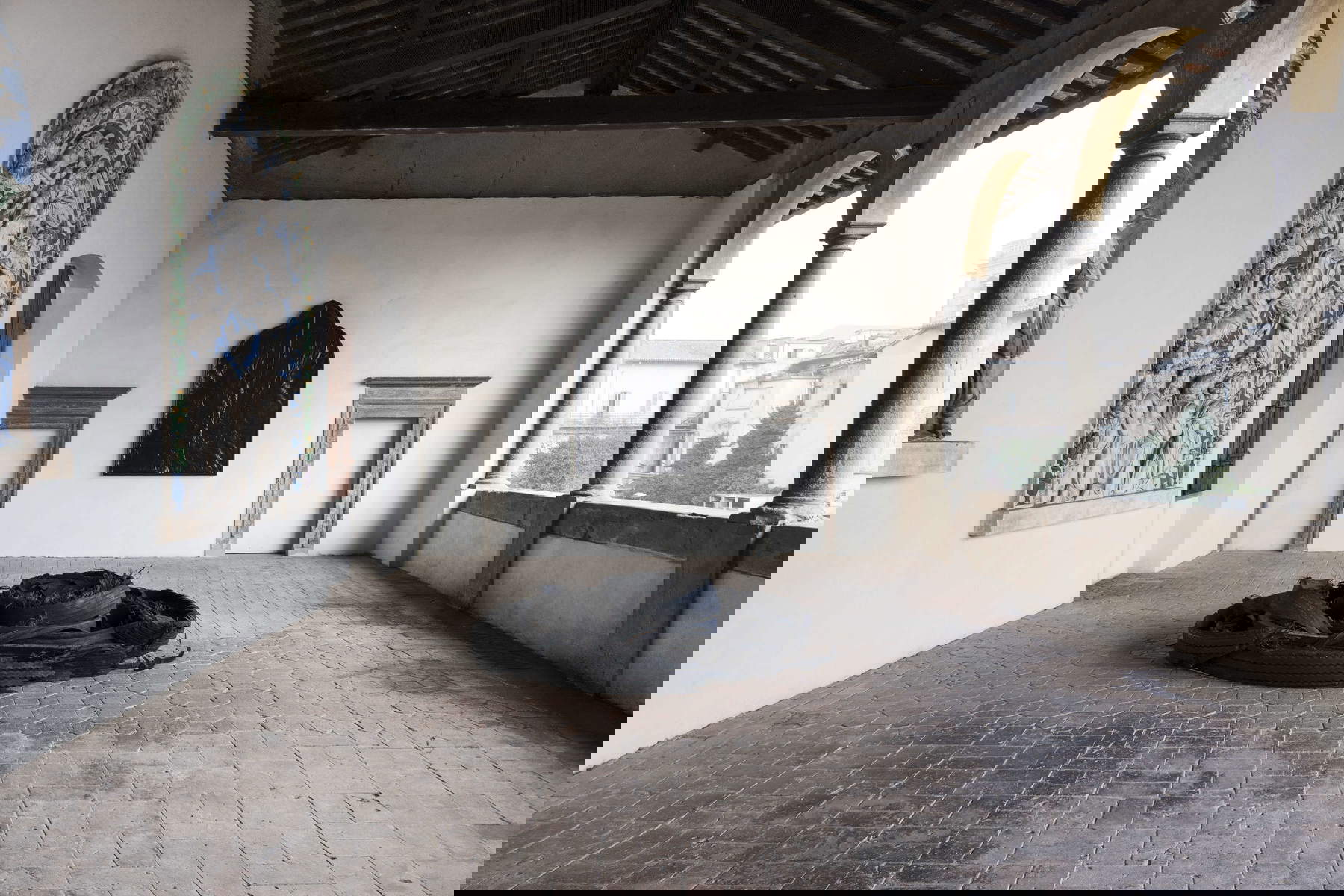
While certainly Canevari was not the first artist to make use of tires in the history of art (think of Kaprow’s Yard in 1961), he has done so in a more extreme, primary and neither occasional nor marginal way than in more recent years for example Gabriel Orozco, Elisabetta Benassi or Gal Weinstein have done. The psychic force of his works is comparable without a doubt, in terms of themes and political engagement, to that of his peer Santiago Sierra, with the awareness, however, of an art history that for Canevari is also a deep part of his family DNA (his father, grandfather and uncle were accomplished painters and sculptors). It is this inheritance, it is his ability to feel memory and to know how to transform it into a current force that makes his inert and worn-out material current, giving sculpture (because this is what it is about, not ready-made) the ability to know how to renew itself, even through the use of simple sheets of black plastic, transformed into real altarpieces.
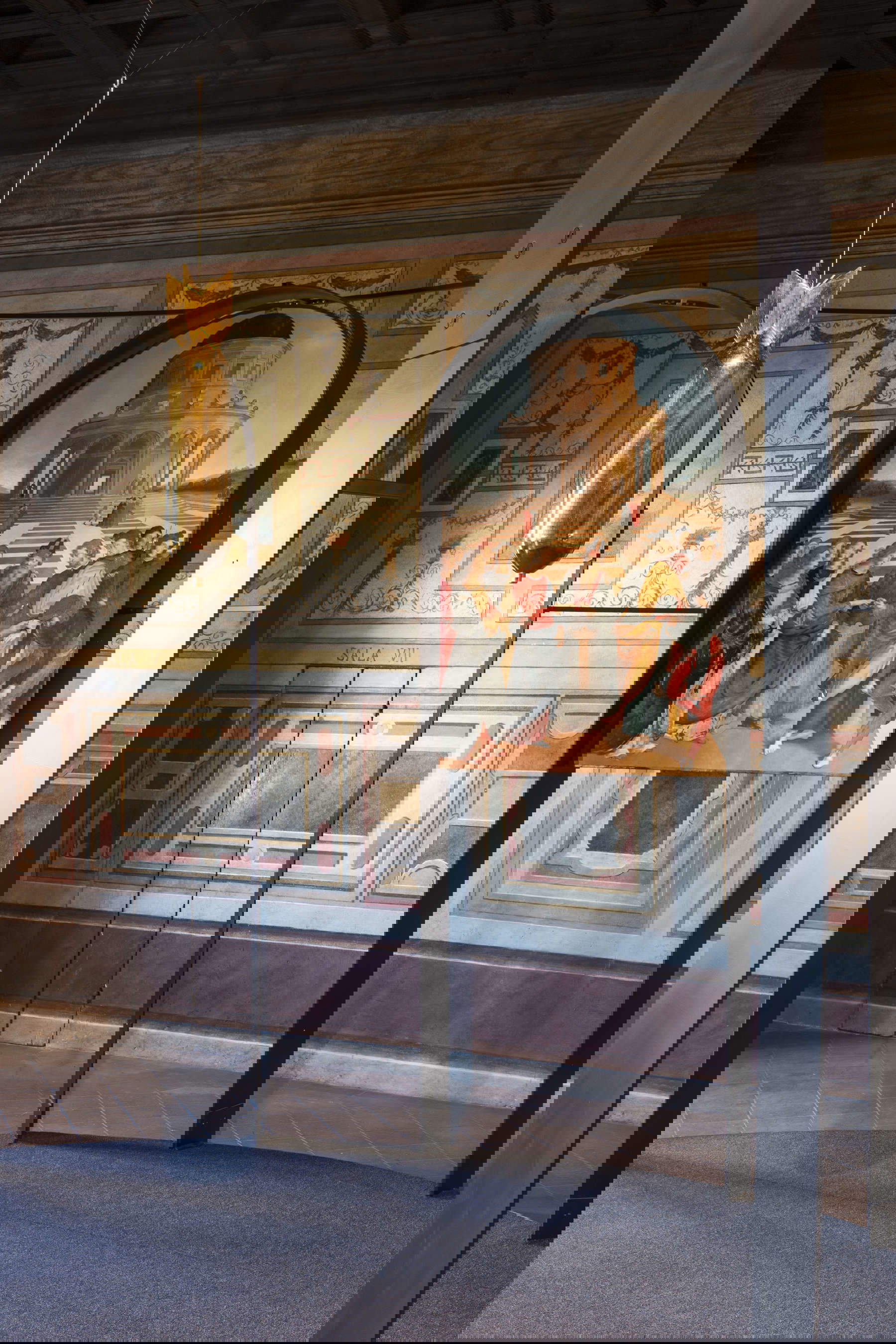
The large site-specific installation, Nido, made in the Loggia of the Pinacoteca open to the city, right in front of large Della Robbia majolica altars, made of destroyed and torn tires, recovered as remnants of an ongoing war on roads and highways and, by reference, on the streets of real war scenarios, thus becomes an effective metaphor, capable of releasing a sense of pity for a brutal matter, for a detritus, a ruin of our times and the violence underlying them. There is no reparation of trauma in Canevari’s works, but a re-actualization of the trauma of history in its incessant coming back and returning upon itself. Let all this also be a warning.
Warning: the translation into English of the original Italian article was created using automatic tools. We undertake to review all articles, but we do not guarantee the total absence of inaccuracies in the translation due to the program. You can find the original by clicking on the ITA button. If you find any mistake,please contact us.