



by Redazione 09/02/2026



Categories: Exhibitions / Disclaimer
Gagosian Gallery in Rome presents Mirrored Fiction, a journey through Duane Hanson's hyper-realistic sculptures and works by Koons, Gursky and Gonzalez-Torres, from Feb. 11 to April 11, 2026. The exhibition explores the boundary between reality and representation, observing the everyday through the body, images and social space.
From Feb. 11 to April 11, 2026, the Gagosian Gallery in Rome is hosting Mirrored Fiction, an exhibition focusing on the hyperrealistic sculptures of Duane Hanson, flanked by works by Felix Gonzalez-Torres, Andreas Gursky and Jeff Koons. The exhibition offers a discussion of Realism and its contemporary implications, investigating how reality is represented, observed and distributed through the body, images and social space. Although each artist interprets the theme from different perspectives, the dialogue between the works reveals a shared interest in form, representation and the materials of everyday life. The centerpiece of the exhibition is Hanson’s painted bronze sculptures depicting ordinary Americans.
Made in the early 1960s in a context of renewed interest in figuration promoted by Pop Art, the works challenge the boundary between reality and representation. Associated with reflections on social visibility and the common person, Hanson’s figures assume the dual role of subject and witness to the viewer’s experience. Their observational immediacy, sometimes unflattering but always intense, makes them familiar and moving, often connected to sociopolitical issues that are still relevant today.


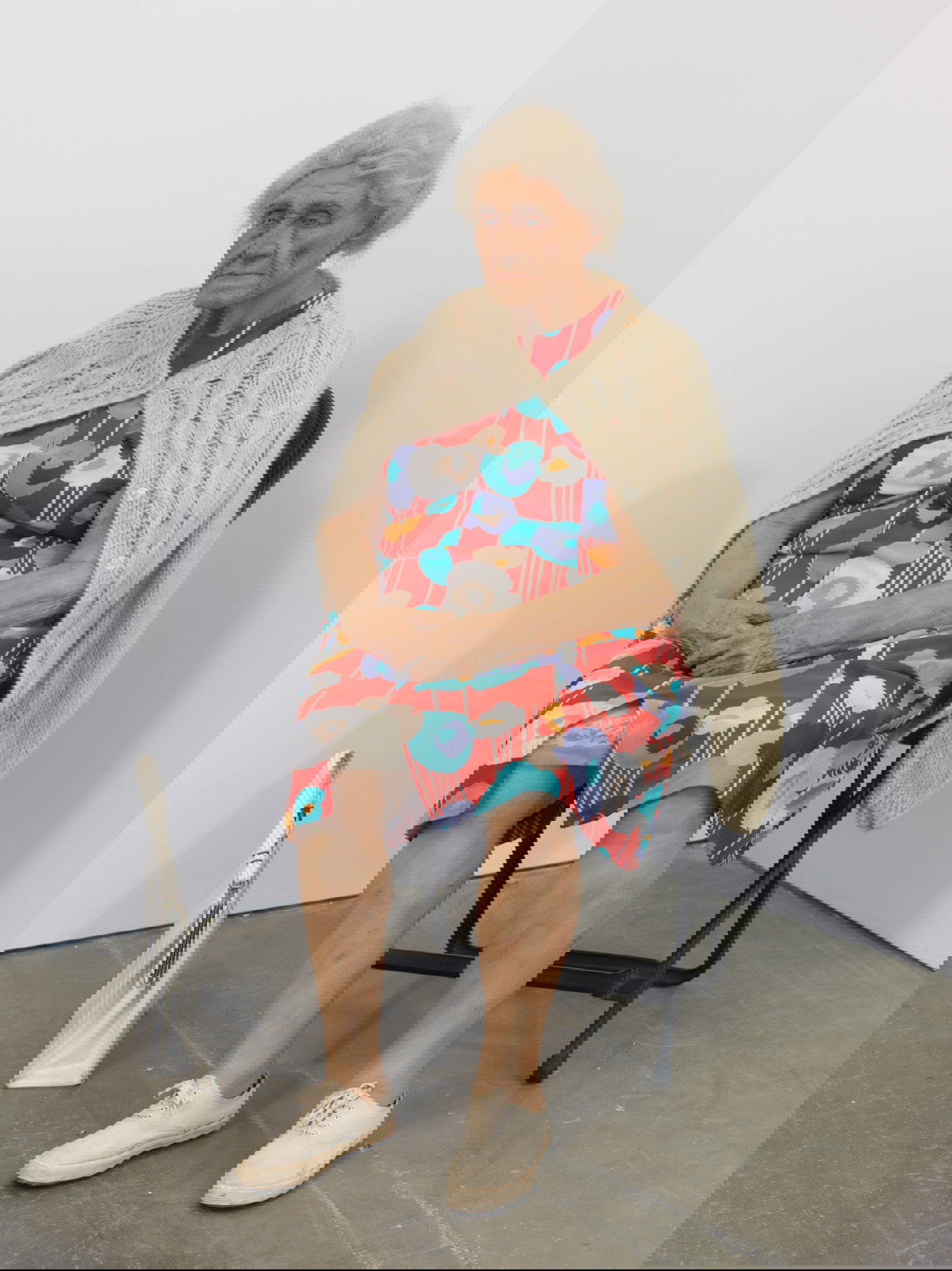
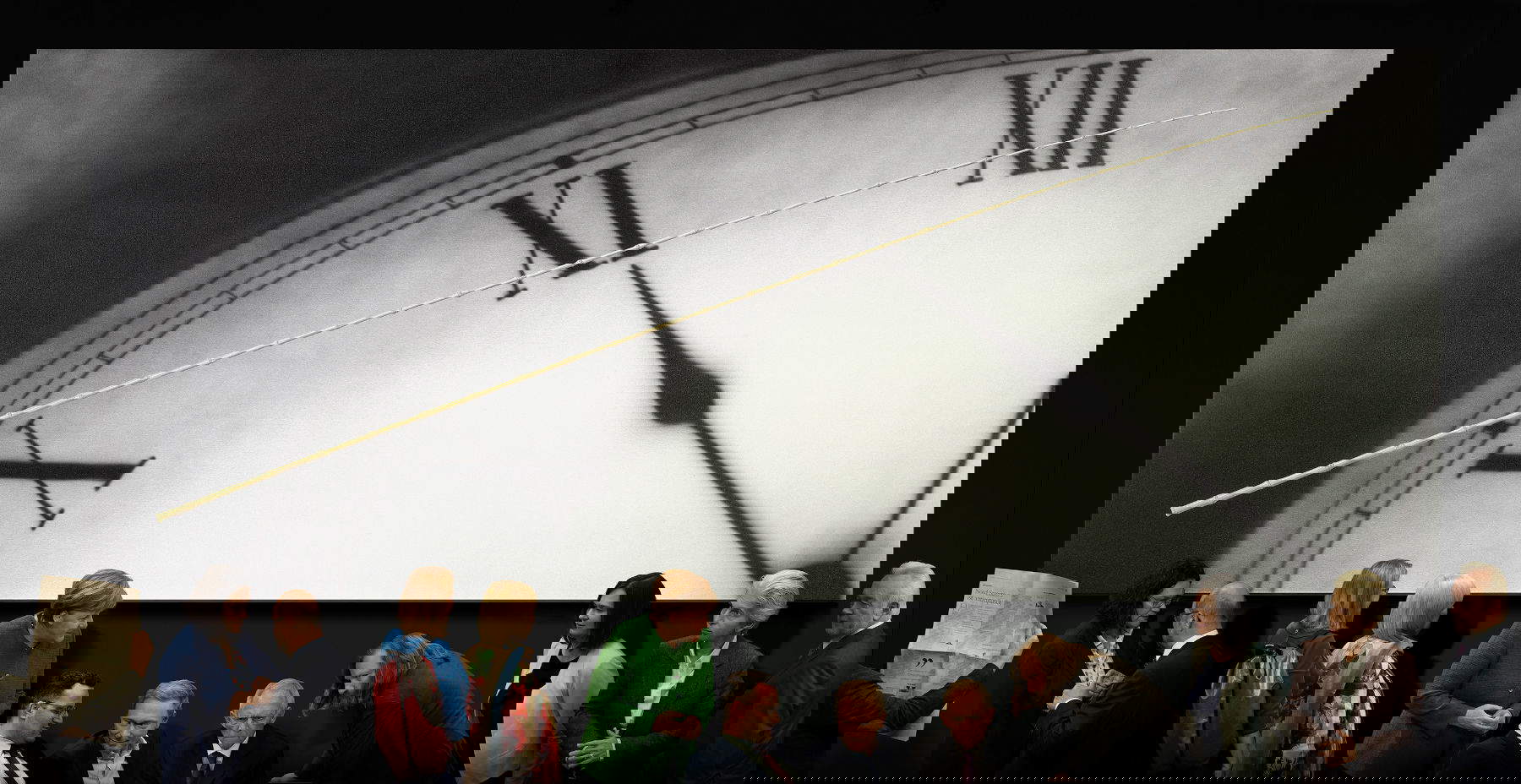
In the 1984 work Window Washer, a young man in stained shorts, sneakers, and an unbuttoned shirt holds a squeegee, with a plastic bucket at his feet. The sculpture is placed in the center of the oval gallery space, while on the wall behind is Andreas Gursky’s Politik II - Politics II (2020), depicting thirteen German politicians, including Angela Merkel, arranged as in Leonardo’sLast Supper. In the background is a glimpse of Ed Ruscha’s Five Past Eleven (1989), with a bamboo pole superimposed on a clock face. The juxtaposition of Hanson and Gursky highlights the connections between a focus on social classes and the study of the human systems that define them.
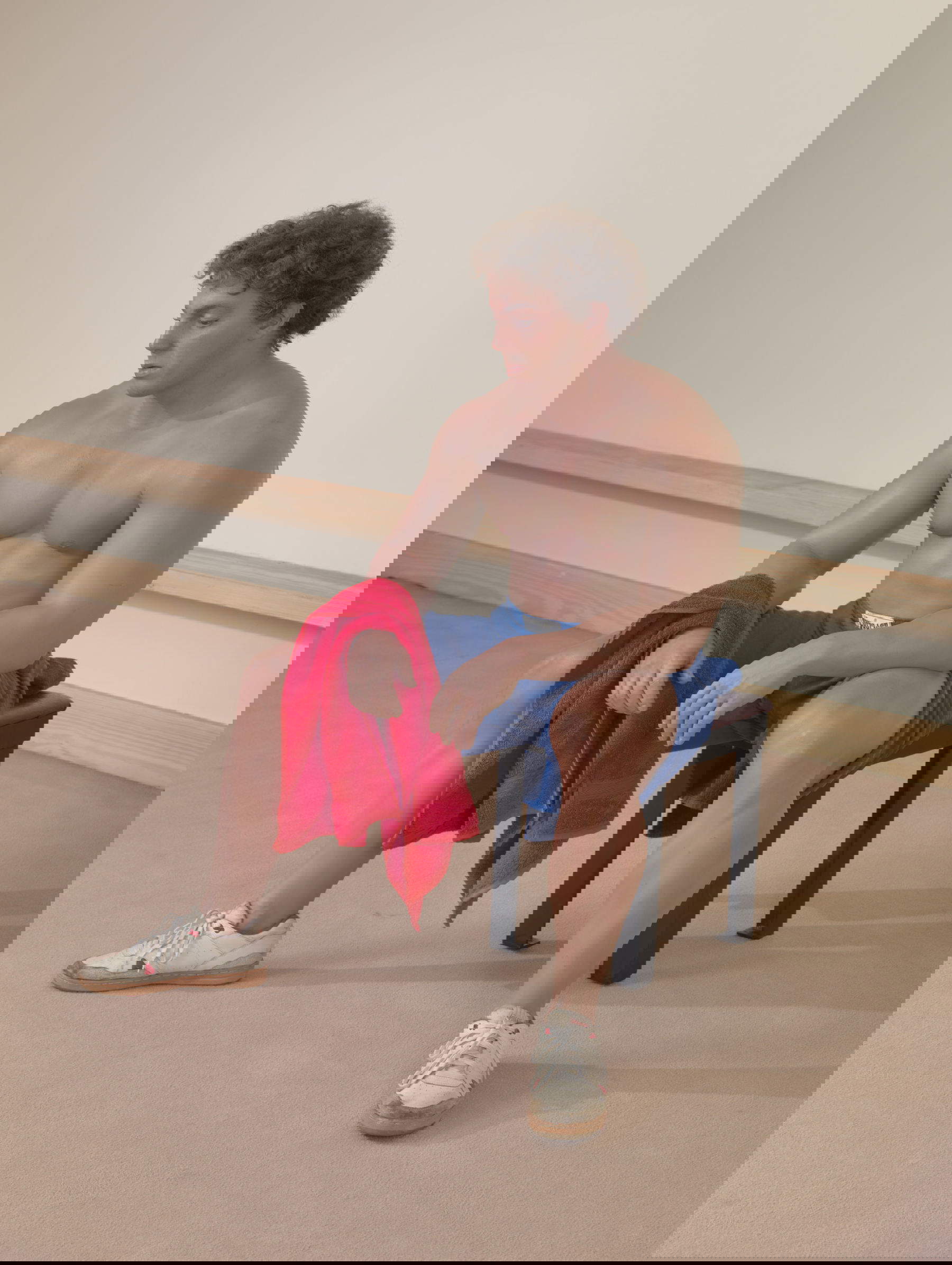
Jeff Koons’Donkey, from the Easyfun series (1999), is a stylized animal head made of mirror-polished stainless steel that reflects its surroundings. The work expands the visual plane of the gallery, suggesting desire, self-recognition and self-referential consumerism. The reflective surface invokes self-discovery, evoking, according to some interpreters, a process of self-alienation, and responds to a narcissistic impulse. The work dialogues directly with Hanson’s Bodybuilder (1989-90), a tanned and under-stressed male figure in shirtless shorts with a towel hanging from his arm.
 |
| Duane Hanson and contemporary realism on display at Rome's Gagosian gallery |
Warning: the translation into English of the original Italian article was created using automatic tools. We undertake to review all articles, but we do not guarantee the total absence of inaccuracies in the translation due to the program. You can find the original by clicking on the ITA button. If you find any mistake,please contact us.