





On the 50th anniversary of the death of Fausto Pirandello (Rome, 1899 - 1975), theAccademia Nazionale di San Luca in Rome and the Archaeological and Landscape Park of the Valley of the Temples in Agrigento present Fausto Pirandello. The Magic of the Everyday, an exhibition that pays tribute to one of the most original and complex protagonists of 20th-century Italian art. Curated by Fabio Benzi and Flavia Matitti, the exhibition brings together about thirty paintings, selected among the artist’s masterpieces, and a significant nucleus of works on paper, with a special focus on pastels, a technique that Pirandello favored after World War II as a tool for intimate research and expressive freedom.
The exhibition takes place in two locations and at two separate times. In Rome, in the halls of the Accademia Nazionale di San Luca, it is scheduled to open to the public from December 19, 2025 to February 28, 2026; after that, the exhibition will move to Agrigento, to Villa Aurea in the Archaeological and Landscape Park of the Valley of the Temples, where it will be open from March 20 to June 2, 2026. The project is being carried out in collaboration with the Fausto Pirandello Association and is supported by Alberto and Fabrizio Russo of Galleria Russo in Rome.
The 50th anniversary of Fausto Pirandello’s death in Rome on November 30, 1975, is a significant occasion to bring a significant figure in 20th-century Italian painting back to the center of public attention. The son of the great playwright Luigi Pirandello, Nobel Laureate in Literature, Fausto Pirandello was able to build a profoundly autonomous artistic path, marked by a constant innovative tension and a lucid and sometimes ruthless vision of reality. Of Sicilian roots but born and educated in Rome, with an important Parisian experience between 1928 and 1930, Pirandello traversed with originality the transition from the existential realism of his early days to a mature language that critics have called “abstract-concrete,” developed especially after World War II.
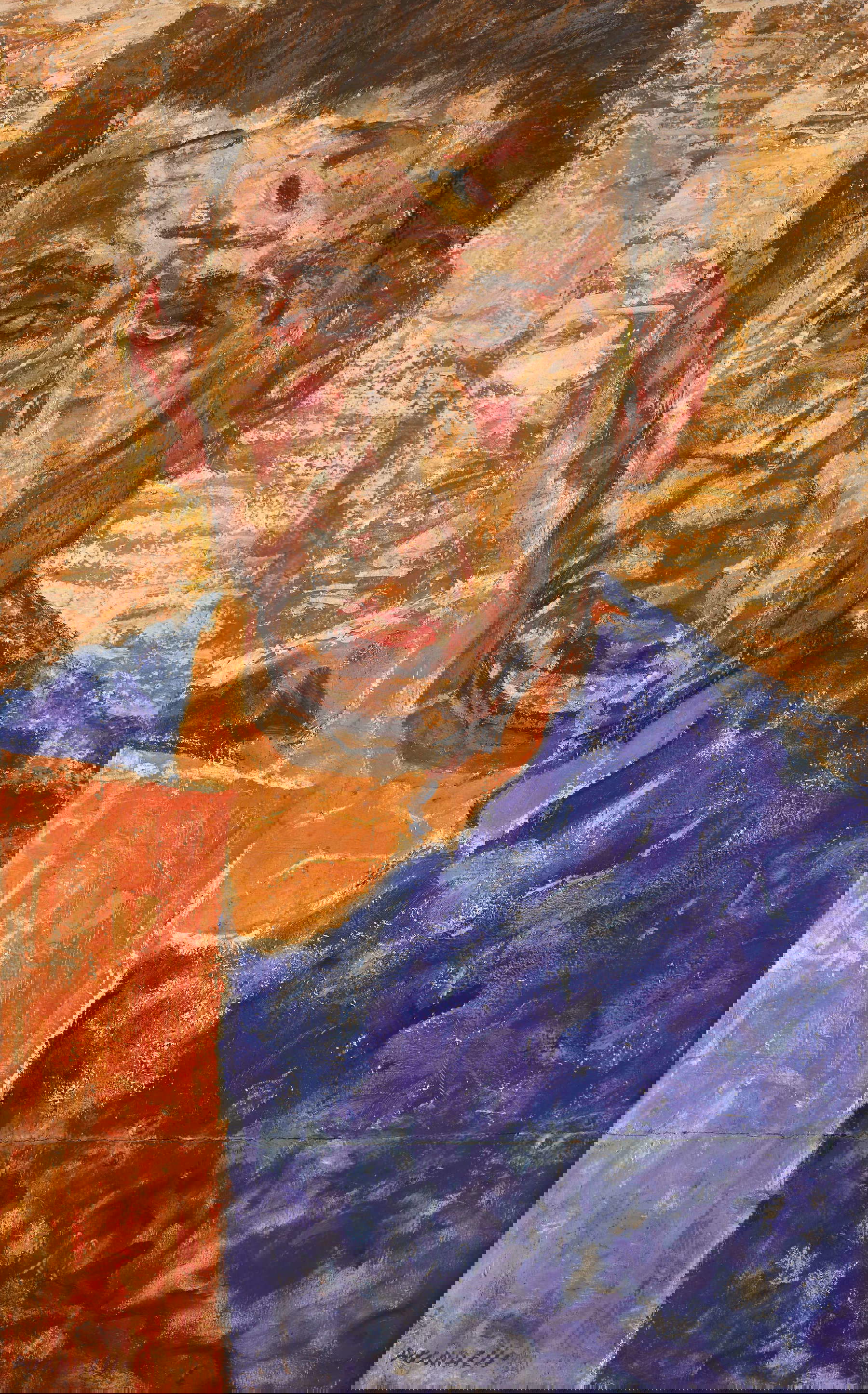
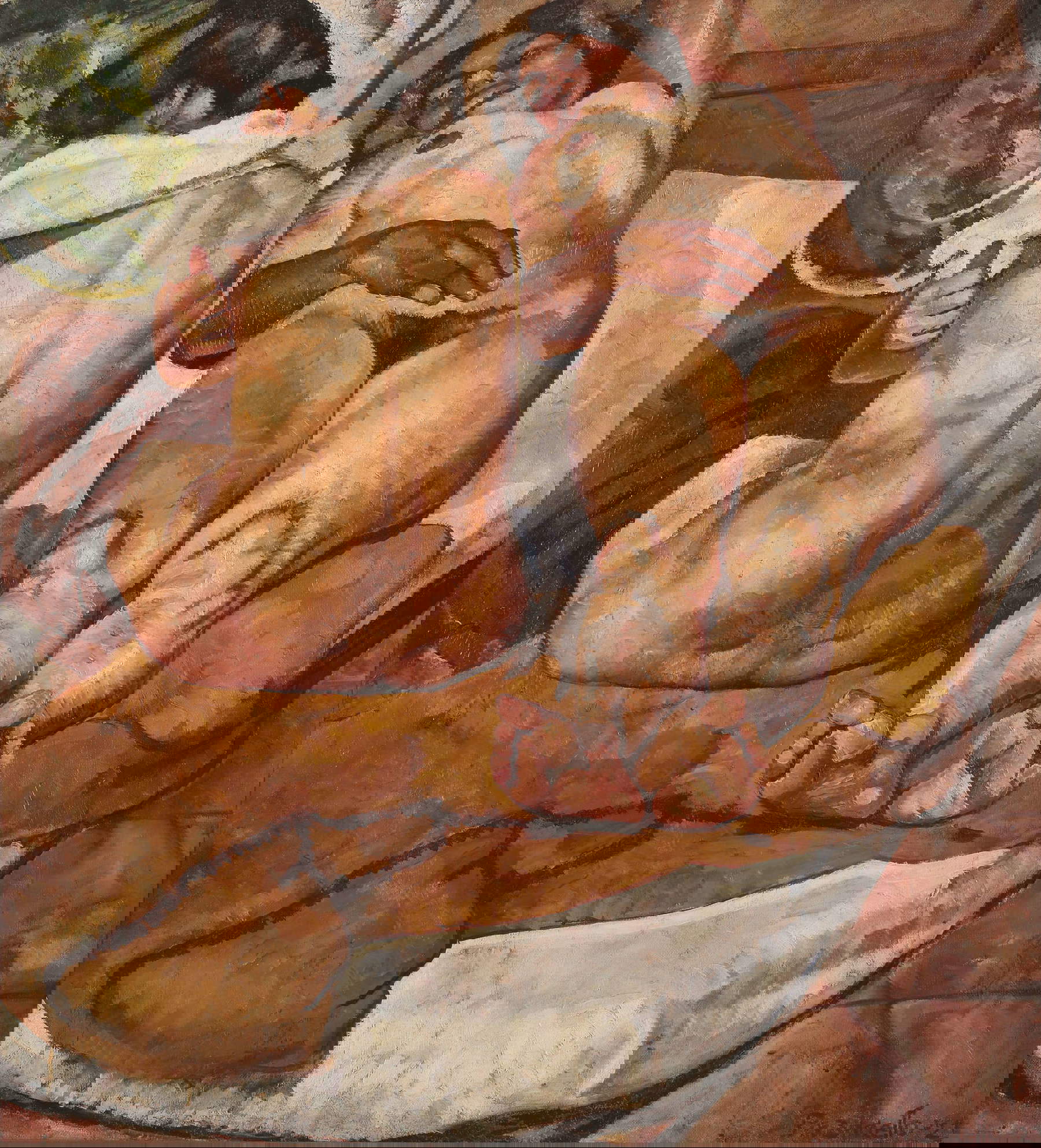

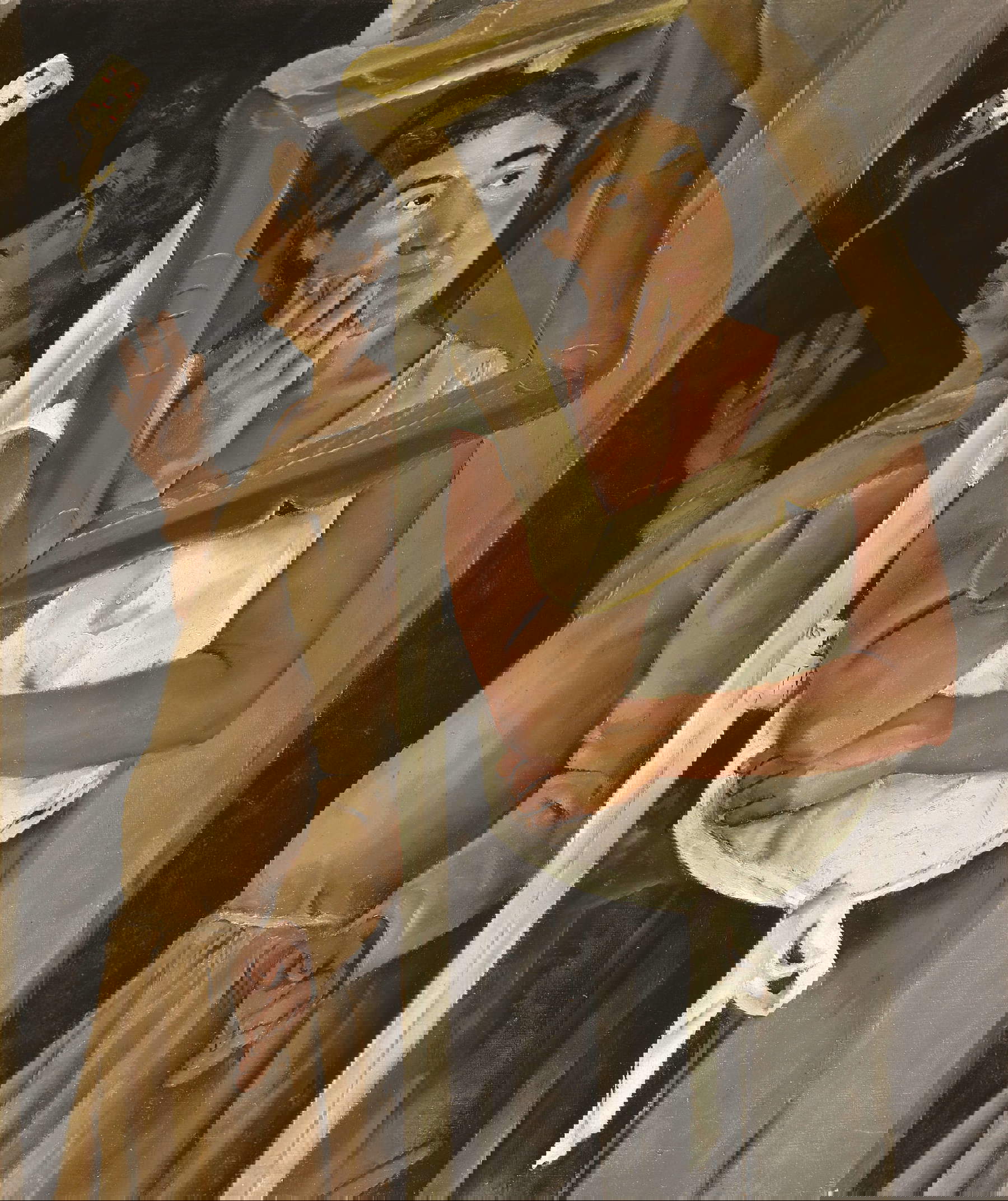
After a major retrospective in 1976 at the Galleria Nazionale d’Arte Moderna in Rome and numerous exhibitions in Italy and abroad, including those at the Palazzo delle Esposizioni in 1999, the Estorick Collection in London in 2015, and most recently at the Mart in Rovereto in 2023 and the Italian Cultural Institute in Paris in 2025, the last public exhibition in Rome was in 2010. The 2025-2026 exhibition project thus takes on the value of a return and a fitting recognition in the artist’s hometown.
The choice of the Accademia Nazionale di San Luca as the first venue for the exhibition is also motivated by the close historical ties that united Pirandello to the institution. In 1947 the artist was elected Resident Academician of Merit and, the following year, National Academician, thus becoming part of a community that recognized the value of his research early on. The second stop in Agrigento, on the other hand, takes on a strong symbolic value, linked to family origins. Luigi Pirandello was in fact born in the contrada Caos, today the site of the House Museum that holds his ashes, and Fausto, though born in Rome, spent many summers as a young man in Sicily, absorbing the light and colors of the island, elements that would profoundly affect his poetics.
The exhibition offers a chronological and critical reading of Fausto Pirandello’s entire production, restoring its complexity and internal coherence. In Rome, in the rooms on the ground floor of Palazzo Carpegna, the exhibition opens with works from the early 1920s, characterized by a cruel realism of extraordinary intensity, capable of anticipating, in terms of expressive force and rigor of gaze, the pitiless objectivity that would be characteristic of artists such as Lucian Freud. This is followed by the works of the Paris period, in which Surrealist suggestions and enigmatic atmospheres are grafted, and the great masterpieces of the 1930s, marked by a plastic and dramatic structure that places Pirandello among the greatest interpreters of European art between the two wars. Not surprisingly, his work had a prominent place in the Realisme exhibition at the Centre Pompidou in 1980.


The last room of the Roman itinerary is dedicated to the postwar season, marked by a profound renewal of forms and color, which led to the elaboration of a personal language that was also recognized and appreciated internationally, particularly in the United States, between the 1950s and 1960s. In the large room on the second floor, on the other hand, a selection of works on paper is on display, accompanied by a single painting, a Self-Portrait, which allows visitors to enter the artist’s intimate workshop, highlighting his incessant work on form and his simultaneously objective and dramatic vision of reality.
During the visit it will also be possible to access the Academic Gallery of the National Academy of San Luca, which holds masterpieces by artists such as Gianlorenzo Bernini, Antonio Canova, Francesco Hayez, Peter Paul Rubens and Raphael Sanzio. Also open to the public for the first time will be the new room dedicated to the Gian Enzo Sperone donation, which brings together thirty-three works by leading figures in art from the seventeenth to the eighteenth centuries, including Vincenzo Camuccini, Guercino, Anton Raphael Mengs, Filippo de Pisis and Giulio Paolini.
The exhibition is accompanied by a catalog published by the Accademia Nazionale di San Luca, with institutional introductions by Marco Tirelli and Roberto Sciarratta, contributions by Silvio Pirandello and Giovanna Carlino Pirandello, essays by curators Fabio Benzi and Flavia Matitti, and a text by Claudio Strinati. The volume constitutes a tool for in-depth critical study that contributes to restoring the complexity of an artist capable of traversing one of the densest and most contradictory periods in twentieth-century art history with radicality and consistency.
|
| Fausto Pirandello, the magic of the everyday between Rome and Agrigento on the 50th anniversary of his death |

Warning: the translation into English of the original Italian article was created using automatic tools. We undertake to review all articles, but we do not guarantee the total absence of inaccuracies in the translation due to the program. You can find the original by clicking on the ITA button. If you find any mistake,please contact us.



























 IT
IT FR
FR DE
DE ES
ES CN
CN


