



by Redazione 11/12/2025



Categories: Exhibitions / Disclaimer
Paula Seegy Gallery is hosting through Jan. 31, 2026 an exhibition curated by Martina Corgnati that traces more than sixty years of Gillo Dorfles' production, including painting, graphics, sculpture and ceramics, highlighting the artist and critic's original approach.
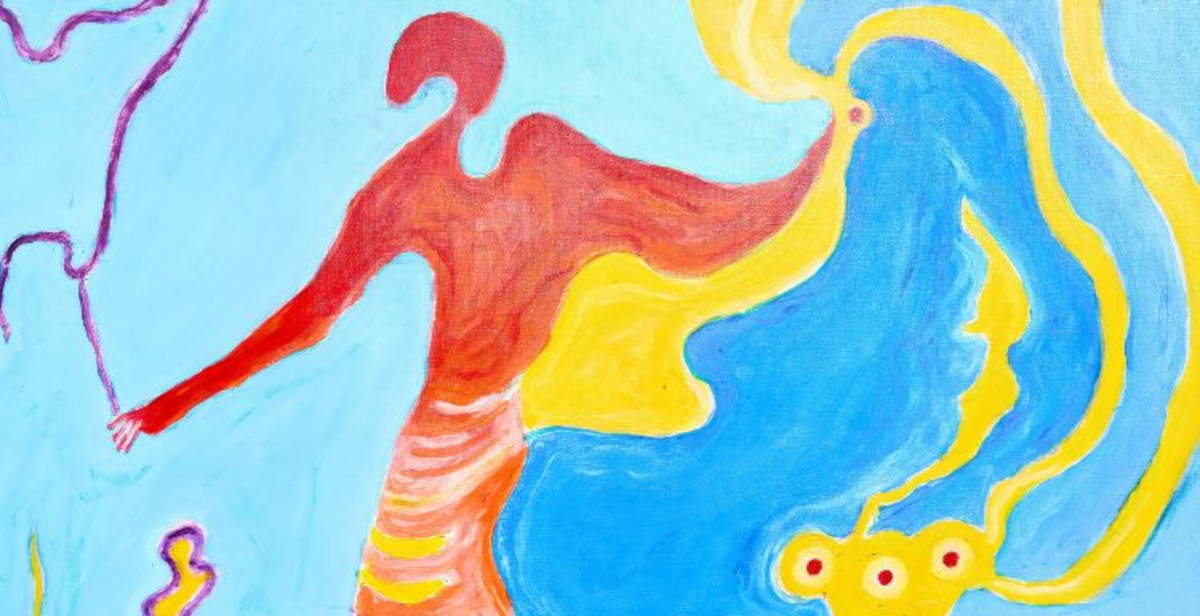
Continuing until January 31, 2026 at Paula Seegy Gallery in Milan is the exhibition Gillo Dorfles. Hybrids and Characters dedicated to Gillo Dorfles, curated by Martina Corgnati, which offers an extensive and in-depth overview of the author’s artistic and theoretical production. The exhibition presents works on paper and canvas, sculptures, plates and ceramic bowls, covering a time span from 1946 to 2013. The selection of works makes it possible to observe more than sixty years of research, highlighting the artist and intellectual’s ability to move through epochs, movements and disciplines with a constant autonomy of thought, accompanied by lucidity and irony.
The exhibition itinerary privileges Dorfles’ iconographic world, characterized by hybrid figures, floating signs, chromatic arabesques and metamorphic characters. The figures, present in both canvases and ceramics, testify to a poetic yet analytical vision of reality. Martina Corgnati describes the experience offered by the works as a salutary balm for the eyes, emphasizing the combination of lightness, intelligence and taste that distinguishes the author. Dorfles’ peculiarity lies in his so-called “laterality,” a critical attitude that places him at the margin of dominant languages and academic norms, allowing him to anticipate trends and identify connections between art, design, fashion and communication. From his beginnings in Trieste to his most recent productions, the exhibition follows the different stages of Dorfles’ career.



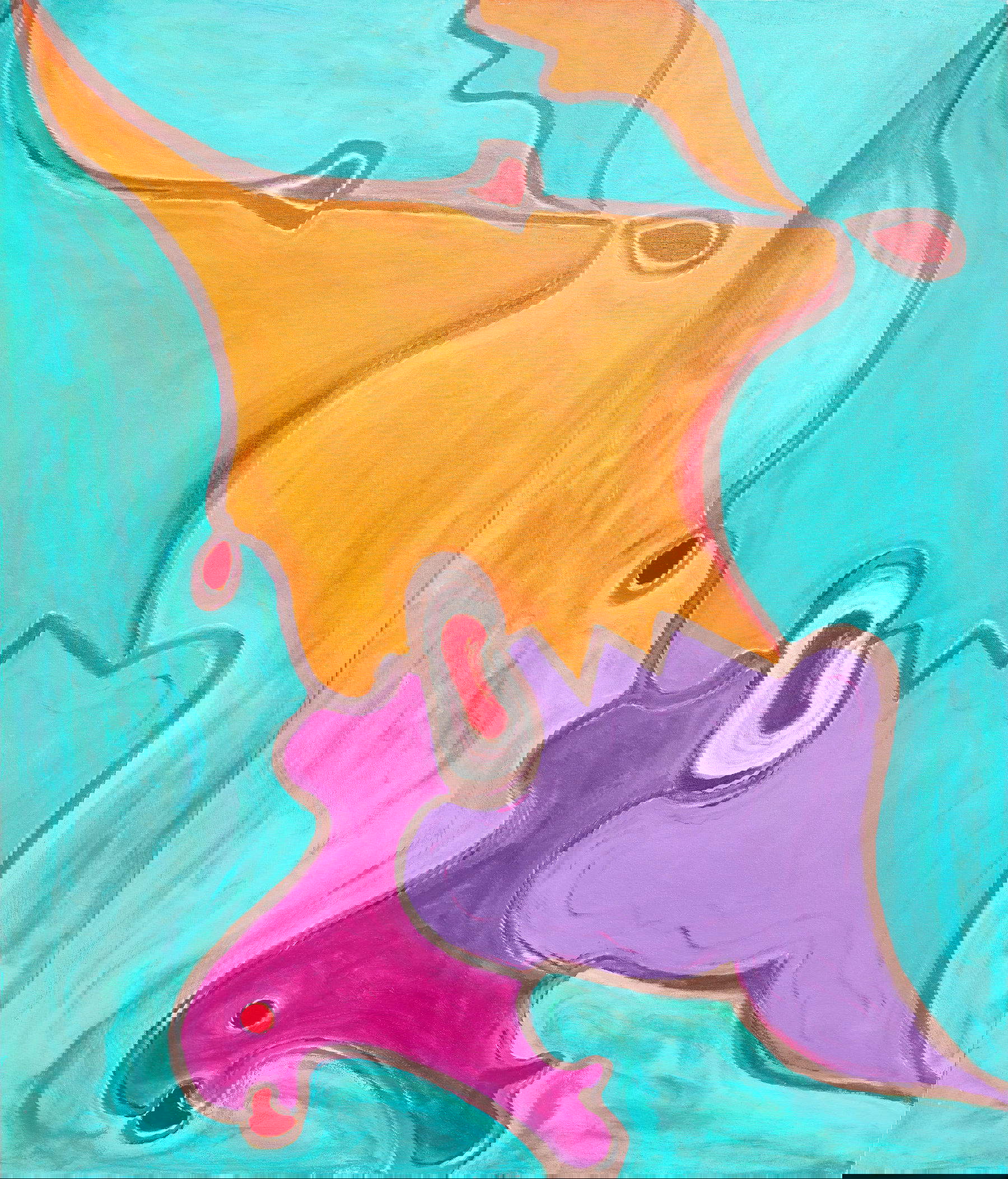
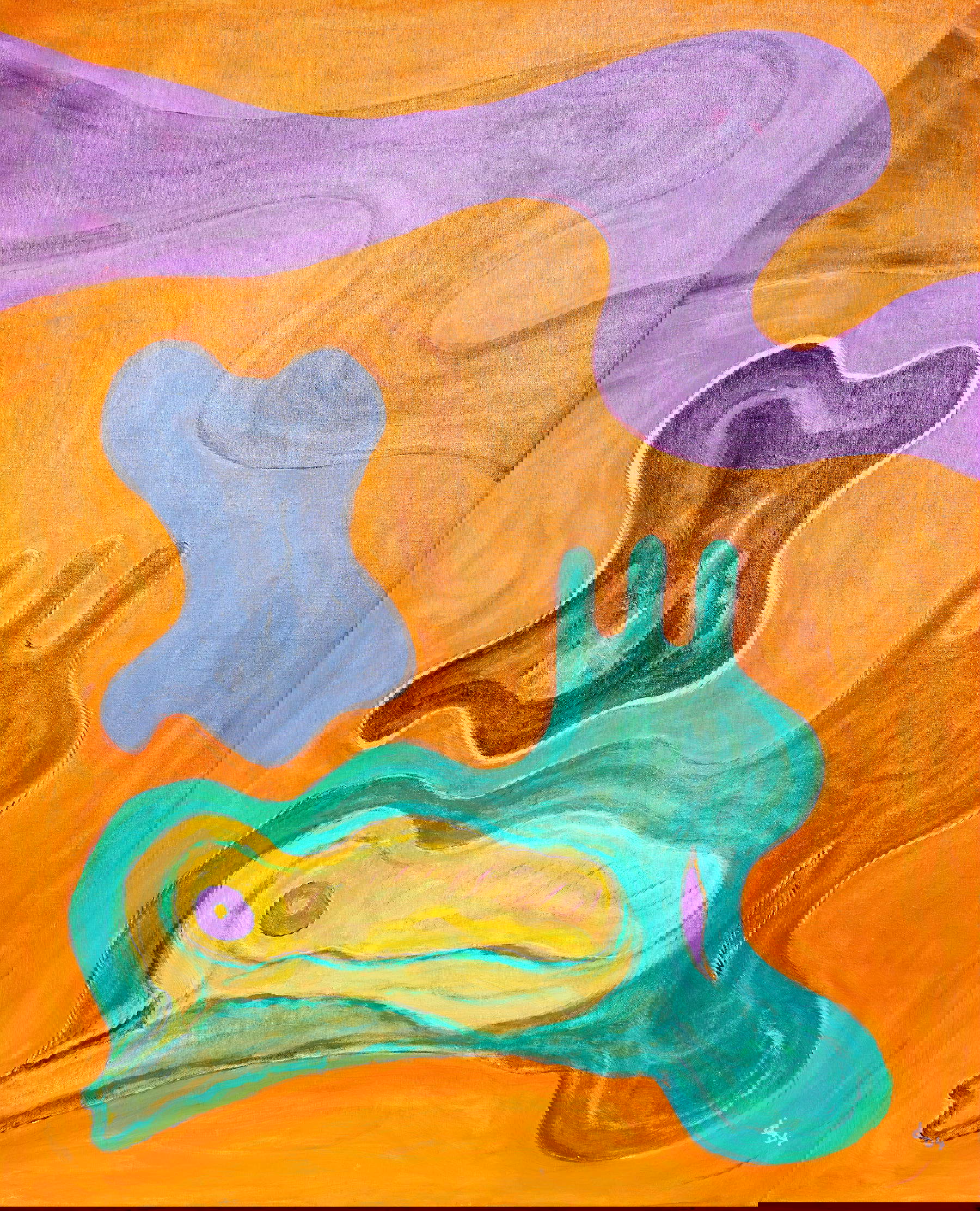
Among the works on display are Un occhio, una mano (1989), Trafitto (1992), Due schieramenti (2001) and a creative portrait of Sigmund Freud (2005), as well as a large fiberglass sculpture. All works show a balance between freedom of gesture and formal precision, oscillating between play, reflection and poetic intuition. Of particular note is the character Vitriol, introduced in Dorfles’ notebooks beginning in 2010, associated with the alchemical acronym Visita Interiora Terrae Rectificando Invenies Occultum Lapidem. Vitriol symbolizes an inner journey into the dark areas of the psyche, representing the artist’s attention to the symbolic and conceptual dimensions of his work.
The exhibition also restores Dorfles’ role as a theorist and critic, whose reflections on kitsch, the aesthetics of myth, and the oscillations of taste influenced our understanding of visual modernity. Since the 1960s, his teaching activity in aesthetics at Italian universities has consolidated his role as a reference for art criticism and theory, while since the 1980s the artist has resumed his pictorial and graphic production, which had already begun in the previous decades. The variety of languages in the exhibition reflects the unity of thought between philosopher of aesthetics and visual artist, between critic and visionary capable of observing the vibrations of contemporaneity. The works document recurring formal patterns, considered by the author to be progenitors of conscious and unconscious graphic expressions, showing how the hand and the idea meet in Dorfles’ work. Expressive freedom and acute capacity for analysis represent constant elements throughout the artist’s career, from his youthful painting to his more recent research in ceramics and sculpture.
Notes on the artist
Born in 1910 in Trieste, he spent his childhood in Genoa and later moved to Milan, where he completed his university studies in medicine in Rome. After graduating in neuropsychiatry in 1934, Dorfles embarked in parallel on a career as a critic and essayist, collaborating with such publications as La Rassegna d’Italia,Le Arti Plastiche, La Fiera Letteraria, Il Mondo, Domus, Aut Aut, The Studio and The Journal of Aesthetics. The painterly beginnings of the 1930s in cosmopolitan Trieste marked the birth of images dense with symbols and psychological tensions, elements that foreshadowed the artist’s visual universe. The founding in the late 1940s of the Movimento Arte Concreta (MAC) together with Bruno Munari, Atanasio Soldati and Gianni Monnet represents a key moment in the definition of a personal style, where abstractionism and formal experimentation are combined. In the years that followed, the “hybrids” and “characters” that became recurrent in Dorfles’s production emerged, figures oscillating between abstraction and caricature and animated by vivid palettes, ranging from teal greens to candy pinks and fuchsias to childlike blues.
The career of Dorfles, who died in 2018 in Milan at age 107, is marked by intense theoretical and critical activity, with such seminal publications as Discorso tecnico delle arti (1952), Le oscillazioni del gusto (1958),The Becoming of the Arts (1959), Latest Trends in Art Today (1961), New Rites, New Myths ( 1965), The Aesthetics of Myth (1967), Artifice and Nature ( 1968), Kitsch. An Anthology of Bad Taste (1968), In Praise of Disharmony (1986), The Lost Interval ( 1988) andAesthetic Itinerary (2011). More recent years have seen the publication ofCatalogue raisonné (2010) and Gli artisti che ho incontrato (2015), a collection of essays on contemporary art documenting the author’s entire career. Exhibitions dedicated to Dorfles have taken place in numerous Italian and international venues, including Milan (PAC, 2001; Palazzo Reale, 2010; Fondazione Marconi, 2014), Bologna (Circolo Artistico, 2002), Trieste (Museo Revoltella, 2007), Chiasso (Max Museo, 2010), Rovereto (Mart, 2011), Urbino (Casa Raffaello, 2014) and Rome (Macro, 2015). The exhibition at Paula Seegy Gallery is part of this path, offering a coherent and detailed analysis of the production of one of the most significant artists and critics of the Italian landscape of the 20th century and the first decades of the 21st century. The works remain accessible to the public Tuesday through Saturday, 12 to 7 p.m., at the venue at 14 Via San Maurilio, Milan, until Jan. 31, 2026.
 |
| Gillo Dorfles at Paula Seegy Gallery in Milan: hybrids and characters between art and criticism |
Warning: the translation into English of the original Italian article was created using automatic tools. We undertake to review all articles, but we do not guarantee the total absence of inaccuracies in the translation due to the program. You can find the original by clicking on the ITA button. If you find any mistake,please contact us.