




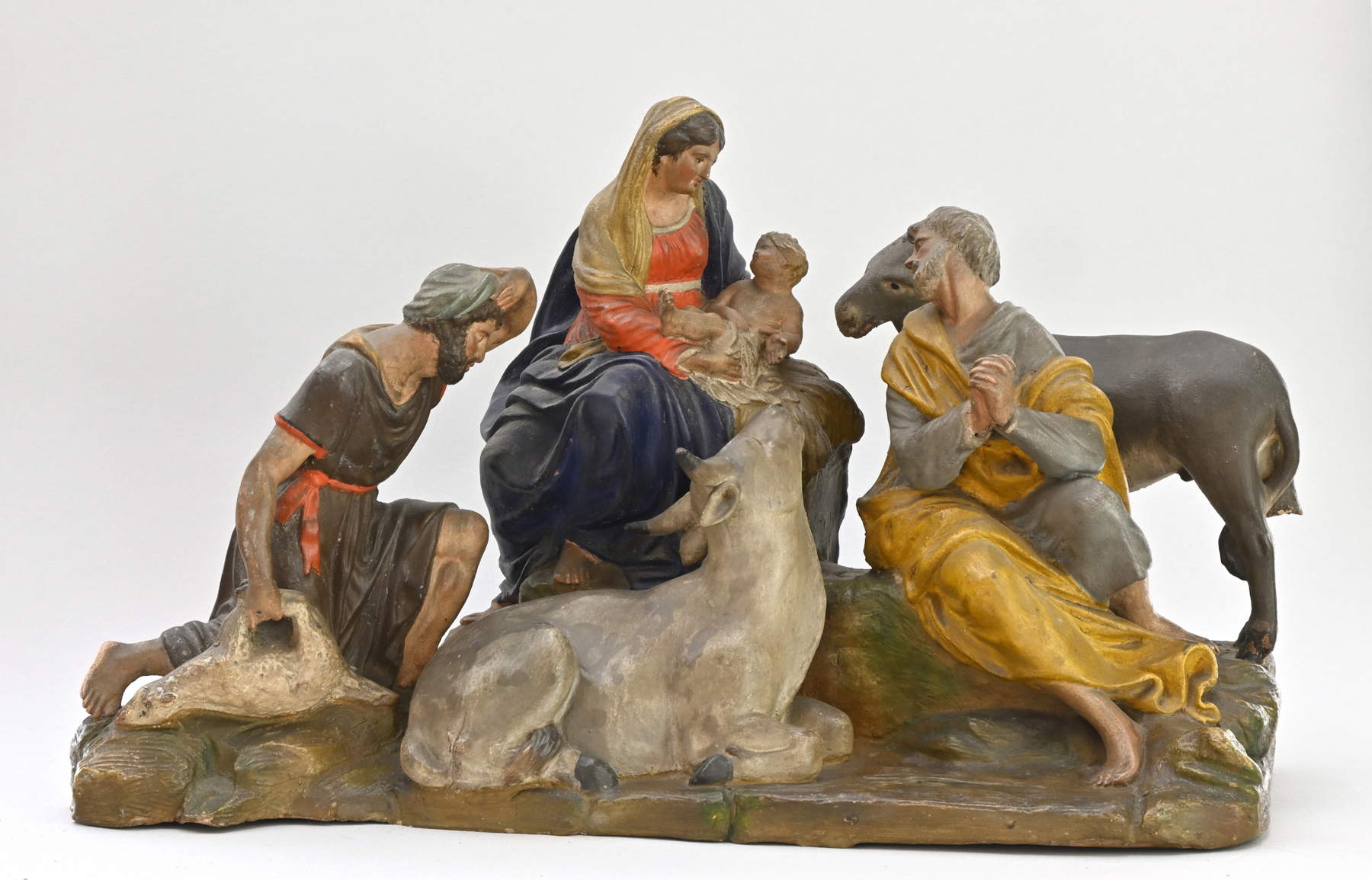
Like every year, the Civic Museum of Industrial Art and Davia Bargellini Gallery in Bologna renews its appointment dedicated to the nativity scene. In fact, as part of Festivamente, the program of cultural initiatives promoted by the Municipality of Bologna for the holiday season, from December 6, 2025 to January 11, 2026, the Civic Museums of Ancient Art will host the exhibition Nativity Scenes from the Forlai Collection, curated by Antonella Mampieri and which can be visited free of charge. As usual, the exhibition stems from a collaboration with the Centro Studi per la Cultura Popolare, directed by Fernando and Gioia Lanzi, which for years has been dedicated to the study of the relationship between the sacred and Christian traditions, contributing to the dissemination of knowledge of the Bolognese nativity scene and its artistic and symbolic characteristics. The exhibition is part of the annual cycle that brings into dialogue the museum’s rich collection of polychrome terracotta figurines from the 18th-19th centuries, the most important preserved in Bologna in terms of quantity and artistic value, with various Italian nativity schools, testifying to the wide diffusion of this art form in the country.
This year’s edition is dedicated to the collection of Edgardo Forlai, an architect from Bologna by origin but from Forlì by adoption, of which a selection of sixteen figures from the areas of Bologna, Modena and central-southern Italy, dating from the late 18th century to the early 19th century, is presented.
Before devoting himself to nativity scenes, Forlai collected a large collection of 19th- and 20th-century puppets, marionettes, small theaters, backdrops and paper materials, mostly from the Emilia-Romagna area, donated to the City of Forlì in 2003. This is no accidental juxtaposition: nativity scenes and puppet theater share simple materials, bright colors and a gallery of recurring characters that, combined in ever new ways, give life to short stories with happy endings.
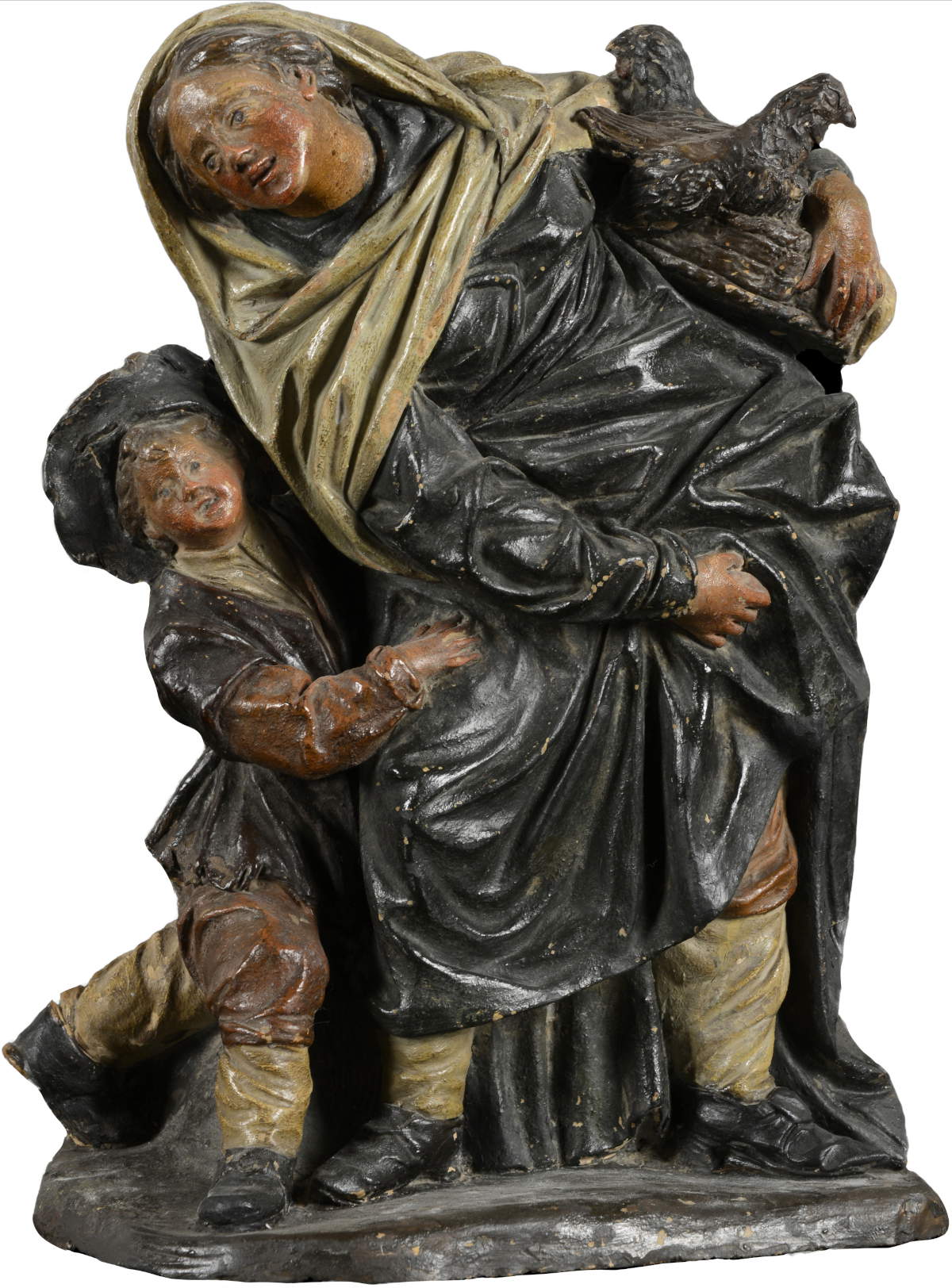
However, the nativity scene from Bologna and Emilia remains his deepest passion, not excluding works from other regions such as Tuscany and Campania. Forlai appreciates the fragility of the materials (terracotta, plaster, wax, papier-mâché), the intense colors, the liveliness of the fabrics and, above all, the ability to renew the compositions while remaining faithful to an established tradition. The Bolognese nativity scene is a kind of folk tale that reintroduces typical characters: the Sleepyhead, perhaps stunned by wine, the Marvel who opens her arms in amazement, the Adoration with her hat worn on her chest, and the Tradition leading a child in the transmission of the faith. The figures are not elegant, but it is precisely the authenticity of rough shepherds, washerwomen stooped over the tub, wrinkled old women and ill-dressed peasants that restore the most genuine voice of a people whom faith makes, symbolically, “truer and more beautiful” than the refined Magi.
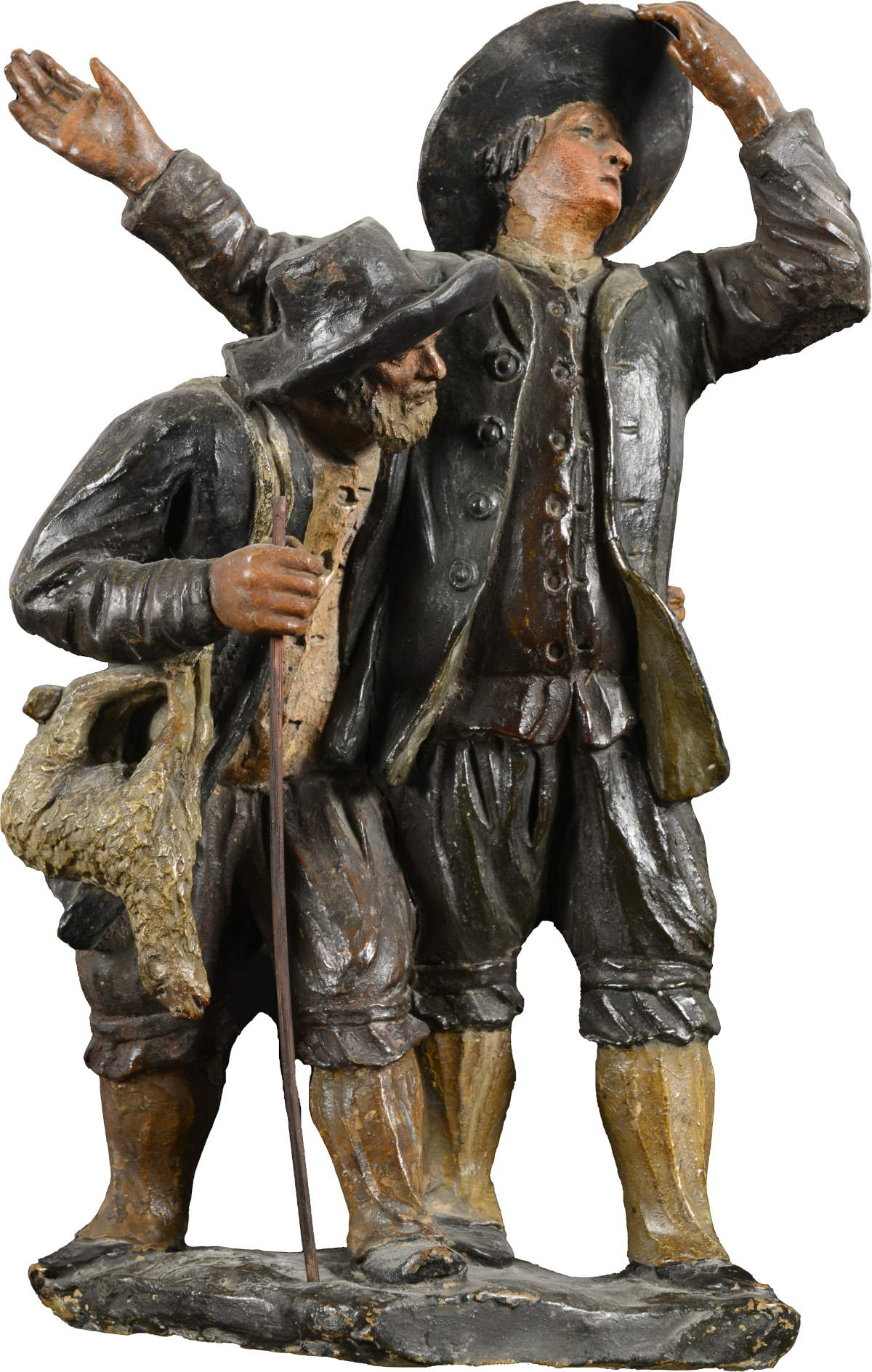
The exhibition of the Forlai collection allows visitors to admire particularly significant pieces, such as the pair of Shepherds with an engraved date “1790,” a rare chronological reference, and the figure of Tradition, a mother and child, attributable to Bolognese sculptors of great skill. Many specimens find correspondence in the prototypes on display in the permanent collection, illustrating the continuity and evolution of nativity molds. Examples include the St. Joseph with staff, the Madonna and Child, the kneeling Shepherd, and the Sleepyhead.
Probably Modenese, on the other hand, is the polychrome terracotta nativity scene that flanks the Nativity with a Wise Man with caudatario and a rustic couple consisting of a Peasant and his donkey. Some of the works allow us to recognize the fortunes of models created by masters such as Filippo Scandellari and Pietro Righi, reproduced for more than a century through the use of molds and spread in numerous variations.
The first section of the exhibition, set up in Room 2, is dedicated to seriality in the production of statuettes: through the juxtaposition of very similar specimens, sometimes made decades apart, the public can observe the formal evolution of an archetype. The Madonna and Child is flanked by two versions of St. Joseph in adoration: the prototype signed by Scandellari in 1770 and the derivation belonging to the Forlai collection. Arranged around the sacred group are the typical characters of the Bolognese nativity scene, such as the Sleepyhead, the Tradition, the Adoration and the Wonder, represented by two sturdy shepherds, one of them dated 1790. The Shepherd with bagpipe from the Forlai collection also dialogues with a similar specimen kept at the Fondazione Cassa di Risparmio in Bologna.
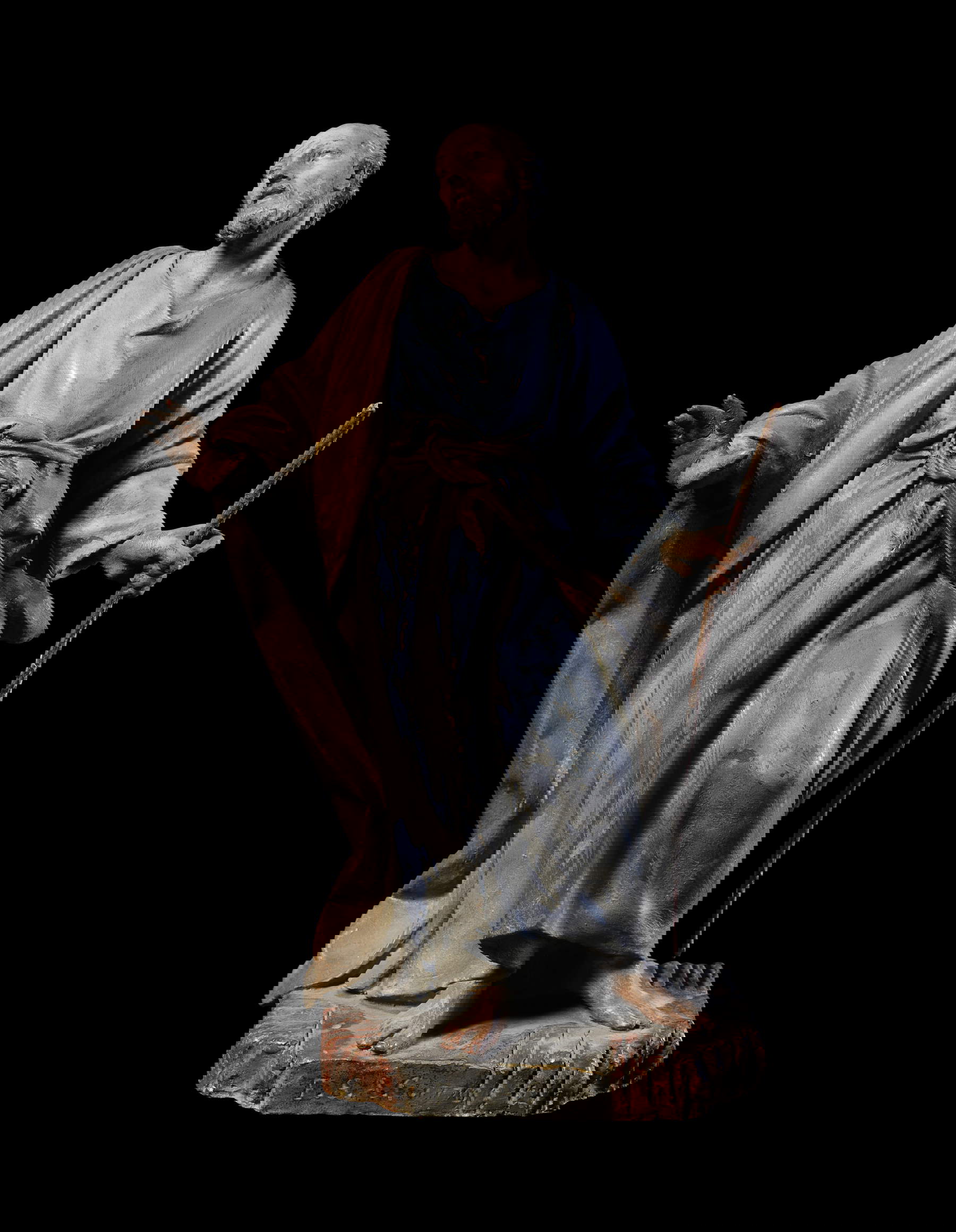
Originating in Baroque churches, the nativity scene spread to aristocratic residences in the late 17th century and, in the following century, to bourgeois homes as well. Growing demand led to an increase in artists modeling statues and modelers who, starting from known prototypes, made simpler versions intended for a popular audience. Room 4 houses an Adoration of the Shepherds from the Forlai collection flanked by a similar group with the Magi, deriving from Giovanni Putti’s famous Nativity Scene, datable to the early 19th century.
Also on display in the same room is a delicate polychrome wax pair, a Madonna and a St. Joseph, probably the work of a master from Tuscany or southern Italy, regions where the ceroplastic technique had great success for processional statues, religious figures and nativity scenes. The Bolognese wax tradition is also documented by 18th-century portraits and the famous anatomical waxes in the Palazzo Poggi.
Among the most documented crib artists is Pietro Righi, who came from a middle-class family and was forced to interrupt his studies due to economic difficulties. He returned to the Academy as a janitor and devoted his career to nativity scenes, which he often signed and dated. His works, modeled through molds from as-yet unidentified prototypes, range from the simple Holy Family to more complex compositions such as those in the church of Santa Caterina di Strada Maggiore. In Room 6 Righi’s nativity scene from the Forlai collection is compared with two versions permanently displayed by the museum.
Mediation activities for adults and children will be offered throughout the exhibition period, free of charge and with no reservation required.
Hours: Tuesday, Wednesday and Thursday from 10 a.m. to 3 p.m.; Friday from 2 to 6 p.m.; Saturday, Sunday and holidays from 10 a.m. to 6:30 p.m. Closed on non-holiday Mondays.
Christmas holiday opening hours:
Dec. 8 10 a.m. to 7 p.m.
Dec. 24 10 a.m. - 2 p.m.
Dec. 25 closed
Dec. 26 10 a.m. - 7 p.m.
Dec. 31 10 a.m. - 2 p.m.
January 1 closed
January 6 10 a.m. - 7 p.m.
|
| In Bologna, at the Davia Bargellini, nativity scenes from the Forlai collection on display |

Warning: the translation into English of the original Italian article was created using automatic tools. We undertake to review all articles, but we do not guarantee the total absence of inaccuracies in the translation due to the program. You can find the original by clicking on the ITA button. If you find any mistake,please contact us.






















 IT
IT FR
FR DE
DE ES
ES CN
CN


