





From December 4 to 18, 2025, the Dovzhenko Centre in Kyiv, Ukraine, dedicates a new exhibition to the history of American experimental cinema, in collaboration with RIBBON International and Anthology Film Archives. Early American Avant-Garde Cinema: Maya Deren & Beyond reconstructs, through an extensive program divided into sections, the evolution of the American avant-garde between the 1940s and the decade following the end of World War II. The initiative continues the work begun in 2024 with the retrospective on Sergei Paradžanov organized in New York, confirming the dialogue between two archival institutions committed to the preservation and study of film heritage.
“This series,” says Jed Rapfogel, film programmer at Anthology Film Archives, “highlights how Maya Deren helped chart the path for avant-garde cinema, demonstrating-along with her contemporaries-that cinema can be as intimate, poetic and self-expressive as any art form. Following the path from the early experiments of the Ukrainian Deren to the innovations of Brakhage, Anger, and Menken (who were inspired in part by Dovzhenko’s editing experiments, among others), we also trace the connections between the American avant-garde and the history of global and Ukrainian cinema. We are thrilled to collaborate so closely with the Dovzhenko Center, one of the most important film archives in the world, to tell this story.”
“This program strongly reaffirms how deeply Ukrainian artists have shaped the history of world cinema,” emphasizes Olena Honcharuk, Director of the Dovzhenko Center. “Maya Deren’s legacy reminds us that Ukrainian creators have long expanded the language of film and helped give birth to entirely new artistic movements. At a time when Ukraine’s cultural memory is directly threatened, the Dovzhenko Center’s work to preserve and share our film heritage has never been more urgent. We are honored to collaborate on a series that not only celebrates the American avant-garde, but also recognizes the Ukrainian stories and voices that shaped it [the American avant-garde].”
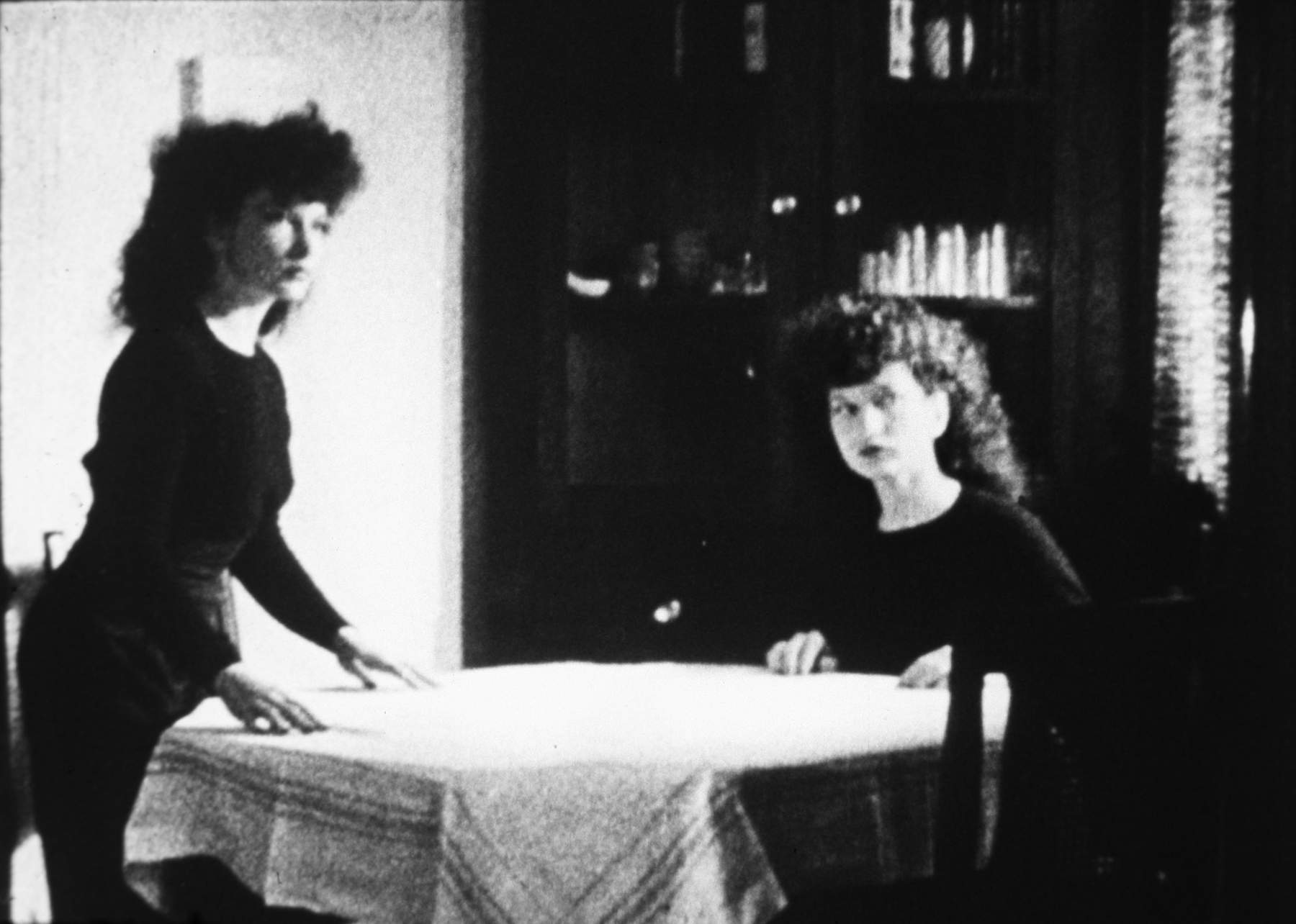
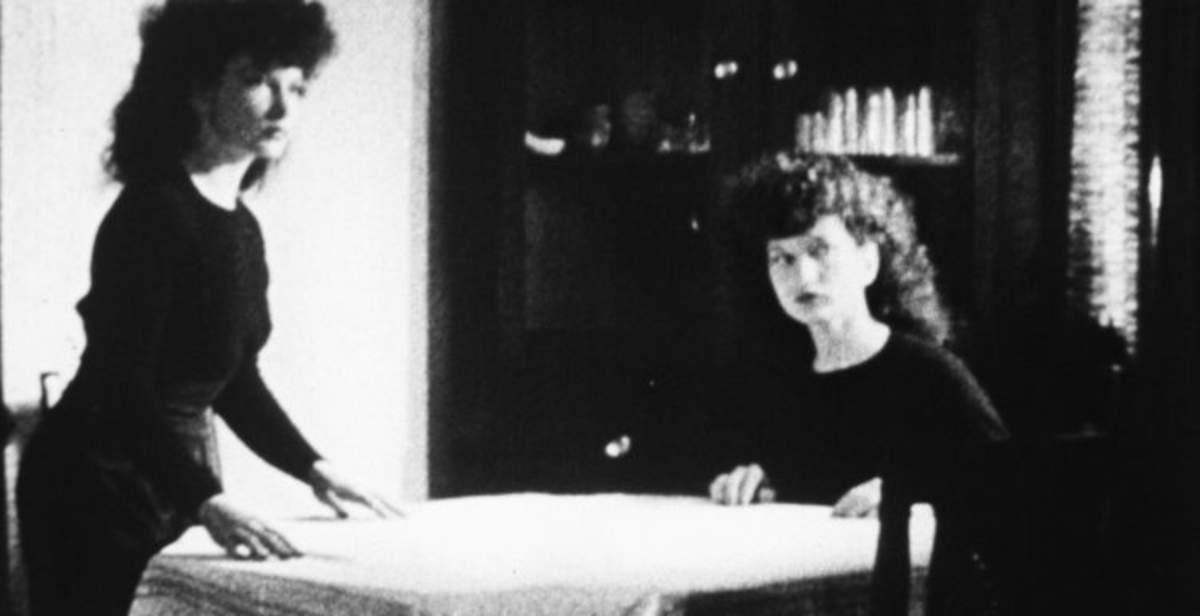
The exhibition, commissioned by RIBBON International, places the emergence of the American avant-garde in a transnational framework that also involves Ukrainian contributions. At the center is the figure of MayaDeren, an artist and filmmaker who was born in Ukraine and emigrated to the United States in 1922. With Meshes of the Afternoon(1943) she inaugurated a film practice independent of commercial circuits, linked to an idea of cinema as an independent means of expression. The film, considered one of the founding works of the experimental language, is the centerpiece of a program featuring more than 20 titles. Appearing alongside Deren’s works are those of his direct references and the main heirs of his research-Joseph Cornell, Kenneth Anger, Stan Brakhage, Marie Menken, Harry Smith, Shirley Clarke-authors who, in different ways, expanded the possibilities of cinematic language. The curated choices outline a narrative ranging from Deren’s inner dramas to Brakhage’s visual philosophy, including works that weave experimentation, filmic diary and reconsideration of narrative or documentary tradition. These include Film No. 12 (Heaven and Earth Magic) by Harry Smith and the diaristic productions of Jonas Mekas.
The first segment of the program examines the emergence of experimental cinema in the United States. It opens with Cornell’s The Fall of the House of Usher (1928) and continues with Cornell’s Rose Hobart (1936), leading up to the turning point represented by Meshes of the Afternoon. Kenneth Anger’s Fireworks (1947) creates a link between Deren’s work and the subsequent underground season, while Menken’s and Brakhage’s trials outline further developments in visual research.
The second part maps the consolidation of the avant-garde from the 1950s to the 1970s, a period marked by a broadening of formal and conceptual solutions. Titles include Menken’s Lights, Brakhage’s Mothlight, Harry Smith’s Film No. 11 and Ron Rice’s Chumlum, works that reflect a climate of creative freedom. The itinerary closes with Bruce Baillie ’s Castro Street (1966) and Hollis Frampton’s Hapax Legomena (nostalgia) (1971), marking the shift toward structuralist inquiry.
An additional part of the program, Body + Dance, examines the relationship between movement, the body and cinema. Deren and Talley Beatty ’s A Study in Choreography for Camera (1945) and Sara KathrynArledge ’s Introspection (1941) show early developments in dance film, understood as a format that privileges gesture and perception over linear narrative. They are joined by works that redefine the presence of the body in filmic space, including Willard Maas’s Geography of the Body (1943), Anger ’s Eaux d’Artifice (1953) and Carolee Schneemann’s Body Collage (1967). Later works by Vito Acconci and collaborations between Charles Atlas and Merce Cunningham extend the discourse to video experimentation, interrogating the limits of physicality and the possibilities of vision. The festival also includes a busy schedule of screenings, talks and presentations that will take place at the Dovzhenko Centre. Screenings include experimental and feature films such as Shirley Clarke’s The Connection , Symbiopsychotaxiplasm: Take Onedi William Greaves, the diaristic works of Jonas Mekas, and programs devoted to the two main sections.
 |
| In Kyiv, Ukraine and the United States reread the origins of American avant-garde cinema |

Warning: the translation into English of the original Italian article was created using automatic tools. We undertake to review all articles, but we do not guarantee the total absence of inaccuracies in the translation due to the program. You can find the original by clicking on the ITA button. If you find any mistake,please contact us.





















 IT
IT FR
FR DE
DE ES
ES CN
CN


