




by Redazione 13/01/2026



Categories: Exhibitions / Disclaimer
The second exhibition of the Valentino Garavani and Giancarlo Giammetti Foundation's PM23 space opens in Rome. Joana Vasconcelos signs a project that puts in dialogue twelve works by the artist and thirty-three creations by Valentino Garavani, interweaving art, fashion and social commitment.


On January 18, 2026, the exhibition VENUS - Valentino Garavani through the eyes of Joana Vasconcelos, the second exhibition project of PM23, the space opened last May by the Valentino Garavani and Giancarlo Giammetti Foundation in Piazza Mignanelli 23, opens to the public in Rome. The exhibition, which can be visited until May 31, 2026, comes after a widespread art intervention that covered the city with three monumental works by the Portuguese artist placed in as many symbolic places in the capital, introducing the public to a dialogue between contemporary art and urban space that now finds a more structured form within the 1,000-square-meter exhibition space.

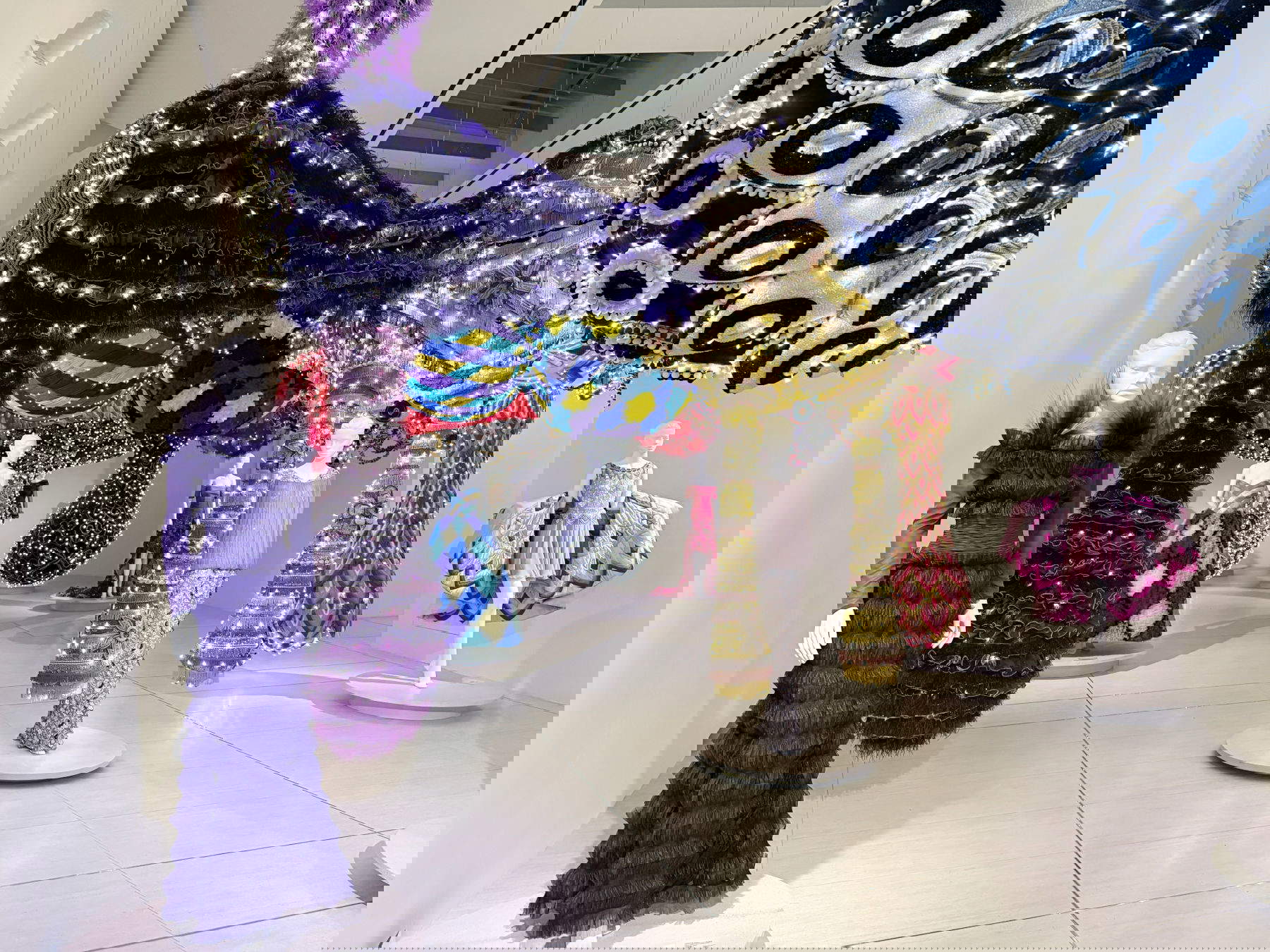
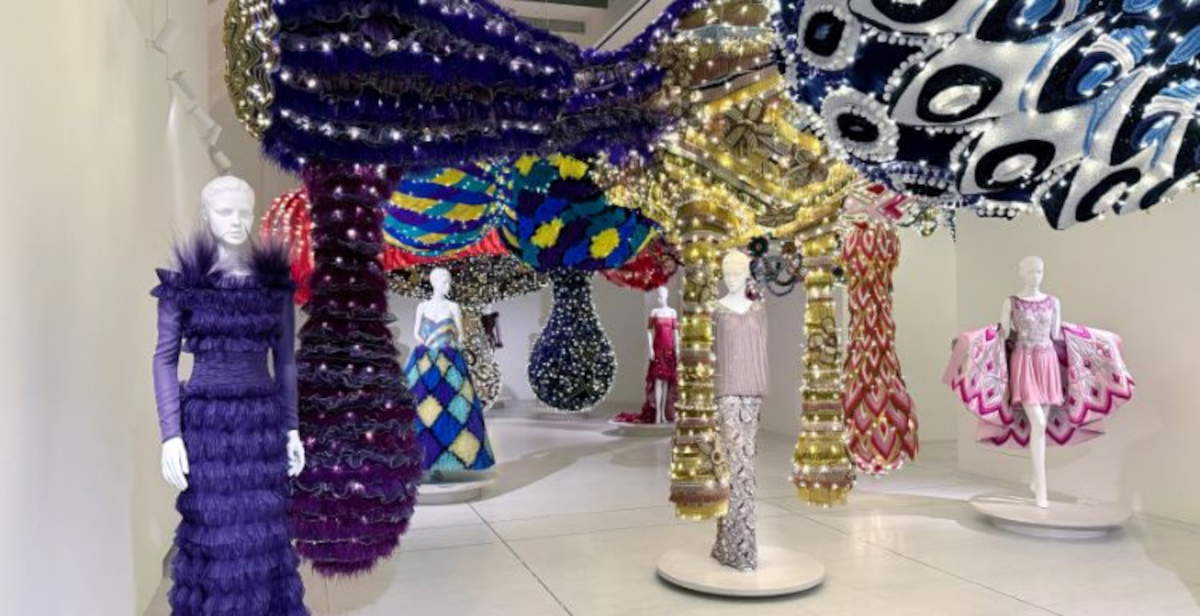
The exhibition offers a path that rereads the creative universe of Valentino Garavani through the gaze of Joana Vasconcelos, relating twelve of the artist’s works, including existing installations and works created specifically for PM23, with thirty-three of the designer’s creations. The selection of clothes comes from the maison’s archives and was curated by Pamela Golbin. The project stems from an assignment in design freedom given to the artist, who was called to confront Valentino Garavani’s aesthetic and symbolic codes without predefined constraints. Within the space of Piazza Mignanelli, the exhibition path builds an interweaving of different languages, in which fashion and contemporary art dialogue through common themes such as identity, the representation of the feminine, the value of manual labor and the transformation of materials. The operation is in the groove of Vasconcelos’ research, known for her use of craft techniques and everyday objects reworked in a monumental key, and for a constant attention to social and cultural issues.


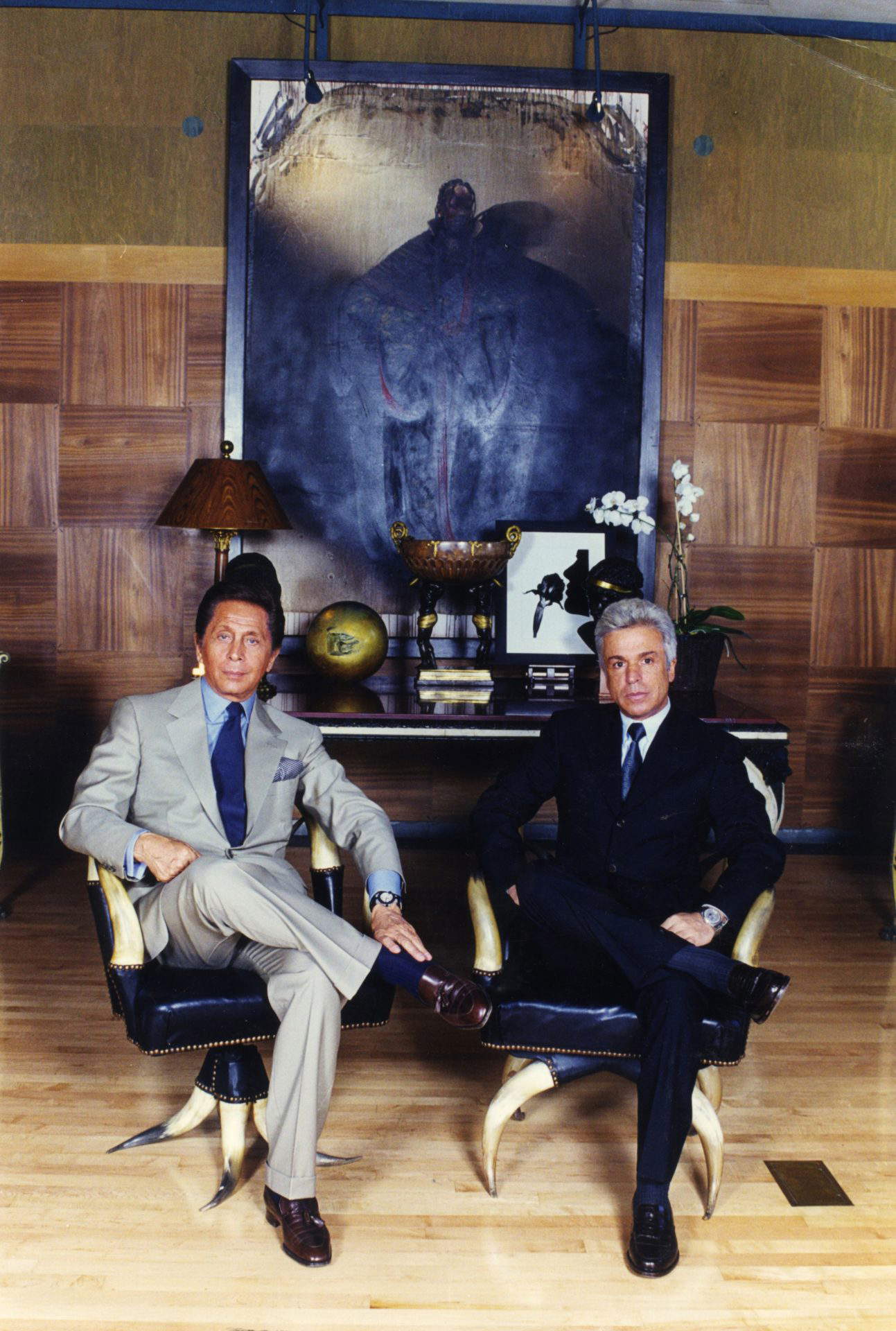
"VENUS was born from the desire to celebrate creativity in all its forms, as a bridge between art, fashion and community," say Valentino Garavani and Giancarlo Giammetti. "With this project we wanted to offer a space where beauty and innovation can meet participation and inclusion, turning artistic expression into an opportunity for dialogue and sharing. The collaboration with Joana Vasconcelos allowed us to explore new languages, interweaving different knowledge, hands and stories, and to make visible the value of collective work and creativity as a tool for empowerment. Through VENUS we celebrate not only art and fashion, but also the communities, people and places that helped make this project possible, reaffirming our belief that beauty-as a driving force-allows creativity, shared and participated in, to stimulate new visions, strengthen communities and leave a lasting mark on future generations."


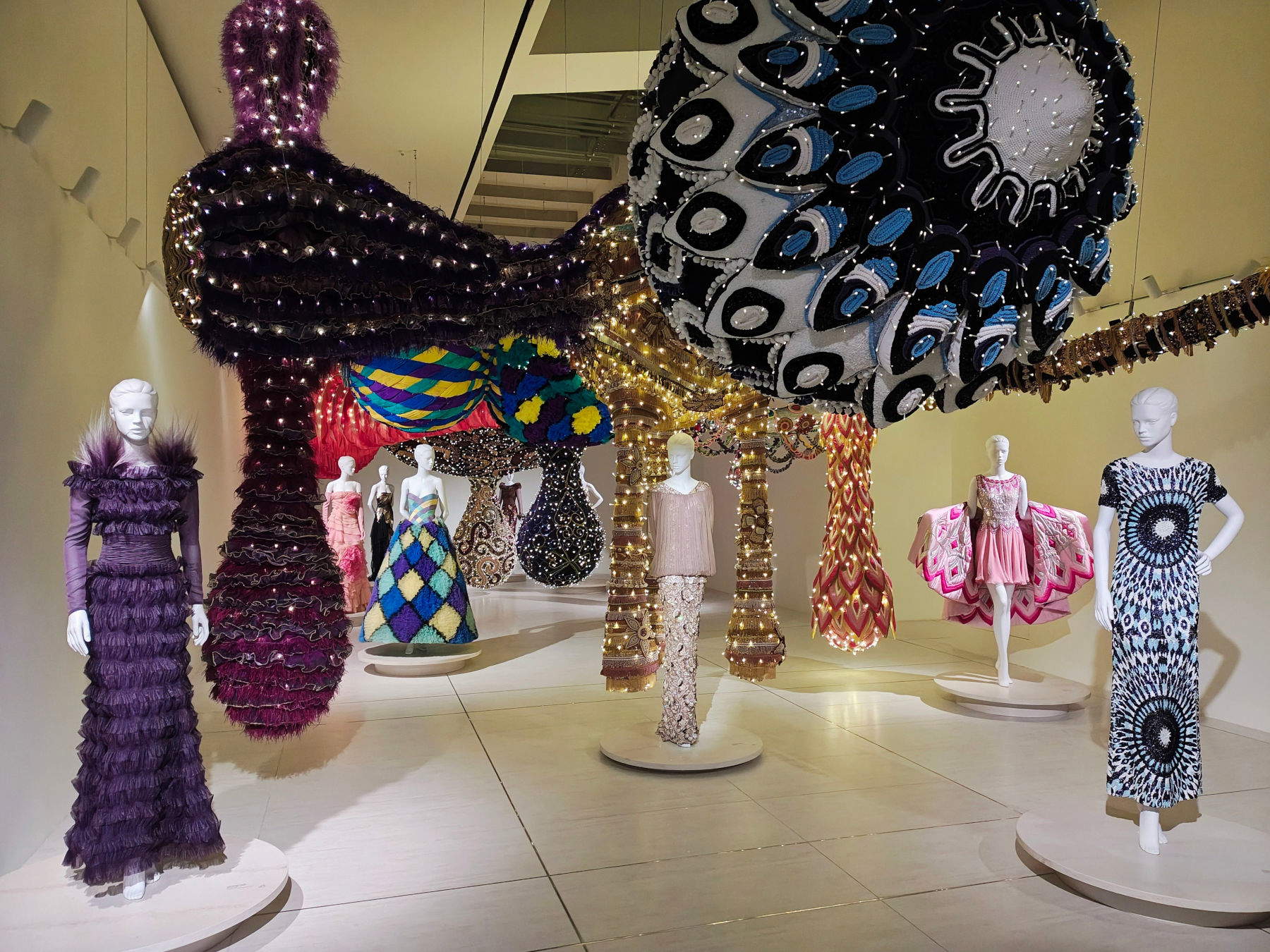
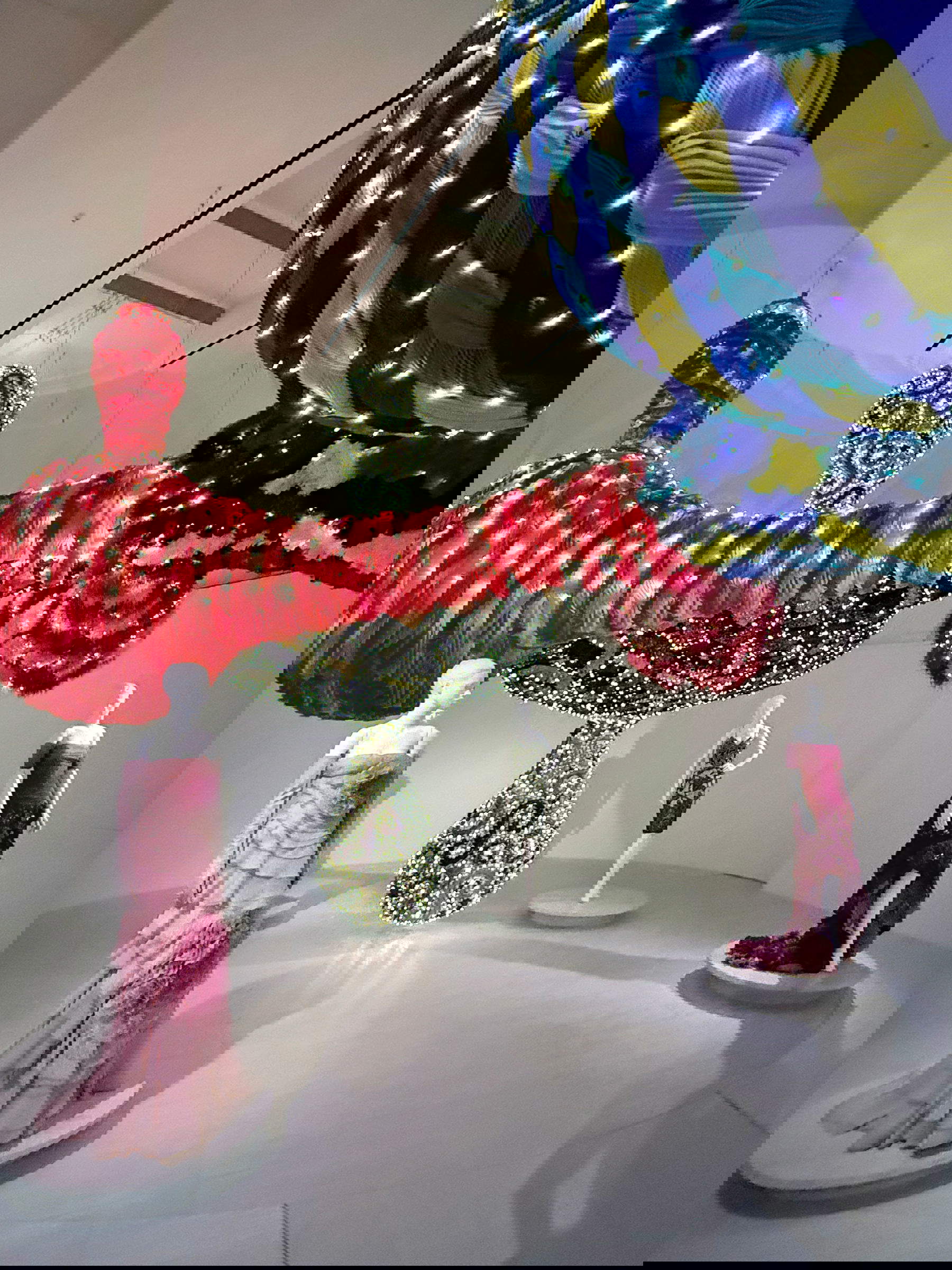
A central element of the exhibition is the monumental Valkyrie VENUS, a work that gives the title to the entire project and was conceived in direct relation to the space and the study of the designer’s codes. Placed in the apsidal room, the figure develops as an extension of eight Valentino Garavani dresses, from which it takes shape and then expands into space through the arms. The work functions as an interpretive lens on the designer’s legacy and as an abstract synthesis of the multiple contemporary female identities evoked in the exhibition itinerary.
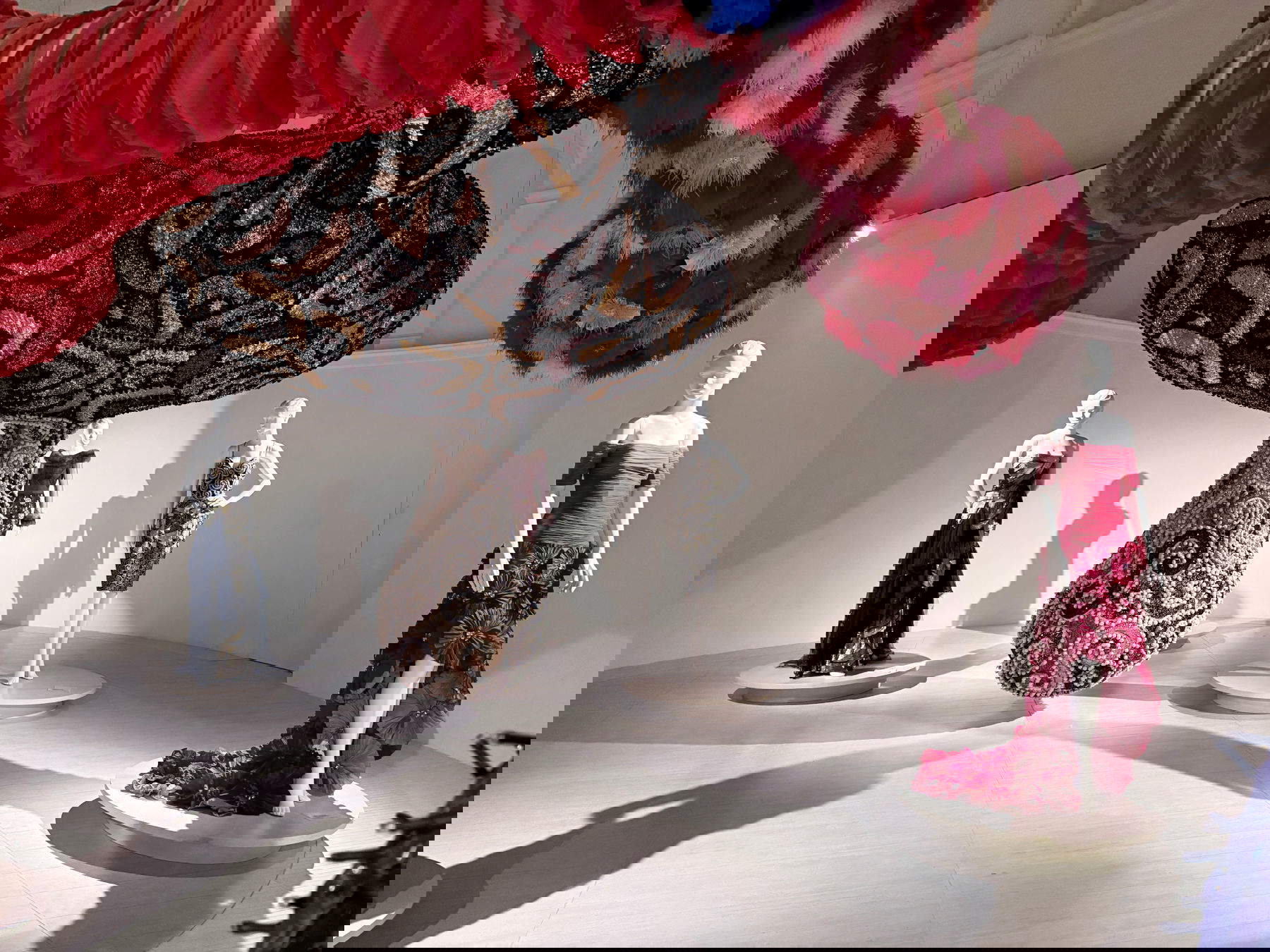
The rooms host a series of installations that dialogue with the Haute Couture creations. Venus, The Painting, belonging to the Crochet Paintings series, transforms fabric into a pictorial surface and is presented as a framed work that takes inspiration from the Josef Hoffmann motif used in the Haute Couture gowns of the fall-winter 1989-1990 collection. In the same setting, Strangers in the Night addresses the theme of female archetypes constructed by patriarchal culture, while Full Steam Ahead (Red) #1 proposes a mechanical lotus flower composed of irons, objects related to domestic work that take on a symbolic value of resilience and metamorphosis. Juxtaposed with these works are creations by Valentino Garavani from different seasons of Haute Couture. In particular, Strangers in the Night dialogues with a cocktail dress with ostrich feather headbands from the fall-winter 2007-2008 collection, while Full Steam Ahead (Red) #1 is presented together with a tulle and sequined evening dress with a long train from the fall-winter 2001-2002 collection. The comparison of works and dresses highlights formal and symbolic affinities, as well as a common focus on the construction of the figure and the expressive value of materials.
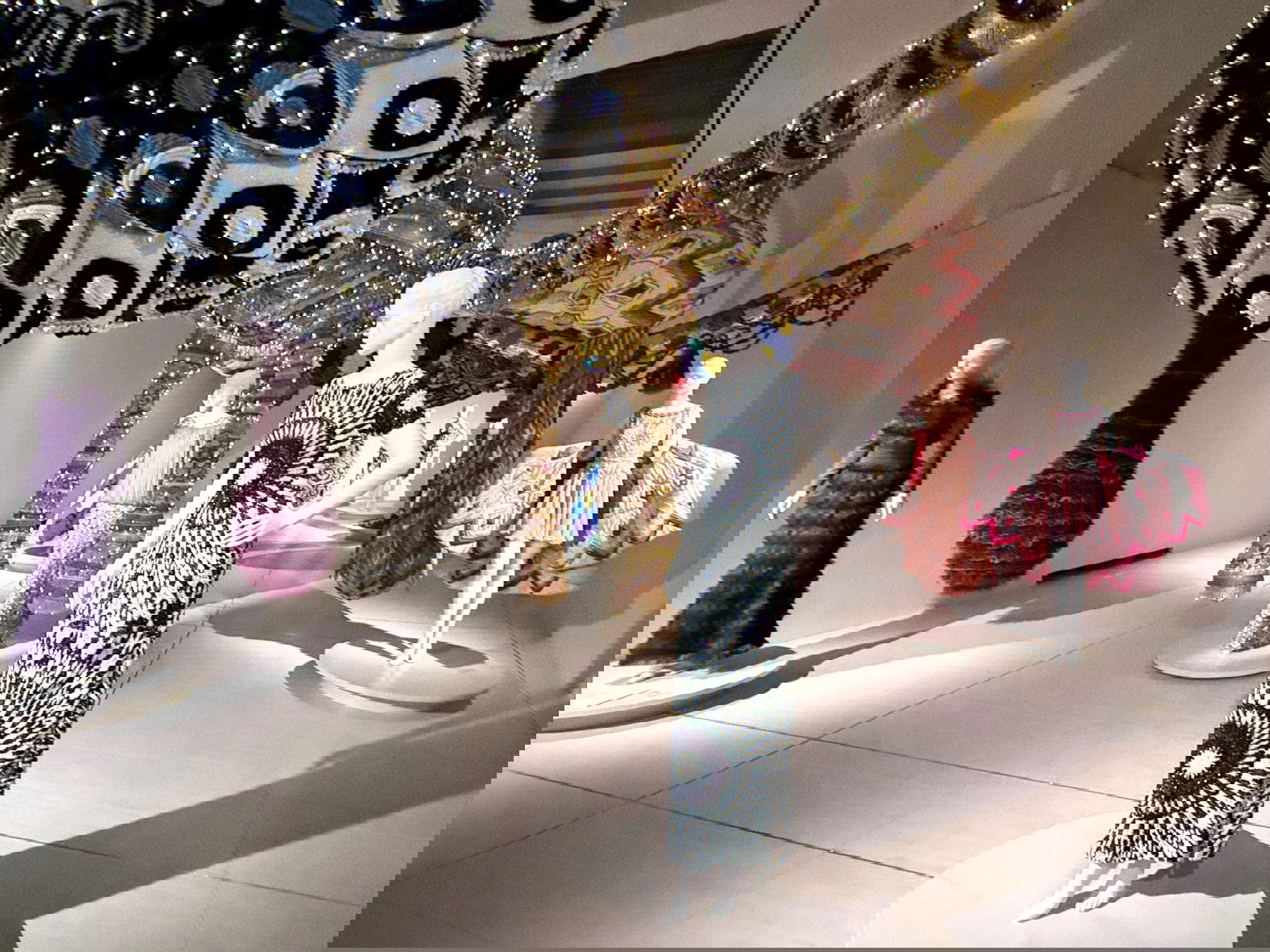
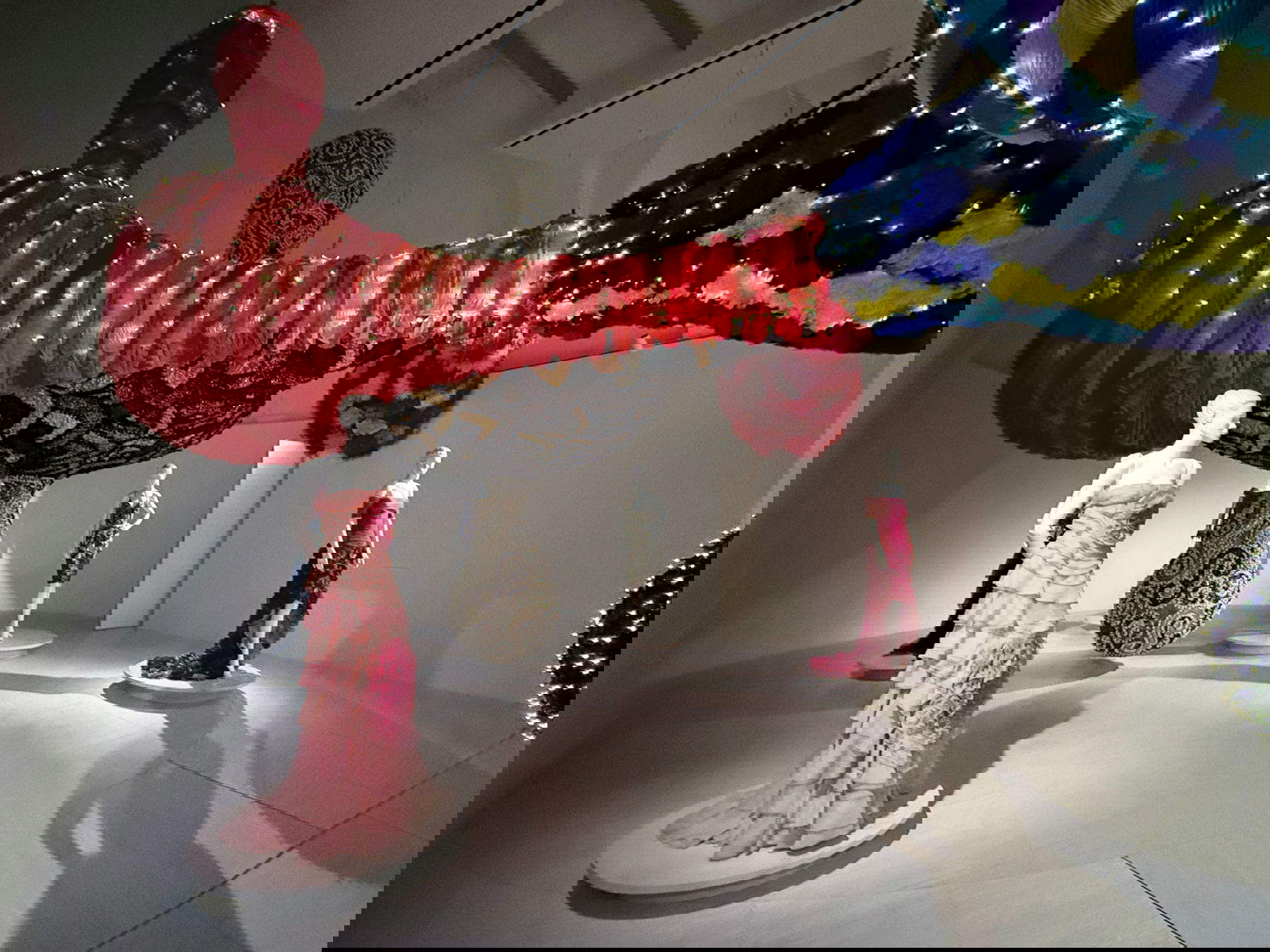
The tour continues with the room dedicated to Marilyn, an installation in which domestic objects such as pots and lids are transformed into monumental heeled shoes. The work overturns stereotypes associated with the female role and brings the theme of invisible labor to the forefront. In this setting, three Haute Couture dresses, belonging to the fall-winter 1998-1999, fall-winter 1999-2000 and spring-summer 1995 collections, complete the installation. The garments, made of silk, satin, organza, taffetas and sequins, decline different shades of silver and help build a dialogue between matter, light and form. A corridor connects the different sections of the exhibition and presents three works by Joana Vasconcelos: Red Independent Heart #3, Witch Mirror and Sacred Heart. In this space, embroidered corsets and jackets with sharp lines accompany the visitor, reinforcing the link between installations and clothes and emphasizing the role of sartorial detail as a narrative element. The path culminates in Garden of Eden, an environment in which different female archetypes converge, from Valkyrie to Cinderella, from femme fatale to seductress. The space houses eight iconic total black dresses made of tulle, silk, georgette and lace, embellished with sequins, crystals, glass beads and tulle work. The ensemble builds a shared mythical narrative that synthesizes the themes addressed throughout the exhibition.
With VENUS, PM23 also develops one of the cornerstones of the Valentino Garavani and Giancarlo Giammetti Foundation, namely social and collective engagement. Indeed, the Valkyrie VENUS work, created by Joana Vasconcelos’ atelier in Lisbon, was enriched by a large-scale participatory project. The work involved 756 hours of workshops, more than two hundred participants of different ages, and the creation of more than two hundred kilograms of crocheted forms produced in numerous places in Rome, from the center to the suburbs, and later sent to the artist.
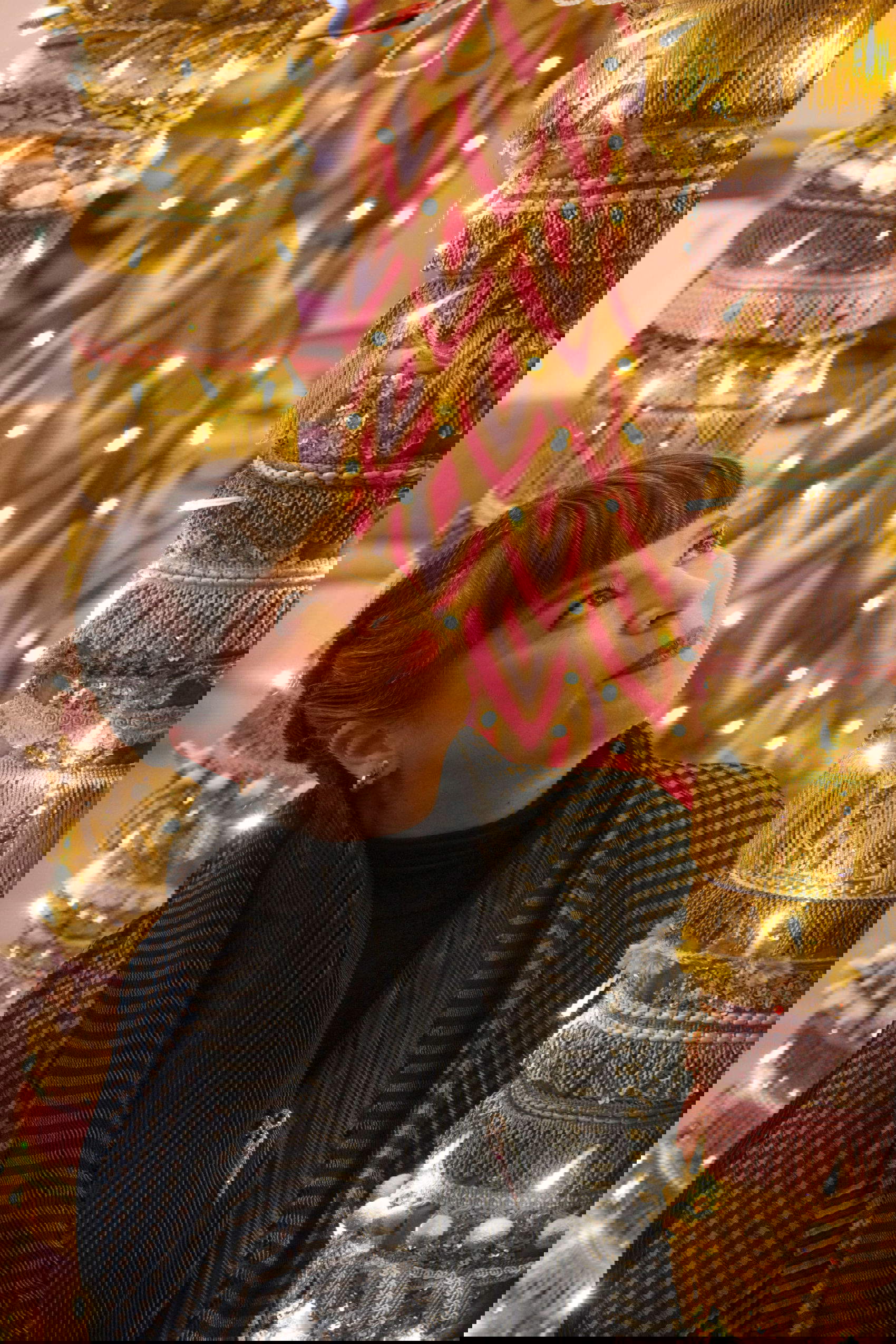
Students, patients, inmates and members of nine partner associations took an active part in the project, transforming the manual gesture into a collective experience. The crocheted “second skin” that covers the large VENUS, thirteen meters long, thus becomes the result of a choral process that binds creativity, care and social cohesion. The work takes on a dimension beyond the exhibition, standing as a synthesis of craft intelligence and as the outcome of a collaboration between different worlds.
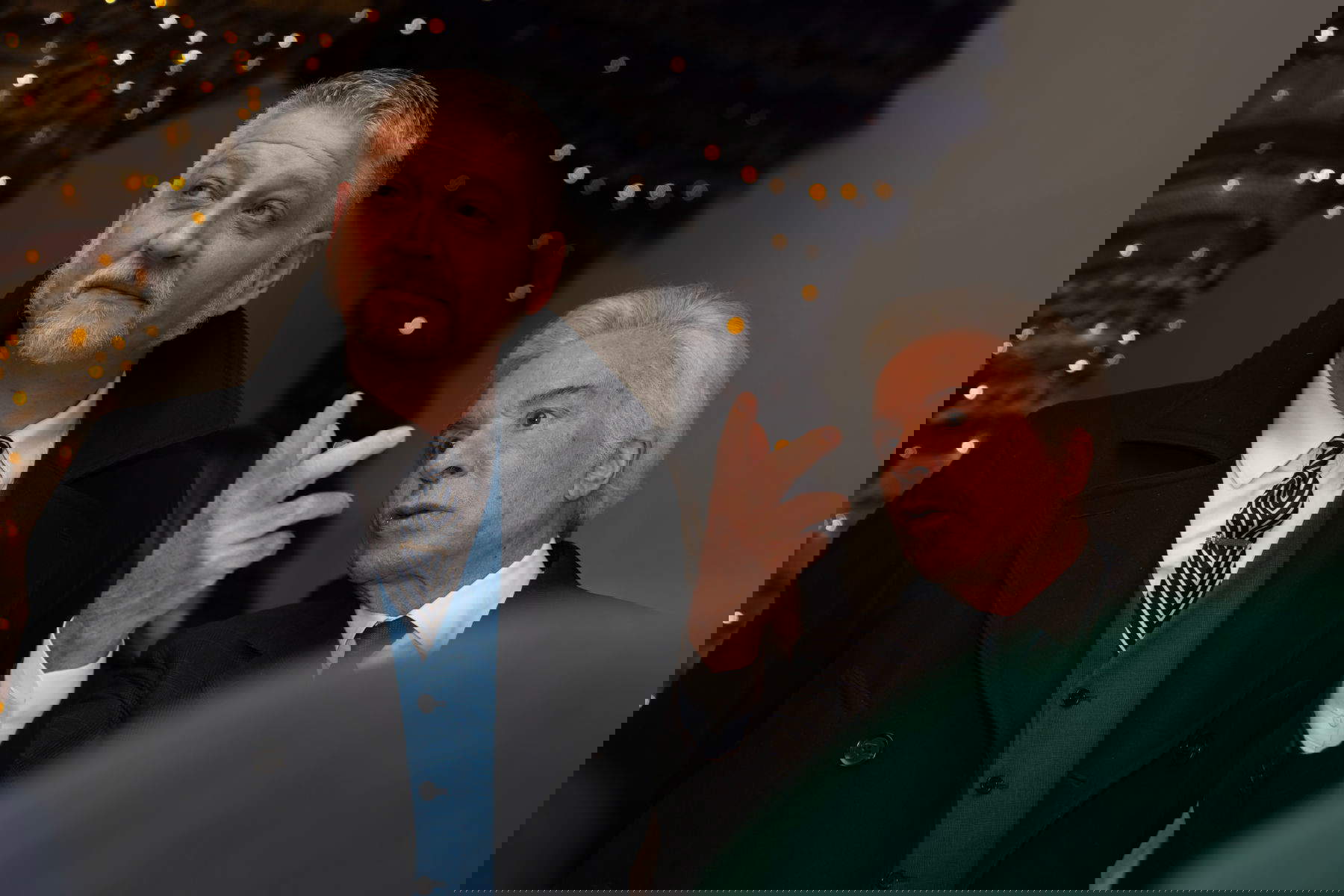
A number of higher education schools were also involved in the project, including MAM - Maiani Accademia Moda, Accademia di Costume & Moda and NABA Nuova Accademia di Belle Arti di Roma. Students participated in workshops, community meetings and visual communication activities, developing reflections on Valentino Garavani’s aesthetic codes and the social value of fashion. Alongside the educational institutions, several social and health partners hosted crochet workshops aimed at patients, families and communities. These include the Rebibbia Women’s Prison with the Severino Foundation, the Bambino Gesù Children’s Hospital in the Gianicolo, Palidoro and Passoscuro Pediatric Centers, the Gemelli Medical Center, the Differenza Donna association committed to women’s empowerment and the fight against gender-based violence, and INTERSOS, an international humanitarian organization active with the Torre Spaccata multipurpose center.
Also dedicated to the project is Trame #73, a documentary by Daniele Luchetti presented in a room within the exhibition. The video-installation collects the testimonies of students, inmates, crochet teachers, craftswomen and the artist herself, offering a choral narrative about shared work, the transmission of knowledge and the role of creativity as a tool for individual and collective transformation. The documentary highlights the value of manual making as an artistic practice and as a form of cultural resistance, restoring visibility to the gestures of the communities involved.
Practical information
Tickets are available on the PM23 website and at the box office.
ONLINE As of January 1, 2026
Full: €15 - Reduced: €12 - Wheelchair users: €15
IN LOCO As of January 1, 2026
Full: €18 - Reduced: €15 - Wheelchair users: €18
 |
| In Rome, Joana Vasconcelos rereads the legacy of Valentino Garavani |
Warning: the translation into English of the original Italian article was created using automatic tools. We undertake to review all articles, but we do not guarantee the total absence of inaccuracies in the translation due to the program. You can find the original by clicking on the ITA button. If you find any mistake,please contact us.