





From Feb. 13 to April 4, 2026, 21Art Treviso is hosting a solo exhibition of Pascale Marthine Tayou (Nkongsamba, Cameroon, 1966), a Cameroonian artist among the most influential figures on the international contemporary scene. The exhibition marks the start of the collaboration between 21Art and Galleria Continua, Tayou’s historical interlocutor, and is part of 21Art’s project to develop partnerships at the national and international level to support contemporary artistic research, according to the strategy of the benefit company founded by Alessandro Benetton on an idea by Davide Vanin.
The exhibition offers a path through memory, identity and geopolitics, investigating the relationship between humanity and otherness, a central theme of Tayou’s artistic practice. Active since the early 1990s, the artist has participated in Documenta 11 and several editions of the Venice Biennale, and lives between Ghent and Yaoundé. His multifaceted production includes sculpture, installation, drawing, video and textile art, characterized by a deliberate rejection of fixed geographical or cultural affiliations. Tayou’s work reflects an awareness that identity, power and tradition are social and symbolic constructs, subject to continual transformation, and focuses on the concept of travel, physical and mental, and the encounter with the Other in a context of global dynamics.
Early in her career, the artist changed her name by adding an “e” to her middle name, turning it into a feminine ending. The playful but conscious gesture was intended to distance herself from patriarchal artistic authority and rigid gender roles, extending resistance to any attempt to confine her practice to a defined cultural or geographic origin. The Treviso exhibition clearly illustrates this position, presenting works of great diversity and expressive force.
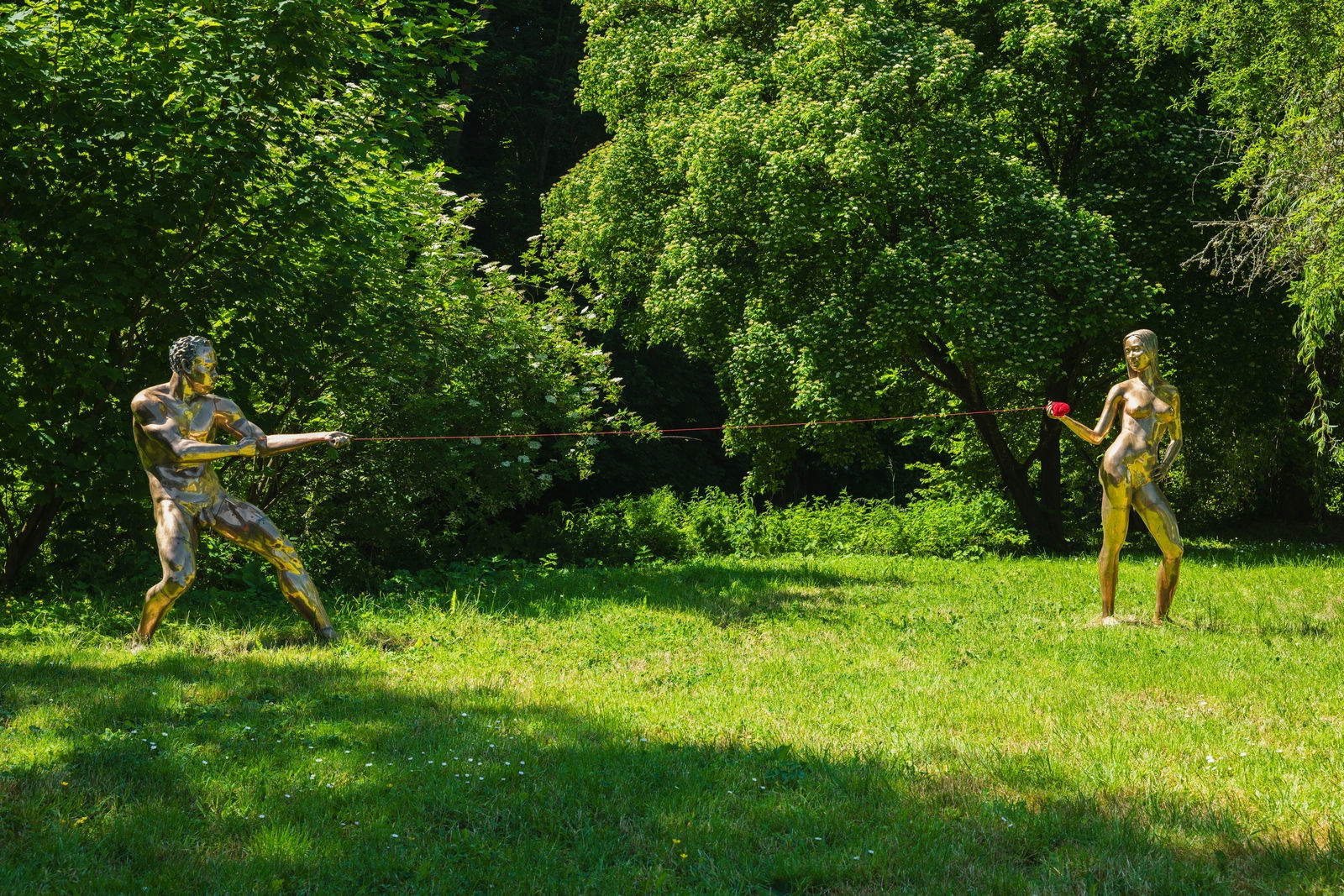
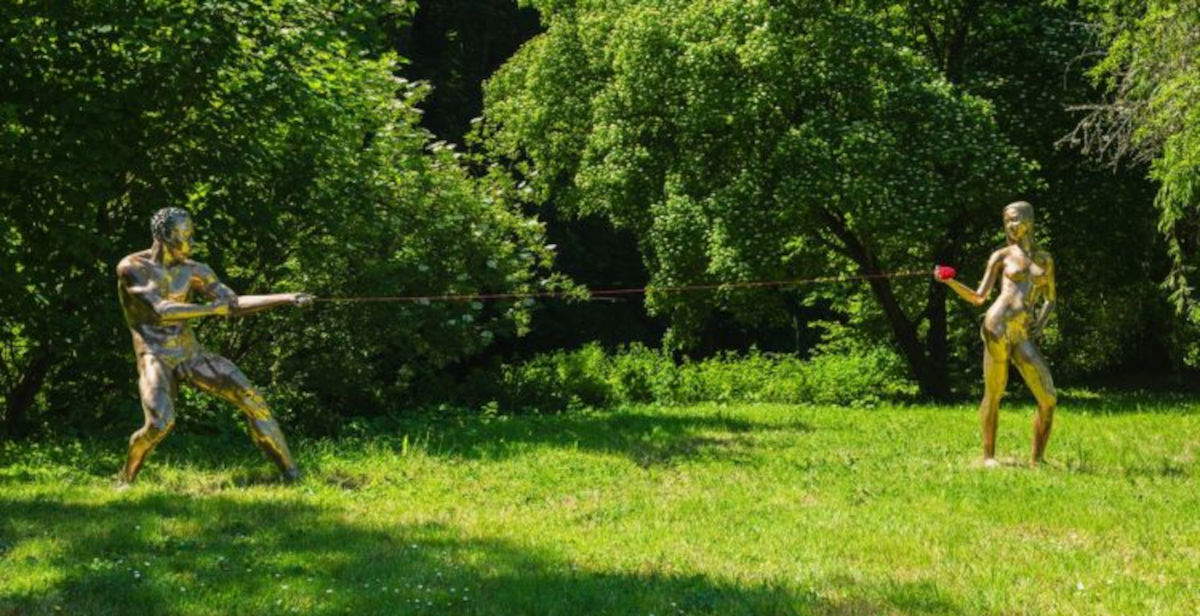
Among the works on display, Tug of War stages a confrontation between two bronze figures that ironically subvert traditional power dynamics and stimulate reflections on gender relations and geopolitical imbalances. The title recalls historical tensions between Western powers and African societies, transforming the duel into a symbolic space dedicated to reflecting on complementarities and power structures. The Eseka series originates from a train derailment in the town of Eseka, about a hundred kilometers from Yaoundé, and proposes a universal metaphor: places that welcome and repel, poised between desire, trauma, and aspiration.
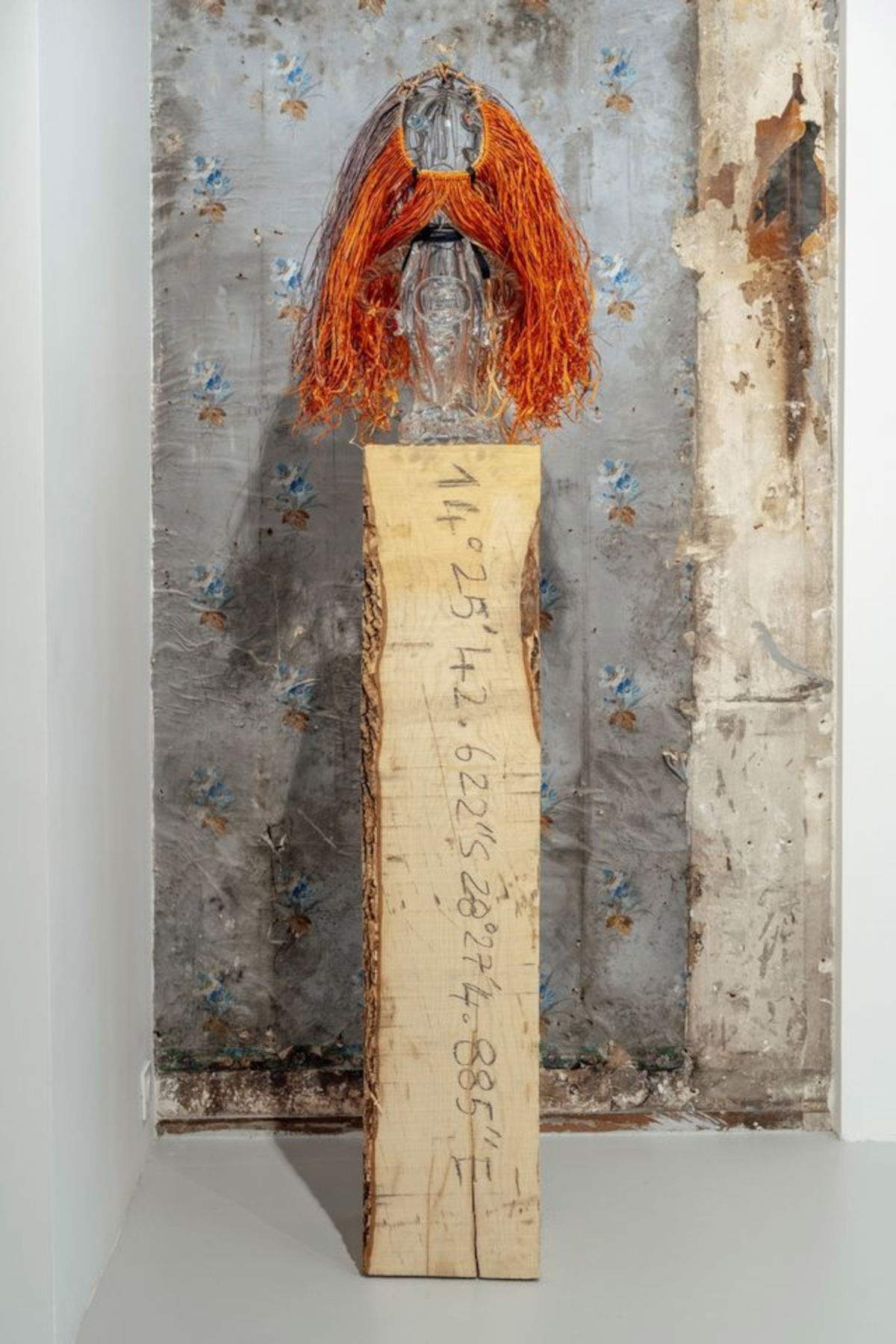
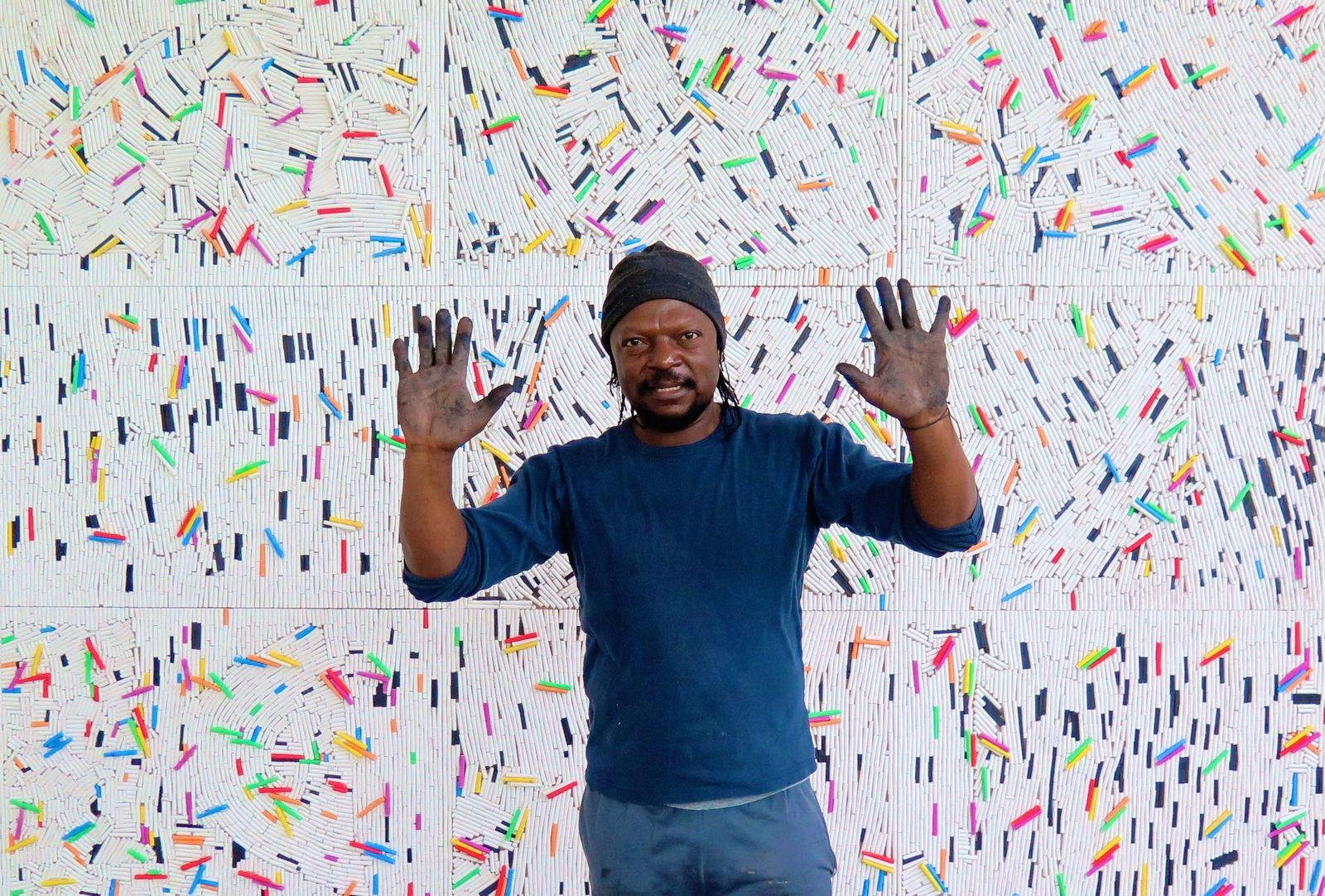
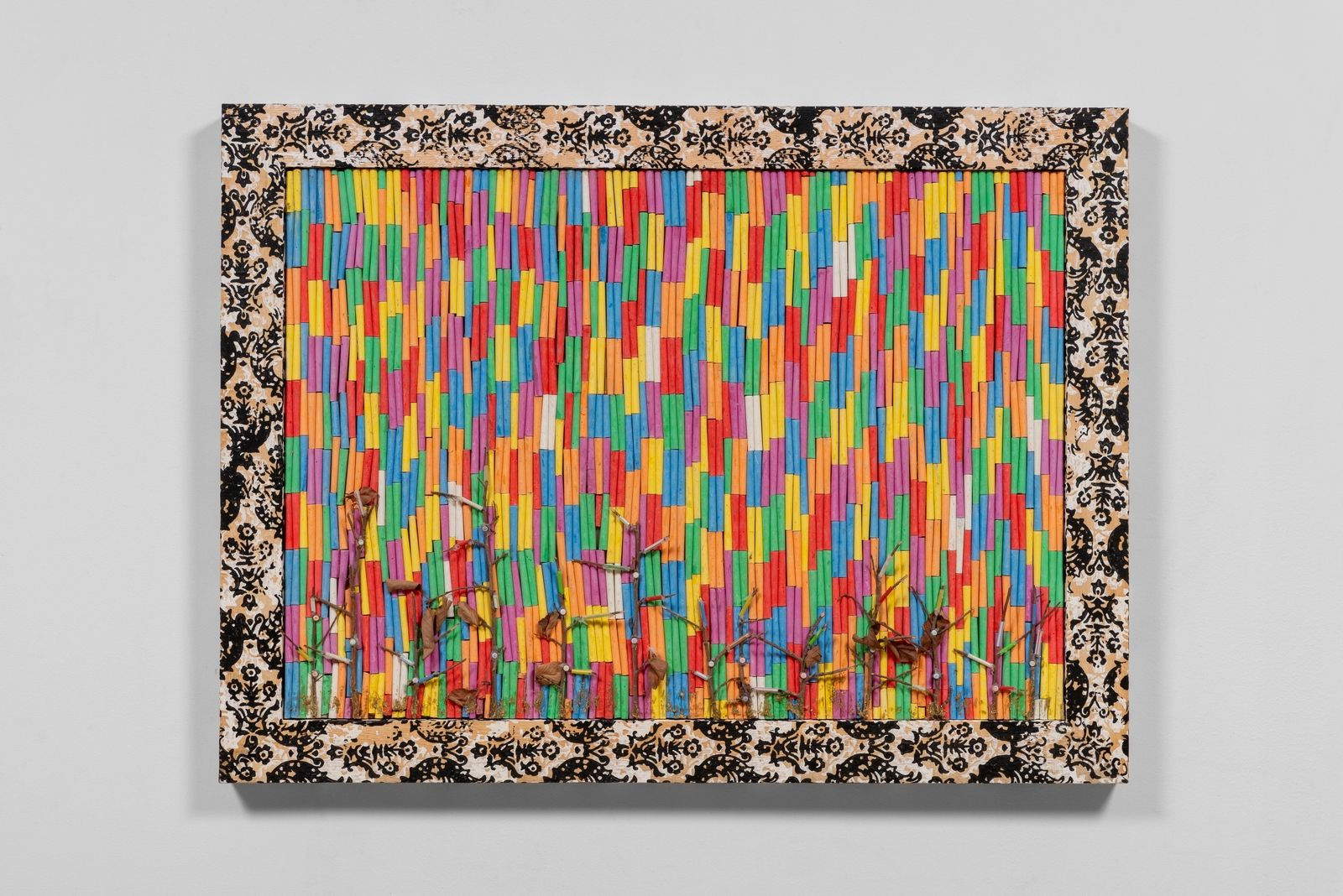
Rounding out the path, Poupées Pascale and Bantu Towels introduce a more intimate, narrative and domestic dimension. The artist uses materials such as crystal, textiles and everyday objects to construct hybrid forms that foster dialogue between cultures, memories and symbols. The act of sewing and assembling places the domestic sphere at the center of the creative process, transforming it into a place of collaboration and renewal. Charcoal Frescoes, started in 2012, combines a decorative aesthetic with a critical reading of the contemporary world, addressing issues such as resource extraction, labor relations and consumption. In Treviso, Tayou also presents new plaster frescoes, in dialogue with charcoal to emphasize continuity and textural coherence, including a never-before-seen Charcoal Fresco exhibited for the first time.
21Art Treviso, at Viale della Repubblica 3 in Villorba, is open to the public Tuesday through Friday with hours 10 a.m.-1 p.m. and 3 p.m.-7 p.m., while Saturdays are accessible by appointment. Admission is free. For information: treviso@21art.it, https://twentyoneart.com/.
Pascale Marthine Tayou, born in Nkongsamba, Cameroon, in 1966, lives and works between Ghent, Belgium, and Yaoundé, Cameroon. Active since the 1990s, he is internationally known for his participation in Documenta 11 (2002) and the Venice Biennale (2005 and 2009). His research ranges between sculpture, installation, drawing, video and textiles, without limiting himself to a specific medium or theme, and always takes his personal experience as a starting point.
Early in her career, Tayou added an “e” to her first and middle names, bestowing a feminine ending and ironically distancing herself from authorship and gender roles. The same attitude guides her practice with respect to cultural or geographical reductions: the works mediate between cultures, relate humans and nature, and reflect on the social, cultural, and political construction of identity. Tayou’s work is mobile, heterogeneous and often driven by the idea of travel and encounter with otherness. Objects, sculptures, installations, drawings, and videos show how an individual moves through the contemporary world, exploring the dynamics of the so-called global village and negotiating one’s African origins and the expectations attached to them.
 |
| In Treviso, Pascale Marthine Tayou's exhibition between identity, geopolitics and memory |

Warning: the translation into English of the original Italian article was created using automatic tools. We undertake to review all articles, but we do not guarantee the total absence of inaccuracies in the translation due to the program. You can find the original by clicking on the ITA button. If you find any mistake,please contact us.






















 IT
IT FR
FR DE
DE ES
ES CN
CN


