





Bread understood as social architecture and the work of the land as a universal language are the focus of the new exhibition section Earth, Work and Bread. Forms of Dwelling in the Rural World, open to the public from Thursday, Feb. 5 until mid-June 2026 at the Archaeological Museum of Palazzo Ducale in Tricarico (Matera). The section is part of the broader diffuse exhibition The Goddesses of Grain, launched on Dec. 20, 2025 and articulated over the entire territory of Basilicata, with stages already active in Matera, Metaponto, Policoro and Potenza.
The new section offers an intense dialogue between Luigi Spina ’s photographic research and precious artifacts from the ethnographic collection of the National Museums of Matera, creating a choral narrative dedicated to rural civilization, its rituals and hopes. The heart of the exhibition is a corpus of fifty black-and-white photographs, in the 50x60 cm format, through which the artist investigates the identity value of objects. A central part of the project is devoted to bread marks, the wooden stamps used for centuries to identify the loaves of bread of different Matera families. In Spina’s images, the shapes of bread and artifacts resonate with the landscape of Matera, in an interplay of surfaces, volumes and tones that reflects the profound relationship between food and the land.
The exhibition develops as a narrative that starts from the land, understood not only as a productive resource but as a living space in which toil, identity and a sense of belonging are intertwined. Alongside the photographs, a rich selection of objects from the Vicinati dei Sassi and surrounding rural areas is presented, including utensils related to the wheat cycle and bread-making, along with artifacts that render the complexity of agricultural and peasant life.
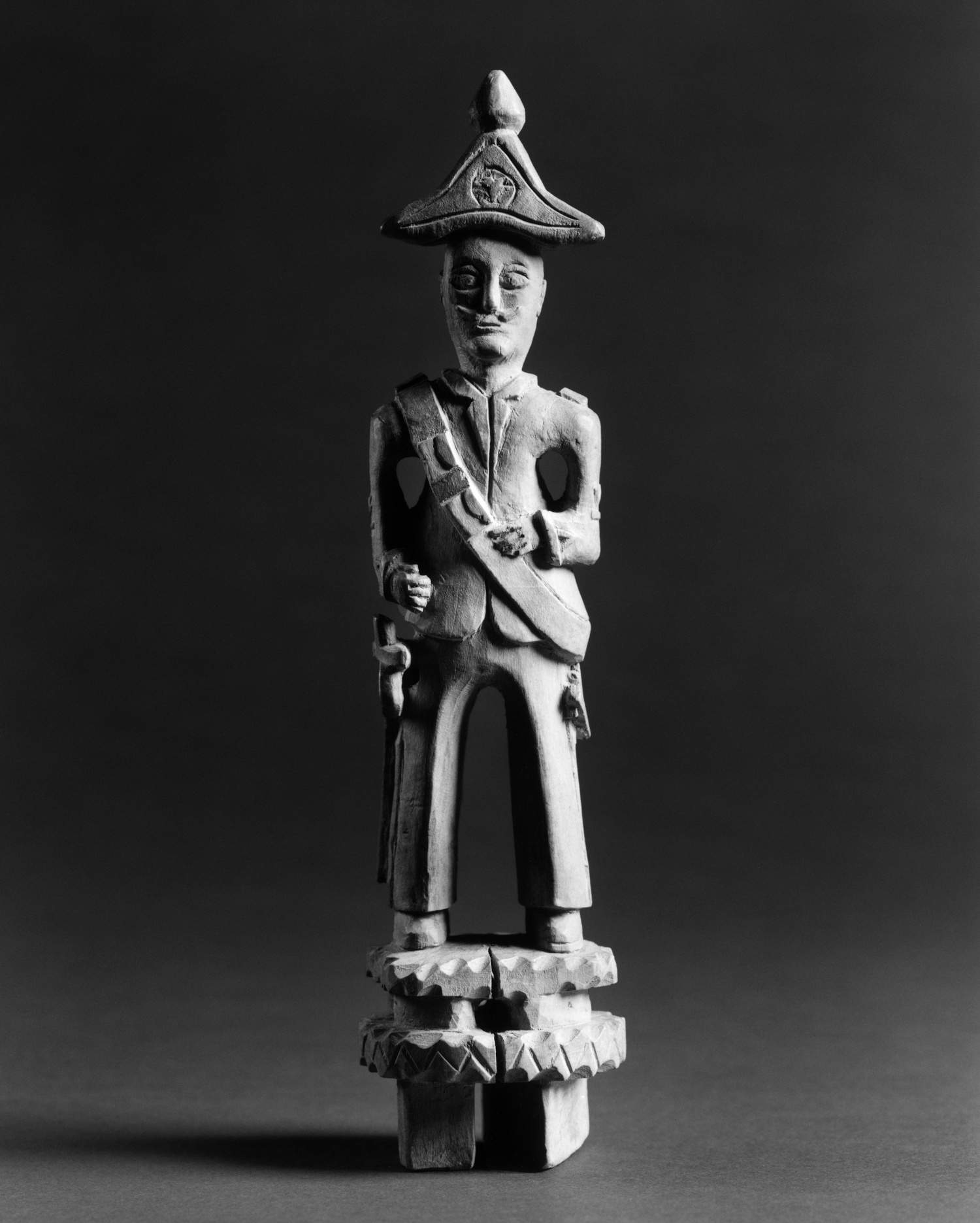
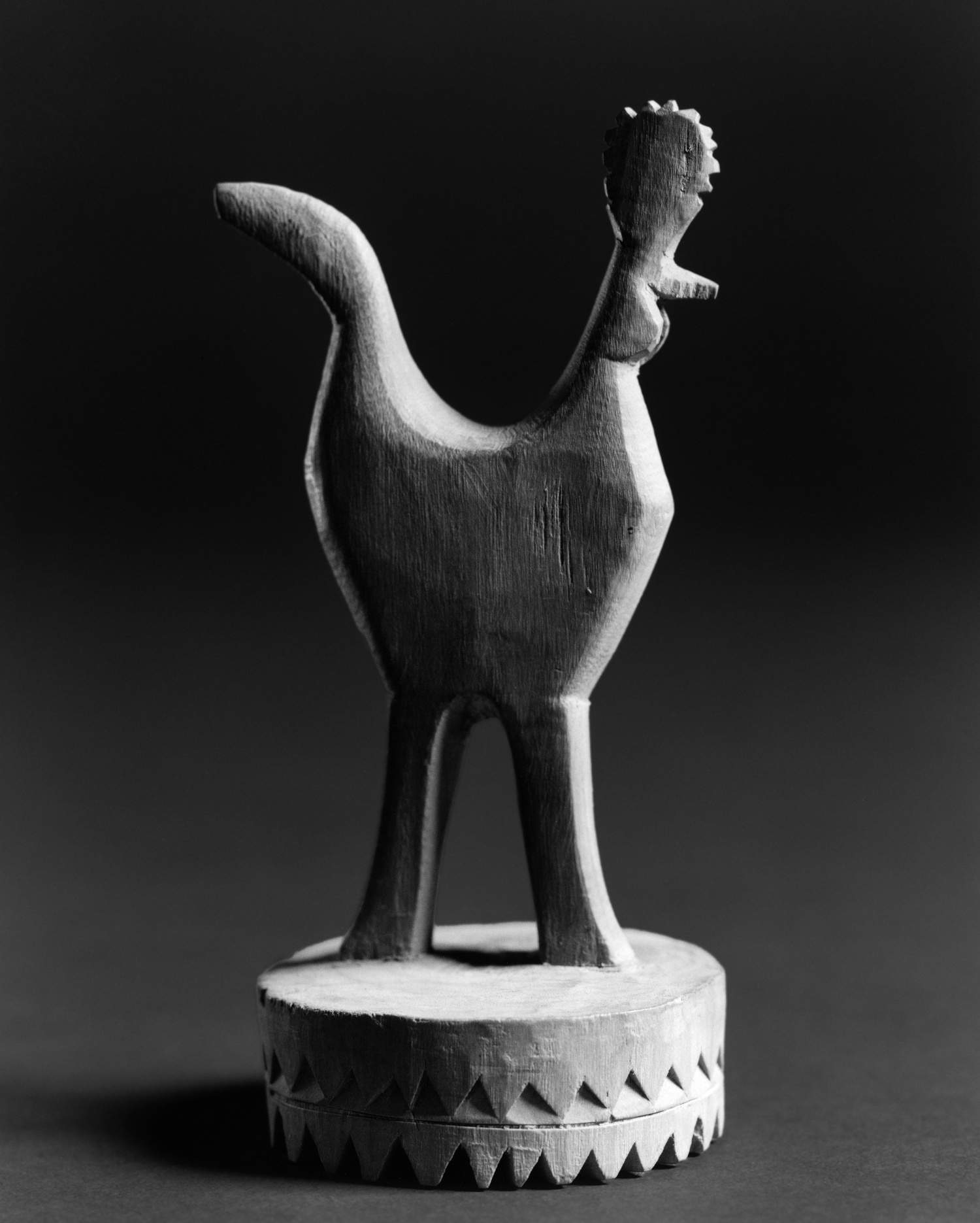
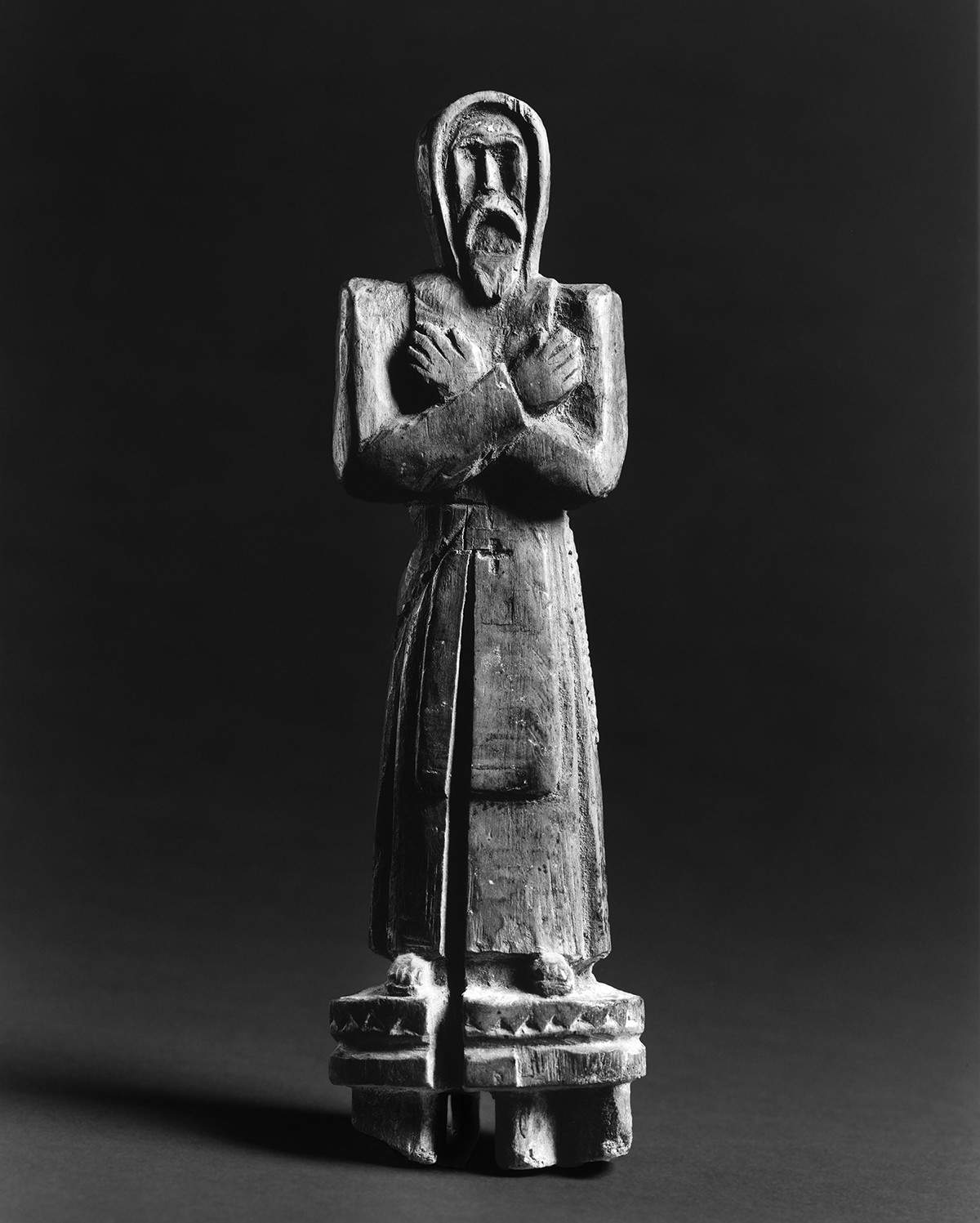
From the open horizon of the fields, the narrative shifts to the intimacy of domestic space, where the transformation of food punctuates daily time and reveals a culture of thrift, in which every object testifies to the value of resources and the precision of gesture. In this symbolic universe, bread and wine assume a central role: not mere foodstuffs, but signs of justice, sharing, and passage from the private to the collective dimension of communal ovens and rituals. Even the simplest utensils, such as carved spoons and everyday objects, become expressions of essential and profound creativity.
Finally, the exhibition opens to the dimension of the sacred, which does not remain confined to the spaces of worship but permeates every aspect of existence. Ex votos, amulets and devotional images restore the image of a widespread and archaic religiosity, born as a response to the uncertainty of life. This unified vision of matter and spirit finds a powerful correspondence in Luigi Spina’s shots, where carved wooden surfaces are charged with humanity, becoming living traces of a memory that continues to interrogate the present. In keeping with the philosophy of the project, which aims to create a direct link between the visitor and the themes of the earth, the visit to the exhibition will be accompanied by a convivial moment.
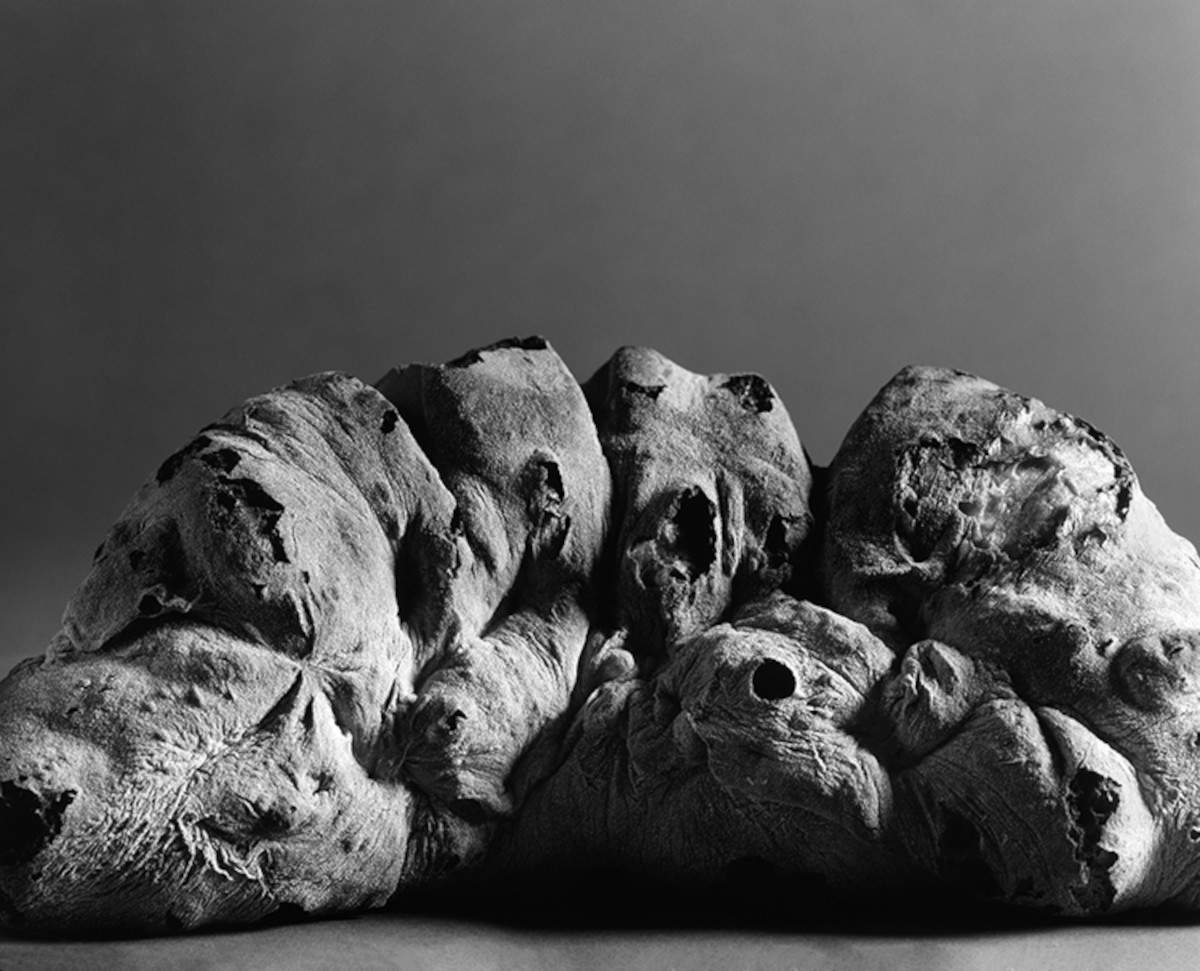
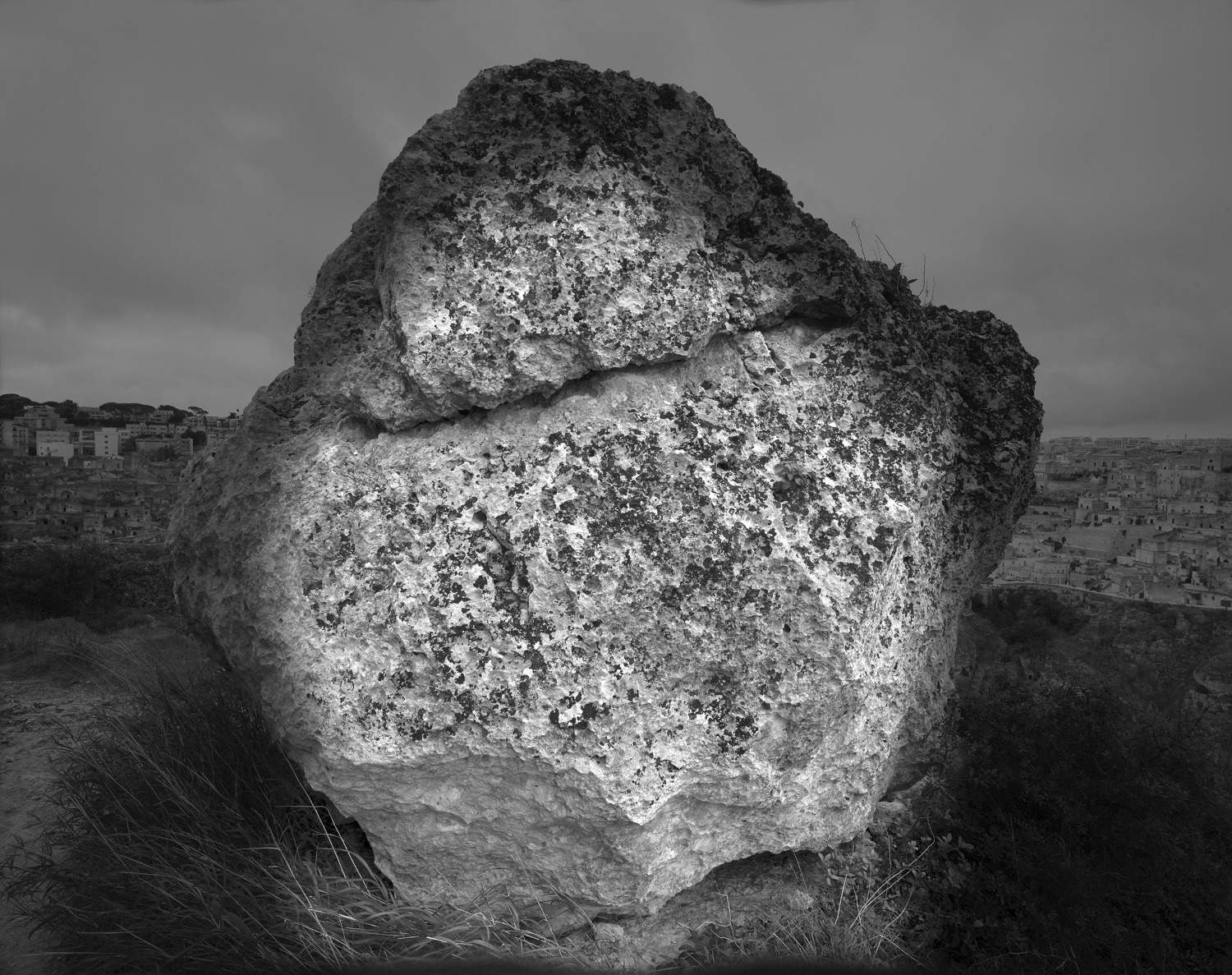
At the end of the stay in Tricarico, Luigi Spina’s photographs will become a permanent part of the collections of the National Museums of Matera, continuing in time the dialogue with ethnographic artifacts and with the collective memory of the communities of reference. After the Tricarico stop, the exhibition will continue in Melfi in the season of budding, when life returns to manifest itself; in Grumento in the time of harvest and reaping, the culminating moment of the agricultural cycle; and finally at the Diocesan Museum of Matera (MATA), which will accompany the start of a new sowing, symbolically marking the passage from conclusion to a new beginning.
“There are objects that we call common, to which we do not attribute value, and which instead hold our family and social histories. The bread brands, agricultural tools, and artifacts of the Matera peasant world are a reflection of an existence made up of sacrifice, identity and belonging. In those forms-often anthropomorphic or zoomorphic-we read the dreams, anxieties and hopes of a community that transformed daily toil into pure creativity. Bread, marked by the mark of each family, thus becomes food, warmth, faith and memory: a deep bond between man, the land and the landscape of Matera,” says photographer Luigi Spina.
|
| In Tricarico (Matera) 50 photographs by Luigi Spina tell the story of peasant culture, including land, work and bread |

Warning: the translation into English of the original Italian article was created using automatic tools. We undertake to review all articles, but we do not guarantee the total absence of inaccuracies in the translation due to the program. You can find the original by clicking on the ITA button. If you find any mistake,please contact us.














 IT
IT FR
FR DE
DE ES
ES CN
CN