




From March 14 to June 28, 2026, the Magnani-Rocca Foundation in Mamiano di Traversetolo, a few kilometers from Parma, hosts The Symbolism in Italy. Origins and Developments of a New Aesthetic 1883-1915, an exhibition that brings together more than 140 works including paintings, sculptures and engravings, offering a comprehensive mapping of Italian Symbolism. The exhibition aims to reconstruct an artistic movement that elaborated an autonomous language between the 19th and 20th centuries, while constantly confronting European trends, from English Pre-Raphaelism to French and Central European culture, with figures such as Gustave Moreau and Arnold Böcklin serving as references. Curated by Francesco Parisi and Stefano Roffi, the exhibition distinguishes artists who consciously elaborated a Symbolist lexicon from those who occasionally followed iconographic fashions, thus delineating a critical picture of the movement. The exhibition, divided into seven sections, addresses the main thematic nuclei of Italian Symbolism: nature conceived as a living organism, myth as a perturbing experience, the female figure in ambivalent roles, landscape as a space of interiority, and the graphic sign as a tool to convey the invisible. The exhibition documents how Italy developed its own Symbolist physiognomy, capable of integrating spiritual instances and reflections on myth with the national figurative tradition, without renouncing international comparison.
Among the featured artists are Giovanni Segantini, Giuseppe Pellizza da Volpedo, Gaetano Previati, Giulio Aristide Sartorio, Galileo Chini, Luigi Russolo, Leonardo Bistolfi, Adolfo Wildt, Alberto Martini, Cesare Saccaggi, and Libero Andreotti, while foreign artists such as Arnold Böcklin, Edward Burne-Jones, Franz von Stuck, and Max Klinger document the relations between Italy and Europe. The itinerary also explains the reasons for the later reception of Symbolism in our country compared to France, Belgium and the Central European area, highlighting important cultural exchanges, such as Böcklin’s stay in Florence, the Pre-Raphaelite milieu active between Rome and Florence and the influence of the Deutsch-Römer colony.
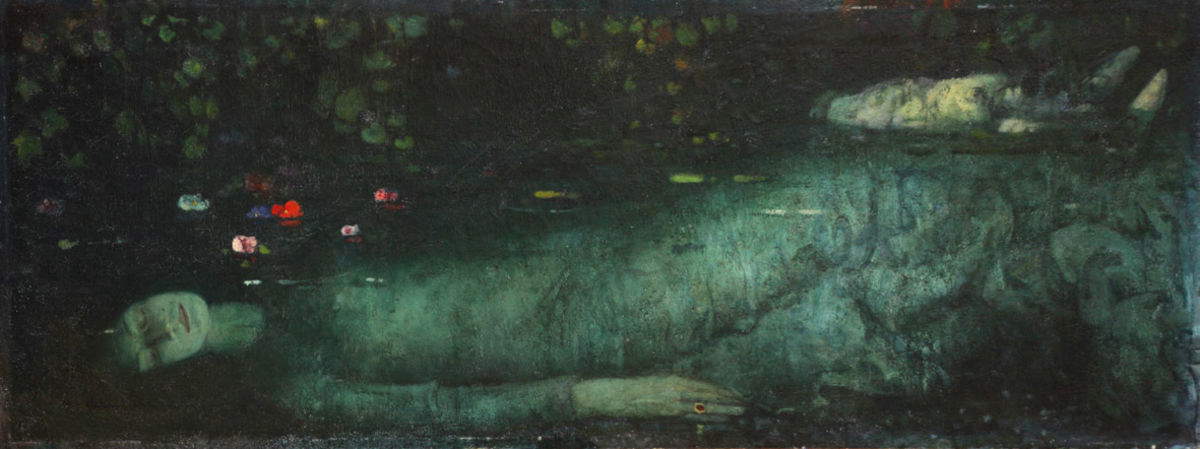
The first section, On the Threshold of Symbolism: Between Theory and Literature, presents the cultural context of the 1880s and 1890s, with figures such as Gabriele D’Annunzio, Angelo Conti, and Vittore Grubicy. In this phase, the first pictorial experiences consistent with the new sensibility emerge, including the In Arte Libertas group and Sartorio’s early works, including Isaotta Guttadauro, an example of Roman Pre-Raphaelite declension. The second section, From History to Symbol, shows how Italian history painting began to privilege myth and sacredness over narrative, with works by Francesco Netti, Cesare Maccari, Domenico Morelli, Giulio Bargellini and Luigi Conconi.
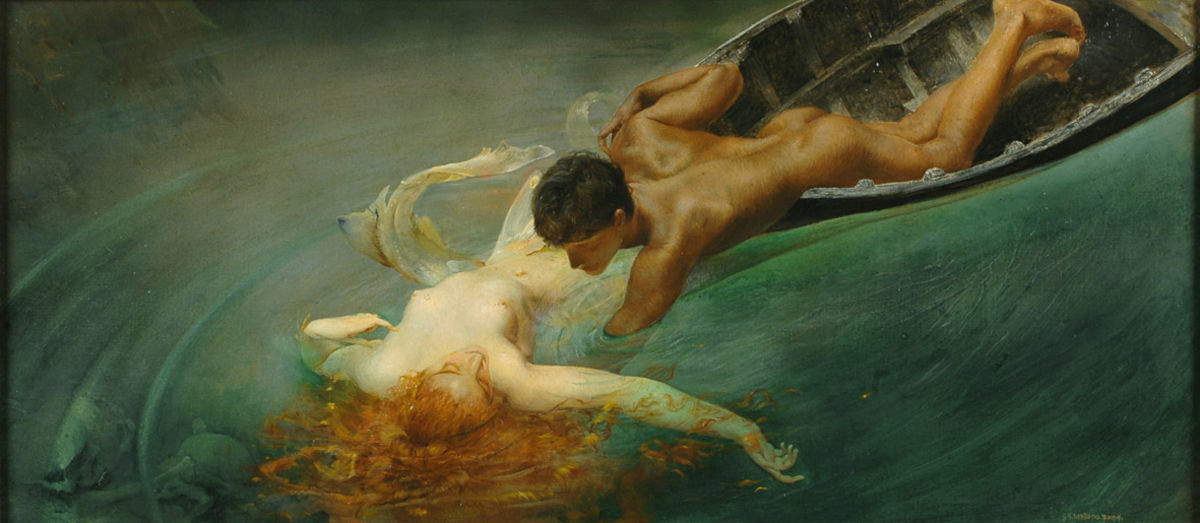
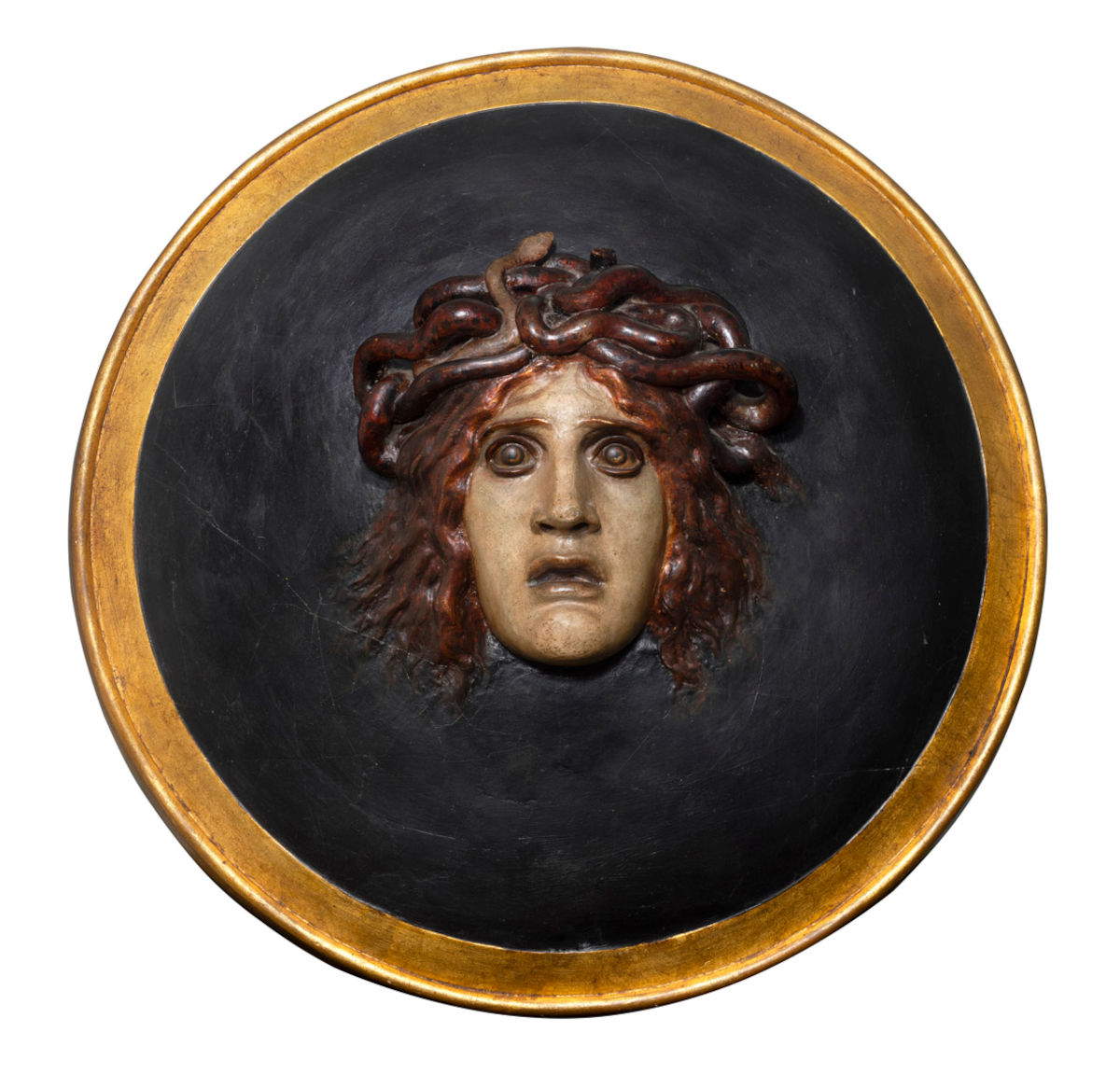
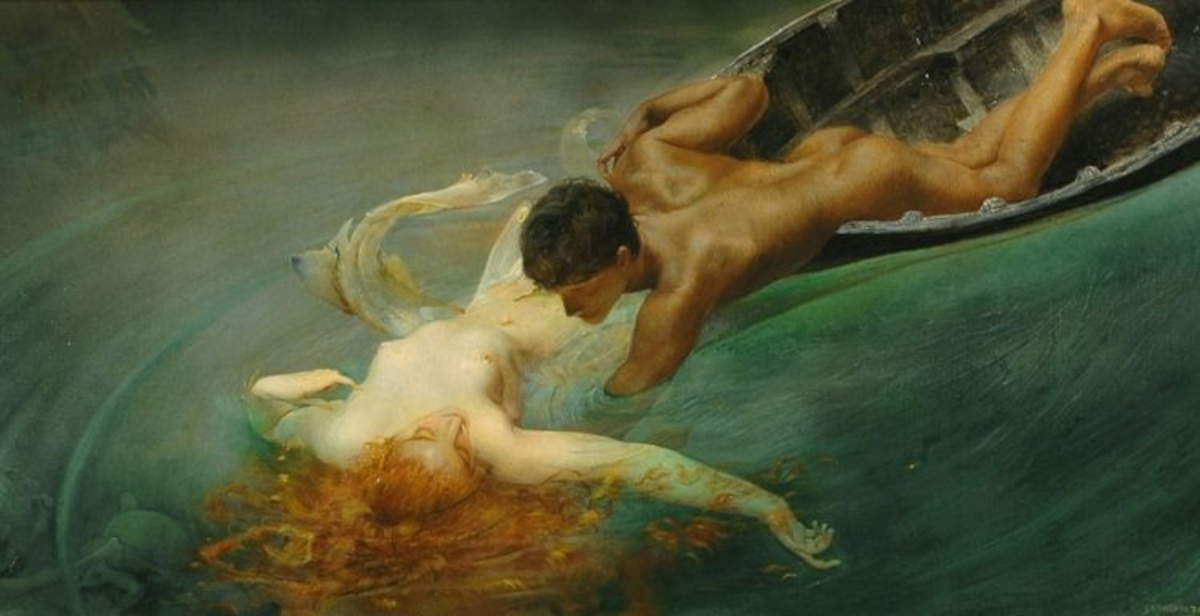
The third section, In the Woods and Seas of the Gods, highlights Central European influence and authors such as Böcklin, Klinger and von Stuck, with Italian masterpieces such as Sartorio’s Abisso verde and works by Discovolo, Nomellini, Dalbono and Laurenti. The fourth section, Poison, Desire and Redemption. The Feminine Vision, analyzes the female figure between sanctity and sin, spiritual body and seductive body, with works by Galileo Chini, Alberto Martini, Cesare Ferro, Glauco Cambon, and a rare youthful proof by Marussig. Cambon’s Salome, returned to Italy after more than 30 years in Israel, stands out.
Geographies of the Invisible. Landscape, the fifth section, presents landscape as a projection of the inner state, from the earliest formulations of the landscape of the soul (paysage d’âme) to the Divisionists Segantini, Longoni and Benvenuti. The sixth, The Dark Sign. Symbolist illustration, focuses attention on drawing and graphic techniques with works by Martini, Costetti, Sartorio and Cambellotti. The last section, Latest Trends and Developments, documents the persistence of Symbolism beyond 1910 through Ferenzona, Ferrazzi, Gabrielli and Crema, testifying to a personal and autonomous survival of Symbolist language.
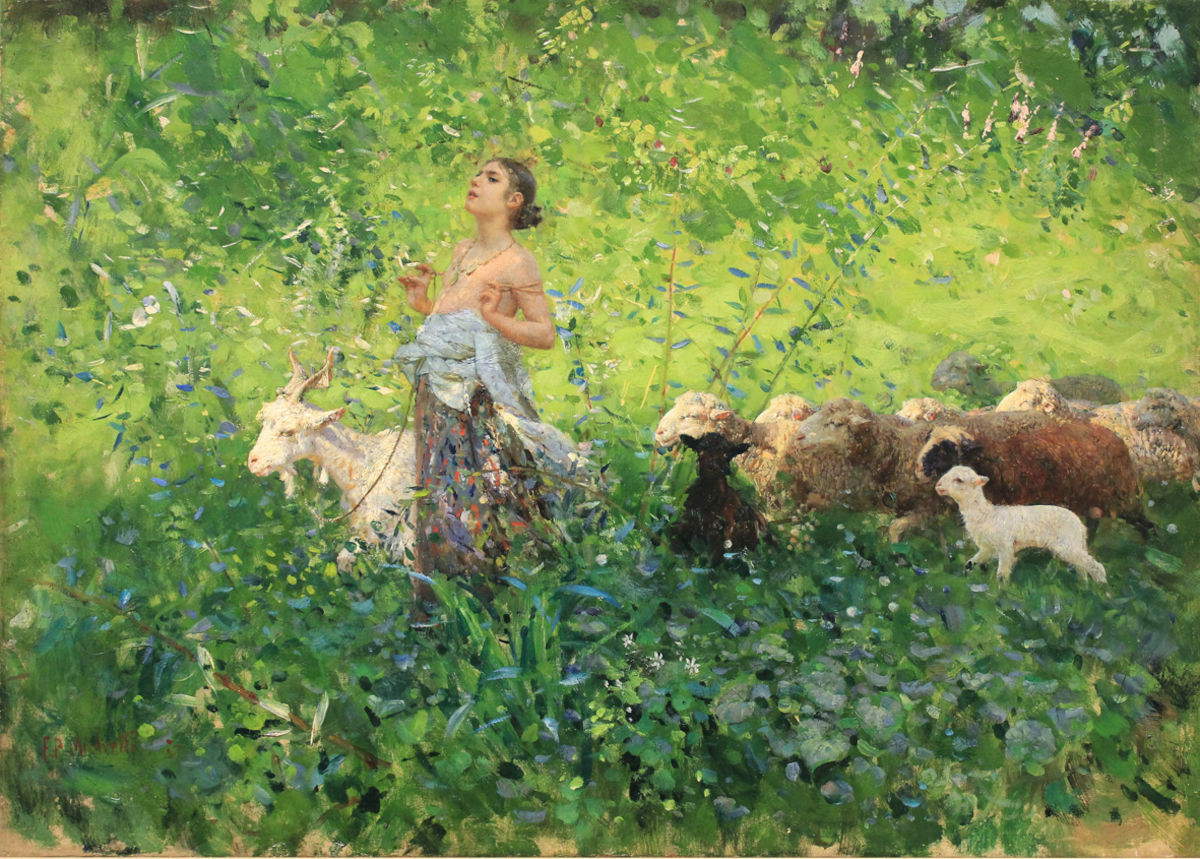
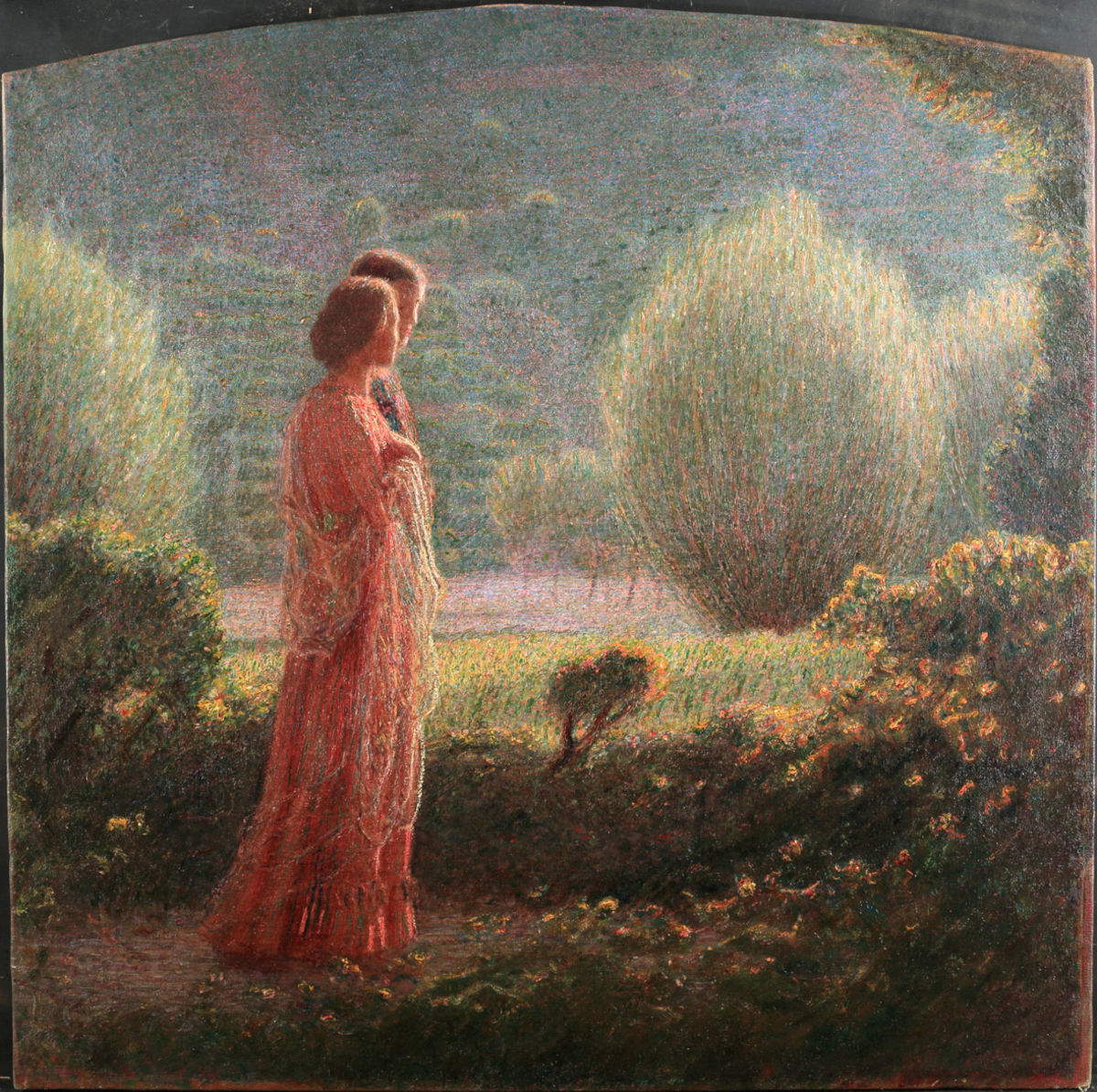
The exhibition itinerary ideally extends into the Romantic Park of the Villa dei Capolavori, twelve acres of English, Italianate and contemporary gardens conceived according to the New Perennial Movement, offering an extension of the Symbolist experience in contact with the landscape. The park, desired by Luigi Magnani, represents a continuity of the collector’s aesthetic sensibility, where art and nature merge into a contemplative experience.
The works come from prominent public institutions and private collections, including the Presidency of the Italian Republic, the Galleria Nazionale d’Arte Moderna e Contemporanea in Rome, the Galleria Civica in Turin, the Museo del Novecento in Milan, and the Mart in Trento and Rovereto. Many rarely accessible works offer the opportunity to observe brought together masterpieces that are difficult to see elsewhere. The exhibition catalog, edited by the two curators and published by Dario Cimorelli Editore, includes essays by Alessandro Botta, Niccolò D’Agati, Mario Finazzi, Eugenia Querci, Sergio Rebora and Alessandra Tiddia, and is a critical reference point on Italian Symbolism.
Hours: Tuesday-Friday: 10 a.m.-6 p.m. (box office closes at 5 p.m.), Saturday, Sunday and holidays: 10 a.m.-7 p.m. (box office closes at 6 p.m.). Mondays closed (open Easter Monday)
Tickets: € 15 full (also valid for Permanent Collections and Romantic Park), € 13 groups (minimum 15 people), € 5 schools and under 14s. Ticket includes a visit to the Villa’s Secret Cabinets. For less than fifteen people, reservations are not necessary; tickets are purchased upon arrival at the Foundation.
 |
| Parma, a major exhibition on Italian Symbolism at the Magnani-Rocca Foundation |

Warning: the translation into English of the original Italian article was created using automatic tools. We undertake to review all articles, but we do not guarantee the total absence of inaccuracies in the translation due to the program. You can find the original by clicking on the ITA button. If you find any mistake,please contact us.



















 IT
IT FR
FR DE
DE ES
ES CN
CN


