




In Rome, from April 29 to July 31, 2026, Gagosian welcomes Lately I Find a Sliver of Mirror Is Simply to Slice an Eyelid, a photographic exhibition dedicated to Francesca Woodman (1958-1981). The exhibition, which specifically explores her relationship with Surrealism, brings together about fifty shots taken by the artist during her short life, many of which have never been shown to the public.
Through images depicting her own body and that of other models, whether in natural settings or scruffy interiors, Woodman employs composition and staging to evoke enigmatic and theatrical atmospheres. Crossing boundaries between body, objects and space, her photographs express both identity and fragmentation. Figures, sometimes nude, clothed or covered, appear either exposed or partially concealed, often accompanied by everyday objects, such as eggs, gloves, masks, shells, cups, fruit or fish, loaded with possible symbolic meanings. These works reveal a self-conscious, curious and experimental artist who was deeply attracted to the Surrealists’ innovative use of allegory, language and everyday objects to evoke the mysterious and wondrous.
Woodman studied Dadaism and Surrealism at the Rhode Island School of Design (RISD), and there are numerous references to these movements in her notebooks. Italy also played a significant role in his education: in fact, he spent many childhood summers in Tuscany with his parents, both U.S. artists. She spoke fluent Italian and was well embedded in the country’s artistic culture; she also lived in Rome between 1977 and 1978 while still attending RISD. At that time she frequented the Libreria Maldoror, a space devoted to Dadaist, Surrealist and Futurist art and literature, where her first European solo exhibition was also held.
In 1979 he wrote to the Italian publisher Alberto Piovani, indicating among his influences “[Josef] Koudelka, Brassaï, [Jean-Auguste-Dominique] Ingres and Balthus” and stating, "I would like the words to be to my photographs what the photographs are to the text in Nadja by André Breton. He identifies all the allusions and enigmatic details of some rather ordinary and mystery-free snapshots and elaborates them into a story. I would like my photographs to summarize the experience."
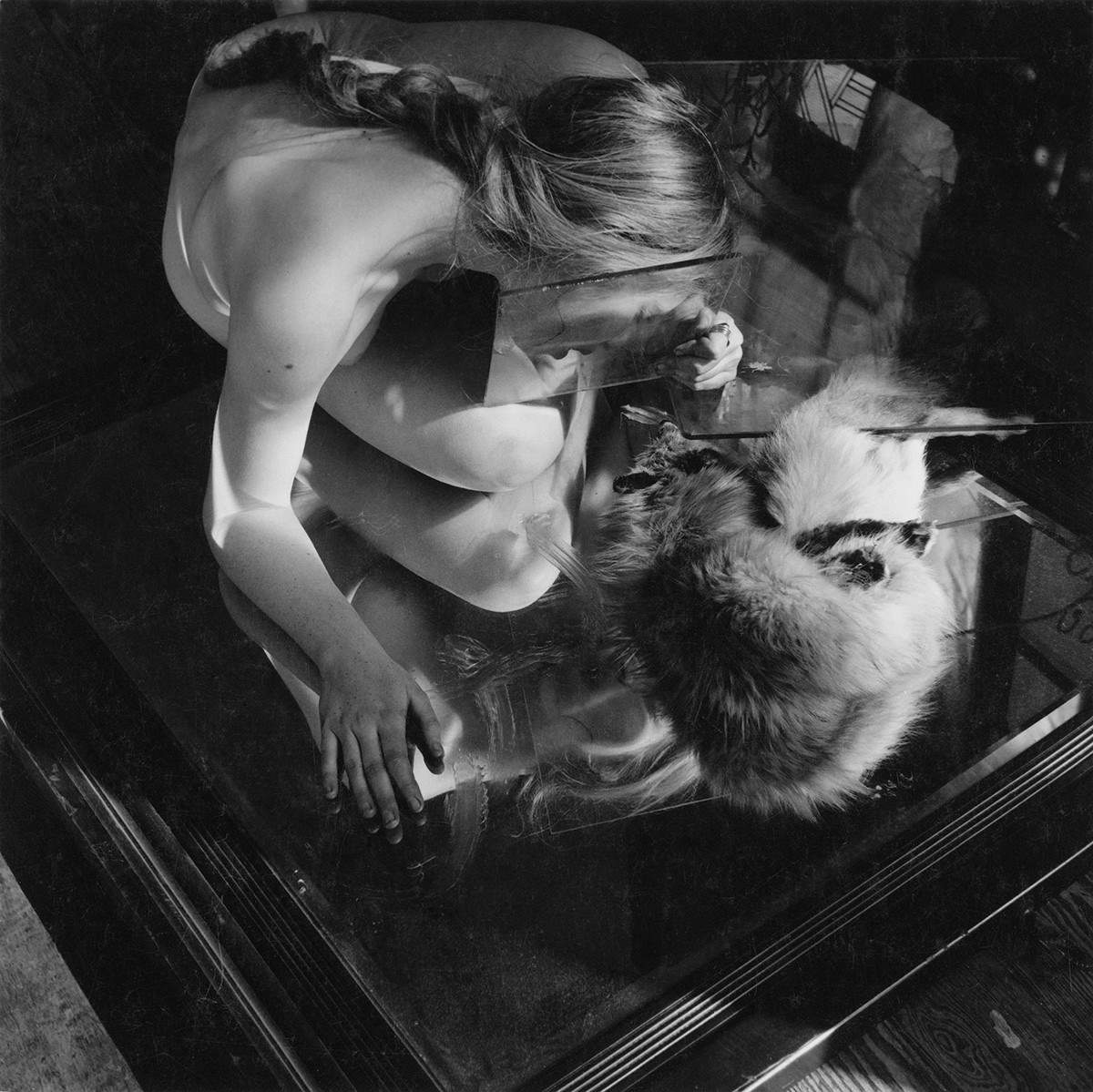
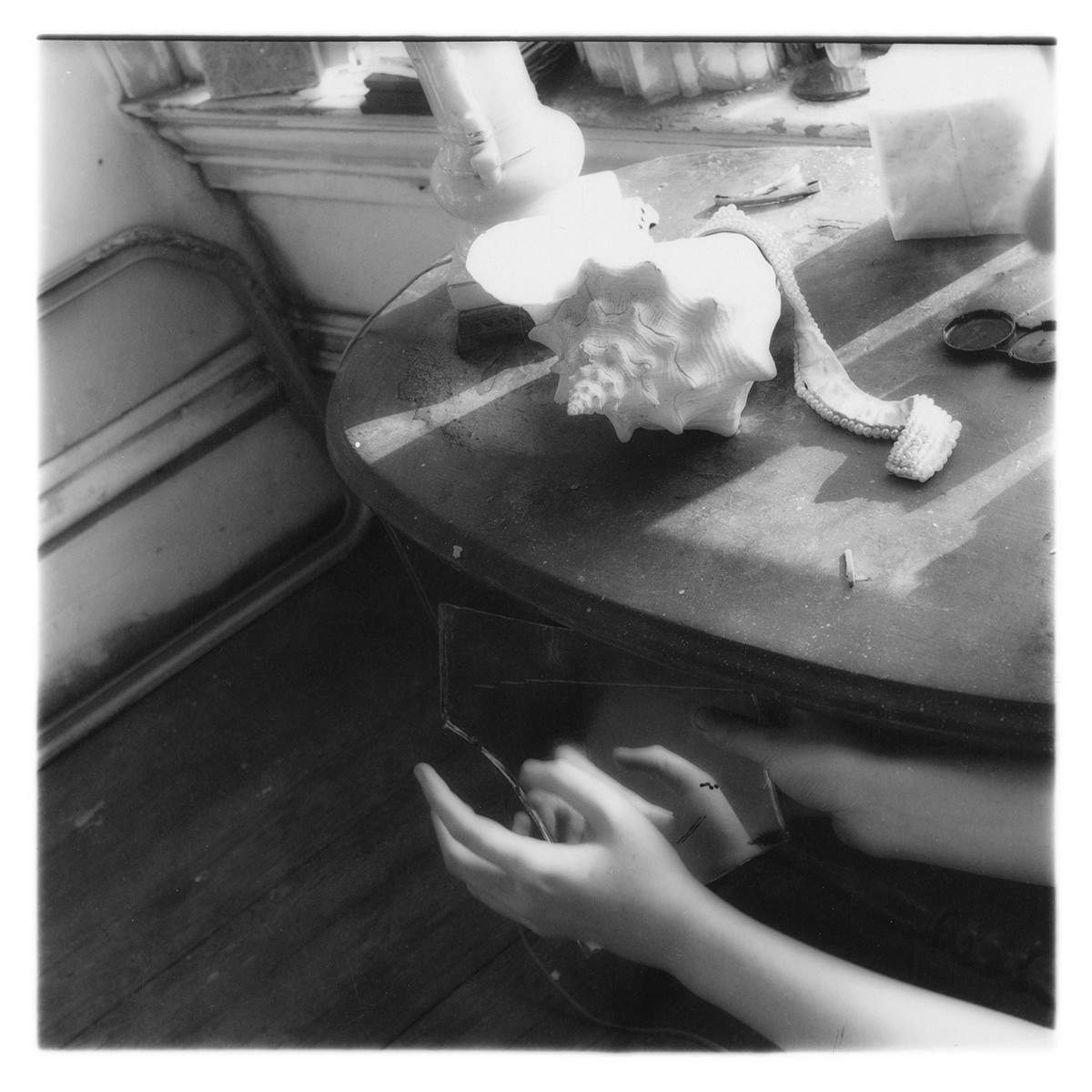
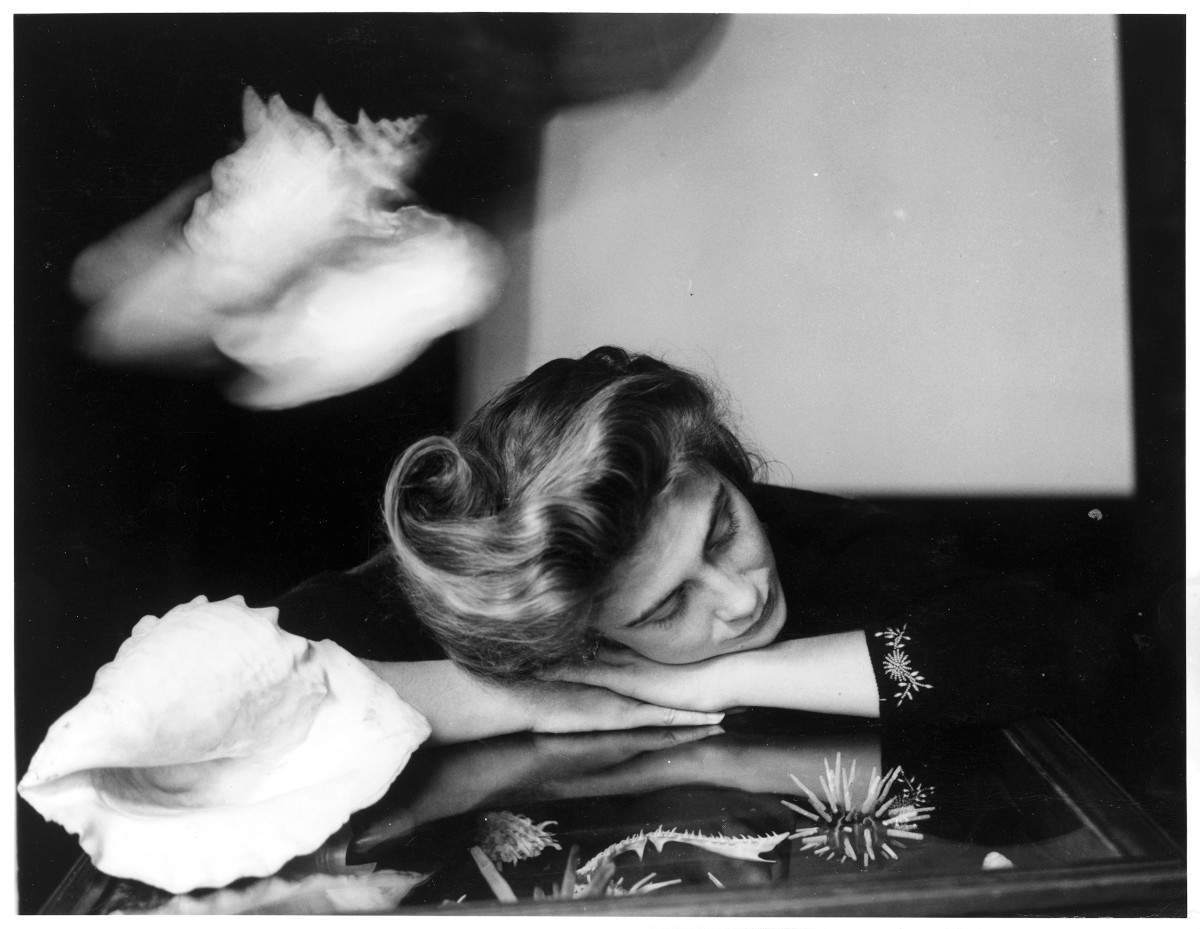
The title of the exhibition recalls a photograph of the same name made between 1975 and 1977, in which hands support a fragment of a mirror beneath a still life resting on a table, evoking the same associative force as the Surrealist images of Breton and Luis Buñuel. In a 1976 note, Woodman connected this work to a course on fairy tales taken during his first year at RISD, relating it to the story of the “Snow Queen,” in which symbolic mirror fragments alter the perception of beautiful and ugly. Other works on display include the use of mirrors, glass, and manipulated, photographed, painted, or printed images that challenge a unified vision through processes of multiplication and substitution.
As art historian Alyce Mahon notes in her recent contribution for the Gagosian Quarterly, “objects are not personal but are malleable in Woodman’s work, serving to bring the surreal into lived space, whether it be the studio, an abandoned house, or nature. In this way their utility takes on new meaning: they become vehicles for new encounters between strangers or strange things.”
Other photographs present the female body reinterpreted in singular ways: eels and pike wrapped around the naked body, skin pinched with clothespins, legs wrapped with duct tape. These images evoke theSurrealist interest in dreaming and fetishization, while suggesting a subtle irony toward her own codes. Working both in front of and behind the lens, Woodman develops a dialogue with Surrealism that is set in the context of contemporary photography, conceptual art and feminism, as well as her experiences between RISD and Rome.
|
| Rome, Gagosian brings together 50 shots by Francesca Woodman on her relationship with Surrealism |

Warning: the translation into English of the original Italian article was created using automatic tools. We undertake to review all articles, but we do not guarantee the total absence of inaccuracies in the translation due to the program. You can find the original by clicking on the ITA button. If you find any mistake,please contact us.















 IT
IT FR
FR DE
DE ES
ES CN
CN


