





Elena Salamon Gallery, at its venue in Piazzetta IV Marzo in Turin, presents from March 6 to April 24, 2026 the exhibition Hokusai. The Sign that Becomes Life, which brings together more than 180 original woodcuts by Katsushika Hokusai.
The title draws inspiration from the last stage name the famous Japanese artist chose-Gakyō rōjin Manji, or the “old fool for drawing”-and recalls a reflection by the artist, “From the age of six I felt the desire to paint whatever I saw around me.” The arrival of Hokusai’s works in Europe caused a real cultural shift. Arriving at first almost by chance, used as wrapping paper for porcelain, his prints quickly won the attention of artists such as Claude Monet, Edgar Degas, Paul Gauguin, Vincent van Gogh and James McNeill Whistler. Out of that encounter came new compositional freedoms and a formal synthesis that contributed decisively to the transformation of modern Western art. Hokusai represented an ideal bridge between East and West, fostering a deep and enduring dialogue between two artistic traditions that continue to influence each other.
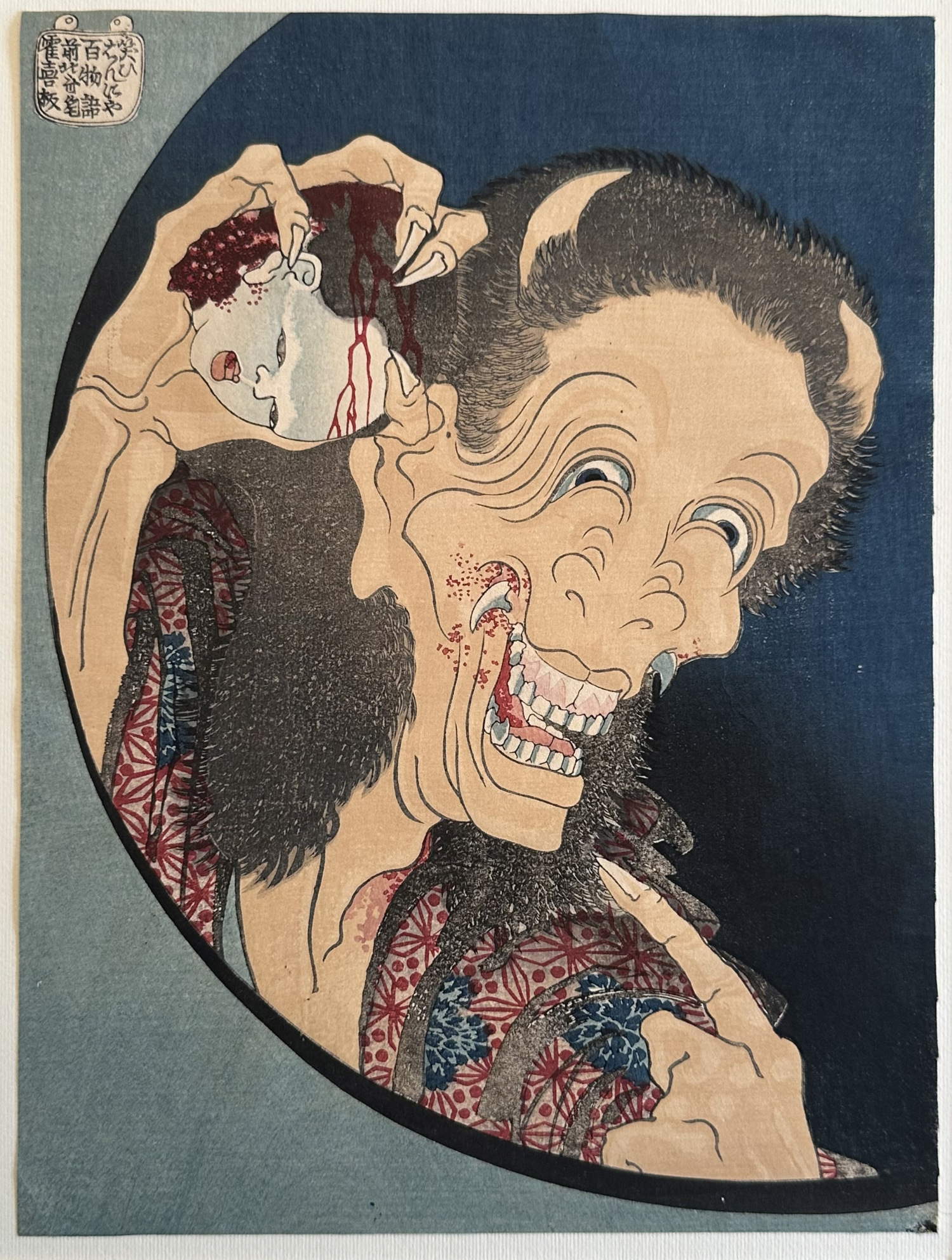
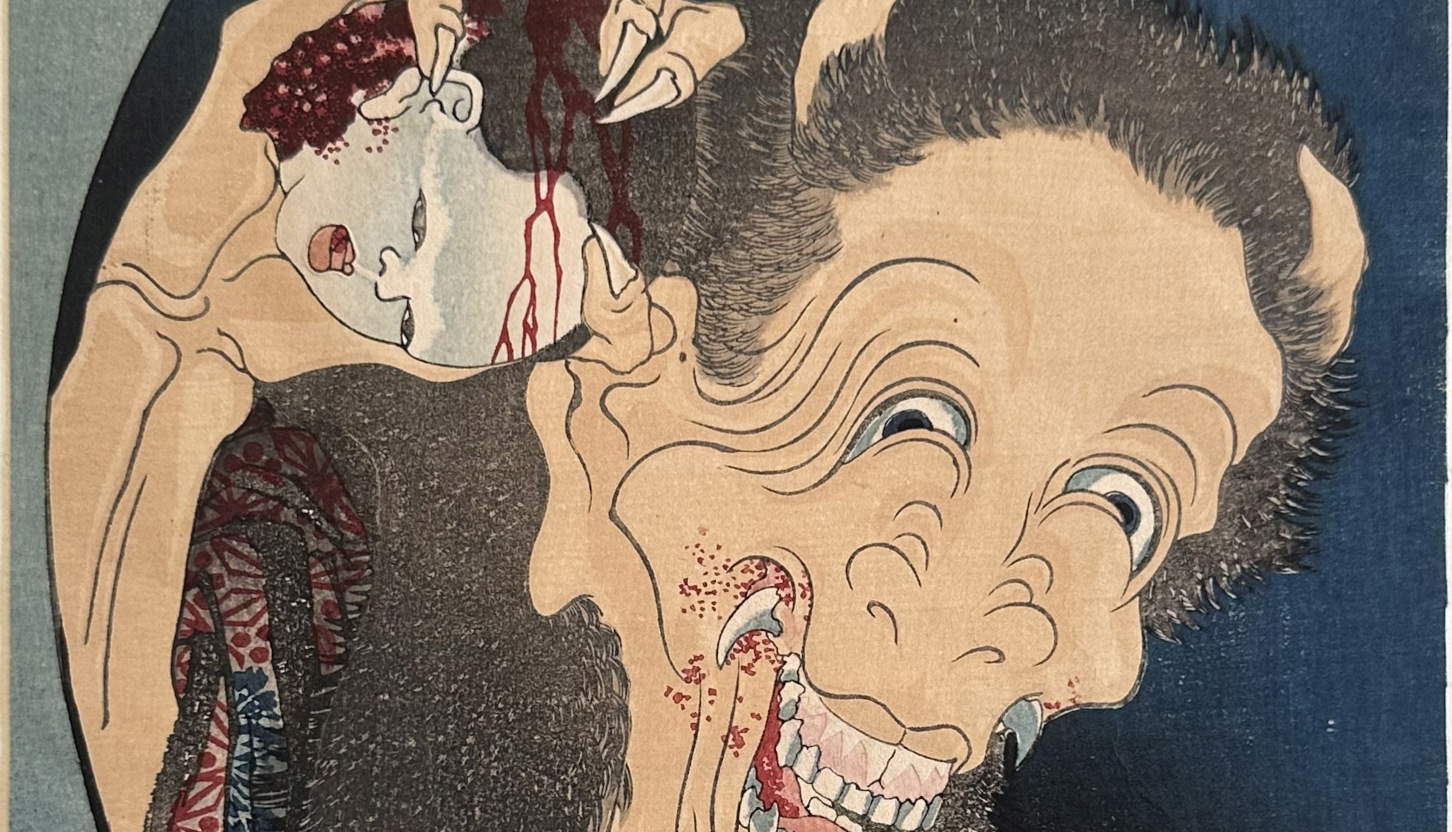
The Turin exhibition opens with two polychrome woodcuts from the series Tour of Waterfalls in Various Provinces(Shokoku Taki Meguri, c. 1832-1834), works characterized by vibrant chromatic intensity and formal elegance of extraordinary finesse. Of exceptional note is The Laughing Demon Hannya(Warai Hannya, 1831), considered among the rarest folios in the artist’s entire output. Timothy Clark, former director of the Japanese section of the British Museum, recognizes in this work a crucial moment, in which the master blends hyperrealism, fantastic imagination and a subtle irony that anticipates the spirit of modern manga. The figure of the Hannya, embodiment of the female spirit born of jealousy, is rendered with intense theatricality: the mocking grin, protruding horns and sharp claws emerge with powerful expressiveness. The specimen presented in the exhibition is distinguished both by its excellent state of preservation and by the presence of mokume-zuri, the wooden veins typical of early printings.
Testifying to the early phase of his work are eight prints from the Small Tokaido series (1804), displayed here inMeiji-era examples. The plates narrate the fifty-three stations along the famous route between Edo and Kyoto.
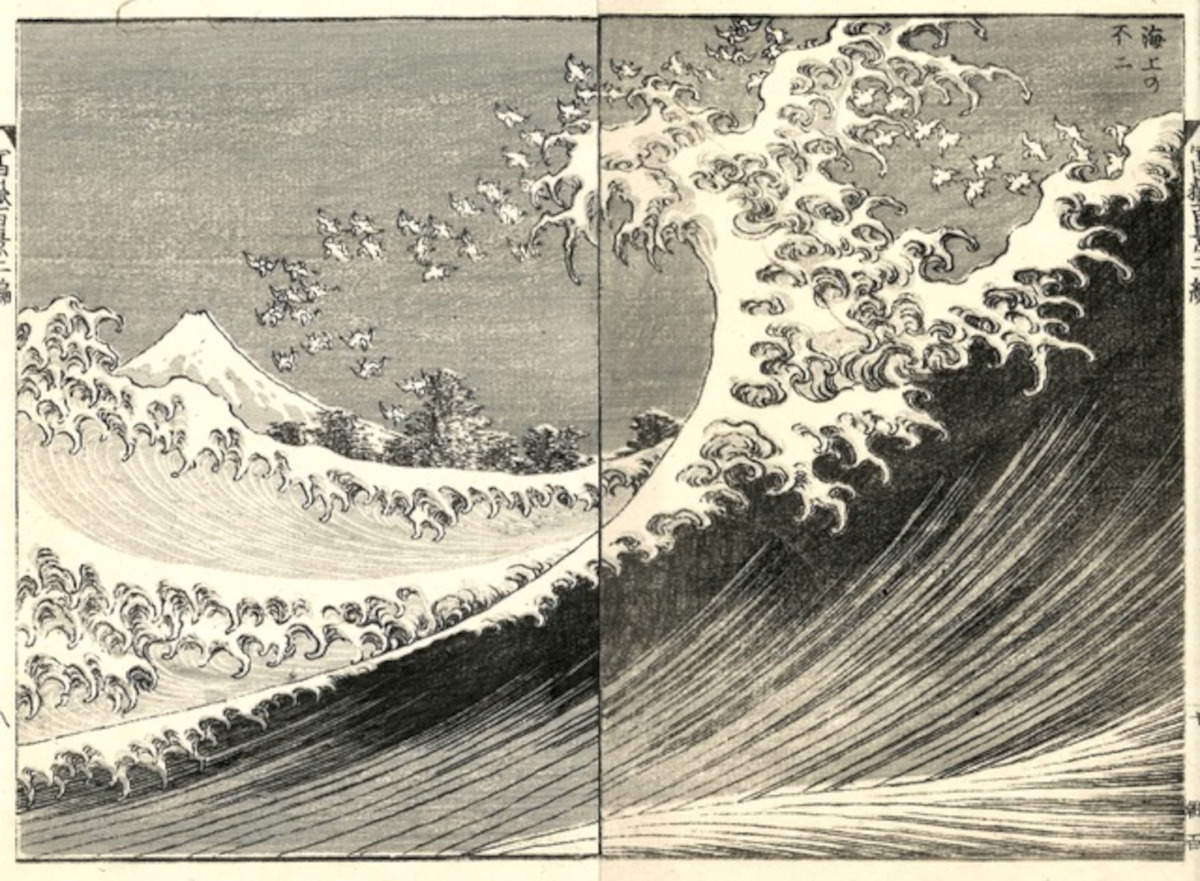
The tour continues with a polychrome woodcut belonging to the Thirty-six Views of Mount Fuji (1830-1832), the series that consecrated Hokusai to international fame. Also of particular note are the Hundred Views of Mount Fuji (c. 1834-1835): 102 etchings declined in three shades of gray, considered one of the absolute pinnacles of his production. Made over the age of seventy, this collection restores a more intimate and spiritual vision of the sacred mountain. In the work The Fuji from the Sea, the theme of the wave is taken up with expressive maturity and symbolic depth: the crest blown by the wind dissolves into a flock of plovers, while Mount Fuji appears as the only stable point in the immensity. It is the final landing place of a subject already famous thanks to The Great Wave, where the dialogue focuses between wind, water and sacred mountain.
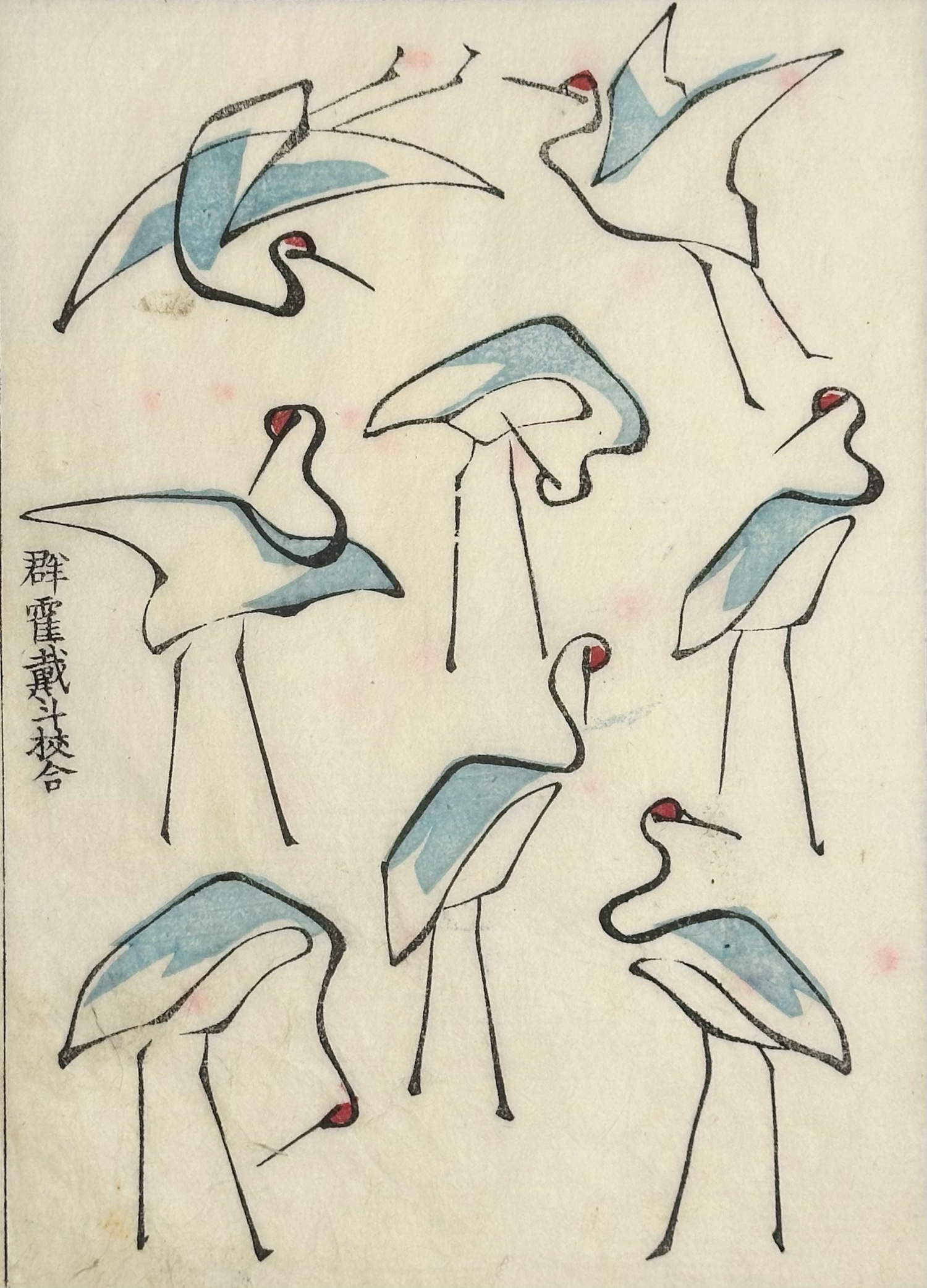
The exhibition also includes 55 woodcuts from the collection Denshin kaishu Ippitsu gafu (1823), with delicate turquoise and pinkish tones that are striking in their immediacy and visual freshness. The title itself encapsulates the artist’s aesthetic conception: art must go beyond mere imitation of reality to capture the vital energy of things.
Closing the exhibition are three complete volumes of the trilogy Illustrated Warriors of China and Japan (1836), black-and-white woodcuts in which the legendary heroes of tradition come to life with extraordinary narrative energy.
“It was my grandmother who passed on to me a love of Hokusai. Running the city’s first women’s gallery, she was the first to introduce Japanese prints to Turin in 1969,” says curator Elena Salamon. “She taught me to capture the essential simplicity and poetry of Hokusai, expressed in a universal language capable of moving across the centuries. This exhibition brings together specimens acquired over the years, creating a path through the most significant moments of his production.”
Hours: Tuesday, Wednesday and Friday from 3 to 7 p.m.; Thursday from 10:30 a.m. to 7 p.m.; Saturday from 10:30 a.m. to 6 p.m.
 |
| Turin, more than 180 original woodcuts by Katsushika Hokusai on display at Elena Salamon Gallery |

Warning: the translation into English of the original Italian article was created using automatic tools. We undertake to review all articles, but we do not guarantee the total absence of inaccuracies in the translation due to the program. You can find the original by clicking on the ITA button. If you find any mistake,please contact us.






















 IT
IT FR
FR DE
DE ES
ES CN
CN


