





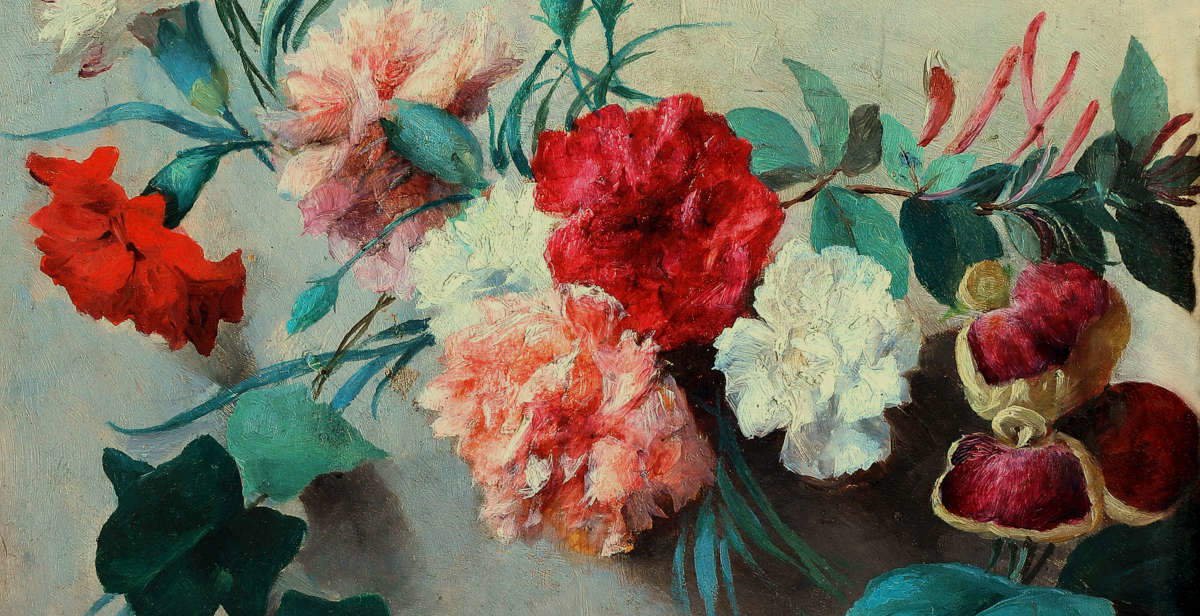
At the “Giuliano Ghelli” Civic Museum in San Casciano in Val di Pesa (Florence), 19th-century floral painting is back in the spotlight with an exhibition that interweaves art, science, history and local identity. Until March 1, in fact, the exhibition Con l’occhio del botanico. Flowers in nineteenth-century Tuscan art from the Bezzuoli to Tito Chelazzi from San Casciano in Val di Pesa, 1834 - Florence, 1892, an exhibition that restores centrality precisely to Tito Chelazzi (San Casciano in Val di Pesa, 1834 - Florence, 1892), an artist who long remained in the shadows and who, instead, was recognized by his contemporaries as Italy’s first floral painter. The exhibition, curated by Michele Amedei, features a selection of about forty works, most of which have never been seen by the public, from private collections and institutions such as the Kunsthistorisches Institut in Florence.
The exhibition stems from the desire of the Municipality of San Casciano in Val di Pesa to rediscover and enhance a figure deeply linked to the territory. Tito Chelazzi, who was born in San Casciano in 1834 and died in 1892 in Florence, was an original protagonist of the Italian nineteenth century, capable of combining an almost scientific observation of nature with a pictorial sensibility traversed by the civic and patriotic values of the Risorgimento. Many Sancascianesi still keep in their homes a work signed by the artist, a sign of a deep bond between the painter and his community, which now finds a public and collective restitution in the halls of the civic museum. The Giuliano Ghelli Museum, a cultural hub and exhibition space among the most active in Tuscany, thus welcomes a project that builds an ideal bridge between the late 18th century and the last decades of the 19th century. Floral painting becomes the thread of a narrative that spans the Enlightenment, Romanticism and the age of Italian Unification, restoring the sense of a season in which art looked to nature not only as an aesthetic subject, but as a field of study, a moral symbol and a metaphor for civil rebirth.
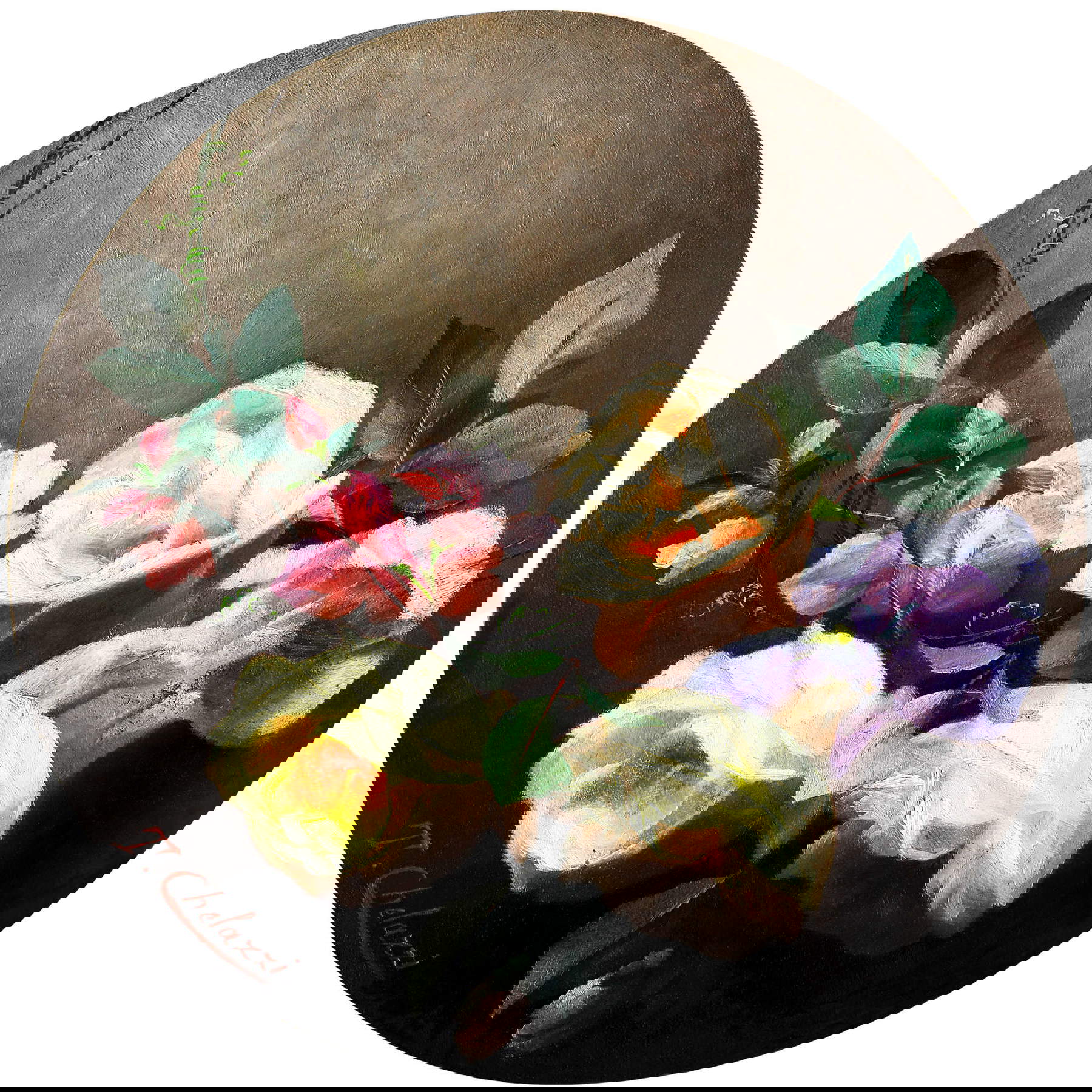
“The pictorial representation of the bouquet,” explains curator Michele Amedei, “understood as a floral composition linked to naturalistic and allegorical beauty, depicted in indoor and outdoor settings, is the fil rouge, theelement that recurs in the exhibition and that unites the artists we are bringing for the first time between the halls of a museum, the Bezzuoli and Tito Chelazzi, united by their love, almost scientific, for nature, flowers and their meaning in the important historical moment in which the painters work. This is a truly original exhibition that opens to different planes of interpretation and offers the possibility of getting to know representative and revealing works that, on the one hand, show a lenticular attention, the result of an observation that takes place precisely ’with the eye of the botanist,’ and on the other are crossed by the latent presence of an Italy that identifies with rebirth and with everything that symbolizes the flower. Another subtle aspect that the exhibition reveals is the reference to Giovine Italia, to the sense of patriotism and Garibaldian values that art lived in that period, visible in the colors, fabrics, and flowers and of which Tito Chelazzi, an active supporter of the Unification of Italy, having participated in a battle of the Risorgimento, is an extraordinary witness and representative.”
The exhibition is supported and promoted by the Municipality of San Casciano in Val di Pesa, which thus continues a wide-ranging cultural program already launched with the exhibitions dedicated to Jacopo Vignali and Stanislao Pointeau. On those occasions, the collaboration with the Uffizi Galleries and the Fondazione CR Firenze, as part of the project Terre degli Uffizi - Musei diffusi, had strengthened the role of the San Casciano museum as a place of high-profile research and dissemination.
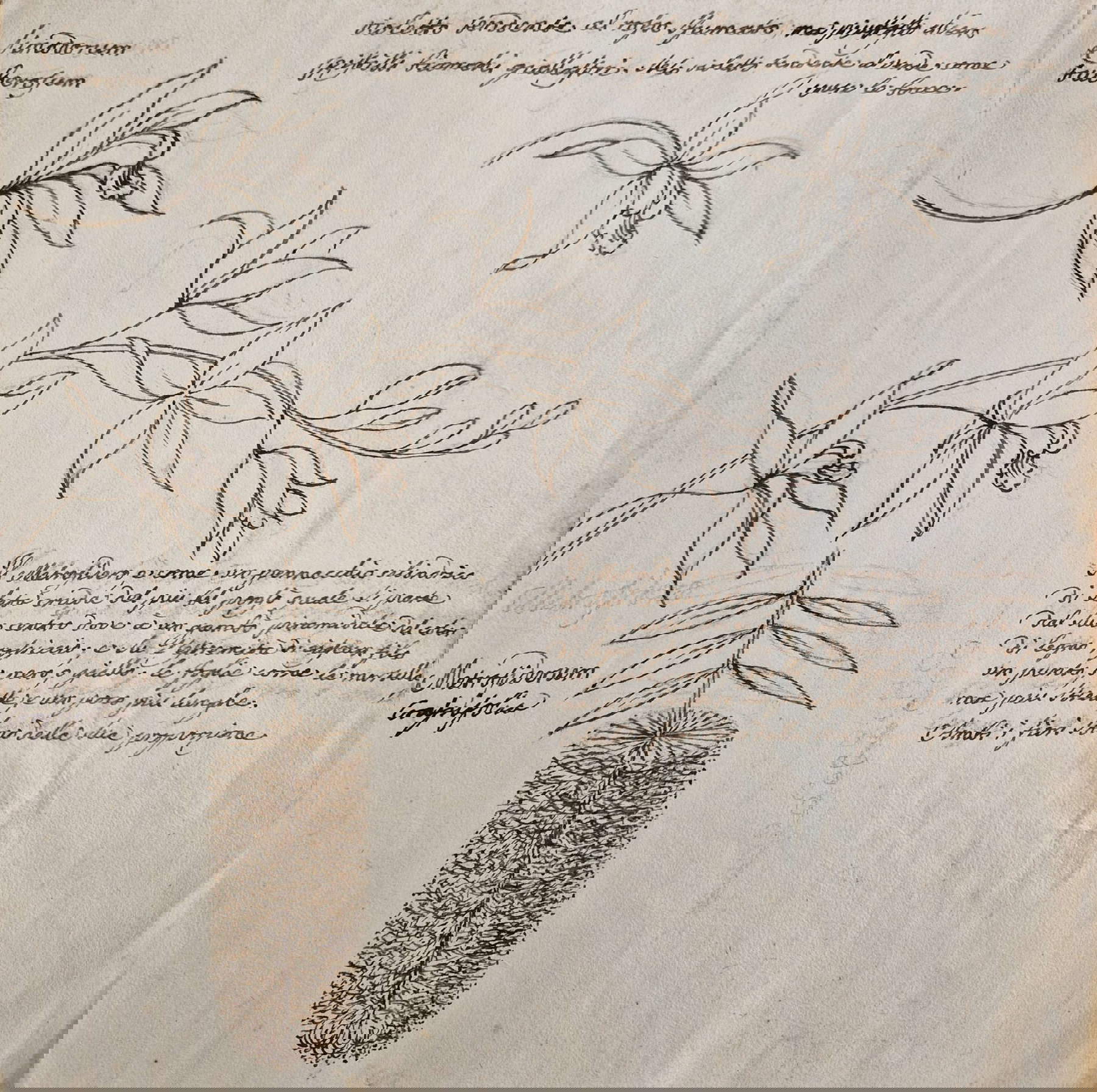
The exhibition is divided into three sections. The first, dedicated to flowers in the art of Luigi and Giuseppe Bezzuoli between the Enlightenment and Romanticism, introduces visitors to the relationship between science and art in Tuscany between the late 18th century and the first half of the 19th century. On display are preparatory studies by Luigi Bezzuoli (Florence, 1750 - 1820) for botanical treatises, along with seventeenth-century French floral engravings belonging to the artist, including a rare plate from Jacques Bailly’s Diverses fleurs mises en bouquets. These works dialogue with portraits by Giuseppe Bezzuoli (Florence, 1784 -1855), in which bouquets of roses, chrysanthemums and daisies enrich domestic interiors, reflecting a society increasingly attentive to the scientific classification of the plant world.
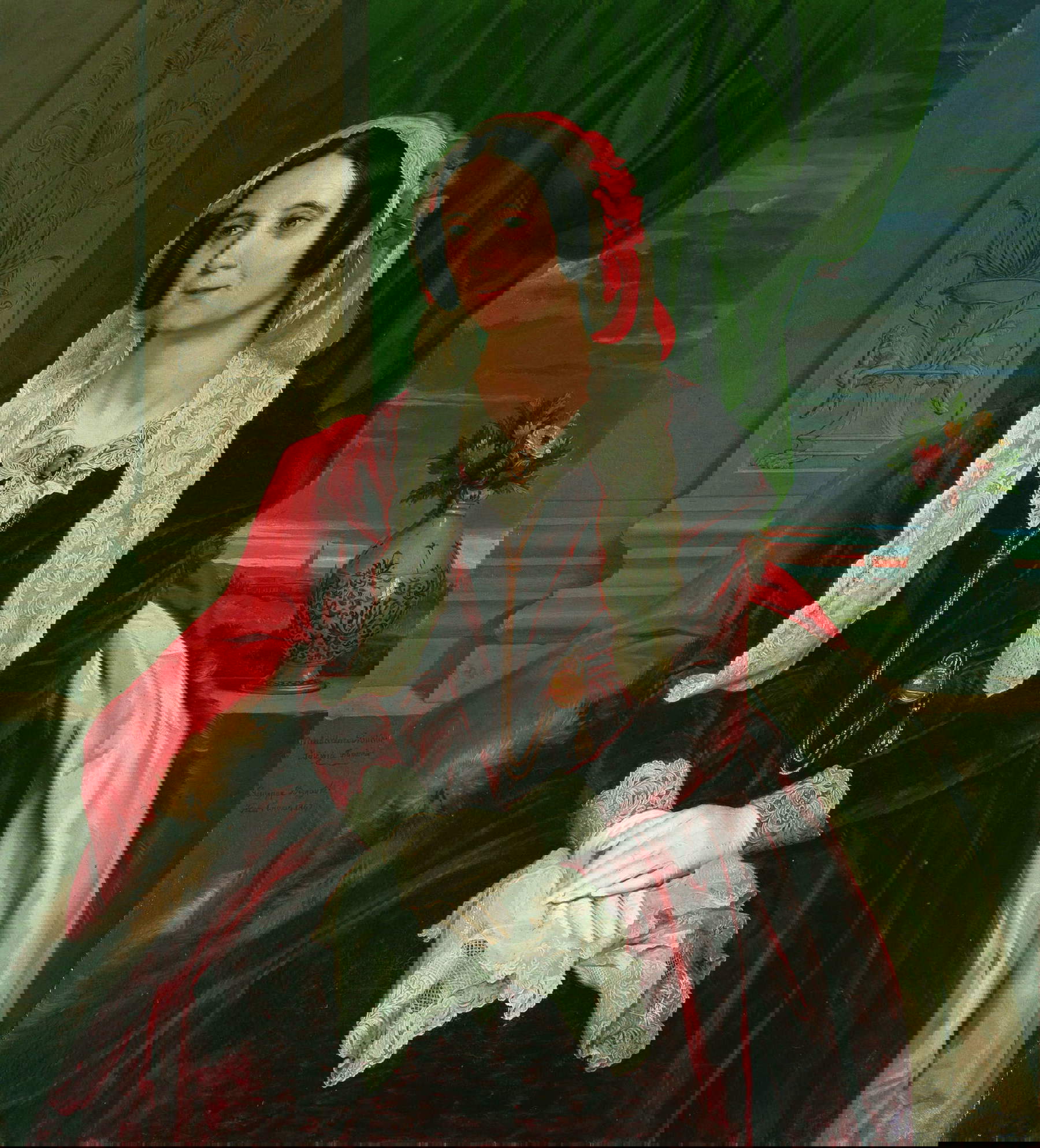
The second section is entirely dedicated to Tito Chelazzi. In addition to unpublished documents attesting to his participation in Risorgimento battles, the itinerary brings together still lifes and floral compositions, including decorative works such as painted mirrors, which were highly prized by international patrons. These include Russian princesses and Margaret of Savoy, who in 1892 purchased some of Chelazzi’s canvases now housed at the Quirinale. A dialogue with works by Macchiaioli painters such as Giuseppe Abbati allows the artist to be placed within the lively artistic scene of his time. Finally, the third section focuses on the ambitious publishing project I fiori, published by Fratelli Treves between 1892 and 1894. The botanical volumes, edited by figures such as Pietro Gori and Angelo Pucci, were illustrated by Chelazzi and Arnaldo Ferraguti and represent a meeting point between scientific popularization, publishing and art.
The exhibition project is flanked by a rich program of collateral initiatives. Lectures, guided tours and educational activities accompany the public throughout the exhibition period. The meetings, scheduled between January and February, feature scholars such as Anna Donatelli of the University of Florence, Giovanni Occhini and Christian Satto of the University for Foreigners of Siena, and explore topics ranging from floral painting to poetry to Chelazzi’s role as Garibaldi’s soldier. At the end of each lecture is a guided tour with the curator.
Great attention is also paid to the younger generation, with an educational campus entitled “From Flower to Flower. Botanical inspirations and artistic experiments for little explorers,” scheduled for Dec. 29 and 30, designed for boys and girls ages 6 to 12. The goal is to bring new generations closer to the language of nature art and stimulate active participation of families.
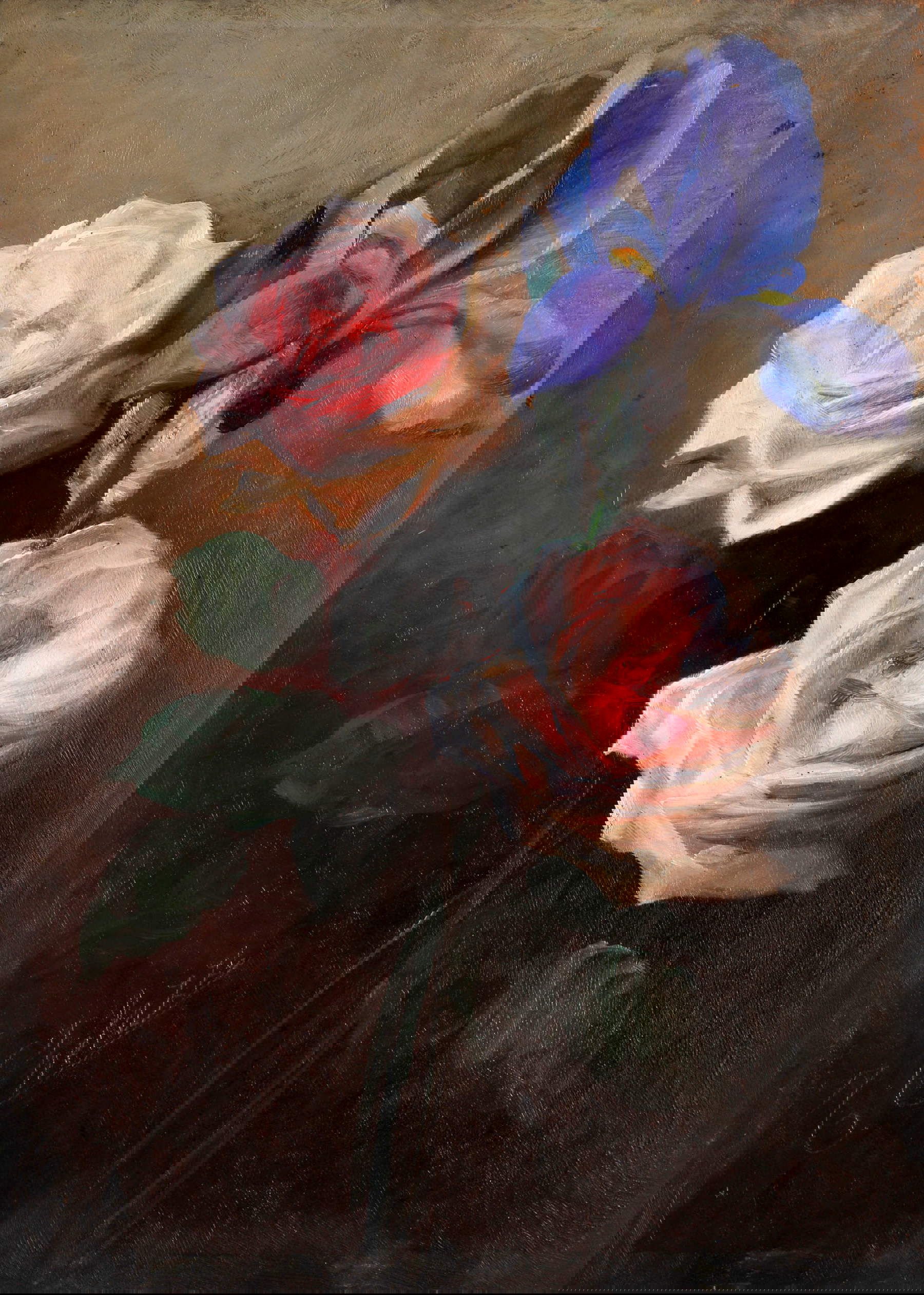
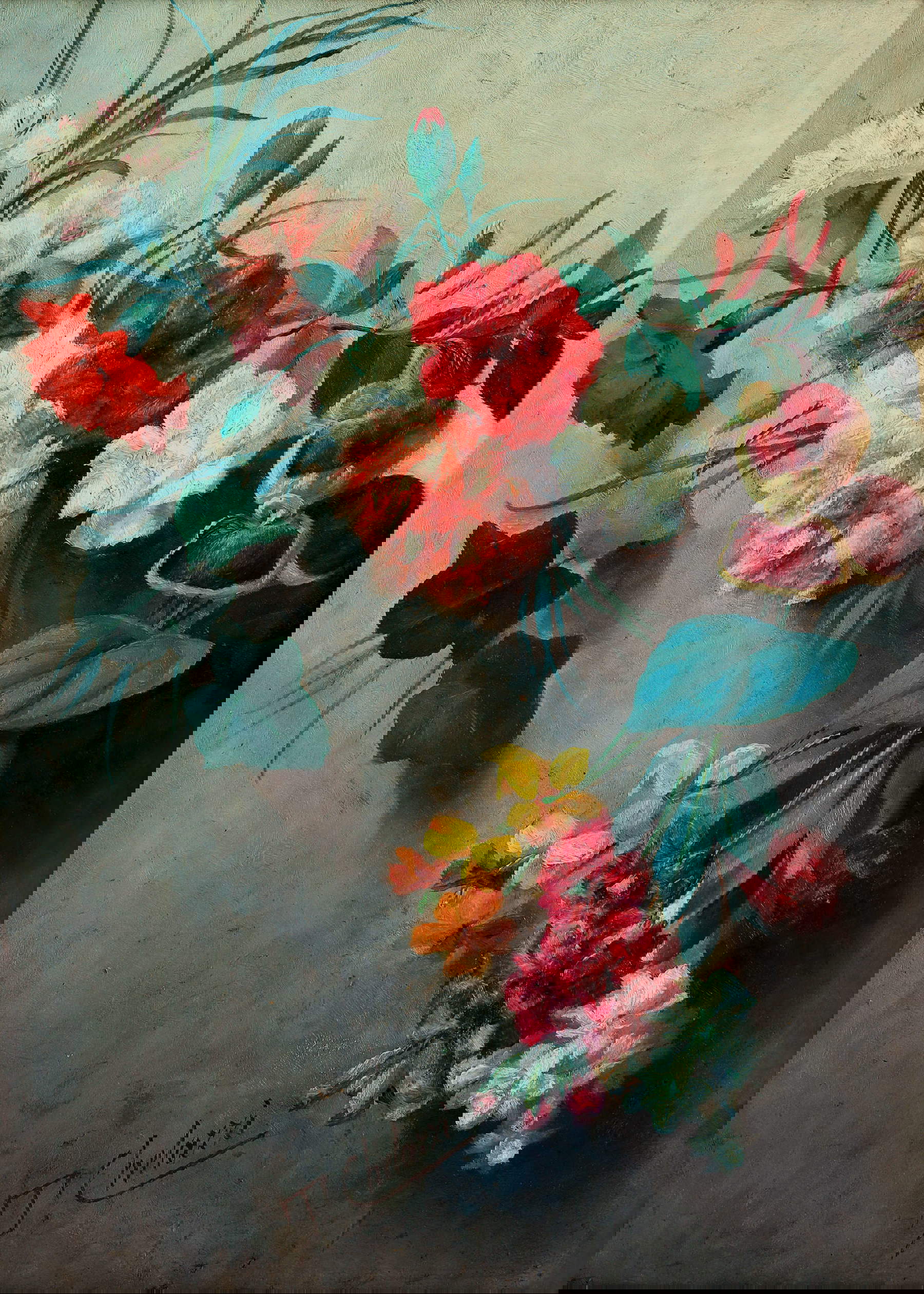
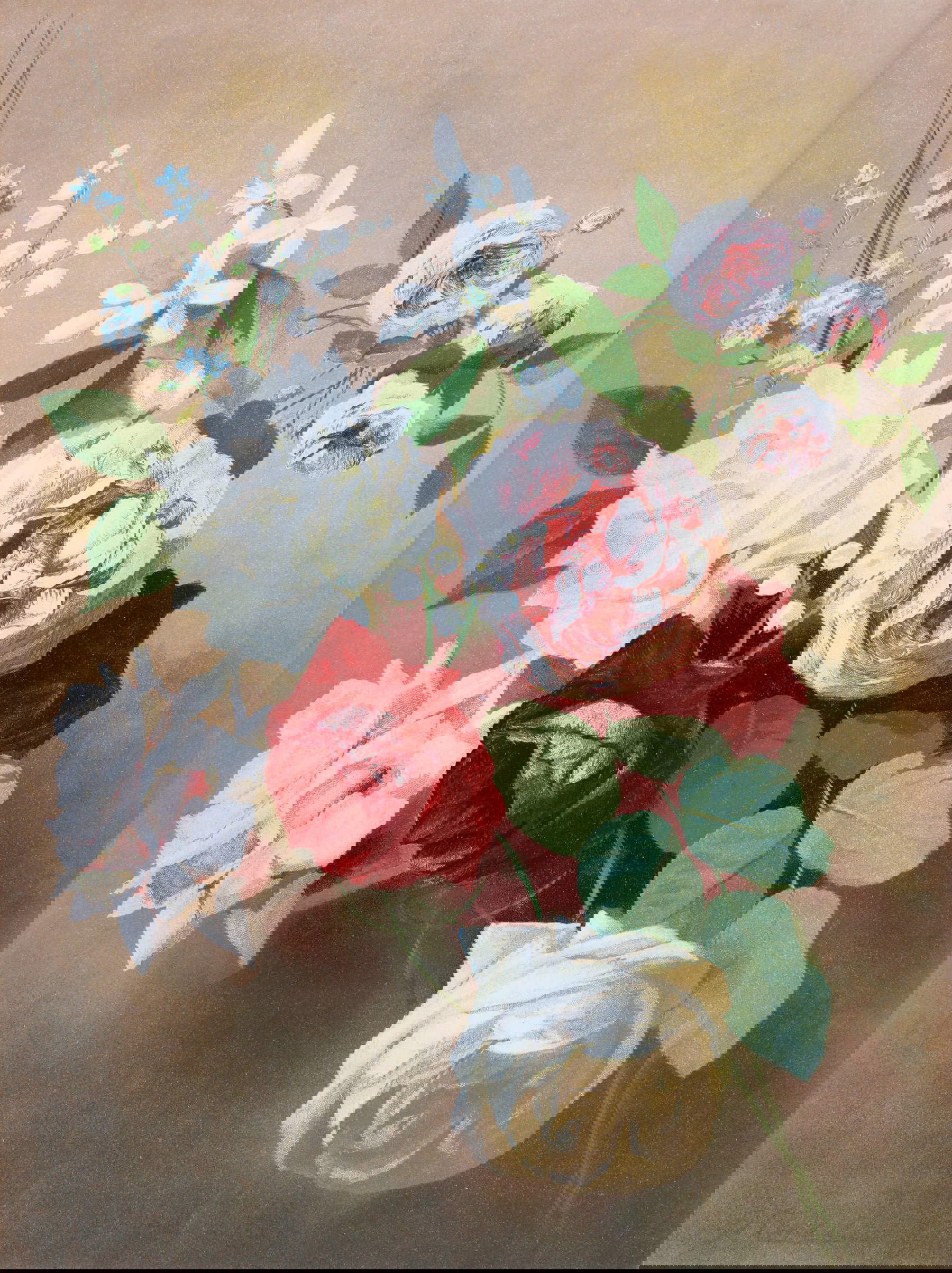
“We are proud to host an exhibition of the highest cultural profile that has as its theme the genre of floral painting between the late eighteenth century and the 1890s,” says Mayor Roberto Ciappi, “and that wants to pay tribute to a great local painter, appreciated by the people of Sancasciano so much so that many keep a work signed by Chelazzi in their homes, so a thank you goes to all those who have made the paintings available for the realization of this exhibition. It is an event that aims to highlight the work of the Sancascian, as the first florist painter in our country.”
“The cultural project,” specifies Culture Councillor Sara Albiani, “also consists of a program of collateral events that juxtaposes opportunities for in-depth study of the floral theme in nineteenth-century painting, led by experts, historians and university professors, guided tours alongside the curator and a campus for the youngest and youngest in which the and participants will be able to experiment with their artistic approach to the world of flowers. A truly unique opportunity that aims to open the language of Tito Chelazzi’s naturalistic art to the whole community and stimulate the participation of families and the younger generation.”
The exhibition opens from 10 a.m. to 1 p.m. and 3 p.m. to 4 p.m. Admission: 8 euros full ticket, 5 euros reduced for groups of 15 or more and residents of the municipality of San Casciano in Val di Pesa. Free for children up to 6 years old. For information: museo@comune.san-casciano-val-di-pesa.fi.it or phone 055 8256385.
 |
| Tuscany rediscovers Tito Chelazzi, first florist painter of the 19th century |

Warning: the translation into English of the original Italian article was created using automatic tools. We undertake to review all articles, but we do not guarantee the total absence of inaccuracies in the translation due to the program. You can find the original by clicking on the ITA button. If you find any mistake,please contact us.



















 IT
IT FR
FR DE
DE ES
ES CN
CN


