



by
Federico Giannini  @federicogiannini1
18/03/2026
@federicogiannini1
18/03/2026



Categories: Interviews / Disclaimer
FAI Days? Not just a cultural event, but a street party. A "bologna sandwich" and not a typical dish: that's how FAI President Marco Magnifico thinks of them, and in this lengthy interview with Federico Giannini he addresses many issues, including volunteers, student employment, queuing, heritage storytelling, awareness raising and more.
From the few openings of the first editions (the debut in 1993), to a mobilization that involves hundreds of cities and hundreds of thousands of people each year, the FAI Spring Days have become one of the most participated cultural events in Italy. An event capable of bringing the public inside places that are often inaccessible, but above all of lighting a new look at the heritage that surrounds us. Recounting its evolution in this interview with Federico Giannini is FAI President Marco Magnifico, who traces the almost pioneering origins of the initiative and claims its impressive growth in numbers and impact. But the point, he explains, has not changed: the FAI understands the Days not so much and not only as a cultural event, but as a street party, because the goal remains to stimulate curiosity, engage citizens, and create a direct link with history and places. In this interview, Magnifico reflects on the success of the initiative, the problems (starting with the role of volunteers, queues, communication), the challenges and the need to make people understand that FAI’s work does not end in a weekend, but continues every day, away from the spotlight.
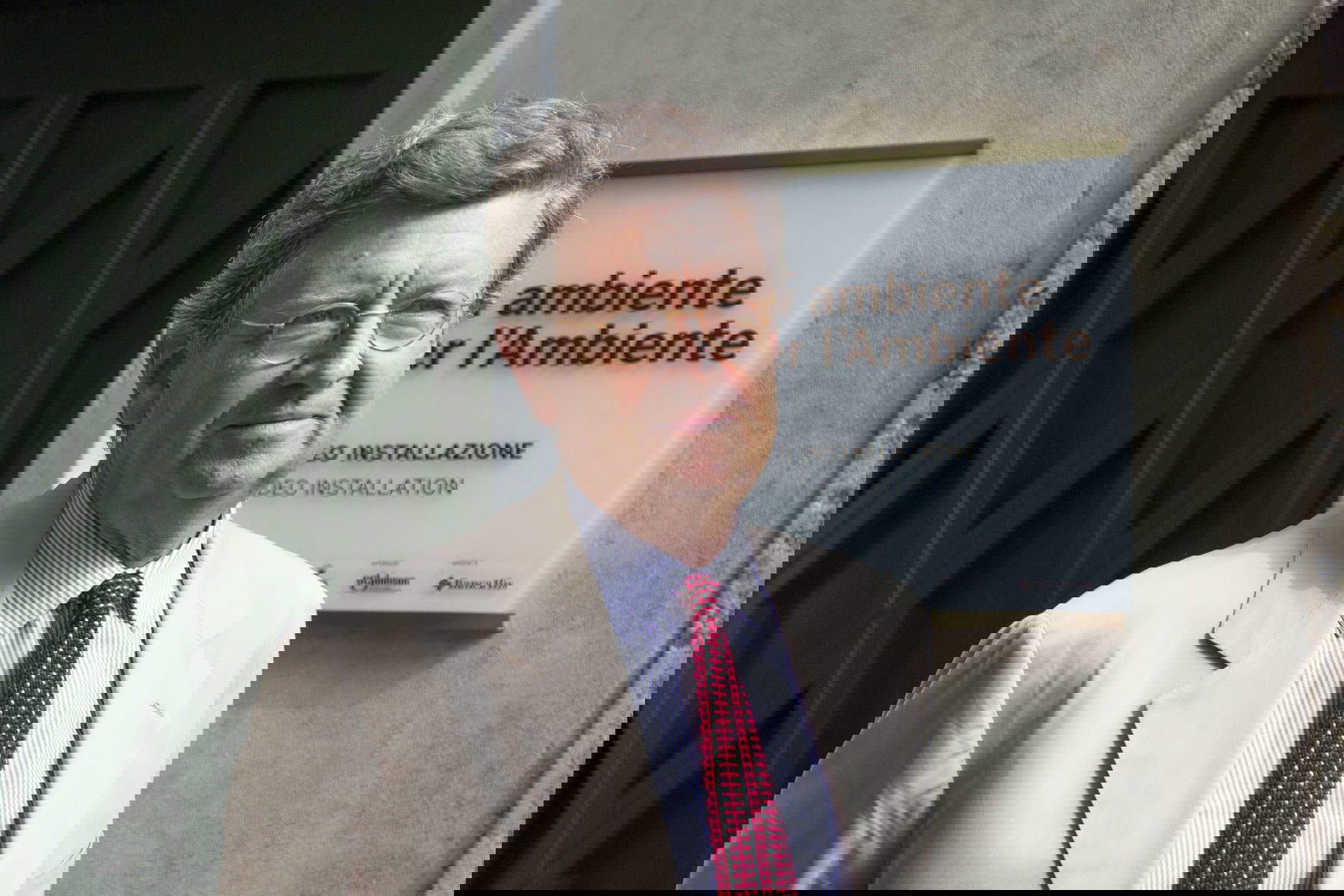
FG. The FAI Spring Days are now in their 34th edition: what do they represent for FAI and the country today compared to the first edition in 1993? And what do you think are the reasons for the success of an event that unquestionably enjoys a great deal of attention, both from the public and from the media, in a way that is unparalleled when we think of this kind of event?


MM. The reason we organized it, 34 years ago, was that ... nobody was talking about us. FAI was small, had three properties, three Estates, there were four of us. And everything came about by “copying” from good initiatives: in particular, FAI Days came about by copying Naples Open Doors of the Fondazione Napoli Novantanove. However, we did not want to limit ourselves to one city, we wanted to open up to all of Italy. In the first edition we were only in the north, with about 50 delegations, compared to 380 today. A very small thing. However, we saw that it worked, and little has changed since then, except the numbers, which are colossal: in these 34 editions of the FAI Spring Days alone we have moved 13 million Italians to visit 17,000 places. However, the spirit has not changed, the ultimate motivation has changed: in its time, the Days were born to make people talk about us, while today they have transformed, without our realizing it, into the biggest street event that the country dedicates to cultural and landscape heritage. The FAI Days are the most sincere mirror of the Foundation, reflecting its fundamental qualities as a whole, for those who work in it and those who volunteer for it: daring, curiosity, attention. I call it a “street event” because it is a great popular celebration, but the work of FAI is also something else, in that like any Foundation the daily work is in its Estates, and it is a quieter and more continuous work. Your article last year helped us, in a way, to meditate on the fact that FAI Spring and Fall Days risk making people believe or think that FAI’s activity is to open monuments twice a year. It is not just that: the activity of FAI is to care forever and for all for pieces of heritage that are donated or bequeathed to the Foundation, and then restored and opened to the public. And this year, when presenting the FAI Days of Spring at the Ministry of Culture with Minister Giuli, I reiterated precisely that our activity (we in 2026 collect and invest 12 million euros to restore, we have 150 open sites, 170 professionals working, we spend more than 2 million euros on routine maintenance alone) is also much more. The FAI Spring Days are a time to raise awareness. Our work as stewards of a now colossal historical, artistic and landscape heritage is complex. But the Spring and Fall Days remain FAI’s most important annual awareness-raising moment. Let me give you an example: the AIRC funds valuable cancer research by selling oranges. There, that is our orange sale day. But instead of selling something, we offer the opportunity to visit little-known places, or completely unknown because they are private, in a festive way. What’s more, FAI is almost a conduit, because it is the Delegations (volunteers) who do it for the Italians. This is the most beautiful thing about FAI Days: it is the sense of the citizen-volunteer who puts himself out there, thus expressing his civic sense, so that his fellow citizens can enjoy the joy of visiting a place that is normally difficult to see. It is a cultural street event, though. A public square event, with a certain, pass me the term, lightness of approach, because it is a celebration.
You, moreover, called FAI Days “a great and powerful megaphone” to tell what FAI is and what it does every day. Here, I would like to start precisely from this point, asking you what it is, in your opinion, that in these two days of a street party, as you called it, you do not see of the work you do behind the scenes the other 363 days, and in what way you try to bring it out in the Spring Days.
That’s the bet! In the FAI Spring Days (which, I remind you, are free-contribution, not compulsory; if one doesn’t want to give anything, one still gets in) we try hard to get people to sign up or make a contribution, because it’s our fundraising day. Let’s call it that, because it is. Those who sign up are then naturally “captured”: they get the newsletters, they get the card that gives them free access every day to all the Foundation’s properties, and so they know what FAI does. Towards those who don’t subscribe, I have to say that we are still a little bit behind, in the sense that we don’t always have the time to tell all those people what we really do. Then there is also another aspect. Until a few years ago we were almost only in the north. Today, however, we have a wonderful Bene in the Valley of the Temples, a beautiful one in Sila, one in Puglia, we are perhaps acquiring a Bene in Naples, soon we will finally have one in Florence. So we are more and more present in the center-south, and so today it is easier to tell who we are. It is still not very easy, though, because in Italy there is still a distrust of those who do work that can be taken for something that is done instead of the state. However, we are totally subsidiary, as Article 118 of the Constitution states. There is no payback for a foundation like ours, because when there is an asset, that asset all goes into new restorations. It is a mechanism that is more Protestant than Catholic, if I may use the adjective. A mechanism in which the truly social role is perceived for what it is: aimed at the utility of the community. But in Italy we still struggle a bit, we always think that there is some form of advantage or benefit, which of course there is not. You have brought out a real issue with your article: the FAI Days actually have a very passionate communication. On the one hand it is inevitable, because again this year almost 800 monuments are opened all over Italy, and compared to all similar initiatives born on our model, ours remains the largest, because our volunteers are all over Italy. The issue is that it can happen that people think that’s FAI, while the Foundation is also much more, and we have to communicate that.
And about what people think, and in particular (since you opened this reflection) about the fact that there are people who think (wrongly) that FAI acts as a kind of shadow-ministry, as something that replaces the state. However, to break a lance in favor of those who pursue this view, it must be said that FAI often intervenes in the area of public property. But the protection of Italian heritage is also a story of emergencies and fragility. Here, how much space is there during these days to tell even this less celebratory side? Do you have plans to expand awareness of its fragility?
Beautiful question: I can’t tell you if this year among the 780 openings there are some opened with a denunciation function, but in the past years we opened a lot of them in a ruinous condition, just so that there was a realization that that asset needed the attention of institutions. For example, I remember three or four years ago we opened a huge olive grove in Sardinia that had burned in the previous summer, just to bring people to see the disaster caused by arson. We have opened so many such places (sometimes even with risks). The Messina Lighthouse, first opened a decade ago, had been cleaned by our volunteers of meters of guano to be restored to visitability. And we had said it: the reporting aspect was always there. Also because from the FAI Days and the denunciation openings were also born the Places of the Heart, which are also moments of raising awareness. Not of heritage enhancement, but of raising people’s awareness of the existence of that heritage, of the interest it can have for the citizen, and of the fact that with everyone’s contribution, good can be done. It is a moment of “excitement,” again, let me use the term: the FAI Days serve to excite the community. To make them say, "But look how wonderful, look how much stuff we have. Look how on the one hand we’ve been lucky and on the other hand what a responsibility we have." That’s what FAI Days is all about. And so, again, I agree with you that there can be a gap in the narrative of the Apprentice Tour Guides. Of that there is not the slightest doubt. But the great thing is that it is the kids who tell the adults about heritage. It is not a purely cultural event like Rolli Days, where cultural mediators are paid by the municipality, or like Pontremoli Barocca, where one pays a ticket and therefore wants a service. In this case it is a festival, and one has to take it for what it is. One has to be careful that one does not say too many inaccuracies, and that is certainly a danger one runs, but the spirit is different. And in fact in our regularly open properties, the guides are all professionals: we pay about 120 guides every year, 8 of whom are hired by FAI. In our properties there are no volunteers to tell: there are only professional guides, indeed: we do research, and in-depth research too, in collaboration with many universities. But that is the daily work of FAI. FAI Days are a firework: wonderful in the moment, but then it goes out. The reality of the other 364 days is quite different, as I said quieter and more continuous.
We have gone from 700 places in the past Fall Days in 350 cities, to 780 in 400 cities in these Spring Days. So I would like to know what are the criteria by which places are selected for the public to visit.
I don’t know: that is my answer. The beauty is really that it is the delegations that choose them, and therefore it is the volunteers. We have 360 volunteer groups all over Italy, and they are the ones who choose, there are no criteria imposed from above. The criteria are always to tell the best about the area, because the delegations (like all of us Italians, after all) are parochial. So, the fun of our volunteers is to propose new insights every year (or rather: not always new, because at the 34th edition there are also new generations, and very often we reopen places that were already open: those who were 10 years old at the first edition, today are 44). It is something that we leave totally in the hands of our volunteers. What amazes me very much is that we used to have very few young people. Today we have about seventy youth groups (20- to 30-year-olds) who are the most active and the most curious. They are the ones who propose the most bizarre things: maybe you have to walk three quarters of an hour to get to the cave, and often there is not even much artistic value, but there is local cultural value. It is crucial for young people to share with others places that speak of the history of their grandparents, great-grandparents, great-great-grandparents. FAI Days are like a time to fish in our own identity, where we come from.
About young people: it is often said that it is very tiring to involve them in everything related to cultural heritage. Evidently, if you tell me this, it means that it is not so true.
It is not true at all! When President Mattarella, last year on April 28, received us at the Quirinale on FAI’s founding day, 150 of us went. I spoke and a young volunteer spoke, precisely to show Mattarella that it is not true that young people are not interested in cultural heritage. It is, if anything, a question of how you involve them. And I reiterate that our way is to make them have fun: there are these groups of young people who have fun because they get together, they go for pizza, they have a beer, maybe they find the girl or the boy, but in the meantime they go to the Valle dei Mulini above Amalfi to make their way through the brambles that they then clean to open on the FAI Spring Days, telling the story of the mills that are not masterpieces of art but are living testimonies of their history. Once again: the FAI Day as a time of collective fun, of celebration around heritage. Then at home you may not remember for sure the historical artistic details but it doesn’t matter: what matters is to take you to see something you’ve never seen, to make you say, “But look, I had it next door and I never noticed because I go around blindfolded.” Because that’s the spirit: to excite people to curiosity about heritage, without being too much about the artist or the patron. We do that every day in our Heritage Sites, because that is the mission of FAI.
I then go back to the issue of expertise that you mentioned. We agree that the quality of visitation that a volunteer can offer is variable. One can come across the volunteer who is perhaps a retired scholar, a profound connoisseur of the subject, but as happened to yours truly, one can come across the 18-year-old who has memorized the little lecture. I am certainly not asking FAI to adopt a model that does not belong to it, but I wonder: have you ever thought of alternative ways to employ volunteers, or perhaps “upgrades” for those in the audience who do not want to settle and intend to deepen their visit with something more structured?
As I said before, ours is a firework. Normally we try to open little-known, little-visited, hard-to-reach places. From that point of view, even the owner of the place (given the interest that FAI opening generates) can then decide to deepen or extend the offer. For example, this year we are reopening the RAI headquarters in Corso Sempione in Milan, which is a Gio Ponti masterpiece with furnishings designed by him. RAI is happy to do it through us, because it does not have the facilities to let people visit that magnificent architecture, and it finds FAI a good way to show that that place, which belongs to RAI and therefore belongs to the Italians, is not closed. If, however, RAI then wanted to organize more in-depth tours, perhaps it would organize them as well. But ours, I repeat myself, is a firework. Having said that, there are dozens of young people who have volunteered in the FAI Days and then chose to make heritage storytelling their profession. I myself do this profession because Giulia Maria Crespi [nda: founder of FAI], when I was in my twenties, got me involved in Italia Nostra and put me in the travel group: I started as a twenty-year-old to be a guide in the cultural tours that Italia Nostra organized, and I must have said a lot of rubbish, evidently. But there I learned how to narrate, how to entertain the audience, how not to lose the attention of the people I was talking to. Then I decided to do this as a profession, while I was then studying at Bocconi and wanted to do economics. We have a number of cases where this training served to help the Apprentice Cicero discover that his vocation was in cultural heritage. And that also seems to me to be a good thing. Then, I repeat: in our Estates, there are only professional guides, because being no longer a firework, but being the everyday, we have to and want to be very precise precisely to comply with the dictate of Article 2 of our statute, which says that the “exclusive purpose of FAI is education for the community” . In the FAI Days we do it lightly, in the Beni with precision. Then, we published on our website short fact sheets of all the open properties, written by volunteers from the delegations.
About queues: often the criticism is about waiting. There have been cases of long queues, unsecured access, with people having to give up their visit (I witness this because it happened to me too). In your opinion, can FAI do anything to improve the experience? Also: why so far have you chosen to keep this open mode instead of introducing digital reservations?
We had introduced reservations in the first post-Covid edition, because obviously people still didn’t want to be close. This limited the turnout colossally: instead of 400-500,000 people we had half that number. And that is unfortunate, because if you do a service and half the people come, the other half did not have that experience. Then the reservation brought with it another problem: there were many who didn’t go. Many groups, for example, would book in 30 and arrive in 15. So we decided to reopen the queues. I personally would never queue, but the queue is free: if you want to do it, you do it; if you don’t want to do it, you don’t do it. Reservations halved the influx, and that, for the reality that FAI Days represent, we really felt it was a shame. But, look, even the queues really amazed the institutions that decided to open with us. To say: this year, for the first time, we are opening the Ministry of Education, which has never been open. Moreover, Minister Valditara will personally make the first visits as a volunteer, I must say very cooperative. But he himself was very surprised to see the queues, because Italians on FAI Days queue in an extraordinarily orderly way. You would never say that we Italians are capable of so much. And after all, this is also a positive manifestation: it means that those people want to see that place and are willing to make a certain “sacrifice” in order to do so. So let’s look at the queues positively: it’s a nice manifestation of interest. Then if you want to find the negative element, then you can always criticize. Once I almost ran away: we were opening to the public Villa Arconati Visconti in Castellazzo di Bollate, one of the most beautiful houses in Lombardy on the outskirts of Milan. There was a queue of cars in the lanes, and since it had not rained (it had been a dry winter) and the fields were firm, the cars instead of staying on the road started going on the cultivated fields. Something that on the one hand frightened me, and on the other hand is the figure of success and the desire to see that place. You can see it negatively, but also as the satisfaction of a need that evidently exists and that the FAI Days have intercepted. And it is a great need. In any case, I wonder if we should always do them with the same formula every year, but evidently this formula also meets a real need.
How does FAI handle the possible dissatisfaction of the public attending the Days?
We obviously train our volunteers: politeness, smiles, apologies. Of course there are people who complain, and what we always say is that kindness is contagious: if you are attacked, respond in the kindest way possible. A complaint about rudeness from one of our volunteers would not be tolerable: people who volunteer know what they are up against, they know that FAI Days are very tiring, that for two days you have to greet, welcome, tell, and you have to do it always with a smile. If one is rude he cannot be a volunteer, and if someone complains about that he is right. If, on the other hand, someone complains because he has been standing in line for half an hour, the volunteer can only say, “I am very sorry, we offer this service, and if you are unhappy I am really sorry, but I have no arguments to answer you.” Then you have to look at the reality: we in FAI at the central level are kind of mediators. As I have already said, FAI Days are organized by our territorial network: the structure of the Foundation is an organizational and communicative intermediary between Italians and other Italians. Between Italians who decide to get involved (and not just for two days: you have to go find the monument, ask to open it, study it, clean it, set it up... it is a much longer job) and their fellow citizens ready to receive a service for which they are grateful, ready to see that bell tower they have never seen and want to know about. This is what a FAI Day is all about.
FAI Days are also a great fundraising opportunity. Is it difficult to communicate to the public that behind the festive event there is also a concrete economic need for the protection of the properties?
Not so much. Meanwhile, of course, the SMS helps, although little is raised by SMS now, however it serves to give the event a sense of fundraising: “If you don’t want to sign up, at least send a text message.” We keep it alive mostly because of that. But nowadays FAI is talked about quite often, and as FAI expands in Italy (Italians see that the Garden of Kolymbethra in the Valley of the Temples is kept like Adam and Eve’s Eden, that the small houses where farmers stood next to the houses of the gods have been beautifully restored, and so on), as people understand that beyond the blaze of FAI Days there are very solid embers, it is easier to say: “Sign up.” So much so that we have jumped to 320-330,000 members, people who pay 39 euros each year. We used to celebrate 1,000 because it was very difficult to tell what we are. Today it is a little easier. FAI Days are an opportunity to say, “All right, I see that you do good work, I’m signing up.” Therefore, it is also the day when we reap the ripe fruits.
In the communiqué you sent to the newspapers this year, you claim an impressive number, namely 13.5 million Italians who have participated in FAI Days in more than 30 years, which roughly means half a million Italians per Spring Day: now, also in light of the fact that FAI Days are meant to offer themselves as an opportunity that, as you write, is “offered to Italians to learn about and appreciate the wonders of our country,” what do you think Italians have changed in their relationship with cultural heritage over all these years?
I think the FAI Days have greatly served a change in attitude. I am absolutely convinced of that: 13 million is an impressive number, that’s a fifth of the population. So I think the FAI Days, followed by all the similar initiatives (I’d like to say “imitations,” but it’s wrong to call them that, since we also imitated Napoli Novantanove) have contributed decisively. The open days of historic houses, banks, Open House, Le Vie dei Tesori in southern Italy, Rolli Days, all came about as a beautiful development and evolution of our model. Our volunteers sometimes say “they copy us,” and I say “good!” because we also copied Naples 99, and the more people copy us the better. Because the result is that the relationship between Italians and their heritage, which existed 34 years ago, today is very different, has changed a lot. You see it too: your magazine lives off the interest Italians have in heritage, an interest that is much stronger and more important than it was 34 years ago. I am convinced that the FAI Days have had and still have a fundamental role in the development of this curiosity and the perception that we were born in the most beautiful country in the world, and that therefore we have both the good fortune of having it and the responsibility of defending it, getting to know it and, if I feel like it, supporting it with my membership fee to FAI or to all the other beautiful realities that exist (I am not at all jealous of those who have imitated FAI Days, in fact, I always tell the volunteers: it is wrong to see them as competitors, but even so, competition is the soul of commerce, if someone competes with us then let’s find other things to do). To say: this year in Palermo we are opening Porta Nuova. And there our volunteers have made cartoons to tell the story of the door to children who cannot climb all the stairs that it takes to get to the top of the door, so that they also have their own satisfaction. This is to say that the competition will squeeze your brain to do things that you would not have thought of doing, but that you do precisely because you have to differentiate yourself. Then they’ll copy you, and you’ll find others, and that’s how history works. You and your magazine, last year, in a kind of peppery way (but then again, the journalist has to be a little peppery) helped us to think about the fact that we need to be clearer in communicating who we are and what we really do every day, and that FAI Days is just an awareness day, a popular festival. At the folk festival, in a sense, you eat the bologna sandwich, not the excellent local dishes.
Well, that seems like a fitting metaphor.
Here, I emphasize, however, that our sandwiches and our mortadella are delicious. If you want to eat cassoeula, go to a good Milanese restaurant: we make cassoeula as it should be made, but in our Beni, not at FAI Days. For bologna, the important thing is that it is good. And that it is sincere. But what is not lacking is the enthusiasm of the volunteers, the genuineness of the spirit with which they do things, and not in antagonism to the institutions, but with the institutions, with the Municipalities, with the Regions, with the Provinces, it’s a festoon where everybody shakes hands, and that’s the most beautiful thing.
Warning: the translation into English of the original Italian article was created using automatic tools. We undertake to review all articles, but we do not guarantee the total absence of inaccuracies in the translation due to the program. You can find the original by clicking on the ITA button. If you find any mistake,please contact us.