




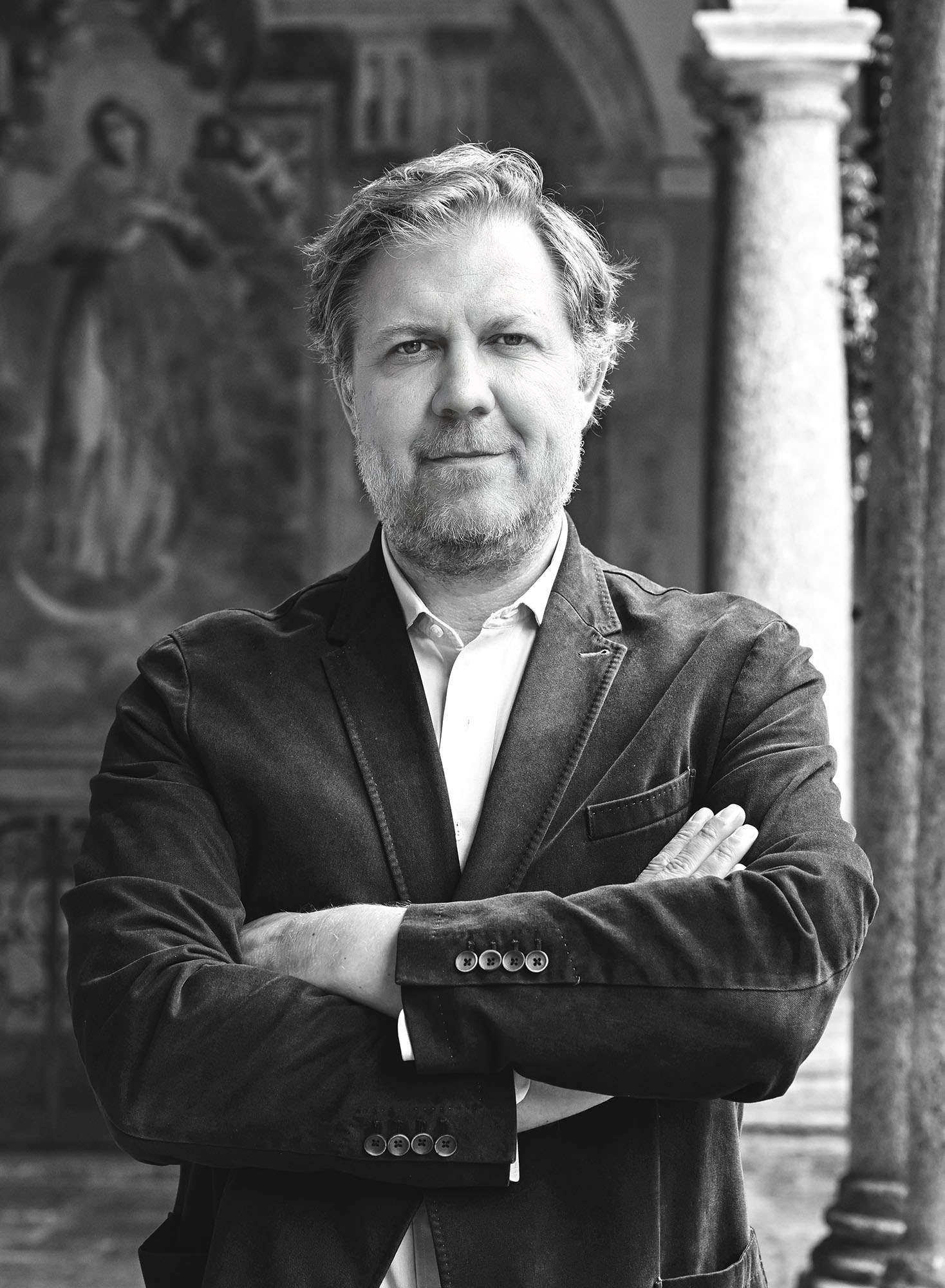
How is photography doing today? We discuss this with Federico Rui, a gallery owner who spans more than 30 years of transformations in the contemporary art system, while maintaining a lucid and independent gaze. Rui started his own activity in the art world in 1995, inside a Milanese gallery, where he was in charge of organizing exhibition layouts and managing relationships with collectors. In 1996 he participated in the design of one of the first online portals dedicated to art, and shortly afterwards he collaborated with a publishing house, contributing to the birth of one of the first Italian digital shopping platforms. He later joined the administrative sector of the Brera Academy of Fine Arts, while in 2002 he and a partner founded Galleria Pittura Italiana. It was in 2010 that Federico Rui Arte Contemporanea took shape. The gallery’s activity privileges the promotion of emerging artists, with a specific interest in painting. Since 2004, he has participated in major art fairs in Italy and abroad and collaborated with important Italian auction houses. In this interview, Rui, whom we met on the occasion of his participation in the MIA Photo Fair BNP Paribas 2026 in Milan, reflects on the dynamics that govern the art system today, between authors’ autonomy and commercial pressures. At the center, the work of Nicolò Quirico and Alex Trusty, two artists who explore different but complementary languages. What emerges is a broader reflection on the meaning of the work, its fruition and the risk of increasing spectacularization. In an age dominated by speed and image, Rui invites a recovery of depth and critical attention.
NC. Federico Rui is present at MIA Photo Fair BNP Paribas 2026 with work by Nicolò Quirico and Alex Trusty. In an exhibition context increasingly oriented toward the construction of narratives and placements, how does research fit into the contemporary photography system and what dynamics do you think are redefining the relationship between author, gallery and market today?
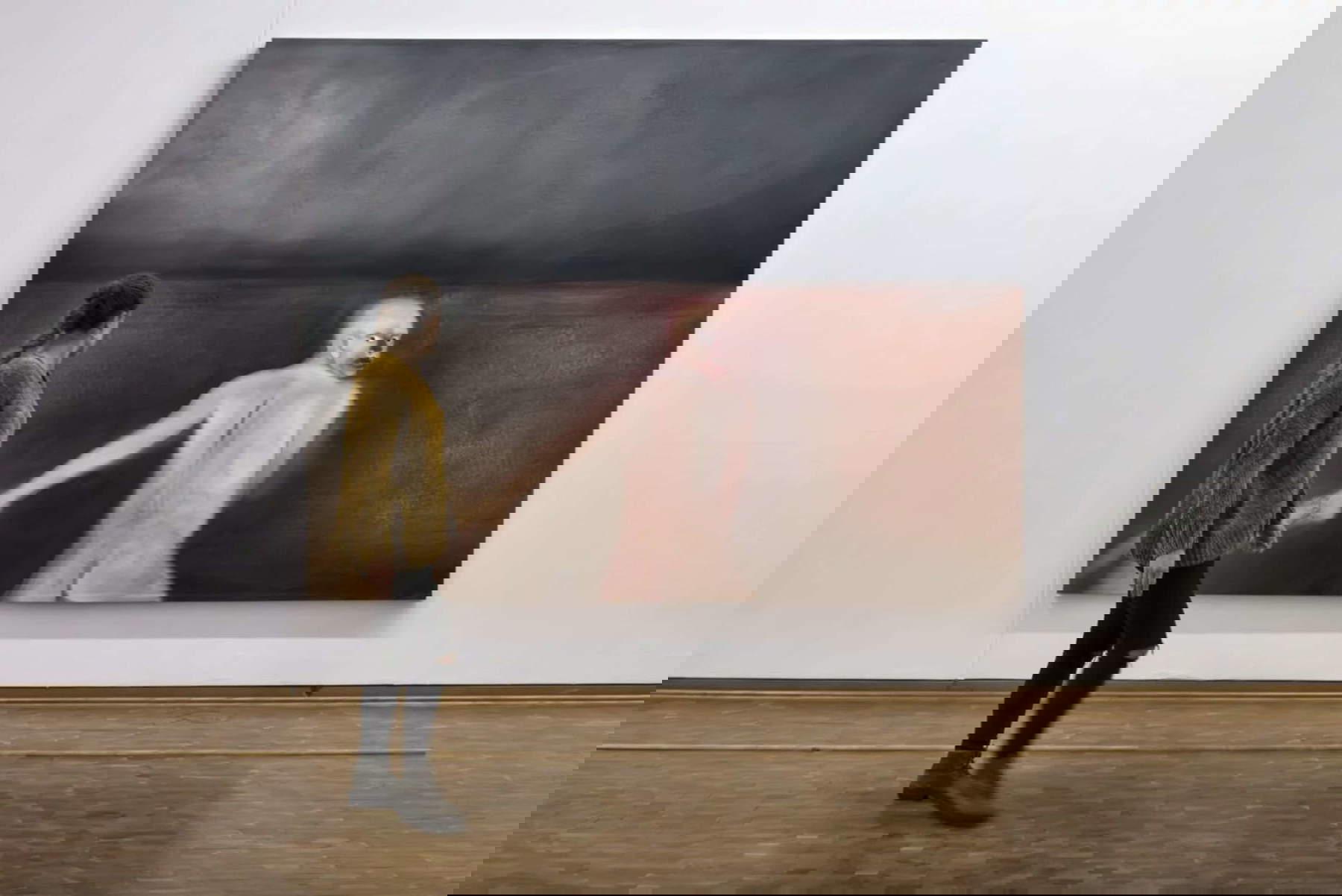
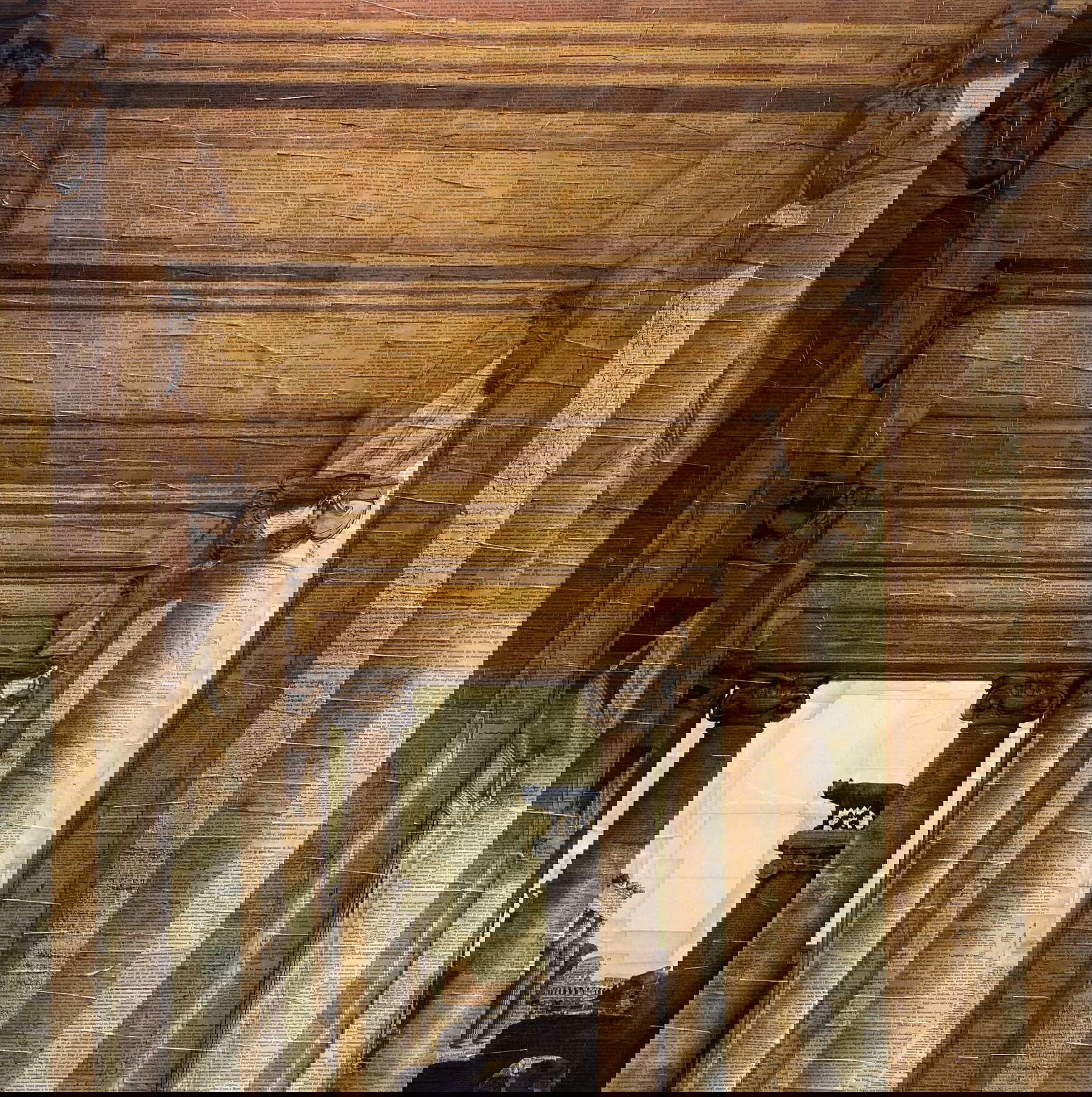
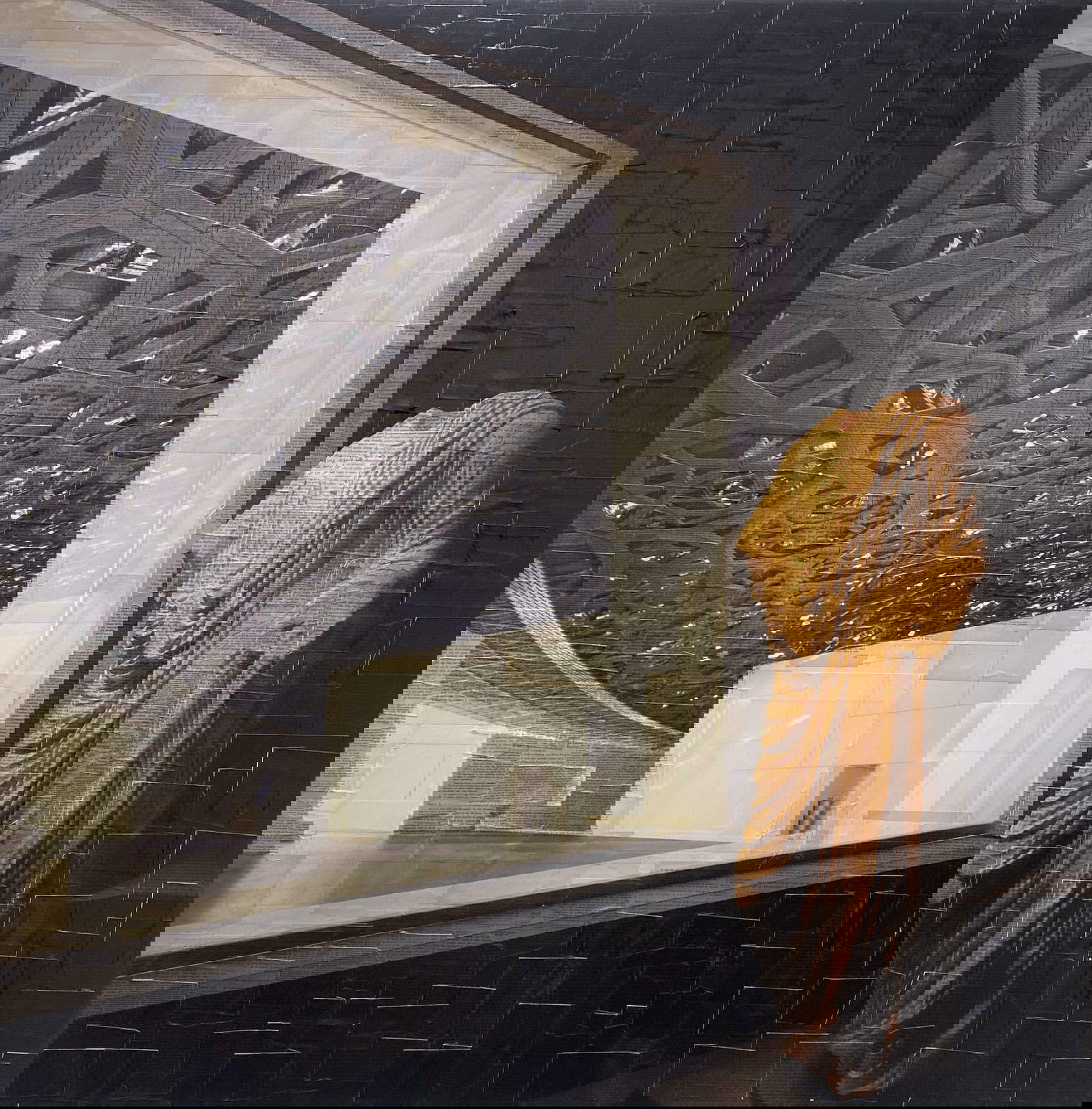
FR. Nicolò Quirico and Alex Trusty have a very particular research, which they have been carrying out for almost ten years now, completely autonomously and independently. Nicolò Quirico’s gaze investigates architecture by dwelling on the different styles, the different eras, the functions for which they were designed. And he gives them back their own voice made of presences, in which man, however, never appears. The founding elements of the work are two: the city, with its geometries and architectural volumes, and the books, a condensation of memories, experiences, and knowledge of the man who builds and inhabits the city. So on the one hand the shots are studied and elaborated to return a formal, sometimes ideal appearance, on the other hand the texts that make up the background texture return the hubbub of what happened during their existence. The support becomes an integral part of the work: a collage of vintage book pages is in fact the background of a photographic print, which thus becomes unique. The human figure, on the other hand, is central in Alex Trusty’s work, which relates the visitor to the work and the museum, the architecture to the user. Shots are thus born where casual interaction (the photographs are not posed) creates unique instants, in which the viewer becomes in turn a work of art, and the work of art becomes collective memory. Museums are created to guard, preserve and promote the traditions of civilizations. Each visitor enters into dialogue with the works by beginning his or her own personal dialogue and relationship with them.Alex Trusty photographs people as they observe, move, pause in front of masterpieces. He is interested in what happens around the work of art, rather than the work itself. His photographs capture the moment suspended between contemplation and distraction, between attention and absence, in which each viewer becomes part of the scene, even if unconsciously. From a point of view of dynamics, the authors are completely free in their research, which they pursue independently of market influences and demands. In this sense, the relationship with the gallery is increasingly important, because it becomes the necessary and irreplaceable bridge between production and fruition and in which impressions that are not only commercial are gathered and converged. I like to think that the sale is a natural consequence of work done by several people, with stability and continuity over time.
ùWhen two artistic but different languages meet, as in this case between the works of Quirico and Trusty (featured at MIA Photo Fair BNP Paribas 2026), what happens to the original meaning of the work? Is it expanded or transformed?
The meaning of the work remains the same, but it is an important moment of confrontation with current trends. It is a delicate and important transition, because consider that a gallery exhibition receives a few hundred people, in a museum a few thousand, at the fair a few tens of thousands. This is precisely why the fair becomes the place not only for commercial exchange, but also for dialogue and cultural exchange.
How do you judge the photography scene today? Do you think it is more open to experimentation or dominated by market logic and trends?
Photography is now an overused term. It includes within it such a variety of genres (fashion, reportage, commercial, portraiture, etc.) that it should be delimited to the field of our interest: art. Especially since today, with the advent of social media and smartphones, we are all photographers. But how many are artists? A technically perfect shot is not enough, nor is an evocative vision. You need an idea, a feeling, a quest, that extra something that makes the artist unique. And the artist is such regardless of the medium he or she uses. The risk in the contemporary scenario is that the word experimentation is confused with “showmanship.” Exceeding the limits, one’s own and others’, technical and creative, does not mean making the work spectacular. The effect is that it can have an opposite effect, of trivialization.
Some argue that art is in danger of becoming just spectacle or product. How do you respond to those who think that the experience of the work is losing depth?
It is actually true, although it must be admitted that fads have always existed. However, in this historical period we are losing direct contact with opera. Everything is image, everything is speed, everything is shallow. When we talk about art we talk more and more about the art market, and little about art. There is rarely the time (or the desire to delve deeper). In this sense spectacular, or supposedly new, works then leap to the headlines. Lea Vergine said, in an interview from which the book Necessary is Only the Superfluous originates, that “today there are only curators, critics are very rare. And who is the curator? He is a person who spends time on airplanes looking for new things all over the world on commission. That is, he is a manager. He is the one who used to be a merchant moved by passion. These are driven by the necessity of the orders they had, which is to find the new, to find a new one that you can make a deal with. The new. However, the new is never there.”
Many people talk about new frontiers of photography and imaging: in your opinion, where do you see the research of the artists in your gallery in an ever-changing landscape?
“The present, which is in time what the facade is in space, prevents one from seeing things in depth,” wrote Alberto Savinio (in Scritti dispersersi 1943-1952). In this sense, I find Nicolò Quirico’s work very innovative and courageous, which goes beyond photography as an end in itself, and questions history and memory represented by old books. The facades of architectures (the present) hide all the load of history and experience: each building is life being written and each book is a brick of our culture. In a different way, Alex Trusty also relates not only to the memora, but also to the container of memory. Museums, already referred to as cathedrals of contemporaneity (Angelo Crespi), are the sacred place where contemporary customs, in the broad sense of the term (colors, clothes, poses, behaviors) confront works of art that have become public domain.
How do you see the role of the author today? Who dictates the rules of contemporary art, the artist or the system surrounding it?
The artist works alone, increasingly surrounded by stimuli, but less and less accompanied by exchange and confrontation. It has never been so free as it is today, and art has never been so democratic and within everyone’s reach. It follows that of rules do not exist, unless we refer to the art market ... but it would be good to go back to talking about the works, and not their outline!

The author of this article: Noemi Capoccia
Originaria di Lecce, classe 1995, ha conseguito la laurea presso l'Accademia di Belle Arti di Carrara nel 2021. Le sue passioni sono l'arte antica e l'archeologia. Dal 2024 lavora in Finestre sull'Arte.Warning: the translation into English of the original Italian article was created using automatic tools. We undertake to review all articles, but we do not guarantee the total absence of inaccuracies in the translation due to the program. You can find the original by clicking on the ITA button. If you find any mistake,please contact us.

















 IT
IT FR
FR DE
DE ES
ES CN
CN