




by Redazione 21/04/2026



Categories: Museums / Disclaimer
Available in four languages and free of charge, the Musei Italiani app allows users to purchase tickets online, discover events, exhibitions and cultural itineraries, improving accessibility and simplifying the visitor experience.

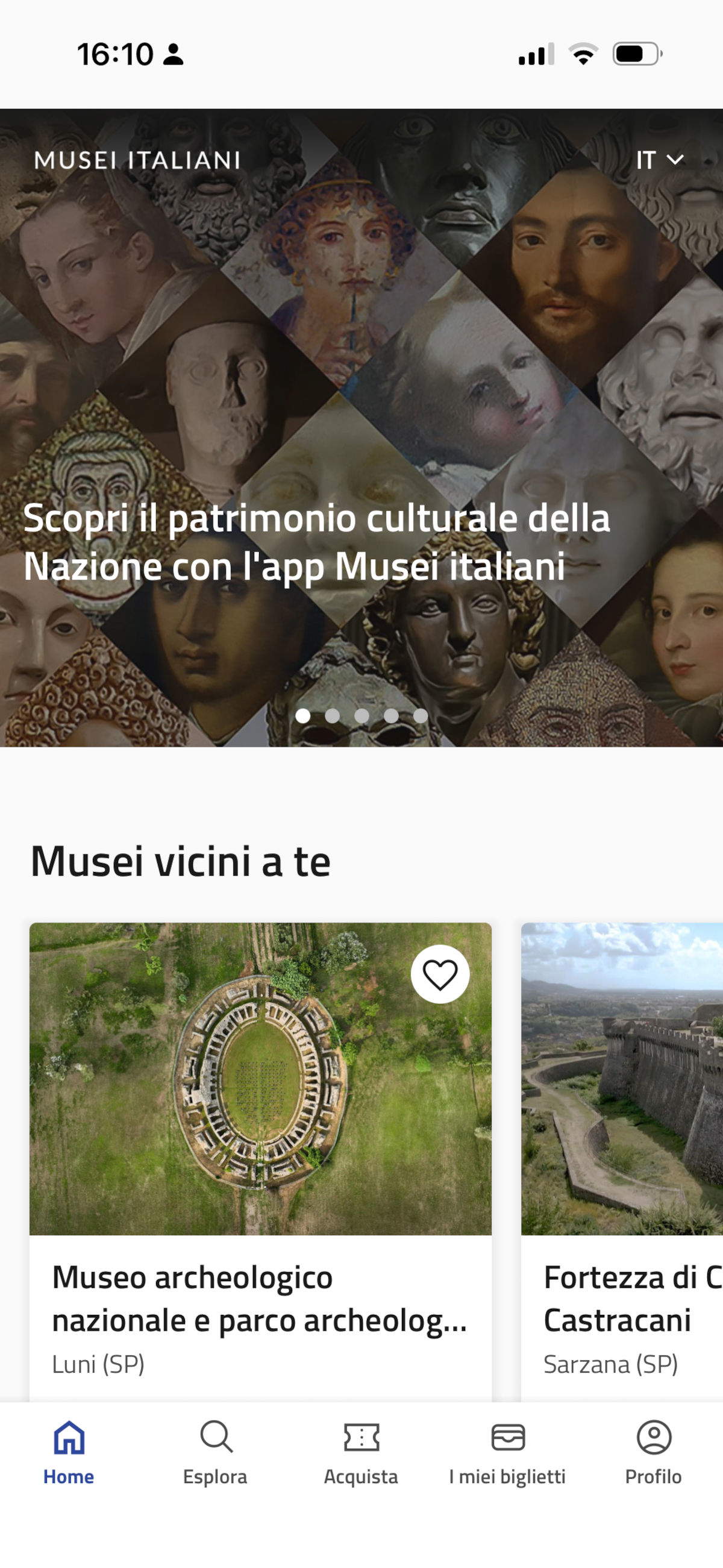
“Cultural heritage at your fingertips.” This is the message of the Musei Italiani app, an innovative project that aims to significantly transformaccess to museums and cultural venues by offering users an intuitive, secure and comprehensive digital service and promotingaccessibility. Available for free on the main platforms in Italian, English, Spanish, French and, soon, also in Arabic, the app allows users to buy tickets online, obtain updated information on more than 600 museum cards, constantly growing to ensure precise coverage of the places of culture of the National Museum System. Institutions surveyed include state, public non-state and private accredited museums. The app also allows users to discover events, exhibitions and cultural itineraries.


The goal is clear: to simplify the enjoyment of cultural heritage, improve accessibility and make the visiting experience more engaging and modern. The project, developed by the Directorate General for Museums with funds from the PNRR, is part of the broader digitization and accessibility strategy promoted by the Ministry.



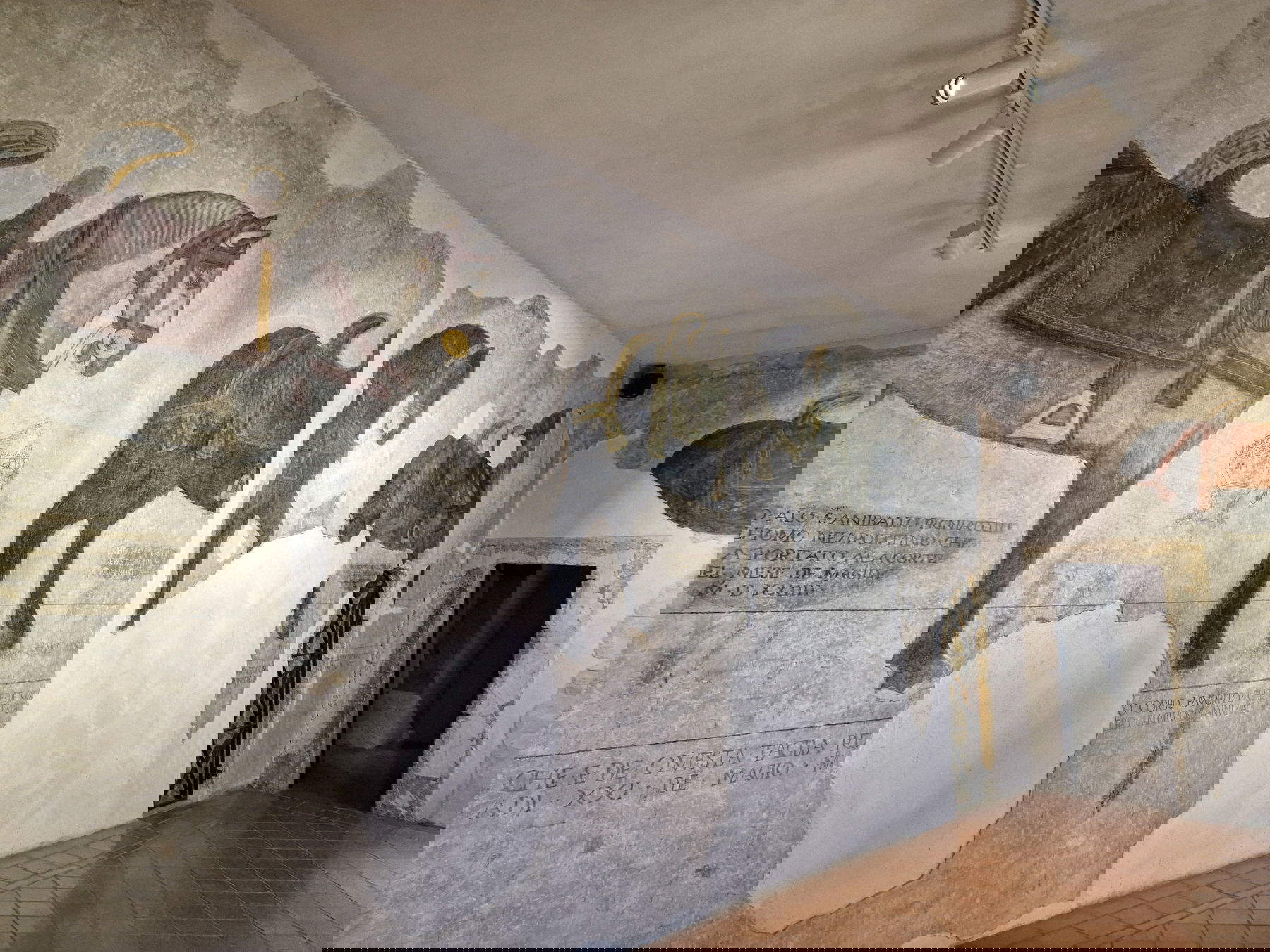
A single platform for tickets, info and accessibility
The application offers multiple features to simplify visits to Italian museums. Through an intuitive interface, users can: purchase tickets online, avoiding queues and securing direct access to museums; find the nearest museums, thanks to an integrated geolocation system; access detailed information on hours, services, accessibility and cultural offerings; explore itineraries and thematic routes, for a richer and more personalized experience; and consult news and updates on current exhibitions and events.
This digital solution not only aims to significantly improve the visitor experience (who, for example, can plan his or her visit in advance and access all the information on museums participating in the app from a single schedule), but also represents an important step forward in the digitization of the Italian cultural sector, because the app is able to guarantee official and secure information in a single digital space.
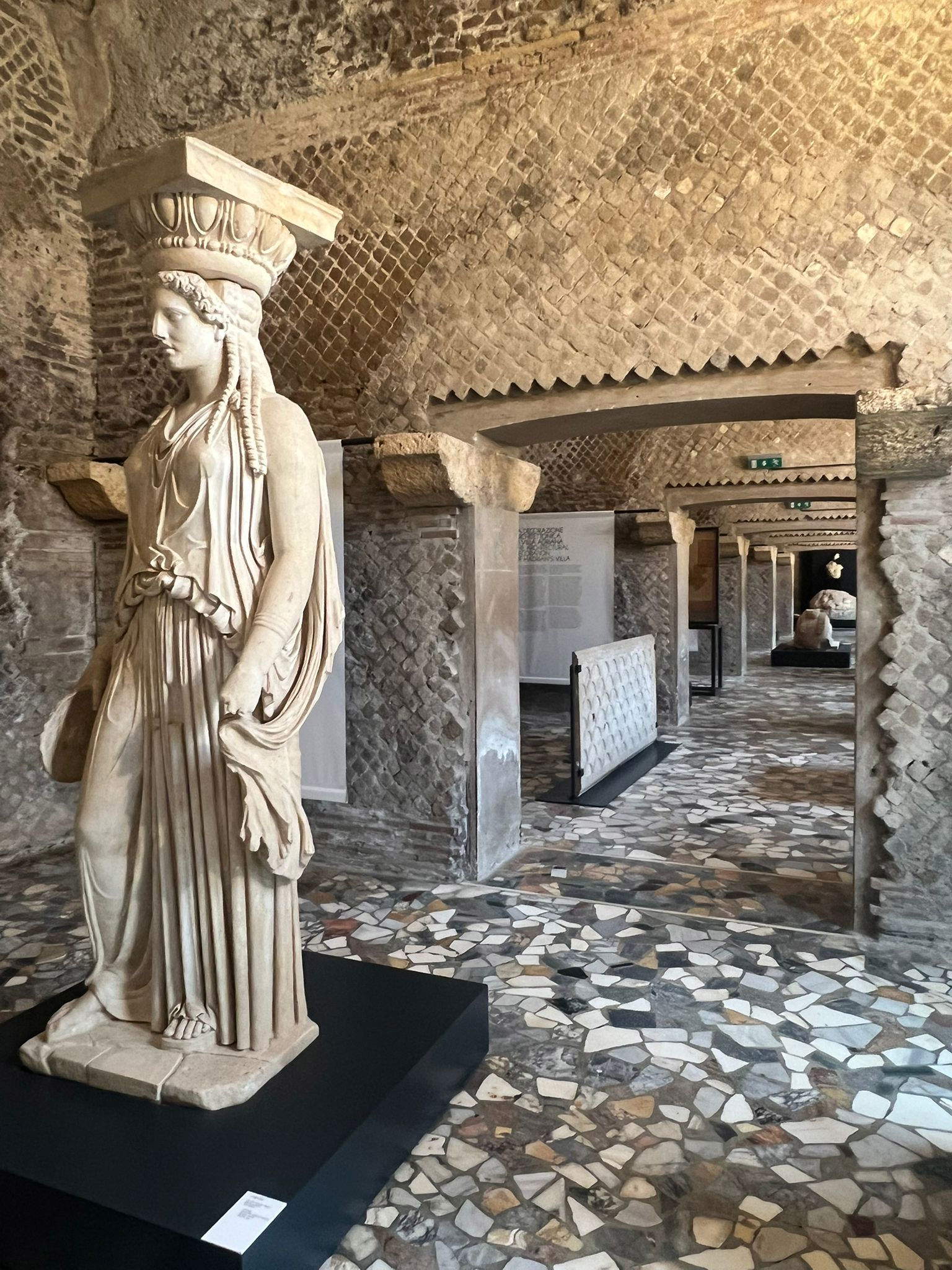
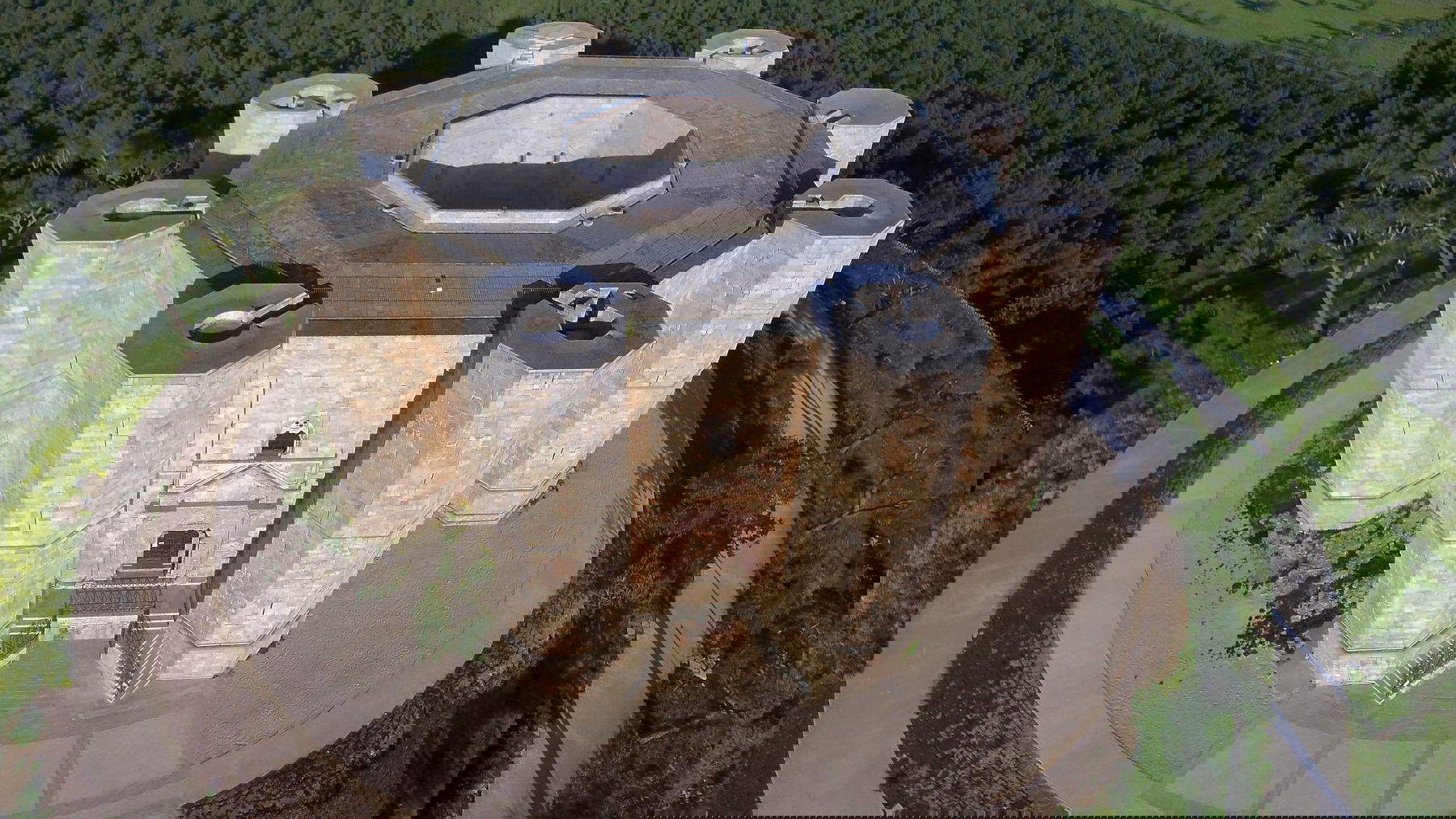
The Musei Italiani web platform: a bridge between museums and the public
Parallel to the app, the Ministry of Culture has developed the web platform www.museiitaliani.it, which serves as a digital interface to present the national museum offerings and allow tickets to be purchased from the browser as well.
In addition to providing information on exhibitions, events and services, the portal also has an important institutional function: it is the reference point for the accreditation of museums to the National Museum System (NMS). This system, which brings together state, non-state and private museums from all over Italy, promotes uniform standards of quality and accessibility, regardless of the ownership, region or size of member institutions.
How the Italian Museums app works
As soon as it is downloaded, the app presents the user with the possibilities offered, after which it immediately asks for sharing options, allowing the user to set geolocation (or, conversely, to leave it off according to preference) to better calibrate the browsing experience. In fact, the app offers personalized content based on where the user is located: thus, news and content related to the museums to which the visitor using Musei Italiani is closest is provided first. By navigating to the single page of the museum (the distance in km from the point where the user is geolocated is also provided), the app offers the user a quick description, a list of services, information on accessibility (whether therefore the museum is passable by those with reduced mobility, whether there is an entrance suitable for people with wheelchairs, whether there is an elevator, what materials support the visit, whether there are other devices and if so what they are). Contact information is also provided for each museum.
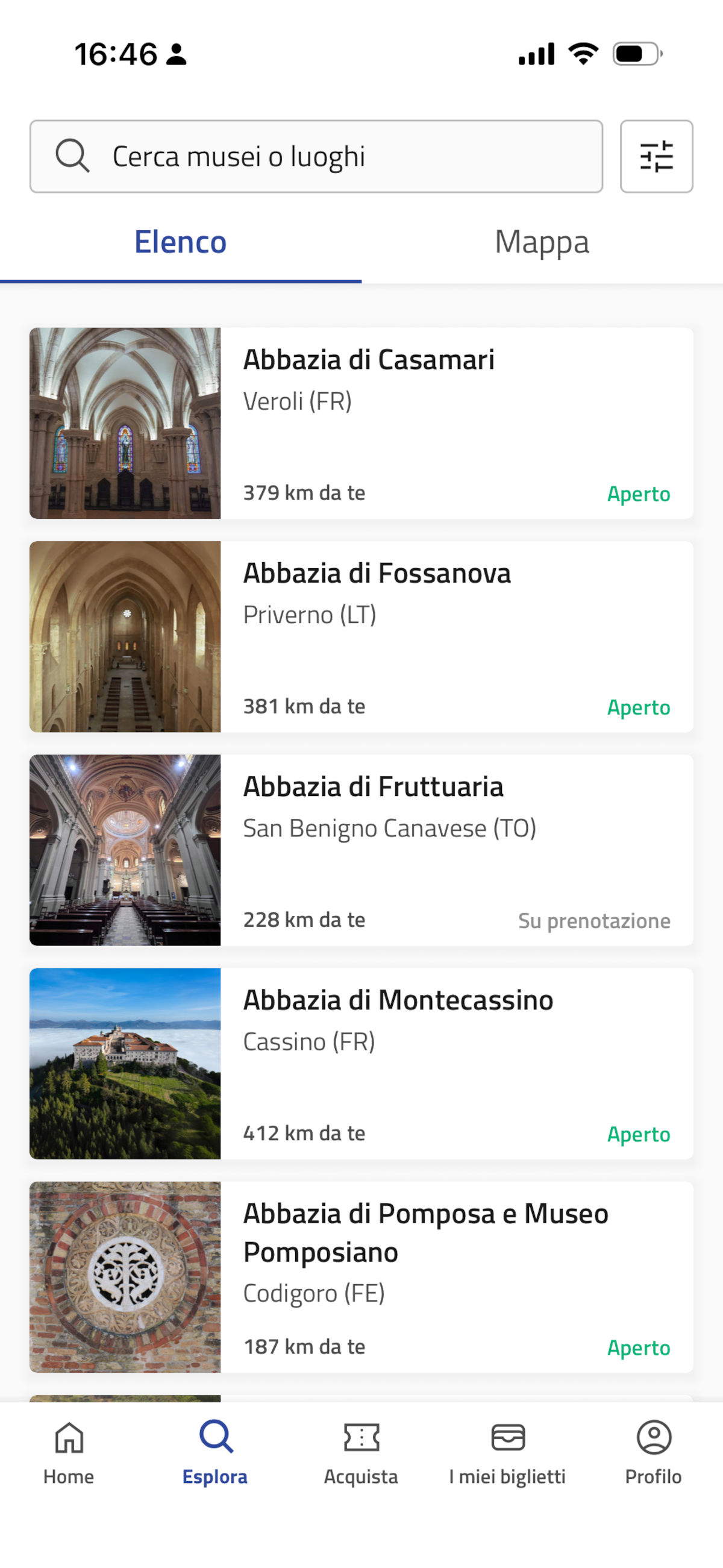
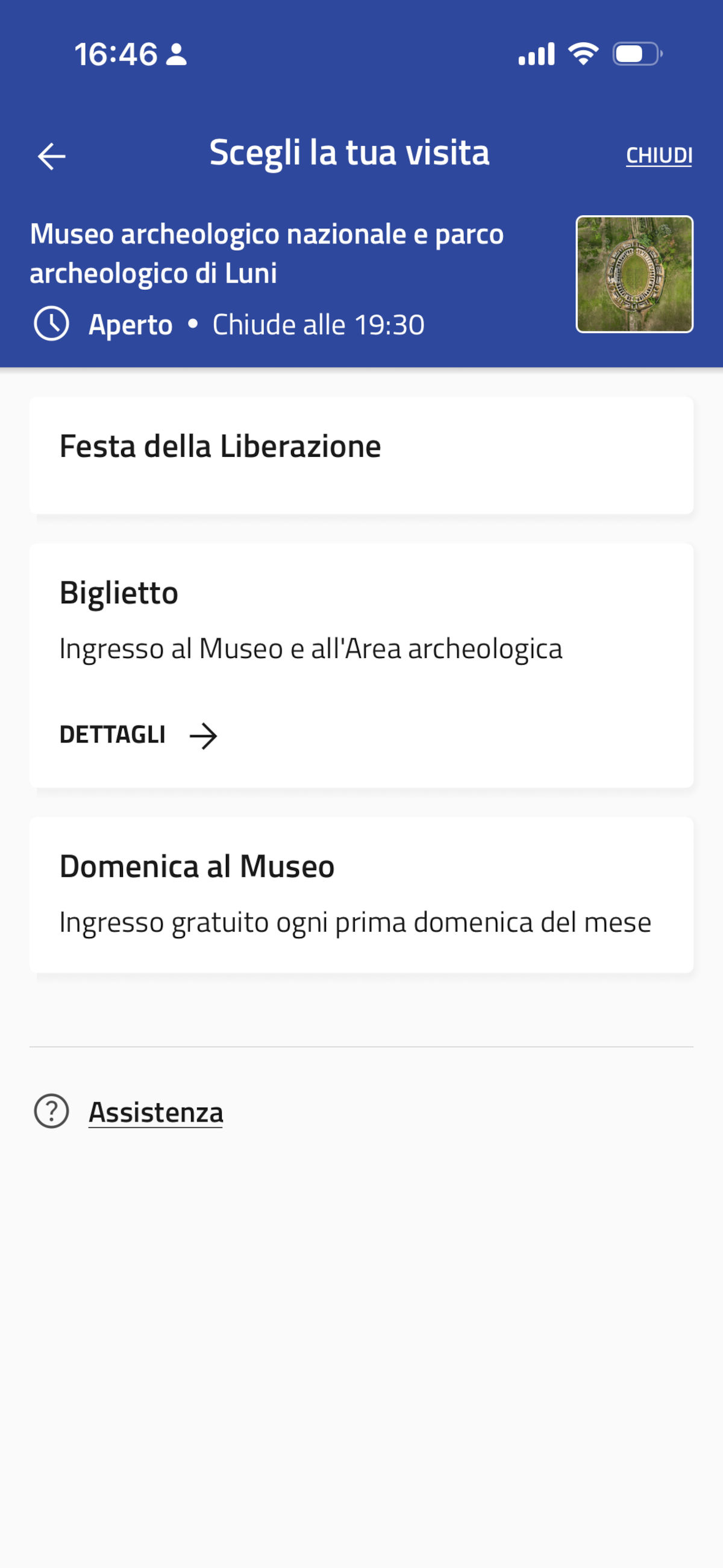
The app also offers a list of exhibitions, again proposed on the basis of geolocation, but it is possible to search through all the events registered in the app’s database, and then again the museums chosen by the app based on the user’s preferences, and again the recommended itineraries that gather museums by thematic groups (for example: “Discovering Etruscan Italy,” “Ionian Magna Graecia,” “The Medicis and their Mansions,” “Places of the Bourbons”). An interface for exploring the various museums is then provided, in two modes (list and map) in addition to the interface for purchasing tickets.
How the app promotes accessibility
The app is intended to be a significant step toward more inclusive and democratic access to culture, breaking down many of the barriers that traditionally can hinder the enjoyment of museums. Accessibility is improved in many ways, starting with digital accessibility. The app offers an intuitive and user-friendly interface that allows visitors to easily navigate information about museums, current events, and how to visit. Indeed, having a single digital tool that collects up-to-date data on opening hours, available services, recommended routes, and physical accessibility simplifies visit planning, preventing users from having to search for information on multiple websites, with the risk of finding incomplete or out-of-date news.
Another key aspect is the integration ofe-ticketing, which allows entrance tickets to be purchased directly through the app. This system greatly reduces difficulties for people with reduced mobility or special needs, who often face long lines or complex purchasing procedures. In addition, being able to arrange a visit in advance, choosing the day and time, helps those who need more planning, such as people with mobility impairments, the elderly, or families with young children. Most importantly, it prevents the user from running into unofficial dealer sites.
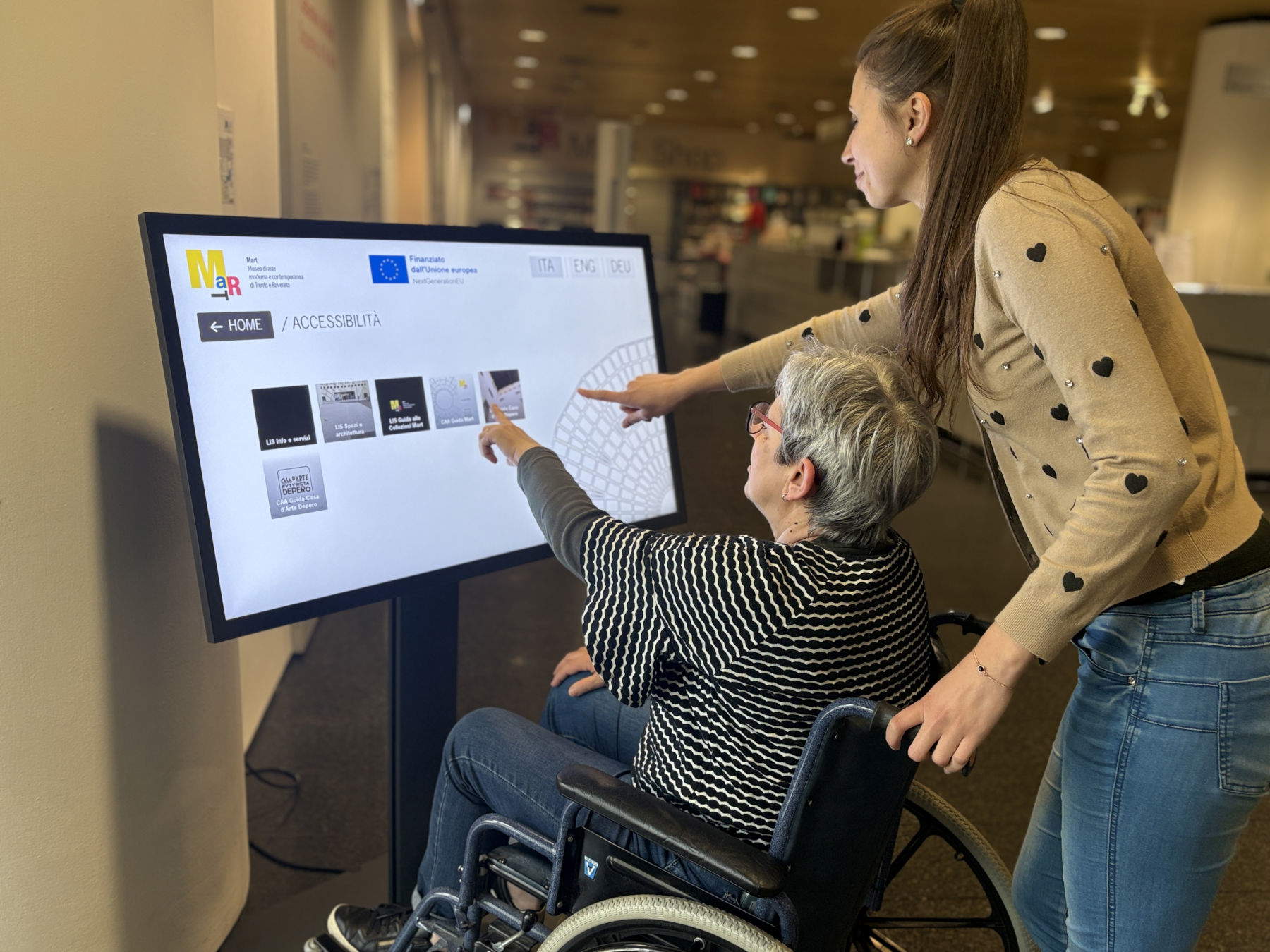
From a physical accessibility perspective, the app helps visitors identify facilities with barrier-free paths, elevators, accessible bathrooms, rest stops or other supports necessary for comfortable enjoyment. Another key element is the focus on cognitive and sense-perceptual accessibility. The app project was funded with NRP funds precisely to improve the accessibility of cultural venues for people with visual, hearing, or cognitive disabilities as well. In this sense, the ability to access multimedia content, such as audio descriptions or introductory videos, can make a difference for those who need an alternative support to reading written texts.
New features for enhanced sense-perceptual and cognitive accessibility
The app also introduces new features dedicated tosense-perceptual and cognitive accessibility, with tools designed to facilitate understanding of content and the visitor experience for audiences with different needs. Museum fact sheets integrate more structured information and multimedia aids to aid orientation, content reading and enjoyment of the works. Among the most relevant innovations are interactive audioguides developed with the support of artificial intelligence, designed to adapt narrative content to different levels of knowledge and modes of enjoyment. Audioguides offer personalized listening paths, with simplified or in-depth explanations, based on the user’s preferences and specific cognitive needs. The goal concerns a more inclusive fruition of cultural heritage, with digital tools capable of supporting understanding, reducing information barriers and encouraging more autonomous access to museum content.
Finally, the Italian Museums APP represents a tool that not only facilitates visits to museums, but also helps to promote a culture of inclusion, ensuring that the nation’s cultural heritage can be known by an increasingly wide and diverse audience. The ability to centralize and digitize information, simplify the ticketing process, and ensure accessible visitor routes marks an important step forward in the sustainable and inclusive management of Italy’s cultural heritage.
 |
| Italian museums: the app that makes cultural heritage accessible to all |
Warning: the translation into English of the original Italian article was created using automatic tools. We undertake to review all articles, but we do not guarantee the total absence of inaccuracies in the translation due to the program. You can find the original by clicking on the ITA button. If you find any mistake,please contact us.