




by Redazione 30/01/2026



Categories: Museums / Disclaimer
At the Royal Palace of Caserta, work, funded by the PNRR, has begun at the Carolino Aqueduct and Fizzo Springs.


At the Royal Palace of Caserta, work, funded by the NRP, has begun at theCarolino Aqueduct and Fizzo Springs. With this intervention, the Reggia achieves the goal of giving concrete implementation to the four major projects supported by the National Recovery and Resilience Plan. The Institute of the Ministry of Culture, a UNESCO Site, is among the implementers of the interventions envisaged by the NRP for a total value of 25 million euros. There are four approved and funded projects, all of which are already underway: the new irrigation system of the Royal Gardens and the regeneration of the grasslands of the Royal Park; the restoration, recovery and enhancement of the Waterway; the protection of the Woods and architecture of the Royal Estate of San Silvestro; and the recovery and enhancement of the Fizzo Springs and the Carolino Aqueduct. These interventions are part of a broader program of extraordinary activities of restoration and functional adaptation that in recent years has seen the Royal Palace of Caserta engaged in the realization of complex construction sites, the search for financial resources, the definition of designs and the monitoring of their implementation.

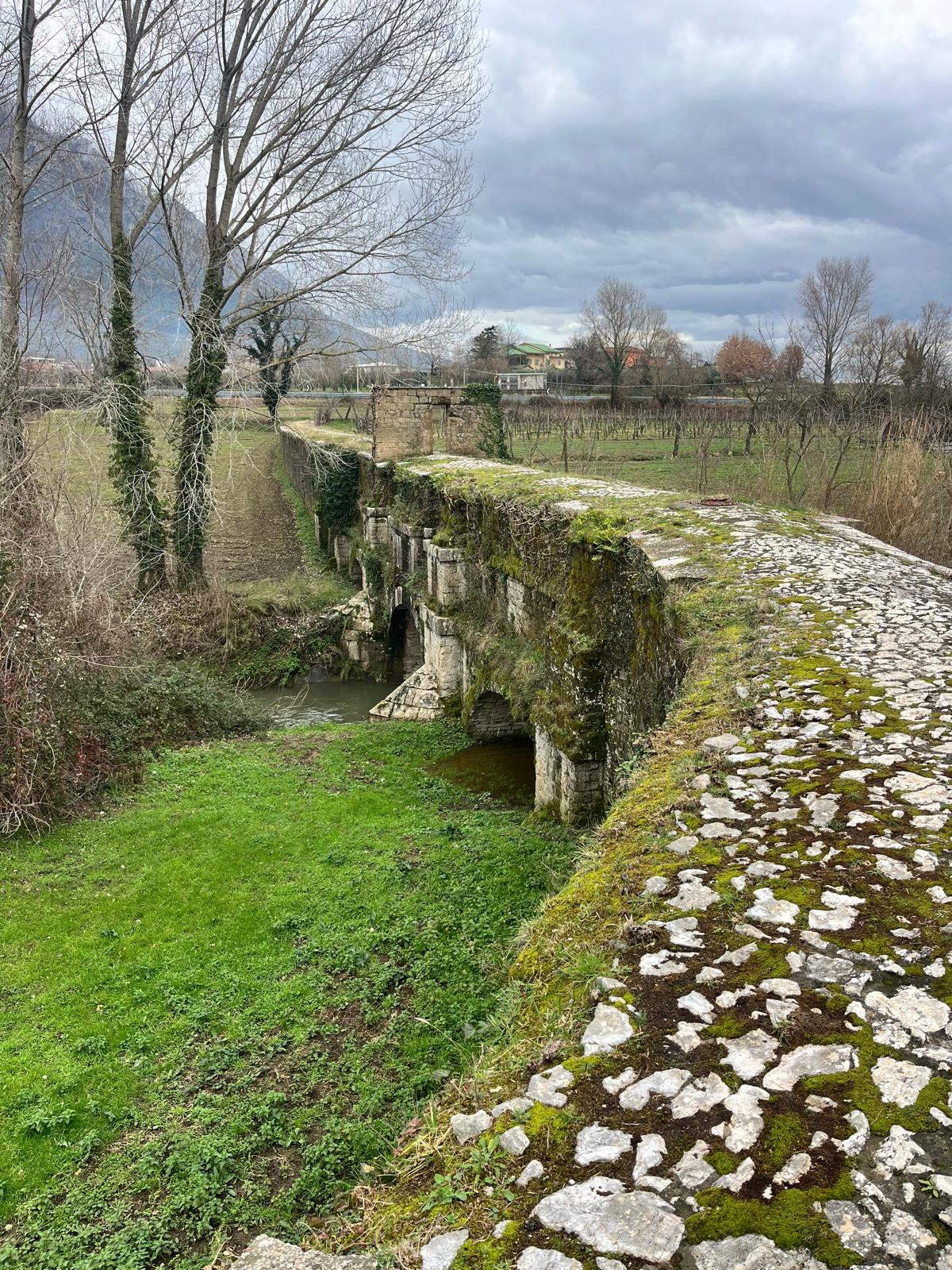
In recent days, the operational phase of the interventions aimed at the recovery and enhancement of the Fizzo Springs, the Carolino Aqueduct and the landscape areas historically connected to the sources began.


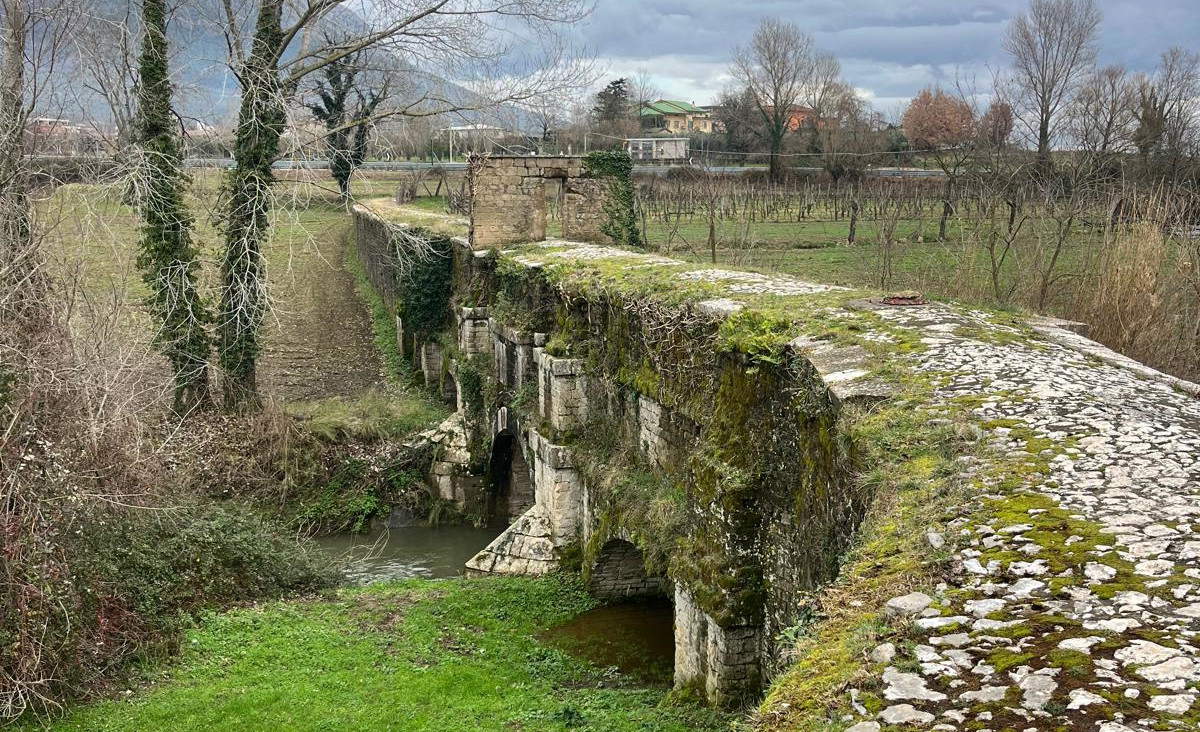
TheAcquedotto Carolino represents a great work of hydraulic engineering and is among the most important public works built by the Bourbons. Designed to ensure water supply to the city that was to develop around the Royal Palace and to enhance water distribution in Naples, the aqueduct was also intended to supply the royal residences and the fountains and water features in the Royal Park of the Royal Palace of Caserta. The pipeline, which is about 38 kilometers long, is all underground, except for sections crossing the Charles III Bridge in Moiano, the Durazzano Bridge, and the Ponti della Valle in Valle di Maddaloni. This feature makes the pipeline invisible on the surface and largely inaccessible, greatly complicating its routine maintenance activities. There are 67 towers along the route, used as vents and access points for inspections.


This is the context for the project, which aims to achieve a concrete improvement in the conservation conditions of the Carolino Aqueduct and the Fizzo Springs, as well as their landscape enhancement, with positive effects on the cultural, scientific, environmental, educational, economic and social development of the territory. In detail, the interventions include the redevelopment and re-functionalization of the entire area of the springs; the restoration and maintenance of the infrastructure of the Charles III and Durazzano bridges; and the ordinary and extraordinary maintenance of the towers not affected by the work already carried out by the Royal Palace of Caserta two years ago.
The start of the construction sites is the result of a long and articulated path, characterized by in-depth investigations and technical, specialized and administrative studies. The design phase was made particularly challenging by the total lack of previous scientific studies and interventions. The investigations conducted also revealed the continuation over the decades of abuses, anomalies and malfeasance, which have been reported to the relevant authorities in recent years.
The Royal Palace of Caserta is called upon to protect the historical and cultural heritage entrusted to it and to ensure its preservation and transmission to future generations. This is a particularly complex task, considering the extent of the Vanvitellian Complex, the variety of functions and uses of its assets, and the many management, conservation, legal, administrative and fruition-related implications.
“The Carolino Aqueduct,” says Tiziana Maffei, director of the Royal Palace of Caserta, “has been, since the beginning of my mandate, one of the priority issues to be addressed. Not only for its extraordinarily recognized historical and landscape value, but also-and above all-as a strategic functional infrastructure, long neglected from a technical and administrative point of view. The deficit of knowledge, monitoring and governance of the system was immediately apparent, in a context made even more critical by the emergence of issues related to the water crisis. Beyond a few punctual extraordinary maintenance interventions carried out in recent years thanks to limited resources found within the framework of UNESCO funding, this Directorate chose to take on the issue in a structural way, applying for PNRR funding. Today, thanks to these resources, we can finally turn a long-recognized need into an organic program of investigations, surveys, design and interventions. This is a complex and technically and administratively demanding work that requires time, expertise and rigorous procedures: problems accumulated over decades are not solved by extemporaneous solutions, but by study, verification, formal acts and construction sites. Only through real and scientifically based knowledge can effective management be ensured. The goal is to ensure lasting protection and functionality of this unique heritage and also to contribute to more effectively countering improper uses and unauthorized withdrawals of the water resource, strengthening the sense of collective responsibility towards the ecosystem.”
 |
| Royal Palace of Caserta, work begins on the Carolino Aqueduct and Fizzo Springs |
Warning: the translation into English of the original Italian article was created using automatic tools. We undertake to review all articles, but we do not guarantee the total absence of inaccuracies in the translation due to the program. You can find the original by clicking on the ITA button. If you find any mistake,please contact us.