





The new year opens with a project of great symbolic and cultural value to Sudan and the international scientific community. On January 1, 2026, the online launch of the Sudan Virtual Museum, a digital platform dedicated to the knowledge, appreciation, and protection of Sudan’s archaeological and museum heritage, was officially announced. The announcement came on a particularly significant date, coinciding with the start of the year and the celebration of Sudan’s National Day, an occasion on which good wishes and messages of closeness were extended to fellow Sudanese, with hopes for a future marked by security, peace and stability while the civil war that began in the spring of 2023 still rages on.
The project is being promoted by the National Corporation for Antiquities and Museums (NCAM) and the Section française de la direction des antiquités du Soudan (SFDAS), which jointly presented the online rollout of the virtual museum, accessible through the portal archeologie.culture.gouv.fr. The Sudan Virtual Museum aims to be a reference tool for the dissemination of knowledge about Sudan’s cultural heritage, offering a virtual tour of the Sudan National Museum’s collections and an extensive apparatus of content dedicated to the country’s major archaeological sites.
The initiative is part of the French Ministry of Culture ’s digital collection “Grands sites archéologiques,” hosted on the platform archeologie.culture.gouv.fr, which actively contributes to the enhancement and dissemination of knowledge of archaeological sites, monuments, collections and archives in France and internationally. The scientific responsibility and coordination of the project is entrusted to the Museum of National Archaeology-Domain du Château de Saint-Germain-en-Laye, while the technical infrastructure of the platform is managed by the digital service of the Ministry of Culture of France.
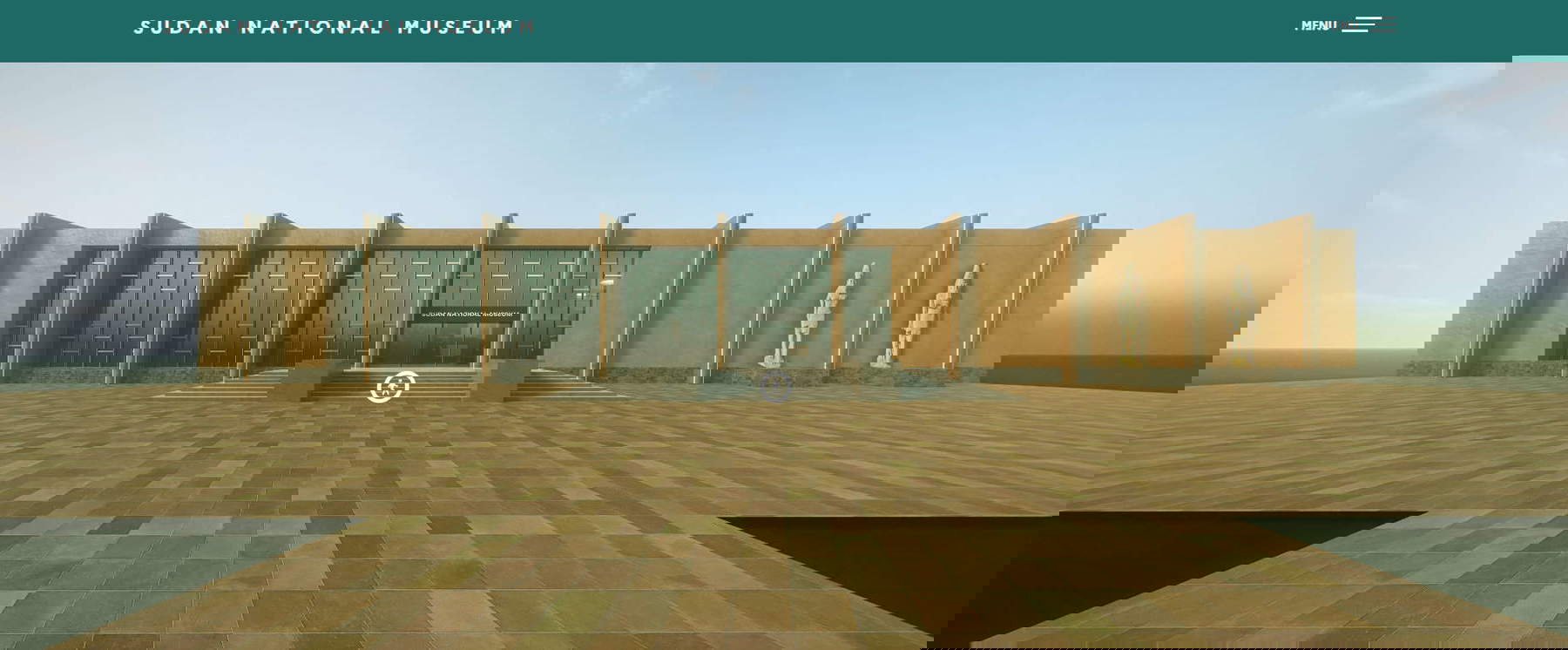
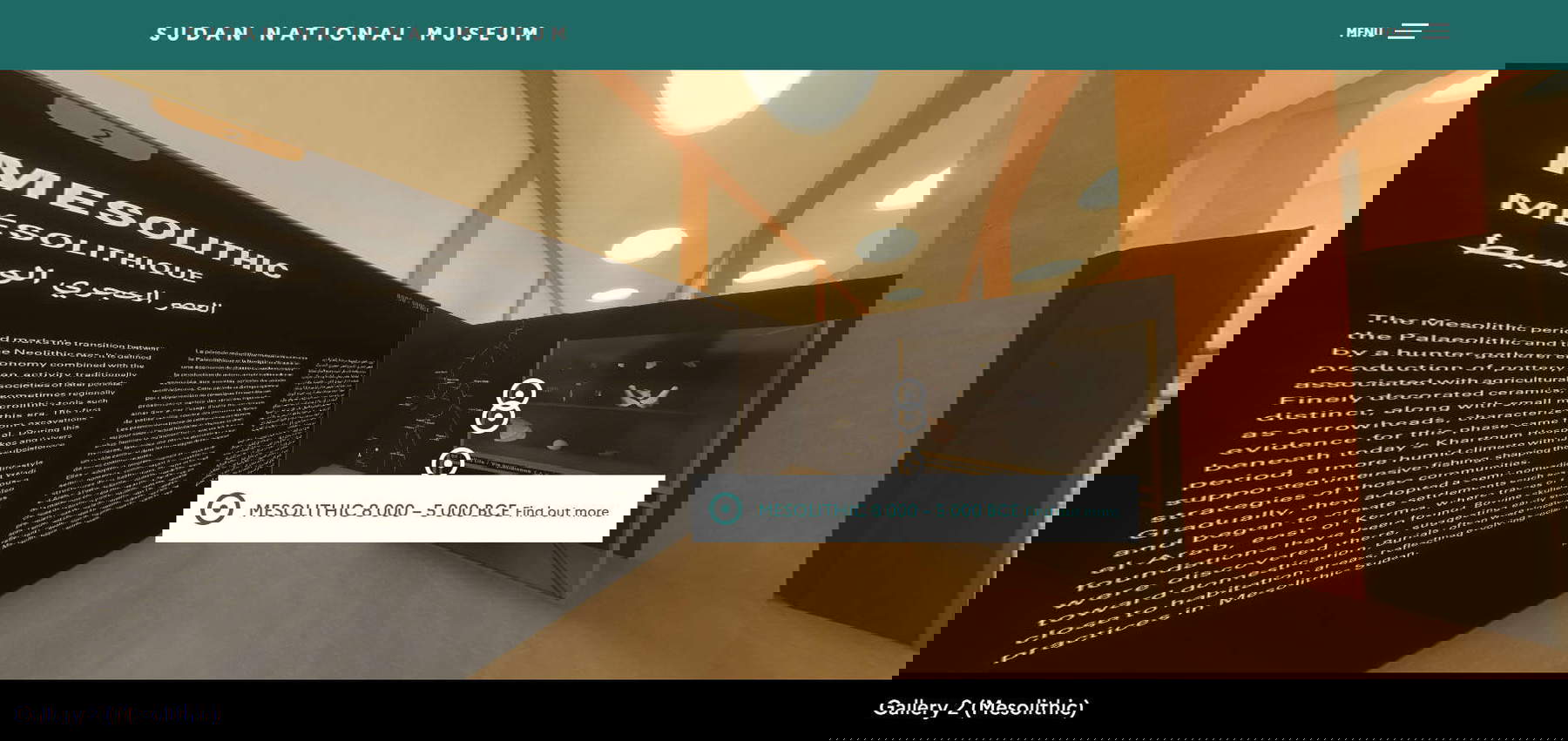
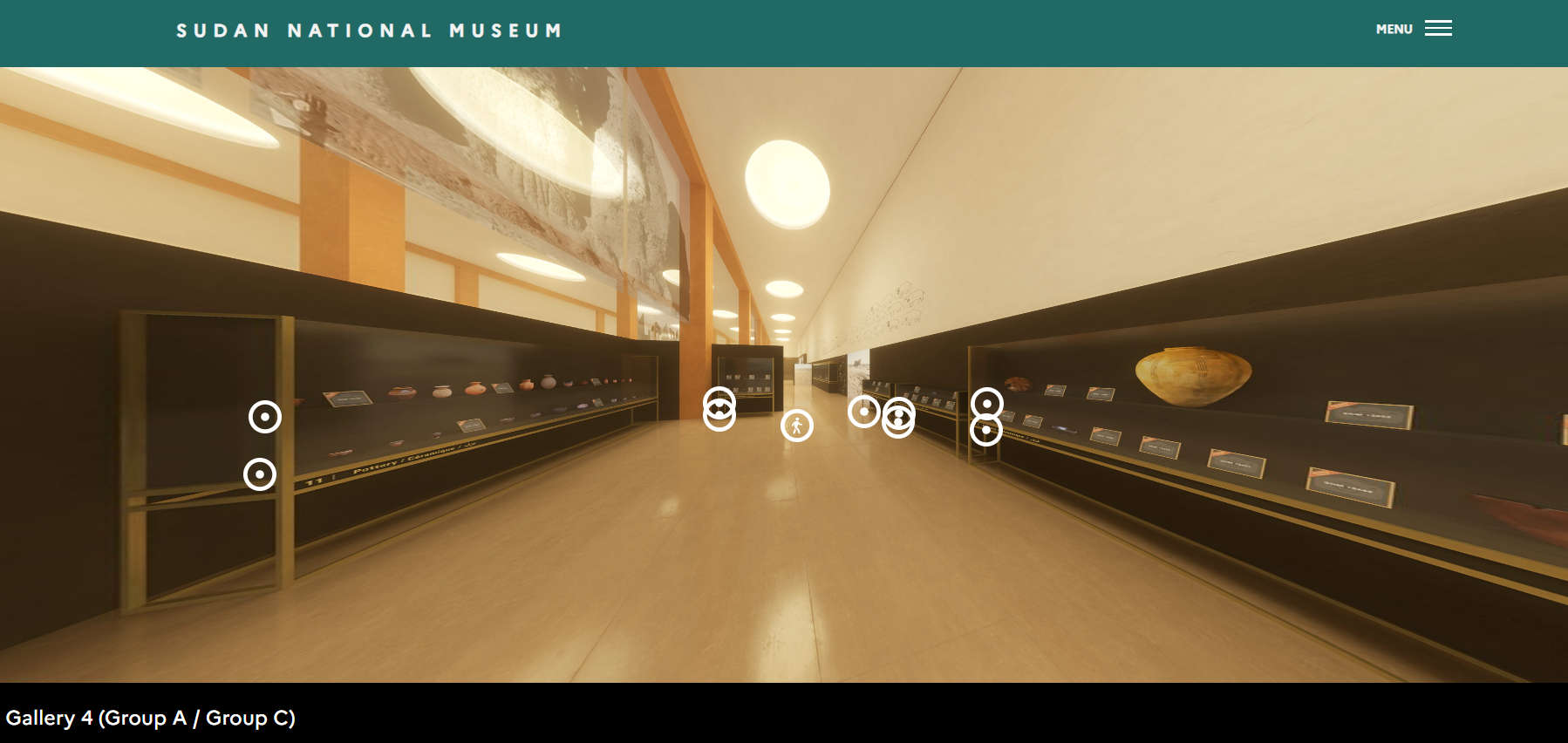
The Sudan Virtual Museum was created with the aim of making accessible to a global audience the cultural heritage of a country that, due to the ongoing conflict and difficult security conditions, sees the possibility of direct access to its museums and archaeological sites severely limited. The virtual dimension thus becomes an essential tool for ensuring continuity of knowledge, research and transmission of historical memory, overcoming physical and geopolitical barriers.
The currently available virtual tour allows visitors to explore galleries covering a chronological span from Prehistory to the Napata Kingdom, one of the key phases in the history of ancient Sudan. Collections dedicated to the Meroe Kingdom and the medieval period are already planned as an expansion of the digital museum during 2026, confirming the desire to build a constantly evolving project capable of restoring the complexity and richness of Sudanese history. Through the platform, it is possible to move through the rooms of the museum just as if one were physically visiting it.
The path proposed by the virtual museum also traces the milestones of the birth and development of the National Museum of Sudan. From the great season of the preservation of Nubia’s monuments between 1960 and 1980, linked to the construction of the Aswan Dam, to the founding of the national museum and its garden in 1971, a key moment in the preservation and presentation of the country’s archaeological evidence. The digital project does not elude more recent difficulties, recalling also the unfinished rehabilitation phase of the museum between 2019 and 2023, interrupted by an increasingly unstable political and military environment.
One of the central aspects of the Sudan Virtual Museum is precisely the reflection on the issue of accessibility of cultural heritage in times of conflict. In a context marked by destruction, looting and concrete risks to the survival of cultural heritage, the digital dimension becomes a form of protection, documentation and sharing. Indeed, the virtual museum makes it possible to preserve images, data and knowledge that would otherwise risk being lost (such as much of the museum’s holdings looted during the civil war) or remain confined to a small circle of specialists.
The project is also characterized by a strong openness to international collaboration. In fact, a call for contributions has been made to the global scholarly community, inviting scholars and institutions to share photographs of objects and materials related to Sudanese collections in order to further enrich the digital museum presentation. It is an invitation that underscores the participatory nature of the project and the desire to build a shared archive that reflects the geographic dispersion of many Sudanese artifacts now held in museums around the world.
On the site, alongside the masterpieces of the National Museum, there is space for in-depth information on regional museums, the great millenary sites of the Sudanese territory and the country’s main historical phases, offering an overview from the dawn of civilization to the medieval age. It also reconstructs the history of archaeological exploration and research, from nineteenth-century explorers to contemporary archaeologists, highlighting the evolution of studies and protection practices.
At a time when Sudan’s material heritage is under serious threat, the creation of a digital space accessible to all affirms the right to memory, knowledge and culture. The project demonstrates how international cooperation and digital technologies can offer concrete tools for heritage protection, keeping alive the focus on a millennia-old history that continues to speak to the world, even through a screen.
|
| Sudan Virtual Museum, cultural heritage online despite war, is born |

Warning: the translation into English of the original Italian article was created using automatic tools. We undertake to review all articles, but we do not guarantee the total absence of inaccuracies in the translation due to the program. You can find the original by clicking on the ITA button. If you find any mistake,please contact us.




























 IT
IT FR
FR DE
DE ES
ES CN
CN


