





What is taking place in Sudan to the indifference of most, as of April 2023, is a massacre of devastating proportions: only a year ago, on January 7, 2025, the New York Times reported estimates of 150,000 casualties and 11 million displaced people, a situation that had prompted the U.S. government to declare that one of the two warring parties, the Rapid Support Forces (RSF), a paralimitary organization that controls the western part of the country, is responsible for genocide. The tragedy of civilians is then compounded by that of the cultural heritage threatened by the war.
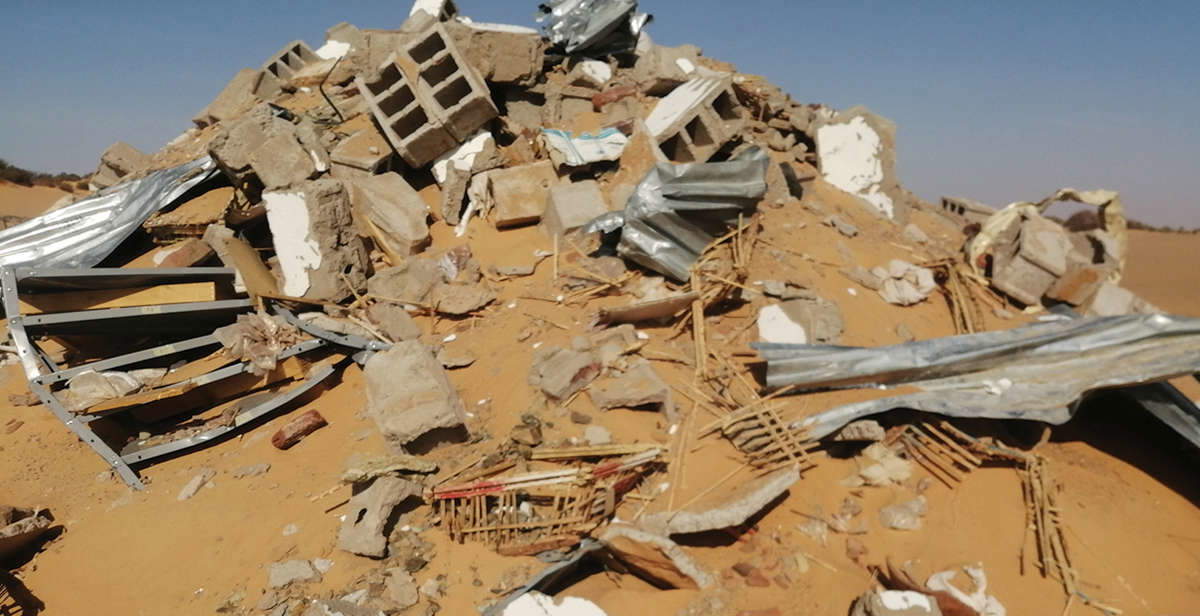
During the occupation of the capital Khartoum, which lasted from April 2023 to March 2025, the RSF subjected the collections of the country’s main museum, the National Museum of Sudan , to heavy looting (the center of Khartoum was later recaptured on March 24, 2025 by the national army). UNESCO had helped implement emergency measures at five archaeological museums in the country (the Kerma Museum, the Gebel Barkal Museum, the Red Sea Museum, the El Damer Museum, and the Sennar Museum), with the endangered collections packed and secured, safe havens set up, and 1,700 objects catalogued and digitized. In addition, UNESCO had provided support to Sudanese artists with the establishment of a center in Port Sudan that allowed displaced cultural professionals to continue their artistic activities in a safe space, network and discuss common challenges, develop new skills and knowledge, and interact with the local community. However, this was not enough to prevent the looting of museums, archaeological sites and private collections across the country: among them, the National Museum.
Publishing, three days ago, Jan. 8, 2026, an account of what happened at the museum was the French newspaper Le Monde, through the account of a historical employee, Jamal Mohammed Zein, who was the first to return to the site after the reconquest of Khartoum by the national army: “All the crates had been opened, overturned, half-emptied. We even found pieces of pottery lined up and riddled with bullets, as if they had been in a shooting range.” To date, the museum reports more than 4,000 pieces missing: also completely looted was the main core of the collection, the Kushite “gold chamber,” a collection of jewelry and gold artifacts found in the tombs of the kings and queens of Nubia, the ancient region that roughly corresponds to today’s Sudan. Also stolen were hundreds of funerary figurines from the Nabataean period, as well as mummies dating back to 2,500 B.C. which are among the oldest in the world (some of them grotesquely used, moreover, to edit propaganda videos in which the mummies were presented as victims of the regime of Omar al-Bashir, the former president of Sudan who was overthrown in a 2019 coup and is wanted by the International Criminal Court for war crimes and crimes against humanity). Not only that: the museum’s exterior was mined, the museum’s facade damaged by rocket fire, the garden canopies that protected three pharaonic temples moved here in the 1960s were destroyed (the temples, however, managed to survive the occupation). When the RSFs occupied the museum, militia members also took videos of themselves ravaging the institution. The museum’s top management also established contact with the RSFs to try to interrop the devastation, but it was to no avail. The stolen artifacts were either destroyed or ended up on the black market: authorities in Sudan have already alerted Interpol in the hope that something can be recovered. A comprehensive list is also being compiled and will be sent to ICOM, the International Council of Museums.
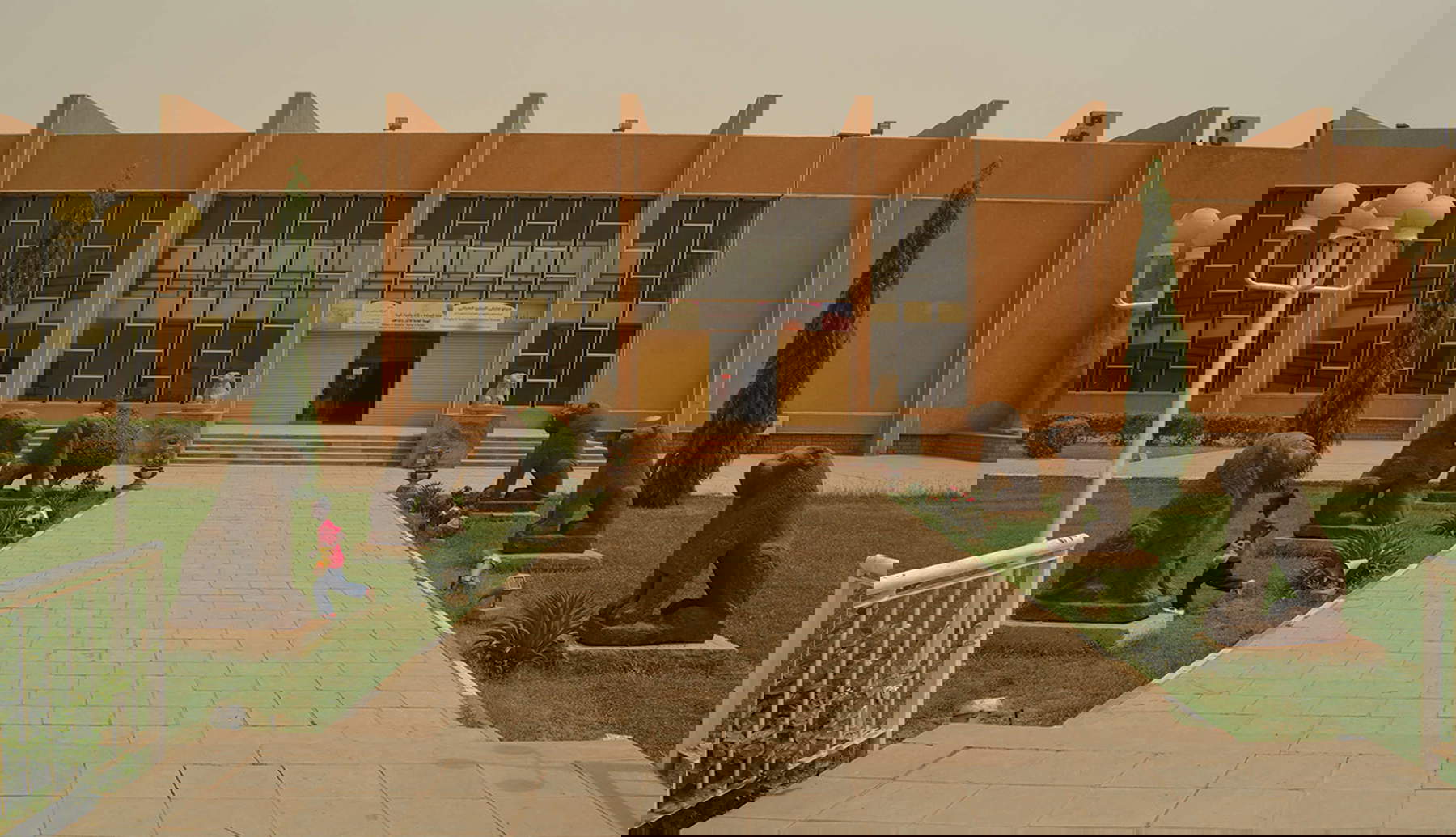
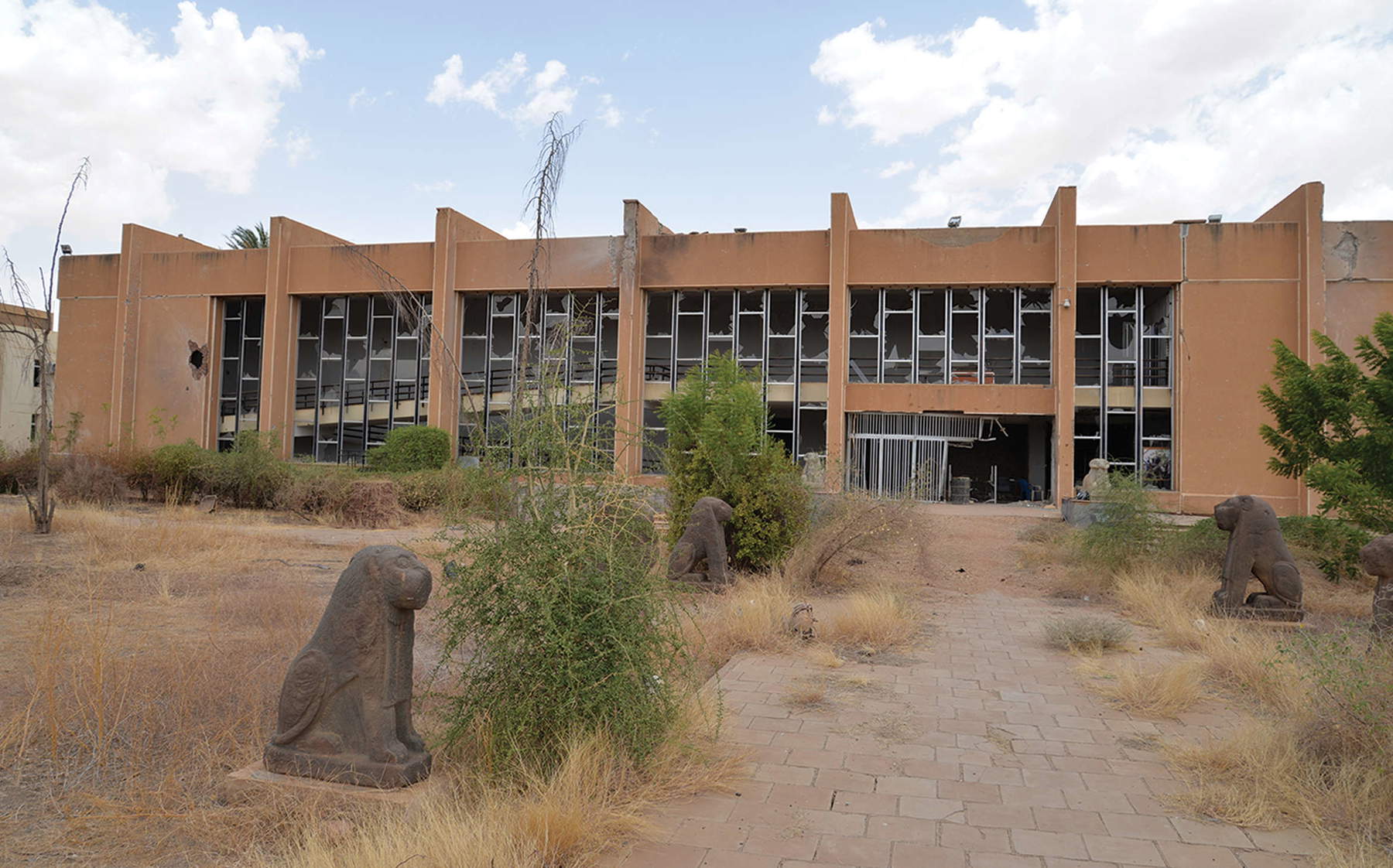
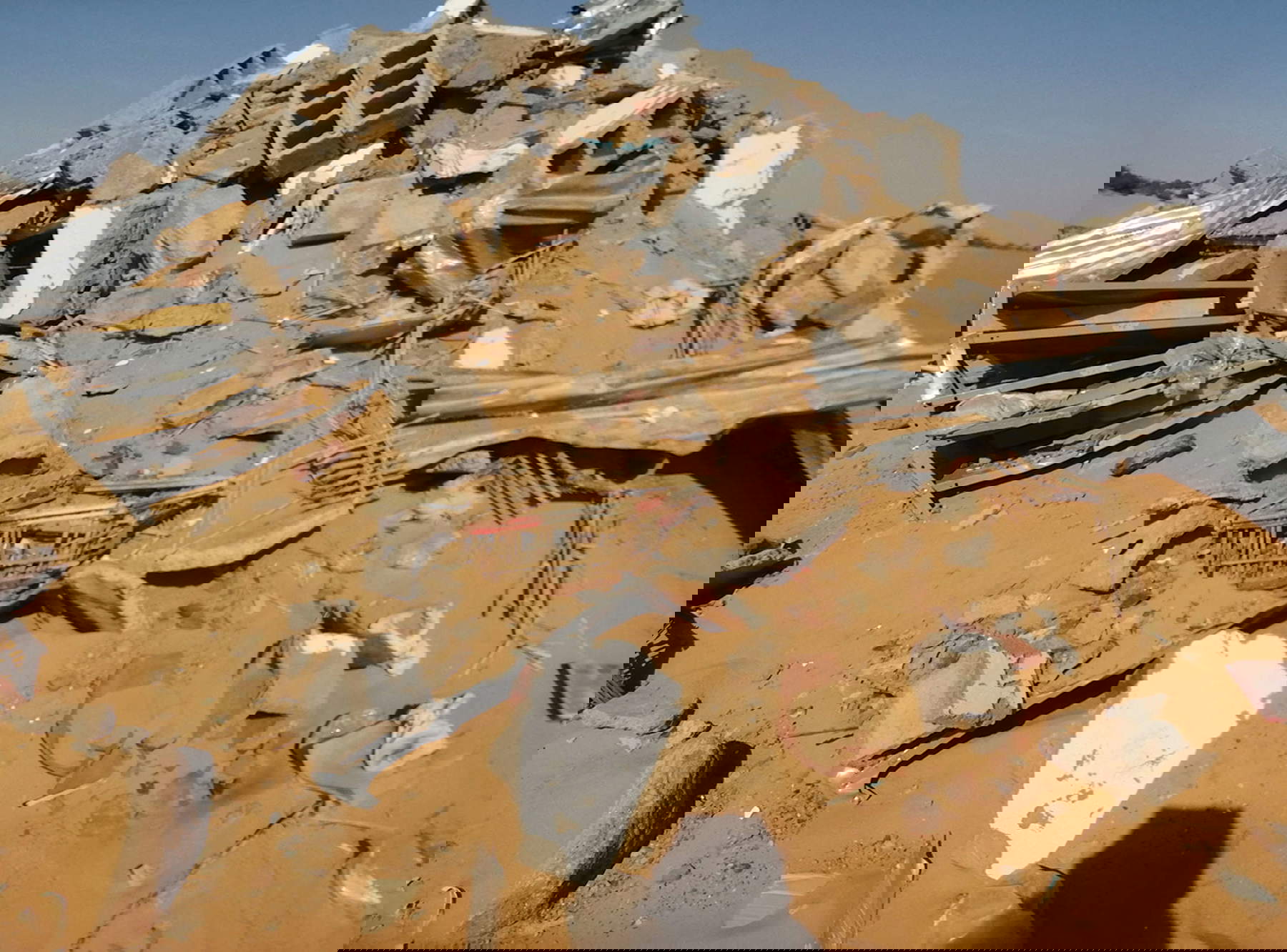
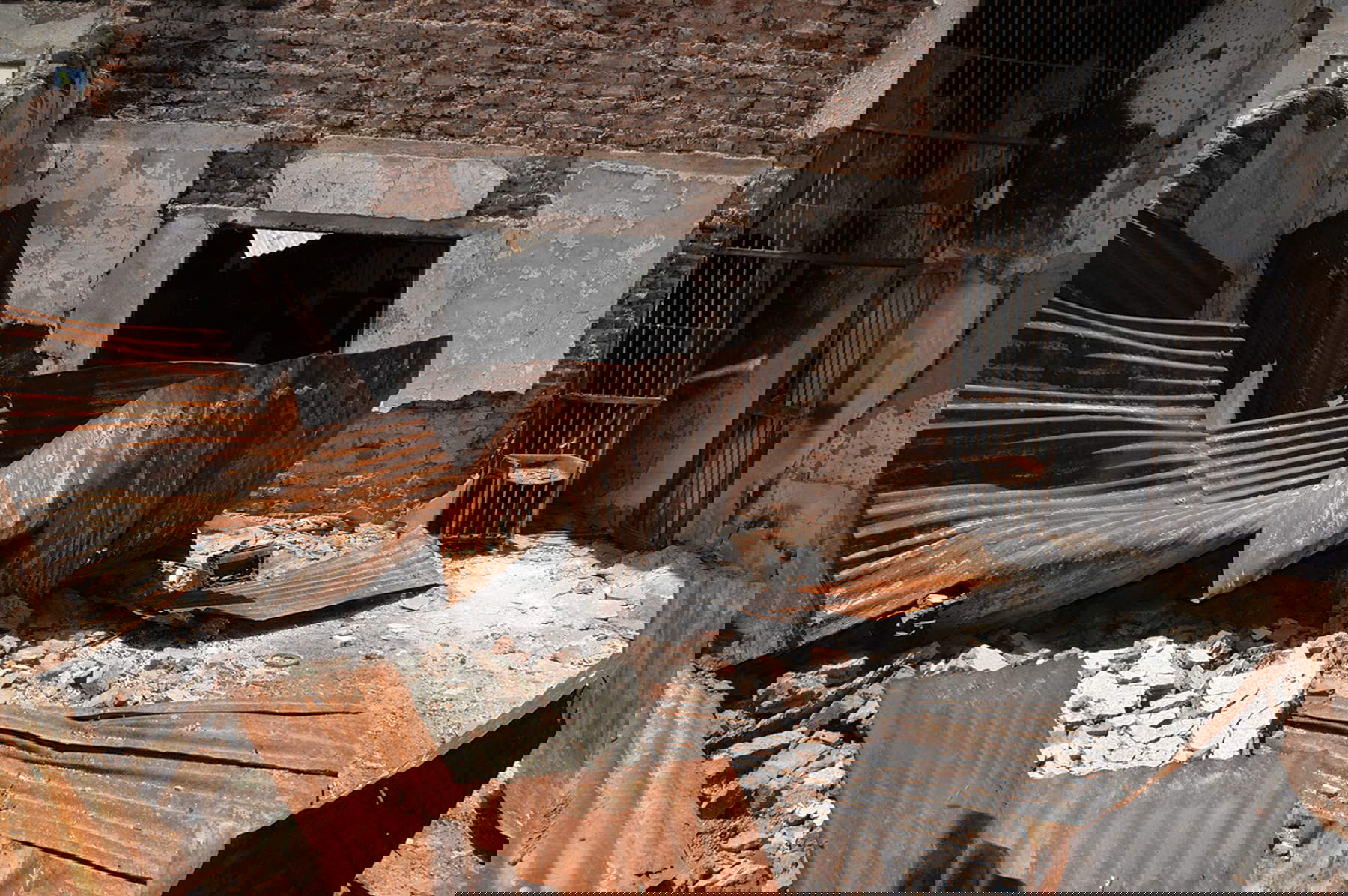
But there is not only the National Museum in Khartoum among the cultural victims of the war. The Le Monde article provides a list of the most important sites that suffered damage: the Beit al-Khalifa Museum in Omdurman, home to an important historical and ethnographic collection, was also looted. The archaeological site of Naqa, 250 kilometers north of Khartoum and near the Pyramids on the island of Meroe (a very ancient city in the north of the country where one of the most important archaeological sites in North Africa is located, called an “island” because it is surrounded on three sides by the Nile: in ancient times it was the heart of the Kingdom of Kush and has been a World Heritage Site since 2011) suffered damage. In Darfur, the palace of Sultan Ali Dinar in Al-Fashir (capital of North Darfur), one of the symbols of the Fur community, came under airstrikes. Again, in the city of Geneina, capital of West Darfur, the palace of Sultan Bahr el-Din and the city museum were destroyed.
According to Ikhlas Abdelatif, director of museums at the National Corporation for Antiquities and Museums (NCAM), Sudan’s main museum body that has been operating out of Cairo in Egypt since the beginning of the war (despite the fact that some museum and archaeological site managers have remained in Sudan), total losses for Sudanese institutions alone amount to $110 million. And there has been, in this destruction of cultural property, a deliberate intent, according to Abdelatif: “This is no accident. The RSF are not only trying to take over the country militarily, they have launched an operation to erase and replace Sudanese identity. With the support of the UAE, the plan is to change the demographics of Sudan. This has gone hand in hand with mass displacement campaigns, with a quarter of the population uprooted; ethnic cleansing, as in Darfur; and, finally, here in Khartoum, the theft of our history.” Among the damaged sites were also the Palace of the Republic of Khartoum, hit back in May 2023; the Mohamed Omer Bashir Center Library, burned the same month; the Sudan Museum of Natural History; the Abdallah Kahlil Museum; and the Khalifa Museum, subjected to looting.
The National Museum of Sudan came partially back to life after the end of the occupation of Khartoum-there was also financial support from UNESCO (the amount was not disclosed) to salvage what can be saved and put back up what is possible. Last October, an article by Habab scholars Idriss Ahmed and Geoff Emberling published in the Cambridge University Press scholarly journal Antiquity summarized what had happened and took stock of the situation. “In the early months of the war in Sudan,” the article recalls, thus starting with what happened in the spring of 2023, “many civilians living in the Khartoum area fled to safety, including the entire NCAM staff. The Sudanese government was quickly forced to suspend payment of salaries to employees, including most NCAM staff and university archaeologists. Together, these changes created the immediate risk that there would be no more specialists to monitor threats and damage. Within weeks, RSFs controlled much of Khartoum. Looting, vandalism, combat damage, and destruction eventually affected all of Khartoum’s museums, including the National Museum, causing substantial loss of cultural heritage. RSF members filmed themselves inside the National Museum’s Bioarchaeology Laboratory and posted the video online. Until recently, however, the true extent of the damage has been difficult to assess because RSFs would not allow NCAM staff or international observers access to these sites. The NCAM and the international community have thus been forced to rely on reports from nonspecialists via social media for much of the past two years. In addition to threats of damage and looting to museums, there has been damage and threats to archaeological dig repositories, for example in Soba, south of Khartoum, and by gold miners on Sai Island in Northern State. The British Museum’s research project at Amara West had built a visitor orientation and storage center at the site. In April 2023, Google Earth images suggested some damage, and in July, NCAM staff documented its total destruction, likely caused by prospector groups. It was widely reported that truckloads of artifacts from the National Museum were brought by the RSF to western Sudan. This information from Sudan’s central intelligence agency has been corroborated by international organizations, with the trucks appearing on satellite images. A truck was stopped by the Sudan Armed Forces (SAF) while crossing the border into South Sudan and it was reported that some artifacts from the National Museum were recovered, although details have not been made public. Some items that may have been part of the National Museum’s collection have also been offered for sale, some online (on eBay) and some by phone.”
Then there is more than just direct damage, Ahmed and Emberling explain, “In addition to threats of looting and the conflict itself, potential damage to archaeological sites is also caused by the unprecedented influx of displaced people from the capital region. This is one of the unusual aspects of the situation in Sudan, compared to what has happened in Iraq and Syria. Having lost their livelihoods, many displaced Sudanese have turned to farming and gold mining, and some have attempted to build houses on archaeological sites. The growing number of people around archaeological sites also increases the risk of vandalism and unintentional damage, although it can be an opportunity for training and engagement.”
Meanwhile, national and international institutions are trying to work against threats to cultural heritage. Several museums have been secured, NCAM has formed an Emergency Action Department to assess damage and implement measures to protect sites when it has been possible to do so safely, and has organized workshops and conferences to inform the international community about threats to cultural heritage in Sudan. In collaboration with international partners, NCAM also intensified its efforts especially in areas where cultural and historical sites were in immediate danger.
One of the biggest challenges, Ahmed and Emberling point out, was finding ways to get money flowing into the country during the war. Sudan was in fact subject to U.S. and international financial sanctions until 2020, and some of these restrictions are still in place. One of the consequences is that Sudanese banks are not connected to the international banking system, and direct transfer of funds to accounts in Sudan is not possible. Several less formal methods have been developed, all of which require an unusual degree of flexibility on the part of lending institutions, although not all have been able to disburse funds successfully.
Then there are field projects that have managed to remain active during the war: one such project is the Jebel Barkal Archaeological Project (JBAP), a joint project between NCAM and the Kelsey Museum of Archaeology at the University of Michigan (co-directed by Emberling himself). JBAP was able to support colleagues moving into the Jebel Barkal area to actively protect the site and mitigate damage caused by the unusually heavy rains that hit Sudan in August 2024, including excavations. A training program has also been developed for local guides at the site and to conduct outreach activities in local communities, including displaced people living in camps. “These activities,” the two scholars say, “provided a little comfort and support to the communities around the site. All of this work has been done under the direction of Sami Elamin, who has bravely decided to remain in Sudan to do what he can to protect the sites and museums under his supervision. We hope that this work to safeguard cultural heritage will contribute to the rebuilding of human ties in Sudan when the war ends.”
Other international organizations and individuals have made significant contributions. Generous private donations, organized by the Sudan Archaeological Research Society, supported a large number of NCAM staff members, including janitors of archaeological sites, for much of the first two years of the war. TheAmerican Sudanese Archaeological Research Center provided small grants to Sudanese scholars to continue research, engage in community outreach, protect sites, and, most recently, translate scholarly articles into Arabic, facilitating the teaching of Sudanese archaeological heritage to a group of displaced students. It has also regularly hosted online lectures by Sudanese and international scholars to illustrate ongoing work. And at least three other international organizations have worked and continue to work to monitor damage to cultural heritage in Sudan, primarily through satellite imagery: the Smithsonian Institution’s Cultural Rescue Unit, Heritage Through Peace through its Sudan Heritage Protection Initiative, and the Section Française de la Direction des Antiquités du Soudan (SFDAS) through their projects Innovating monitoring approaches for heritage protection in Sudan and Sudan Archaeological Heritage Protection Project.
The SFDAS, a French archaeological unit housed at the National Museum in Cairo, in particular has continued to provide support for the cataloguing of the National Museum and the Kerma Museum, with the publication of a trilingual catalog by the missions engaged in Kerma, and offers annual scholarships to Sudanese researchers and students, in Sudan or in exile, to facilitate their research. SFDAS has also initiated a project to create a virtual museum based on objects on display at the National Museum of Sudan, in collaboration with the National Museum in Cairo and the Louvre Museum in Paris, which was launched on January 1, 2026. A small sign of rebirth while the war continues and the tragedy of the population is worse than ever.
 |
| Sudan, the silent massacre: tens of thousands killed and cultural heritage destroyed |

Warning: the translation into English of the original Italian article was created using automatic tools. We undertake to review all articles, but we do not guarantee the total absence of inaccuracies in the translation due to the program. You can find the original by clicking on the ITA button. If you find any mistake,please contact us.





















 IT
IT FR
FR DE
DE ES
ES CN
CN


