




by Redazione 17/02/2026



Categories: News / Disclaimer
Young scholar discovers at the National Central Library in Florence a volume of extraordinary interest to the history of science: a printed copy of Ptolemy's Almagest with numerous handwritten annotations attributable to Galileo Galilei


Discovery at the Biblioteca Nazionale Centrale in Florence, where a recent investigation has unearthed a volume of extraordinary interest to the history of science: a printed copy of Claudius Ptolemy’sAlmagest, published in Basel in 1551, containing numerous manuscript annotations attributable to Galileo Galilei. The discovery was made by young scholar Ivan Malara, a research fellow at theUniversity of Milan, and is the result of a study begun more than three years ago. The goal was to clarify what direct knowledge Galileo had of theAlmagest, the astronomical treatise composed in the second century AD by Ptolemy and which remained a reference point for astronomy for more than a millennium. In particular, the research aimed to identify which edition Galileo had consulted and what weight this reading had when comparing it with Nicholas Copernicus’ De revolutionibus orbium coelestium (1543).


The starting hypothesis, seemingly paradoxical, argues that deep knowledge of the Ptolemaic system was one of the decisive prerequisites for Galileo’s adherence to the Copernican heliocentric model. Although the two cosmological visions are opposites, they in fact share the same mathematical structure and many astronomical techniques, making theAlmagest a kind of theoretical basis indispensable for understanding Copernicus’ work.


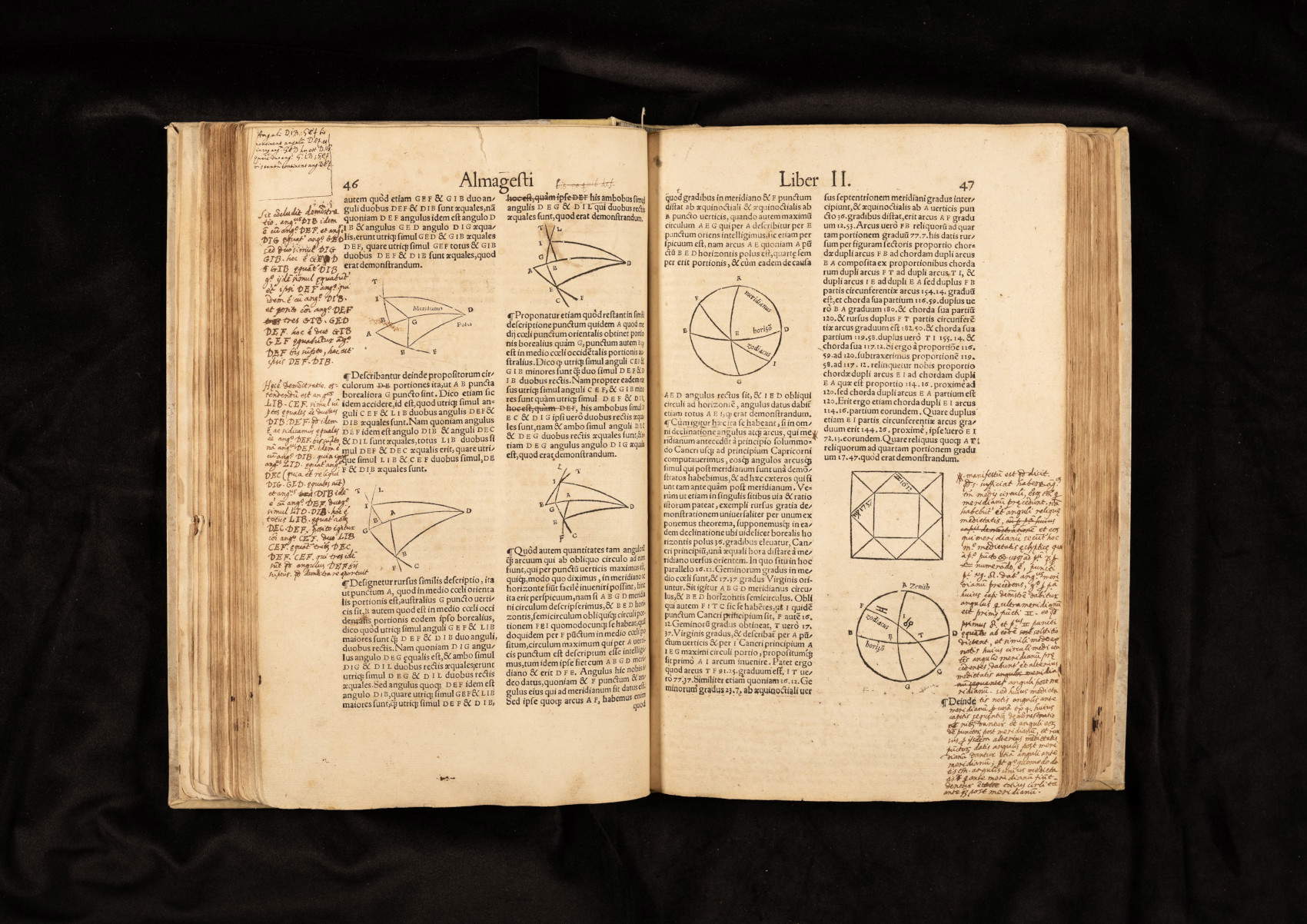
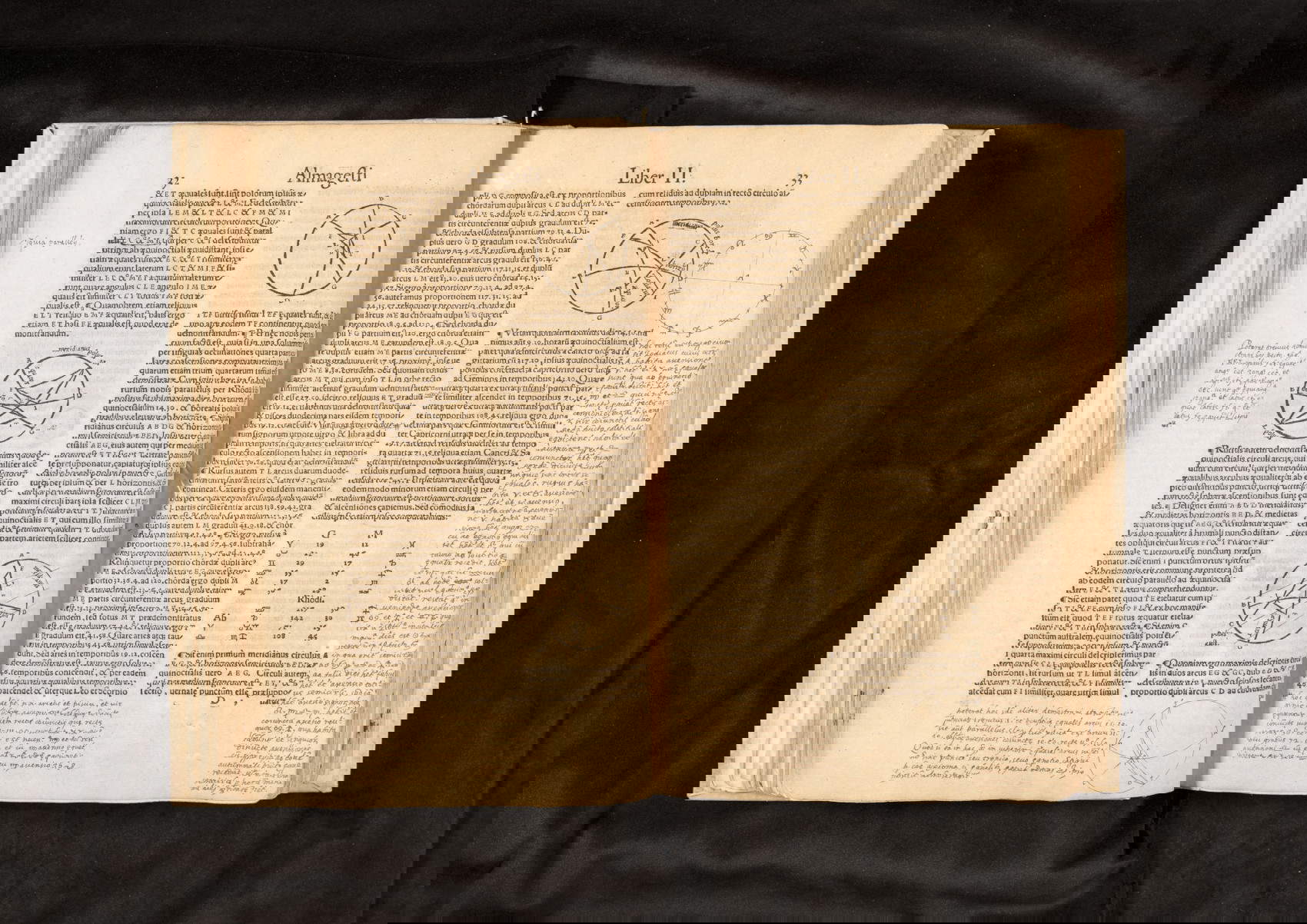
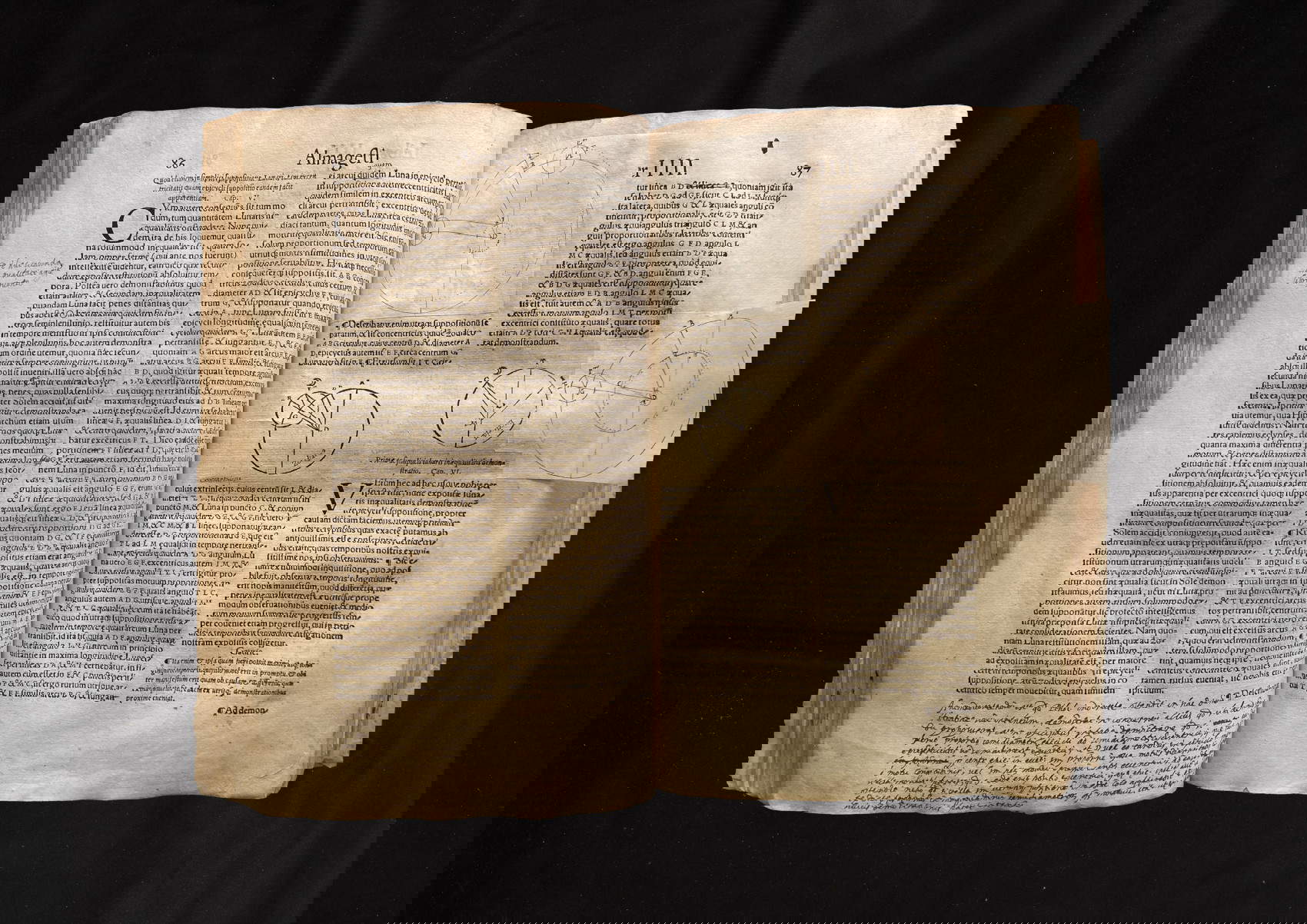
Already in his youthful writings, particularly in De motu antiquiora (1589-1592), Galileo demonstrated considerable familiarity with Ptolemaic mathematical demonstrations and claimed to have composed a commentary on theAlmagest, now lost. However, the fundamental question remained unresolved: on which text he had studied. The answer emerged through a systematic analysis of early printed editions of theAlmagest preserved in Florentine libraries. A volume containing Latin translations of Ptolemy’s works, richly annotated in the margins, was identified in the magliabechian collection of the Biblioteca Nazionale Centrale. Paleographical and content examination of the annotations revealed a strong correspondence with Galileo’s early handwriting and with specific passages from De motu and other of his writings, both before and after Sidereus Nuncius (1610).


The Library also holds the Galileiano Fund, consisting of 347 manuscripts acquired in 1861 with the union of the Palatine Library with the Magliabechiana. The discovery of the postillated specimen within the Fondo Magliabechiano, the original nucleus of the institute, born of Antonio Magliabechi’s bequest to the city of Florence, opens up new perspectives for research even in areas of the collections hitherto thought to be unrelated to Galileo’s books.
|
| Important discovery at Florence's National Central Library brings to light a volume postillated by Galileo |
Warning: the translation into English of the original Italian article was created using automatic tools. We undertake to review all articles, but we do not guarantee the total absence of inaccuracies in the translation due to the program. You can find the original by clicking on the ITA button. If you find any mistake,please contact us.