





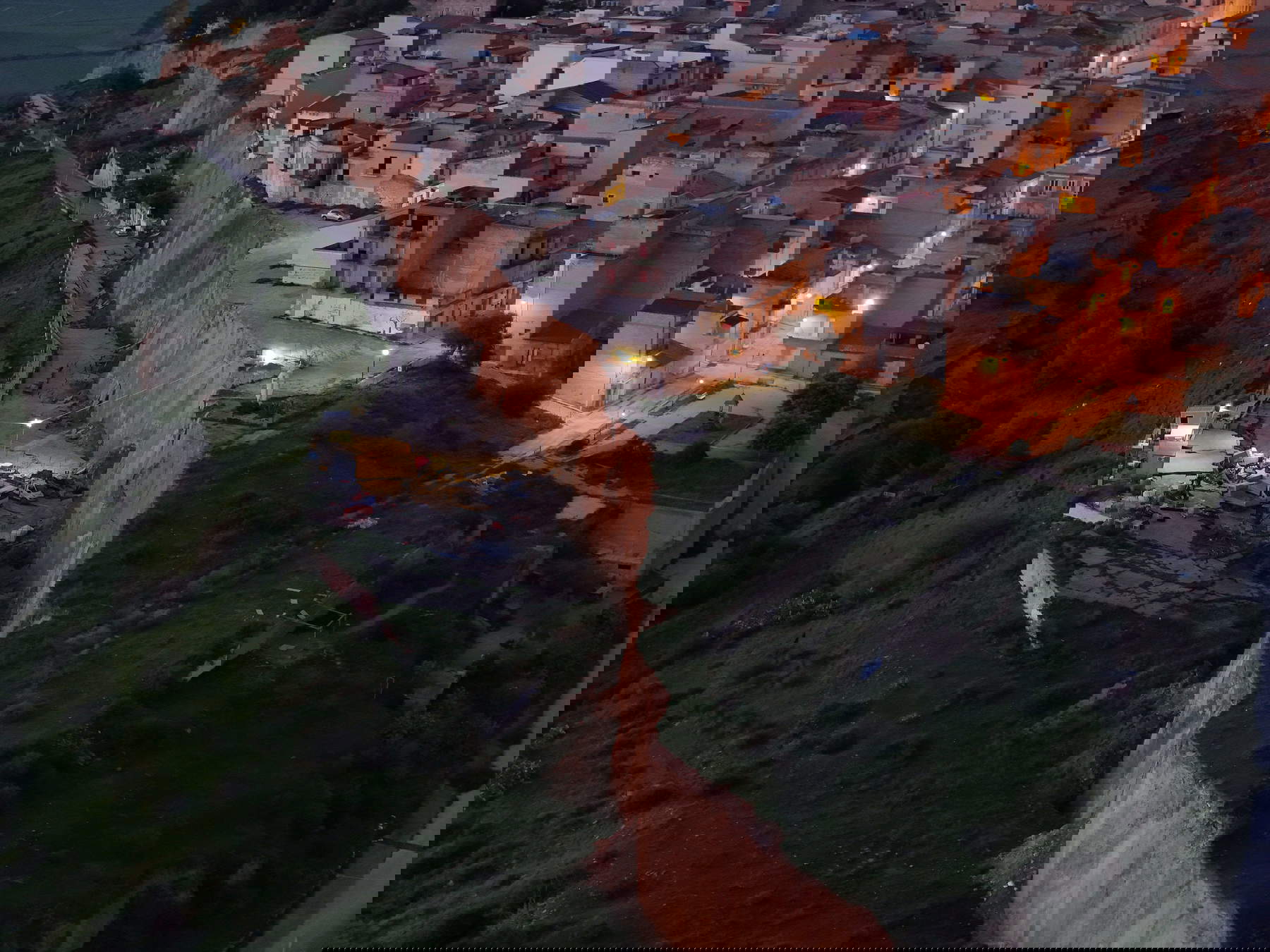
In Sicily, the landslide that hit Niscemi, in the province of Caltanissetta, has opened a phase of emergency involving not only the safety of people and homes, but also the protection of the city’s historical and cultural heritage. This is the context of the inspection carried out today by the Superintendence for Cultural and Environmental Heritage of Caltanissetta, ordered by the Regional Councillor for Cultural Heritage and Sicilian Identity, Francesco Paolo Scarpinato, with the aim of verifying the state of conservation of the artistic and monumental assets present in the area affected by the landslide movement.
The regional government, led by Renato Schifani, took immediate action to guarantee assistance to families left homeless by the landslide. At the same time, attention was focused on safeguarding a heritage that represents a fundamental testimony to the history and identity of Niscemi. The reconnaissance conducted by the Superintendence’s technicians concerned in particular buildings of worship, the historic center and some symbolic places of the town’s memory.
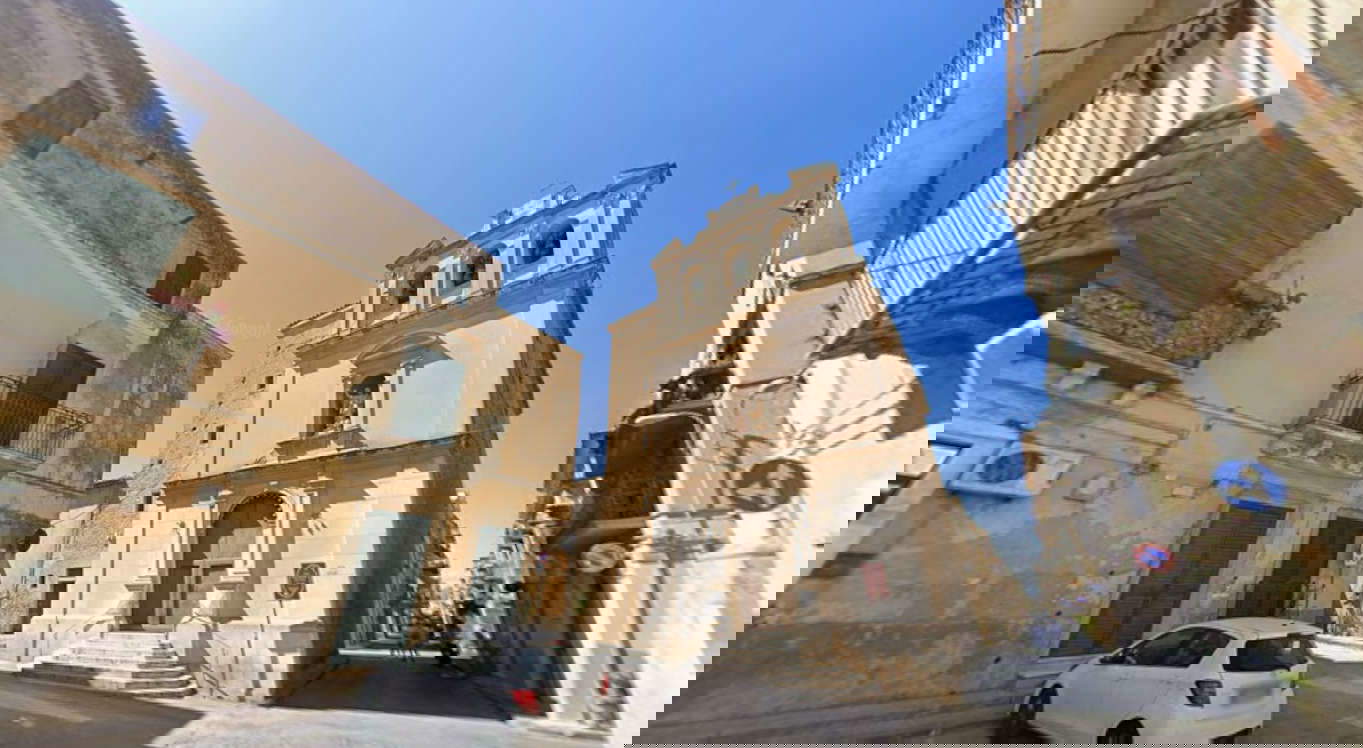
One of the first sites examined was the church of Maria Santissima delle Grazie, a building of great historical and religious value, in its current form dating back to 1733 but pre-existing at the founding of the city in 1626, and therefore considered the oldest church in Niscemi. Although no visible structural subsidence was detected, the decision was made to transfer the valuable movable property, an arrangement that responds to a principle of utmost caution. According to Superintendent Daniela Vullo, an initial visual analysis does not reveal any structural subsidence at the moment, despite the fact that the church is located on the edge of the so-called red zone. However, precisely because of its location and the potential risk related to the evolution of the landslide, in agreement with the Curia and the fire brigade, a precautionary decision has been made, however: the displacement of valuable movable property stored inside the building.
The Superintendency has already drawn up a detailed list of the artifacts to be moved, consisting of paintings and statues of special historical and artistic value. In the coming days, these goods will be secured in the Curia’s premises at the mother church or at the Civic Museum in order to preserve their integrity and prevent irreversible damage. This is a delicate operation, which requires rapid time but also the utmost care, given the fragility of the works involved.
The inspection also involved the historic center of Niscemi, where there are a number of buildings of historical interest that are subject to protection, particularly with regard to their facades. Among these buildings, only one is listed in its entirety: Palazzo Iacona di Castellana, a significant example of the local architectural heritage. Also in this case, the Superintendence has initiated an initial assessment of the condition of the buildings, pending any technical investigations related to the evolution of hydrogeological instability.
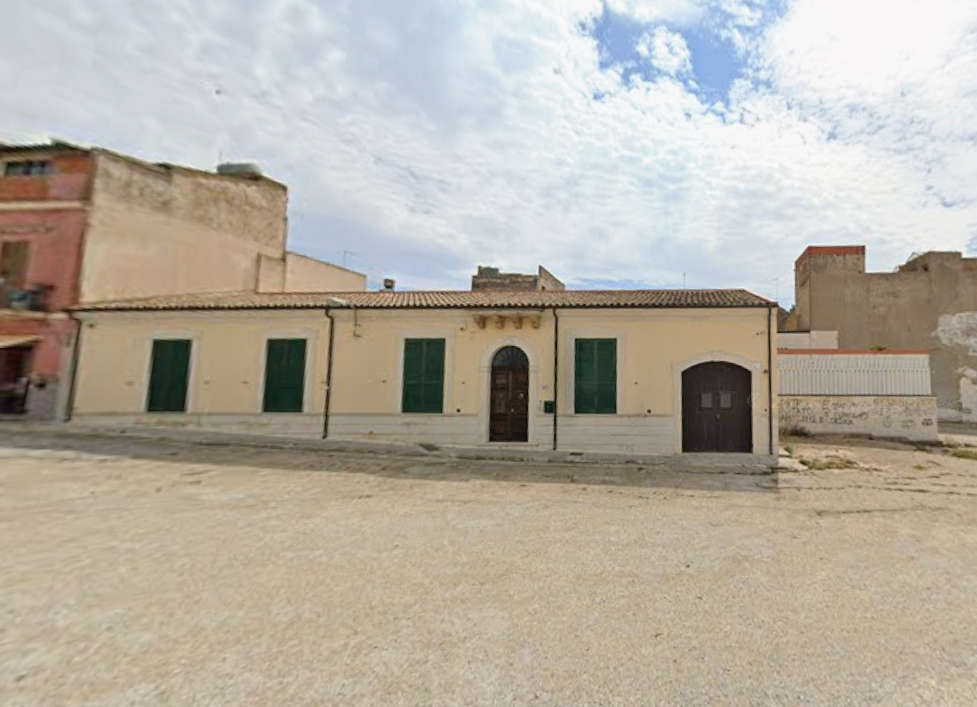
Particularly complex appears to be the situation of the “Angelo Marsiano” library, which holds about five thousand volumes, mostly dedicated to the history of the city and belonging to the historian after whom the library is named. The building housing the collection, at 67 Via Roma, is located within the red zone and, at the moment, it has not been possible to approach it for a direct verification of the condition of the premises and books. In the coming days, the Civil Defense and firefighters will evaluate the actions to be taken, also based on the technical documentation provided by the Superintendence, which is making available floor plans and useful materials to verify the possibility of recovering the volumes. However, the recovery of the books promises to be complex, precisely because of the building’s location in the area most affected by the landslide.
On the institutional front, Regional Councilor Scarpinato reiterated the region’s commitment to the protection of Niscemi’s cultural heritage. “We have put in place every useful action for the protection of cultural heritage,” Scarpinato said, “and thanks to the synergy and collaboration between entities and institutions we count on arriving in the shortest possible time to the securing of all the assets, a precious testimony of our history.”
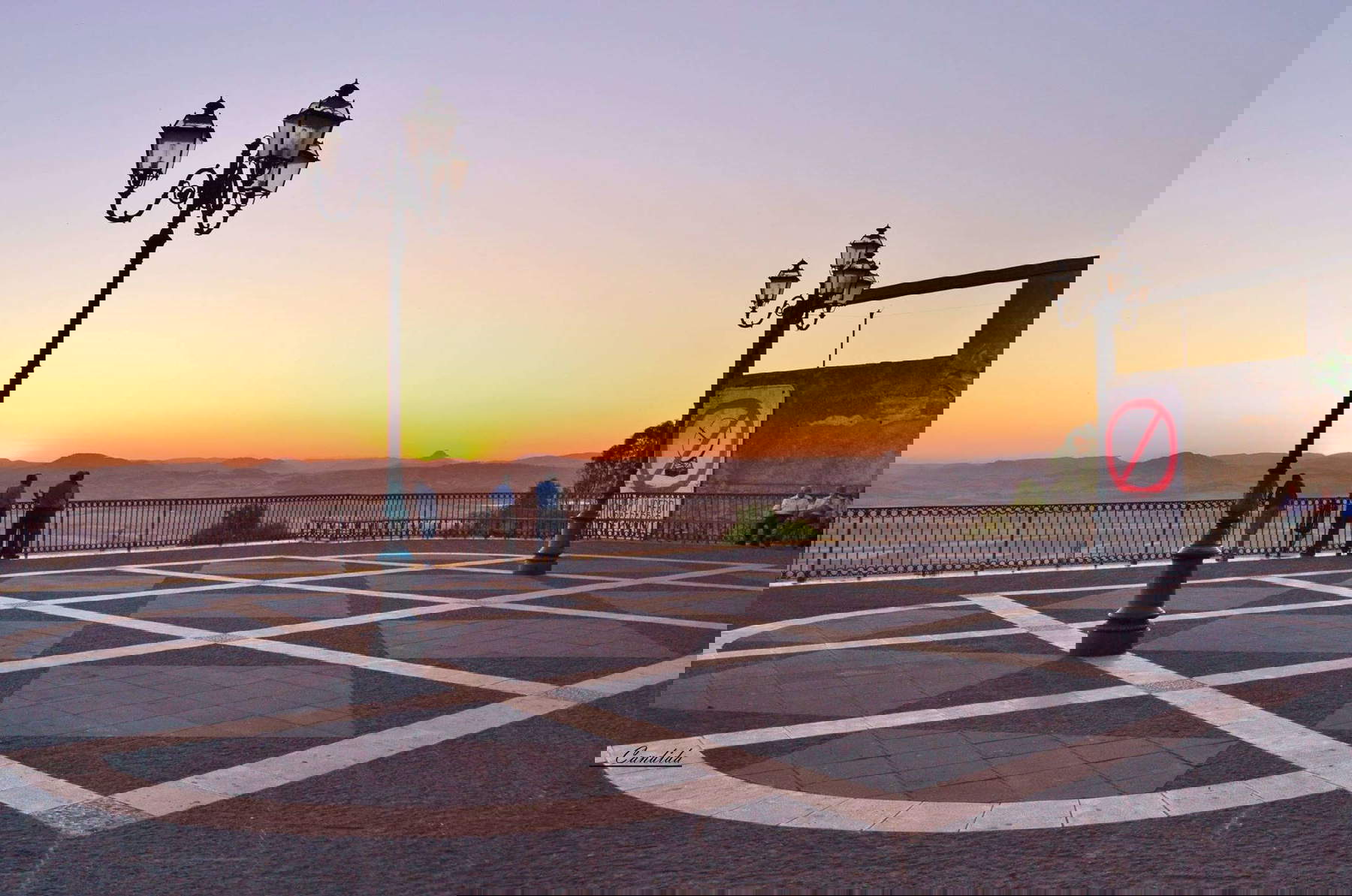
In the picture of assets at risk, the loss that has already occurred of the Belvedere Terrace, a historic panoramic terrace built in 1803 overlooking the Gela plain and the Maroglio river valley, also emerges. The structure had already been rebuilt in 1921 following a previous landslide, but the current disruption caused its ultimate collapse. An episode that testifies to the fragility of the territory and the long history of instability that characterizes the area, and which adds to another loss, that of the Sante Croci church, which gives its name to the neighborhood of the same name: built in the Baroque style in 1710, the building collapsed already following the damage caused by the landslide of 1997.
In this complex scenario, the protection of cultural heritage takes on a value that goes beyond the material preservation of works and buildings. Protecting churches, historic buildings, archives and libraries means safeguarding the collective memory of a hard-hit community. The Niscemi landslide has opened a deep wound in the urban and social fabric, but it has also rekindled attention to the need for integrated land management, capable of combining safety, prevention and enhancement of the historical heritage. The coming weeks will be decisive in understanding the evolution of the situation and in defining broader structural interventions. In the meantime, the Superintendency and the region let it be known that they are continuing to work closely together to ensure that, alongside assistance to people, cultural property can also be secured quickly.
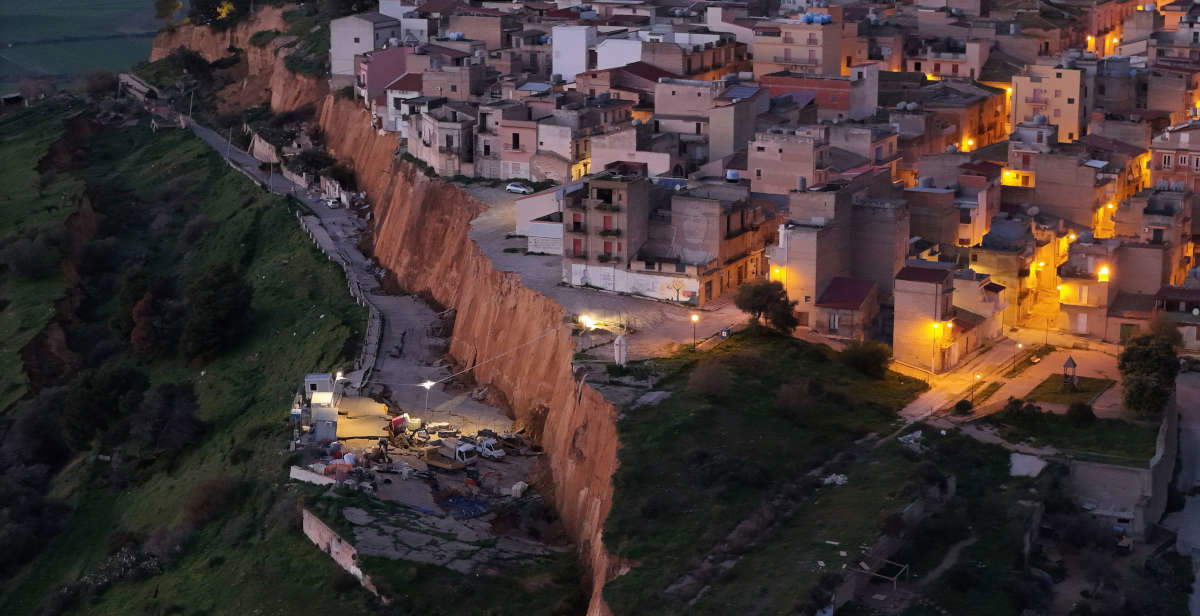 |
| Niscemi landslide also affects cultural heritage: what's at risk of being lost |

Warning: the translation into English of the original Italian article was created using automatic tools. We undertake to review all articles, but we do not guarantee the total absence of inaccuracies in the translation due to the program. You can find the original by clicking on the ITA button. If you find any mistake,please contact us.






















 IT
IT FR
FR DE
DE ES
ES CN
CN


