





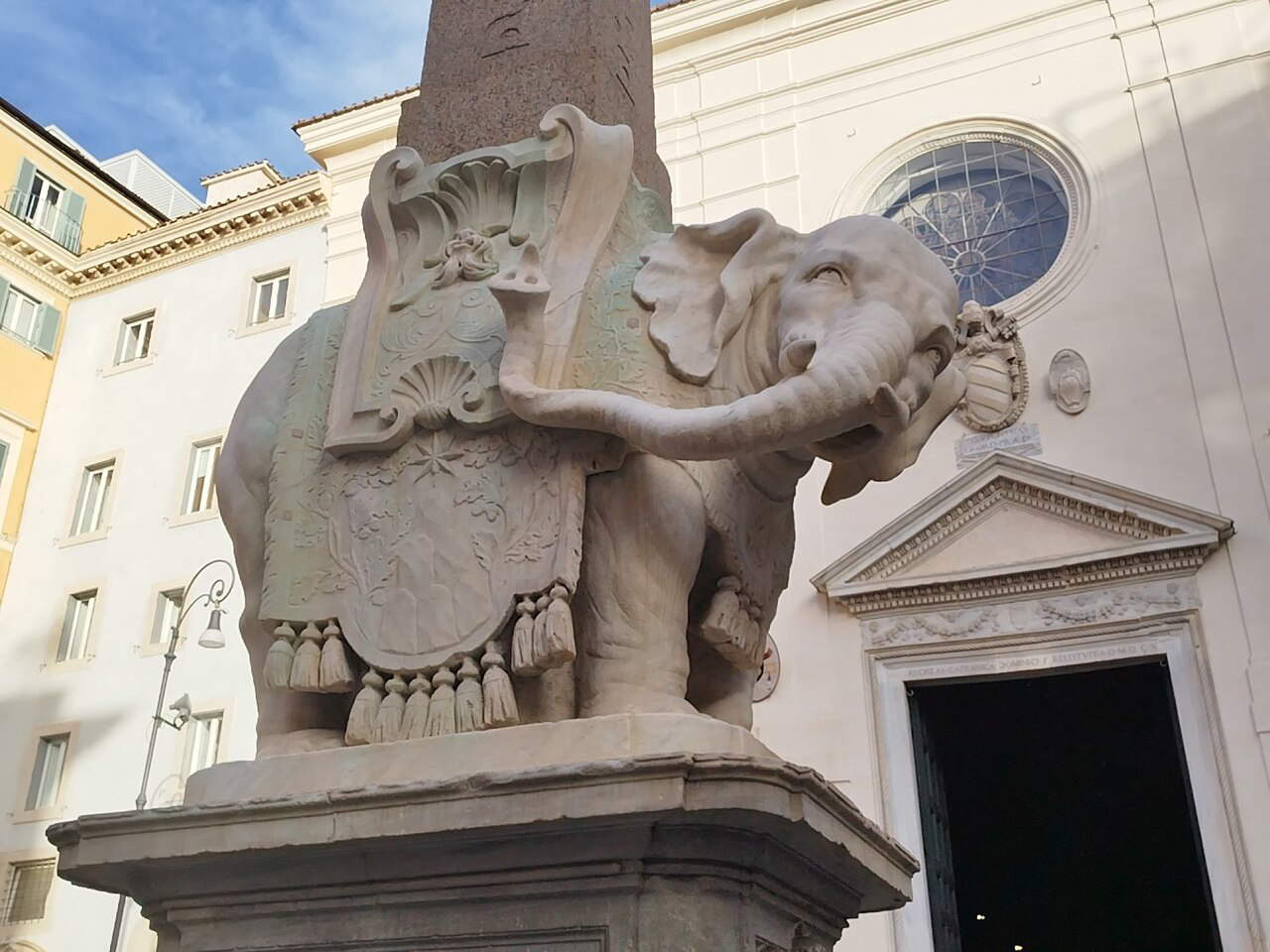
Serious damage in Rome to theElephantine that supports theMinerva obelisk, located in the center of Piazza della Minerva, near the Pantheon. The pachyderm’s left tusk was in fact found broken at the foot of the monument. The episode dates back to Monday but was made known this evening.
The umpteenth episode of damage to cultural heritage in the heart of the Capital affects one of the most recognizable symbols of Rome’s historic center, a work linked to the name of Gian Lorenzo Bernini. The sculpture, created in 1667 by Ercole Ferrata based on a design by the Baroque master, supports an Egyptian obelisk from the fourth century BC and is one of the best-known examples of the integration of ancient and modern in papal Rome. The little elephant, with its appearance at once solemn and ironic, has over time become an icon of the city, a daily destination for tourists and Romans alike.
According to initial reconstructions, unknown persons allegedly broke a delicate and significant element of the sculpture. The alarm was reportedly triggered more than twenty-four hours late, and the incident may date back, as mentioned, to last Monday. It was not until yesterday afternoon that the municipal police, with urban vigilantes from Group I Centro, carried out an inspection together with experts from the Capitoline Superintendency to take stock of the damage and initiate procedures for immediate restoration.
The broken tusk was recovered at the foot of the monument. A detail that is not secondary, because it allows for intervention with greater possibilities of integral restoration. It is not ruled out that a tourist or a group of visitors may have caused the breakage. The most plausible hypothesis is that someone grabbed onto the tusk to take a photograph or selfie, underestimating the fragility of the sculpted part. The structure would not have withstood the weight, giving way suddenly. Those who caused the damage, however, would not have been able to carry away the fragment, which remained in place and was later recovered.
In parallel with technical investigations, analysis of images from security cameras in the area was activated, with the goal of identifying those responsible.
“It is unacceptable,” said Culture Minister Alessandro Giuli, “that once again the nation’s artistic and cultural heritage should suffer such serious damage. Just days before the opening of the major exhibition on Gian Lorenzo Bernini at the Galleria di Arte Antica in Palazzo Barberini, it is his Elefantino in Piazza della Minerva that is being targeted. The Ministry of Culture, through the Special Superintendence of Rome deputed to the high supervision of artistic heritage, will give its contribution to the Capitoline Superintendence, on which the monument depends, for the restoration of the sculpture: one of the most significant symbols of the Capital, hit by an absurd act of barbarism.”
This is not the first time the Elephantine has been targeted. Back in 2016, the same sculpture was subjected to similar damage. Then, too, the damaged part was a tusk and the circumstances appeared similar. The case raised controversy due to the failure of the video surveillance system to fully cover it, which did not allow the perpetrators to be identified in a timely manner. On that occasion only a sliver of the broken detail was handed over to the traffic police, because the main fragment that fell to the ground was taken away and never recovered.
|
| Rome, broken tusk of the elephant in Piazza della Minerva |

Warning: the translation into English of the original Italian article was created using automatic tools. We undertake to review all articles, but we do not guarantee the total absence of inaccuracies in the translation due to the program. You can find the original by clicking on the ITA button. If you find any mistake,please contact us.





















 IT
IT FR
FR DE
DE ES
ES CN
CN