



by Redazione 06/02/2026



Categories: News / Disclaimer
Escaped from the theft at the Louvre on Oct. 19, 2025, despite the crushing damage and marked deformation it suffered, Empress Eugenie's crown has retained almost its entire structure. It will now undergo restoration.

Having escaped theft at the Louvre on Oct. 19, 2025, Empress Eugénie’s crown had been found at the foot of the Apollo Gallery. Initially held by the judicial police for investigative purposes, the crown had been handed over to the Department of Decorative Arts on October 20, 2025. On this occasion an initial report on its state of preservation had been prepared by the department’s director, Olivier Gabet, and deputy director Anne Dion, who is also responsible for this section of the collections.


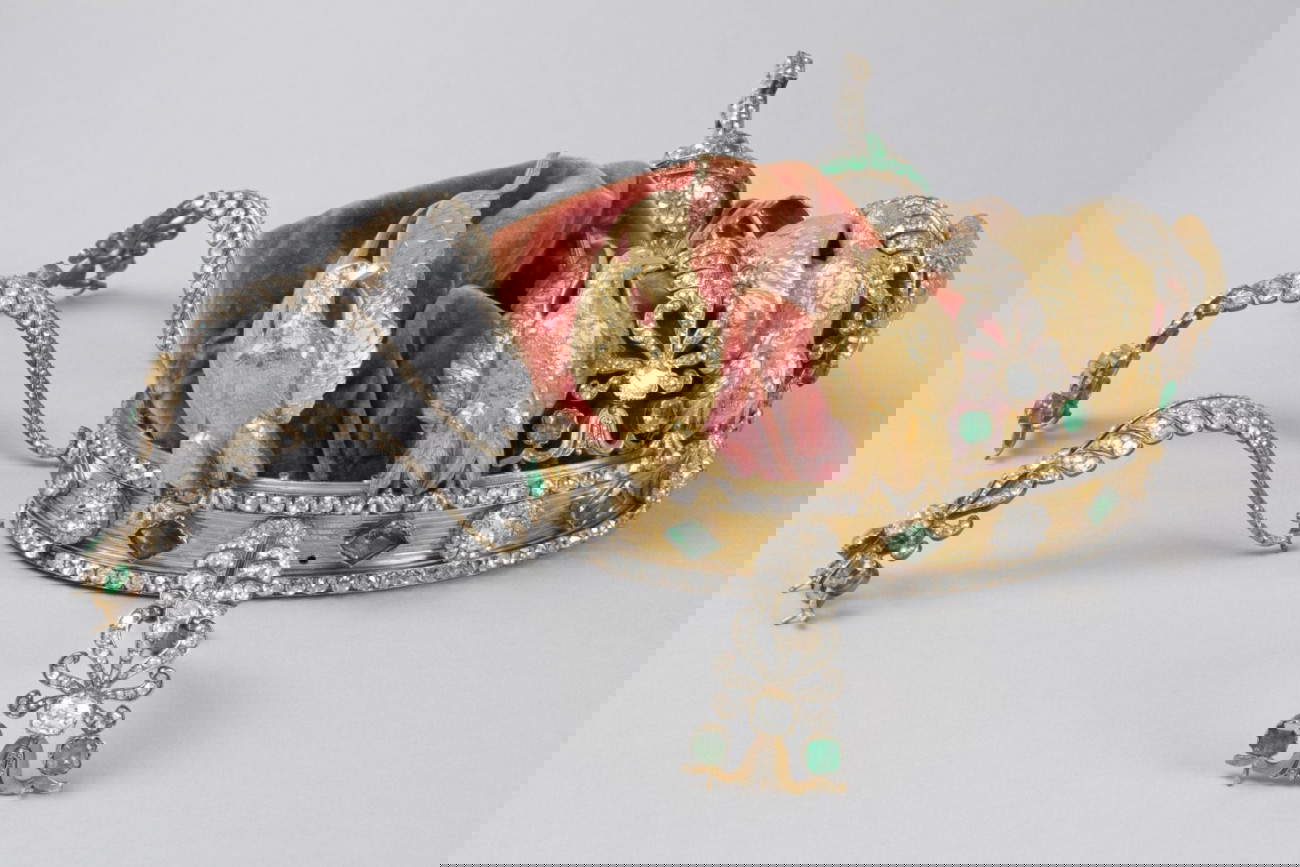
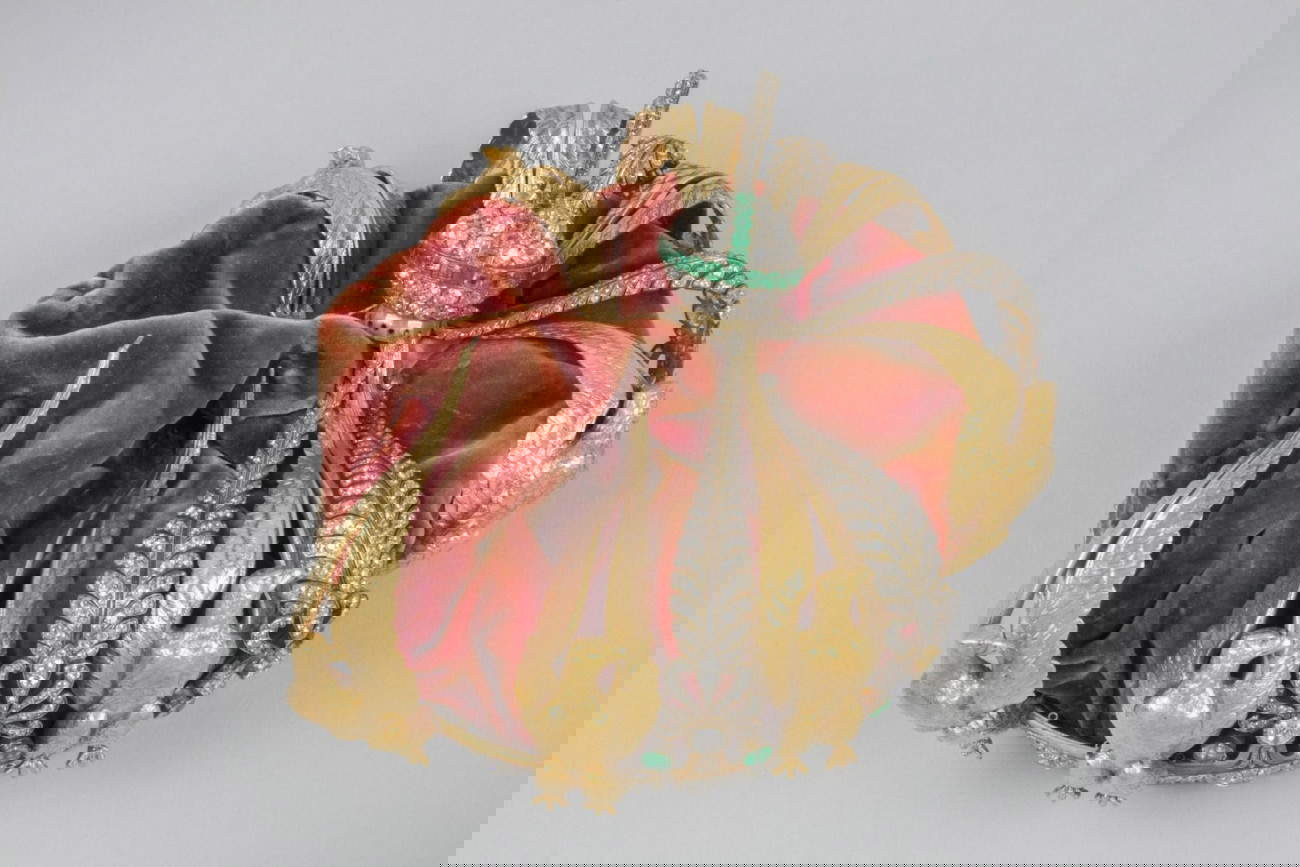
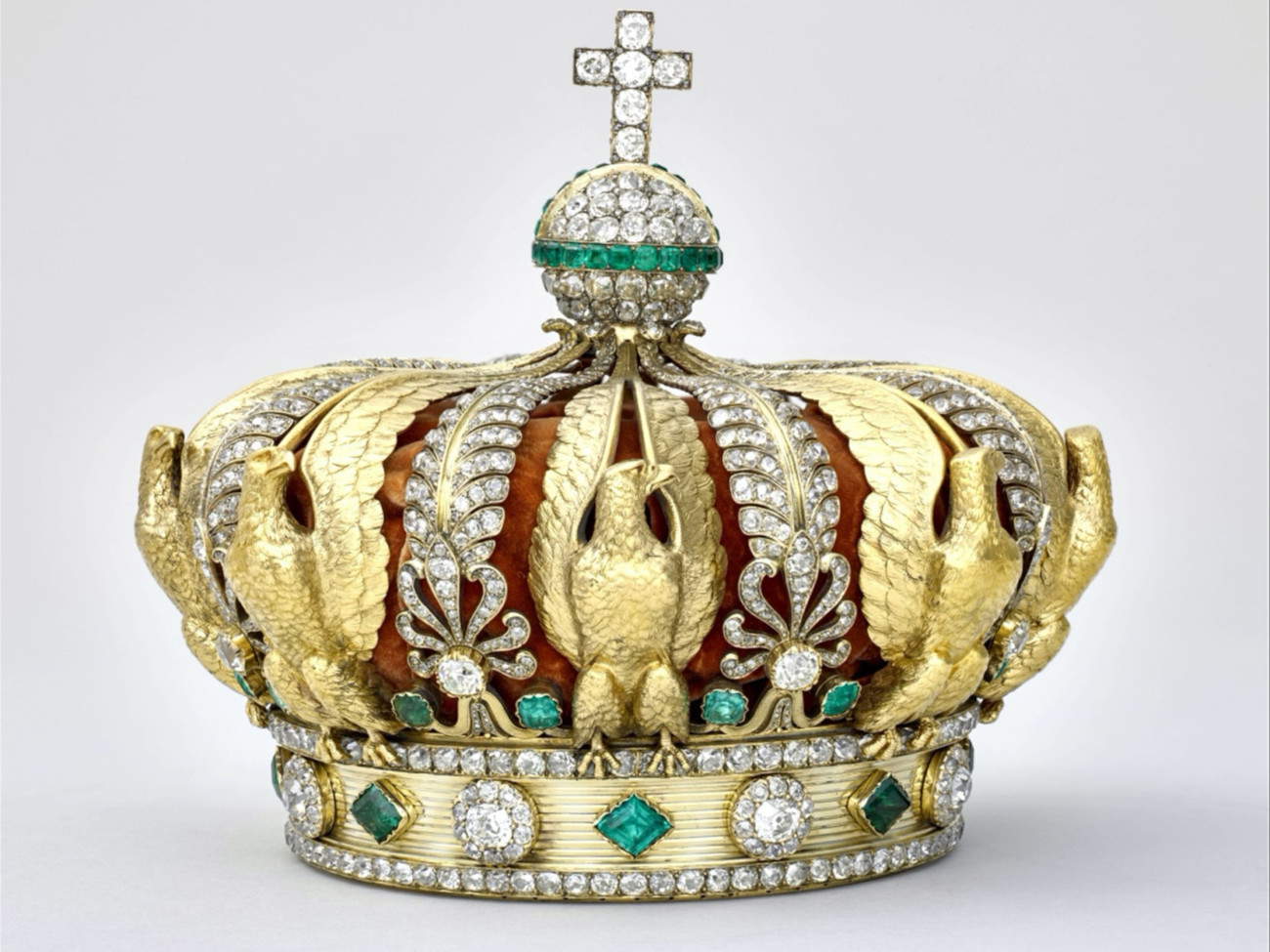
Despite the crushing damage and the marked deformation it has undergone, Empress Eugenie’s crown has preserved its structure almost in its entirety and can now undergo restoration.
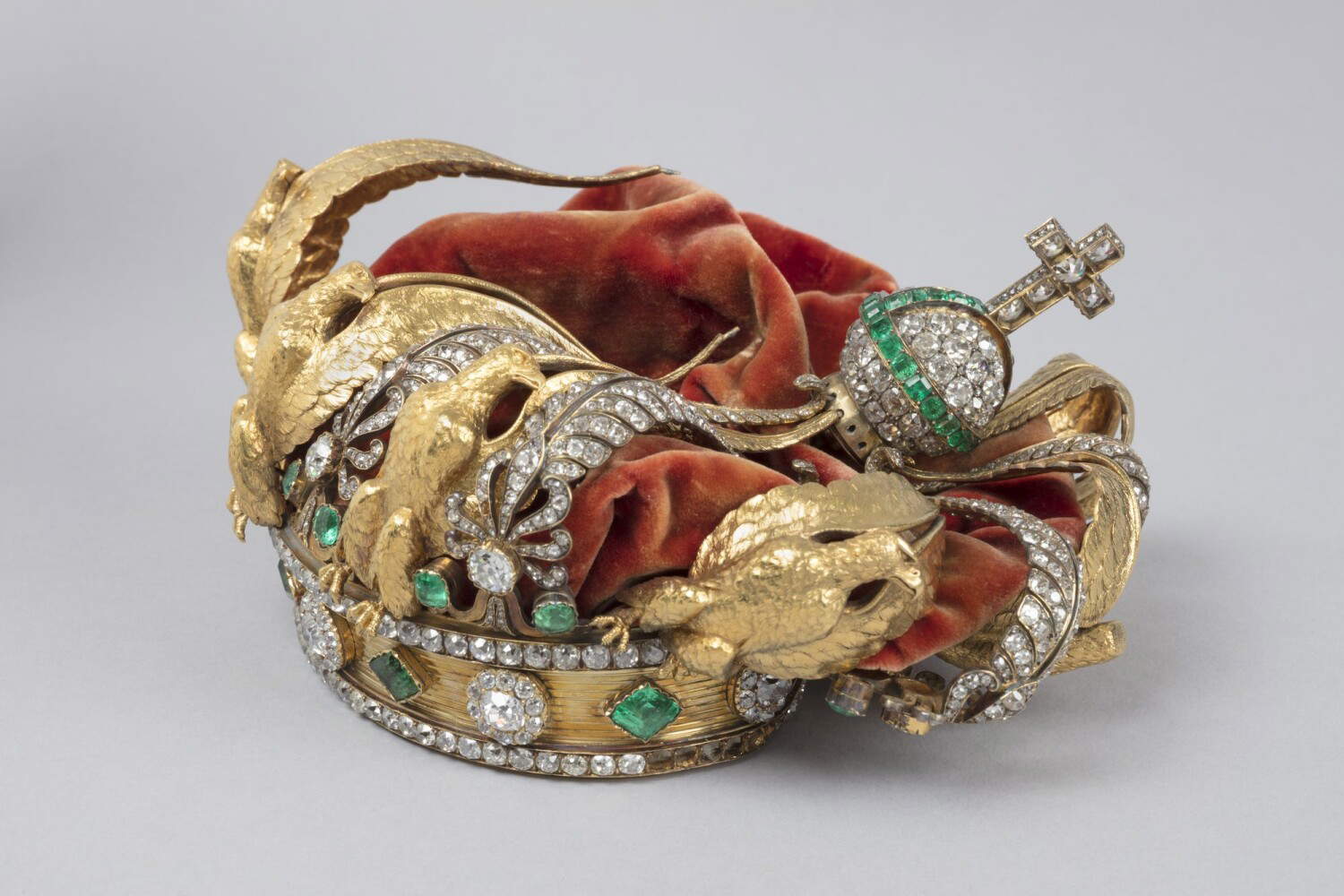
Preliminary examination revealed that the crown’s mount, which is characterized by a flexible and light structure, has undergone significant deformation. This alteration would initially have been caused by the stresses exerted during removal from the casket, through a relatively narrow crack made with an angle grinder, an operation that would have caused the crown rims to detach, one of which appears to have been dispersed in the gallery. Subsequently, a particularly violent impact would have resulted in the crown being crushed. Originally the crown was adorned with eight palmettes of diamonds and emeralds, alternating with eight gold eagles. Only one eagle is currently missing, while all the palmettes have been recovered, although four have detached from their mounts and show deformation in some cases. In contrast, the central globe, decorated with diamonds and emeralds, has remained intact and firmly attached to the frame, with no loss of elements.
Originally composed of 56 emeralds, the crown retains all of them; of the 1,354 diamonds that enriched it, only about ten very small stones that ran along the lower perimeter are missing, while nine others have become detached but have been recovered.



Although the overall shape of the crown appears altered, almost all of its components are still present and only one decorative element is missing. Consequently, the restoration can be carried out in its entirety without resorting to reconstructions or reproductions, limiting itself to remodeling the original structure.
As is the case for all works belonging to French national collections, the restoration of the crown will be entrusted to an accredited restorer selected by tender, in full compliance with the Heritage Code, the Museums Law and the Public Contracts Code. In this framework, more in-depth and technical conservation status reports will also be prepared. Given the symbolic and at the same time unprecedented scope of an intervention of this kind, as well as the high specificity of the object to be restored, the assignment of the selected professional will be accompanied by the establishment of an advisory committee of experts, whose task will be to work alongside the restorer, contributing guidance and assessments on operational choices and methodology of intervention.
The committee will be chaired by Laurence des Cars, president-director of the Louvre Museum, and will bring together Anne Dion, deputy director of the Department of Decorative Arts at the Louvre Museum; Michèle Heuzé, historian of jewelry and precious metals; Anaïs Alchus, conservator in charge of decorative arts of the Second Empire at the Musée d’Orsay, François Farges, mineralogist and professor at the National Museum of Natural History, Emmanuel Plé, head of the historical metals laboratory and decorative arts courses at C2RMF, and Olivier Gabet, director of the Decorative Arts Department at the Louvre Museum. Alongside these members, one or more representatives of the five historic French jewelry houses whose long tradition is deeply intertwined with the history of Crown diamonds-Mellerio, Chaumet, Cartier, Boucheron, and Van Cleef & Arpels, particularly through their workshop leaders and artisans-will also be invited.
Since the announcement of the theft of Empress Eugenie’s crown on October 19, 2025, and after its subsequent recovery, each of these prestigious maisons has expressed a willingness to support the restoration of this work.
History of Empress Eugenie’s crown
On the occasion of theUniversal Exhibition of 1855, Napoleon III commissioned Empress Eugénie’s crown from Alexandre Gabriel Lemonnier, the Emperor’s official jeweler, entrusting him to make two separate crowns, one intended for the Emperor and the other for the Empress. To complete this task, Lemonnier assembled a team of specialized collaborators. These included the sculptor Gilbert (1816-1891), who was probably responsible for modeling the eagles that form the arches of the crown, alternating with palmettes embellished with diamonds. On the other hand, jeweler Pierre Maheu (1807-1866) was called in to head the workshop in charge of the project. The selection of gems and the definition of their arrangement were entrusted to Devin, the Crown’s diamond inspector. Presented at the 1855 Exposition, the Empress’ crown was described by commentators of the time as “lighter and more coquettish” than the Emperor’s, while maintaining a solemnity appropriate to its role, as reported by Arnoux in 1856.
After the fall of the Empire and the subsequent liquidation of the Civil List, it became necessary to make reparations to the Emperor, who had contributed to the Crown Jewels collection at the expense of that fund. Upon his death in 1875, the crown was therefore returned to Eugenia. This return ensured its preservation, saving it from the destruction that befell the Emperor’s crown instead in 1887 during the sale of the Crown Jewels ordered by the Third Republic.
Bequeathed by the sovereign in 1920 to Princess Marie Clotilde Napoleon, Countess of Witt, the crown was finally acquired by the Louvre Museum in 1988. Although never used for a coronation, and perhaps not even worn, since Empress Eugénie was never formally crowned, the crown remains an object of exceptional historical significance. Along with the crown of Louis XV, whose original diamonds were replaced by replicas soon after the coronation, and the so-called Charlemagne crown, made in 1804 for the coronation of Napoleon I, Empress Eugénie’s crown represents one of the very few sovereign crowns preserved in France.
|
| Theft at the Louvre: Empress Eugenie's crown will be restored. Photos of the current condition |
Warning: the translation into English of the original Italian article was created using automatic tools. We undertake to review all articles, but we do not guarantee the total absence of inaccuracies in the translation due to the program. You can find the original by clicking on the ITA button. If you find any mistake,please contact us.