




by Redazione 30/01/2026



Categories: News / Disclaimer
The intervention of Esther Stocker, a major international art name, has transformed a transit site in Trento into an important work of art. But there has been no shortage of controversy. And her work has already been vandalized (though immediately fixed).


The redevelopment of the underpass of Via Canestrini in Trento, recently transformed thanks to a large work by Ester Stocker (Silandro, 1974) entitled Sottopasso lineare (Linear Underpass), is an emblematic case of how public art can intervene in the space of the city, transforming purely functional places into aesthetic and sensory experiences. Not without stirring up some controversy. The project, born from the synergy between the Mart, the Galleria Civica and the city administration, saw the direct involvement, as anticipated, of Esther Stocker, an artist of South Tyrolean origin based in Vienna, whose research has long focused on the redefinition of spaces through a rigorous use of geometry and a color palette reduced to the essential. The intervention was not limited to a simple operation of superficial decoration, but aimed at a regeneration of a fragile spot in the city’s fabric, emphasizing the ethical dimension of artistic production applied to collective space.


The work that modified the underpass, which is included in a vast urban regeneration project that is to transform the entire Ex SIT area, near the train station, which will become a large interchange hub for urban mobility, is presented as a complex network of black and white lines that chase each other along the walls, ceiling and floor, creating an immersive environment that challenges the usual conventions of seeing. These lines, while starting from an apparently symmetrical order, undergo sudden deviations and fractures, accommodating within them distortions that break the uniformity of vision. According to Stocker’s vision, the main goal is to restore value to a transit place frequented daily by citizens, offering an experience that is both unusual and engaging. The artist interprets work in public space as an act of sharing, aimed at soliciting the perception of passersby and reactivating attention to environments that are usually traversed in a distracted or automatic way.


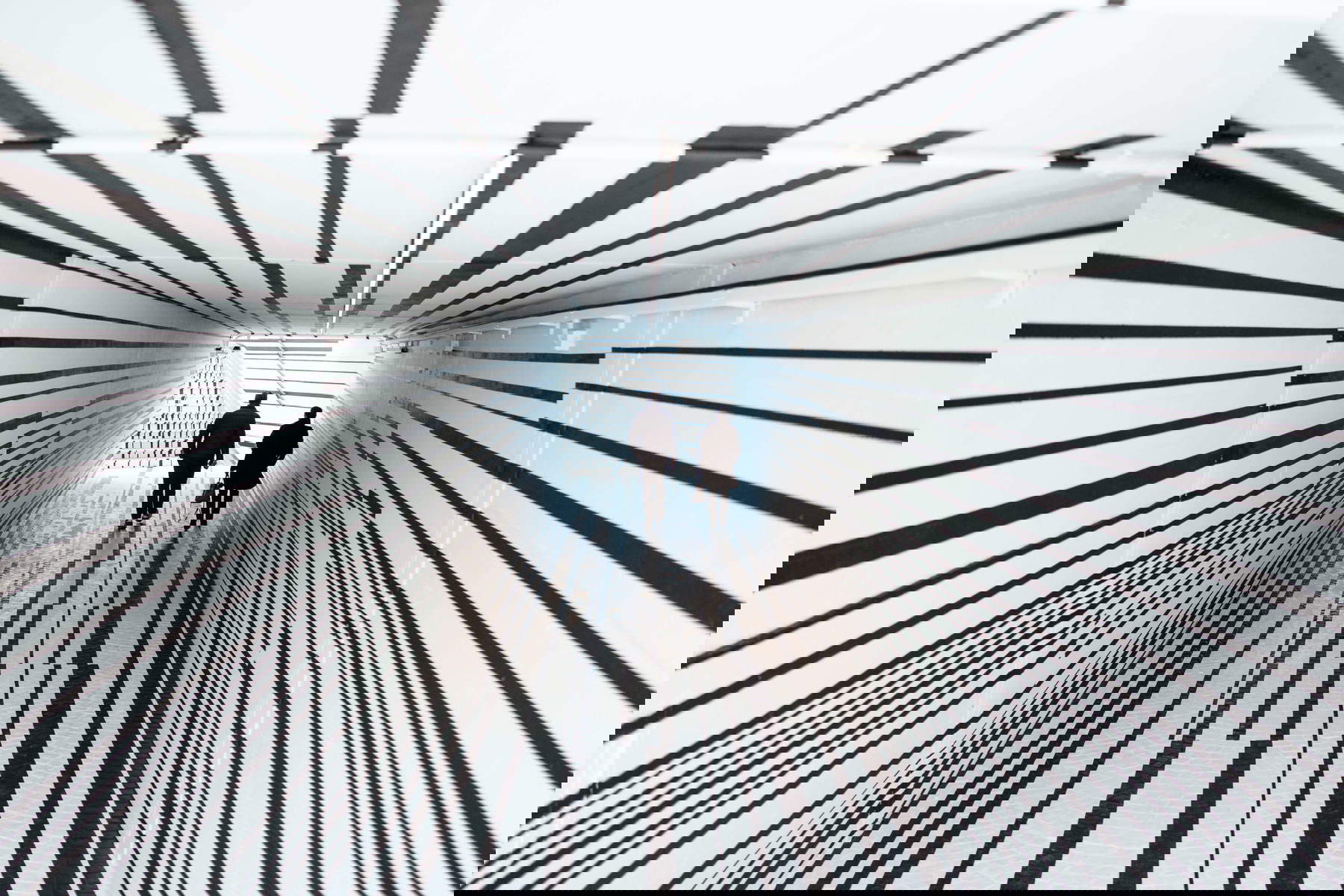
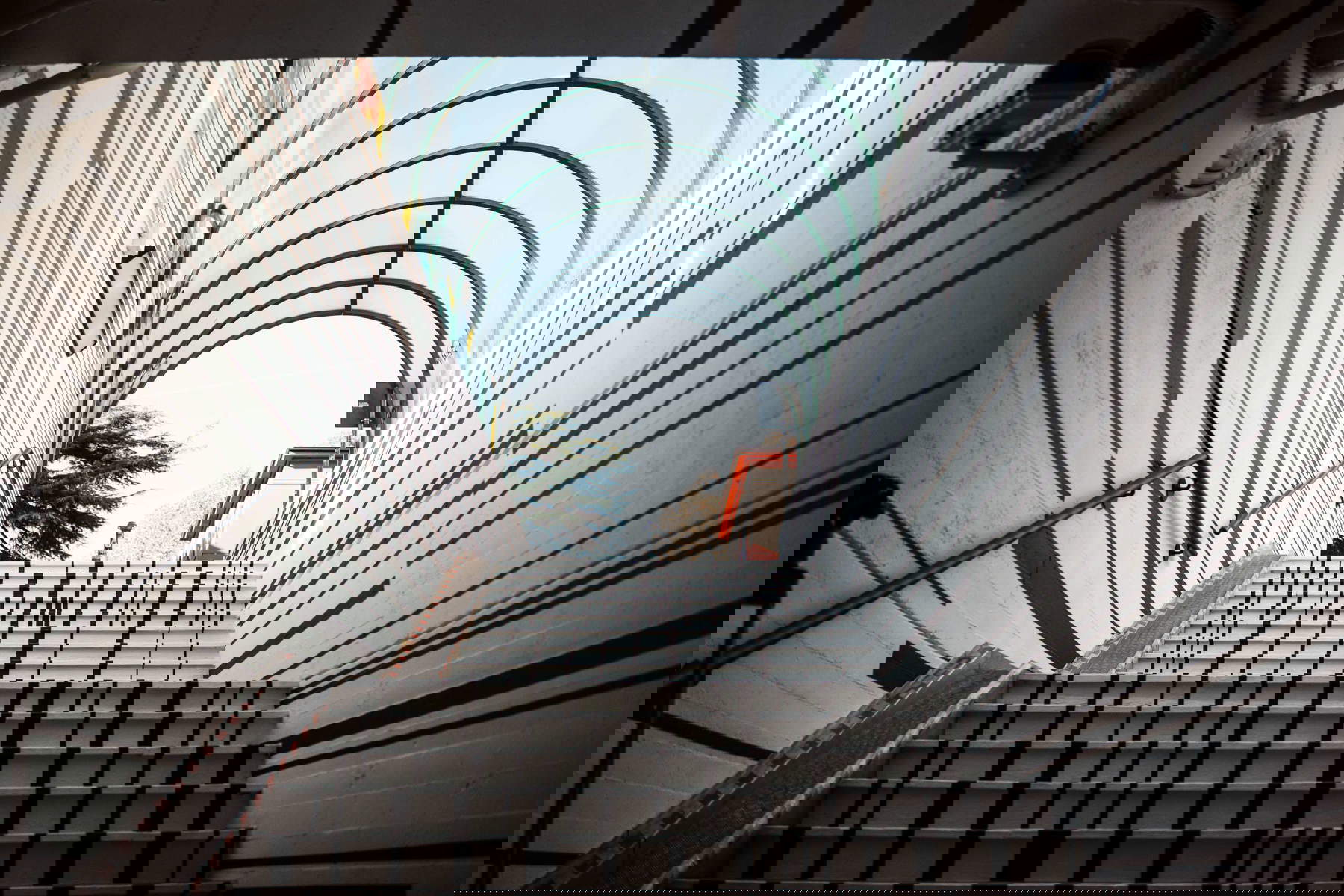
From a technical point of view, the realization of Sottopasso lineare required considerable effort and constant collaboration between the artist, the technical services of the municipality and the contractors in charge. The Nerobutto company took care of the painting part, while the Demi company handled the renovation of the electrical components. In addition to the purely aesthetic value, the intervention involved significant structural modernization: the lighting system was completely redone, with the replacement of the old light fixtures with high-efficiency systems that provide better performance and significant energy savings. At the same time, waterproofing work was carried out to solve problems related to water infiltration, and video surveillance systems previously removed to enable the work were restored.


The work fits into a rapidly changing urban context, acting as a privileged link between the city center and the new intermodal hub in the former Sit area. For Trento Mayor Franco Ianeselli, the transformation of this anonymous corridor into a work of public art embodies the idea of a city capable of bringing beauty and emotion to the everyday, drawing inspiration from that historical tradition in which artists were called upon to shape the facades, churches and buildings of urban centers. In this perspective, Stocker’s intervention succeeds in giving a precise identity to a space that until recently lacked character, fully integrating it into the city’s mobility routes.
Esther Stocker’s approach, suspended between optical art and minimalism, aims to invite the public to a deep interaction with the architecture. The underpass thus ceases to be a simple point on the map to become a perceptual “moment,” a nervous system of lines that forces the brain to seek an order constantly challenged by the work itself. The metamorphosis of Via Canestrini was thus not just a change of chromatic dress, but a proposal for sensitive public art that aspires to change the way citizens interact with the territory.
However, the new layout of the Canestrini Street underpass has generated a heated debate that has divided public opinion and local politics. Criticism has focused on three main fronts: sensory accessibility, the economic impact of the work , and the management of pre-existing urban decorum. Many citizens expressed discomfort with the strong visual impact of the broken black-and-white lines, complaining of a disorienting effect that some described as capable of causing “headaches” while crossing. On the political front, the opposition and some members of the majority raised strong concerns about the decision to prioritize aesthetic research at the expense of the primary function of the place. In particular, counselors from Generation Trento pointed out that a public work should meet the criteria of “universal design,” taking into account the needs of those with cognitive, visual or motor fragility. According to this view, although the intervention is conceptually interesting and bold, it would be lacking in terms of sensory accessibility, creating a possible short-circuit between the artist’s expressive freedom and the needs of those who have to use a crucial mobility junction on a daily basis. Councilman Renato Tomasi then pointed out that the new installation has erased previous murals made by young amateur writers, sometimes independently, other times in collaboration with the municipality’s youth policies, raising doubts about the continuity of collective participation projects.


Another central point of controversy concerns the financial aspect of Sottopasso lineare, with a total cost that amounts to about 80 thousand euros. Fratelli d’Italia councilor Daniele Demattè sharply disputed the size of the expenditure, calling it disproportionate to the 10 thousand euros that were initially planned through an amendment linked to a budget variation. Demattè demanded an explanation as to how the final figure could rise to eight times what was initially agreed upon between the political forces. Mayor Ianeselli’s reply was not long in coming: the first citizen clarified that the total amount does not constitute the compensation for artist Esther Stocker, but covers the entire redevelopment operation. This includes, in addition to the artistic component, the skilled labor for painting and, above all, the necessary structural work such as the new lighting system and the waterproofing of the walls to combat infiltration. These are, however, figures that are completely in line for such projects.
In any case, supporters of the project, such as curator Gabriele Lorenzoni of the Civic Gallery, continue to defend the transformation of the underpass as an act of ethical transformation of space, necessary to revitalize an area otherwise destined for degradation. Not to mention, then, that Trento now has a public work by an important internationally recognized artist, who is moreover fully aware of the social function of art, as she stated in recent hours in a long interview with Gabriele Landi published in Finestre sull’Arte (dedicated to her art in general, and where the subject of controversy was not touched upon). According to Stocker, art only makes sense if it is embedded in a social dimension: “I think art only makes sense if it is thought of that way. Not in an overly educational way in my opinion, but in a way that allows for a poetic, aesthetic dimension, a meeting place. These meeting places should not only be thought of as psychic places, but also as mental places, where forms thoughts and ways of thinking can lead us to beauty.”
But there has been more than controversy. In fact, less than forty-eight hours after the opening ceremony, which took place last Jan. 20, the work on Canestrini Street was the subject of an act of vandalism that reignited discussions about urban security. On the night following the reopening, some writing made with a dark stroke appeared on the white surfaces of the underpass, defacing the installation at one of its most visible points. The messages left by the vandals included insulting writings and acronyms directed against law enforcement, a gesture that was immediately condemned by authorities and professional unions.
The Siap, Sindacato Italiano Appartenenti Polizia, called the incident an ignoble disfigurement to decorum and collective heritage, interpreting it as a worrying sign of contempt toward institutions and those who work for the safety of citizens. According to the union, this incident demonstrates a vulnerability that had been partly predicted and also reported through social channels in the days leading up to the inauguration. The act of vandalism hit a space that was created precisely with the intention of erasing the signs of degradation and restoring dignity to a strategic area for pedestrian viability.
The incident brought the issue of prevention and monitoring of the area back to center stage. Although the underpass was equipped with security cameras connected to a newly restored video surveillance system, the episode confirmed that technology alone is not always enough to prevent lightning acts of damage. Outrage over the scrawl also touched citizens who had appreciated Esther Stocker’s intervention, who saw the vandalism not as a form of artistic rebellion but as a lack of civic sense and respect for the common good. There were those who reflected on the inability of part of society to recognize and defend urban beauty, noting how we often realize the value of a place only when it is defaced. Despite the controversy over the “psychedelic” and divisive nature of the underpass, the vandalism attack was perceived across the board as harming the entire Trentino community.
However, the municipal administration’s reaction to the damage to the work was immediate and marked by firmness, while maintaining an approach aimed at education rather than mere repression. The writings that had defaced the walls of Via Canestrini were in fact removed very easily: having been made with pencils or very light colors, a simple eraser was enough to restore the surfaces to their original appearance. This simple intervention demonstrated that, paradoxically, choosing a design based on sharp lines and pure colors such as black and white facilitates maintenance and restoration operations in case of minor vandalism.
Mayor Franco Ianeselli, during a press conference, reassured the public about the effectiveness of the control systems. Thanks to the sharp images provided by the video surveillance cameras, the perpetrators of the graffiti were identified as absolutely recognizable subjects, thus allowing the normal detection activities by the competent authorities to proceed. The first citizen reiterated his satisfaction with the aesthetic and structural result of the work, inviting everyone to walk through it personally to overcome prejudices and experience the emotion conveyed by the installation, while admitting that the perception of art remains a subjective matter. An innovative proposal, however, came from Deputy Mayor and Councillor for Culture, Elisabetta Bozzarelli, who stressed the importance of addressing the issue from the perspective of civic education. Rather than limiting itself to purely punitive sanctions, the council hypothesized obliging those responsible for the defacement to clean up other walls in the city that have been previously defaced. The idea behind this measure is to promote a culture of caring for the public good, turning an individual mistake into an opportunity for learning and active participation in maintaining urban decorum.
The Via Canestrini underpass affair closes, at least for this first chapter, with a new, important work for Trento, created by an important artist like Esther Stocker. And the redevelopment project does not stop here: in the coming months, the external roofing of the underpass and the road section that connects it to the new intermodal hub are scheduled to be finished, thus completing an intervention that aspires to definitively change the face of a Trento neighborhood.
|
| Trent, talks around Esther Stocker's underpass. |
Warning: the translation into English of the original Italian article was created using automatic tools. We undertake to review all articles, but we do not guarantee the total absence of inaccuracies in the translation due to the program. You can find the original by clicking on the ITA button. If you find any mistake,please contact us.