




by Redazione 27/01/2026



Categories: Ancient art / Disclaimer
Purchased with the support of major German foundations, the Altenberg Madonna, a 14th-century Gothic sculpture, secured the recomposition of the Altenberg Altar in the Städel Museum in Frankfurt, and thus became one of the most significant acquisitions in the institution's history.

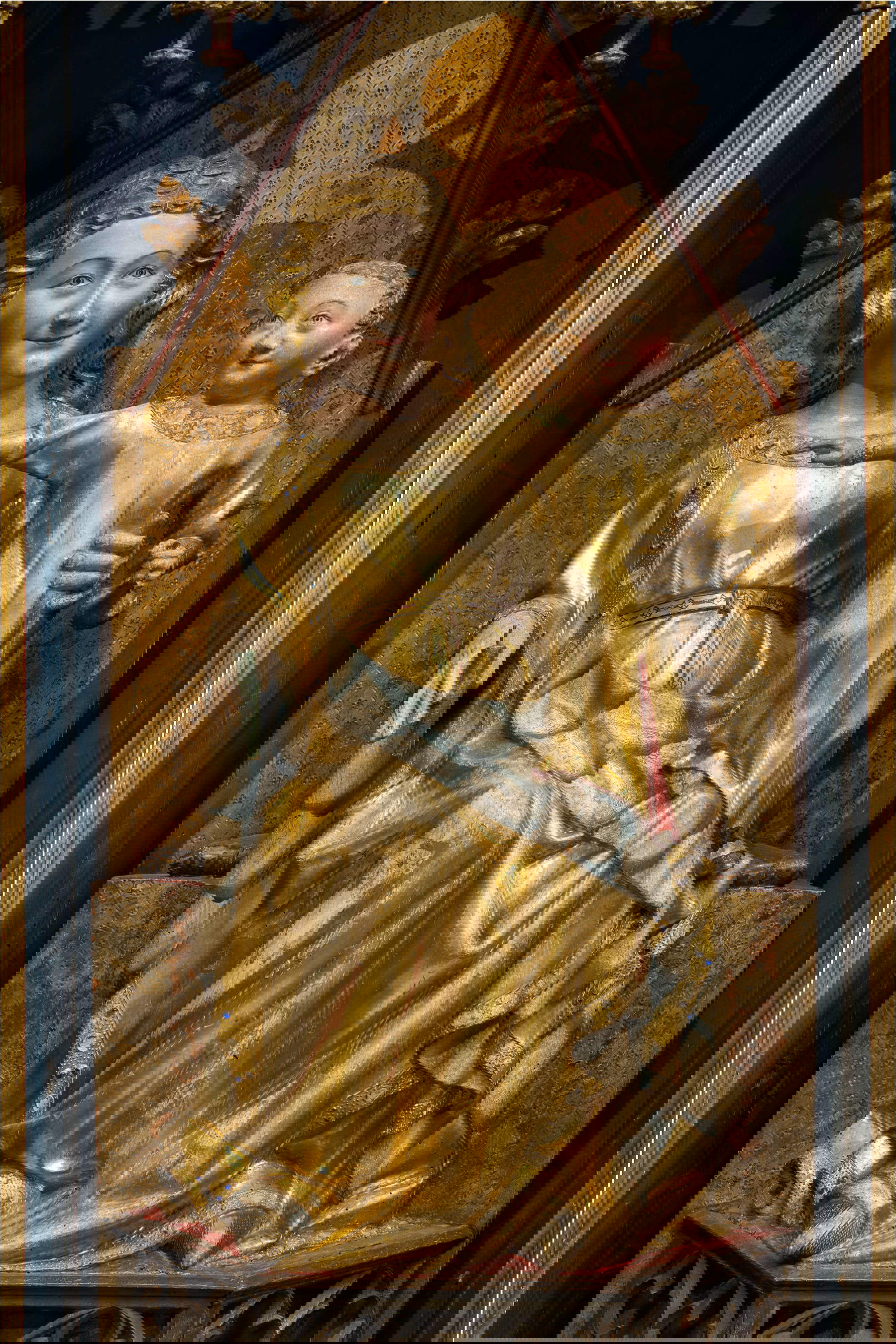
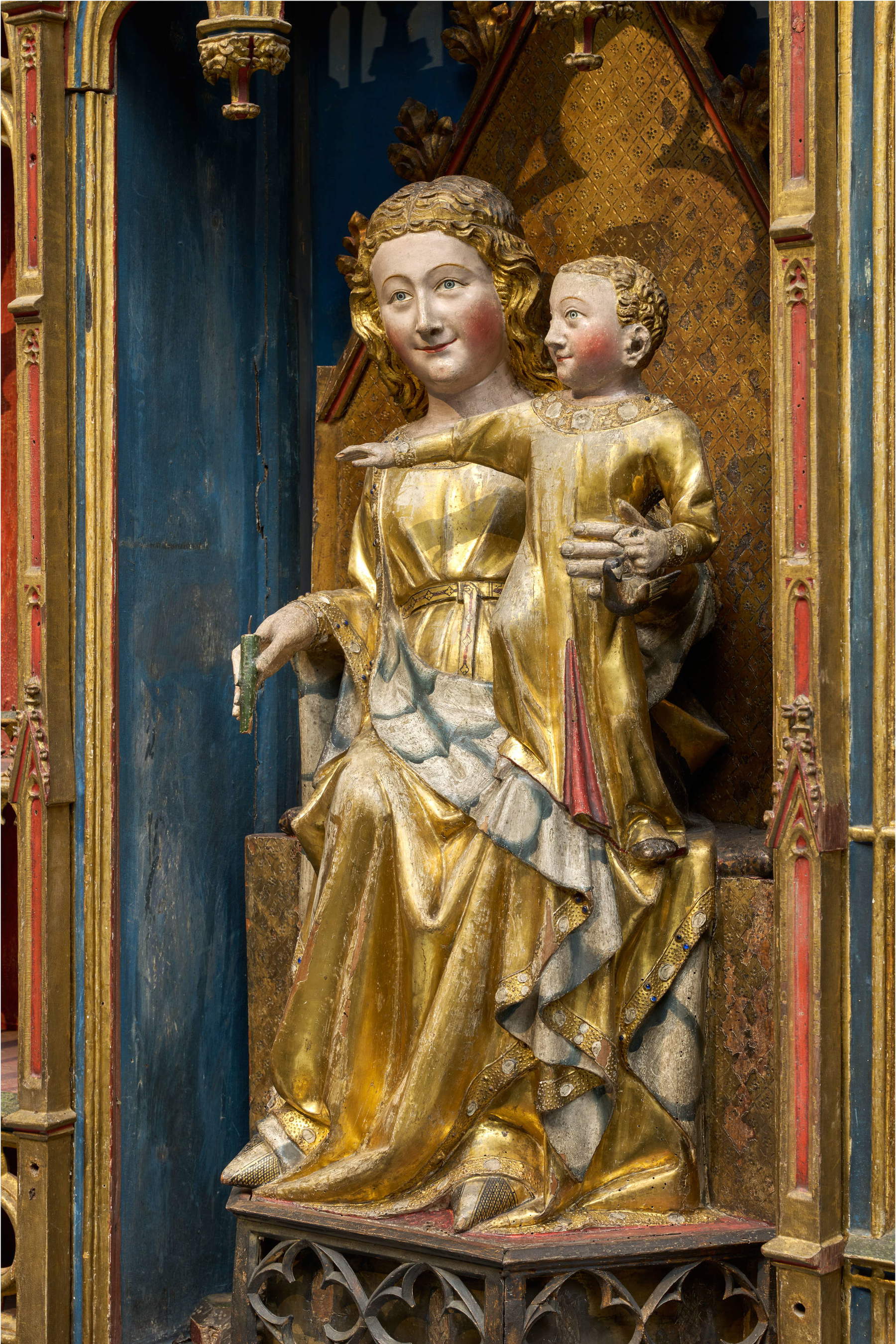
One of the most important acquisitions in the history of the Städel Museum in Frankfurt, a watershed moment for the knowledge and enjoyment ofmedieval art in Germany: thus was presented this morning the acquisition of the Madonna and Child Enthroned better known as the Altenberg Madonna, a sculpture dating from around 1320-1330 that was acquired by the German museum thanks to the joint support of the Ernst von Siemens Art Foundation, the Städelscher Museums-Verein and the Kulturstiftung der Länder. The work, which is considered one of the absolute pinnacles of German Gothic sculpture and one of the oldest examples of 14th-century Cologne production, is listed in the register of cultural property of national importance and is therefore protected by restrictions preventing its export.

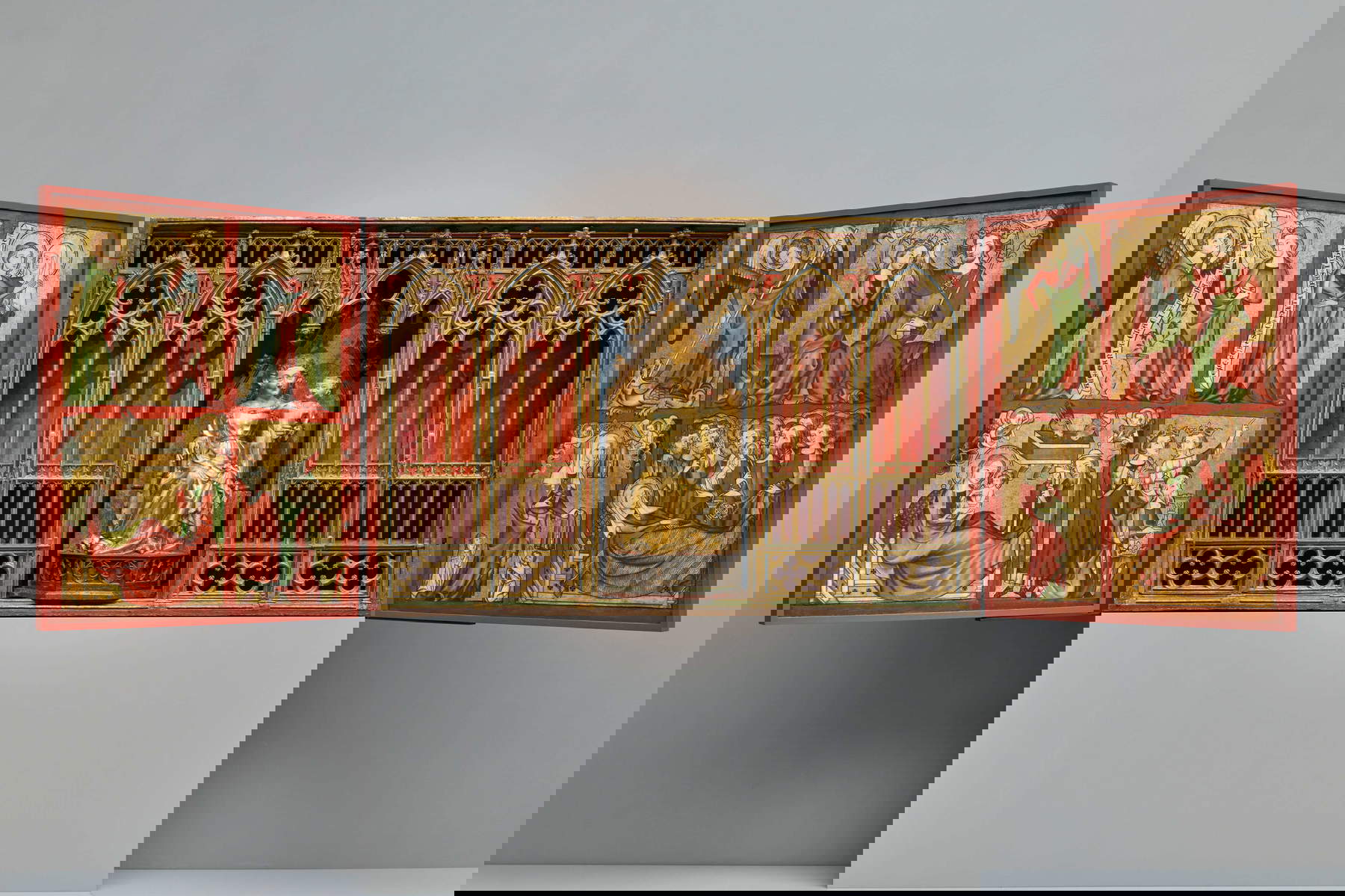
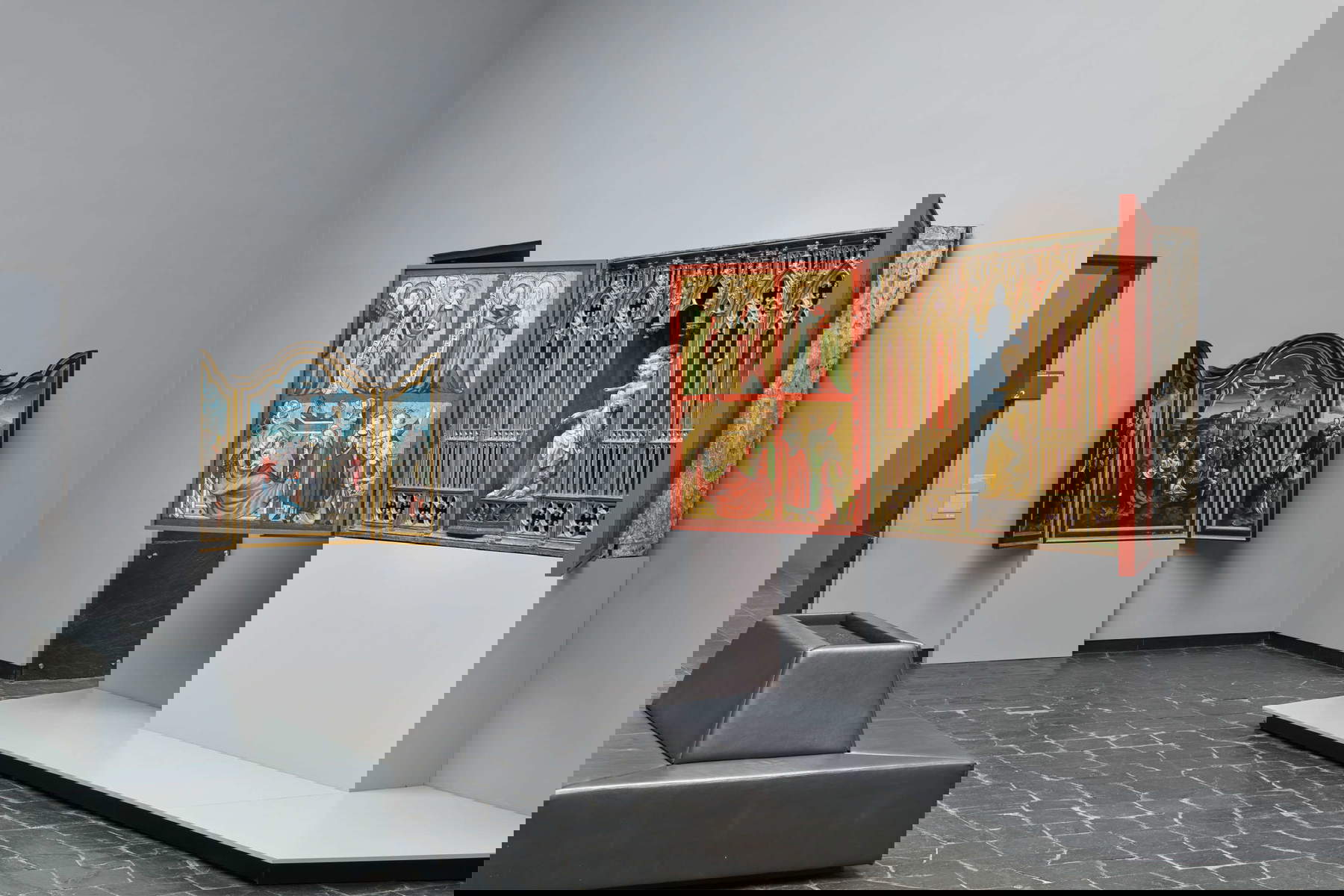
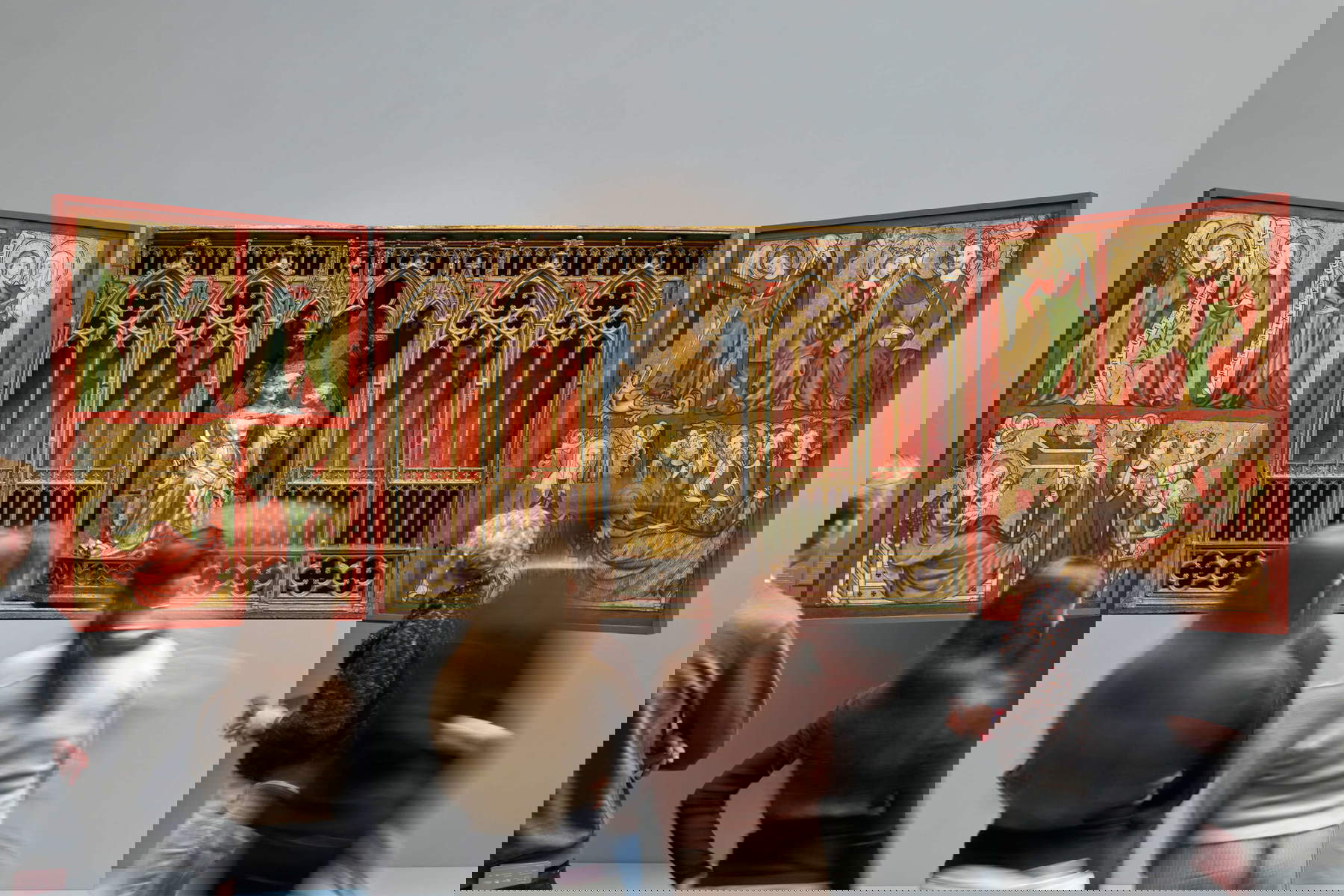
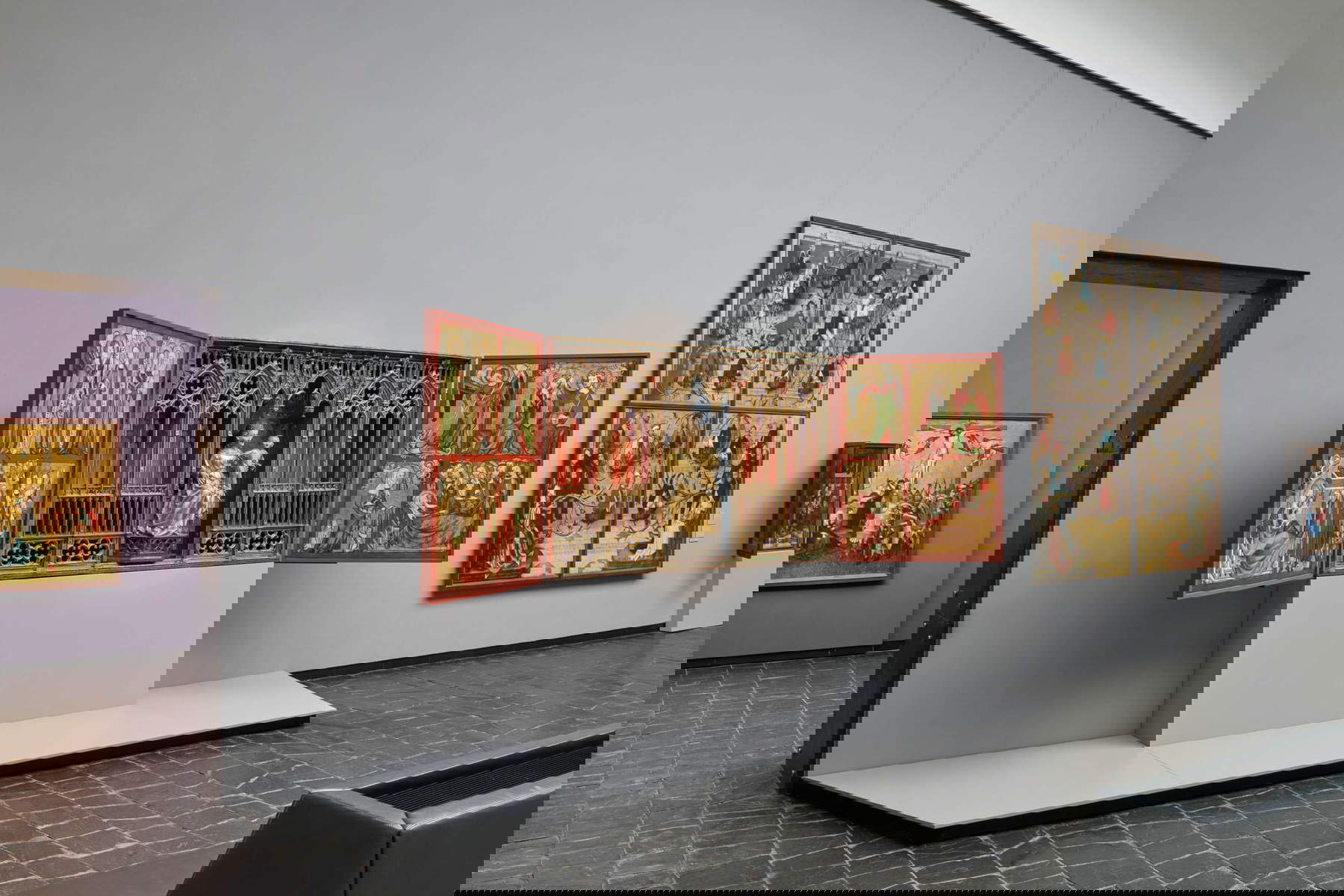
The Altenberg Madonna originally belonged to theAltenberg Altar complex, made for the abbey church of the Premonstratensian abbey of Altenberg an der Lahn, near Wetzlar, Hesse. For more than a hundred years the Städel Museum has preserved the painted wings of this extraordinary polyptych, which represent the oldest evidence of German painting in the museum’s collections. The central core of the altar is now in permanent storage at the Städel from the Braunfels Castle Museum, and with the acquisition of the Madonna, once placed right in the center of the polyptych, the altar can finally be reassembled in its entirety and presented to the public on a permanent basis.


The recent history of the sculpture is marked by a long stay in private hands. Since the late 1920s, the Altenberg Madonna had been in southern Germany and, since 1981, had been on permanent loan to the Bayerisches Nationalmuseum in Munich. Its entry into the Städel’s collections thus represents not only an exceptionally important collector’s enrichment, but also a symbolic and historical return of the work to the artistic and narrative context for which it was intended. Indeed, the Altenberg Altar occupies a prominent place in the history of European sacred art. Beginning in the late 13th century, figured altarpieces became central elements in the churches of Latin Europe, giving rise to an increasingly close collaboration between painters and sculptors. In this context, a type of altar with movable sashes capable of adapting to the different liturgical needs of weekdays, Sundays, and holidays became established, especially north of the Alps. Made around 1330, the Altenberg Altar is one of the oldest surviving examples of this innovation.
The weekday side of the altar presented scenes from the Passion of Christ on a dark background, while the progressive opening mechanism allowed the central casket, in which the Madonna of Altenberg was placed, surrounded by the abbey’s relics, to be gradually revealed. The partial Sunday opening, on the other hand, showed the Virgin flanked by episodes from her life. The iconographic program reflected Mary’s central role as patroness of the church and abbey, as well as the importance of the Marian cult in the spiritual and political context of the region.
Altenberg Abbey had been closely linked to the family of the landgraves of Hesse and Thuringia since the 13th century. After the death of Ludwig IV of Thuringia, Elizabeth of Thuringia entrusted her youngest daughter Gertrude to the abbey’s care. Gertrude, who became abbess, determined its fate for decades, while the presence of Saint Elizabeth’s relics made Altenberg, along with Marburg, one of the main centers of veneration of the saint.
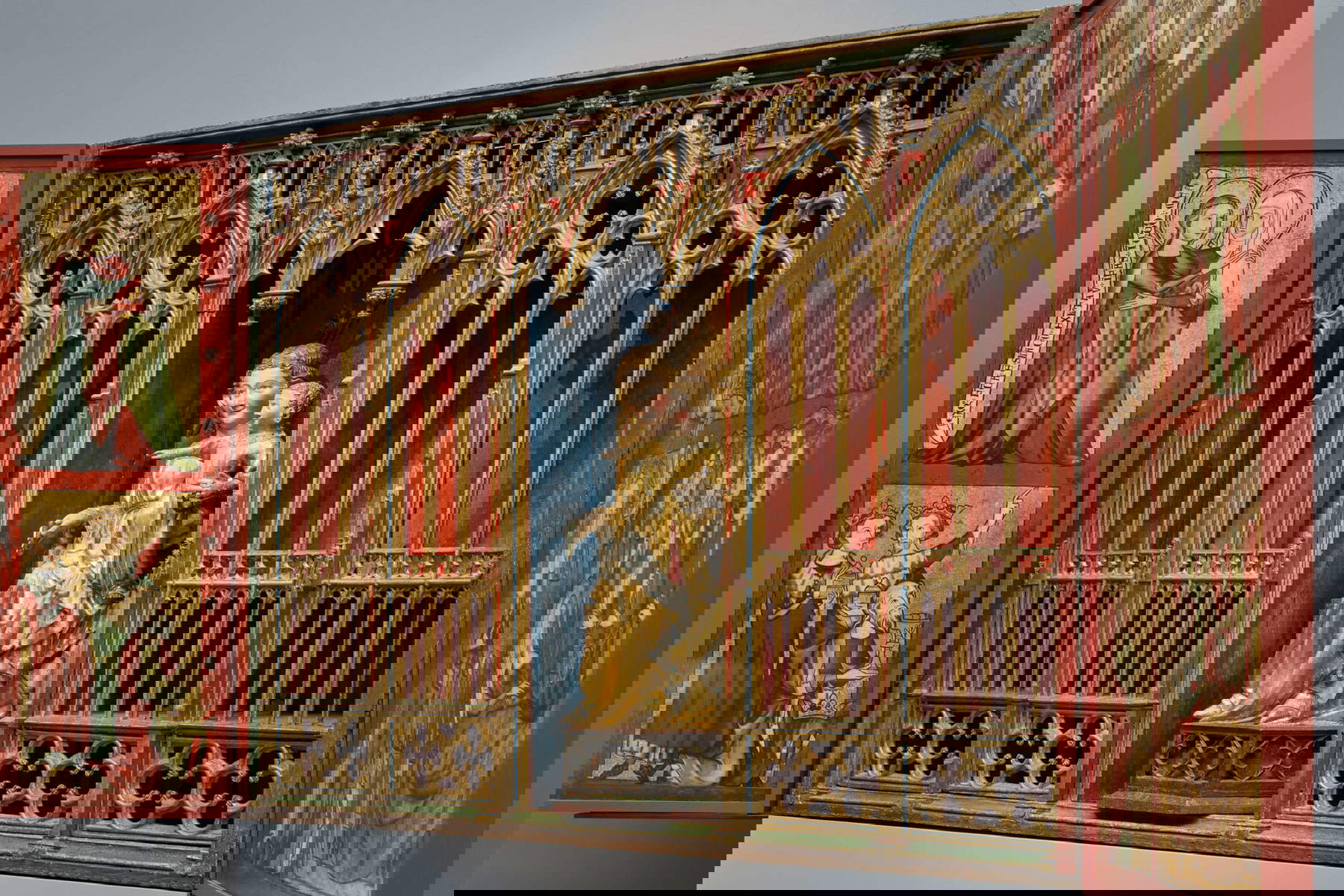
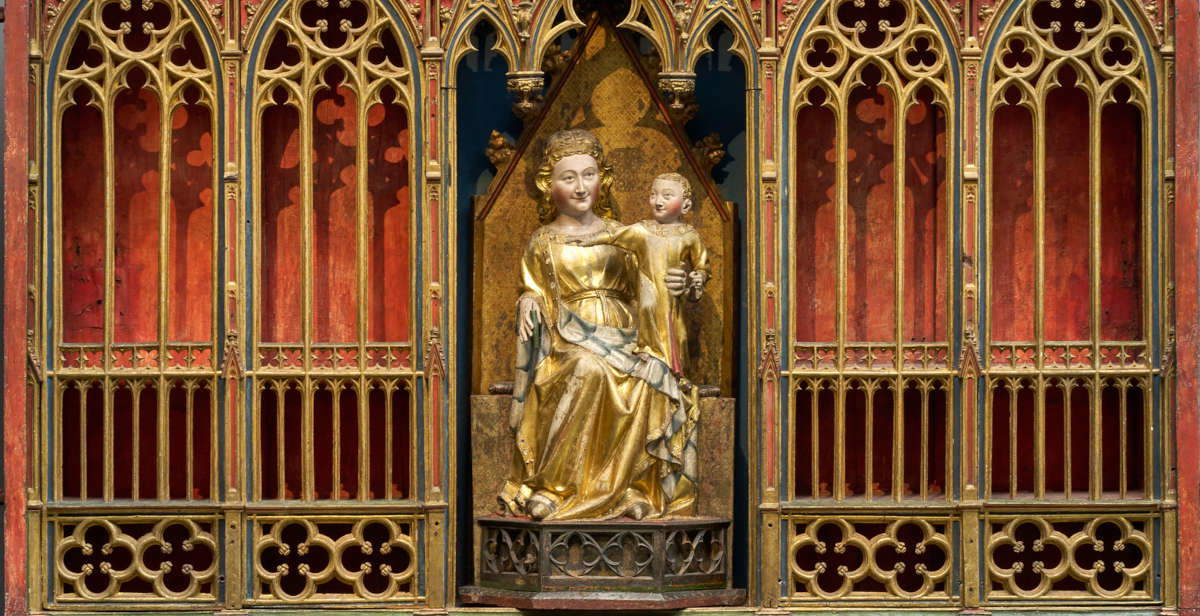
From an artistic point of view, the Altenberg Madonna belongs to a widespread and famous type of enthroned Madonnas with Child standing, which developed in Cologne on the basis of French models. Examples of this type are now preserved in numerous museum collections, as evidenced by related works in the Liebieghaus Skulpturensammlung in Frankfurt. However, the Altenberg Madonna is distinguished by the extraordinary quality of execution and the exceptional state of preservation of the original polychromy, a rare feature for wooden sculptures of this era.
The Virgin is depicted as a young woman with a lively smile, seated on a throne with a thin cushion and a high back concluded by an ornate pointed pediment. Her feet rest on a polygonal base adorned with tracery. In her right hand Mary holds the remains of a lily, a symbol of her virginity and a reminder of the scepter of the Queen of Heaven, while with her left hand she supports the Child, shown standing with one foot on his mother’s thigh and the other on the seat of the throne. The gesture of the Child, stretching out his arm toward the now-lost lily and clutching with his other hand a bird pecking painfully at his finger, symbolically alludes to the future Passion of Christ. The formal opulence of the sculpture was further accentuated by the gilded clothing of the Virgin and Child, embellished with glass inserts simulating precious stones, and the original presence of a crown. Mary’s golden mantle, lined with ermine, reiterated her role as Queen of Heaven, while the richly decorated and gilded throne emphasized the royal and sacred dimension of the depiction.
The Altenberg Madonna and the altar of which she was a part also constitute exemplary evidence of the female monastic culture of the Middle Ages, which developed in a social context strongly dominated by male hierarchies. The Premonstratensian nuns of Altenberg succeeded in creating a high artistic and spiritual environment, an expression of a refined theological and cultural vision.
The provenance of the work is documented in detail. After the suppression of the abbey in 1803, the sculpture passed to the princes of Solms-Braunfels, who sold it in 1916 to Munich art dealer A. S. Drey. By the late 1920s it entered the collection of Julius Böhler, remaining in family ownership until its acquisition by the Städel Museum.
Statements
“After 100 years,” says Philipp Demandt, director of the Städel Museum, “the famous Altenberg Madonna has returned to its rightful place on the altar-a memorable event in the history of the Städel Museum! We owe the successful acquisition of this exceptional work of art to the foresight of the owners and the dedication of our sponsors. I would like to express my sincere gratitude to the Ernst von Siemens Foundation, the board of directors and all members of our supporting association, as well as to the Kulturstiftung der Länder.”
Martin Hoernes, Secretary General of the Ernst von Siemens Art Foundation, on the foundation’s commitment, says, “At the Ernst von Siemens Art Foundation, we are committed to preserving important evidence of art and cultural history, both today and in the future. The Altenberg Madonna is an enchanting and remarkably early example of Cologne’s medieval sculpture. From Cologne, via Altenberg, it now arrives in Frankfurt am Main. For our founder, entrepreneur and patron Ernst von Siemens, it was always important to bring works of art to the right place so that they could be made accessible to a wide audience. The Städel Museum is not only a logical choice, but also an excellent one.”
“The Altenberg Madonna,” stressed Christine Regus, general secretary of the Kulturstiftung der Länder, “is undoubtedly a cultural asset of national importance and, thanks to its excellent state of preservation, one of the most significant examples of medieval art in Germany. This work belongs to the Städel Museum, where it will be permanently accessible to the public as part of the Altenberg Altar. It was therefore of great importance and pleasure for us to support this acquisition.”
Sylvia von Metzler, president of the Städelscher Museums-Vereins, says, “For more than 125 years, the members of the Städelscher Museums-Vereins have been committed to the Städel Museum. In addition to special exhibitions and restoration projects, acquisitions have always been close to our hearts. Generously supporting the Städel Museum in expanding its collection is an expression of our deep attachment. The Altenberg Altar is the Städel’s oldest work of German art, and the fact that it can now be permanently supplemented with the Madonna fills us with extraordinary joy.”
 |
| Altenberg Madonna enters Städel Museum: a historic acquisition for the museum |
Warning: the translation into English of the original Italian article was created using automatic tools. We undertake to review all articles, but we do not guarantee the total absence of inaccuracies in the translation due to the program. You can find the original by clicking on the ITA button. If you find any mistake,please contact us.