



by Redazione 01/03/2026



Categories: Ancient art / Disclaimer
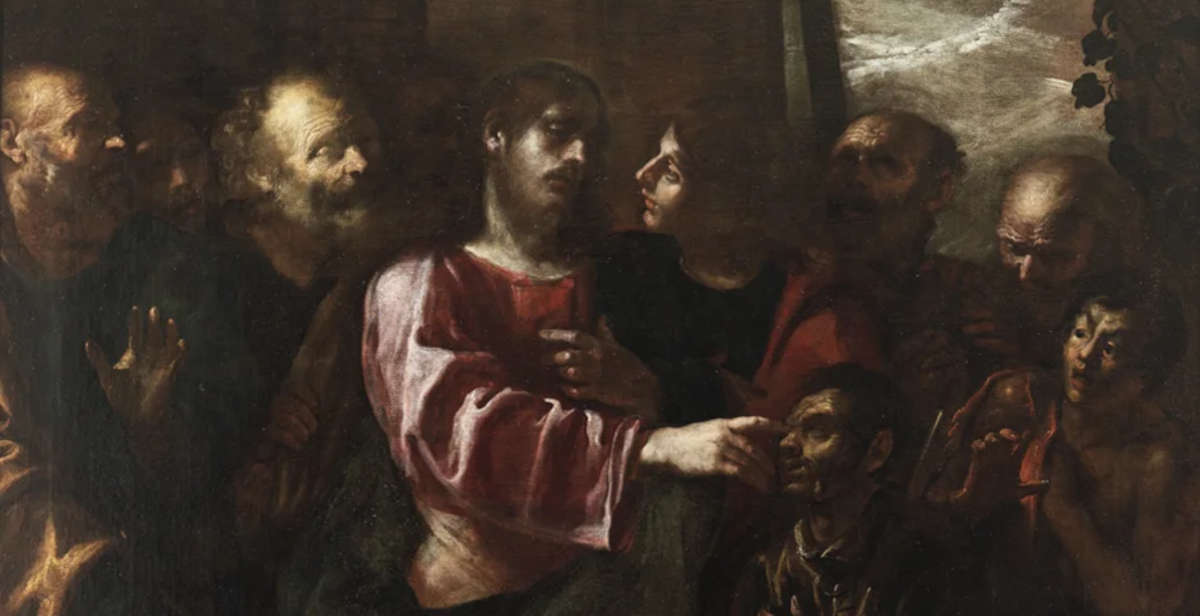
In Cremona, restoration of Pietro Martire Neri's 17th-century Healing of the Blind Man Born ends: the intervention offers a cue for a review that rereads the Cremonese painter's work. On display until March 8, 2026 in the Sala delle Colonne.
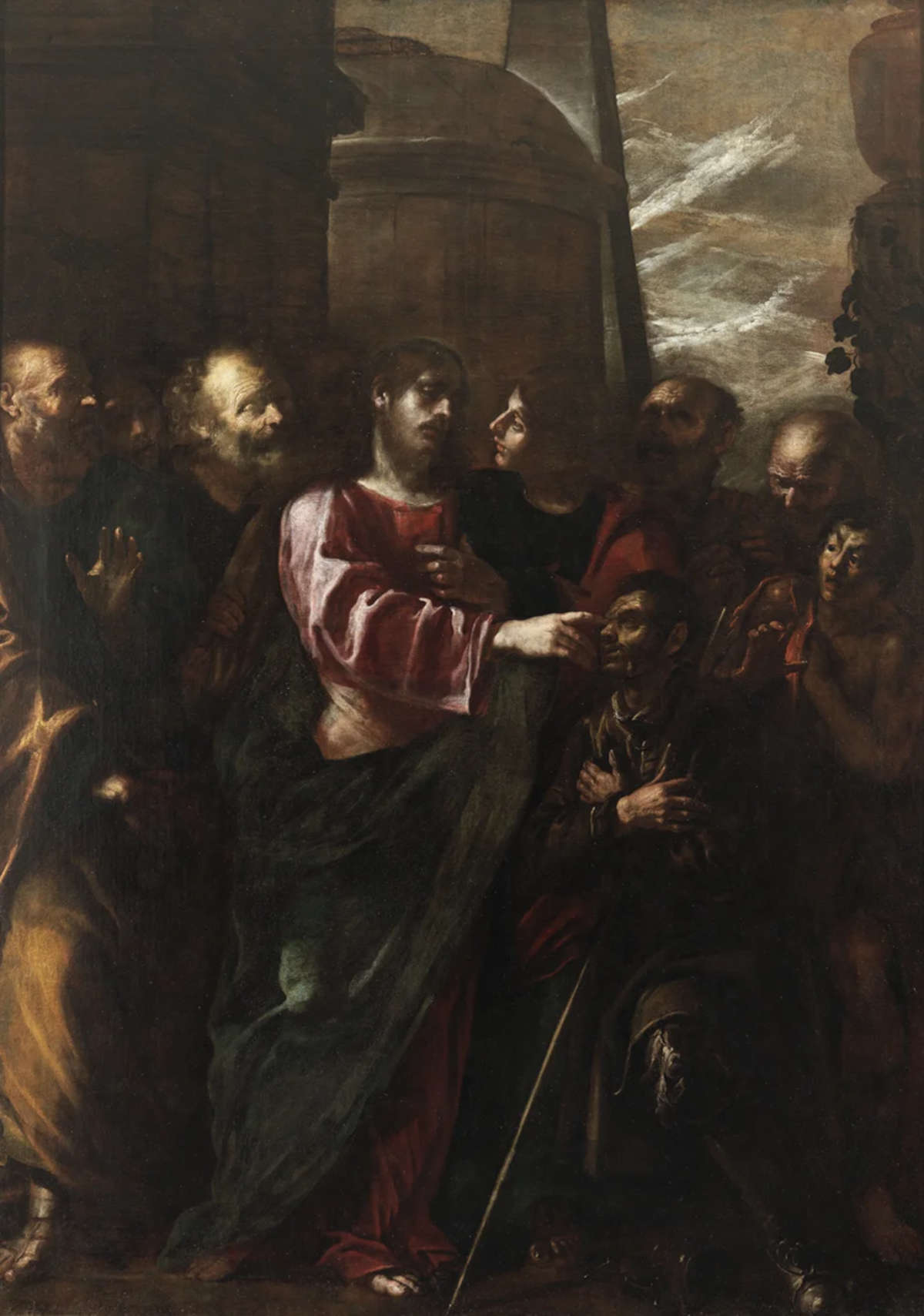
In Cremona, the restoration of the large canvas depicting the Healing of the Blind Man Born by Pietro Martire Neri (Cremona, 1591 - Rome, 1661) has turned into an opportunity for a comprehensive study and reinterpretation of the Cremonese painter’s work, resulting in a dossier exhibition set up in the Sala delle Colonne of the Ala Ponzone Museum and open until March 8, 2026. The intervention, supported by the Association of Friends of the Ala Ponzone Museum over the two-year period 2024-2025 at the invitation of Mario Marubbi, curator of the civic museum, brought back to the center of attention a figure who is still elusive today, especially because of the complexity of reconstructing his catalog.
The restored canvas, owned by the museum, depicts one of the most intense Gospel episodes and came to the Pinacoteca in 1949 at the urging of then-director Alfredo Puerari. It came from the church of San Facio al Foppone in Cremona and entered the civic collections in exchange for another painting by the school of Malosso, considered of lesser value and already represented in the collections. At the time, however, Puerari did not recognize other works by Neri already in the museum. These include the two panels with St. Peter and St. Paul, which were only attributed with fine insight to the painter by Ardea Ebani several decades later.


The restoration of The Healing of the Born Blind offered the opportunity to reconsider the artist’s technique and style, extending the investigation to other paintings in the Ala Ponzone Pinacoteca that are variously referred to Neri. Alongside the small nucleus of works owned by the museum, the exhibition brings together other canvases that, for various reasons, are useful in understanding an author whose hand was sometimes very mimetic in quoting the work of others, an element that contributes to the difficulties in reconstructing his figure. The restitution of his artistic physiognomy is therefore not a simple undertaking, as shown by a not so meager bibliography that has its roots in 1665 with Giuseppe Bresciani and continues in the early eighteenth century with Desiderio Arisi, up to the most recent studies, not always in agreement in their attributive proposals.
According to sources, Pietro Martire Neri’s education took place in the workshop of Domenico Fetti in Mantua. Bresciani records in 1665, thus a few years after the artist’s death, that Neri, having moved with his father to Mantua, was placed under the discipline of art with “Domenico Feti romano.” This training explains some of the stylistic choices and interpretive approach that would characterize his production. In the catalog accompanying the exhibition, Marubbi speculates that one of the many replicas of Jacob’s Dream seen in the 1996 Mantua exhibition may represent the Cremonese artist’s beginnings still in the master’s workshop. This is the version already in the Cleveland Museum of Art, which Safarik presented not as a simple antique copy, in Arslan’s opinion, but as a free interpretation probably due to a painter of Nordic education, as suggested by the landscape in the background, a derivation of Adam Elsheimer’s inventions. Safarik captured the interpretive aspect of the canvas, a hallmark of Neri’s approach to the master’s works, which are never slavishly copied but reworked in personal variations.
After Fetti’s death, Neri returned to Cremona probably in 1623. The Portrait of Melchiorre Salina from Villa Durini in Gorla Minore, featured in the exhibition, is supposed to be the first work executed after his return from Mantua. In this painting there are no obvious echoes of the Fettian alumnus, while the figure’s rigorous aplomb seems to recover models still linked to the Malossian tradition.
In contrast, the fluid brushstrokes, undone and transparent subject matter, formal sprezzature , and freedom of execution of the Presentation in the Temple at the Ducal Palace in Mantua anticipate the stylistic characteristics found in the Healing of the Blind Man Born. In the Cremonese canvas, the painter reveals a growth of monumentality and an intensification of pathos that have suggested a broadening of his cultural horizons. The hypothesis of an early study trip to Rome was long considered the most logical explanation, not least in light of the strong chiaroscuro contrasts and gloomy atmosphere that seemed to presuppose a direct knowledge of Roman Caravaggism.
Restoration has, however, partly tempered this impression. The strong contrast between light and shadow, also found in the Escape to Egypt in the Cremona Museum, depends largely on the alteration of the pigments used, with effects not intended by the artist. Moreover, in the broad Caravaggesque universe, Neri appears uniquely oriented toward Giovanni Serodine, the only Caravaggesque visible in Lombardy shortly after 1630. Without ruling out the possibility of a Roman journey, to date undocumented, the work could also be explained by assuming that the painter had been able to see Serodine’s works that had arrived on Lake Maggiore.
The review of materials in the Pinacoteca also led to the reconsideration of a Head Study, perhaps never fully understood until now. The work turned out to be in close stylistic connection with the bystander apostles at the Healing of the Born Blind, particularly with the figure on the far right. The study seems to reflect the painter’s modus operandi of experimenting on a resulting tablet with an impression captured from life, perhaps from a posed model, and then recovering the invention at the appropriate time in the final composition.
Other works by Peter Martyr Neri are exhibited alongside The Healing of the Blind Man Born, and some of these have been mentioned: the Portrait of Melchiorre Salina from the Villa Durini in Gorla Minore, the Head Study from the Ala Ponzone Museum, the two panels of St. Peter and St. Paul from the Cremonese museum, the Vision of St. Peter from the church of Sant’Agata in Cremona, the Flight into Egypt from the Ala Ponzone Museum, and the St. Louis Gonzaga Renunciation of the Marquisate from the church of Saints Marcellinus and Peter in Cremona. Francesco Boccaccino’s St. Anthony the Abbot from the Ala Ponzone Museum, formerly attributed to Pietro Martire Neri, completes the itinerary, a testimony to the uncertainties that still accompany the definition of his catalog.
The reference text for the exhibition is taken from the catalog Materials for Pietro Martire Neri, edited by Mario Marubbi, published by the Ala Ponzone Museum in 2025. The exhibition therefore takes the form of a moment of critical verification and updating of studies, starting from a restoration that was not limited to the material conservation of the work but stimulated a broader reflection on the artistic personality of the Cremonese painter. A path that, starting from a symbolic canvas, invites us to rethink the figure of an artist still partly to be deciphered, whose interpretative ability and ability to confront different models continue to question scholars and the public.
 |
| For the 17th-century Peter Martyr Neri a restoration and exhibition in Cremona |
Warning: the translation into English of the original Italian article was created using automatic tools. We undertake to review all articles, but we do not guarantee the total absence of inaccuracies in the translation due to the program. You can find the original by clicking on the ITA button. If you find any mistake,please contact us.