




After more than a century of display in the halls of the Louvre’s sculpture department, where Michelangelo’s Prisoners are located, the Portal of Palazzo Stanga, a 15th-century masterpiece attributed to Pietro da Rho (Rho, c. 1465-after 1513) and coming from the palace of the same name in Cremona, has regained its expressive power thanks to a major restoration that has profoundly renewed its visual perception. Presented to the Parisian public since 1877, the monumental doorway from Cremona is now the protagonist of what the museum calls a “metamorphosis,” allowing the extraordinary quality of its decorative apparatus and the finesse of its sculptural carving to be appreciated once again.
The portal originally belonged to the Stanga palace, built in the last decade of the 15th century for Cristoforo Stanga, a leading figure in the circle of the Duke of Milan, on whom Cremona was politically dependent at the time. The palace underwent a first, radical transformation in the 18th century, when it passed to the Rossi family, which remodeled it according to the Baroque taste then dominant, giving it the appearance that still characterizes it today. Further changes affected the building in 1870, and it was at this stage that the ancient 15th-century portal was dismantled. Five years later, in 1875, the door was purchased by the Louvre from the Marseille collector Édouard Vaïsse, thus becoming part of the Parisian museum’s collections.
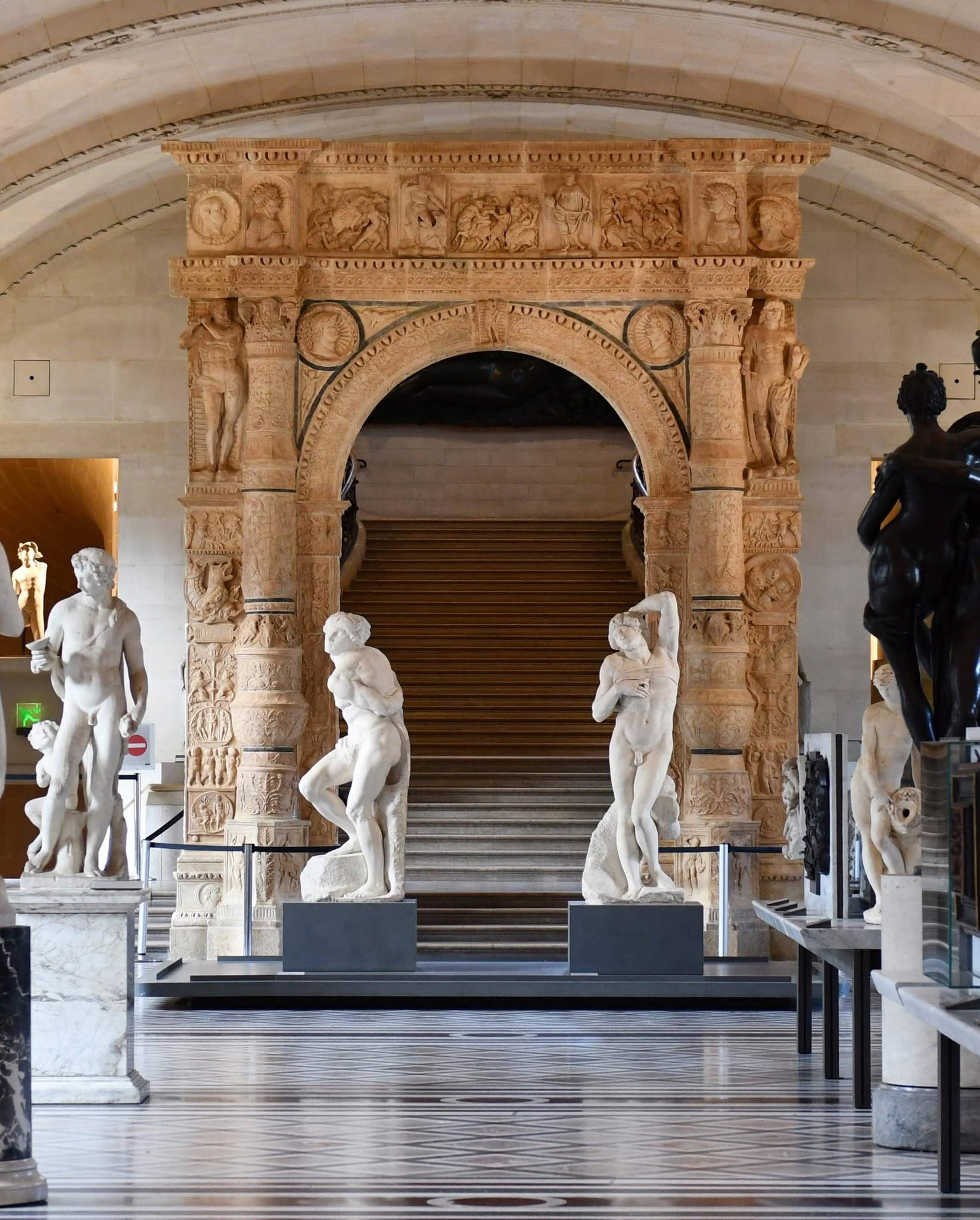
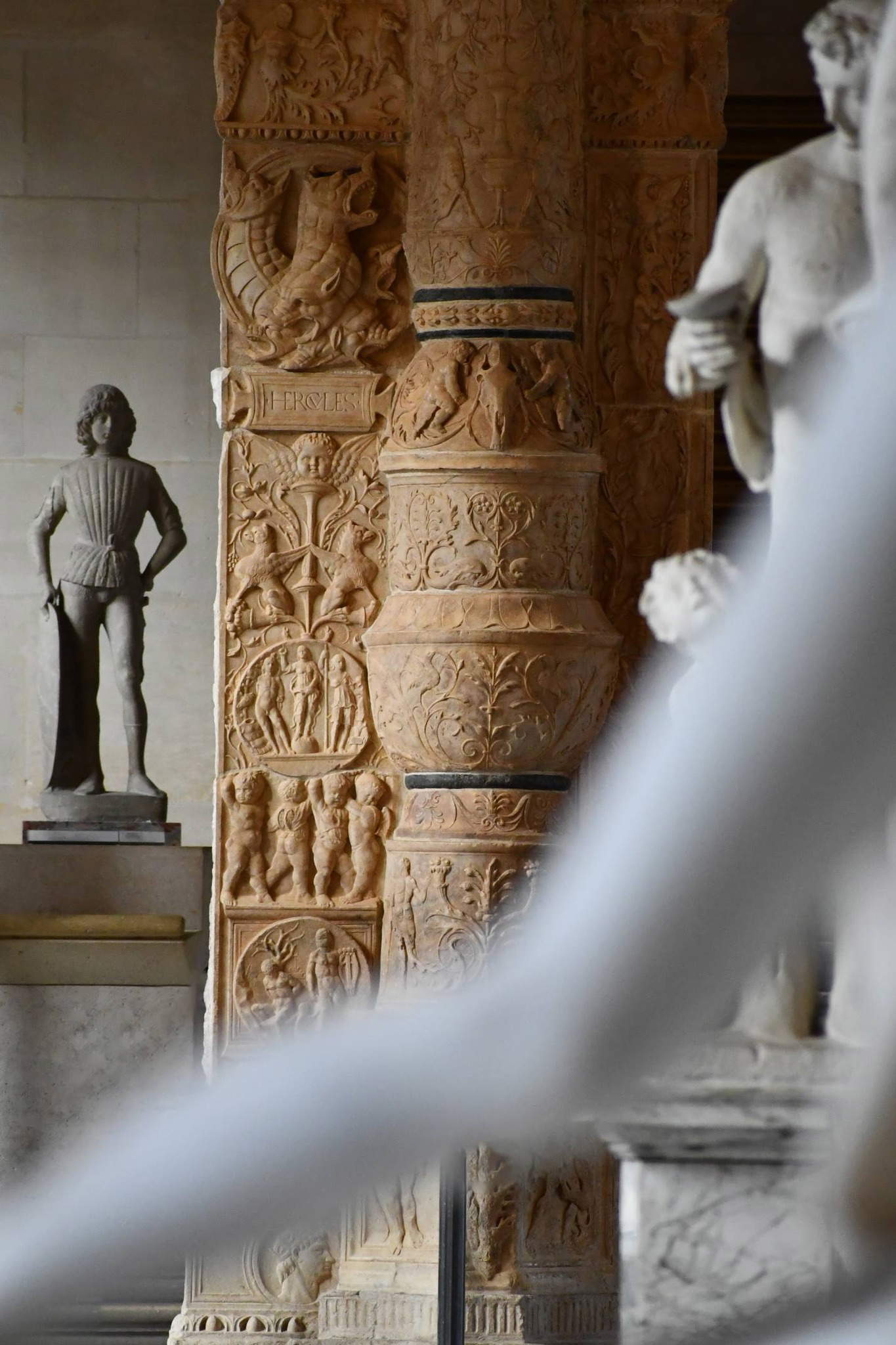
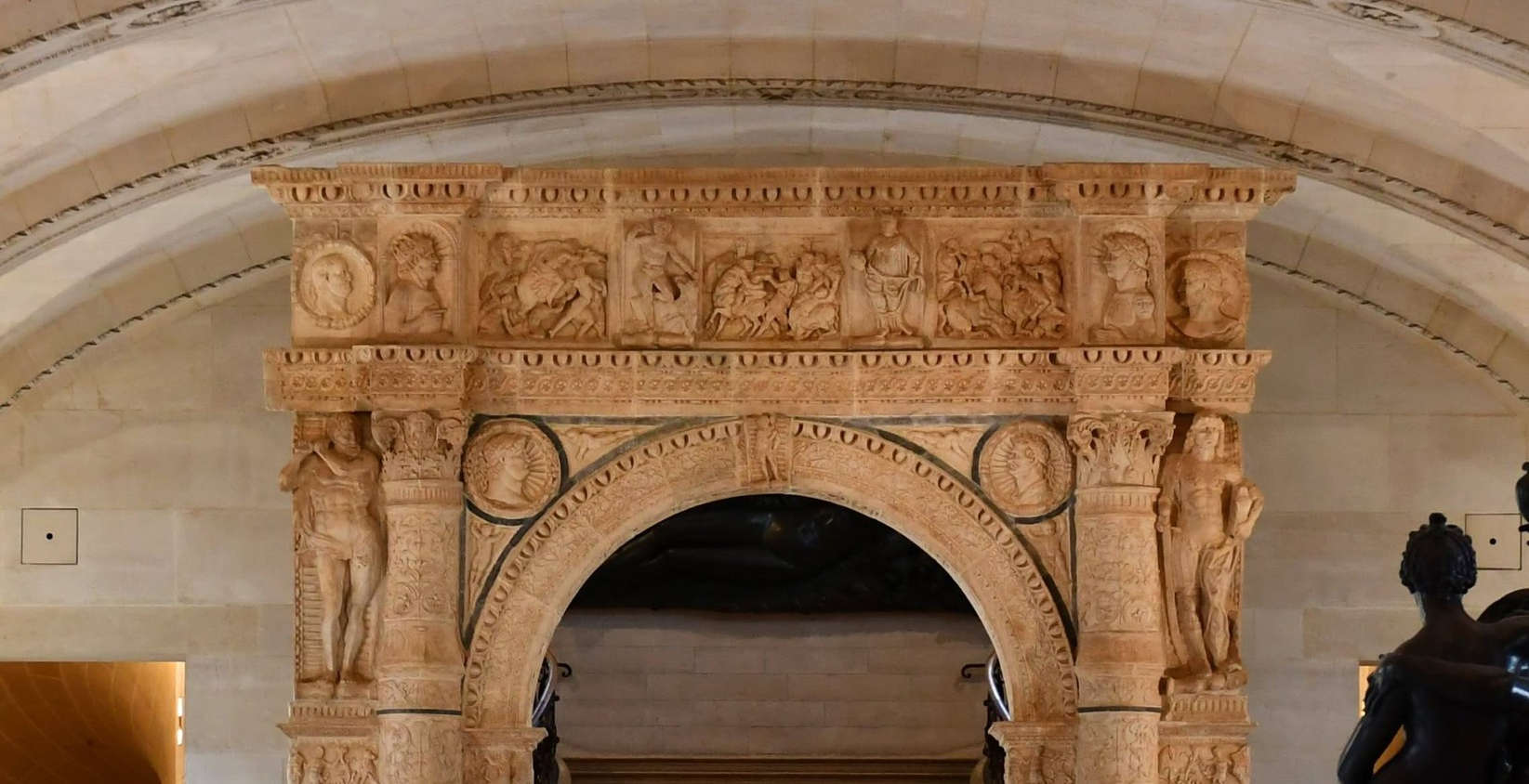
Attributed, as mentioned, to Pietro da Rho, a Lombard sculptor documented in Cremona between 1480 and 1508, the portal of Palazzo Stanga is considered one of the masterpieces of Renaissance sculpture in northern Italy. More than seven meters high, it looks almost like a triumphal arch, designed to celebrate the prestige of the patron through a very rich iconographic program inspired by classical antiquity. The figures of Hercules and Perseus form the symbolic centerpiece, echoing models widespread through plaques and medals produced by bronze artists in northern Italy.
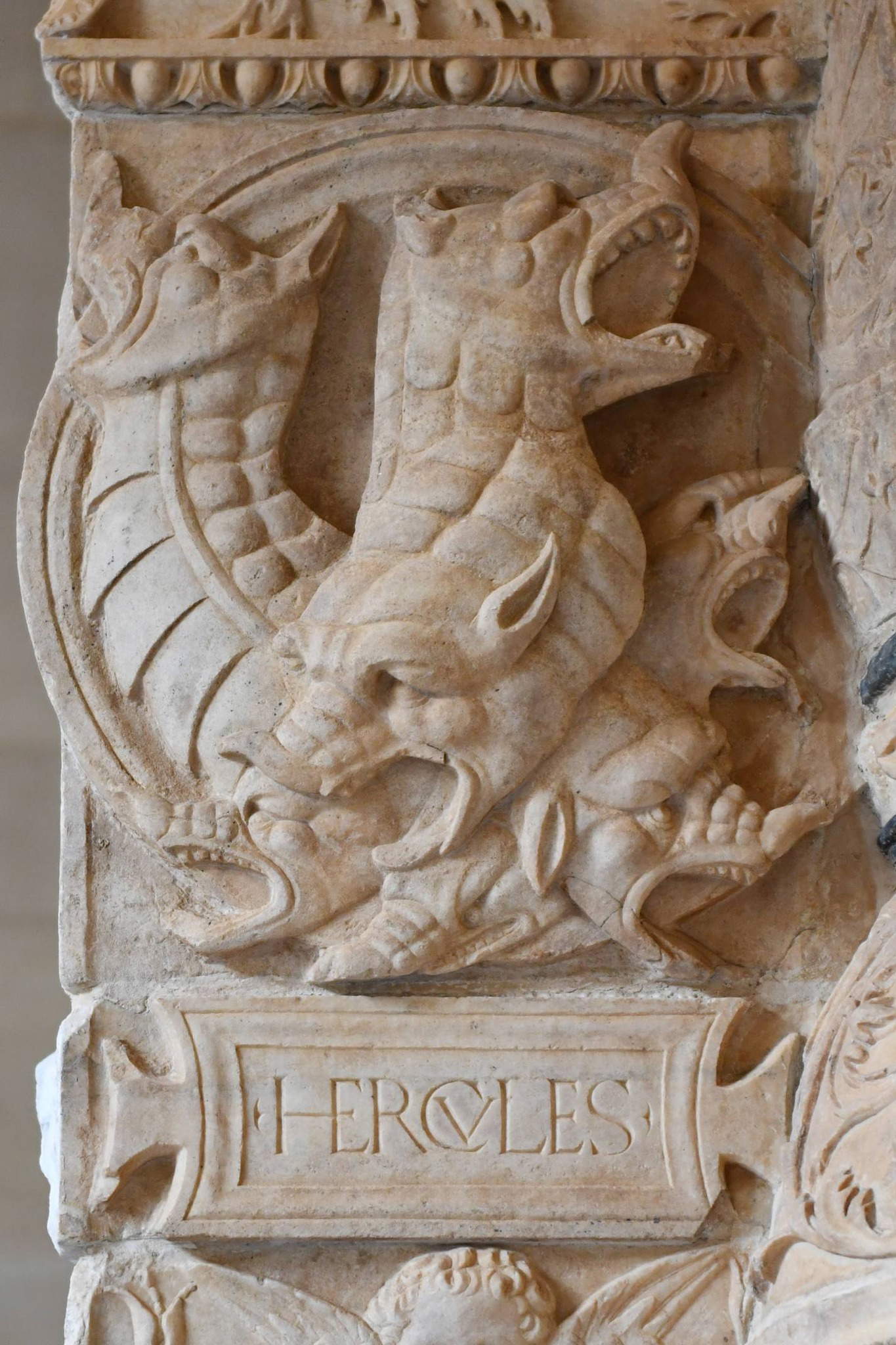
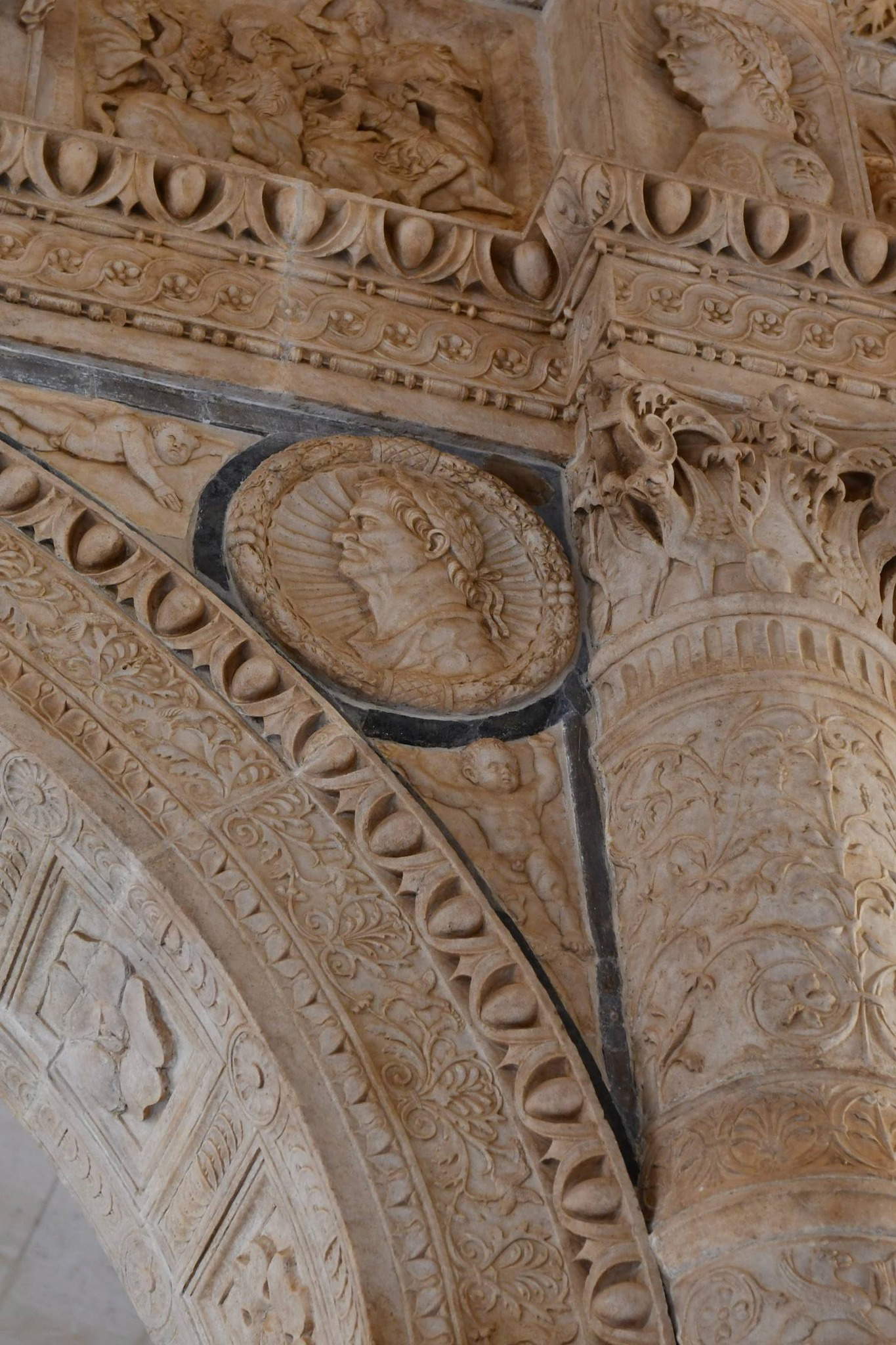
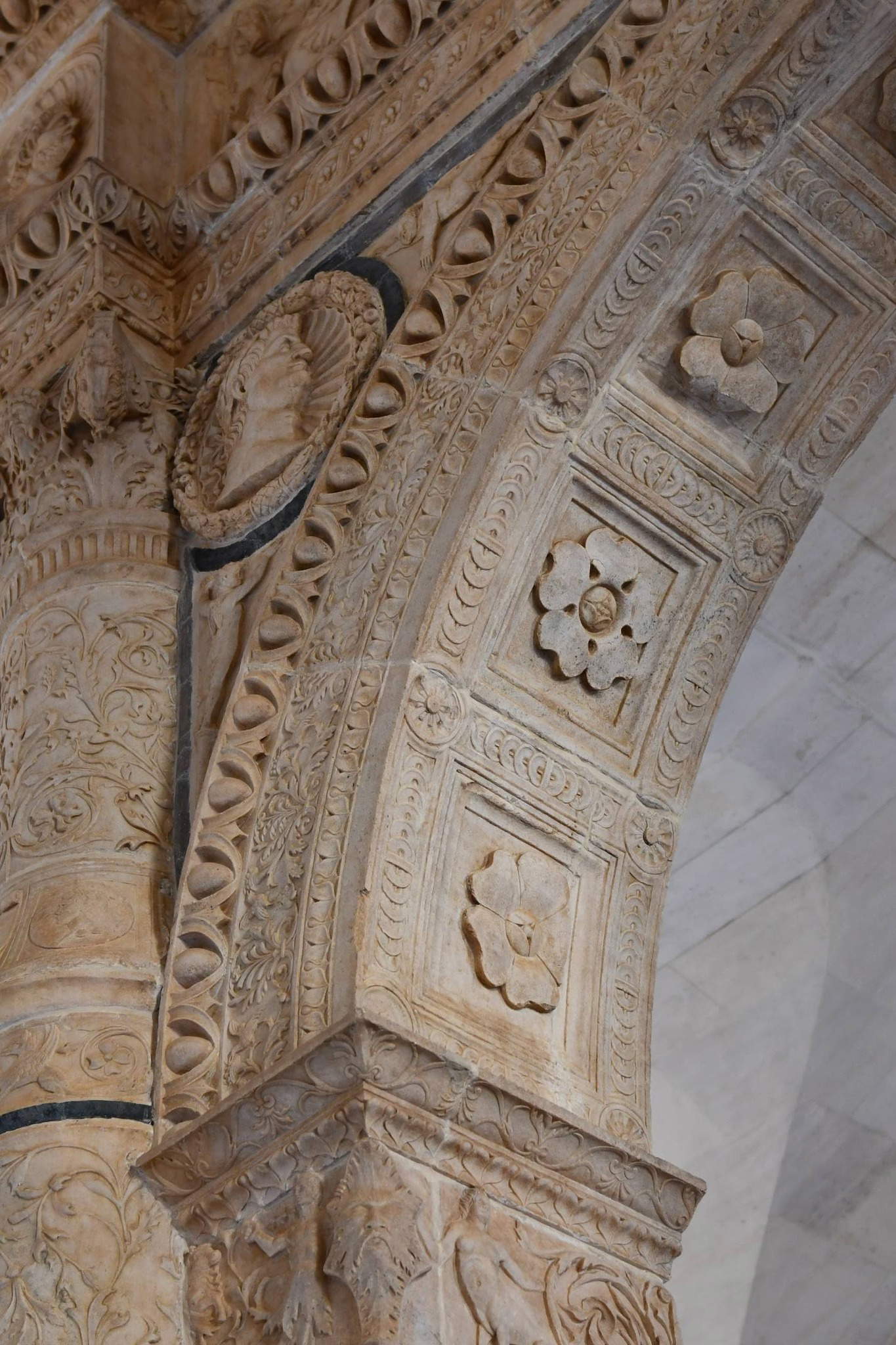
In the lower register, on triangular pedestals supporting half-columns, four of Hercules’ labors are depicted: the struggle with Antaeus, the slaying of the Hydra of Lerna, the Nemean lion, and the birds of Lake Stymphalus. In the center of the portal, two medallions further enrich the mythological narrative: on the left appears the hydra with its seven heads, while on the right are the three heads of the Gorgons and that of the winged horse Pegasus, born of the blood gushed out when Perseus decapitated Medusa. On either side of the arch stand two imposing monumental figures embodying the protagonists of the mythological cycle: Hercules, depicted wielding his club, and Perseus, represented in armor.
Above the arch, on the architrave, are three reliefs with battle and centauromachia scenes, alternating with busts in profile and medallions depicting Roman emperors. The entire ensemble is enlivened by a dense decorative fabric, elaborate capitals, friezes with fantastic animals and additional mythological scenes, all of which contribute to an effect of great visual and symbolic richness.
The material used in the construction of the portal is Candoglia marble, the same material from which Milan Cathedral was built. During the 19th century, however, the surface of the door had been covered with a layer of dark brown paint, accompanied by subsequent applications of wax. These treatments, while probably having a protective function, had progressively altered the legibility of the work, flattening volumes and obscuring details.
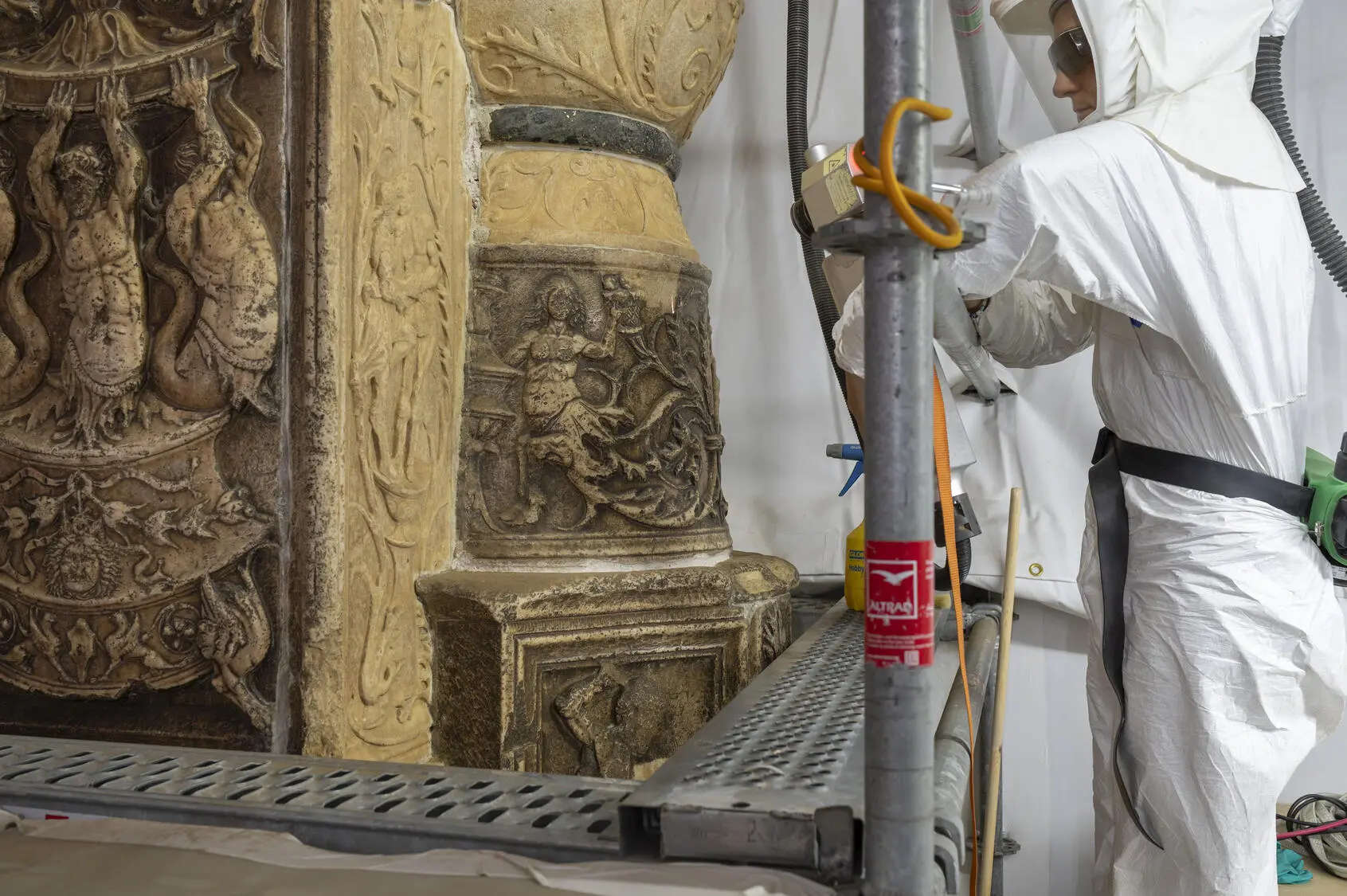
Before intervening on the work, it was necessary to conduct an articulated round of preliminary studies to precisely define the conservation status of the marble. The investigations were coordinated by Hubert Boursier, with input from C2RMF, the Centre de recherche et de restauration des musées de France, which carried out the scientific analyses. These researches made it possible to identify the chemical nature of the brown layer, composed of oxalates, thus providing the basis for choosing the most suitable restoration techniques.
Numerous tests were conducted by Hubert Boursier and Jennifer Vatelot, along with Hélène Susini and Azzurra Palazzo of the C2RMF sculpture restoration service, in order to identify the most effective and least invasive method. The team in charge of the intervention, under the direction of restorers Adèle Cambon and Annabelle Sansalone, then proceeded to remove the dark layer using lasers, supplementing the operation with a light chemical treatment to remove the waxes, all while fully respecting the original material.
The layer of nineteenth-century painting left a slight golden hue in the marble. A more intense use of the laser could have attenuated it further, but it would have carried the risk of affecting the original surface of the material. The conservative choice adopted made it possible to restore the quality of the reliefs, the modulation of the volumes, and the clarity of the profiles, draperies, and medallions, while also allowing the rediscovery of the black stone incrustations that emphasize and enhance the ornamental course.
Thanks to this intervention, the Stanga Gate can now be read again in its material and historical complexity. The restoration has restored dignity to a masterpiece that, although it had been in the public eye for decades, had gradually lost some of its expressive power. Also completing the project was a new lighting system, designed by the lighting design atelier of the Louvre’s Directorate of Art Studios and Collections Presentation. The new light allows the delicacy of the sculptures and the dialogue between solids and voids to be captured more accurately, enhancing the depth of the reliefs and the iconographic richness of the work.
The restoration of the Stanga Gate was also made possible thanks to the generous support of the Kinoshita Group, which was instrumental in carrying out the work. With this operation, the Louvre returns to the public not only a restored work, but an essential fragment of the artistic history of the Lombard Renaissance, once again legible in its authenticity and symbolic value.6
 |
| Louvre, a Lombard Renaissance masterpiece is reborn: the Portal of Palazzo Stanga |

Warning: the translation into English of the original Italian article was created using automatic tools. We undertake to review all articles, but we do not guarantee the total absence of inaccuracies in the translation due to the program. You can find the original by clicking on the ITA button. If you find any mistake,please contact us.




























 IT
IT FR
FR DE
DE ES
ES CN
CN


