





The restoration of the Stendardo della Santissima Trinità by Raphael Sanzio (Urbino, 1483 - Rome, 1520), kept at the Pinacoteca Comunale di Città di Castello, has restored new legibility to the work and led to the unexpected discovery of the preparatory drawing traced by the artist directly on the canvas. The results of the intervention, presented before the painting’s departure for a major international exhibition(Raphael: Sublime Poetry curated by Carmen Bambach at the Metropolitan Museum of Art in New York, March 23 to June 28, 2026), mark an important step in technical and art-historical studies on the young Urbino master.
The intervention was conducted by theCentral Institute for Restoration in synergy with the Soprintendenza Archeologia Belle Arti e Paesaggio for Umbria and the Municipality of Città di Castello, under the aegis of the Direzione Generale Archeologia Belle Arti e Paesaggio of the Ministry of Culture. Launched last July, the restoration represents the second phase of a scientific project developed by the Institute and begun back in 2020 at the instigation of the Superintendency then headed by Marica Mercalli, on the occasion of the 500th anniversary of the artist’s death. The project is part of a broader line of reflection by the Institute on the integration of the lacuna as a critical choice in restoration. In the case of the Stendardo della Santissima Trinità, this approach guided the intervention toward a conscious revision of the formal presentation of the work. Prior to the work, in fact, the reading of the painting was highly fragmentary, conditioned both by the conservative and liturgical events that had affected the work over the centuries, and by previous aesthetic interventions carried out in the 1950s, which had ended up hindering a full critical understanding of the painting and its valorization as a fundamental document of the formation of the very young artist.
The goal of the project was to re-establish a proper perceptual dynamic between the painted image and the missing portions of the pictorial surface. With this in mind, the work focused on reducing the visual incidence of the gaps, bringing the continuity of the image to the forefront and improving the overall perception of the composition. A first phase of the intervention had been completed in 2021 on the occasion of the exhibition Young Raphael in Città di Castello and his gaze, promoted by the municipality and curated by Marica Mercalli and Laura Teza between October 30, 2021 and January 9, 2022. On that occasion, the work had focused on the reintegrable gaps: developing the figurativeness implicit in the preserved fragments, the restorers had carried out a hatching integration in the parts that presented adequate requirements, restoring greater visual unity to the images.
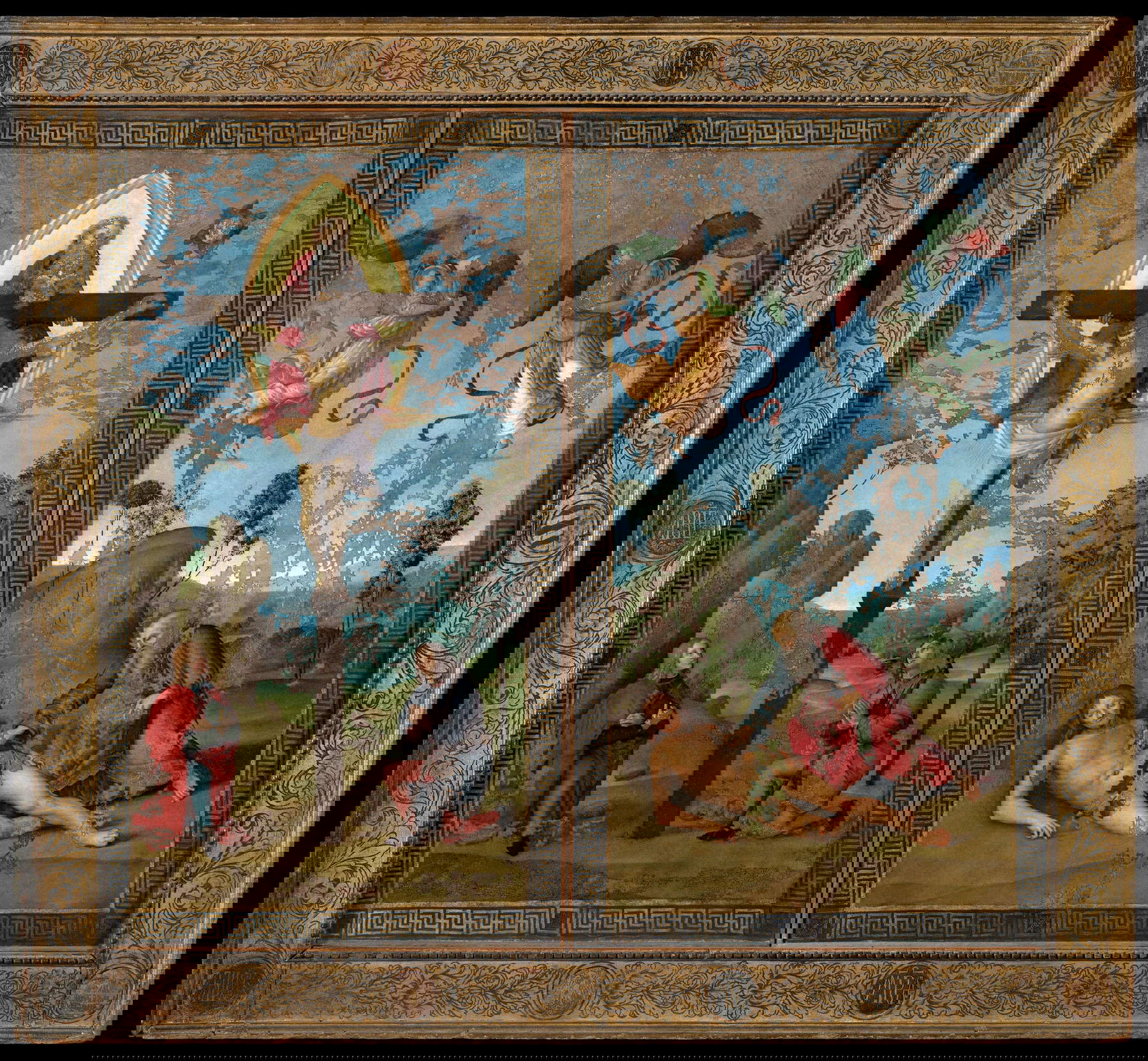
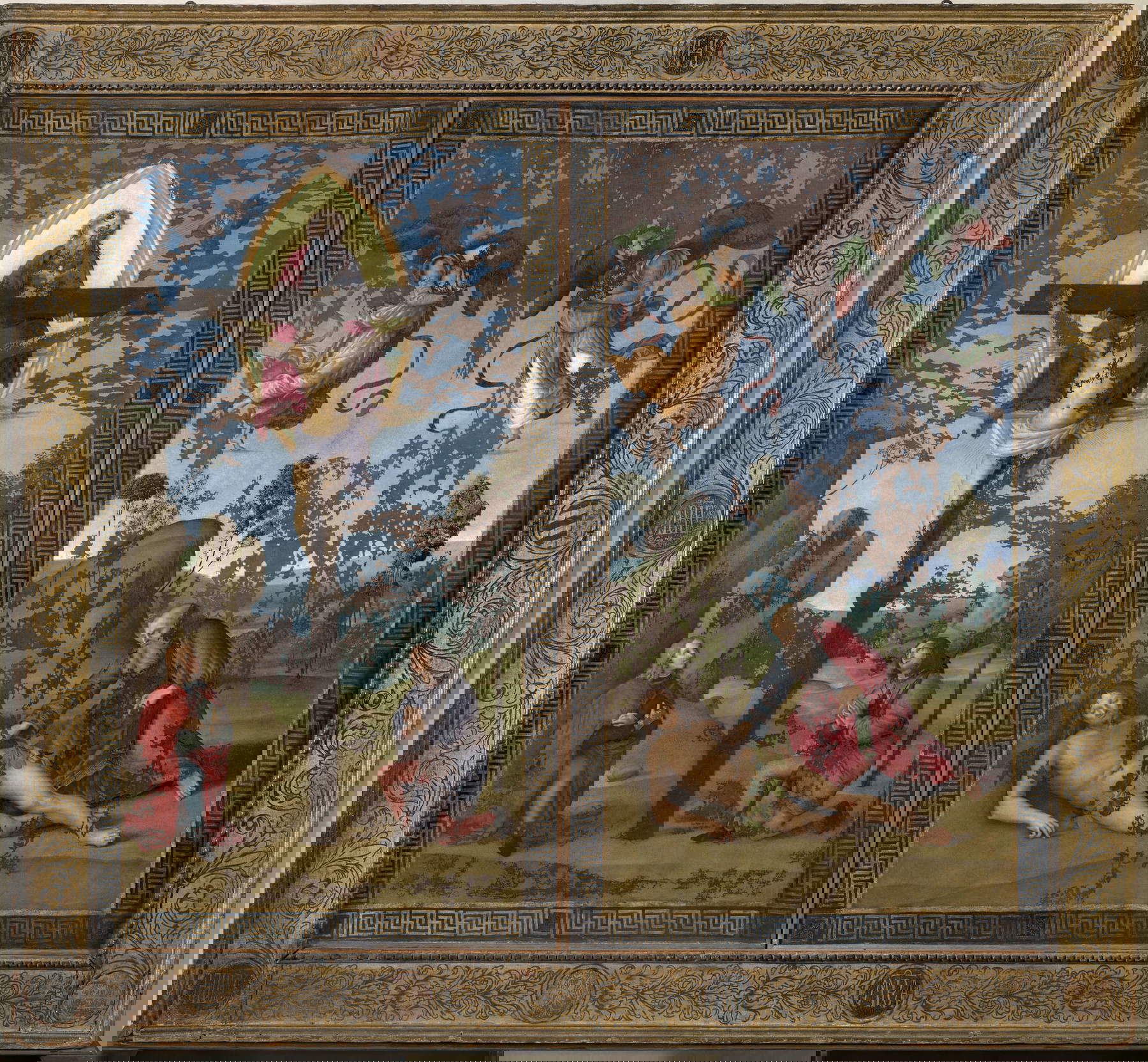
The results presented today, on the other hand, concern the second phase of the project, dedicated to the treatment of the gaps that cannot be reintegrated, i.e., those that, according to the criteria developed by Cesare Brandi, do not allow for integration due to insufficient formal and chromatic information. During the nineteenth and twentieth centuries these areas had been affected by restoration interventions that had introduced materials characterized by warm and dark chromatics. These stratifications, in addition to visually overpowering the painted image, had ended up completely concealing the original support as well.
The removal of these materials proved to be a particularly complex operation. After thorough cleaning, carried out by the Institute’s Paintings on Canvas Laboratory in a balance between traditional methodologies and laser technology, the non-original stratifications were gradually removed. This process brought to light the very fine weave linen canvas chosen by the artist as support. The new overall tonality of the work, strongly lightened thanks to the cleaning and color balancing of the canvas, reduced the perceptual impact of the gaps and significantly improved the legibility of the figures and tonal passages still preserved.
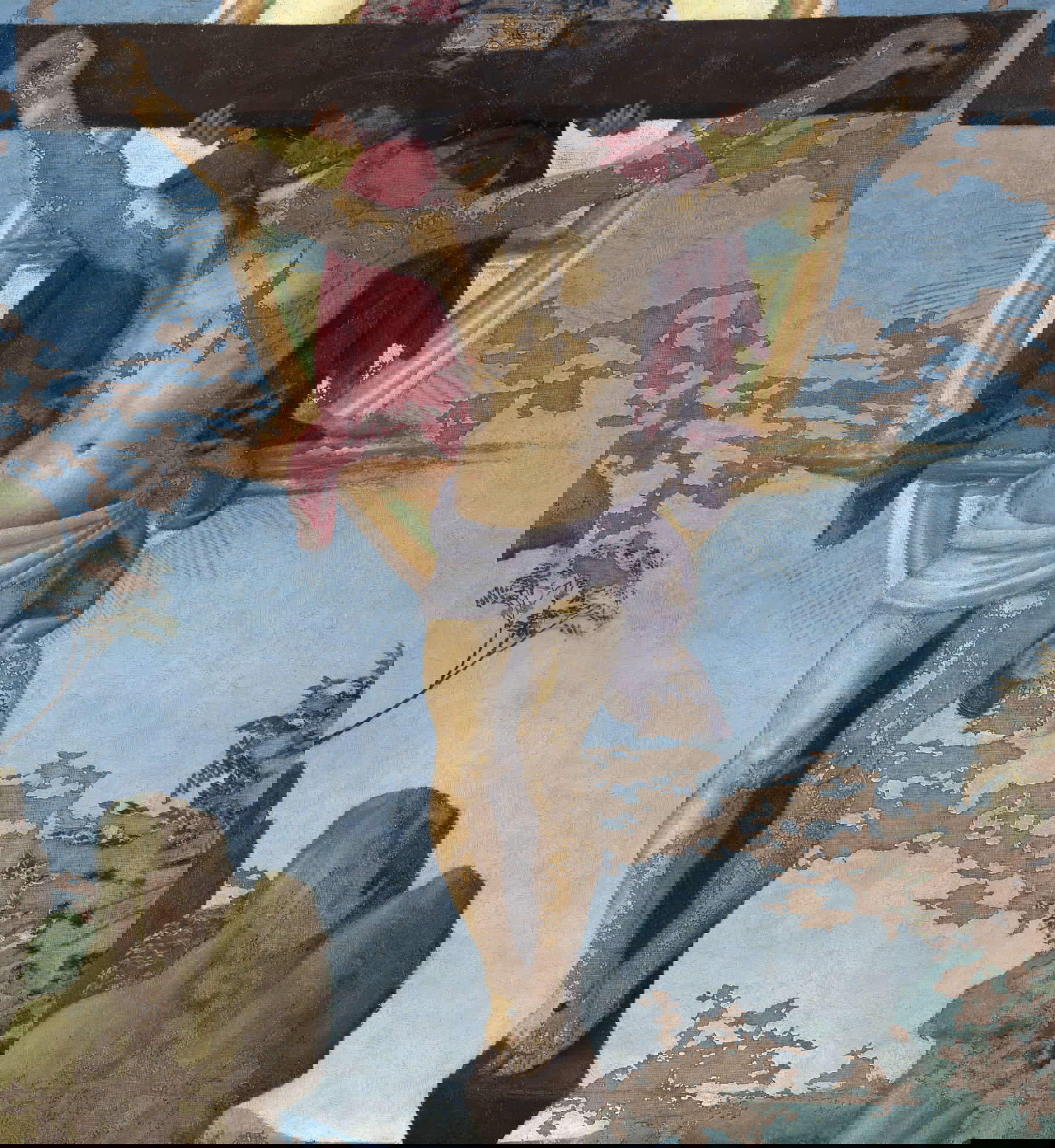
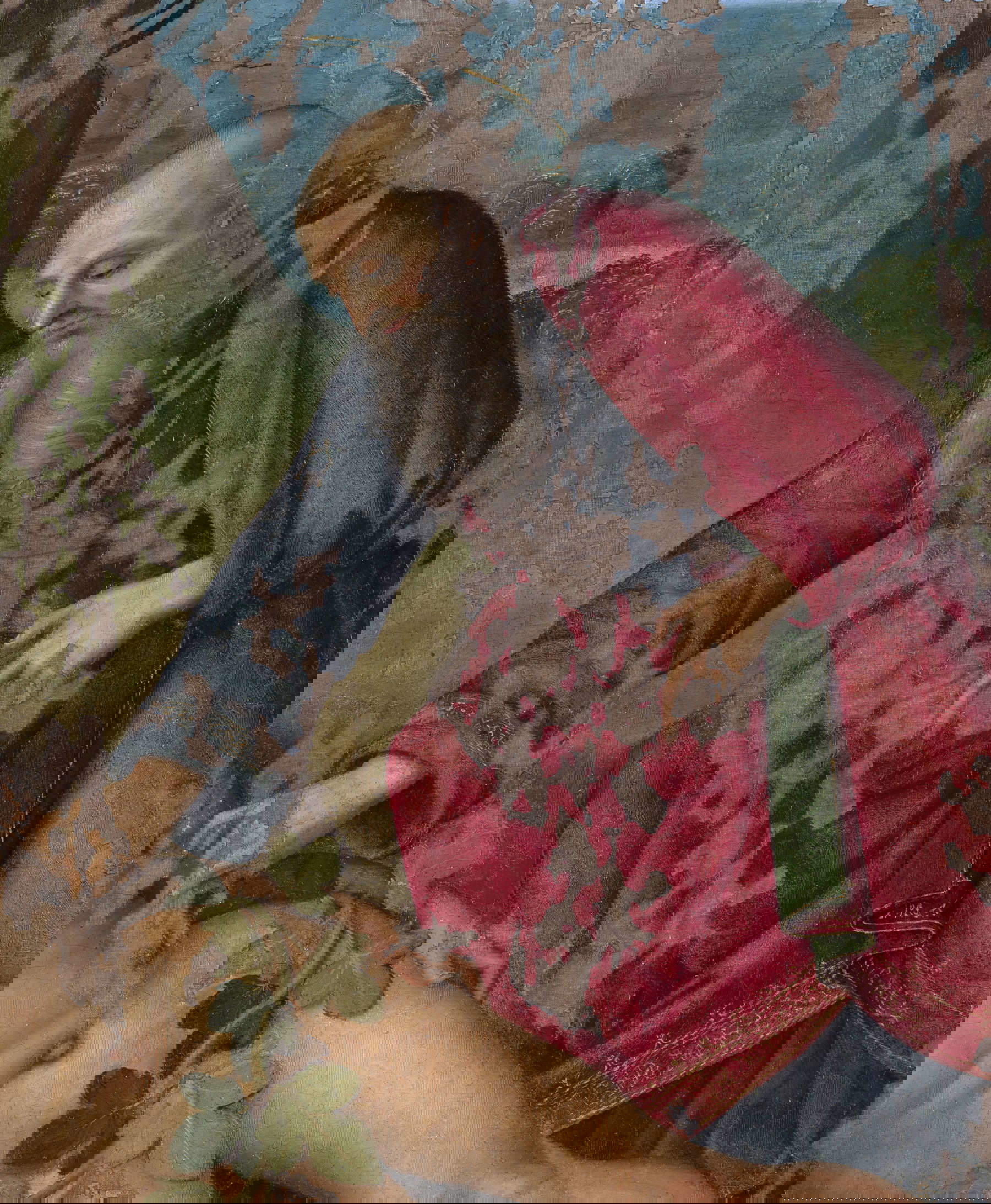
During the cleaning operations, an extraordinarily interesting element also emerged. In fact, in some areas now devoid of painting, which had remained hidden for centuries under the overlapping materials, the preparatory drawing traced by Raphael directly on the canvas before the painting preparation was applied. The discovery, completely unexpected, now makes it possible to observe with precision profiles, details and iconographic aspects of the work that until now could only be hypothesized.
The revelation of the drawing represents a major contribution to studies on the work and execution technique of the young Raphael. It is in fact a direct and hitherto unknown testimony of the artist’s creative process, capable of providing new elements of analysis on the design phase of the image and the operative methods adopted in the realization of the painting.
The results of the intervention conducted by the Paintings on Canvas Laboratory and the diagnostic campaign carried out by the Institute’s Scientific Laboratories, accompanied by an extensive photographic and documentary apparatus, will be the subject of in-depth study as part of a forthcoming study day and in a publication published by Campisano Editore.
During the press conference, the work was shown to the public before leaving for the exhibition Raphael: Sublime Poetry. The loan of the work for the exhibition also involved the recognition of a financial contribution that helped support the restoration work. During the presentation, details of the preparatory drawing that emerged during the work and was made visible for the first time thanks to the cleaning operations were also previewed.
The Director General of Archaeology, Fine Arts and Landscape, Fabrizio Magani, stressed that “the restoration of Raphael’s Stendardo represents a further result of the excellence of Italian restoration, which, through the Central Institute for Restoration, continues to hold high the value of our tradition in this field. Returning today to a work that in the past had already been the subject of study and intervention at the same Institute means reaffirming the great value of the constant and conscious care of our cultural heritage. That is why I believe this is truly a day of great celebration.” He was echoed by the director of the Central Institute for Restoration, architect Luigi Oliva, who recalled how the Banner of the Holy Trinity represents an exemplary historical reference for Italian and international restoration. “It is,” he explained, “a work that has undergone numerous interventions over the centuries that have transformed it from a processional banner painted on both sides into two altarpieces displayed first in the church and then musealized. The Central Institute for Restoration has intervened since 1952 to ensure the best conservation of the work by combining the development of restoration theory with scientific research dedicated to knowledge and conservation. The removal of degraded restoration materials and the integration of additional gaps have given new legibility to the extraordinary hand of early Raphael even on areas considered lost forever. New perspectives will still open up in the future with the experimentation of Artificial Intelligence and the perceptual theories of Color Assimilation. A wealth of knowledge that will also be made available to the general public. In this scenario, the synergy between the entities and the excellence of the Ministry of Culture and the City of Città di Castello is a guarantee for the application to this priceless masterpiece of the highest levels of world research in the field of restoration and programmed conservation.”
Soprintendente Archeologia, Belle Arti e Paesaggio per l’Umbria, Francesca Valentini, pointed out that “for the ABAP Superintendency for Umbria, the restoration of Raphael’s Stendardo della Santissima Trinità that is being presented today, as well as the loan to the Metropolitan Museum of New York, represent acts of knowledge and territorial enhancement, scientifically and culturally grounded, made possible thanks to the close collaboration between the institutions of the Ministry of Culture, DG ABAP, the Central Institute for Restoration and the Municipality of Città di Castello. The intervention was aimed at proposing a more balanced and coherent reading of the original pictorial text, in continuity with the intervention curated by ICR and SABAP Umbria in 2019. Returning to a historicized restoration means adopting a method based on specialized and interdisciplinary comparison, in full coherence with Cesare Brandi’s thought for which restoration must leave open the possibility of further future interventions. The goal has been to improve readability and perceptual clarity, balancing integrations and restoring a unified and undistorted perception of the work. The important exhibition that will open at the MET will place Raphael’s work in a scientifically very solid context, and the Superintendence will continue to take care of the Stendardo in the territory, providing scientific collaboration to the new display of the work in the Pinacoteca Civica of Città di Castello.”
For the Municipality of Città di Castello, Mayor Luca Secondi and Culture Councillor Michela Botteghi emphasized that the project represents a milestone in the work’s enhancement: "It comes to a conclusion today, with the imminent departure of the Raphael Stendardo for the MET, a valorization project of great importance that the Municipality of Città di Castello has shared with the Soprintendenza Archeologia Beni Culturali e Paesaggio dell’Umbria and the Istituto Centrale per il Restauro, to whom thanks are due for having restored to the work the legibility that time had reduced. The Stendardo today appears in its original artistic value and prominence, the subject of new and in-depth diagnostic and historical investigations, which will also bring new light on its genesis. We want to emphasize as a relevant element the significant synergy between institutional levels that accompanied this complex intervention and that is complemented by the collaboration with the Metropolitan, which supported the restoration, and where the Stendardo will be exhibited, for the first time after restoration, as part of the exhibition Raphael: Sublime Poetry, curated by Carmen Bambach. We believe that the presence in New York of the Stendardo in an event of international level will help promote its knowledge on a qualified and wide audience, with positive repercussions, also for the museum and the territory that guards it."
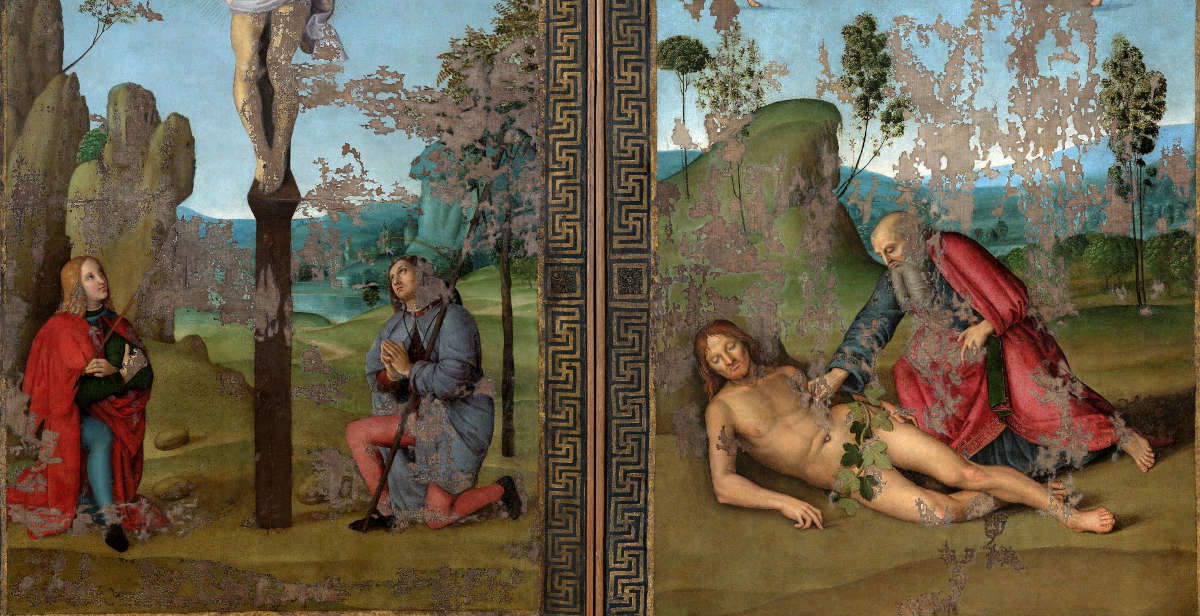 |
| Raphael, extraordinary discovery: drawing of the Banner of the Trinity resurfaces from restoration |

Warning: the translation into English of the original Italian article was created using automatic tools. We undertake to review all articles, but we do not guarantee the total absence of inaccuracies in the translation due to the program. You can find the original by clicking on the ITA button. If you find any mistake,please contact us.


















 IT
IT FR
FR DE
DE ES
ES CN
CN


