




by Redazione 21/01/2026


Categories: Ancient art / Disclaimer
A never-before-seen silver-tipped portrait of Hans Baldung Grien, an extremely rare drawing that has remained in the model's family for more than 500 years, will be auctioned in Paris at Hôtel Drouot on March 23, 2026, with an estimate of between 1.5 and 3 million euros.
A major event for the art market and for the history of Renaissance drawing is being prepared in Paris. On Monday, March 23, 2026, at theHôtel Drouot, the auction house Beaussant Lefèvre & Associés, in collaboration with the Bayser cabinet, will present a hitherto unknown work by Hans Baldung Grien (Schwäbisch Gmünd, c. 1485 - Strasbourg, 1545), one of the greatest masters of the German Renaissance. The sale is scheduled on the eve of the opening of the Salon du dessin, a landmark event for collectors and scholars, and concerns an extremely rare drawing executed in silver point, estimated at between 1,500,000 and 3,000,000 euros.
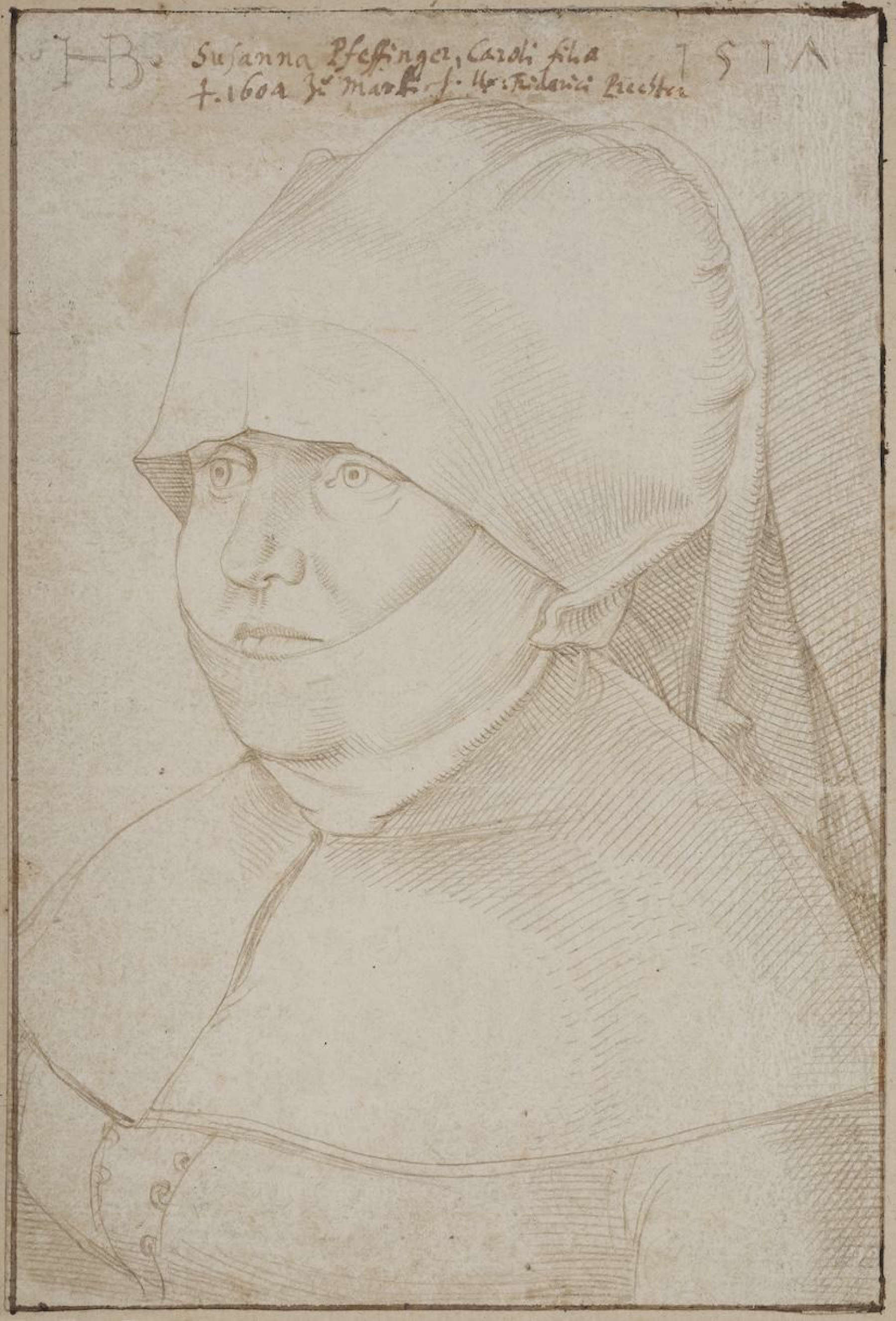
The sheet, made in 1517 in Strasbourg, depicts a woman named Susanna Pfeffinger, who was born in 1465 and died in 1538, and has remained in the model’s family for more than five centuries, passed down from generation to generation. This is an exceptional case in international collecting: the drawing was not known to art historians specializing in Hans Baldung Grien and is now a discovery of great scientific significance. It is also the only silverpoint drawing by the artist still in private hands, while only very few of Baldung’s sheets, out of a total corpus of about 250 known drawings, are kept outside museum institutions.


The work is executed with one of the finest techniques of the Renaissance, silver point on paper prepared with bone dust. The medium, treated with a layer that allows the metal to permanently imprint the mark, does not allow for second thoughts or corrections, which denotes absolute confidence in the stroke on the part of the artist. This technique, also described by Leonardo da Vinci in his Book of Painting, was favored by the great drawing virtuosos and was learned by Hans Baldung through Albrecht Dürer, who in turn had inherited it from his goldsmith father. In the sheet intended for auction, Baldung demonstrates a complete mastery of space, tonal modulations, and tip pressure, strengthening shadows or lightening light with extreme precision.
Stylistically and technically, the drawing is closely related to those preserved in the famous Karlsruhe collection, the Skizzenbuch housed at the Staatliche Kunsthalle Karlsruhe, with an additional feature of great importance: the sheet is signed with the artist’s original monogram. An element that helps reinforce its exceptionality and historical value.
Antiquarian Patrick de Bayser, who was instrumental in the rediscovery of the work, called his encounter with the drawing a real shock, both personally and professionally. "The discovery of this drawing was both a personal and professional shock. Personally, because I have always been sentimentally attached to Alsace and its people: my grandfather participated, with Marshal de Lattre’s army, in the liberation of Alsace, a land he fell in love with to the point of settling there, in Kientzheim, near Colmar. Professionally, because this drawing is, in my opinion, the most important I have had the privilege of bringing to light since the discovery of Leonardo da Vinci’s Saint Sebastian in 2016. Baldung’s drawings are extremely rare. The last example displayed at auction was sold in 2007 for over $3.7 million."
Arthur de Moras, partner and auctioneer of Beaussant Lefèvre & Associés, also emphasizes the sheet’s exceptional character: “This silverpoint portrait of Susanna Pfeffinger, executed in Strasbourg in 1517 by Hans Baldung, embodies the very essence of the Renaissance: the blossoming of portraiture, the rise of private commissions, and the use of innovative techniques by a master of the stroke working in the shadow of the cathedral spire-the pinnacle of Christendom-erected in a ’free city’ of merchants and intellectuals newly exposed to the advent of printing.”
Hans Baldung Grien is considered one of the most original artists of the Renaissance. Born in Germany, he began his career in Albrecht Dürer ’s workshop in Nuremberg, quickly gaining the master’s trust to the point that he took over in his absence. But it was in Strasbourg, where he settled beginning in 1509, that Baldung found the ideal setting to fully develop his talent. After assimilating Dürer’s techniques and artistic vocabulary, he developed his own language, characterized by a strong interest in the themes of death, eroticism, witchcraft and the passage of time. A free spirit with a fertile imagination, Baldung knew how to reinvent traditional subjects with bold new interpretations. His vision of women, at once powerful and erotic, had few equivalents in his time, and the complex and meticulous depictions of women’s bodies appear almost as an anticipation of the surreal at a time when the Catholic Church, grappling with the emerging Protestant schism, tended to repress natural expression. An artist difficult to classify, Baldung nevertheless exerted a profound and lasting influence.
His portraits of intense humanity, drawings of extraordinary skill, engravings, monumental stained glass windows, and large polyptychs continue to impress with their expressive force and originality. His importance has been reaffirmed by major international exhibitions, such as the major monograph organized in Karlsruhe between November 30, 2019 and March 8, 2020, flanked by exhibitions in Strasbourg and Freiburg im Breisgau, and the historic exhibition of drawings and prints at the Yale University Art Gallery in 1981.
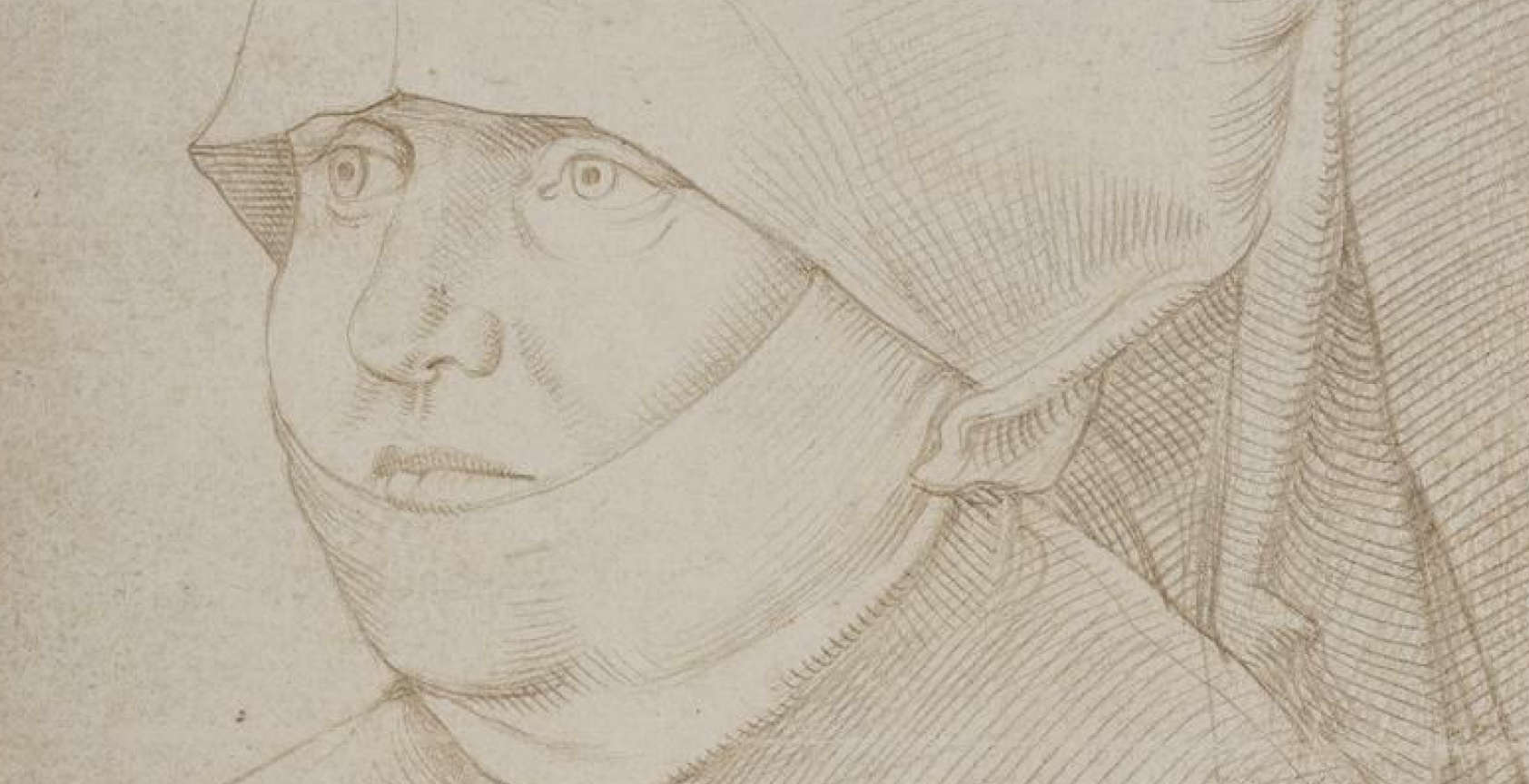
The drawing up for auction depicts Susanna Pfeffinger in a three-quarter-length bust, with the restrained attire of a devout woman, characterized by a bonnet, chin strap, and a robe covering the neck. Susanna was the wife of a merchant, Friedrich Prechter, and belonged to a family closely associated with the economic and cultural development of Strasbourg. The Prechters were paper suppliers for important European printers and publishers and had both family and probably business relations with the Baldungs. The execution of the portrait in 1517 fits into a logic of family alliances, not least because Margaretha, the artist’s daughter, was linked to the Prechters.
Baldung officially joined the Strasbourg bourgeoisie in 1509, joined the guild of painters in 1510 and opened his own workshop, receiving important private and religious commissions. These include the large portrait of Margrave Christopher I of Baden and his family, now in Karlsruhe, and the triptych for the commendation of the Order of St. John of Jerusalem, painted in 1511. In 1517, the year of Susanna Pfeffinger’s portrait, Baldung became a member of the Grand Council of Strasbourg, frequenting the elite of a free city ruled by a council of notables and characterized by a lively circulation of ideas, artists and craftsmen. Around 1520 he adhered to the Reformation, orienting some of his production toward the secular, while continuing to treat sacred subjects.
Among the great German masters, Baldung achieved a reputation in Strasbourg comparable to that of Dürer in Nuremberg, Grünewald in Colmar, Cranach in Saxony, and Holbein in Basel. All agree that he was the most gifted of the artists trained in Dürer’s workshop. Both were virtuosos of the silver point, and a comparison between the 1517 portrait of Susanna Pfeffinger and that of Agnes, Dürer’s wife, executed in 1521 using the same technique, highlights a striking closeness, but also Baldung’s gradual liberation from rigid early imitation toward a more subtle and tonal use of the mark.
The bond between the two artists was deep and enduring. When Dürer died in 1528, Baldung received a lock of the master’s hair, cut off as a token of remembrance, a gesture that testifies to a mutual respect and almost a symbolic transmission of inheritance. This relic is now kept at the Academy of Fine Arts in Vienna and remained until the 19th century along with the valuable Karlsruhe sketchbook.
Baldung’s career continued until his death in 1545. He engraved portraits of leading Protestant reformers, including Luther, Sturm, and Martin Bucer, produced numerous paintings with secular or mythological subjects, and continued to work for ecclesiastical and aristocratic patrons despite the iconoclasm of his time. Sensuality remained a central theme of his work, declined in Sabbath scenes, allegories of women and death, and reflections on femininity as in the Seven Stages of Life preserved in Leipzig. Her drawings, increasingly refined and complex, show a meditative and ambiguous dimension, between philosophical irony and introspection.
Through imagery, Baldung sought to push the boundaries of his contemporaries’ thinking, bringing out an almost unconscious dimension in his compositions. It is no coincidence that the Surrealists rediscovered him in the twentieth century, recognizing in his expressive and daring style a fundamental alternative to the classical model of the Italian Renaissance.
 |
| Very rare Renaissance drawing by Hans Baldung Grien discovered: goes to auction |
Warning: the translation into English of the original Italian article was created using automatic tools. We undertake to review all articles, but we do not guarantee the total absence of inaccuracies in the translation due to the program. You can find the original by clicking on the ITA button. If you find any mistake,please contact us.