




by Noemi Capoccia 02/12/2025



Categories: Archaeology / Disclaimer
Mesolithic artifacts and medieval structures emerge on the site of the Palace of Westminster Restoration and Renovation program in London's West End: a layered body of evidence that rewrites the history of the area, revealing human activity far more ancient than heretofore assumed.


Archaeological investigations at the Palace of Westminster complex in London’s West End have uncovered evidence of human activity dating back nearly 6,000 years, more than a millennium earlier than the earliest Stonehenge structures. It consists of more than sixty chips of chipped flint, including one worked tool, dating to the late Mesolithic or early Neolithic period, around 4300 BCE. The find is part of the three-year research program sponsored by the Restoration and Renewal Delivery Authority, which is in charge of the Palace Restoration and Renewal project. The data that emerged will play a relevant role in the design of future interventions. The flints are from undisturbed sandy deposits, remnant portions ofancient Thorney Island. The area, prior to the formation of present-day London, was a favorable environment for fishing, hunting and gathering, practices attested by the rare materials found. This is evidence that helps to define more precisely the human presence in the area, now the hub of the British capital.

“The history of Westminster is long, fascinating and well documented,” says Lord Speaker, Lord McFall of Alcluith. “Discoveries like these allow us to expand our knowledge of this ancient site. These archaeological investigations are an important part of the preparatory work for the restoration and renovation of the Victorian building.”


“As we prepare for the restoration and renovation of the iconic Palace of Westminster, we are working hard to better understand the building and the millennia of history that lie beneath the seat of Parliament as we know it today,” says Judith Cummins, MP, Deputy Speaker of the House of Commons and Chair of the R&R Program Board.


Parallel to the prehistoric discovery, excavation activities have returned a diverse set of artifacts documenting continuities and transformations of the site over the centuries. Objects identified include a medieval leather shoe with soles and laces of different sizes, dated around eight hundred years ago; fragments of richly decorated clay pipes, traceable to the nineteenth-century reconstruction of the Palace after the fire of 1834 and probably used by the stonemasons engaged on the site; a fragment of a Roman altar more than two thousand years old, later reused in the structure of a later later; a lead badge depicting a flowering heart, an ornamental motif popular between the 14th and 15th centuries on rings and seals; a 19th-century five-pint beer mug with the inscription “Geo Painter,” likely referable to George Painter, innkeeper of the Ship and Turtle Tavern in the Leadenhall area; and a medieval Westminster tile, used as a model for the tiles employed in the 19th-century reconstruction of the Palace.
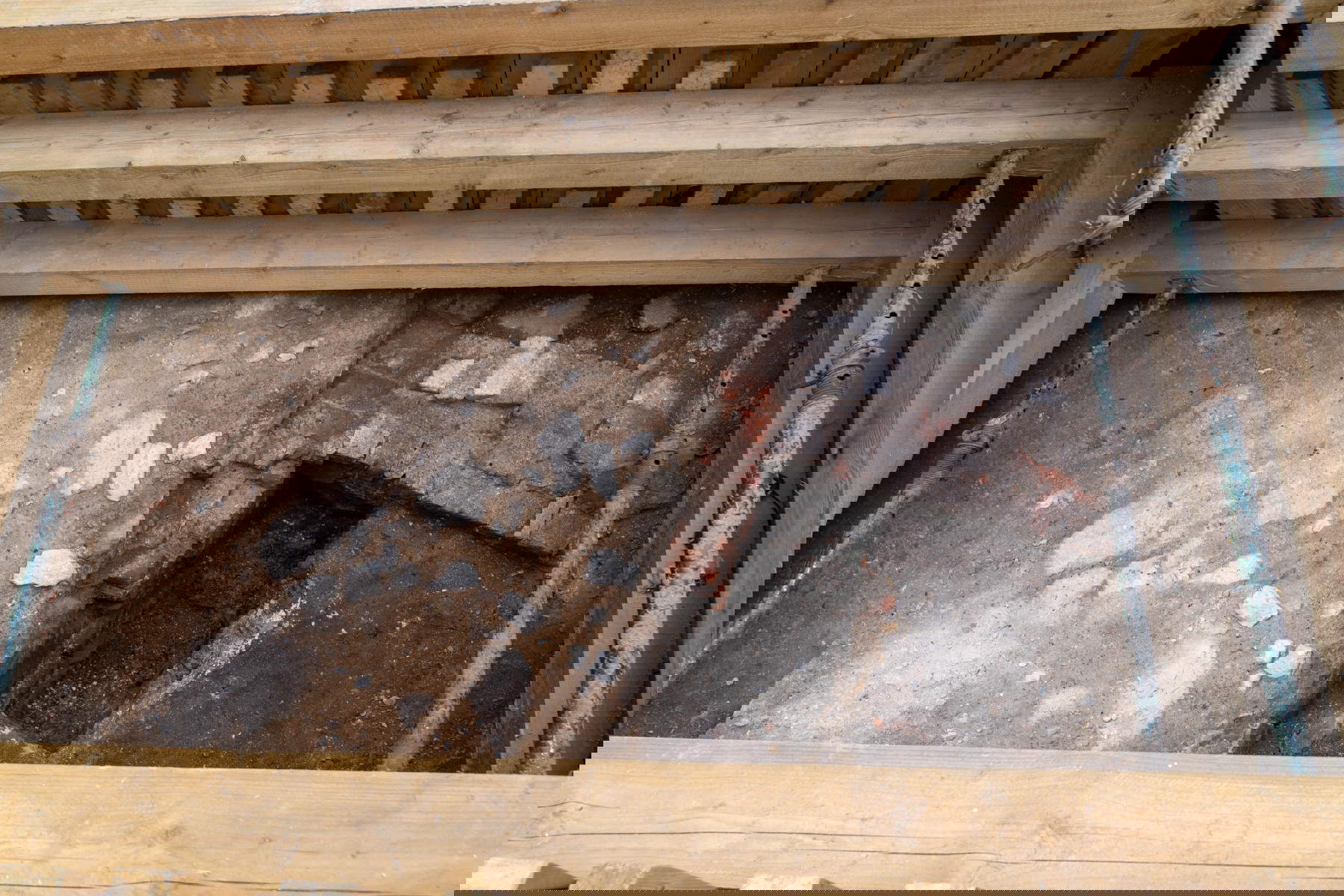
One of the most notable results of the research concerns the discovery in August 2025 of the remains of the medieval Lesser Hall, also known as White Hall. The complex, dating back to 1167, was on two floors and originally intended for royal dining hall functions. Over time it was used for activities prominent in parliamentary history, housing the Court of Chancery, the Court of Requests and, at various stages, the House of Commons and the House of Lords. For a long time it was believed that the building had been badly damaged by the great fire of 1834, the origin of which was allegedly linked to the furnace in the basement of the hall. The new archaeological evidence, reinforced by documentary evidence, indicates instead that important parts of the stone masonry not only survived the fire and a subsequent World War II wartime explosion, but were repaired, covered again and used until the final demolition in 1851. The discovery allows for a reconsideration of the durability and function of the surviving medieval buildings in the subsoil of the modern palace.
“The Palace of Westminster has been a central part of our national history for a thousand years; the site of momentous events that have shaped the history of the United Kingdom,” adds the Chair of the Board of Trustees of the Houses of Parliament Restoration and Renewal Authority, distinguished historian, archaeologist and heritage restoration expert, Simon Thurley CBE. “As we plan the important restoration and renewal of the Houses of Parliament, we need to tread carefully on the history beneath our feet, to protect it and learn from it. Last year this process of discovery began with the first test excavations that have already revealed things we didn’t know, as well as confirmed what we suspected. This is the beginning of a fascinating and important journey of discovery.”
“The early findings from the archaeological surveys confirm Westminster’s richness as a site,” continues DavidBrock, head of the Government Heritage Unit at Historic England. “They testify to the variety of human experience at this site. The identification of the Lesser Hall walls is particularly exciting. As this work continues, we hope that it will further expand our understanding of the surviving medieval buildings, particularly Westminster Hall, and that the discoveries will enrich our knowledge of this World Heritage site. It should also pave the way for a sensitive response to the site’s past when proposals are made for the restoration and renovation of the Palace.”
“These exciting discoveries and finds contribute to the national history and historical knowledge of the Palace of Westminster and World Heritage Site,” says Diane Abrams, archaeological manager of the Restoration and Renewal Delivery Authority. “It is fantastic to see rare evidence of prehistoric flint tools on undisturbed sand deposits in this part of Thorney Island, where Parliament now stands. The discovery of the surviving remains of the medieval Lesser Hall wall, along with the foundations of the former Parliamentary structures, is also a very special event. It is critical to continue these investigations to understand what lies underground at an early stage in order to inform and guide decisions on design and further investigation for future enabling and construction work. This will ensure that the site’s extraordinary heritage and archaeology are managed appropriately, while enabling the safe and efficient implementation of the Restoration and Renewal Program.”
The surveys are being carried out by MOLA (Museum of London Archaeology), commissioned by the Restoration and Renewal Delivery Authority, and cover nine areas of the complex: Black Rod’s Garden, Royal Court, Speaker’s Court, Speaker’s Green, Cromwell Green, Old Palace Yard, Victoria Tower Gardens, New Palace Yard, and the river and foreshore stretch along the Thames. The areas were selected according to design requirements, providing for interventions at locations where future excavation works are expected. The entire perimeter of the Palace falls within a Level 1 Archaeological Priority Area, a category that recognizes its historical value and archaeological sensitivity, the result of settlement continuity spanning more than a millennium.
In the 11th century, Canute the Great established his royal residence on Thorney Island. A few decades later, between 1045 and 1050, Edward the Confessor promoted the construction of a royal palace on the same site as he began the construction of the first Westminster Abbey. Since then, the area has become one of the institutional hubs of English history, a circumstance that explains the multiplicity of archaeological traces preserved in the grounds. So far, the team has identified, documented and covered numerous features that can be traced back to the medieval palace, later parliamentary buildings and Victorian reconstruction. The combined information gathered helps to further clarify the complex layering of the area. The current program aims to more precisely define the archaeology of the Palace, filling gaps in the overall historical picture, guiding future investigations, and supporting design and construction choices with up-to-date data so as to reduce risks and delays in operational phases. Preliminary activities include the excavation of fourteen exploratory trenches, the drilling of ten geoarchaeological cores, and monitoring of the Thames bank. Work will continue until 2026, and a final report on the results obtained is scheduled for 2027.
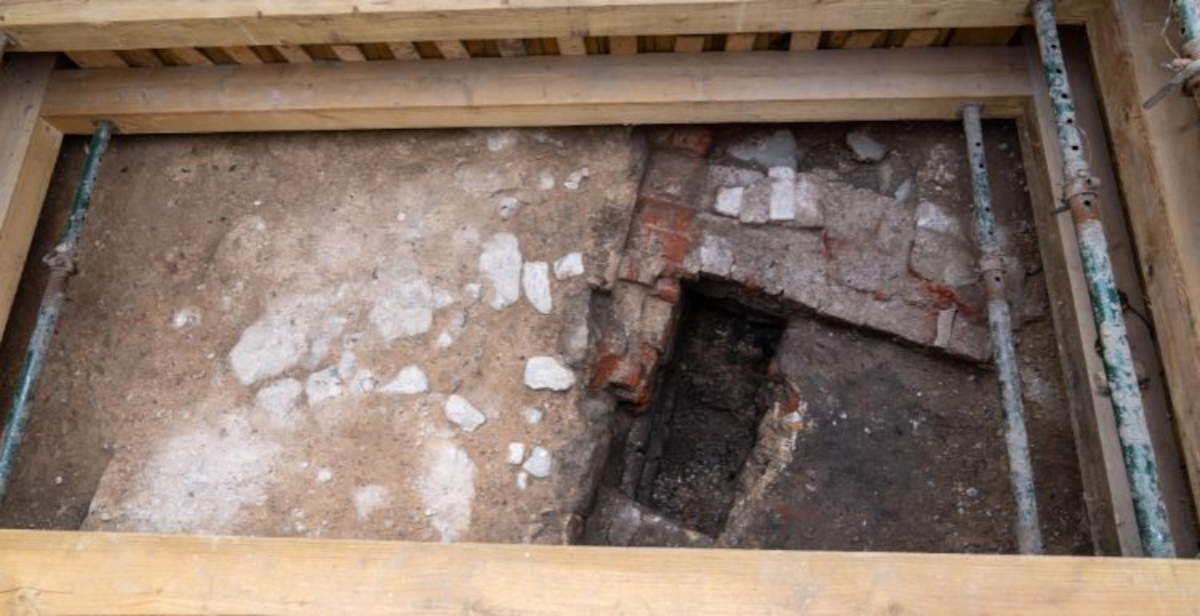 |
| Traces of human activity dating back 6,000 years discovered in Westminster |
Warning: the translation into English of the original Italian article was created using automatic tools. We undertake to review all articles, but we do not guarantee the total absence of inaccuracies in the translation due to the program. You can find the original by clicking on the ITA button. If you find any mistake,please contact us.