




by Redazione 27/02/2026



Categories: Contemporary art / Disclaimer
However, in Koyo Kouoh's Venice Biennale, where no Italian artists appear, there is also a modicum of Italy: in fact, the list includes Theo Eshetu, a British artist of Ethiopian origin, who, however, has lived in Rome since the 1980s, speaks Italian and has worked in Italy longer than anywhere else. Here is who he is.

The Venice Biennale curated by Koyo Kouoh does not feature any Italian artists, as has already been widely noted. Yet, among the names selected for the international exhibition, there appears a presence that has a deep and enduring connection with Italy. He is Theo Eshetu, a British artist of Ethiopian origin who has lived in Rome for decades, speaks perfect Italian and has worked in our country longer than elsewhere, building a substantial part of his own research in our parts.
Born in London in 1958 to Ethiopian and Dutch parents, raised between Addis Ababa, Dakar and Belgrade before settling permanently in Rome in the 1980s, Eshetu embodies a biography marked by cultural and geographic crossings that are directly reflected in his work. His multinational background chronicles the complexity of identity in an increasingly globalized world and constitutes one of the central cores of his research, which focuses on the relationships between cultures, particularly between Africa and Europe, and the way electronic media have helped shape contemporary perceptions of reality. Probably also for this reason he was selected for the exhibition.


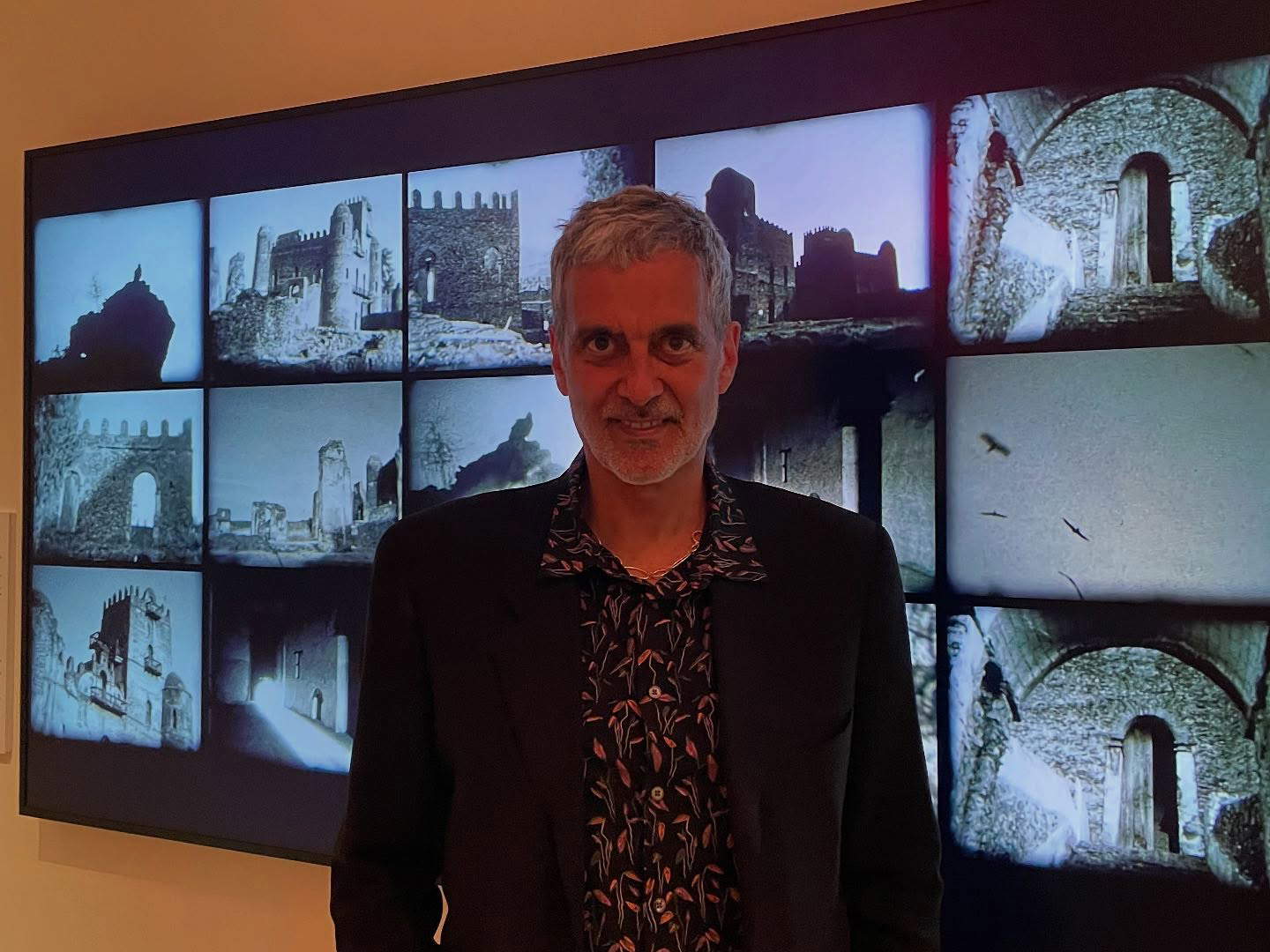
Eshetu uses different video formats to explore cinematic representations and the visual grammar of the moving image. A recurring theme in his work is the stitching together of histories, fromEuropean imperialism to African modernity, to develop an aesthetic capable of capturing the interrelationship between world cultures and collective knowledge. His works experiment with processes of layering and mirroring, resorting to nonlinear narratives that challenge the way images are perceived.
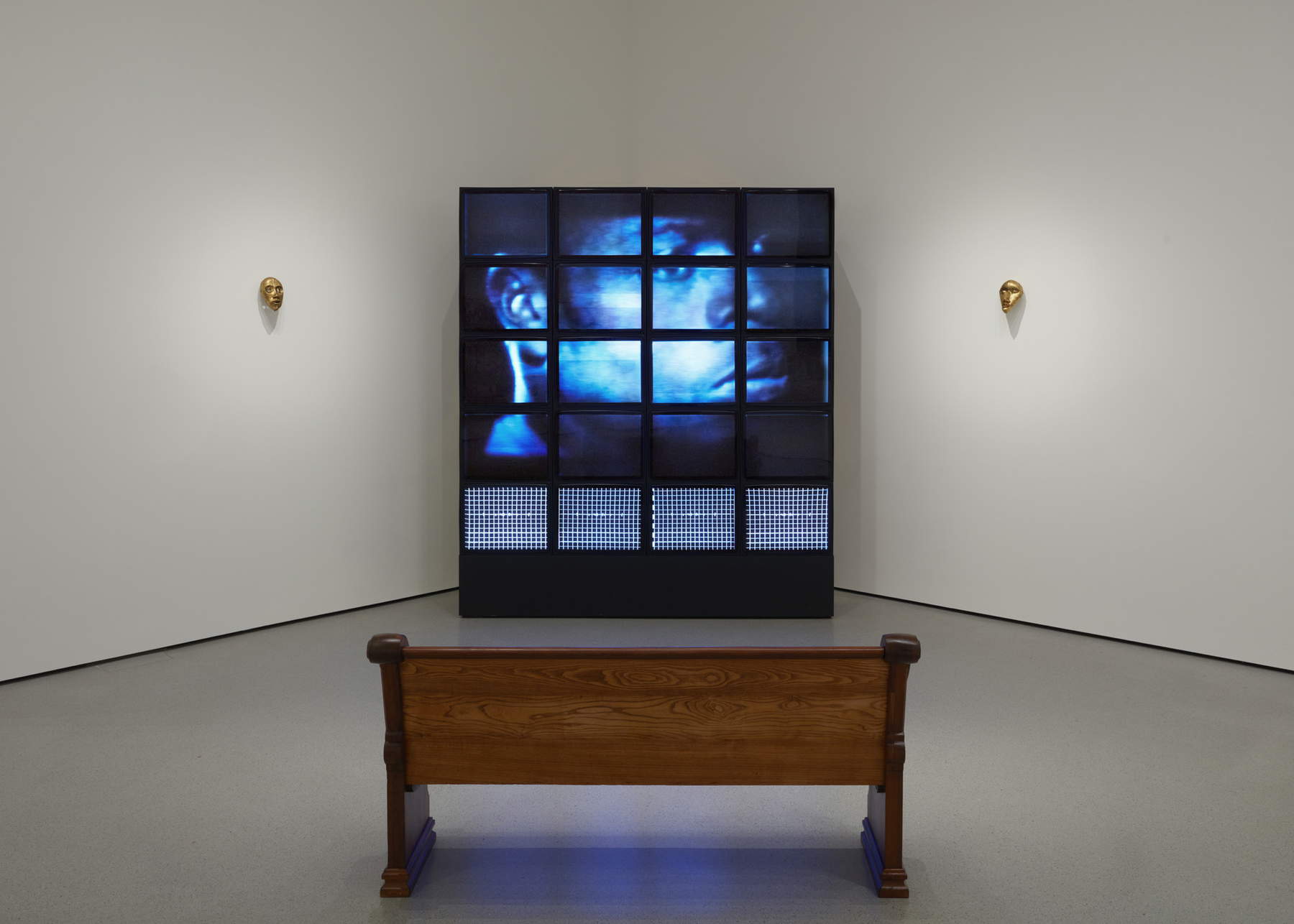
In the course of a prolific oeuvre, Eshetu has tackled themes drawn from anthropology, art history, scientific research and religious iconography, building a distinctive corpus based on a rhythmic and syncopated montage of sounds and images. His works range from large video installations to essayistic films that interrogate the very reality of what images can reveal. While essentially conceptual, his work is always anchored in strong aesthetic components, often achieved through fractal repetitions, kaleidoscopic mirroring games, multi-screen projections or mosaic-like visual patterns. Several works focus on the formal elements of video, such as time and light.
His training was completed in London, where he earned a degree in Communication Design from North East London Polytechnic in 1981. But it was in Rome that, already at the age of ten, he received his first camera, as he has often recounted, starting a path that would lead him in the 1970s to become a rock star photographer. Attracted to the circles of David Bowie and Lindsay Kemp, Andy Warhol and the Velvet Underground, he collaborated with various artists before finally focusing on video art. His focus on the medium’s expressive potential and exploration of African cultures led him in the 1980s to ritualistic, raw and unpolished experiments outside the established art system of the time.
In the series Till Death Us Do Part he investigates the dialectic between the rational and the instinctual, inspired by the contradictions inherent in Leni Riefenstahl’s celebration of the African Nuba. This pioneering video wall installation is presented alongside works by Warhol, Nam June Paik, Joseph Beuys and others at the International Art Show for the End of World Hunger, marking a significant moment in her journey.
In the 1990s he focused on creating a hybrid language capable of blending video art and documentary filmmaking. Travelling Light from 1992, a biographical portrait of Lindsay Kemp, won first prize at the Berlin Video Festival and was often selected as the only video in prestigious film festivals. 1997’s Blood Is Not Fresh Water, awarded on several occasions, is both a portrait of his Ethiopian grandfather, a travelogue and a path of self-analysis. Mass Memory from 1995 is presented at the Venice Film Festival as a tribute to commemorate the passing of Federico Fellini.
Works such as 2004’s Body and Soul and 2002’s Africanized , both presented at the Venice Film Festival among others, testify to his fascination with the interrelationship of world cultures and the metaphysical dimension of video making. The same happens in earlier installations such as 2000’s Brave New World and the same year’s Ways To A Void, which reflect on Buddhist practices through the themes of light and darkness, time and space, being and nothingness. A month-long journey to the Himalayas is condensed into an hour of video, while the viewer is asked to consider the duration of the experience as that of a solar eclipse. Nothing Happens. An Extraordinary Event in 2006, shot and edited during the year of preparations for John Paul II’s funeral, explores the role of images in faith and mass media.
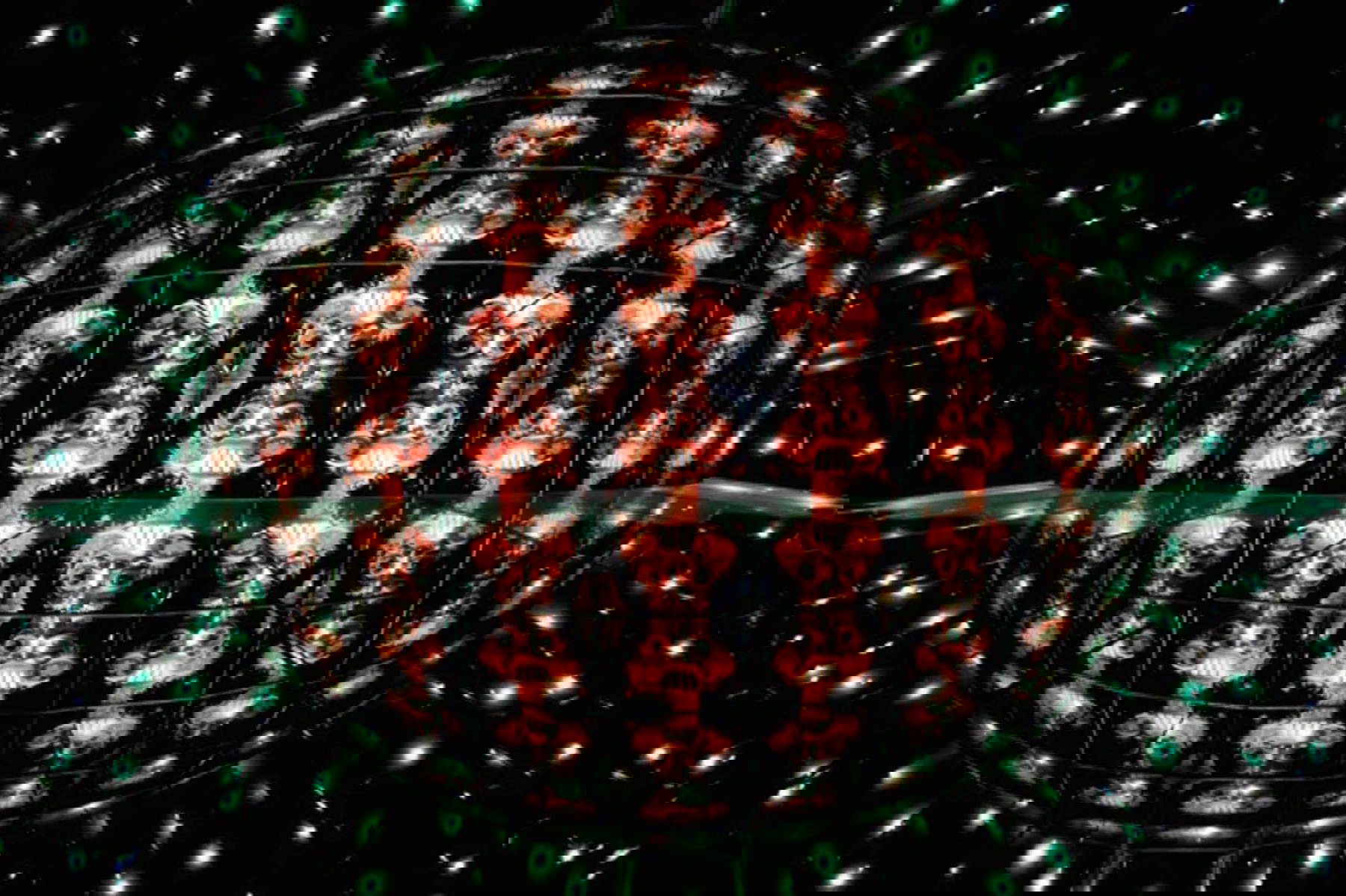
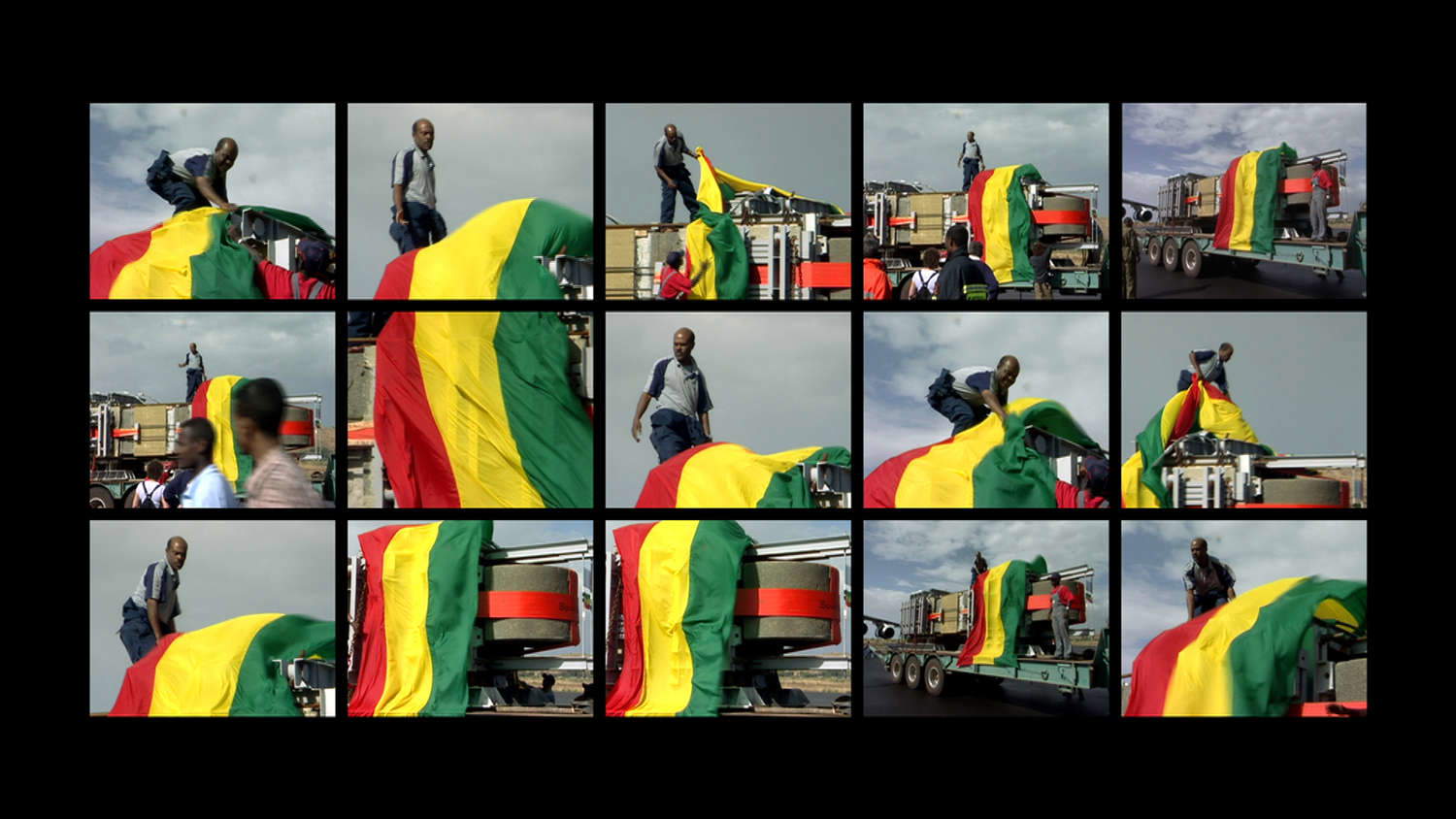
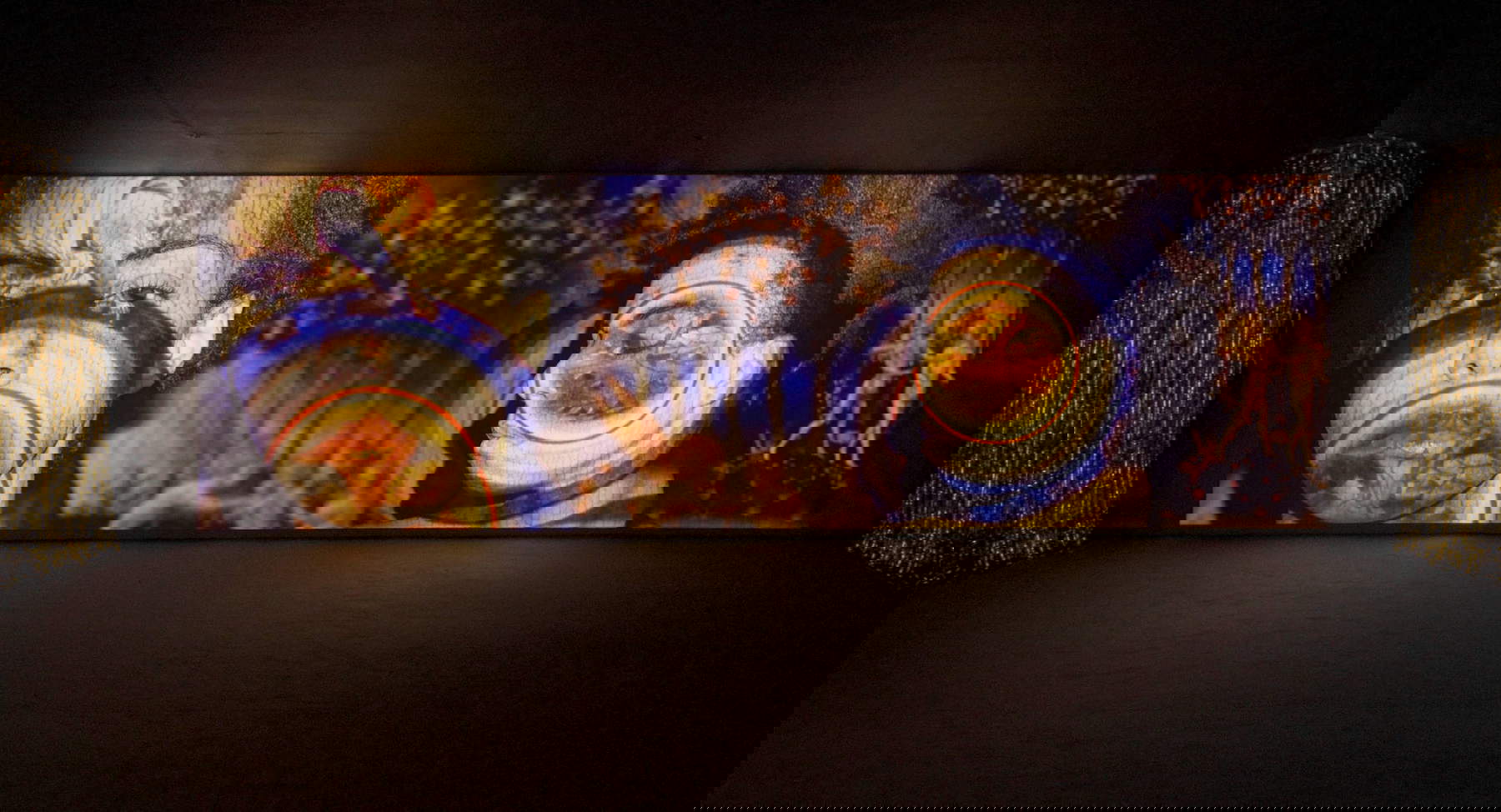
In more recent years he has focused primarily on video installations. Works such as 2011’s Veiled Woman on a Beachfront and 2012’s The Festival of Sacrifice address the role of Islamic art and the socio-political implications of dialogue with the world of Islam as the basis for a contemporary art practice. The Return of the Axum Obelisk from 2009, a fifteen-screen installation presented for the first time at BOZAR in Brussels, documents the return of the Axum obelisk from Rome to Ethiopia and the religious ceremonies that accompanied its rebirth. Also, 2017’s Atlas Fractured , a work inspired by a banner that decorated the Ethnographic Museum in Berlin, on which was depicted the image of five masks representing five continents (the original banner, recovered after being discarded by the museum, has became the screen on which the video was projected in Kassel during Documenta14), aims to question the centrality of European modes of cultural representation , as well as the validity of divisions based on continental stereotypes.
His work has been exhibited in leading institutions such as the Museum of Modern Art in New York, the Metropolitan Museum of Art, Tate Britain, the Smithsonian National Museum of African Art, the Haus der Kulturen der Welt, Mudec in Milan, theHumboldt Forum, the National Gallery of South Africa, the Baltimore Museum of Art, the Institute of Contemporary Arts in London, the Musée des beaux-arts de Montréal, the Studio Museum, the Stedelijk Museum, the Museo Tamayo Arte Contemporáneo, the Guangdong Museum of Art, and many others. He has participated in the 54th Venice Biennale, the 10th Sharjah Biennale, the 13th Gwangju Biennale, the 11th Shanghai Biennale, the 8th Göteborg International Biennial for Contemporary Art, the Dak’Art Biennale and Documenta 14. His works are part of the collections of the Smithsonian Institution, MoMA, Tate Britain, the Metropolitan Museum of Art, the Museum of Civilizations, the Gwangju Biennale Foundation, and MACRO in Rome, among others.
He has participated in numerous residencies and fellowships, including one at the Tarabya Cultural Academy in Turkey in 2016-2017, DAAD’s Artist-in-Berlin program in 2012, a fellowship at the Smithsonian Institution in 2022, and a residency at the Victoria and Albert Museum in London in 2023. Throughout his career, he has been recognized at video festivals around the world, from the Verona Film Meeting to the Asolo Film Festival to the International African Film Festival.
Today, Eshetu lives and works between Rome and Berlin. It is in Italy, as mentioned, that he has built a decisive part of his trajectory, with solo exhibitions at MACRO, Museo Laboratorio d’Arte Contemporanea, Filmstudio in Rome and numerous other spaces, and with a constant presence at the Venice Film Festival and the Rome Film Festival. His participation in the Biennale curated by Koyo Kouoh thus represents a presence that, while not formally among Italian artists, brings with it a significant fragment of the country’s cultural scene.
In an edition that does not include Italian names, the figure of Theo Eshetu thus introduces a minimal element of continuity with the national context. An artist whose identity crosses borders and affiliations, and who precisely from Rome has developed a research capable of dialoguing with the world, relating collective memories, electronic images and cultures in motion.
|
| Venice Biennale, there is also a bit of Italy: Theo Eshetu, British-Ethiopian living in Rome |
Warning: the translation into English of the original Italian article was created using automatic tools. We undertake to review all articles, but we do not guarantee the total absence of inaccuracies in the translation due to the program. You can find the original by clicking on the ITA button. If you find any mistake,please contact us.