





It is hard to deny that this historical moment is particularly happy for the so-called “painters of reality,” if there is still to be used that formula, invented in the 1930s and then made his own in 1953 by Roberto Longhi, who made itmade it famous, to indicate all those artists who between the seventeenth and the eighteenth centuries, especially in the Lombard area, devoted themselves to a painting based on a new idea of “reality,” a veristic idea we might say, devoid of moralistic, allegorical, sketchy intentions, an idea of reality seriously close to the everyday life of the last. There is, meanwhile, a strong market interest, and when something good by a Ceruti, a Cipper, a Bellotti, a Cifrondi or one of those many anonymous artists who practiced the same genre comes out, it is not uncommon to see the adjudications double, triple, quadruple the estimates. Admittedly, we are talking about results that are all in all modest compared to those of other Old Masters, but sometimes it happens to see hammers that set figures with five zeros, and it is not even more rare to see copious deployments of reality painters in the workshops of the antiquarians or at fairs (Salamon, for example, brought to last year’s Florence Antiques Biennale the last of Ceruti’s Padernello cycle canvases remaining on the market, a notified work that was being offered for 1.1 million euros on that occasion). And then there is the work of the exhibition industry that has further rekindled the flame of reality painting, and the most recent chapter in what may already take on the appearance of a kind of chronology of the rediscovery of these painters is the exhibition that the Gallerie dell’Accademia in Venice is dedicating to Pietro Bellotti, Pietro Bellotti and Seventeenth-Century Painting in Venice. Astonishment Reality Enigma. It is the first ever on the painter from Lake Garda but the fourth in three years on the painters of reality, preceded by Ceruti in Brescia and Cifrondi in Clusone in 2023 and Cipper in Trento last spring. This time, however, it is a little different.
Ceruti is a well-known painter, who in the 1980s enjoyed a certain amount of success that culminated in 1987 with Mina Gregori’s monograph, and he needed a work that would better define his physiognomy, better reinterpret the symbolic import of his art (which had already been Manganelli, author of a memorable review of the exhibition held in Brescia in 1987), and reconsider the relevance of his personality, not without freeing him from that nickname, “Pitocchetto,” which perhaps did him more harm than good. Cifrondi benefited from a small exhibition, some 30 works, which provided the occasion for a mapping, moreover available online, of all his remaining works between the Brescia and Bergamo areas. And Cipper needed an exhibition on Cipper that would clean up his image a little, condemned for a time by the damnatio of twentieth-century critics, and moreover tarnished by a deluge of poor-quality works that over the years have been attributed to him too lightly: the one at the Castello del Buonconsiglio was not the first ever exhibition on the Austrian painter, but it was certainly the best. Investigating Bellotti, on the other hand, is like leafing through the pages of a notebook that already has a few pages neatly filled in (the first, and so far only, monograph on him is the one published by Luciano Anelli in 1996, fundamental because it had the merit of ordering a mass of documents and materials that offered the basis for subsequent research), but where there are still many blank, smooth, untouched sheets.
And there are so many blank sheets because, unlike other reality painters, Bellotti underwent sudden changes during his career, frequented different genres, had an international dimension, landed in the painting of the everyday at a relatively late stage of his career, and was formed in a city, Venice, traditionally far from the terragne Lombardy of peasants, porters, and drinkers. Not to mention that we have little biographical information about Pietro Bellotti, and that many nodes of his career can only be reconstructed on a hypothetical basis, imagining his acquaintances, his interests, his conversations. And then we are talking about a painter born thirty-nine years before Cipper and seventy-three before Ceruti. A kind of father. Or grandfather. With a physiognomy all his own, but one that has undeniable points of tangency with the generations that would come later. Bellotti’s fascination lies precisely in his versatility and curiosity, which are perhaps the most recognizable traits of his character and which are in a way also acknowledged by the three young curators of the Venetian exhibition, Francesco Ceretti, Michele Nicolaci and Filippo Piazza, who with the trio of nouns chosen for the subtitle have tried to sum up, in three words, the temperament of this so seductive artist. Awe, what we feel in front of his works, and what he felt when he saw something new, something that caught his attention. Reality, for obvious reasons, of which more will be said later. Enigma, because Bellotti still has much to unveil, because so many of his paintings deal with themes that are anything but conventional, because his personality is unparalleled in seventeenth-century painting, and one therefore wonders from whence he derived such ease of invention, such capacity for identification, such spirit of observation.


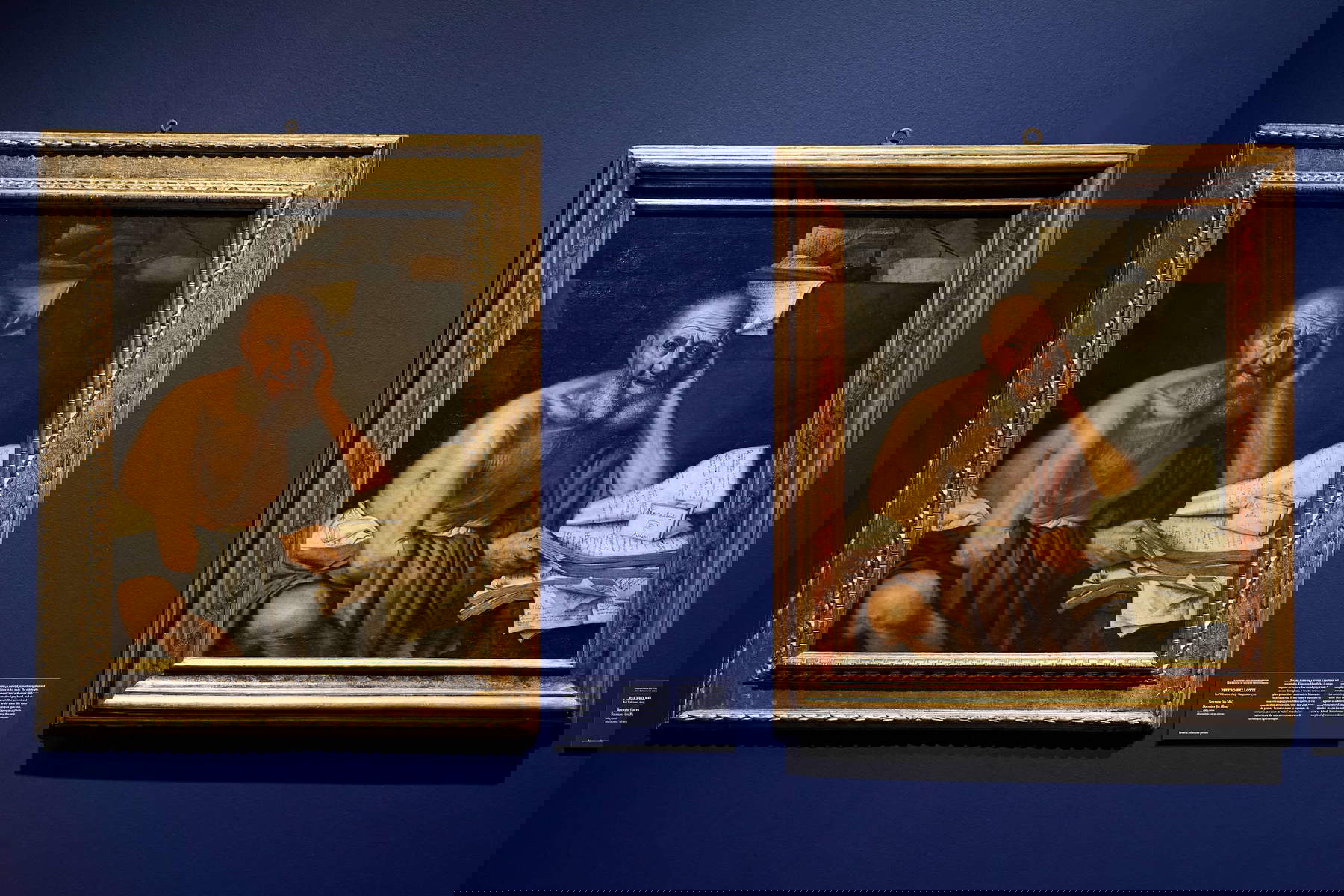
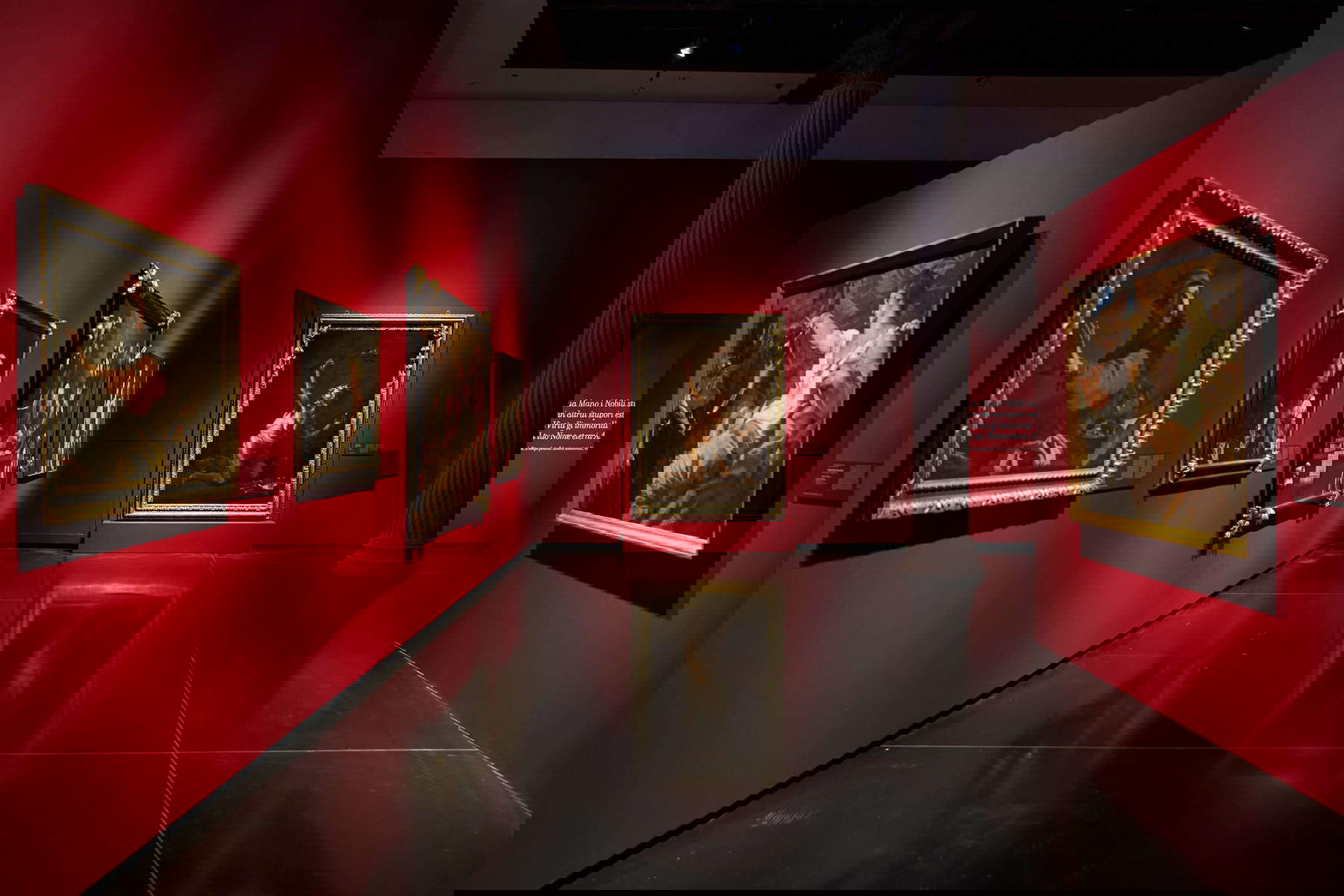

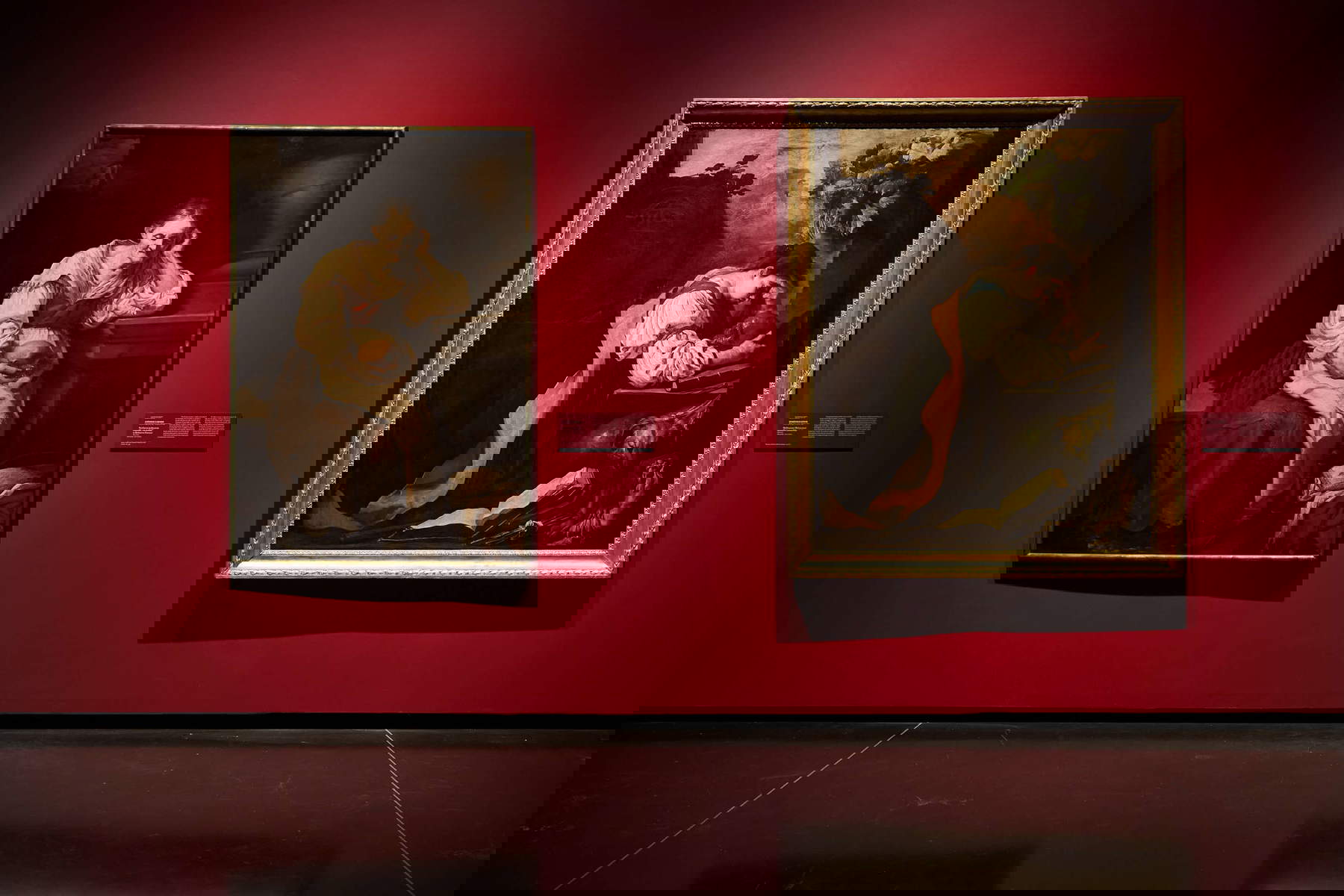

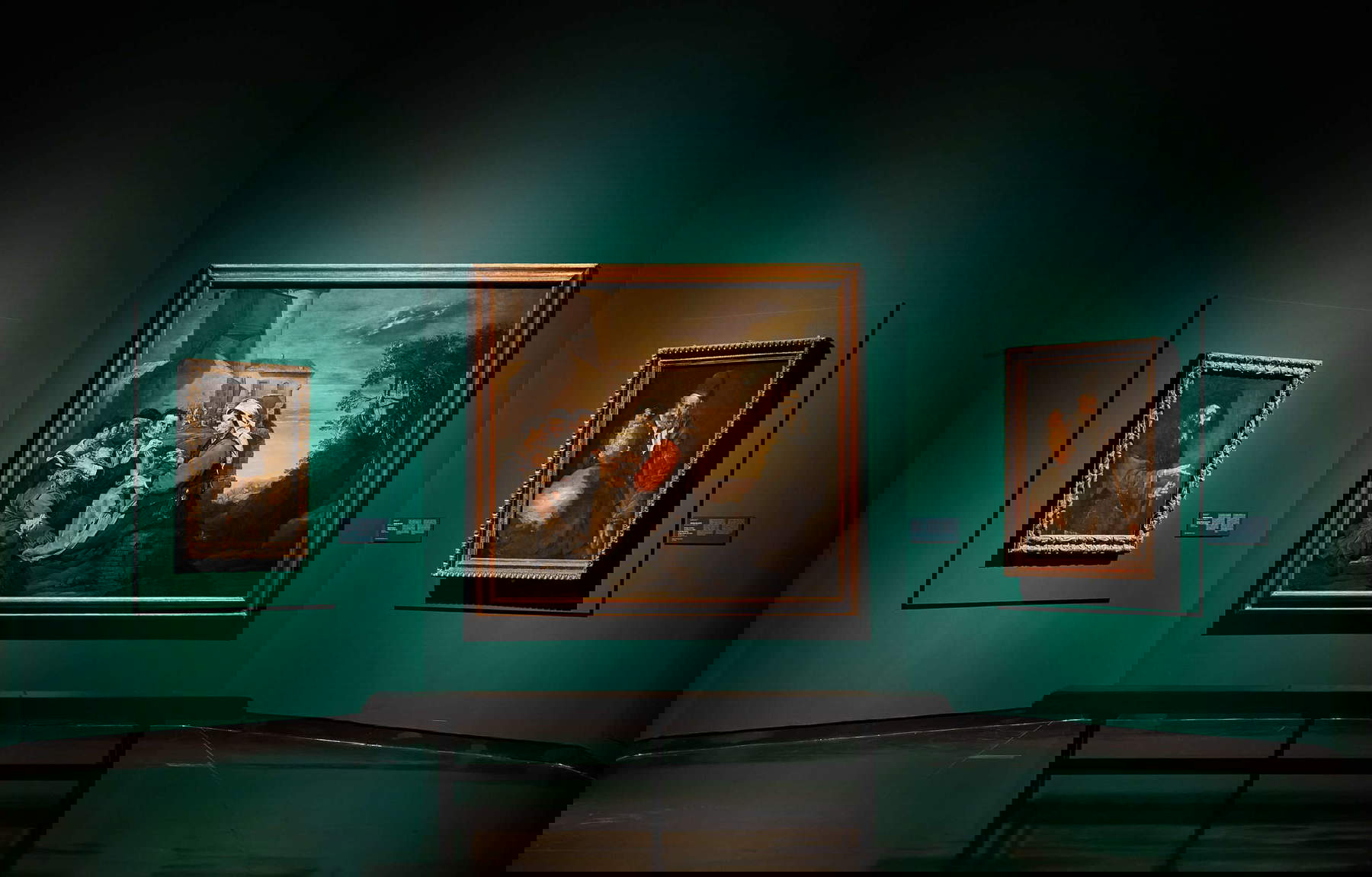
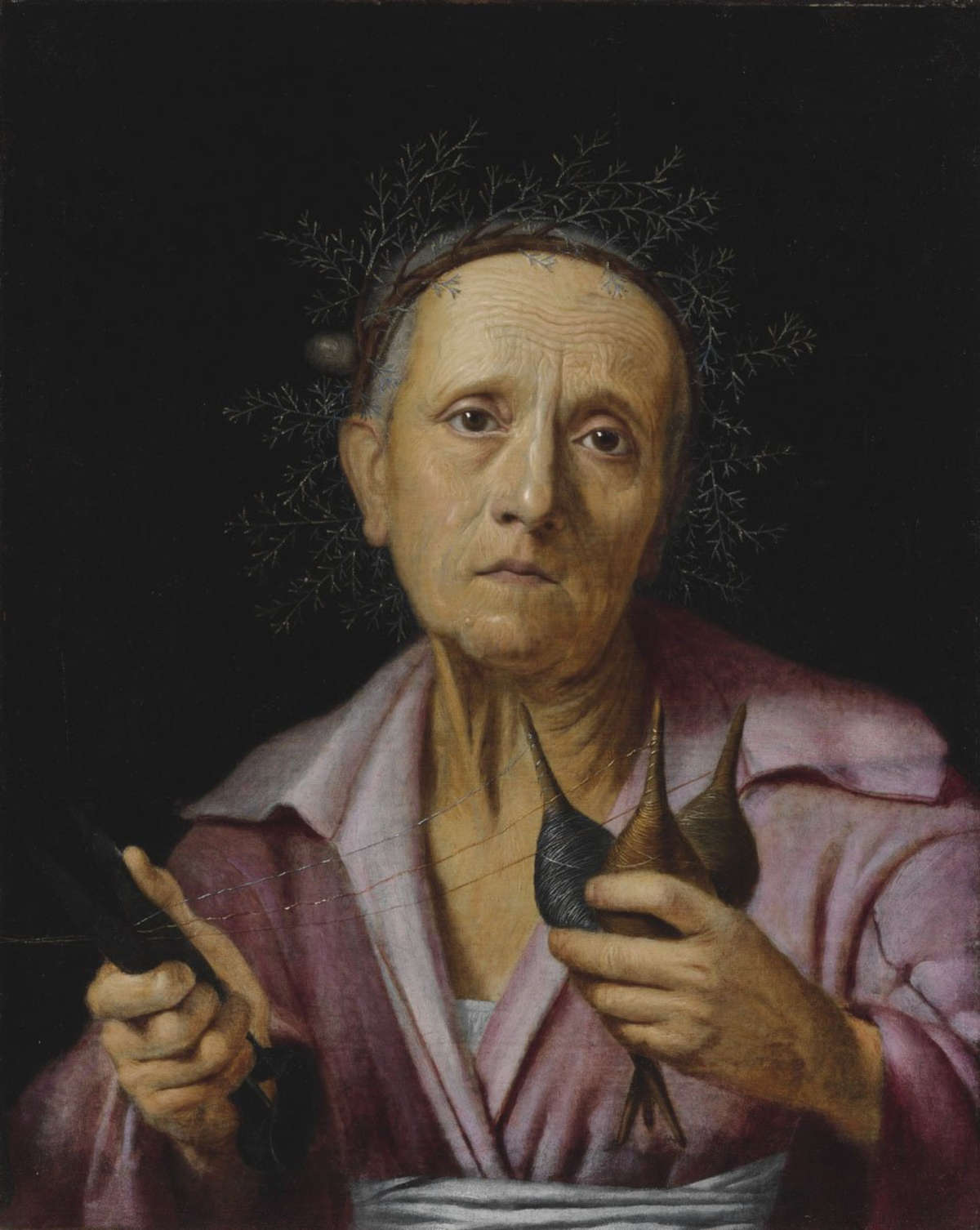
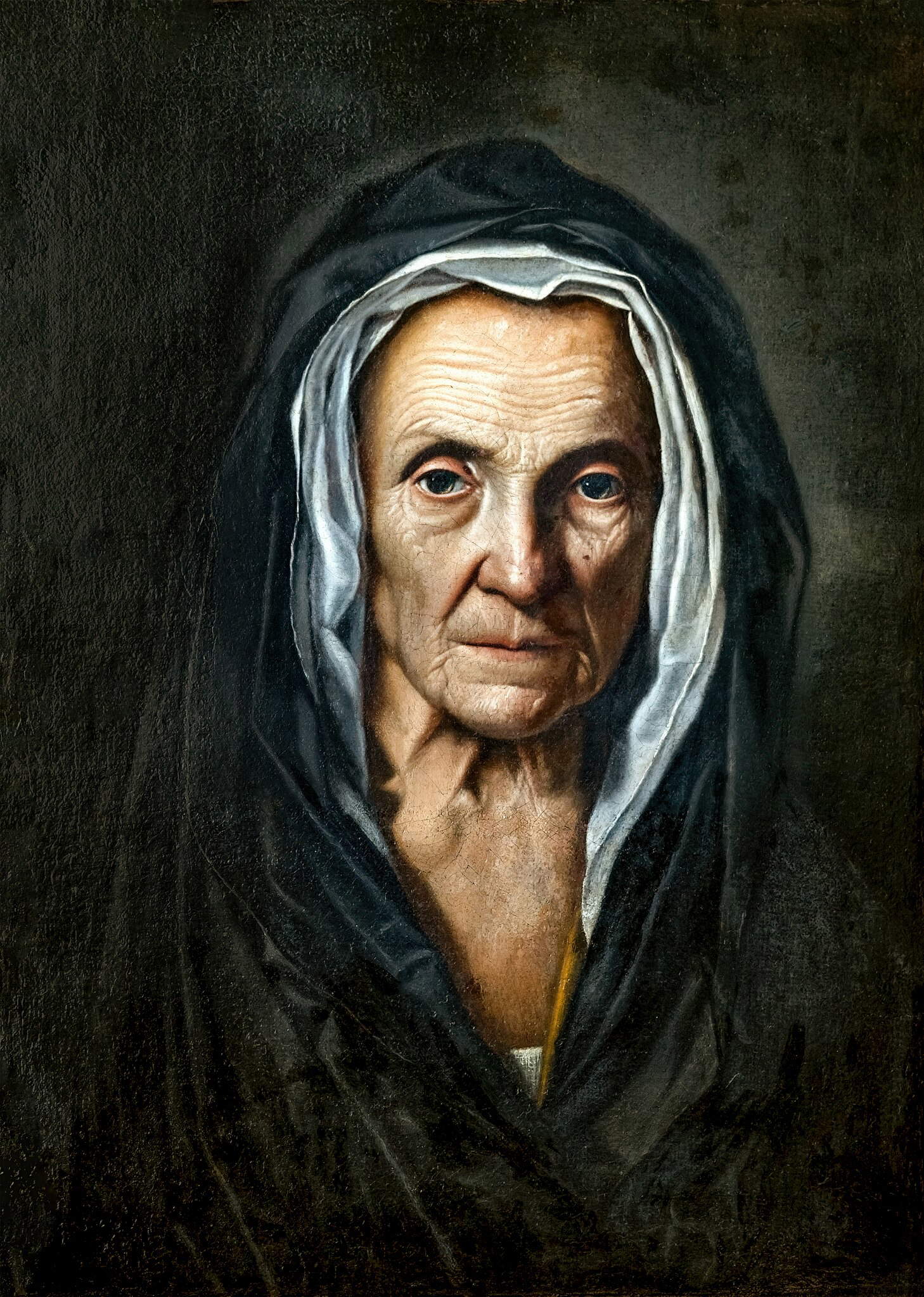
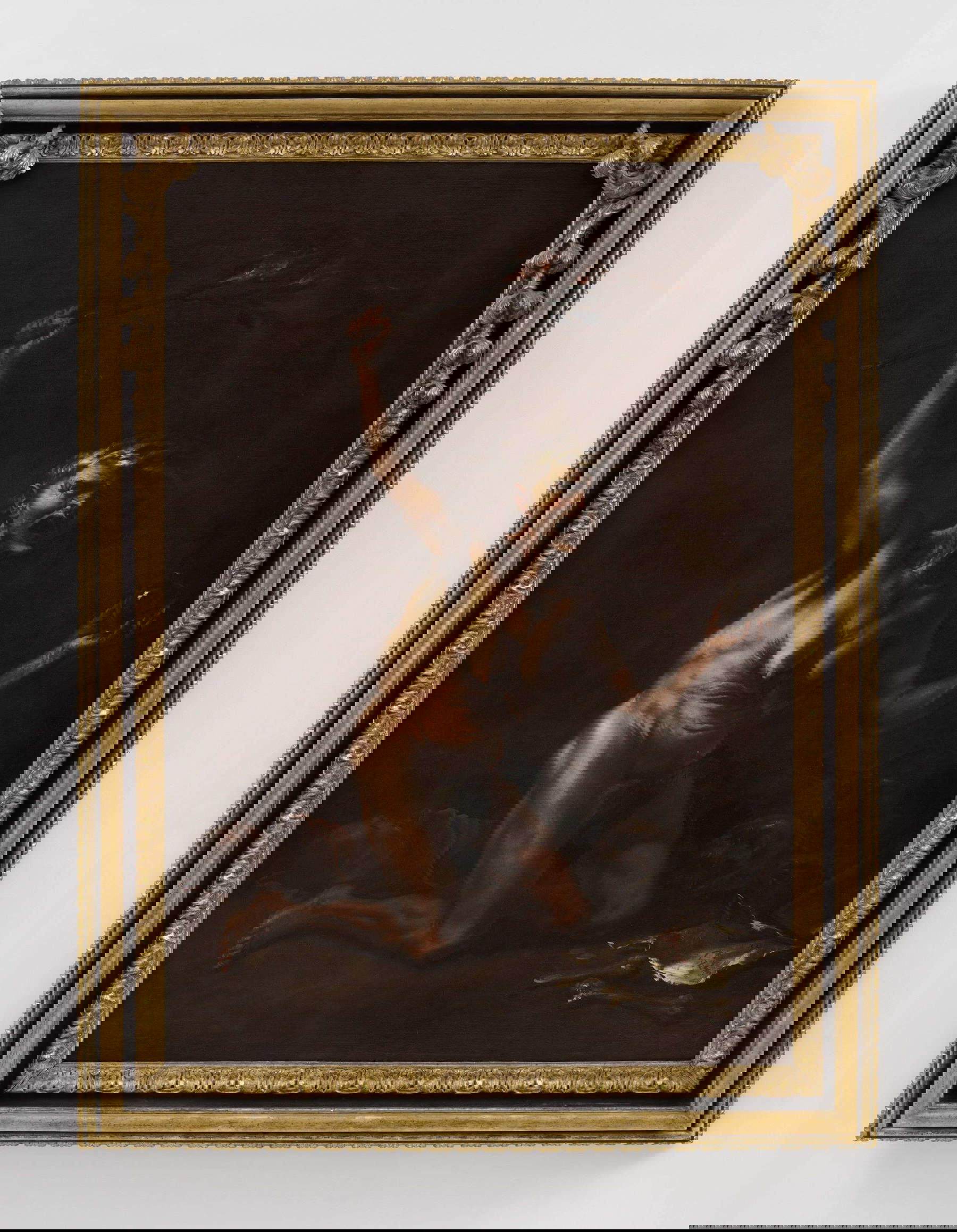
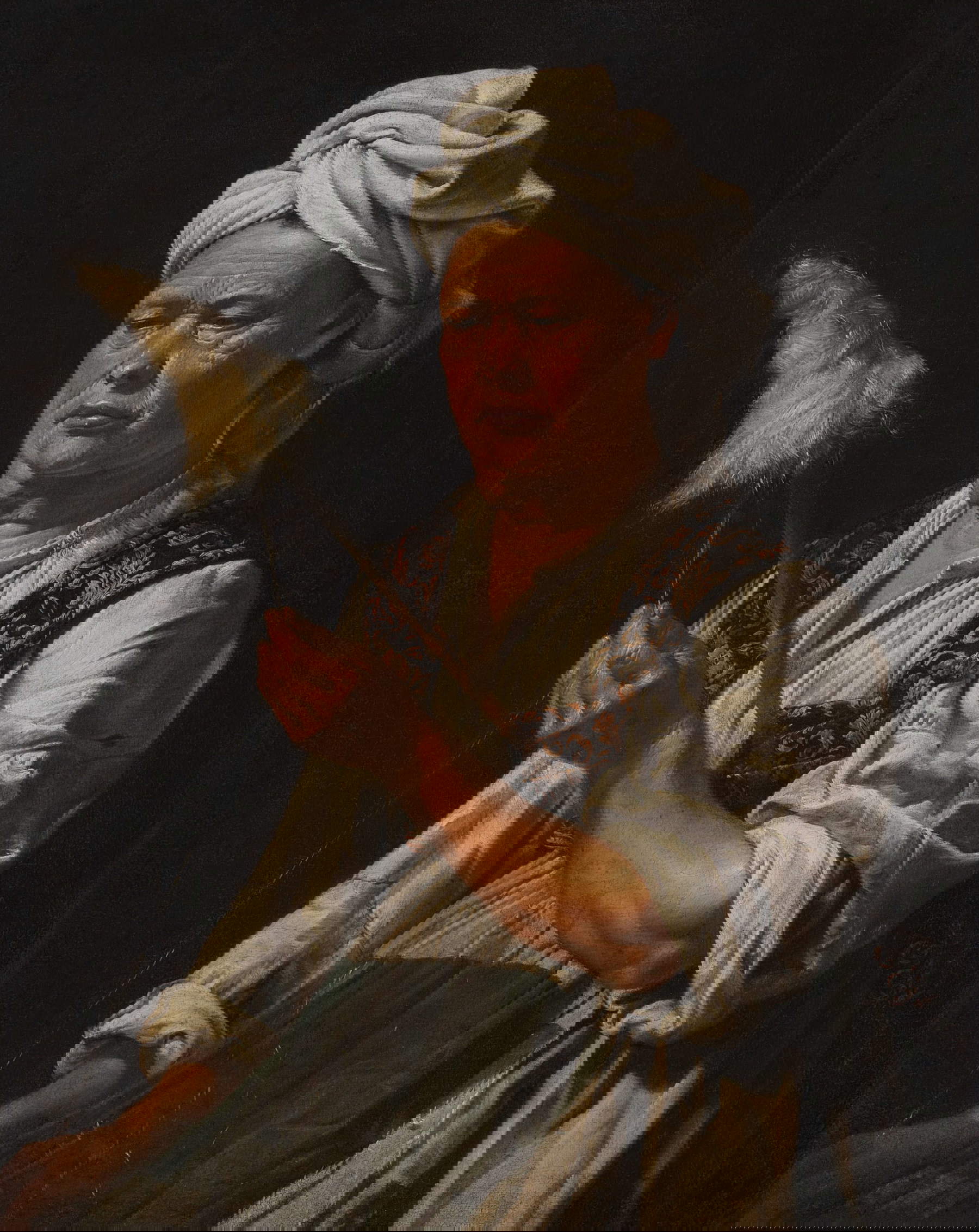
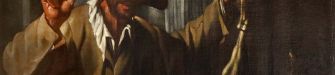
The two self-portraits that the curators have chosen to present at the opening of the exhibition, never before juxtaposed, effectively aim to establish Pietro Bellotti’s unconventionality from the outset, because in the way the artist chooses to depict himself (as “Amazement” and as “Laughter: the ”Amazement," moreover, is a recent acquisition of public collections, since it was bought in 2017 by the state precisely for the Gallerie dell’Accademia) there is not only self-mockery, there is not only theattention to the veristic datum (and thus the perfect description of the wrinkles on the forehead, the reflections of light on the armor, the sparkle on the glass, the folded paper bearing his signature, a fifteenth-century reminiscence, or the square millimeter of beardless skin above the lip, between the two mustaches), there is not not only the unquestionable quality of an up-to-date artist, capable of admirably blending the neo-cinquecentism that was fashionable in mid-seventeenth-century Venice (and which is perhaps even more evident in the Parca Atropo exhibited on the opposite wall, to be related to Giorgione’s celebrated Vecchia of more than one hundred and fifty years earlier), but also the one hundred and fifty years earlier, which can be admired on the museum’s upper floor) and a sharp, lashing naturalism that has been convincingly explained by a sincere interest in the realism of José de Ribera: there is a precise desire to do something profoundly new and profoundly radical, and these are the credentials with which Bellotti is presented to the public of the Gallerie dell’Accademia. A sort of comet gone mad, which suddenly illuminates the Venetian sky without us really knowing where it came from, also because his first known work, the Parca Lachesi , on loan from the Staatsgalerie of Stuttgart, signed and dated 1654, is not only the work of a painter already mature, already profound, already sure of his own maturity, but also of a painter who was already a painter of the future. mature, already profound, already sure of his means and already a reformer (Bellotti does not take a tanned old peasant woman, with wrinkled, sunburned skin and a shawl covering her hair, as a model to construct an image of the moira unwinding the thread of life: her peasant woman is the parca Lachesi, without embellishment or transfiguration), but it is also a work that has nothing to do with what she might have learned from the master, that Girolamo Forabosco who, his Portrait of an Old Woman exhibited next to an’intense and almost disturbing Veiled Old Woman by Bellotti, knew how to master a Rembrandtian brand of realism on a par with his pupil, but this Old Woman is probably to be understood, or at least that is how they intend it in the exhibition, as a work that updates on the innovations introduced by his own former student. Of the Parca Lachesi, a work that was also a great success because the theme had a certain fortune at the time, one of the many autograph replicas is also on display (about a dozen are known), which is distinguished, Ceretti writes in the catalog, “for a slightly more unfolded naturalism, first of all appreciable in the more broken material restitution that affects both the rusty complexion of the parca and the marvelous fabrics that encircle her body.”
This is the ground on which Bellotti’s art matures and grows: an extravagant, unprejudiced, nonconformist painting, imbued, in the early stages of his career, with allegorical and philosophical implications, updated on the literary debates of the time, a painting populated with characters from mythology, witches, magicians, philosophers, subjects certainly recurring in mid-seventeenth-century art, but to which Bellotti succeeds in giving them their own brand. The depictions of philosophers (on view in the exhibition are two versions of the same Socrates and a Veiled Wiseman, all works datable to the second half of the 1760s, compared with a Democritus by Ribera and a Philosopher by Luca Giordano, but also with an Attempted Philosopher by Giovanni Battista Langetti, inserted both to show how theLigurian painter’s arrival in Venice affected developments in lagoon tenebrism, as well as to make clear the distance between his old age, heroic and rhetorical, and Bellotti’s instead mere old age), popular at the time, are useful for reconstructing possible points of contact with the art of José de Ribera, also the author of several figures of old philosophers in humble and frayed if not threadbare clothes: in Venice, where Bellotti had moved from a very young age, leaving his native Roè Volciano on the shores of Lake Garda, when the whole of the Brescia area was territory of the Serenissima, he was certainly able to see Spagnoletto’s paintings recorded in the Venetian collections, and above all he was able to cultivate working relationships, argues Filippo Piazza, with Spanish diplomats operating in the lagoon, with some of whom we know that Bellotti had close contacts. And again, the artist from Lake Garda may have absorbed elements of Spanish figurative culture by staying and working in Milan, a city where Bellotti, Piazza writes, “found favorable terrain and a receptive environment, capable not only of enhancing his skill in making portraits from life [...] but, at the same time, of pushing him to aim toward a realism emptied of any anecdotal or allegorical character.” That is, that realism of the everyday that would mark the entire second part of his career.

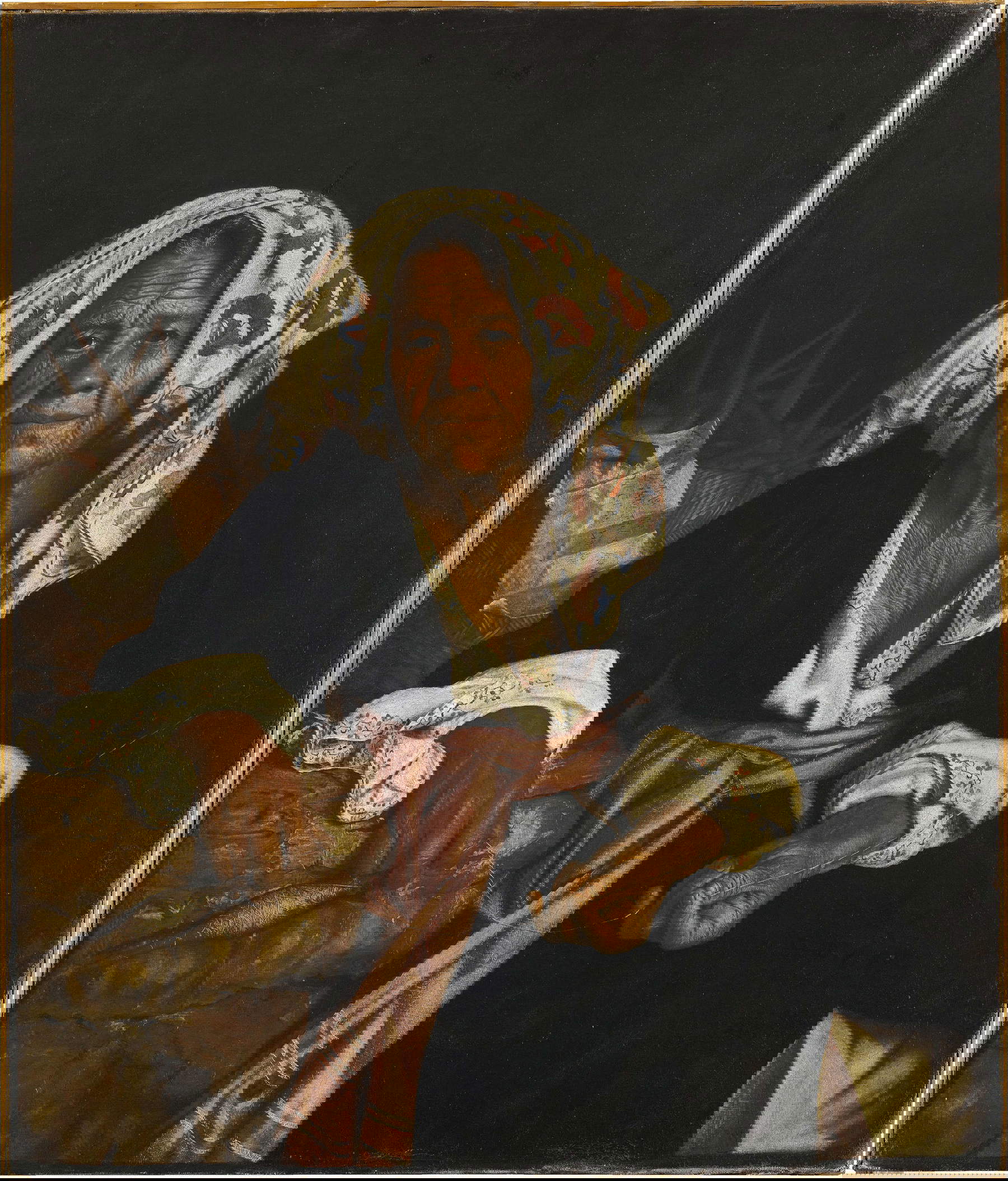
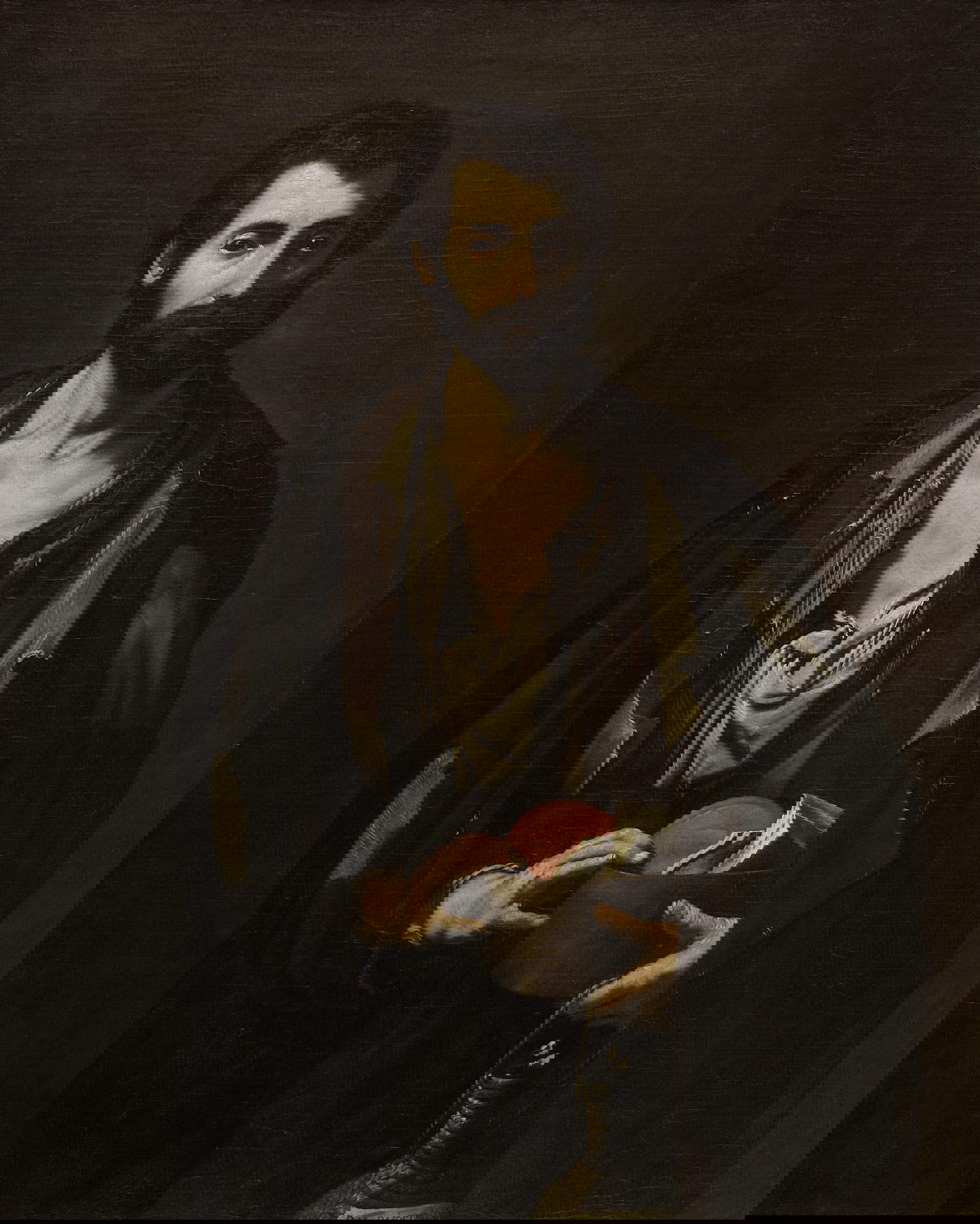
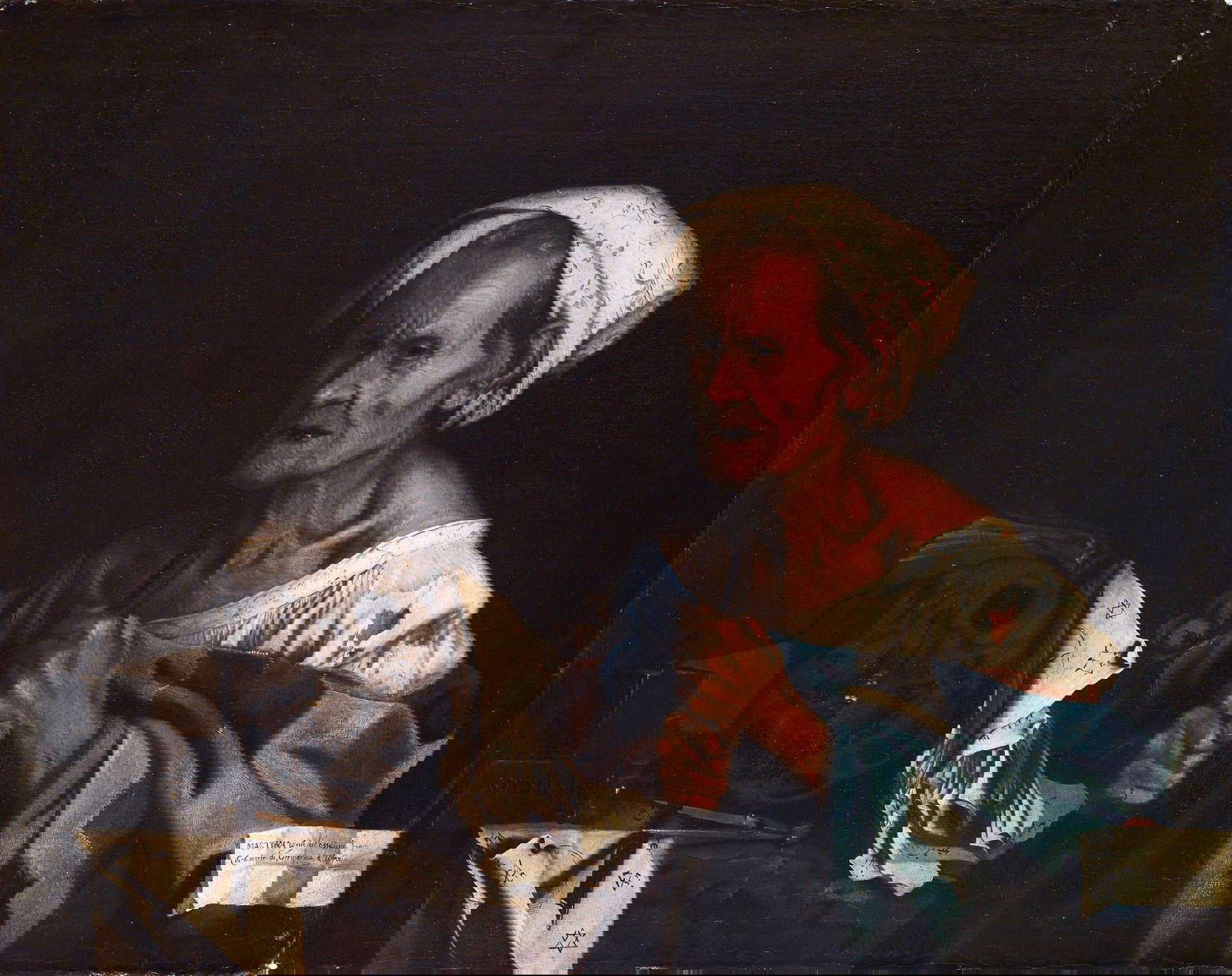
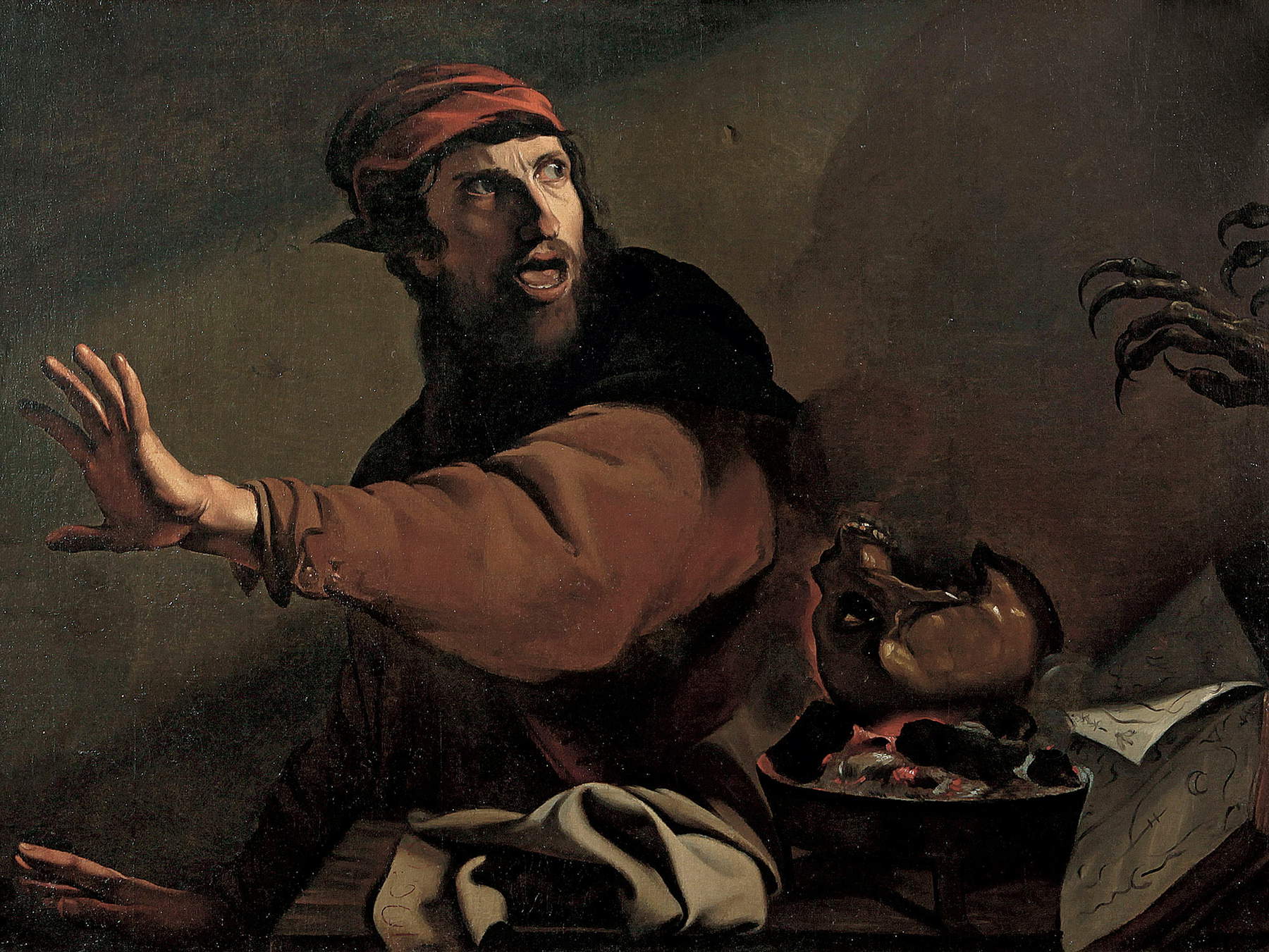
Before arriving at his highly singular realism of the everyday, Bellotti still felt a strong fascination with the world of sorceresses and philosophers that he found hard to abandon, and he would not give up even probing themes of the occult, so much so that an entire section of the exhibition is entirely devoted to this lure that would lead the Garda painter to produce some of his most interesting works: the most intriguing is undoubtedly theIndovina Martina that came to Venice on loan from the Koelliker collection in Milan, a painting with a very rare subject, adequately identified by the artist himself with a leaflet near the lower edge of the canvas where it reads “Martina io fui ch’assicurò l’imperio / col morir di Germanico a Tiberio,” an allusion to the best-known fact attributed to this old hag remembered in Tacitus’ Annals , namely the poisoning of Germanicus, which would have allowed Tiberius to strengthen his power. It is perhaps the most lugubrious figure in Bellotti’s production and is juxtaposed with another disturbing painting, Pietro Paolini’s Necromancer , a depiction of a magician who conjures up a demon with skeletal, clawed hands but then flees the moment the presence manifests itself in his workshop, and it dialogues with Salvator Rosa’s Witch , a recent acquisition by the Uffizi, although we move on different planes: the Necromancer still belongs to genre painting, although it deals with a singular theme for the Caravaggesque painters, and the Witch is all about arousing revulsion by evoking the fears of the time through a precise imagery, which must have been well understood by the men and women of the seventeenth century. Bellotti accomplishes a different kind of operation: old Martina, however repugnant, is, if anything, to be considered closer to that vein of half-length figures that the painter had always practiced, and should be considered more as a portrait than as the evocation of ’a witch who is alive only in people’s imaginations (and, precisely because she is truer than Salvator Rosa’s Witch and more credible than the Necromancer, she appears to us all the more sinister).
It is this almost portrait-like bearing that is the reason why Pietro Bellotti’s Martina appears closer to the Vecchia Filosofa that can be admired in the next section, dedicated to the theme of Vanitas, a reflection from which the artist from Roè Volciano did not shy away, albeit with an originality that emerges from the exhibition by contrast and affinity: the contrast is with the seductive figures of Guido Cagnacci (his Allegory of Human Life is a lofty example of that epidermal sensuality that made the Romagnolo’s painting great and unparalleled), or of Nicolas Régnier (for whom vanitas is first and foremost beauty that fades and wealth that vanishes, and consequently meditation on what will be), and the affinity is instead with Antonio Carneo’s old woman and that of a still unknown author from the Musée des Beaux-Arts in Nîmes, distressing because they know that time is short and their meditation takes the form of a resigned preparation. Bernard Aikema wanted to find a thread that binds all of this early production of Bellotti, reading it in the light of the culture of that “hidden knowledge,” the scholar calls it, ambiguous, precarious and often semi-clandestine, which did not express itself openly in books but circulated masked through images, allegories, paradoxes, provocations. Bellotti, Pietro della Vecchia (his Chiromante, for example, is admired in the section on the occult) and other contemporary painters would thus have translated through images that culture, which was typical of circles such as that of the Accademia degli Incogniti, the circle founded in Venice by Giovan Francesco Loredan and which was known for its intellectual libertinism and its taste for paradox and scandal. Bellotti’s Socrates would be a kind of epitome of this attitude: the painter, Aikema writes, “presents the philosopher as a poor, wrinkled old man, declining any attempt to beautify his features,” but at the same time has him make a gesture, that of the head resting on his left hand, that “gives an indication of what the essence of the painting is, which revolves around the concept of deceptive appearance versus a sublime hidden truth, to be discovered.” The same goes for the Old Philosopher, who was perhaps sensitive to the discussion, particularly felt at the time, about the role of women in public life, a discussion in which even the ’Incogniti (Loredan was in a relationship with the nun Arcangela Tarabotti, even considered by some to be a protofeminist), but in the case we do not know whether out of real interest to Bellotti or simply for the sake of scandal, since championing the cause of women at the time meant welcoming and then promoting a position perceived as uncomfortable and bizarre. These paintings, like those that explore themes of the occult, would therefore be vehicles of alternative knowledge that circulated through manuscripts and not through printed volumes, or orally, or through images, or in any way that could escape official scrutiny.
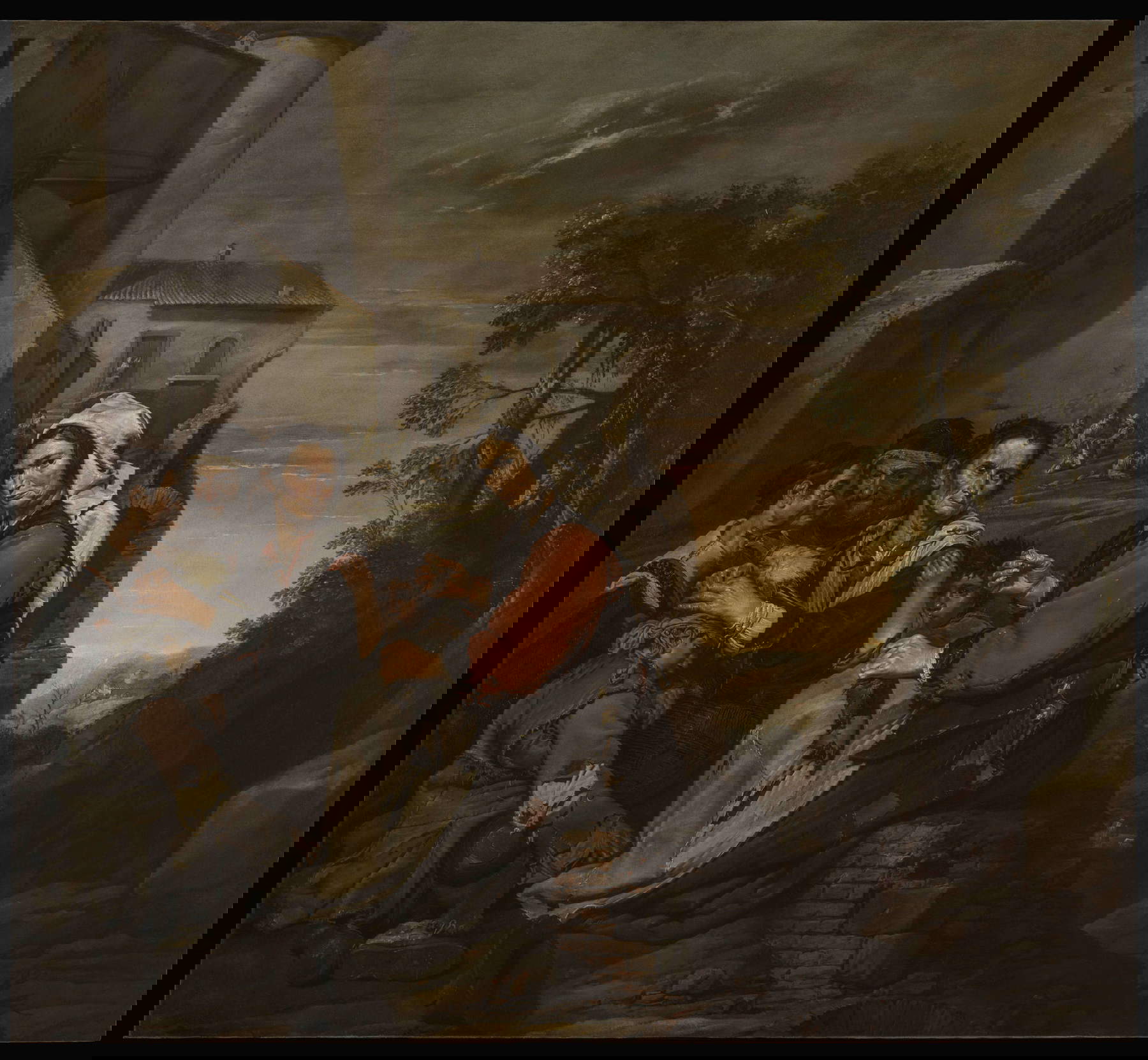
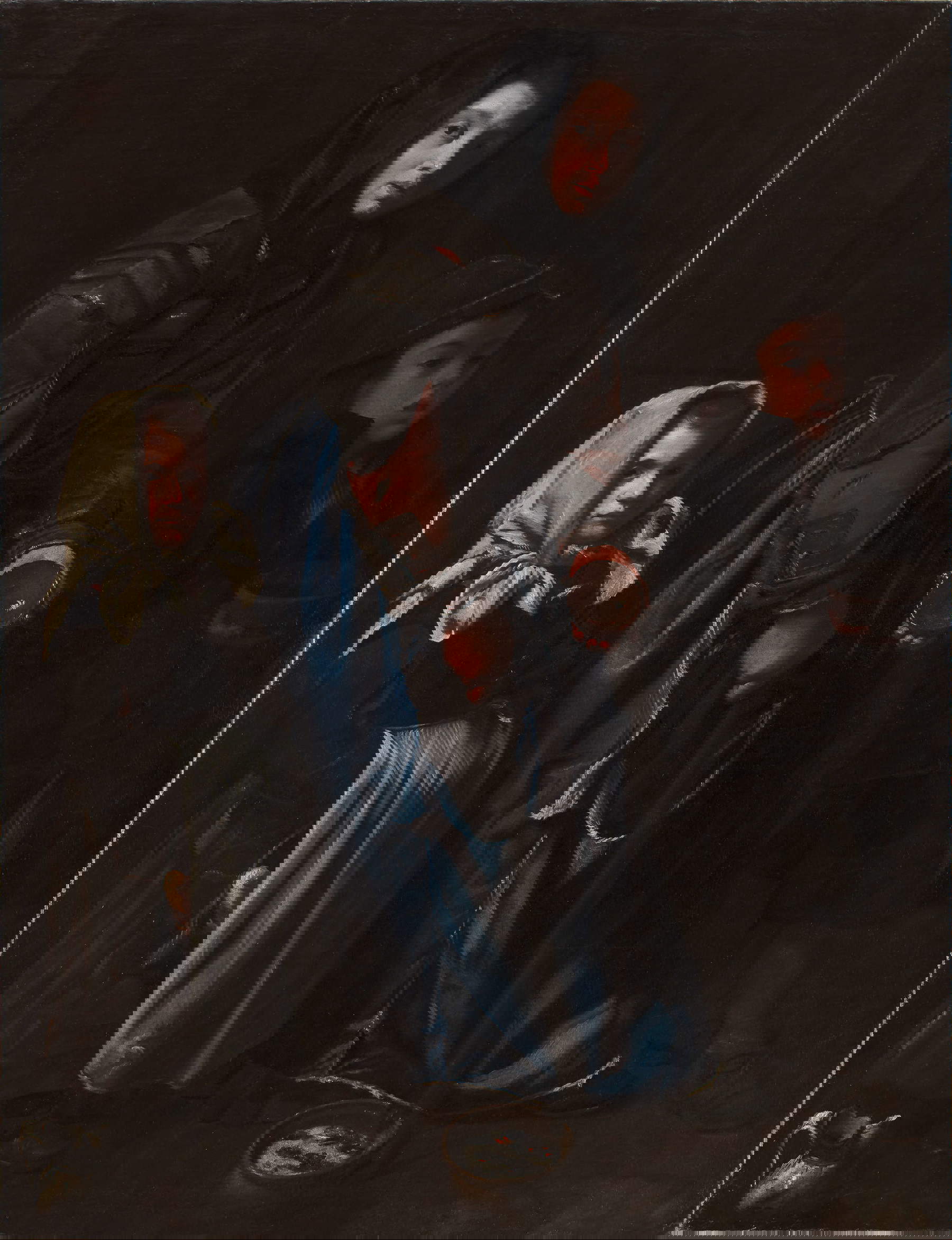
We do not know what Bellotti’s real intentions were: the only certainty we can count on is that at a certain point in his career he would abandon those subjects that were so dear to him, and transform himself into that painter of the everyday capable of anticipating by several decades the various Cipper and Ceruti. And it is a transformation that, at first appearances, might almost seem unnatural: the transition from the Old Philosopher to the paintings in the next room, from the Drinker in the Castello Sforzesco to the School of Embroidery in the Koelliker Collection, not to mention those in the last room of the exhibition, seems almost sudden, unmotivated, not very logical, not very coherent with what Bellotti had built up roughly to the middle of his career. Two facts, it is safe to assume, brought about this transformation, at least on the formal level: the first is the encounter with the art of Eberhard Keilhau, the “Monsù Bernardo” born in Denmark but trained in the Netherlands, who had moved to Venice in 1651 bringing us his Rembrandtian realism made, Nicolaci writes, “of popular subjects often interpreted in a moralistic and allegorical sense” and which would achieve considerable success in the lagoon. The second, even more decisive, is Bellotti’s move, in the mid-1970s, to Milan, where this strand of the quotidian was beginning to come out of its cradle through the work, above all, of a painter who was still half-unknown, that Sebastiano Giulense, known as “il Sebastianone”, who has been rediscovered only recently thanks especially to the studies of Alessandro Morandotti, who can be considered today a sort of link between the portraiture ofa Pier Francesco Cittadini and the straightforwardly popular vein that was to be characteristic of Ceruti, and with which the curators wanted to establish a link, since the production of this Milanese painter is full of all those characters that would crowd the genre (in the exhibition it is possible to see a commoner holding a duck, a work that almost seems to be mocking official portraiture, and which, above all, had never been shown in public before). Bellotti’s operation is original: he strips his subjects of those moralistic intentions that still resisted in genre painting (there remains, if anything, some symbolic appeal: the Devotee caught in a bare setting with a white dove fluttering beside him, a scene obviously too constructed to be true, can be read as an allegory of the steadfastness of faith, and perhaps some hidden meaning also refers to the Old commoner woman with a boy from the MarteS di Calvagese painting discovered last year and made known a few months ago), and brings his characters to a disenchanted, smarmy, almost exasperated realism. Here, then, are the germs of the painting of eighteenth-century reality: figures, as Cipper’s and Ceruti’s will be, who are not investigated (or at least not always: some residues, certainly, persist) with the intention of offering the viewer a warning, an allegory, a caricature of the poor, but simply because they exist. The unseen Boy on a Basket with a Bowl, which lingers on the young man’s frayed and threadbare jacket, on the dirt on his hands, on the piece of bread on his lap, a miserable meal that nonetheless the boy shows smilingly to us who observe him, arrives almost fifty years ahead of Ceruti’s portraits. The Old Pilgrim at the Dallas Museum of Art is just an old pilgrim, and at best, with that gesture of his right hand, he alludes to the fact that he still has a long way to go. The scene with the Peoples in the Open Air, a very recent acquisition by the Gallerie dell’Accademia in Venice after the Millon auction in Cremona in which the painting sold for 275,000 euros (and at the 2023 Ceruti exhibition it was still unclear whose it was: it was attributed to a generic northeastern painter, while the curators of the present exhibition are convinced it is an autograph by Bellotti), is a work that, the curators write in the six-handed fact sheet, intends to highlight with a certain objectivity the conditions of the existence of this group of men, women and children, with an image “of strong emotional impact”, also because it is stripped “of any rhetorical jarring, at most limited to some somewhat mocking expressions that, in any case, have now lost the more overtly winking and picaresque intonation employed by Bellotti himself in his early works, that is, in those executed during the Venetian period, in the 1750s and 1860s.” The Old Spinner, all focused on her work, no longer asks for anything or hides anything, and there seems to be no reason to recognize her as a parca, because compared to a few years earlier all assumptions fall away: there are no more cartouches, there are no more symbolic attributes, there are no figures staring into the eyes of the relative as if to remind him what the fate of all human beings is: here there is only an old woman intent on spinning.



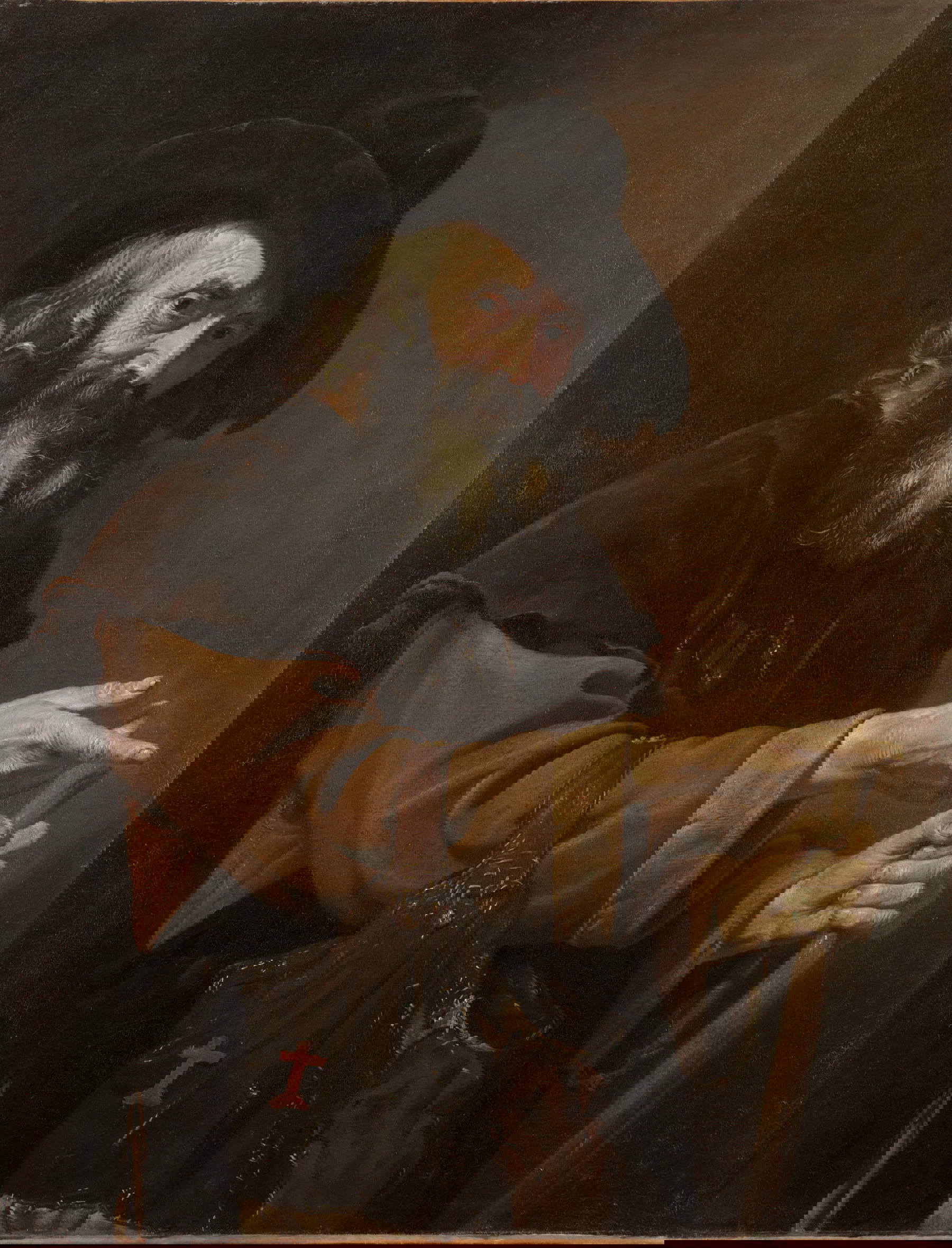
Little more is known about the motivations that suggested to Bellotti the abandonment of the themes he had always practiced and the adherence to the nascent painting of reality, but we are not far from the truth if we imagine him as a painter deeply involved in the cultural climate of his time, aware of the novelties of literature, up-to-date on debates, an interpreter of that “baroque from below,” Emilio Liguori calls him, attentive to ugliness, deformity, poverty, and the passage of time. Liguori hints at the fortune that Lazarillo de Tormes, the founding novel of the picaresque genre, would experience in Italy and particularly in Venice: the Venetian scholar Giulio Strozzi was the first to translate it into Italian, in 1608, although his translation would remain unpublished, but it was in the lagoon that the first Italian translation would finally be published, edited in 1622 by the printer Barezzo Barezzi, and then reprinted again in 1626 and 1635, testifying to the favor the work must evidently have found. Barezzi himself is owed a not insignificant role as a promoter of picaresque literature in Italy, since it was precisely from his printing house that the Italian versions of Mateo Alemán’s Guzmán de Alfarache and Picara Justina, two other cornerstones of the genre, would also come out. Now, we have no idea of Bellotti’s readings, nor do we know what ties he had established with the literary circles of Venice at the time (a mention was made above of the Incogniti: one could imagine his frequentation with the academicians, but there is no evidence to prove it), but perhaps the image of a Bellotti who was anything but refractory to discussions about the books that circulated in the lagoon would not be far from the truth, nor is it unreasonable to note, even in the absence of his formal adherence to theacademy, a cultural contiguity to the themes that were debated in the circles of the Incogniti (and not only, one might say, since the three pillars on which the exhibition is based, reality, wonder and enigma, are in any case to be considered typical of the Baroque sensibility).
Now, after an exhibition that has shown everyone who Pietro Bellotti was and what he did, it is natural to wonder in what terms the undeniable tangencies with the art of Giacomo Ceruti should be thought of, who of the painters of reality seems to be the one closest to him in terms of themes, temperament and similarity of gaze. There are no works by Ceruti in the exhibition (one can console oneself, however, with Mother Beggar with Two Children, a masterpiece by the Master of the Jeans Canvas who is another of the anticipators, one of the closest to the Milanese painter), but it is difficult not to think of those melancholy images of his beggars, porters, spinners, and frequenters of taverns and inns and not to find in them a kind of ideal continuation of what Bellotti had done long before. The exhibition tries to address this problem, albeit leaving it mostly to the catalog, where, however, more points of contact than divergences emerge and where the two find themselves almost related in a sort of “spiritual” correspondence, Filippo Piazza puts it, which surfaces, despite the undeniable differences in style, where one tries to imagine certain paintings by one and the other together. The differences are then to be found in the results: there is, in Giacomo Ceruti, an intensity that is unknown to Pietro Bellotti, just as it is unknown to all the other painters who have tried their hand at the genre. That intensity that has often been mistaken (wrongly) for emotional participation, when it was only a poetic choice, a rhetorical register. In this intensity, Ceruti would remain unmatched. Bellotti, however, had prepared the ground for him.
And even with such a comprehensive exhibition, with so many new features, intervening in that Venetian seventeenth century so little explored by critics and yet so fascinating, and moreover with such an intelligent layout and itinerary even for an audience of non-specialists, there still remains much to be clarified around Bellotti. We know, for example, that he was called to both Munich and Mantua for his talent as a portrait painter, but to date we do not know a single portrait of him, other than those of himself. His younger years are still a question mark. And in some ways that scene of Popolani in the open air is also a question mark, which although presenting in the figures elements and characters entirely compatible with the rest of his production, still remains a hapax, because no other scenes of similar size and breath are known, since Bellotti produced mostly single figures and worked mainly on the small and medium format: it is therefore to be expected that more of his similar stuff will resurface, or, perhaps, it is possible to imagine a collaboration with someone else for this most unusual of his trials. Like any research exhibition that focuses on a rediscovered painter, this one at the Gallerie dell’Accademia in Venice should be seen as a starting point.


The author of this article: Federico Giannini
Nato a Massa nel 1986, si è laureato nel 2010 in Informatica Umanistica all’Università di Pisa. Nel 2009 ha iniziato a lavorare nel settore della comunicazione su web, con particolare riferimento alla comunicazione per i beni culturali. Nel 2017 ha fondato con Ilaria Baratta la rivista Finestre sull’Arte. Dalla fondazione è direttore responsabile della rivista. Nel 2025 ha scritto il libro Vero, Falso, Fake. Credenze, errori e falsità nel mondo dell'arte (Giunti editore). Collabora e ha collaborato con diverse riviste, tra cui Art e Dossier e Left, e per la televisione è stato autore del documentario Le mani dell’arte (Rai 5) ed è stato tra i presentatori del programma Dorian – L’arte non invecchia (Rai 5). Al suo attivo anche docenze in materia di giornalismo culturale all'Università di Genova e all'Ordine dei Giornalisti, inoltre partecipa regolarmente come relatore e moderatore su temi di arte e cultura a numerosi convegni (tra gli altri: Lu.Bec. Lucca Beni Culturali, Ro.Me Exhibition, Con-Vivere Festival, TTG Travel Experience).
Warning: the translation into English of the original Italian article was created using automatic tools. We undertake to review all articles, but we do not guarantee the total absence of inaccuracies in the translation due to the program. You can find the original by clicking on the ITA button. If you find any mistake,please contact us.



















 IT
IT FR
FR DE
DE ES
ES CN
CN


