




by Silvia Mazza 23/01/2026



Categories: Exhibition reviews / Disclaimer
At the National Archaeological Museum in Reggio Calabria, a major exhibition celebrates Gianni Versace between Magna Graecia and global fashion. A powerful identity tribute, rich in materials and suggestions, but one that raises questions about the layout and the dialogue between archaeology and haute couture. Silvia Mazza's review.

“Calabria, where I was born, for me is perfume, dazzling light, shadows.” There was no more congenial place than Reggio Calabria and the National Archaeological Museum (MArRC) to celebrate with an exhibition in his hometown the creative genius of Gianni Versace, eighty years after his birth and almost thirty years after his tragic death. And in more ways than one, it is worth noting, since at the same time as Gianni Versace. Terra Mater. Magna Graecia Roots Tribute (Rubettino catalog), from December 19, 2025 to April 19, 2026, in the heart of London at the Arches London Bridge exhibition space, the Gianni Versace Retrospective is underway (from last July 16 to March 1, 2026). In the beginning was the Metropolitan Museum of Art in New York, which, in that same 1997 when the designer was murdered in front of his Miami mansion, dedicated a career retrospective to him. The exhibition, titled simply Gianni Versace and curated by U.S. critic Richard Martin, saw the display of fifty dresses drawn from the designer’s collections and theatrical collaborations. In Reggio Calabria, as in London, the display includes, in addition to the iconic garments, original sketches, accessories, backstage photographs, runway videos, interviews and VIP testimonials. It is a universe that restores the image of a talent who rewrote the rules of world glamour in the late 20th century, dressing women like Greek goddesses in a pop style.
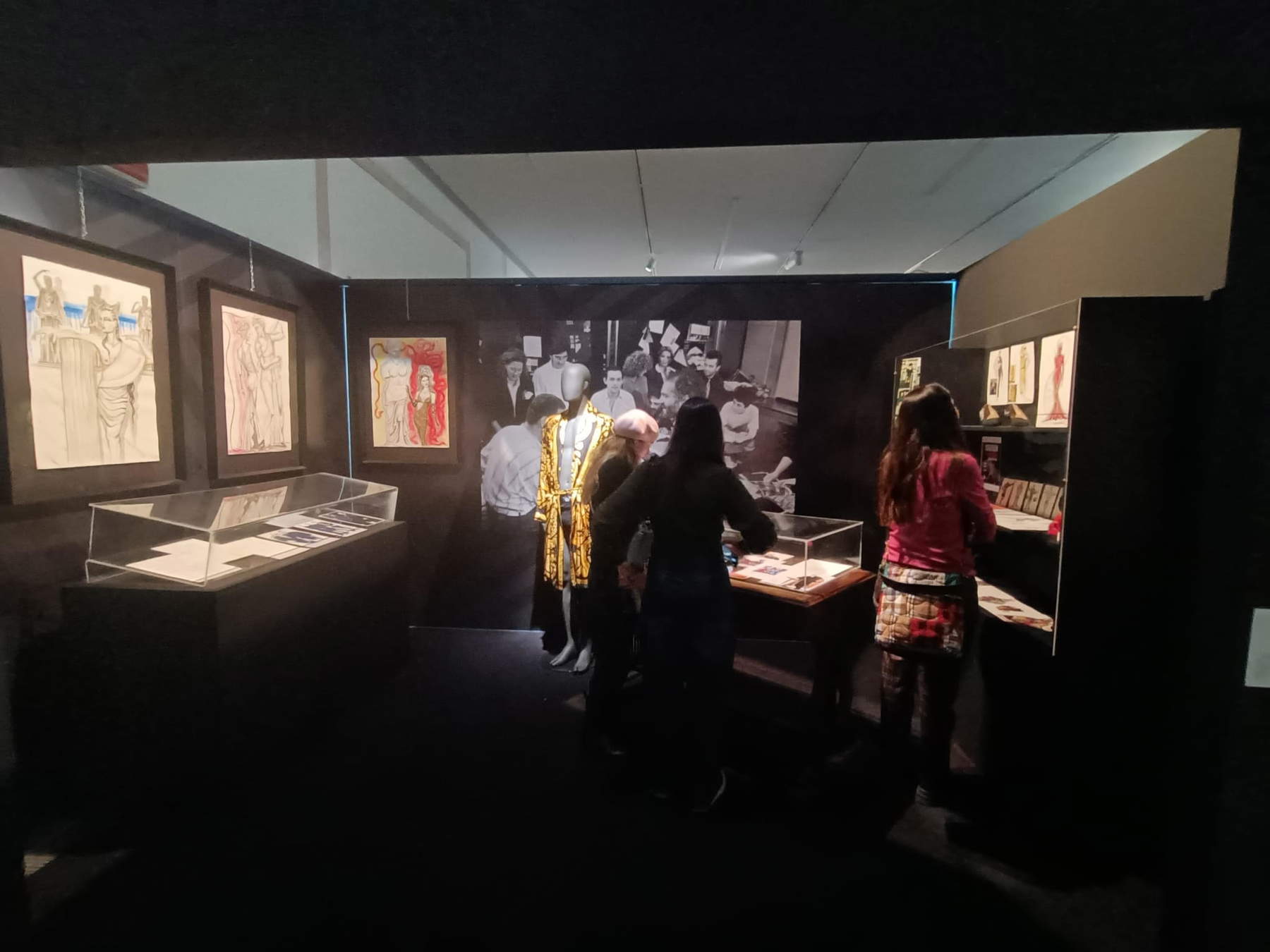
We start, then, from the city for a critical comparison that allows us to better frame in its complexity the project on the banks of the Strait, sponsored by the Region of Calabria, the Metropolitan City of Reggio Calabria and the Calabria Film Commission. The link with the territory, in fact, is another added value compared to the London exhibition. A real tribute of the city to its illustrious fellow citizen, to which the Department of Architecture and Design of the Mediterranean University of Reggio Calabria, the Academy of Fine Arts of Reggio Calabria, the Order of Architects PCC of Calabria and Sicily responded. And, again, the State Archives of Reggio Calabria, which lent the registry records concerning the Versace family and unpublished documents, such as books, sketches, posters, catalogs, notes, polaroids and interviews, documenting the genesis of his aesthetic project. Also involved were the students of the Liceo Classico “Tommaso Campanella,” now Polo Liceale “T. Campanella - M. Preti - A. Frangipane,” attended by Gianni (however, without completing their studies): they created clothes, installations, pictorial panels, graphic and ceramic works, inspired by Gianni Versace, exhibited in the museum spaces as a review in progress.


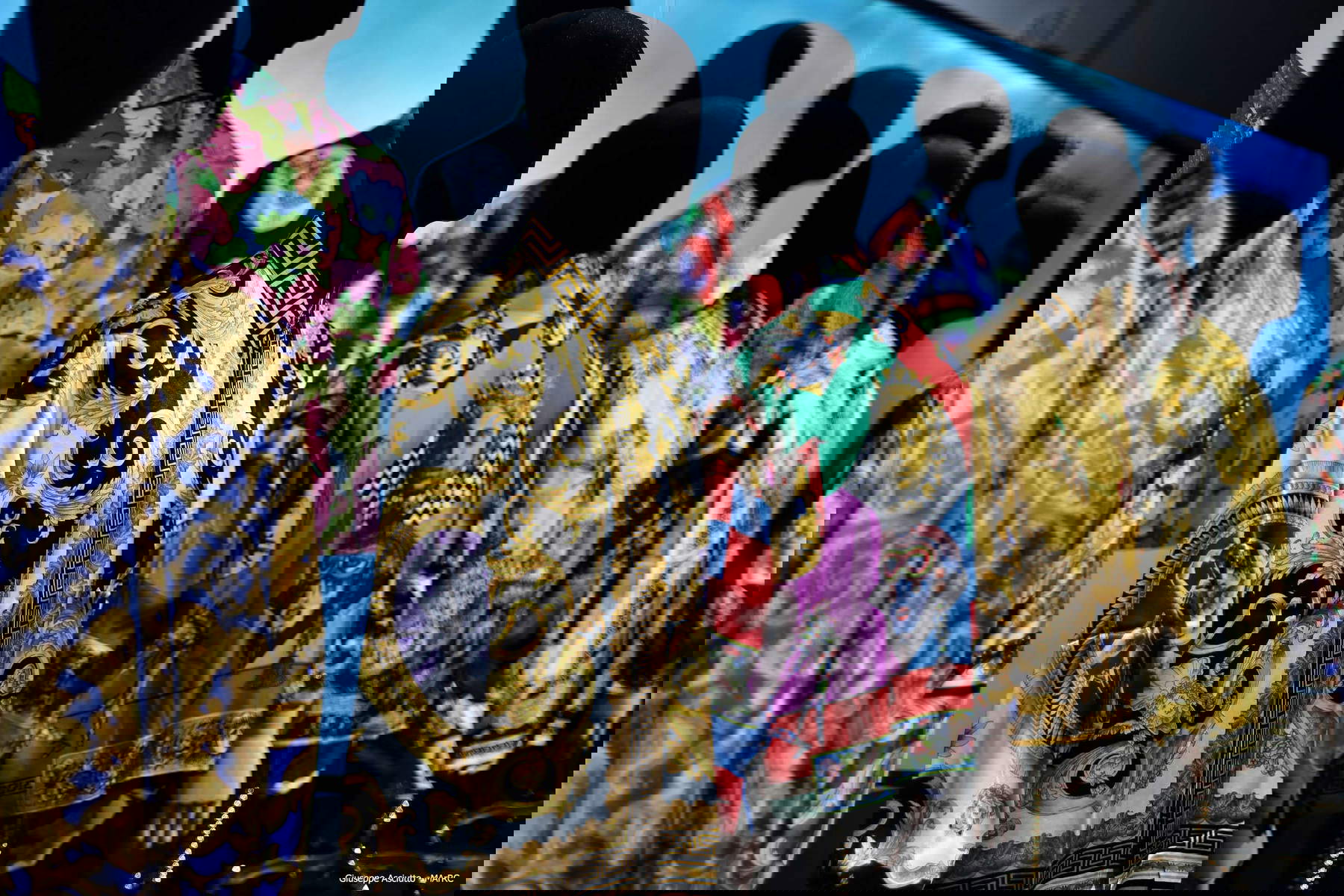
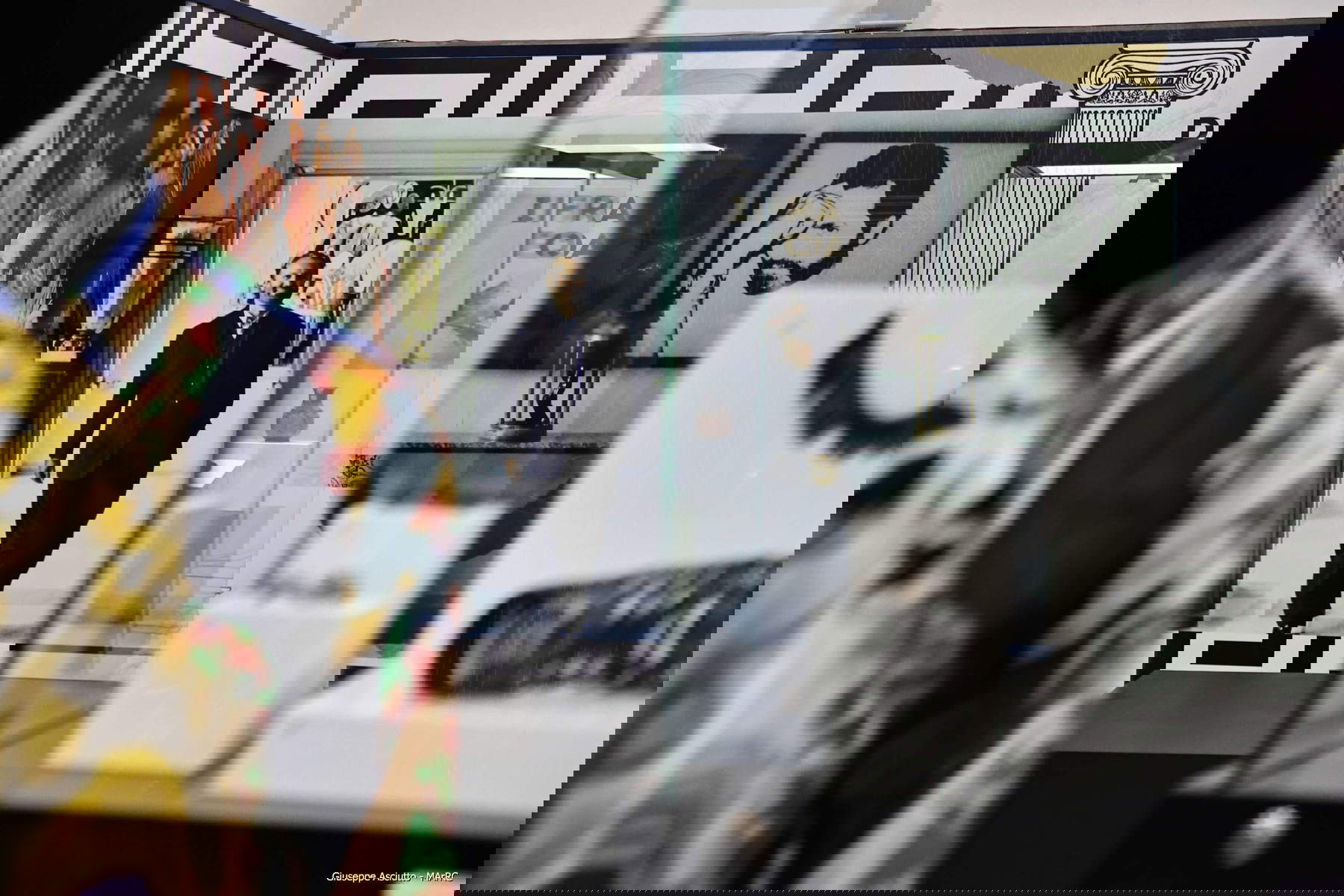
Another qualifying element is the cultural link emphasized by Fabrizio Sudano, director of the MArRC and curator of the exhibition, together with Sabina Albano, also an archaeologist and WorldWild curator of the Gianni Versace Private Collection: “On the one hand, the collections of the museum in Reggio, which houses the Riace Bronzes and numerous figurative testimonies of Magna Graecia; on the other hand, the imagery of a fashion designer who was able to transform those references into an aesthetic language recognized worldwide.” Legend meets classical myth. And this happens in a temple of the art of the ancient world such as the archaeological museum, which allows a power of visual and conceptual references that a former industrial space such as the Arches London Bridge necessarily lacks (where, if anything, the effect is by contrast between brutalist architecture and haute couture).
If, in fact, it is now an increasingly common practice for the director of the host museum to also figure as curator, in this case Sudano, an archaeologist, was able to scientifically interpret the designer’s connection to the suggestions triggered by classical Greek art. Think of decorative motifs such as the meander, scrolls and capitals that stand out in textile patterns laden with bright colors, like those that originally enlivened sculptures and temples. The Medusa above all, the logo of the Maison. Although it would be reductive to limit to these artistic influences the sources of a creative universe that gave birth to clothes rich in stylistic contaminations also indebted to Baroque art and American pop art, and dominated by the unusual combination of different materials, such as silk with leather, metal with rubber. Indeed, Versace’s vision can hardly be called classical and measured, rather baroque and exaggerated.
But how was all this staged? The exhibition was staged at the museum’s exhibition floor, not among the rooms with the permanent collections. This was a choice of greater installation “freedom” that ended up, however, on the whole, weakening the objective: to make evident the link between the designer and the figurative repertoire of the Greek and Roman ages, and specifically with that of the museum, which Versace knew well, as curator Albano recalls: “A direct observation of the archaeological finds contributed to the formation of an imagery capable of translating classicism into a contemporary expressive code.”
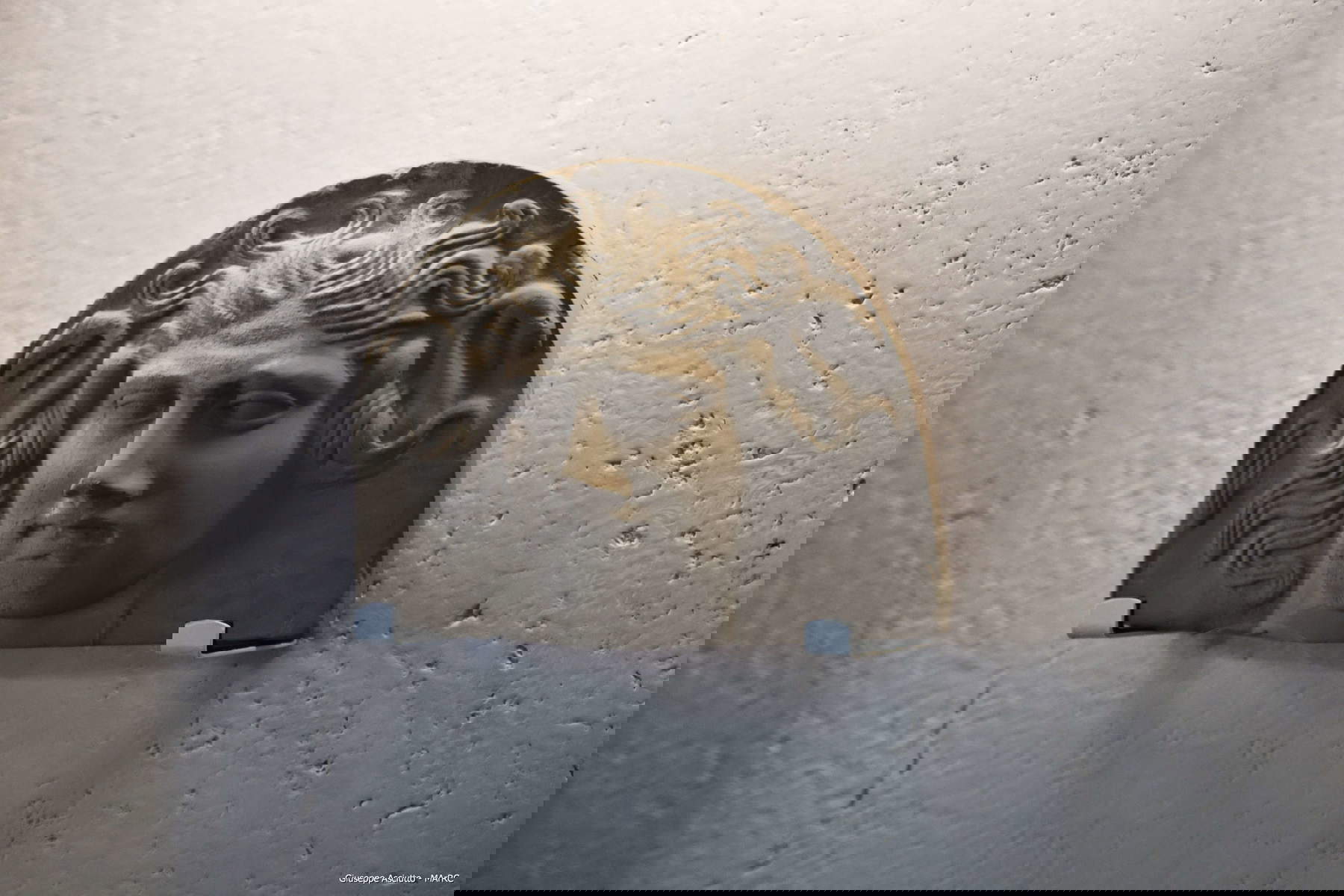
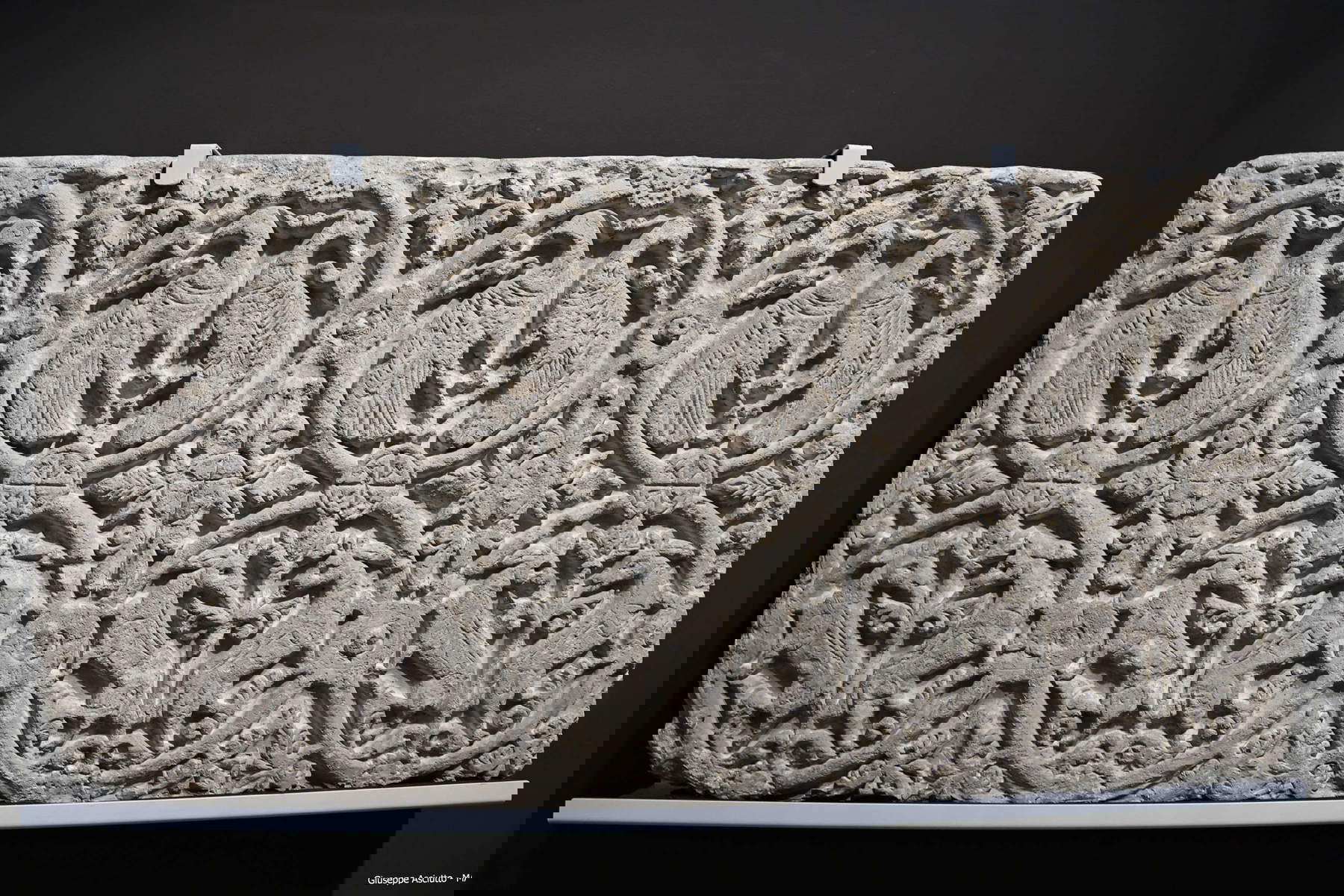
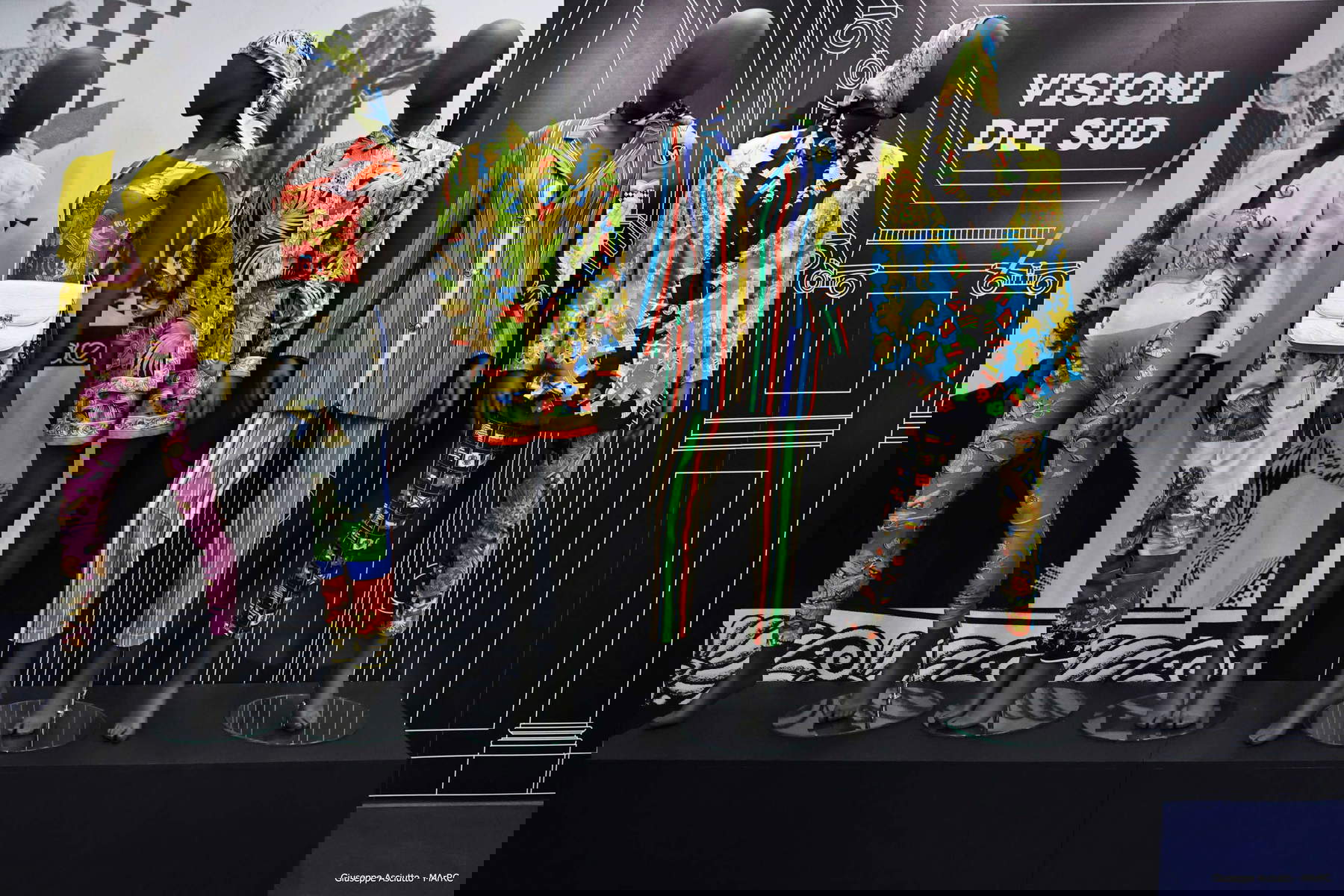
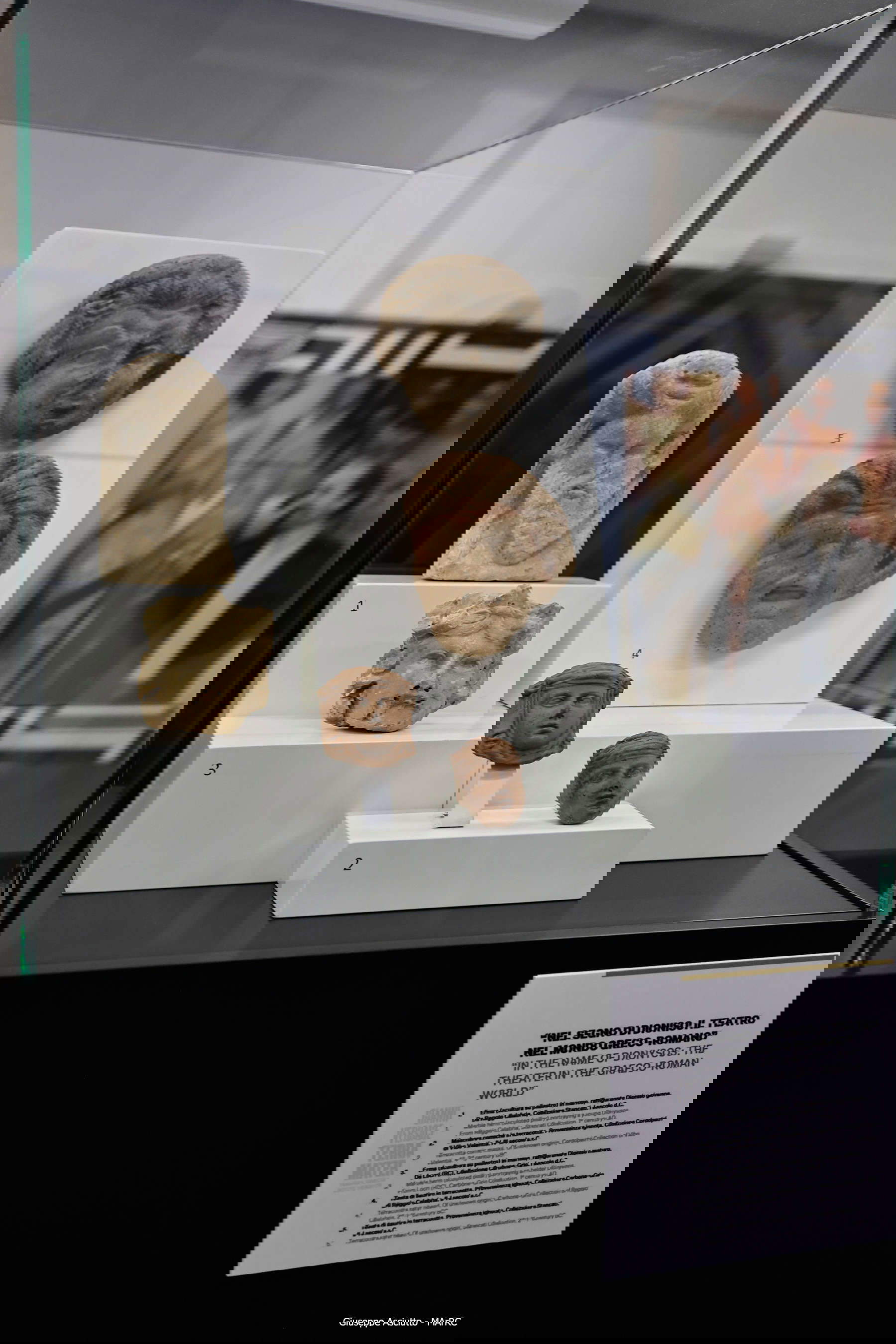
All that remains, then, is to enter the heart of the exhibition. It is divided into several thematic sections, including Mother City, Visions of the South, and Codex Versace. Over four hundred pieces, including clothes, accessories, furnishings belonging to the Home Collection and archival materials, from private collections. The strategy chosen by Versace (as by other stylists before and after him) was, in fact, that of productive diversification, starting from the field of fashion and later extending to include the use of the Versace brand to market the widest possible number of product categories. And here they are, in the showcases serving as a counterpoint to the fashion itinerary, archaeological finds from Magna Graecia and protohistoric, Roman, late antique and Byzantine Calabria, in which it is possible to trace types of objects and iconographies that inspired the creations of the Maison’s founder.
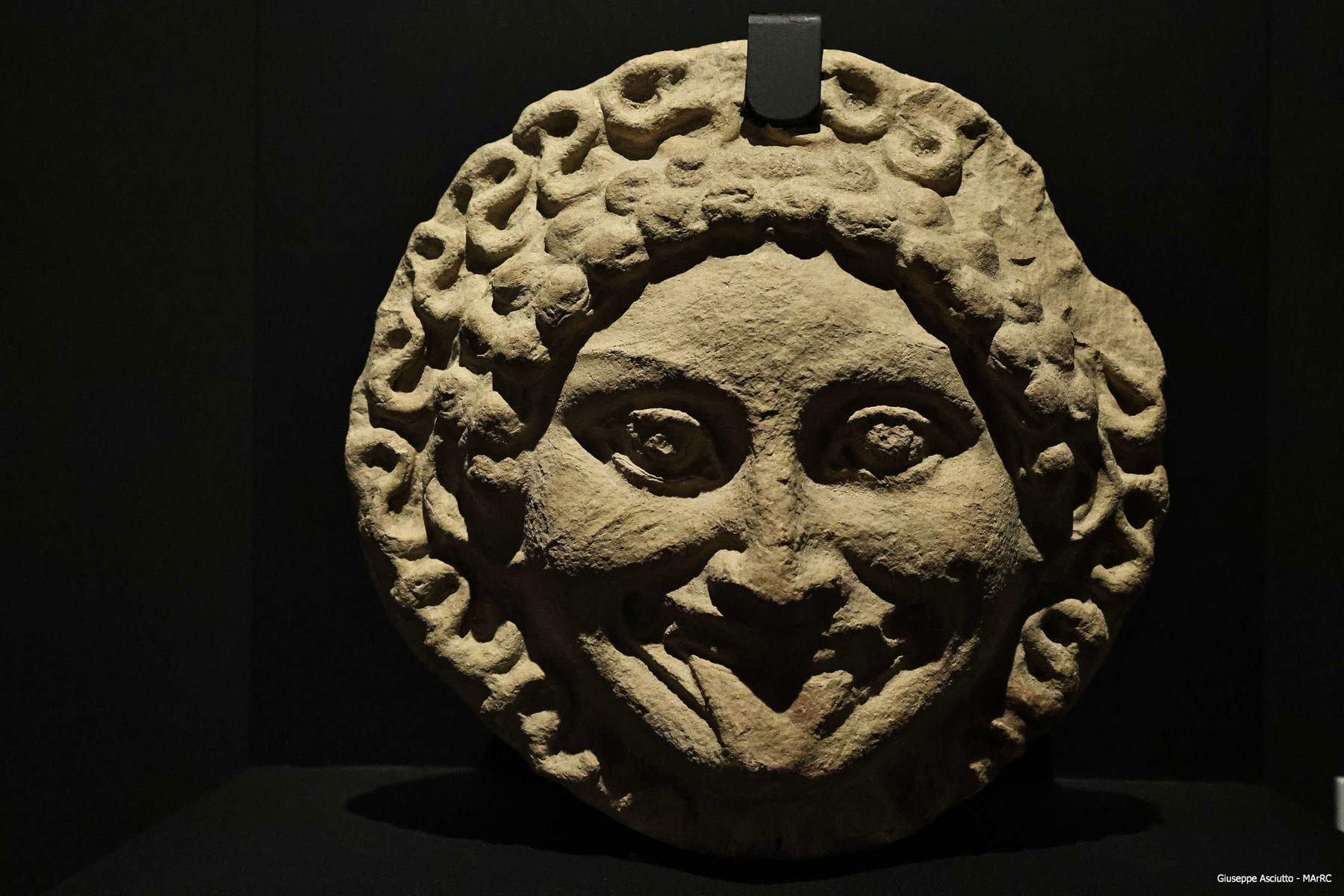
Among the most significant ones are the stucco slab from the church of Santa Maria Theotokos in Terreti (Reggio Calabria), dating back to the 11th century A.D., which is back on display after more than 15 years; the fragments of fresco with fish figures from the Roman Baths of Reggio Calabria, from the 1st-2nd century A.D, again on view after careful restoration, and a terracotta female statuette, with long robe and cloak, from Rosarno (Reggio Calabria); while from the National Archaeological Museum of the Siritide in Policoro (Matera), come an antefix with the face of Medusa and a red-figure pelike (vase to hold liquids), both from the 4th century B.C. Roberto Orlandi’s photographs of Versace’s beginnings, collaborations, covers and top models of the 1990s dressed by Versace complete the exhibition, along with a selection of more intimate portraits. Also, two portraits of the designer signed by Helmut Newton and Alice Springs. There is also a wooden sculpture by master Marcos Marin, belonging to the Paraphrase Project series and characterized by OpArt-inspired cuts, placed in Piazza Orsi, inside the Museum, and a work by Reggio Emilia-born master Natino Chirico, a childhood friend of Gianni Versace, specially created for the occasion.
But back to the beginning of the visit. One is introduced by a video-tribute, with a tribute as well to Ornella Vanoni, who remembers that she was the first “victim” oforoton, an extremely light metallic knit technological fabric that made its debut with a collection of silver dresses and now on a catwalk in 1982, to soon become a hallmark of Versace’s sensual style and that earned him the Occhio d’oro award, a prestigious recognition given by the Italian press to the designer who created the most innovative collection. And how can we forget a divine Patty Pravo at the 1984 Sanremo Festival where metal becomes other than itself with soft draperies that fall as in ancient statuary? He is reminded of this by a model glittering on a mannequin between the first and second rooms of the large exhibition hall accessed by the short introductory corridor dedicated to the unmistakable logo of the fashion house: the head of Medusa, of which two antefix specimens are on display, immediately declaring the purpose of enhancing the deep connection between the designer’s creative vision and the ancient culture of his homeland. It is Versace himself who clarifies the meaning of this choice: “When I had to choose a symbol, I thought of the ancient myth: whoever falls in love with Medusa has no chance. So why not think that those who are conquered by Versace cannot go back?” And again, “When people look at Versace, they must feel terrified, petrified, just like when you look into the eyes of the Medusa.”
But, we said, this classical component does not disregard the very personal reinterpretation in a pop key. It is not a constant. This is clearly seen in a dress that testifies to the bondage period, with chains and leather sculpting the body, along with iconic details such as XL safety pins, which close vertiginous cuts and slits.
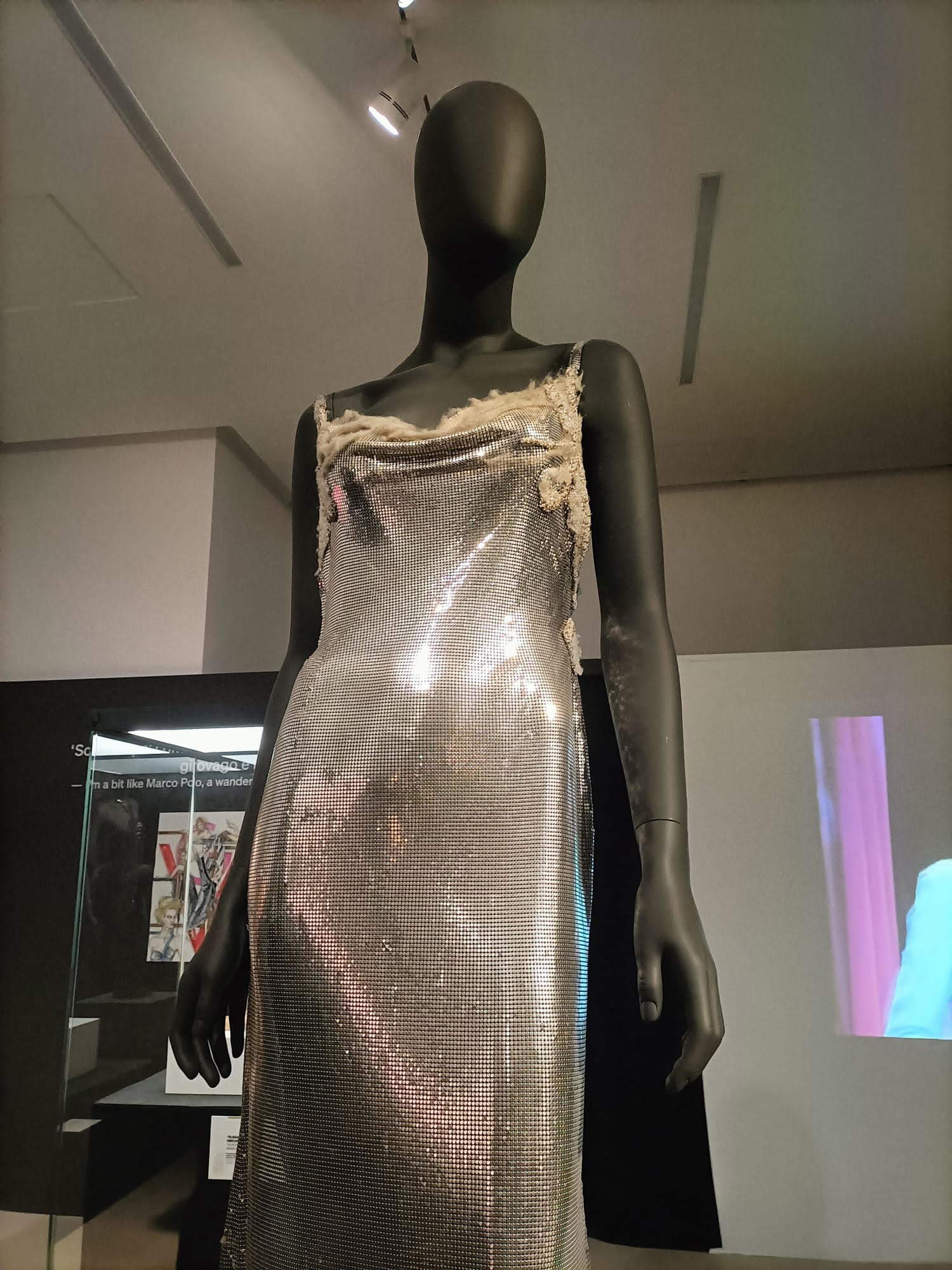
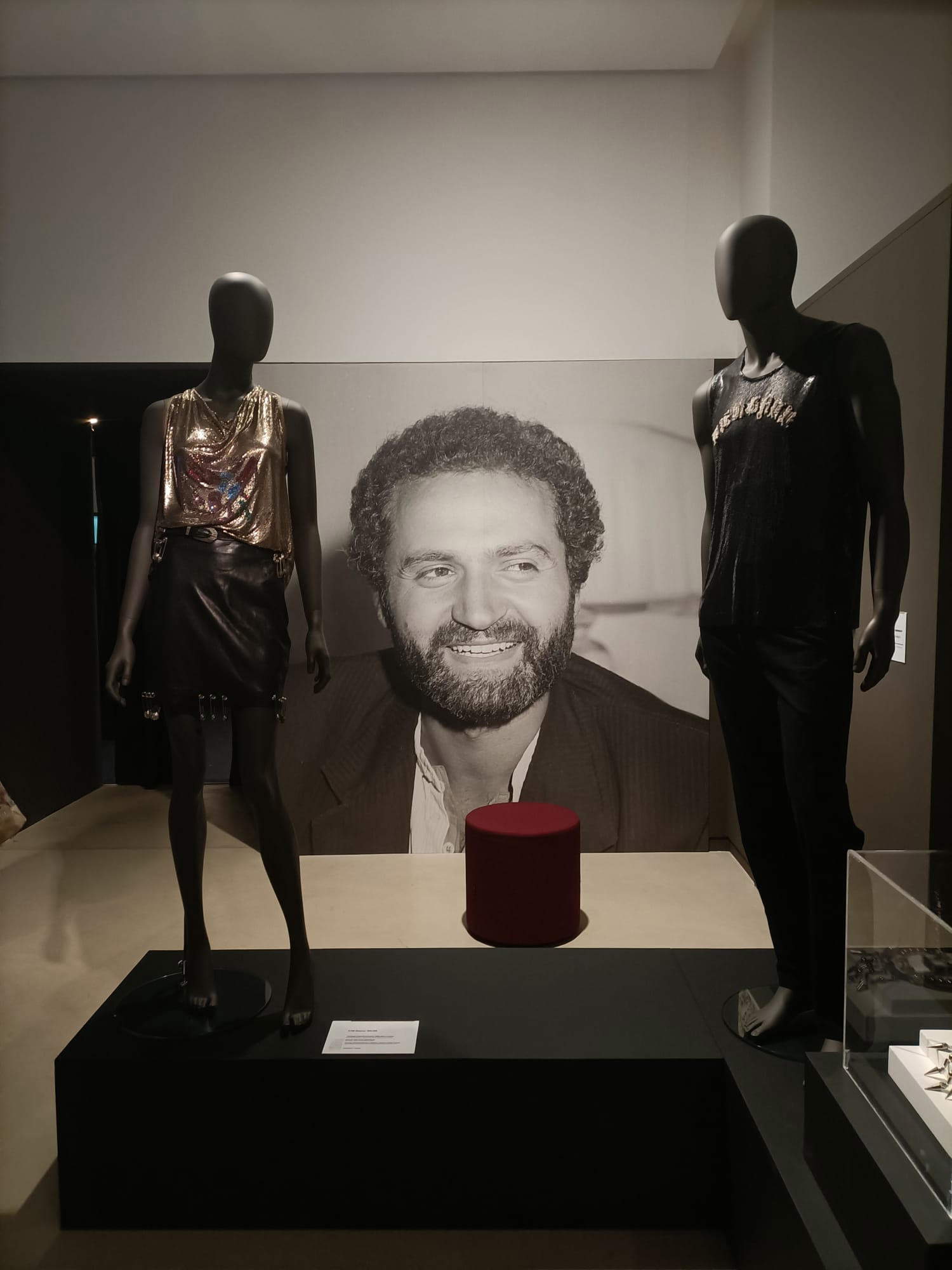
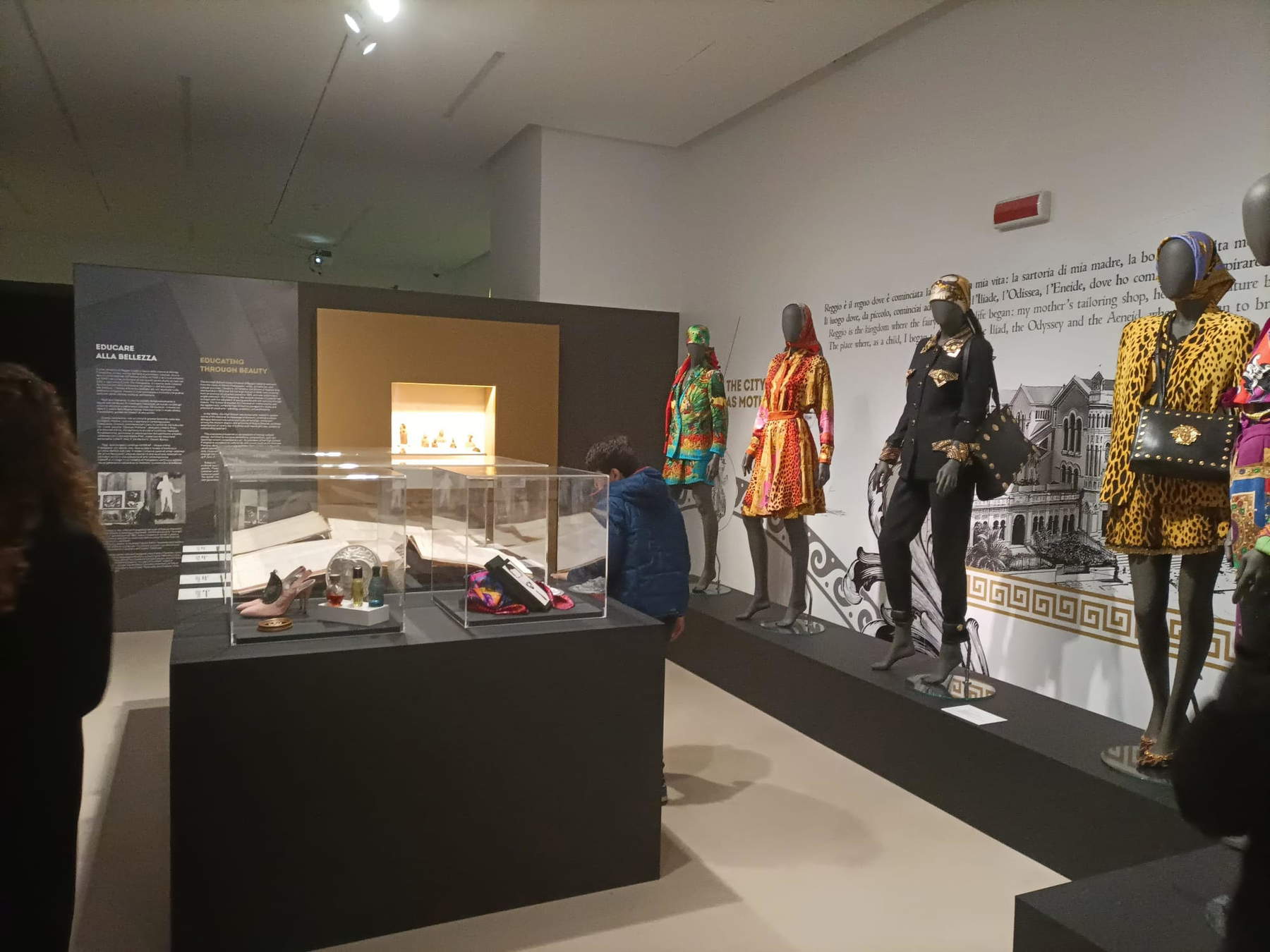
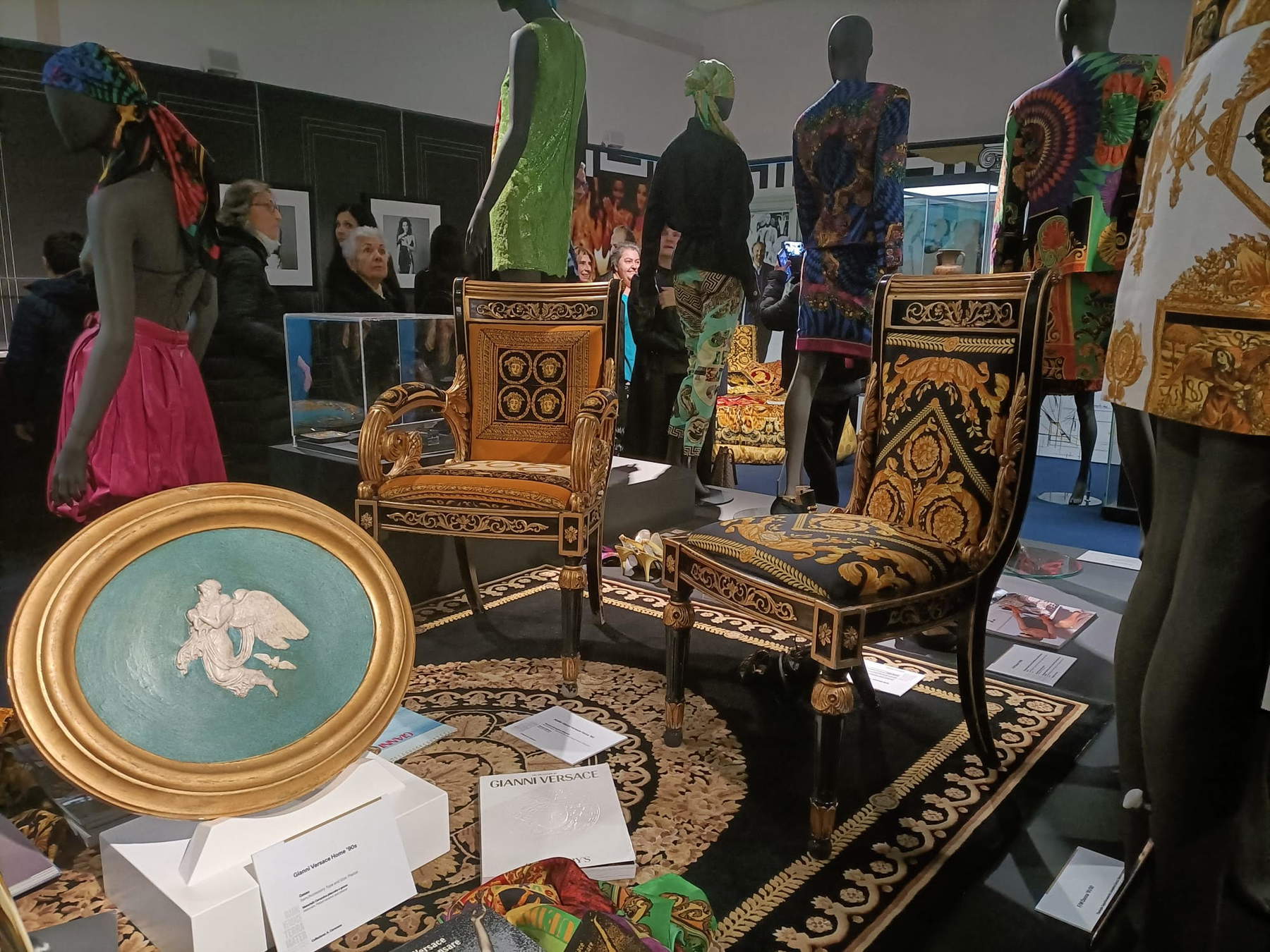
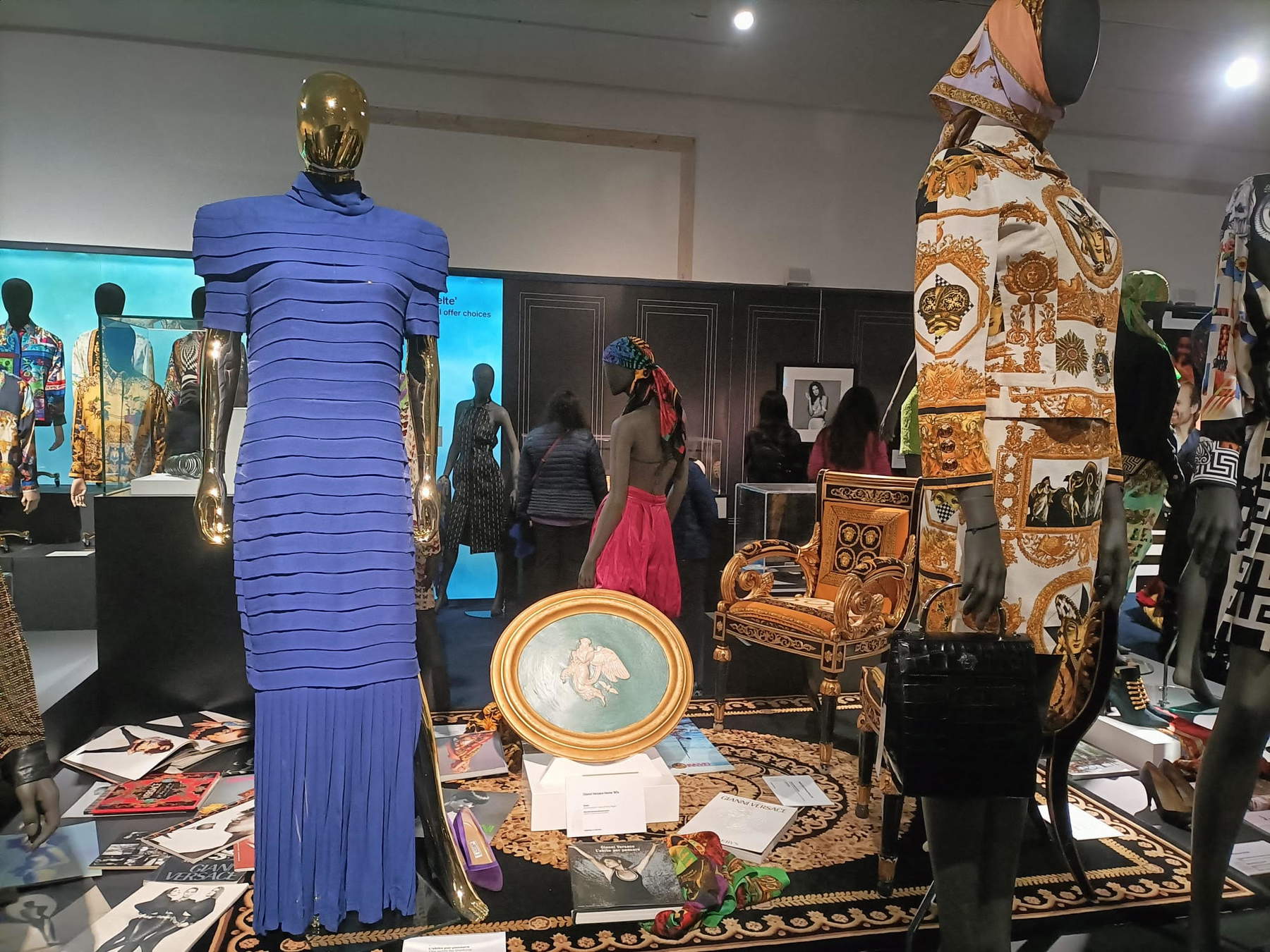
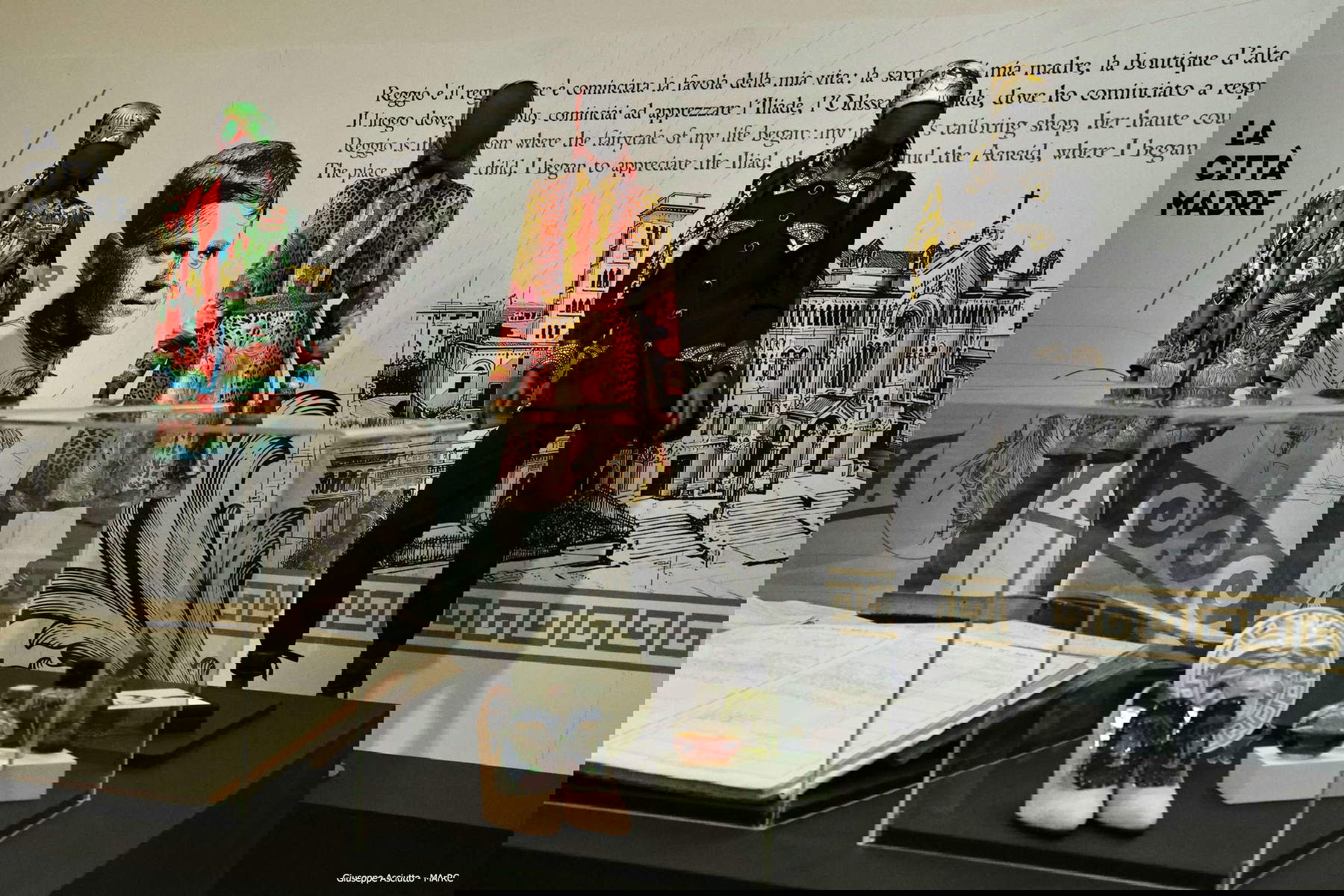
The itinerary also follows a chronological order. At the beginning, a suit made by his mother Franca tells of his apprenticeship in his mother’s tailor shop in Reggio Calabria, one of the most important Italian tailors at the time. The originality of the dialogue between archaeological finds and the designer’s creations would have been more effective, however, as we said, if it had taken place among the halls of the museum, projection backdrops with almost no need for any other staging devices with their dazzling white, perfect for highlighting Versace’s color explosion. Just take a preview look at the exhibition that opened on January 18 in Rome(VENUS - Valentino Garavani through the eyes of Joana Vasconcelos), the second exhibition project of PM23, the space opened last May by the Valentino Garavani and Giancarlo Giammetti Foundation. Thirty-three creations by Versace’s other great contemporary Italian designer, reinterpreted through the installations of Joana Vasconcelos and dropped into neutral environments of a white that is as essential as it is refined.
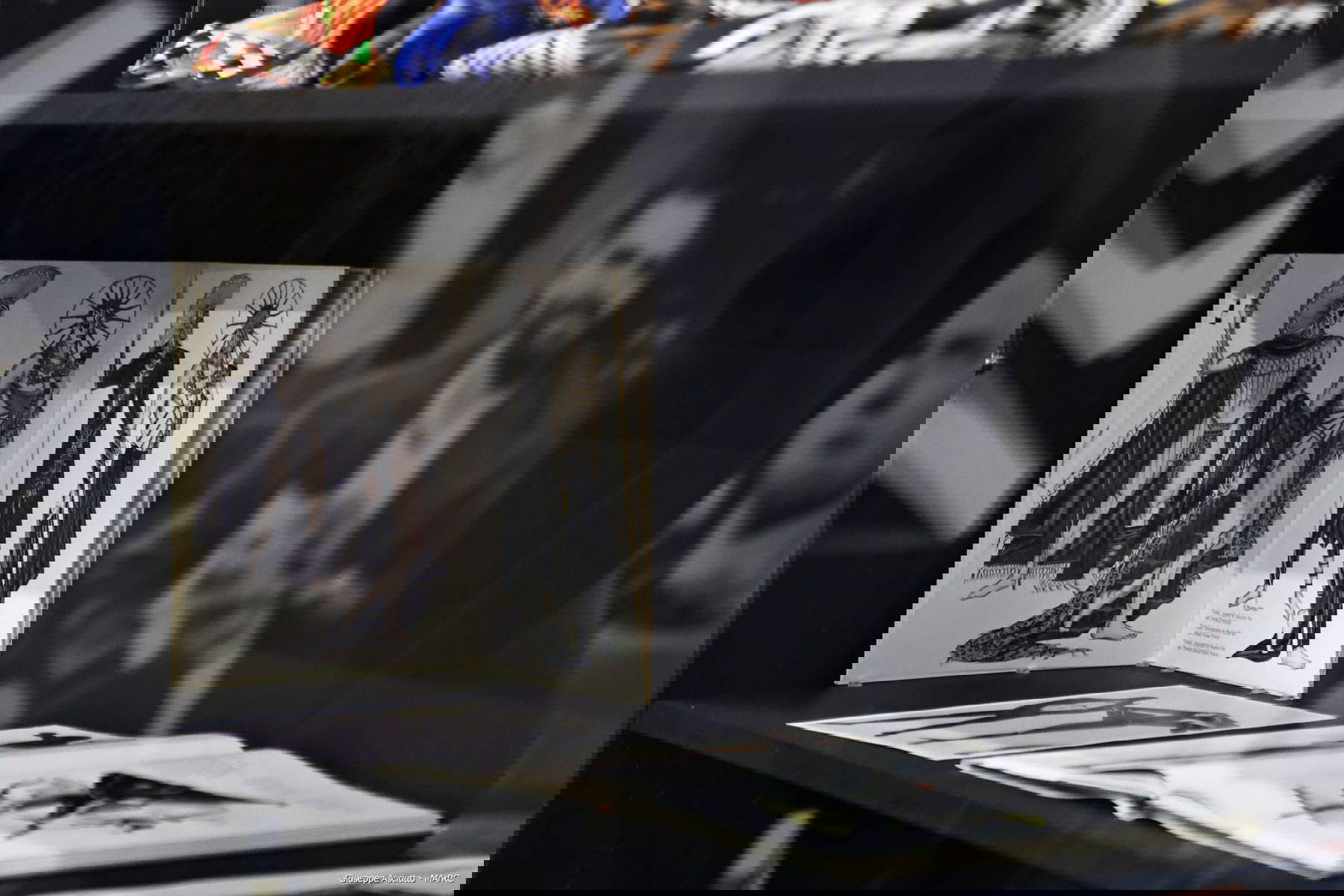
Instead, the solution adopted in Reggio (which, moreover, has more than one derivation from London to think of them as independent solutions, such as the stringing of mannequins on a backdrop in which a monochrome architecture is reproduced or the serial parade of shirts, a real object of desire for collectors) results in a disturbing accumulation effect with visual interferences between clothes, jewelry, furnishing objects, and paneling. A chaotic effect that ends up absorbing in spite of themselves even the archaeological finds there “in detachment.” Creative power and sartorial skill of the sensuality-laden models that dominated the catwalks, in a word Versace’s uniqueness, are instead diluted in the seriality effect of that string of men’s and women’s shirts. The unscrupulous combination of colors and shapes instead of standing on pedestals capable of highlighting the individual piece, as in Rome, suffers the din of a single open space dominated by visual overlays. Versace taught that excess can be elegance. Excess, not chaos. So much so that at the close of the itinerary, one arrives as if at a welcome sensory pause in the cube that carves out a space of its own for the reconstruction of the designer’s studio, with a core devoted to sketches for costume and ballet, evidence of collaborations with Maurice Béjart, John Cox and Roland Petit.
How much more effective it would have been to value individual strong pieces, isolating them, making them emerge as epiphanic visions! This is demonstrated by the introductory room lowered into an intense penumbra that benefits the visitor’s concentration as if in a decompression room from external reality: only two pieces, two splendid Medusa antefixes, symbol of the Versace brand, introduce the exhibition with the semiophoric power of an internationally recognized icon of Made in Italy. Although, in fact, the MArRC lacks garments that have entered into legend such as those sewn on Naomi Campbell and the other supermodels of the 1990s, Lady D, Elton John, Madonna or Prince, displayed instead in London with the supermodel or VIP who wore them behind them, a giant picture of them.
Returning again to the comparison with the London one, the exhibition on the banks of the Straits is also not associated with Gianni Versace srl or the Versace family, but comes from private collectors (in Rome, on the other hand, the clothes come from the maison’s archives). An absence that here, however, evidently weighs heavily. Not that attempts at contact have been lacking (with Santo, not Donatella): “there has been no interest from Prada, which recently acquired the brand,” Sudano tells us, only “cousin Giusy Versace was involved in the presentation of the exhibition in the Senate last December 9.” Who knows what Gianni would have thought of this exhibition. The value, however, of the purpose remains: a tribute to beauty and glamour that like art, indeed as an art form, wins over time, like classical culture. Like Versace, it has become universal.
Warning: the translation into English of the original Italian article was created using automatic tools. We undertake to review all articles, but we do not guarantee the total absence of inaccuracies in the translation due to the program. You can find the original by clicking on the ITA button. If you find any mistake,please contact us.