





Keeping the attention of visitors along the entire path of an exhibition is no easy thing, especially when investigating a historical-artistic period, such as Neoclassicism and its major protagonists, to which a conspicuous number of exhibition projects have been dedicated over the years. Thus, one sometimes chooses to intersperse sections that are not particularly exciting with very high moments, which alone would still be worth the high level of a project. This is the impression that has, in my opinion, those who visit and will visit, until April 6, 2026, the exhibition Eternity and Vision. Rome and Milan Capitals of Neoclassicism at the Gallerie d’Italia in Milan’s Piazza Scala. An exhibition that, in the intentions of the three curators Francesco Leone, Elena Lissoni and Fernando Mazzocca, aims “to evoke the exceptional creative season of Neoclassicism by comparing the artistic production of the highest level of these two ’capitals’ projected toward modern Europe, but also linked to the greatness of the past,” where the Eternal was at that time not only the universal capital of the arts but also the center of attraction for artists from all over Europe, and Milan became first the capital of the Napoleonic Italian Republic and then of the Kingdom of Italy and established itself, contending for artistic supremacy with Rome, as one of the great European centers of Neoclassicism, thanks to its modernity and interaction between different artistic fields. The period on which the curators focused is the twenty years or so from Napoleon’s descent into Italy in 1796 to the end of the Empire in 1814, and featuring Antonio Canova and Giuseppe Bossi, a painter who was a great connoisseur of Leonardo and founder of the Pinacoteca di Brera, as well as, to a lesser extent, Andrea Appiani (two of the same curators, Leone and Mazzocca, curated together with Domenico Piraina the recent exhibition at Palazzo Reale dedicated to the latter painter, which closed on January 11).
The opening of the show at the Gallerie d’Italia is entrusted to the work that constitutes the high point of the entire exhibition, and which alone is truly worth the visit: Antonio Canova’s Colossal Horse from the Civic Museums of Bassano del Grappa, for the first time visible to the public after more than 50 years restored and reassembled in its entirety, thanks to a complex intervention promoted by the City and the Civic Museums of Bassano del Grappa, with theAlta Sorveglianza of the Soprintendenza Archeologia Belle Arti e Paesaggio for the provinces of Verona, Rovigo and Vicenza and with the support of the Soprintendenza per la città metropolitana di Venezia, in collaboration with Intesa Sanpaolo (main partner) as part of the “Restituzioni” project, and with Venice in Peril Fund (main sponsor). The story of the colossal Horse, more than four meters high, made between 1819 and 1821 in plaster patinated to imitation bronze, has the unbelievable: after the Battle of Marengo on June 14, 1800, which saw the victory of Napoleon’s French against the Austrians, the Foro Bonaparte, a majestic monument inspired by imperial Rome and never completed, had been planned by Giovanni Antonio Antolini to be erected in the area of the Castello Sforzesco in Milan, and an imposing statue dedicated to Napoleon was to be placed in the center of the Forum to celebrate him as a hero. The commission was given to Antonio Canova, to make first a marble group with Napoleon crowned by Victory, which he did not execute, then a statue with Napoleon as a pacifying Mars, which went to Paris. The initiative to celebrate him with an equestrian monument then fell to Naples, on the idea of the Capitol’s Marcus Aurelius: once again Canova was commissioned, and he began to work with satisfaction on the models, but never came to completion (as the engravings of the project in the exhibition testify, Canova imagined Napoleon with his head and gaze turned backward, unlike the ancient model of the Marcus Aurelius). With the fall of Napoleon and the Restoration, King Ferdinand I decided to continue that work by replacing Bonaparte with his father Charles III of Spain: the models were completed in 1818 and cast in bronze by 1821. In the meantime, Ferdinand I also commissioned Canova for an equestrian statue depicting him, as a pendant to that of his father, but before he died Canova was only able to finish the full-scale model of the horse. A competition was therefore announced to finish the monument, and Antonio Calì, based on the Canova model, made the statue of Ferdinand I. Subsequently, the two monuments of Charles III and Ferdinand I were placed, in 1829, in Naples in front of the church of San Francesco di Paola. Instead, the plaster models patinated in faux bronze were transferred to Possagno and finally donated to the Museo Civico of Bassano del Grappa, but their fate was not a happy one: the one of Charles III was destroyed under the bombs of 1945, while the one of Ferdinand I was sawed and reduced to pieces in 1967-1968, thus ending up in storage at the behest of the then director of the museum. Now reassembled and restored, it is on display at the Milan exhibition before returning to the halls of the Bassano museum. Next to the Colossal Horse, Donatello’s Testa Carafa , the large bronze horse head that was originally intended for the equestrian monument of the King of Naples Alfonso d’Aragona, which was never completed due to the king’s demise, also opens the exhibition and is now in the National Archaeological Museum in Naples. The reference was the Capitol’s Marcus Aurelius, which is why the same first section also displays an engraving and a rare late 18th-century marble reduction of the monument, as well as a cast, made by Leone Leoni (1560), of the horse’s head from the same monument.
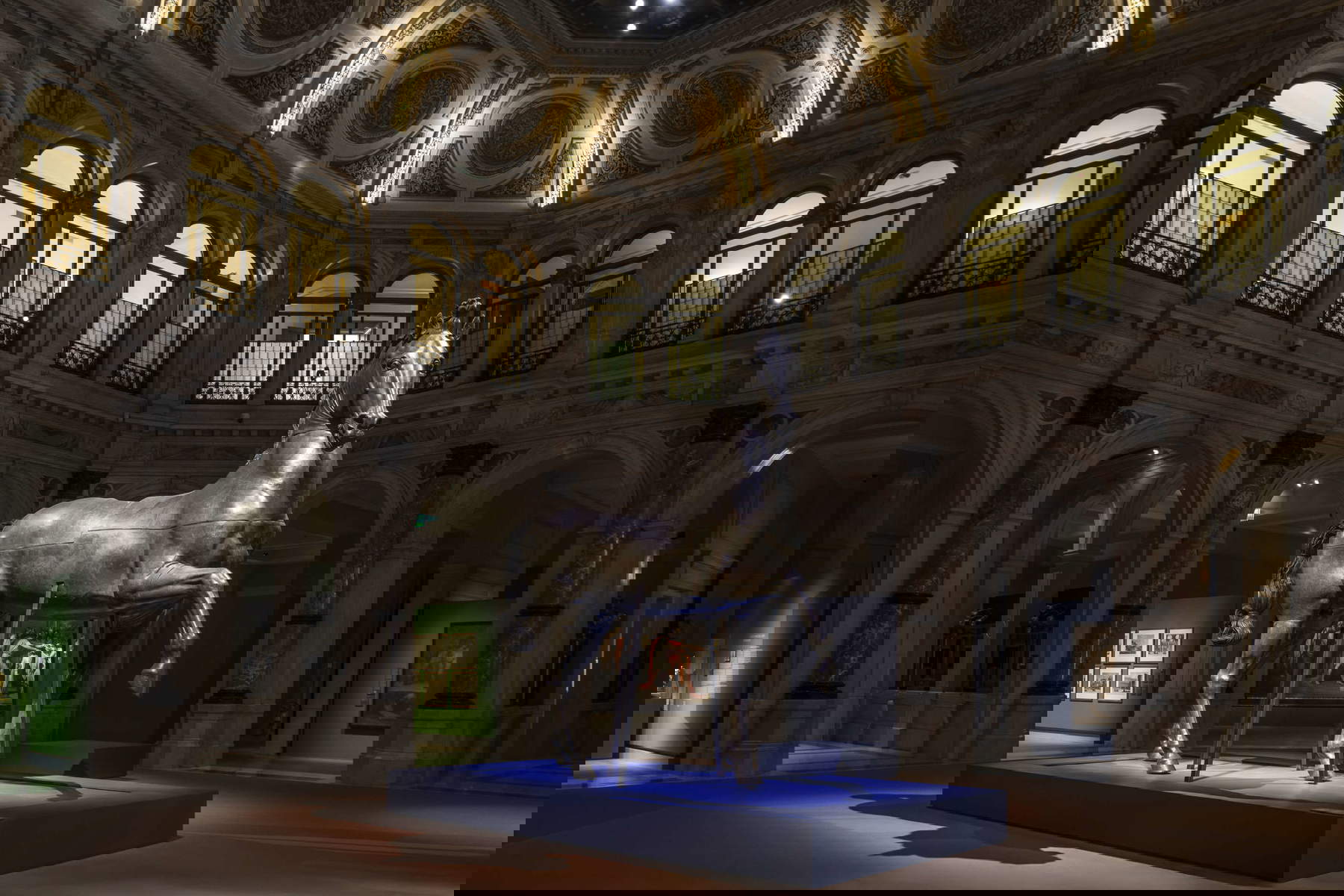
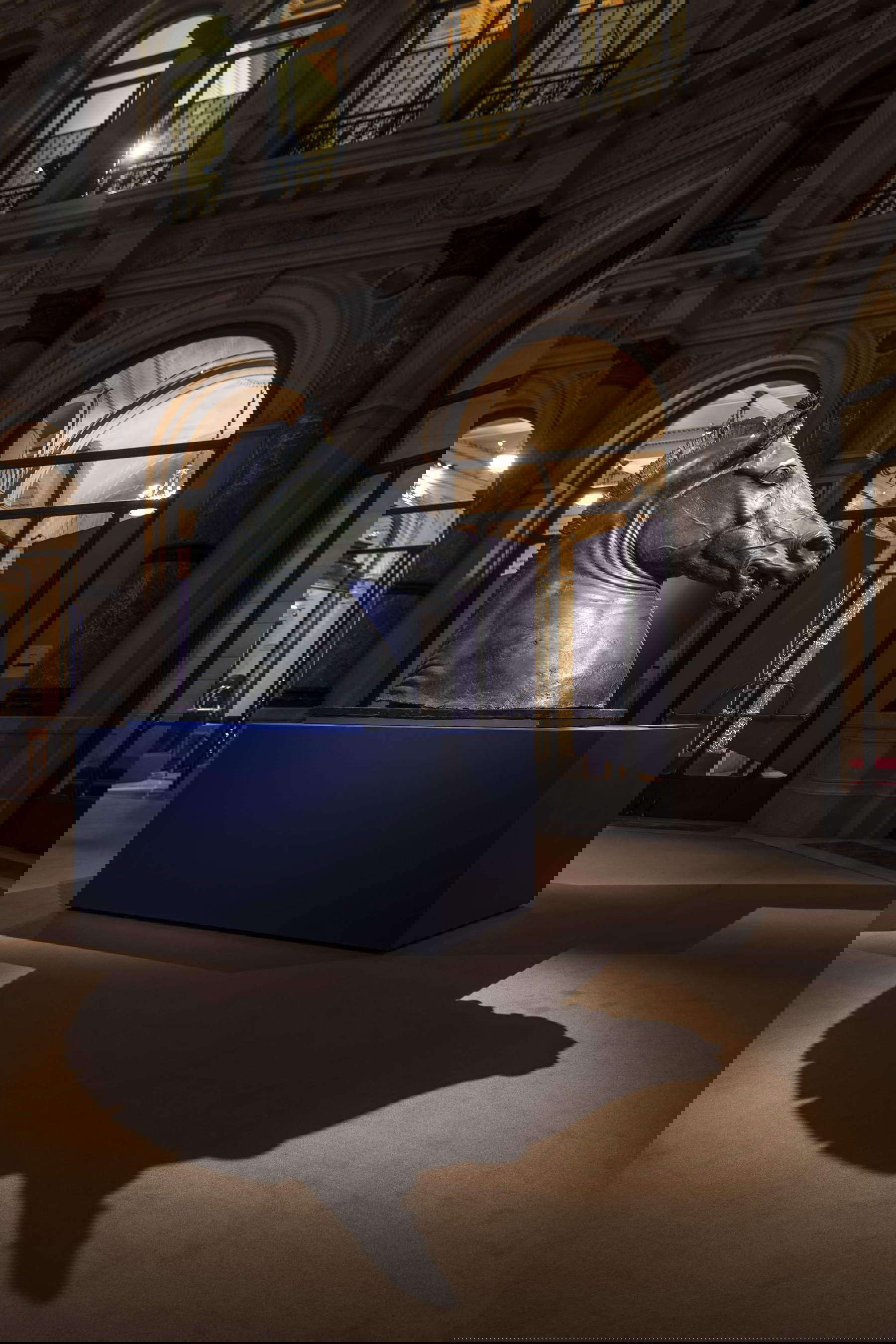
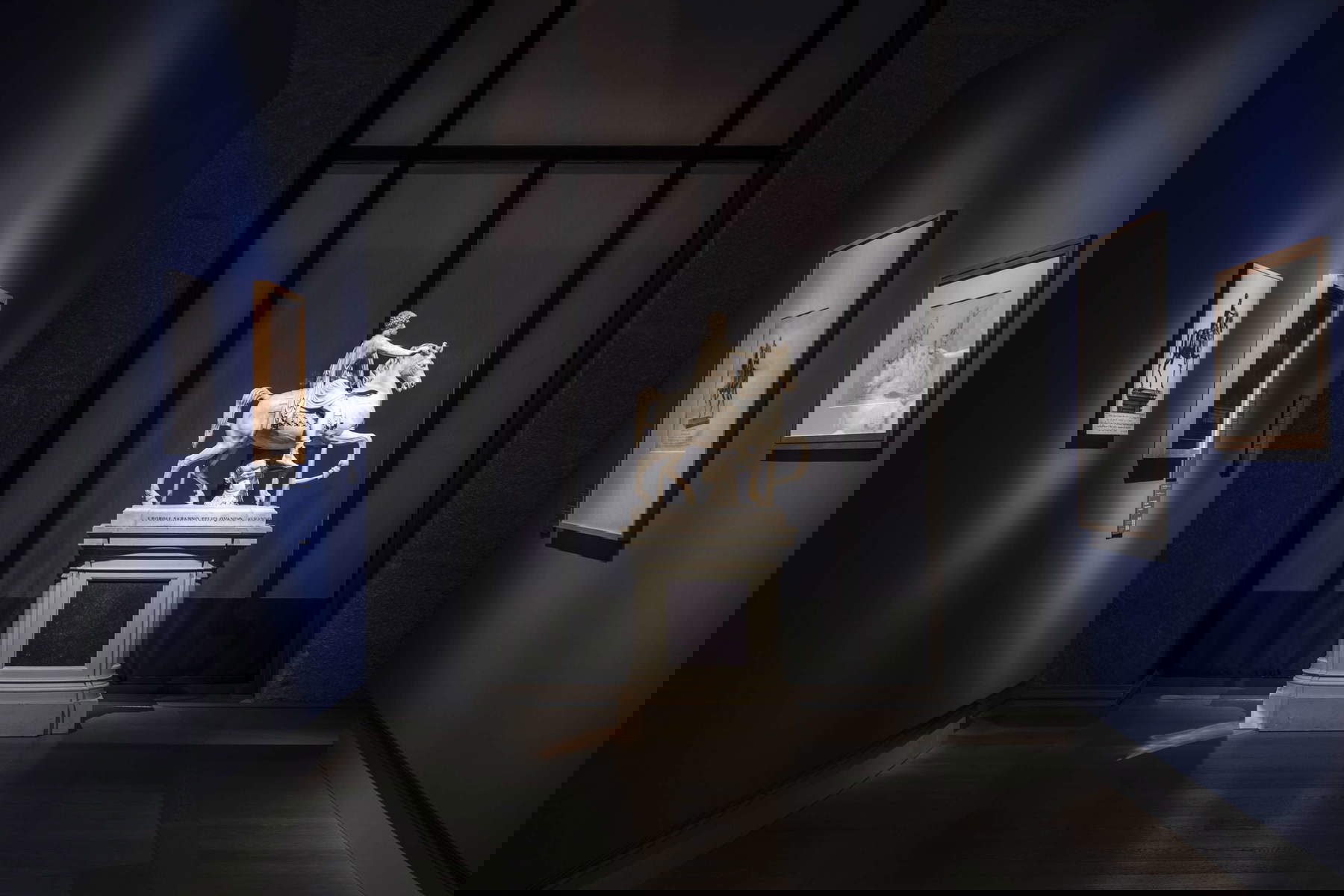
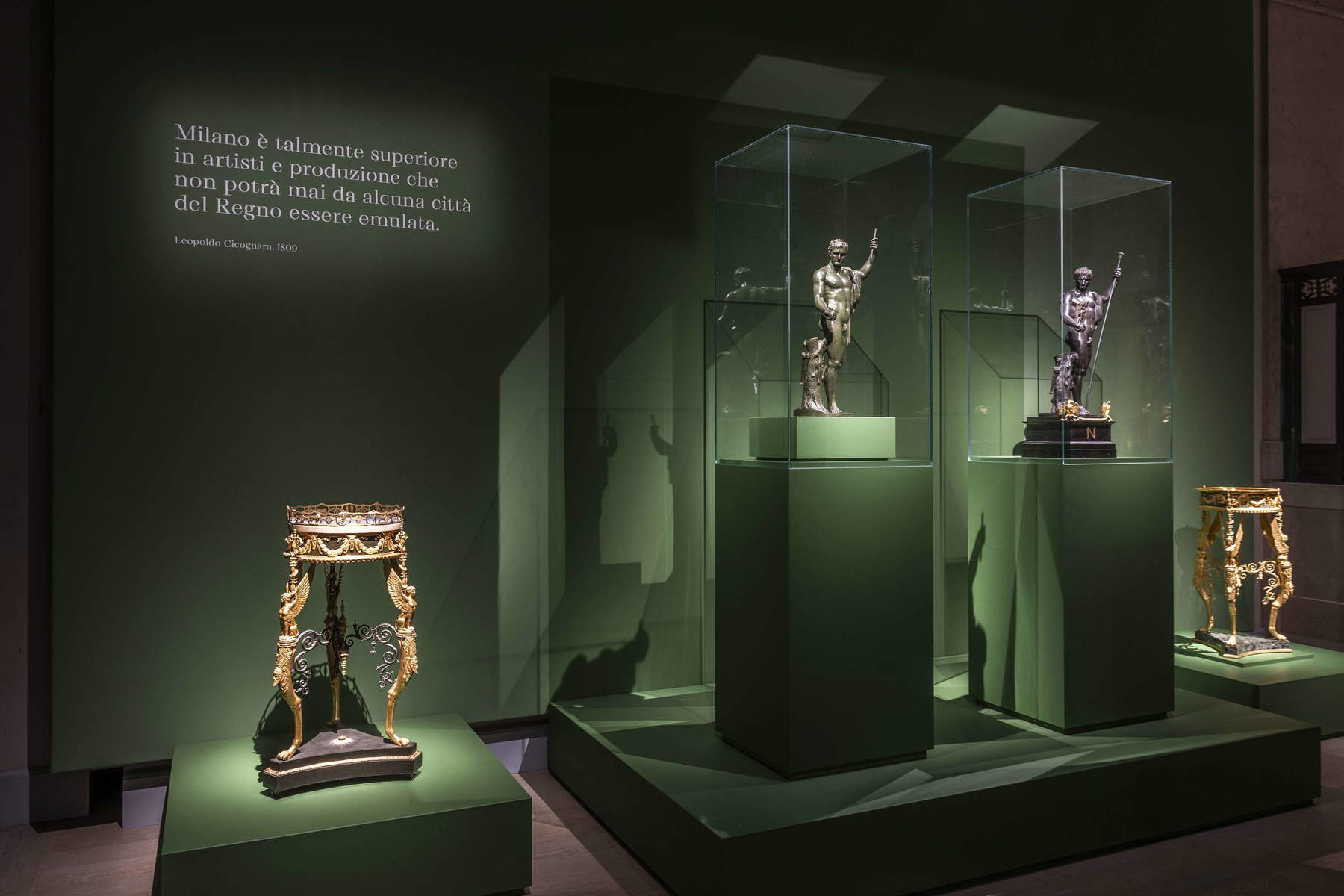
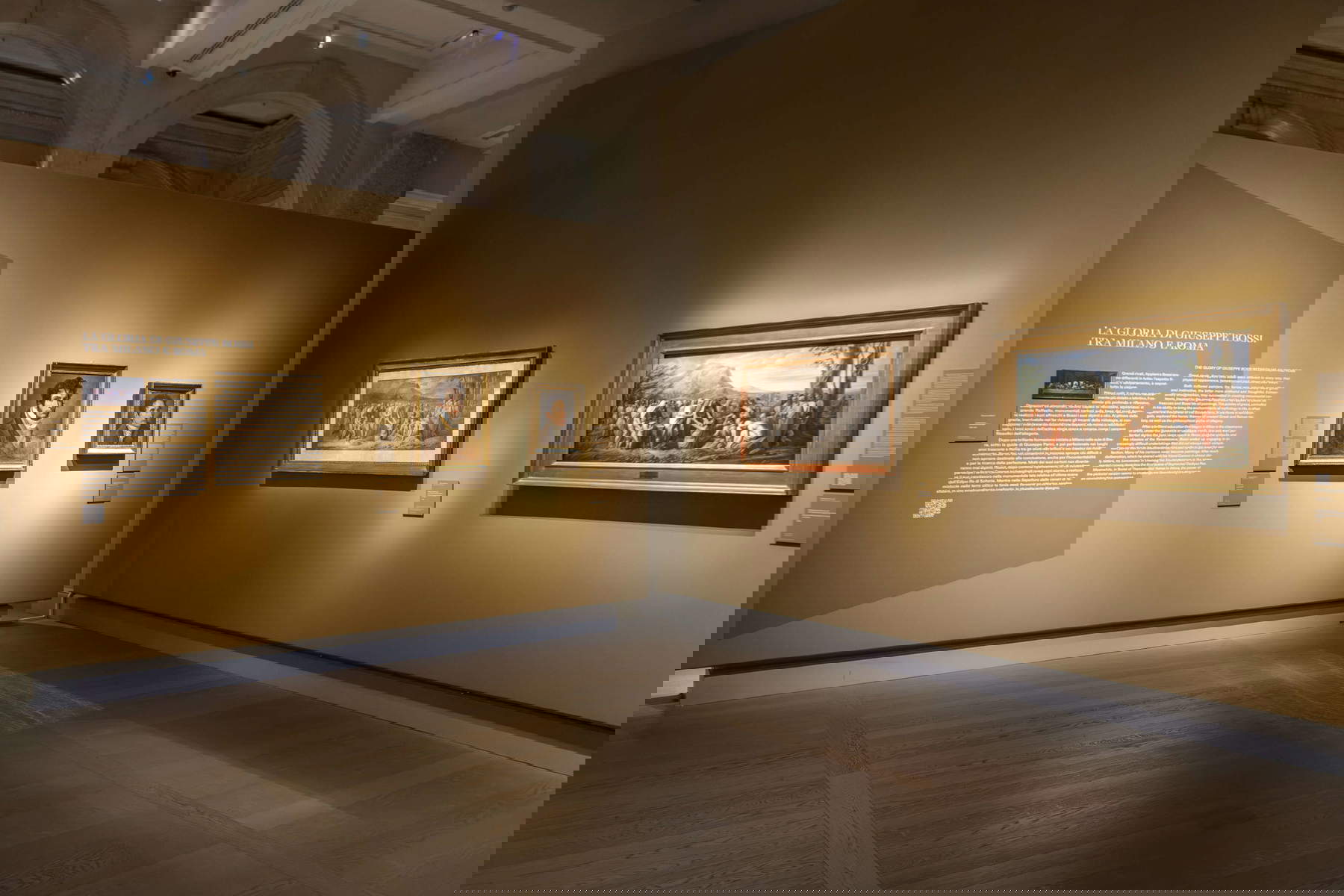
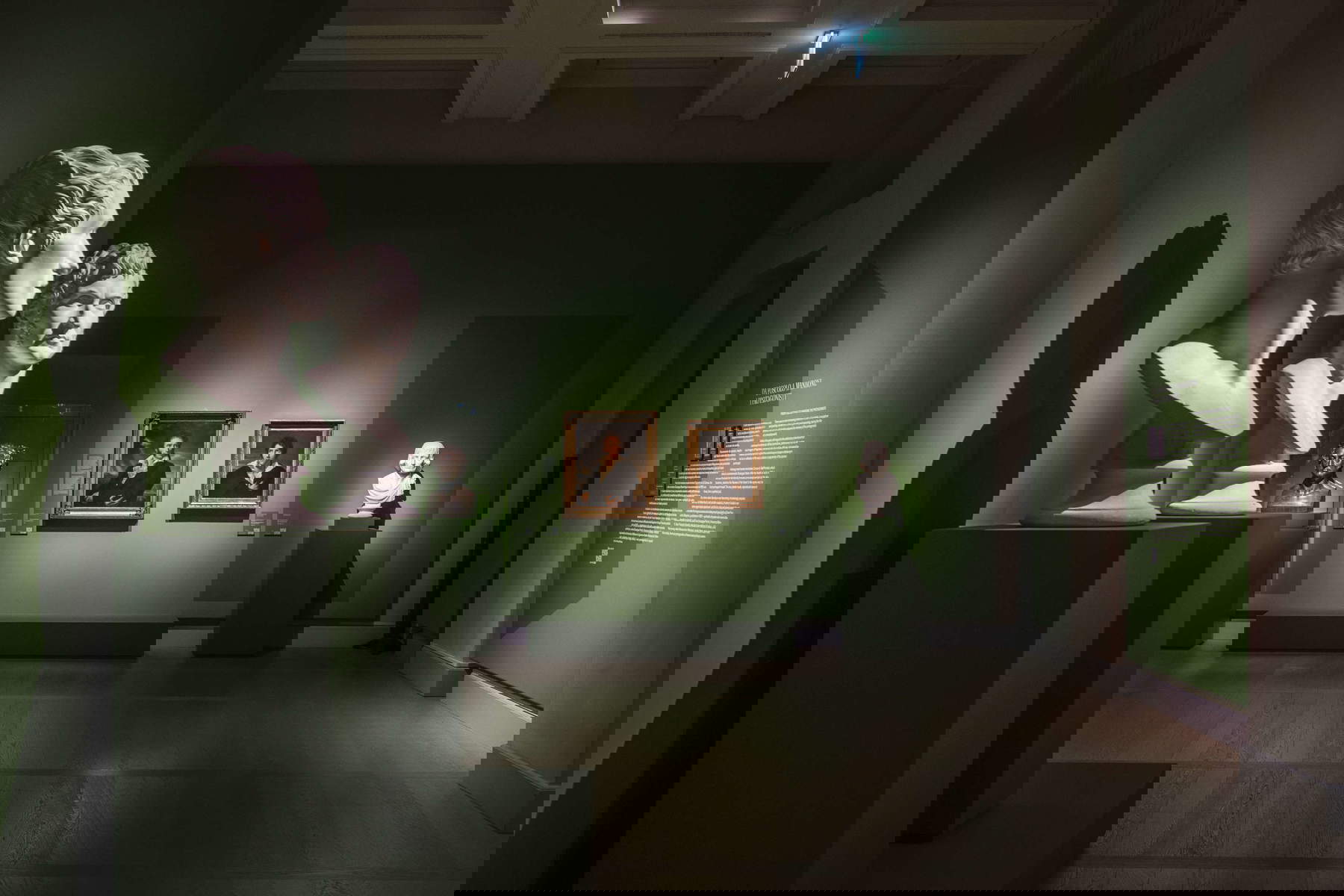
By sheer logical connection, since the idea of creating a commemorative monument to Napoleon in Milan originated from there, the writer would have then followed this first exhibition section with the section devoted to the Foro Bonaparte, which instead in the exhibition itinerary is located in the eighth section. Of the ambitious project inspired by ancient Rome that would have hosted patriotic festivals and military parades, but which, after the foundation stone was laid in April 1801, was never completed because it was too expensive and almost unfeasible, only a series of watercolor drawings by Giovanni Antonio Antolini, the Bolognese architect who conceived the founding project, remained. Preserved at the Bibliothèque nationale de France, they are on display here at the exhibition for the first time.
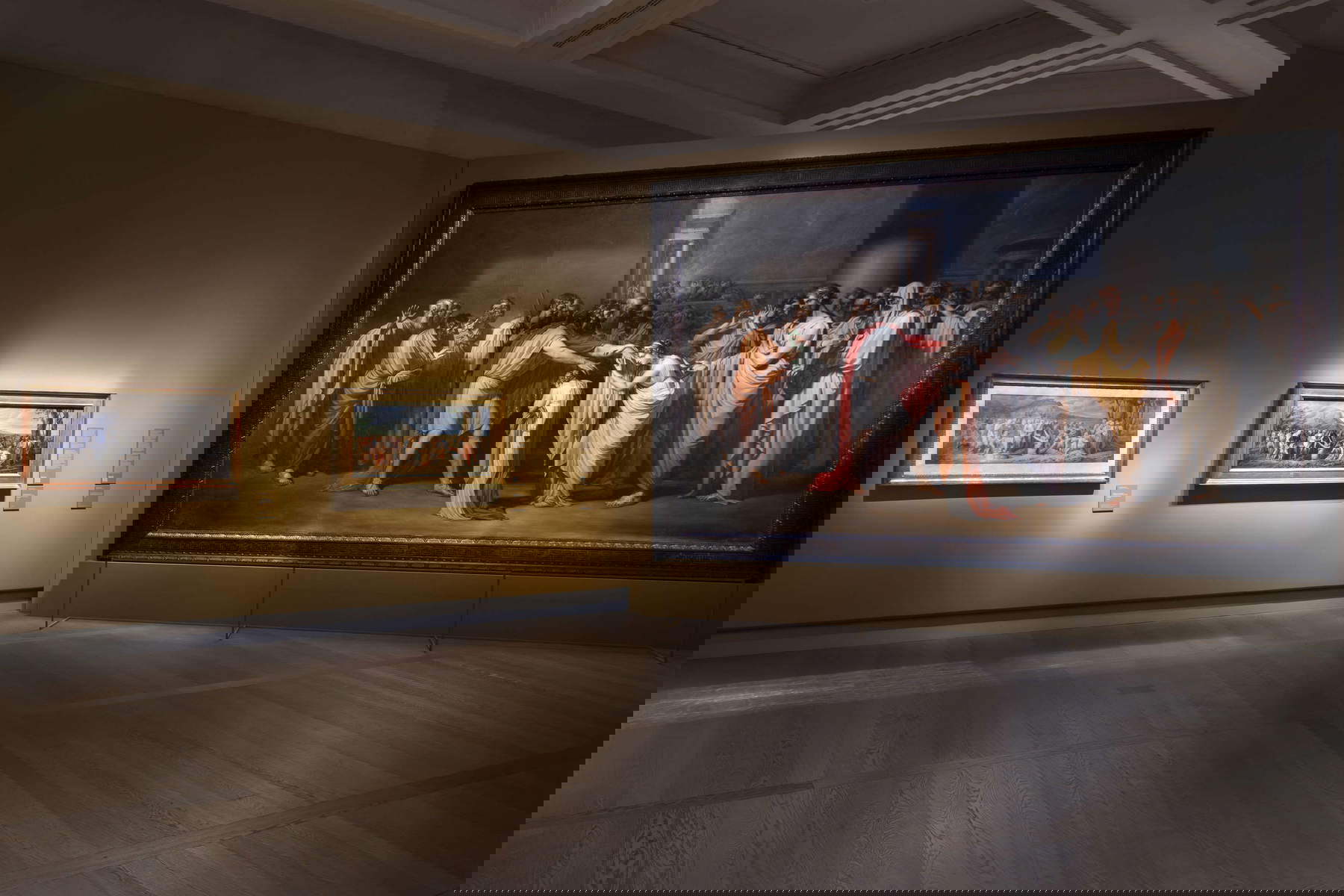
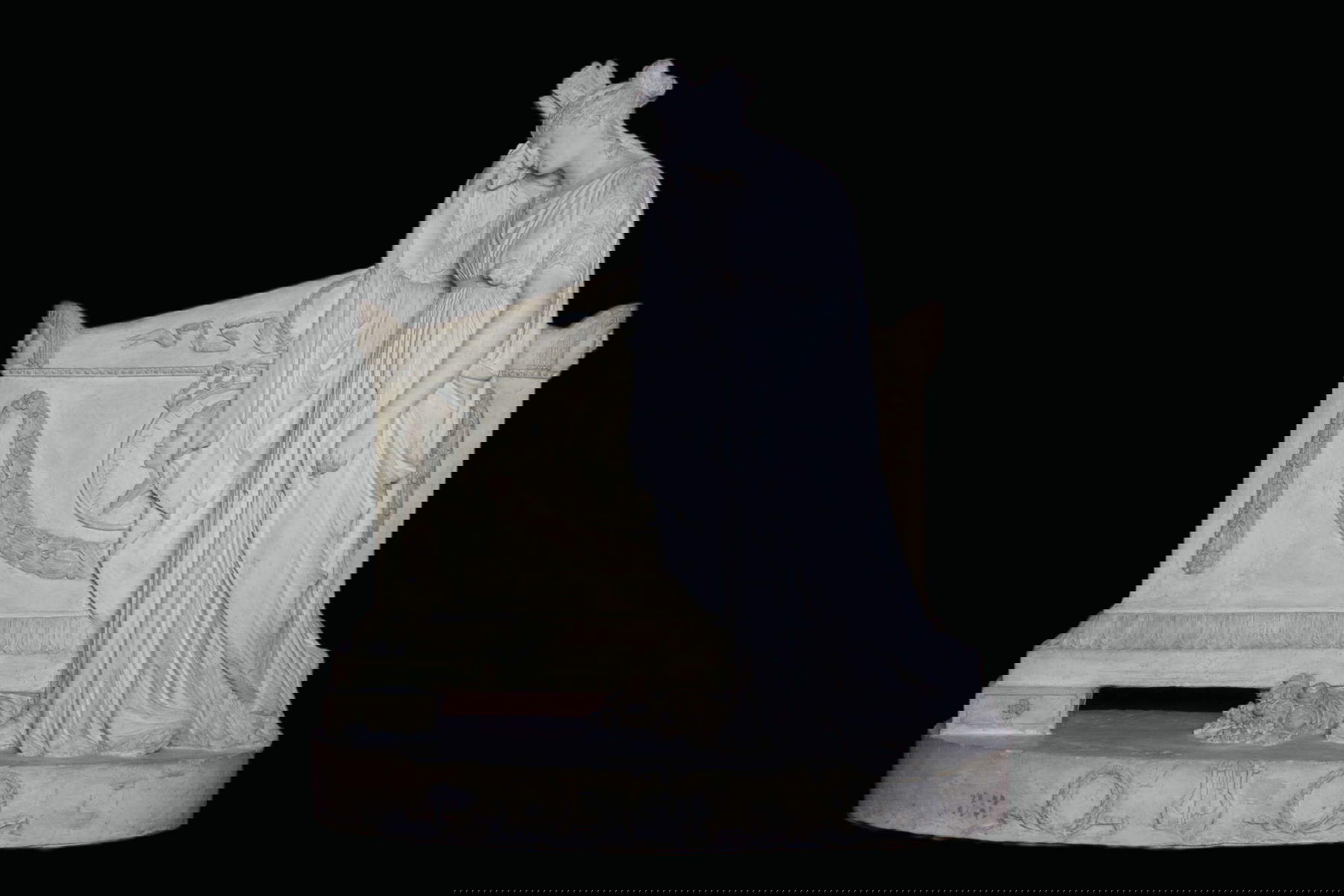
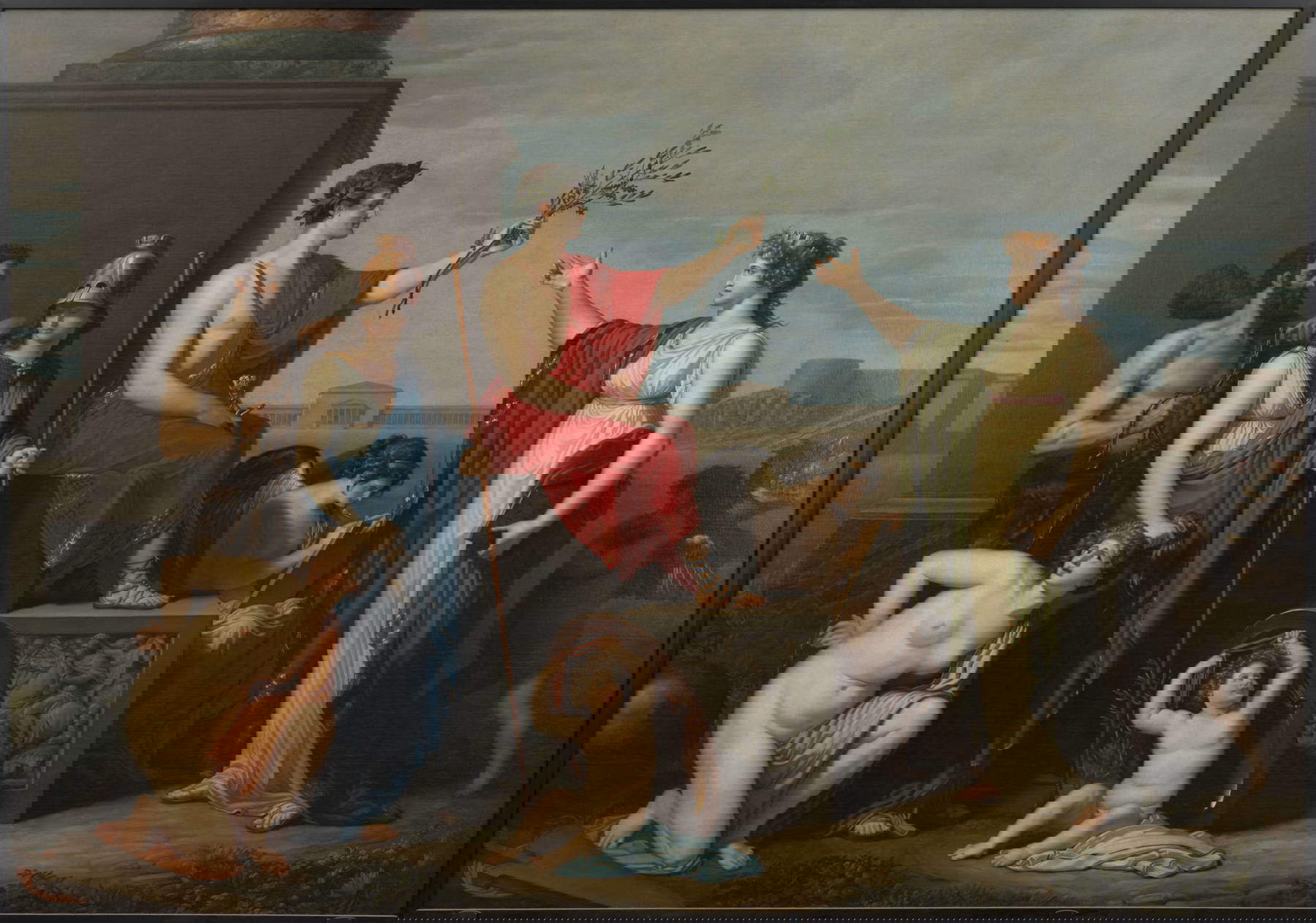
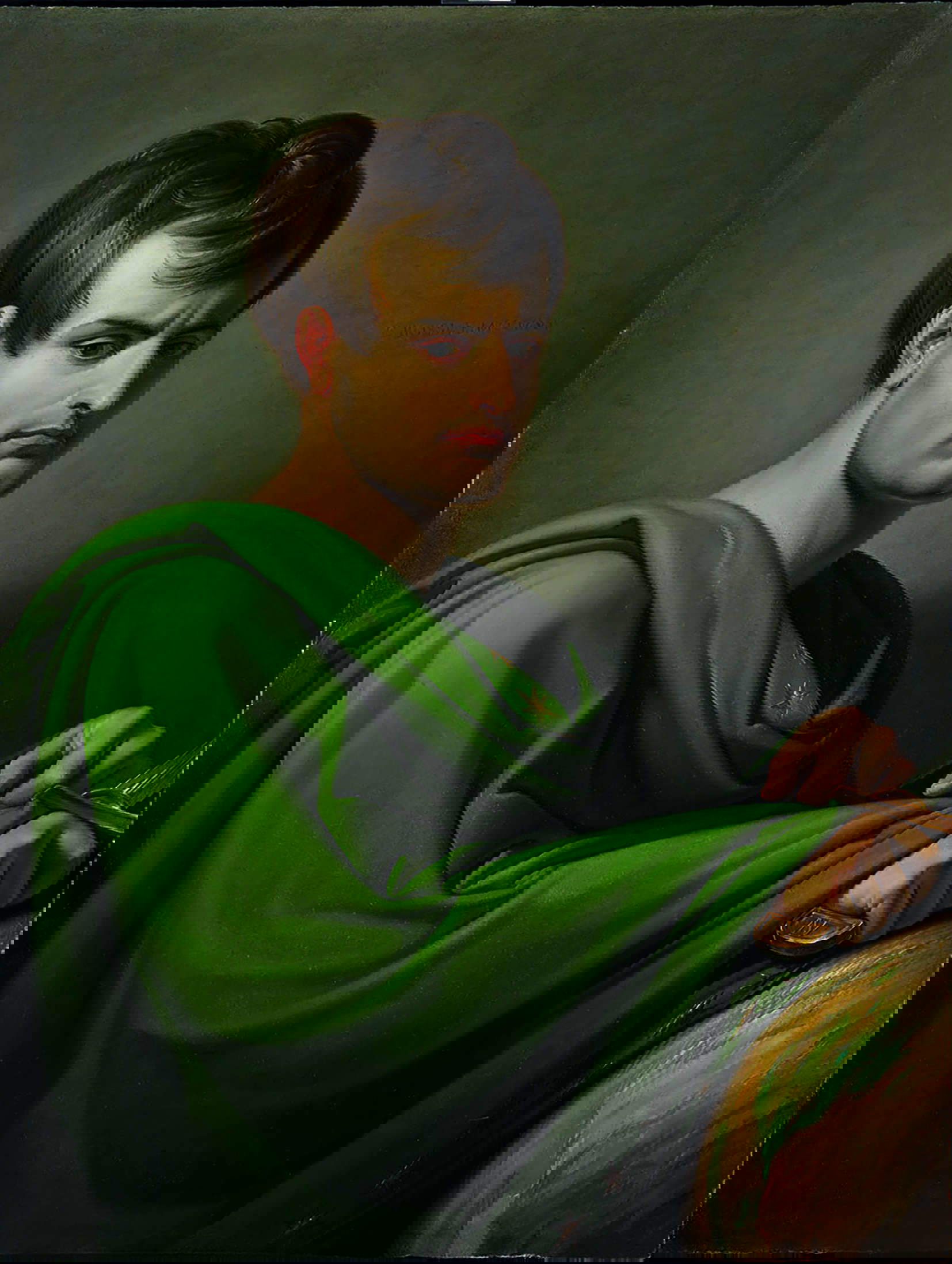
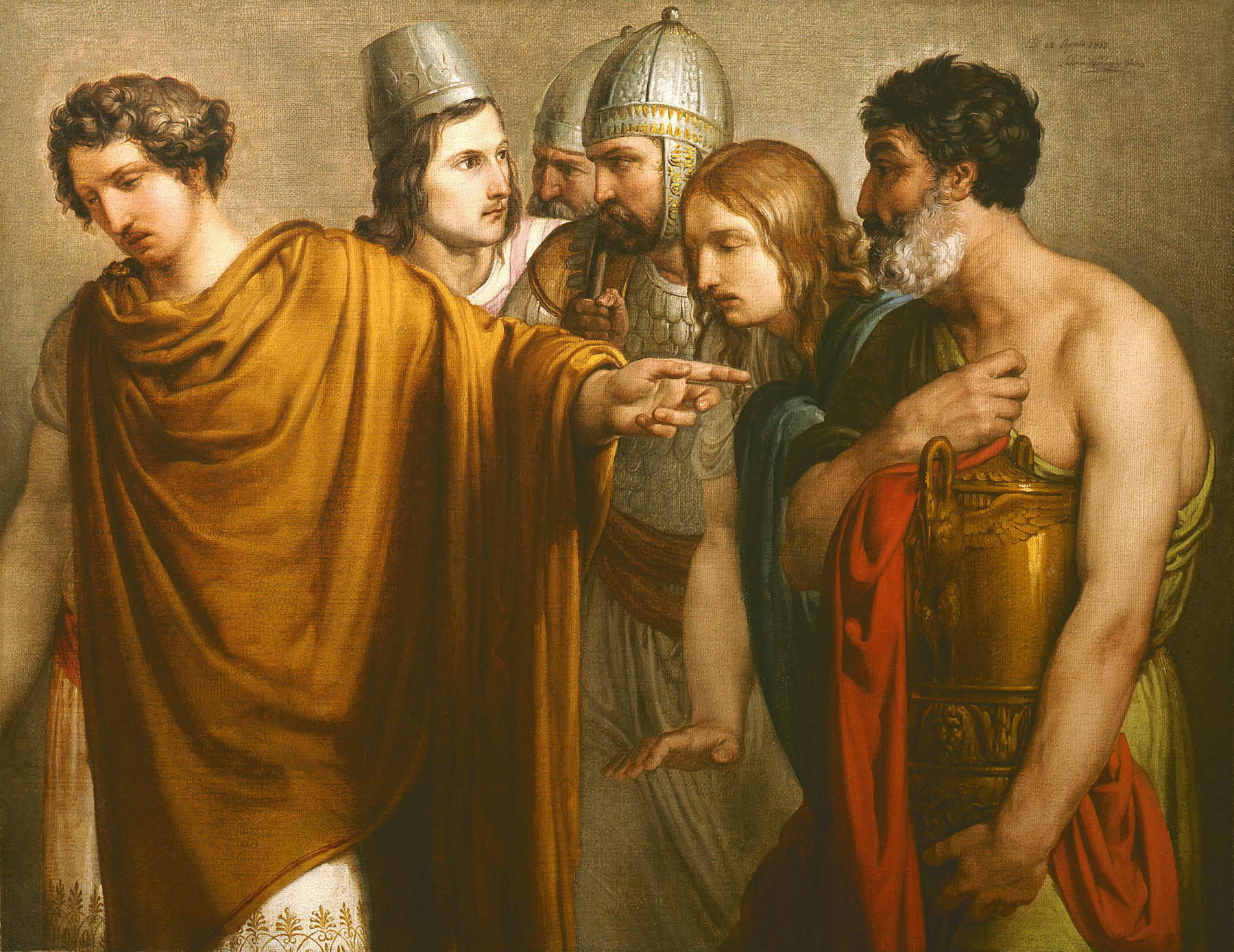
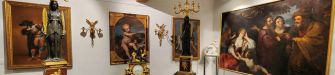
Returning to the second section, dedicated instead to Antonio Canova, Giuseppe Bossi and the image of Italy, we will pause in front of the imposing 1:1 scale photographic reproduction of the Recognition of the Italian Republic to Napoleon, painted by Giuseppe Bossi in 1802 kept at the Brera Academy of Fine Arts immovable due to its monumental size (304 by 436 centimeters) and fragility. Also intended for the planned Bonaparte Forum, but later placed in the National Palace (today’s Royal Palace), the work that won the competition, held to create a painting celebrating gratitude to Napoleon, depicts in the center “Bonaparte clothed in a purple paludment, and crowned with the triumphal laurel,” who “gives the Italian Republic an olive branch intermixed with one of oak, known symbols of peace the one, the other of solidity.” this is how Bossi himself describes the scene depicted. Then on Napoleon’s right are Minerva and Hercules, who “subject him to Fortune in vain reneging on the power of the two major deities.” To his left is the Genius of History, writing and handing down the facts to posterity. In the bas-relief on which Napoleon rests his feet, the victory of Marengo is not surprisingly depicted. The allegory of the Italian Republic, with his head crowned with towers and in his left hand the Constitution, is the first modern and Risorgimento image of Italy: it anticipated in its turreted iconography the weeping Italy in Canova’s Funeral Monument to Vittorio Alfieri (plaster sketches from Bassano del Grappa, Possagno, Carrara and Rome on display). Prominent in the background of the painting is the Foro Bonaparte. After portraying him in the Recognition, Bossi depicted Napoleon again, this time in a brilliant green cloak, leaning on the globe and holding his sword (note the “N” on the hilt) as a conqueror, in the 1806 painting on display here (the exhibition’s guiding image), long thought to be missing and reappearing only in 2013 when it was identified by Mazzocca. Instead, a plaster cast of the colossal-sized Portrait of Napoleon used by Canova for the statue of Napoleon as a peacemaking Mars was placed next to it.
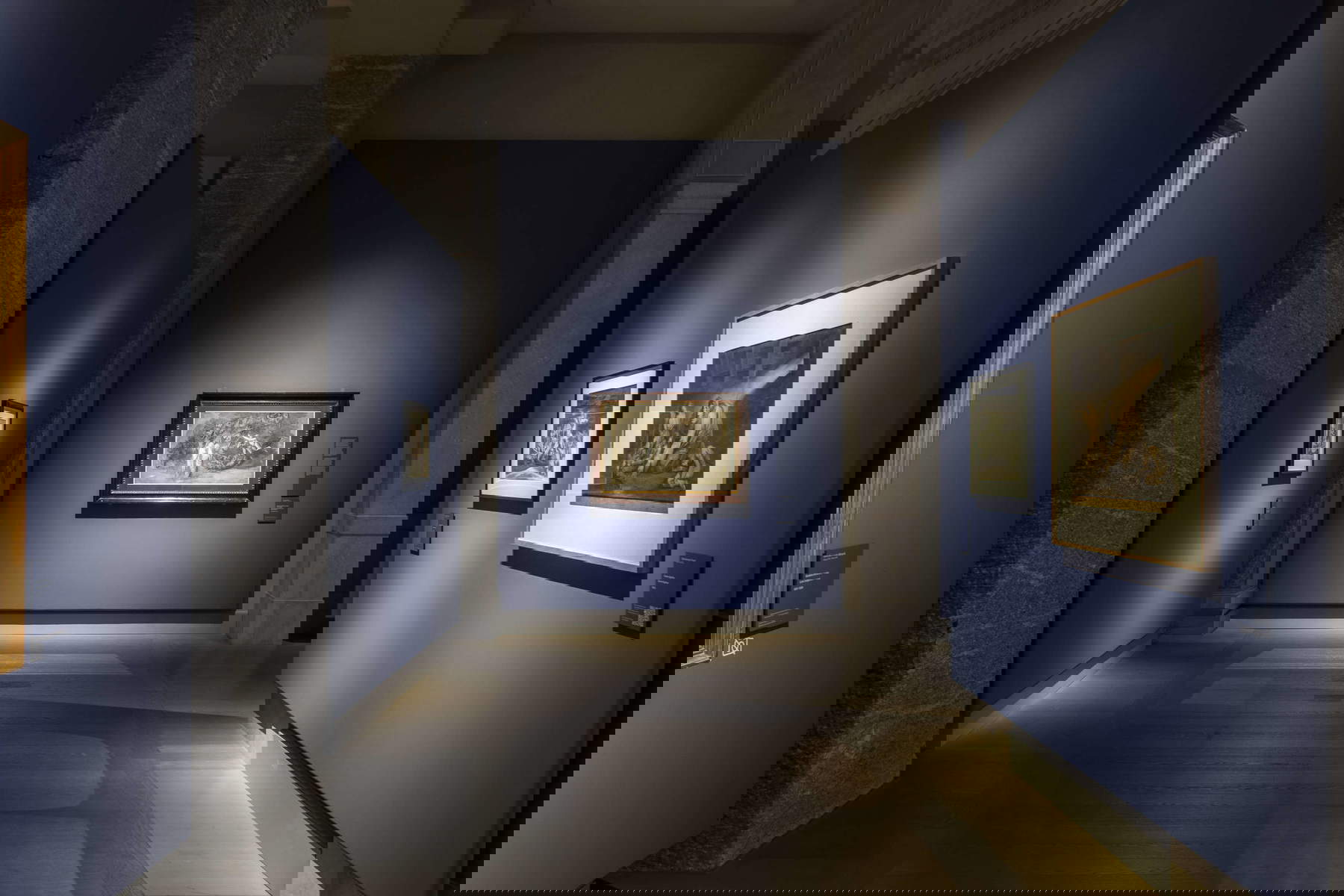
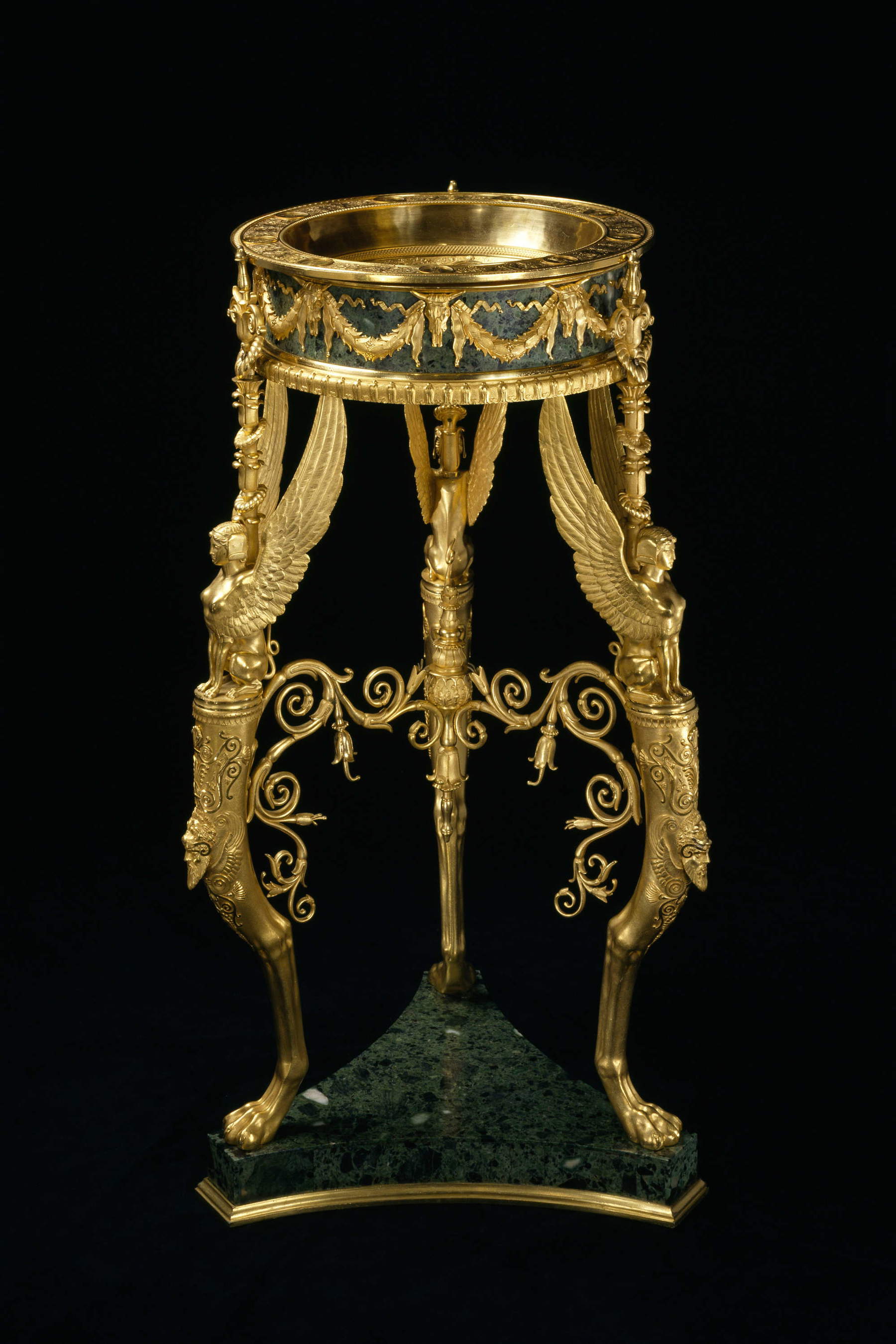
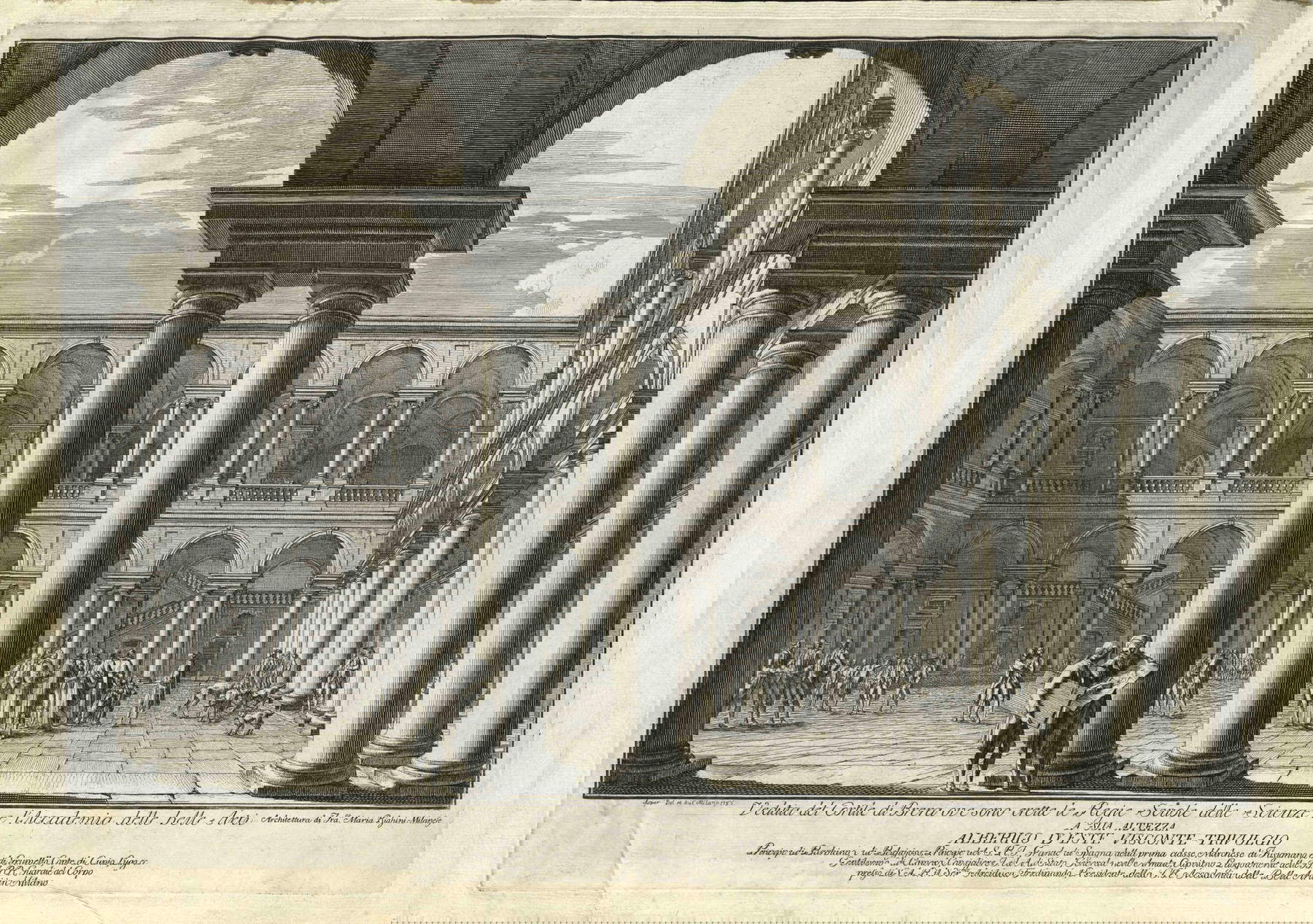
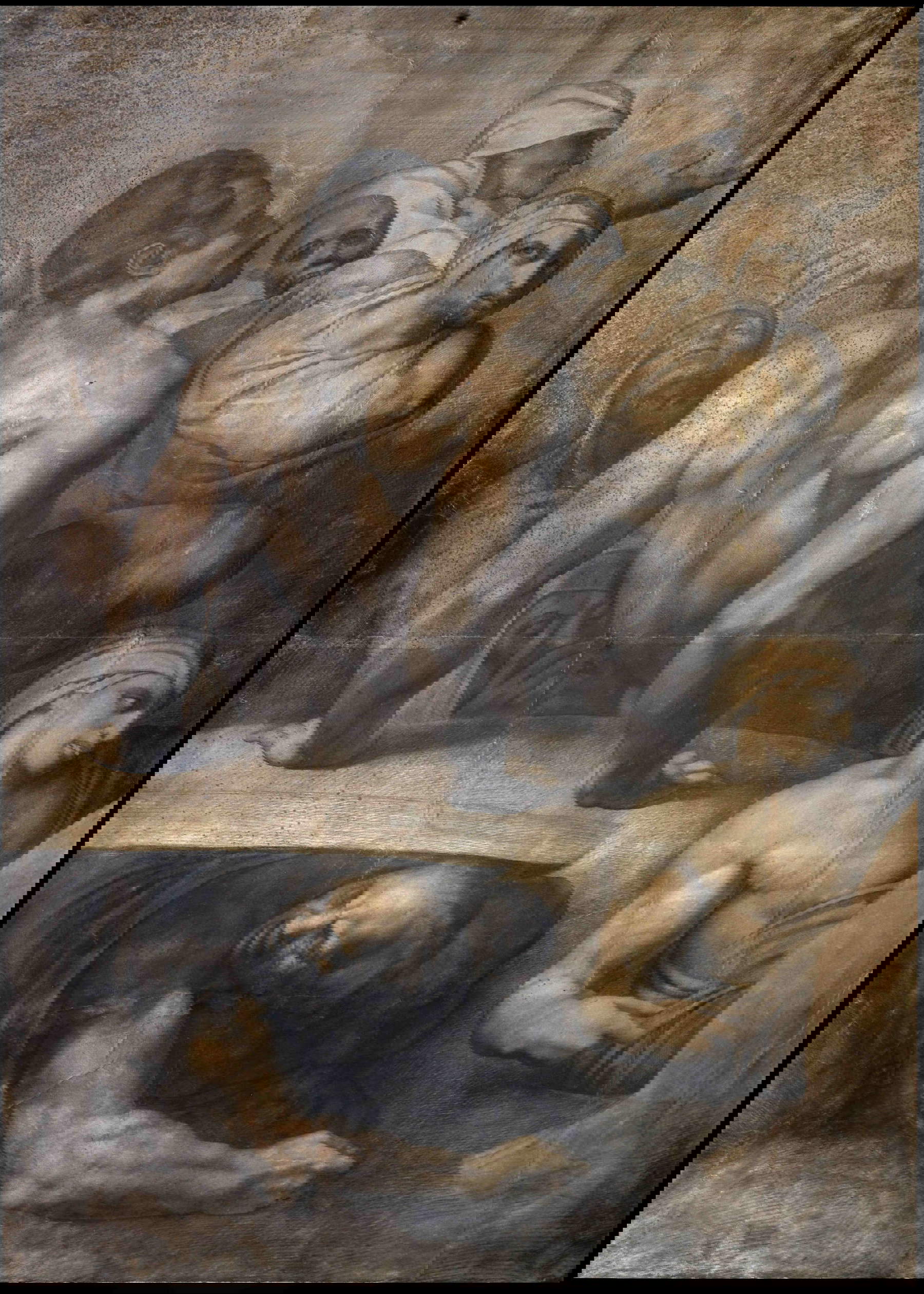
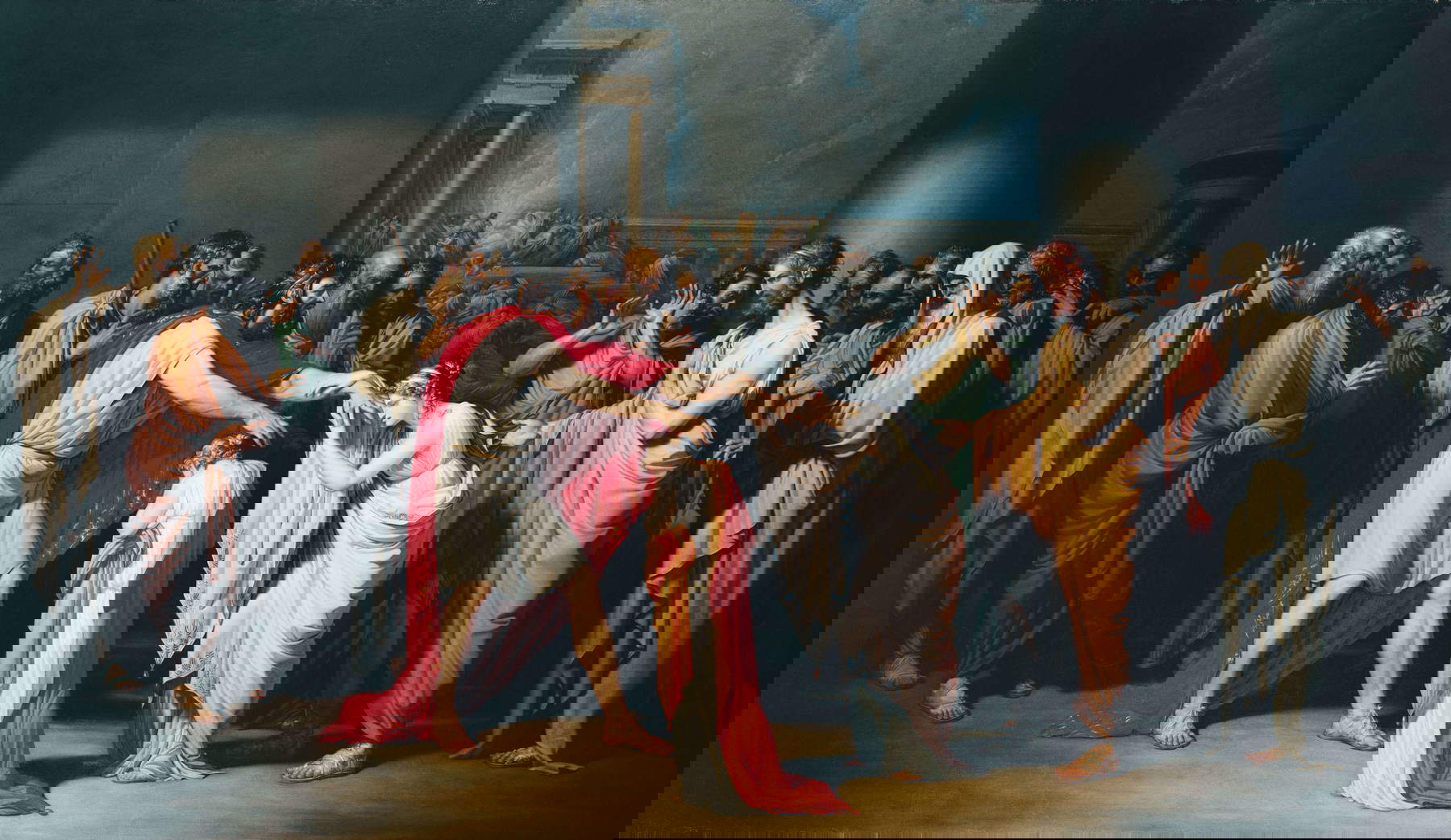
Giuseppe Bossi is also found in the fifth section, after the not particularly exciting ones devoted to the decorative arts (of rare beauty and refinement, however, is Liborio Londini ’s agate cameo depicting theAurora that Guido Reni frescoed in the Casino of Palazzo Rospigliosi in Rome, a testament to how great earlier masterpieces were reinterpreted in the neoclassical era) and to views of Rome and Milan by Giovanni Battista Piranesi and Domenico Aspari. The painter, trained first at the Brera Academy under Giuseppe Parini and then in Rome on ancient models and Renaissance classics, was bound by a deep friendship with Antonio Canova, with whom he also had a close and continuous exchange of correspondence: next to his Self-portrait in a private collection, we find here in fact a portrait that he himself painted for his friend Canova, preserved at the GAM in Milan. In the letters he repeatedly confronted the sculptor about the long creative process of one of his greatest and monumental masterpieces, theMeeting of Blind Oedipus with his Daughters, exhibited here, which began in 1800 and was officially presented to the public on the occasion of the Exposition of Arts and Manufactures in Brera to celebrate the coronation of Napoleon as King of Italy. A large painting in which Bossi depicts the last scene of Sophocles’Oedipus Rex tragedy, the dramatic encounter between Oedipus, already blind, and his daughters Ismene and Antigone, in the presence of Creon, Tiresias and the lords of Thebes. Traces of the work had long been lost; it resurfaced in 2002 on the occasion of the exhibition Napoleon and the Italian Republic held in Milan the following year at the Rotonda di via Besana, where it was presented. Finally, the fine comparison of the drawing and painting versions of Themistocles’ Burial of the Ashes in the Attic Earth can be seen, through which one can understand, in addition to his pictorial ability, his extraordinary skill in drawing. As can also be seen in the next section, devoted precisely to drawing, in which his Damned andDante’s Meeting with Paolo and Francesca are juxtaposed with works by Tommaso Minardi, Bartolomeo Pinelli, Pelagio Palagi, Luigi Sabatelli and Francesco Hayez.
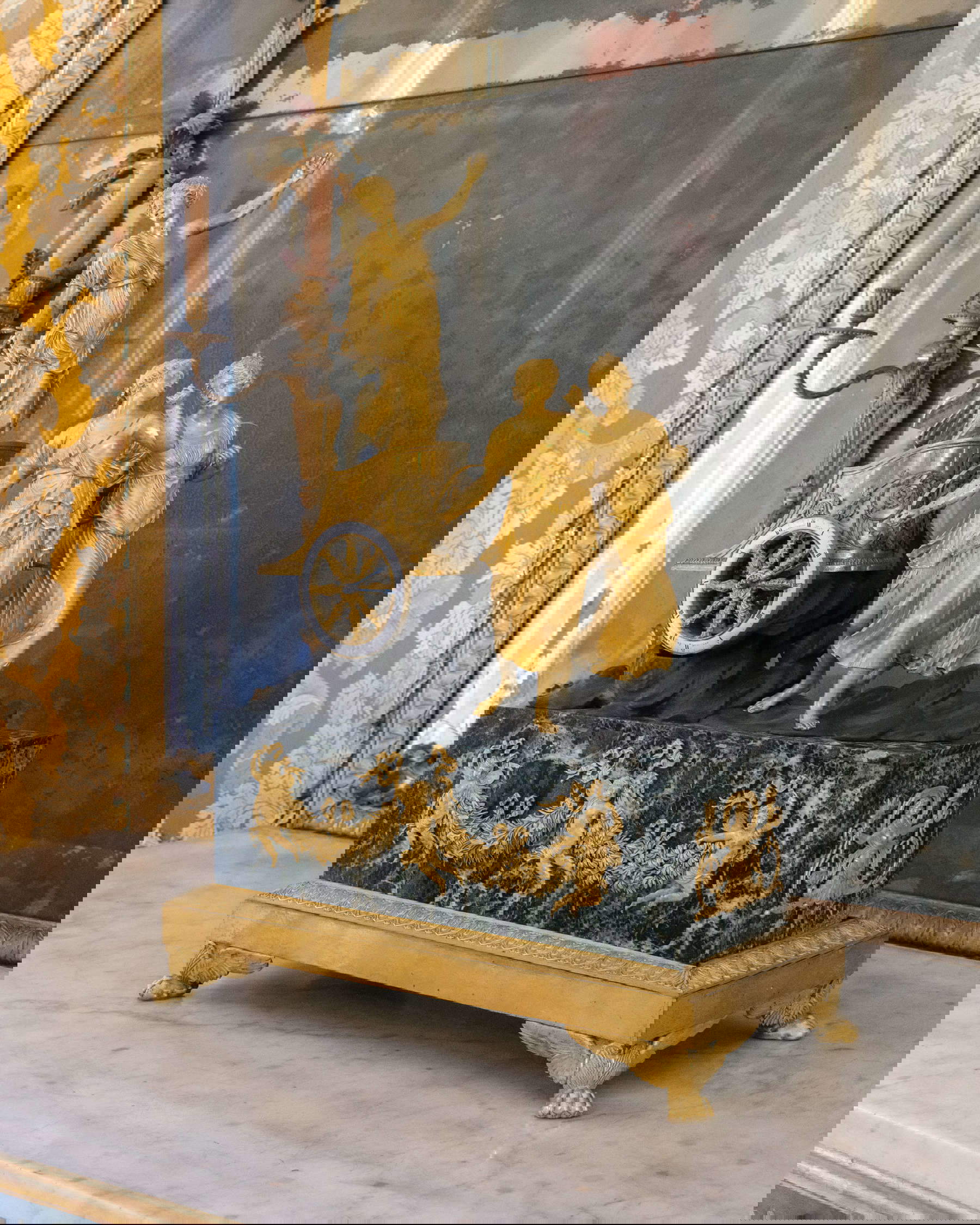
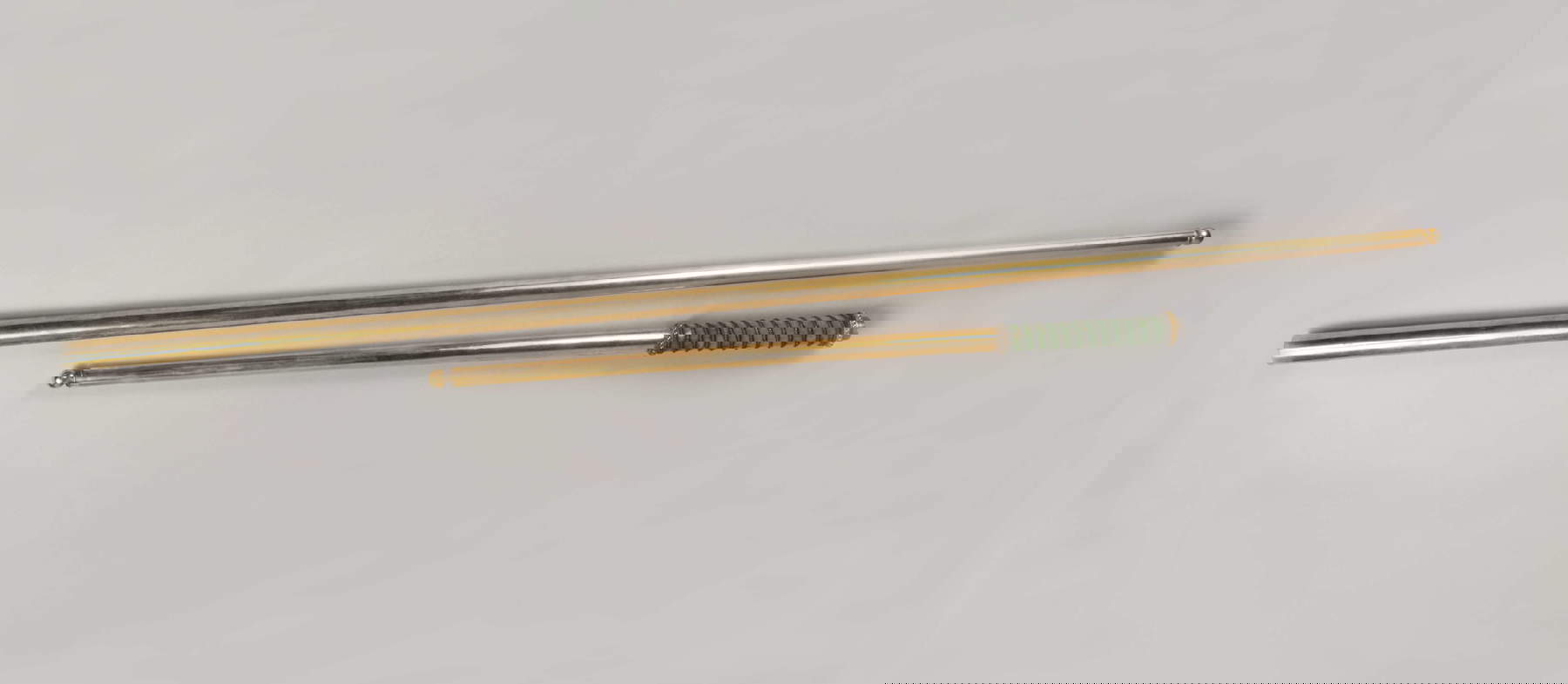
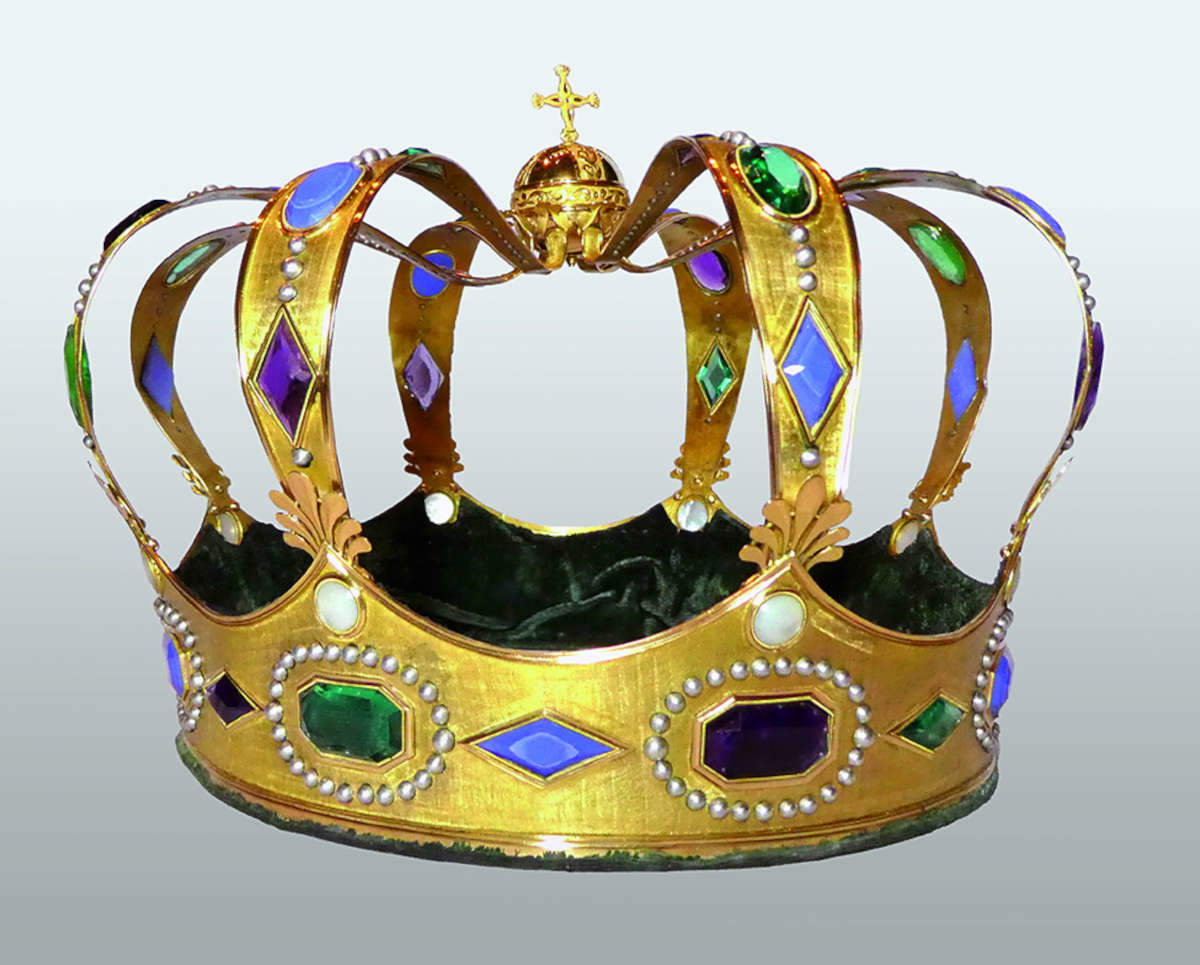
Another significant moment of the exhibition at the Gallerie d’Italia is the display of one of the reproductions made in 1987 by Bruno Ferri of the Iron Crown (the original is kept in the Chapel of Theodolinda in Monza Cathedral) and the original Honors of Italy (crown, scepter, hand of justice, staff and mantle), made on the occasion of Napoleon’s coronation as king of Italy by Parisian manufactures and restored in 2022 as part of Banca Intesa’s Restitutions project. They are on display here to commemorate the famous ceremony that took place in Milan Cathedral on May 26, 1805, when Napoleon placed the Iron Crown on his head alone, accompanying the solemn gesture with these words, “God has given it to me, woe to those who touch it.” Accomplishing the official portrait of Napoleon as King of Italy was Andrea Appiani, who had just been appointed premier peintre: he depicted him with the Honors of Italy, wrapped in the precious embroidered green velvet cloak, while resting his left hand on the crown of the Kingdom of Italy. From this prototype, now preserved in Vienna, various copies and versions were derived, including the one displayed here, also by Appiani, from the Museo del Risorgimento in Brescia.
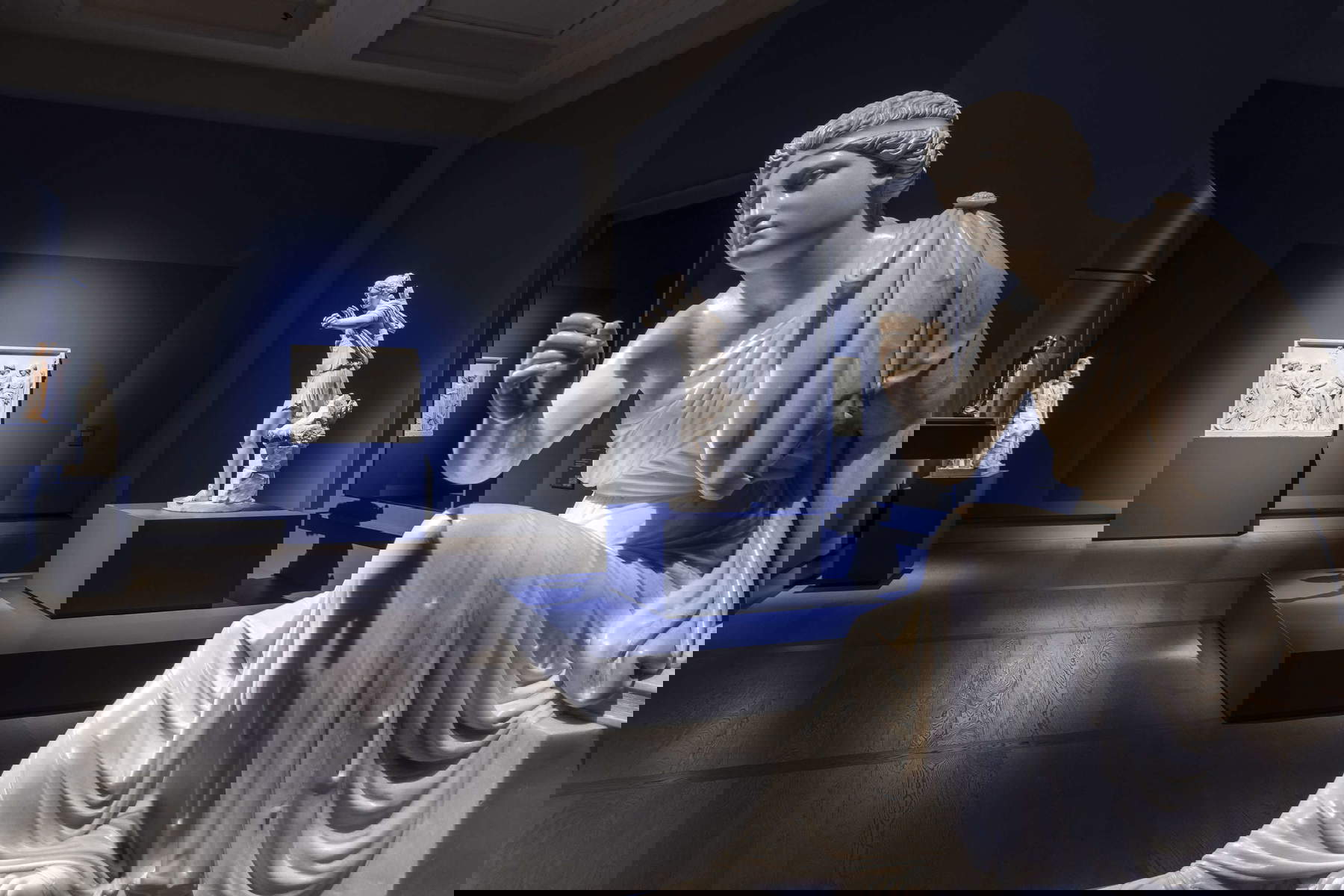
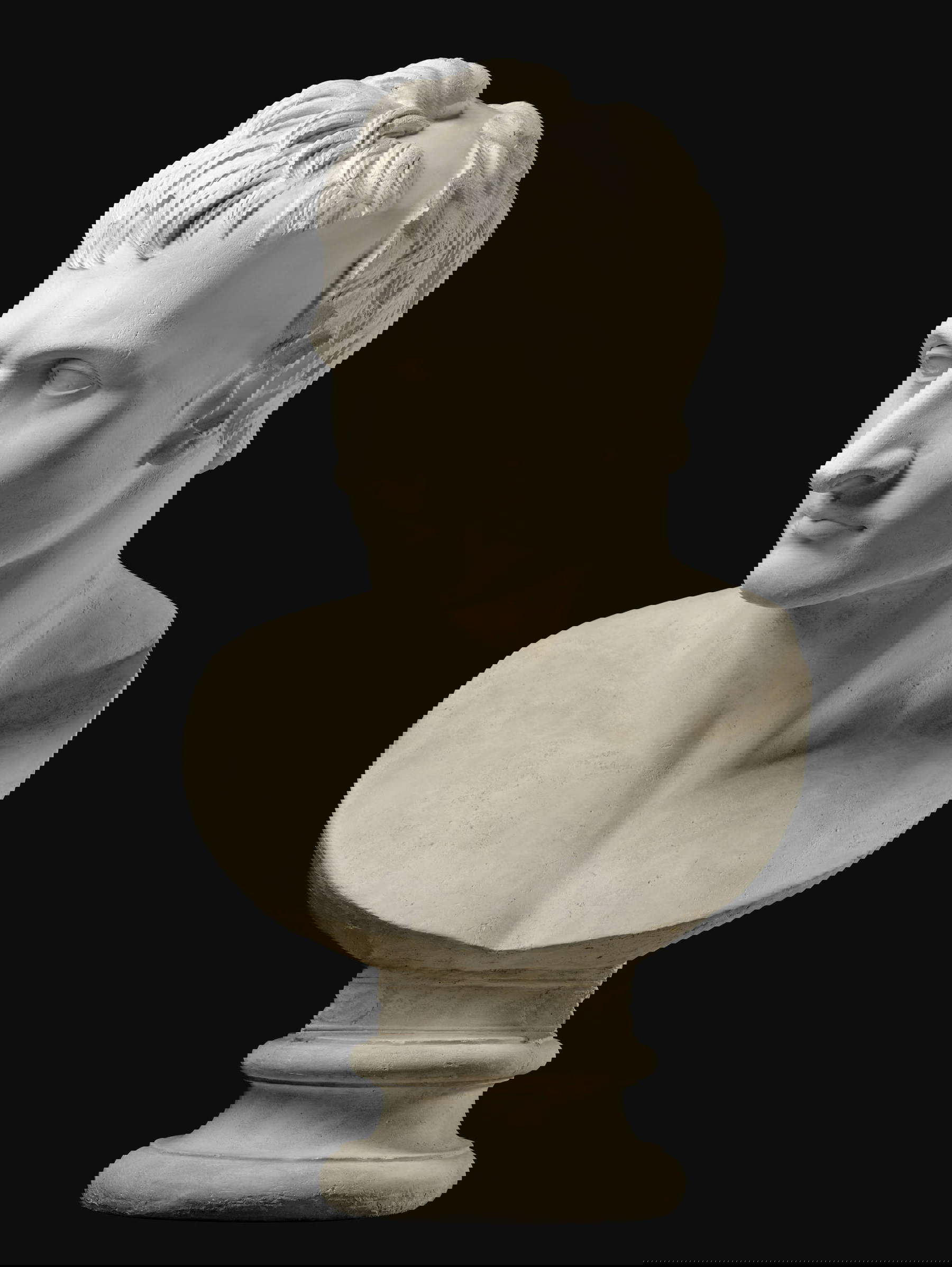
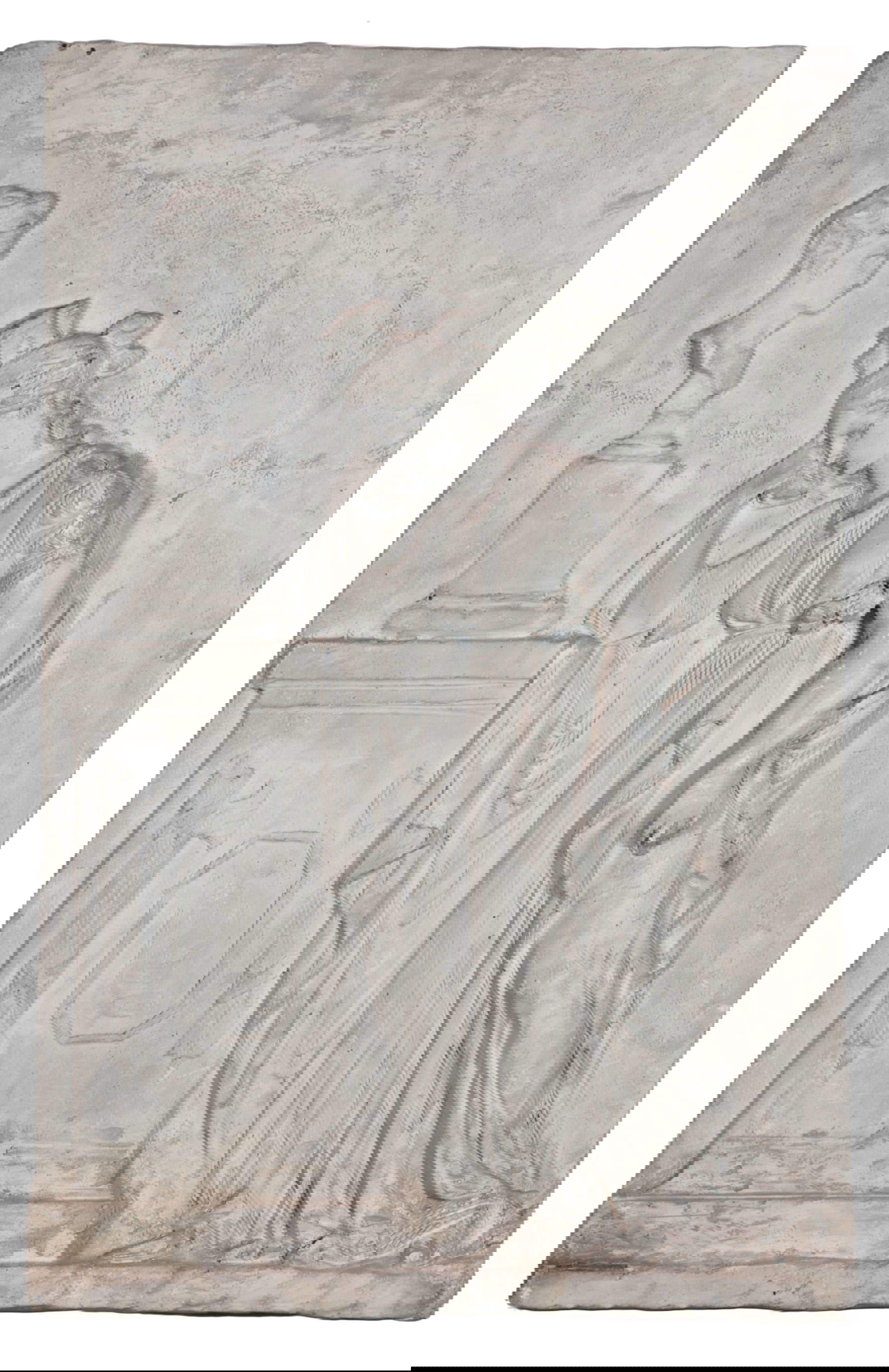
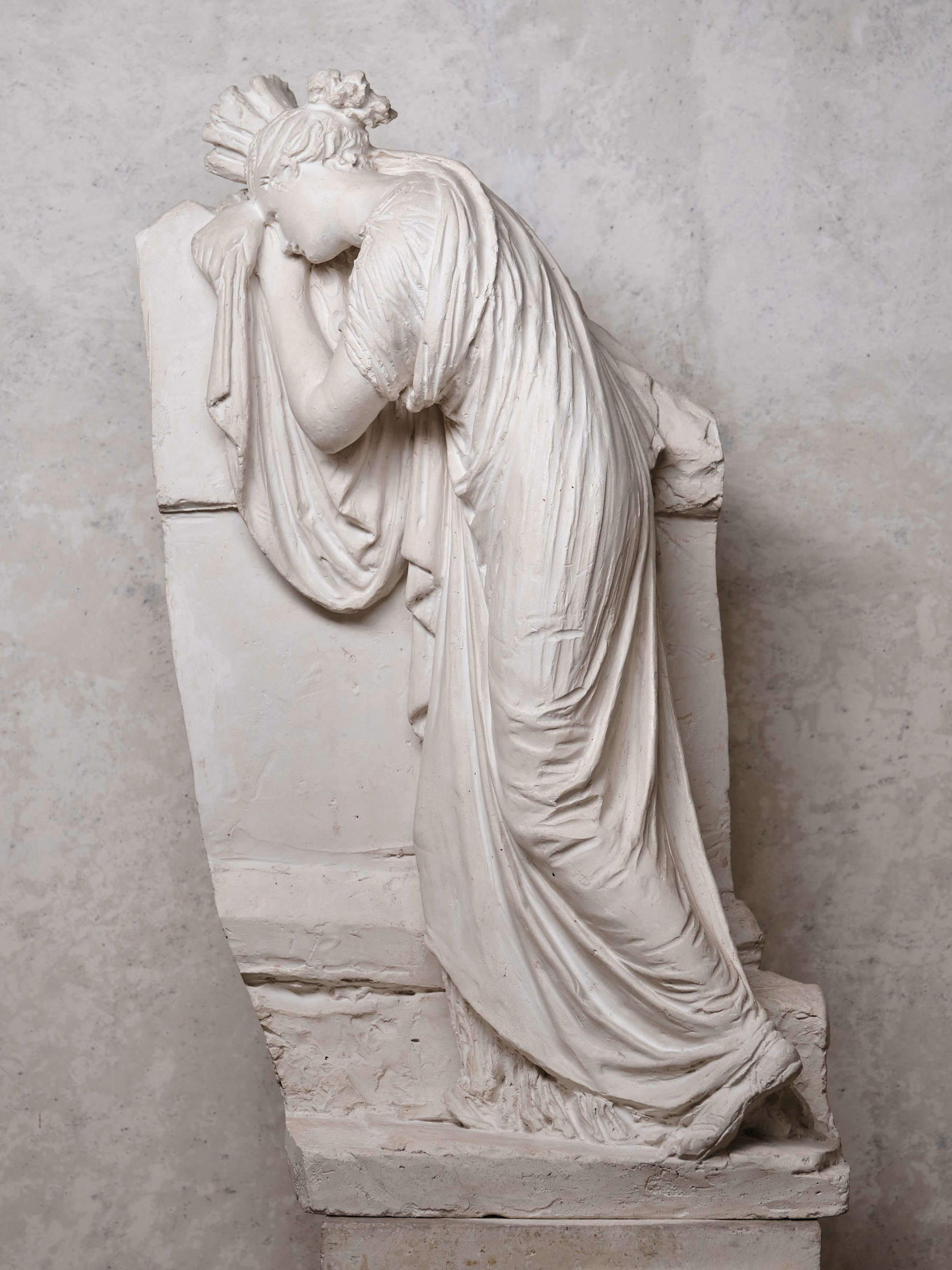
This is followed by the aforementioned section on the Foro Bonaparte, another important focus of the Milanese exhibition, and finally concludes with the last two, one devoted to sculpture from Rome to Milan (exhibited there, for example, are the Minerva infusing the soul to the automaton modeled by Prometheus by the Roman Camillo Pacetti, who moved to Milan for his appointment as professor of sculpture at Brera and brought with him the plaster version he had previously executed, and theAtalanta hunting the wild boar Calidonio by theForlì-born Luigi Antonio Acquisti, who after sixteen years in Rome moved to Milan to participate in the construction site of the facade of the Duomo, bringing with him that statue as evidence of his reflections on the dynamism of Canova’s marbles), the other dedicated to portraits of the protagonists of the Napoleonic age. Beginning with two plaster casts by Canova from Villa Carlotta in Tremezzina that depict side by side in an ideal pendant one of his self-portraits and the Portrait of his friend Giuseppe Bossi who had recently passed away, there follows, among others, Giuseppe Parini, Ugo Foscolo, Giovanni Battista Sommariva, Vincenzo Monti, Alessandro Manzoni and the unpublished portrait of Bianca Milesi.
From the Colossal Horse to the protagonists of Neoclassicism, the exhibition reflects on an era of great ferment in painting, sculpture and the decorative arts. In addition to Canova, the figure of Giuseppe Bossi, a painter little known to the general public who nonetheless was as central to the period as Andrea Appiani, best known for being Napoleon’s official painter, certainly emerges here. Effigyed by artists and evoked through the Honors of Italy, the latter is the real protagonist of the entire exhibition, which, as already mentioned, follows a seesaw course, between moments of notable prominence (the Colossal Horse, Bossi’s masterpieces, the Honors of Italy, the nucleus of drawings by Giovanni Antonio Antolini) and others more tepid. Finally, if in title and intent, Rome and Milan are the capital cities of Neoclassicism, the impression is that of an exhibition unbalanced toward Milan, where the Eternal City is mostly evoked through references to the antique. Completing the exhibition is a fine catalog with entries for all the works. Taken as a whole, a relevant opportunity to learn about vicissitudes of rediscovery and to reconstruct a web of cultural relations that places in dialogue personalities who contributed to defining the face of Italian Neoclassicism, where reflection on the ancient is intertwined with instances of renewal. In this perspective, Milan appears as a cultural laboratory that profoundly affected the imagination of the time.


The author of this article: Ilaria Baratta
Giornalista, è co-fondatrice di Finestre sull'Arte con Federico Giannini. È nata a Carrara nel 1987 e si è laureata a Pisa. È responsabile della redazione di Finestre sull'Arte.
Warning: the translation into English of the original Italian article was created using automatic tools. We undertake to review all articles, but we do not guarantee the total absence of inaccuracies in the translation due to the program. You can find the original by clicking on the ITA button. If you find any mistake,please contact us.



















 IT
IT FR
FR DE
DE ES
ES CN
CN


