





From Dec. 12, 2025 to Feb. 28, 2026 Galleria Continua Roma presents Primavera Romana, a solo exhibition by Adel Abdessemed, an internationally known French artist of Berber origin. The exhibition opens on Friday, December 12, 2025 and marks the start of a new program of exhibitions, projects and collaborations with which the gallery intends to reaffirm its presence in the capital’s cultural scene, focusing on contemporary artistic practices and a dialogue between languages, generations and territories.
Active on the international scene since the early 2000s, Abdessemed has developed a research that crosses different media and techniques, from video to photography, from drawing to painting, from performance to installation. At the center of his work recur themes such as integration, racism, nudity and overcoming taboos imposed by religions, addressed in a transversal way and often through images of strong visual impact. His practice is based on a constant revision of expressive parameters and the use of references to other artistic fields and established cultural images. PrimaveraRomana represents the artist’s first solo exhibition in Rome and brings together a large body of drawings made between 2010 and 2025. The works, organized by thematic nuclei, range from intimate formats to large-scale works. Drawing, understood as an autonomous and non-preparatory medium, allows Abdessemed to transcend technical limitations to focus on the essence of the subjects. The stroke alternates precision and instinct, rapidity and energy, returning images that transform ordinary elements into forms charged with symbolic values.
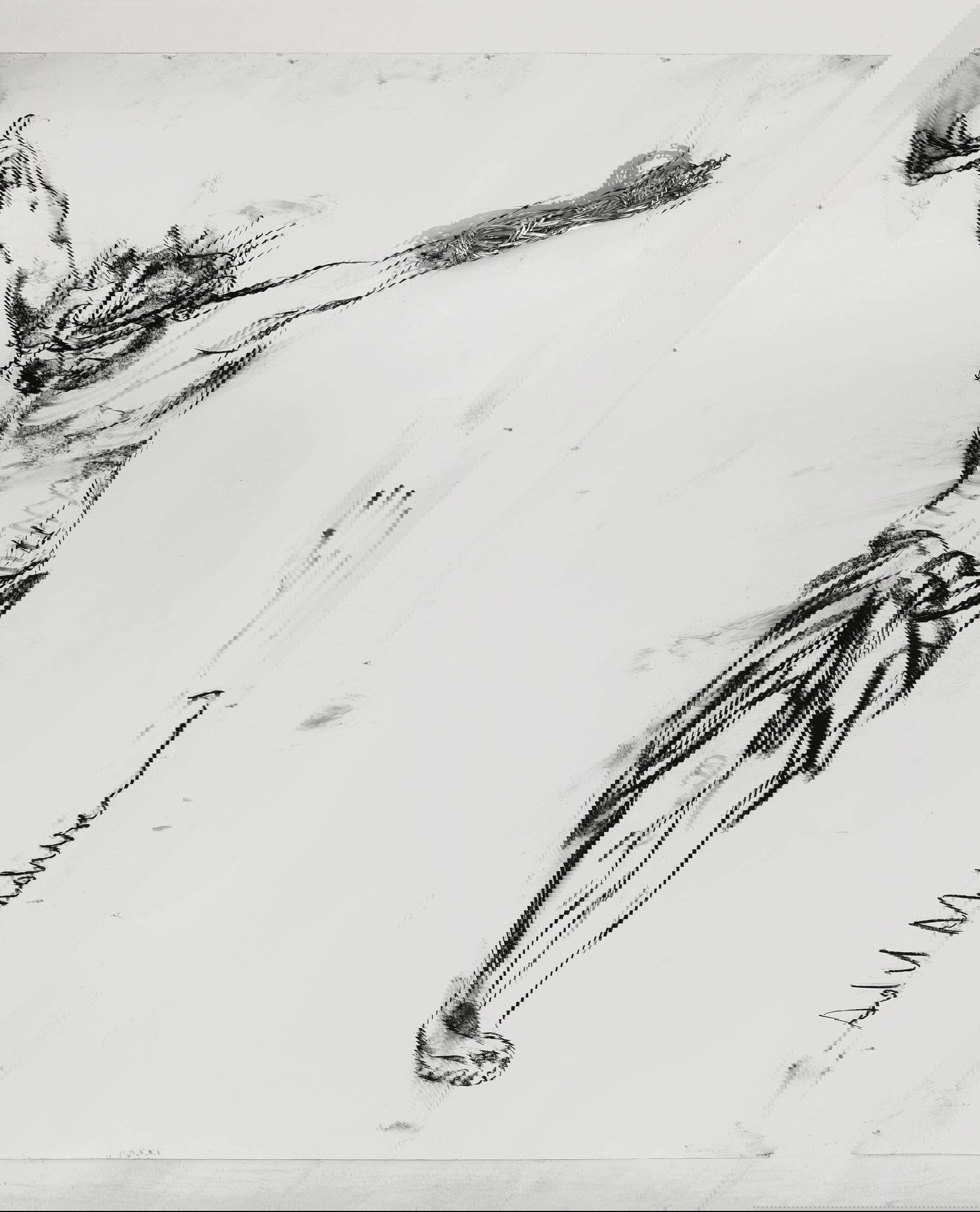
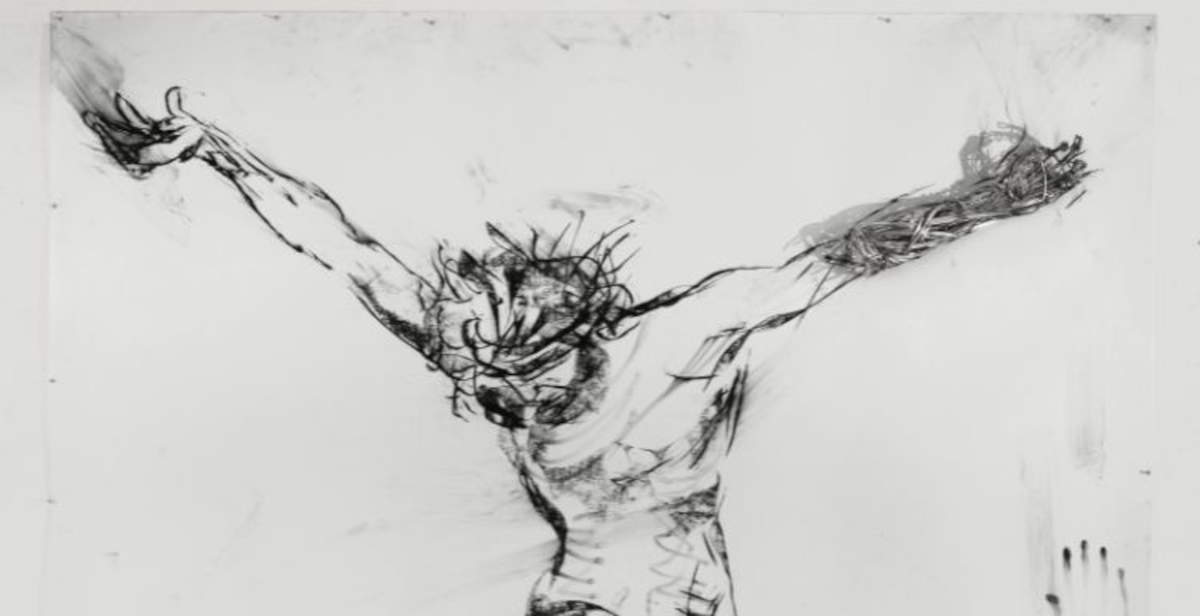
In the exhibition itinerary, the artist proposes a dialogue with the city of Rome, evoked as a space of light, shadow and silence. The first room welcomes Histoire de l’art, a large charcoal drawing on paper depicting a crucified Christ, to which a double-edged barbed wire arm has been added. The work was created in connection with the artist’s visit to the Unterlinden Museum in Colmar, where Matthias Grünewald’s Isenheim altarpiece is kept. In response to one of the most intense representations of Christian suffering, Abdessemed created a series of eponymous drawings and four life-size sculptures, titled Décor, forged from the interweaving of galvanized steel razor blades.
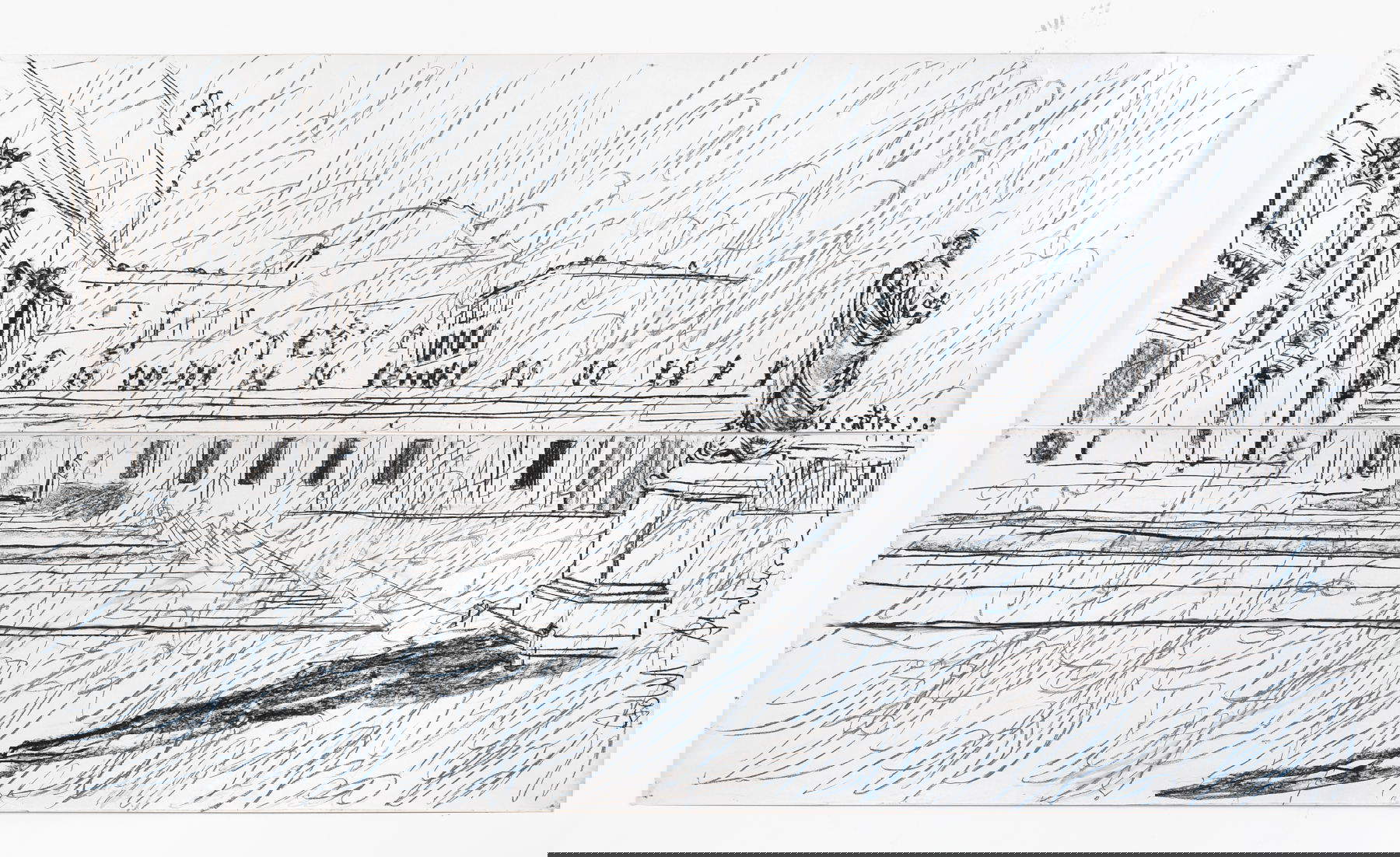
If Décor reworks the symbolic power of the figure of the Passion Christ as a body that welcomes collective suffering, Histoire de l’art focuses on Christ as an art-historical subject, on the human and divine body that has spanned centuries of formal experimentation. In the drawing, lines intertwine with barbed wire, causing the arm to emerge in a three-dimensional dimension that intensifies the expressiveness of the image, as art historian Giovanni Careri notes. On the opposite wall appears Politics of the Studio, Pope, an image depicting empty and silent St. Peter’s Square, traversed by wind and rain, with a lone Pope in prayer. On display in the same room are two drawings from the Politics of Drawing series, dedicated to a donkey and a lamb. The donkey, traditionally associated with humility and docility, and the lamb, a Christian symbol of sacrifice and redemption, are depicted in a suspended condition. The lamb appears squatting on an explosive bed, introducing a tension between innocence and destruction.
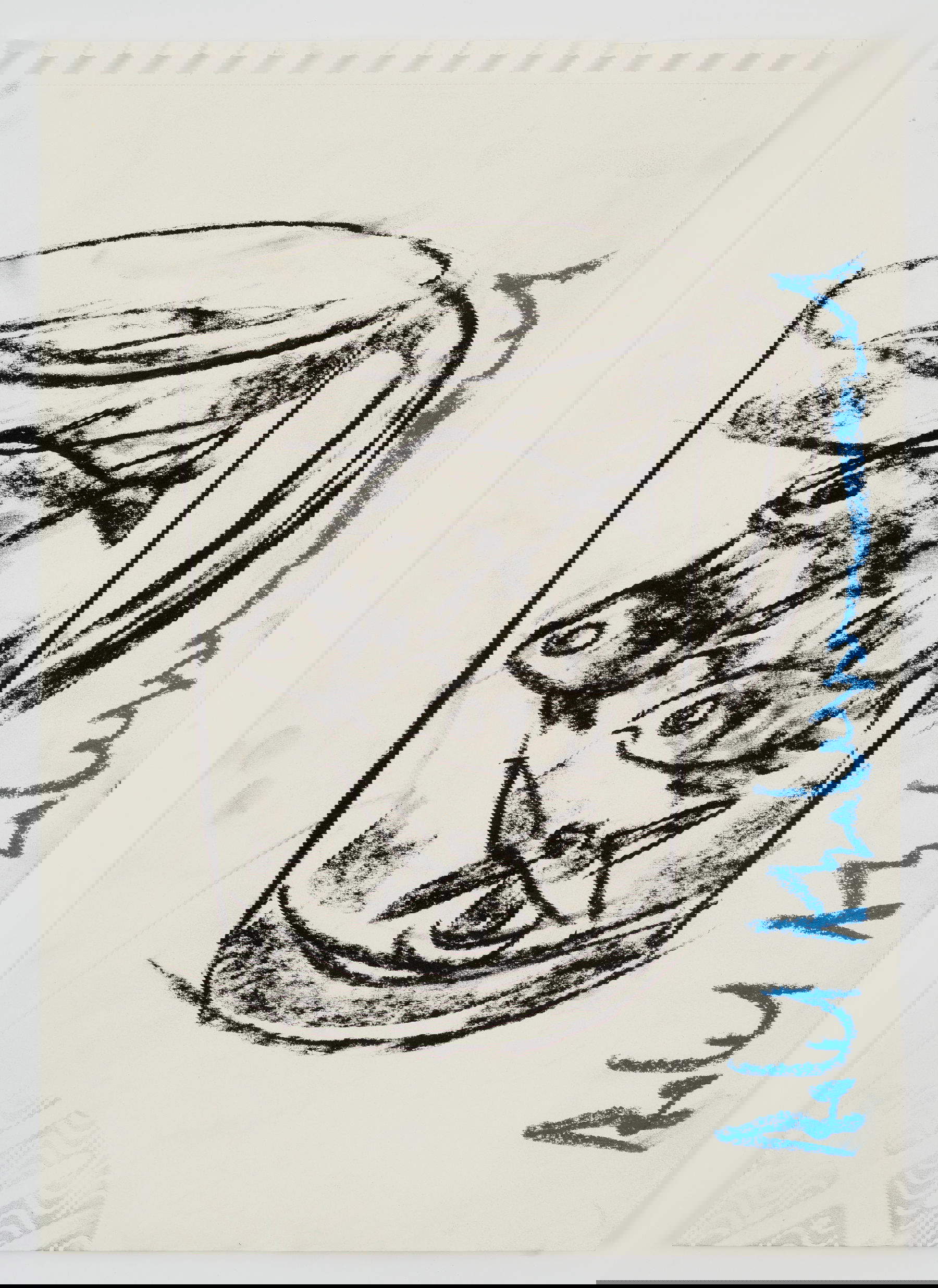
“Like explosive creatures destined for contemplation,” writes David Elliott, “they seem serene, concentrated, indifferent to the dynamite they remain on because they have beentransposed into a zone of free reflection in which possibilities of essence, potential, stillness, happiness, transformation, joy or even death, float in the mind’s eye like characters in a haiku. (...) Appearing, disappearing, and reappearing throughout Abdessemed’s work as symbolic, sometimes ironic expressions of energetic reorientation, they emulate and celebrate the risks, joys, passions, and beauty of our entire universe, in honor of that Big Bang that started it all.”
The reflection on Politics of Drawing continues in the Politics of Drawing series, Glass of Water, in which fish move within the confined space of a glass. The artist defined these images as living still lifes, suspended between movement and stillness, in a condition close to silence. With the series Nature Morte, Abdessemed finally confronts the inanimate world of objects. The drawings, made in charcoal and pastel, depict vases with compositions of cut flowers, branches and pomegranates, juxtaposed with fuses and sticks of dynamite arranged at the base. The apparent formal balance coexists with a latent conceptual violence. Drawing becomes the tool through which the artist attempts to construct a new visual order, capable of accommodating fear and awe. In this context, the figure of the pomegranate takes on a symbolic value related to the conflict between life and death, as recalled by the writer Hélène Cixous, who emphasizes its mythological and literary references.
Primavera Romana takes the form of a crossing of Adel Abdessemed’s main lines of research, proposing to the Roman public an investigation of drawing as a space of confrontation between aesthetics, politics and symbol, within a project that opens a new phase of Galleria Continua’s exhibition activity in the capital.
Born in Constantina, Algeria, in 1971, Adel Abdessemed lives and works in Paris. Active on the international scene since the early 2000s, he has exhibited in numerous institutions between Europe and the United States, including PS1/MoMA in New York, the Centre Pompidou in Paris, the Fondazione Sandretto Re Rebaudengo in Turin, the Parasol unit in London, the Montreal Museum of Fine Arts and the MIT List Visual Arts Center in Cambridge. His work has been presented several times at the Venice Biennale, in 2003, 2009 and 2015, and in other major international exhibitions such as the São Paulo, Lyon, Gwangju, Havana and Istanbul biennales. Recent projects include the solo exhibition An Imperial Message at the Rockbund Museum in Shanghai in 2022 and, in 2024, the curation of staging, sets, and video for Olivier Messiaen’s opera Saint-François d’Assise at the Grand Théâtre de Genève. His works are part of international public and private collections, including the Centre Pompidou, the Musée d’Art Moderne de la Ville de Paris, the Israel Museum, and the François Pinault Foundation.
 |
| Adel Abdessemed in Rome, a springtime between drawing, politics and symbols |

Warning: the translation into English of the original Italian article was created using automatic tools. We undertake to review all articles, but we do not guarantee the total absence of inaccuracies in the translation due to the program. You can find the original by clicking on the ITA button. If you find any mistake,please contact us.



















 IT
IT FR
FR DE
DE ES
ES CN
CN


