








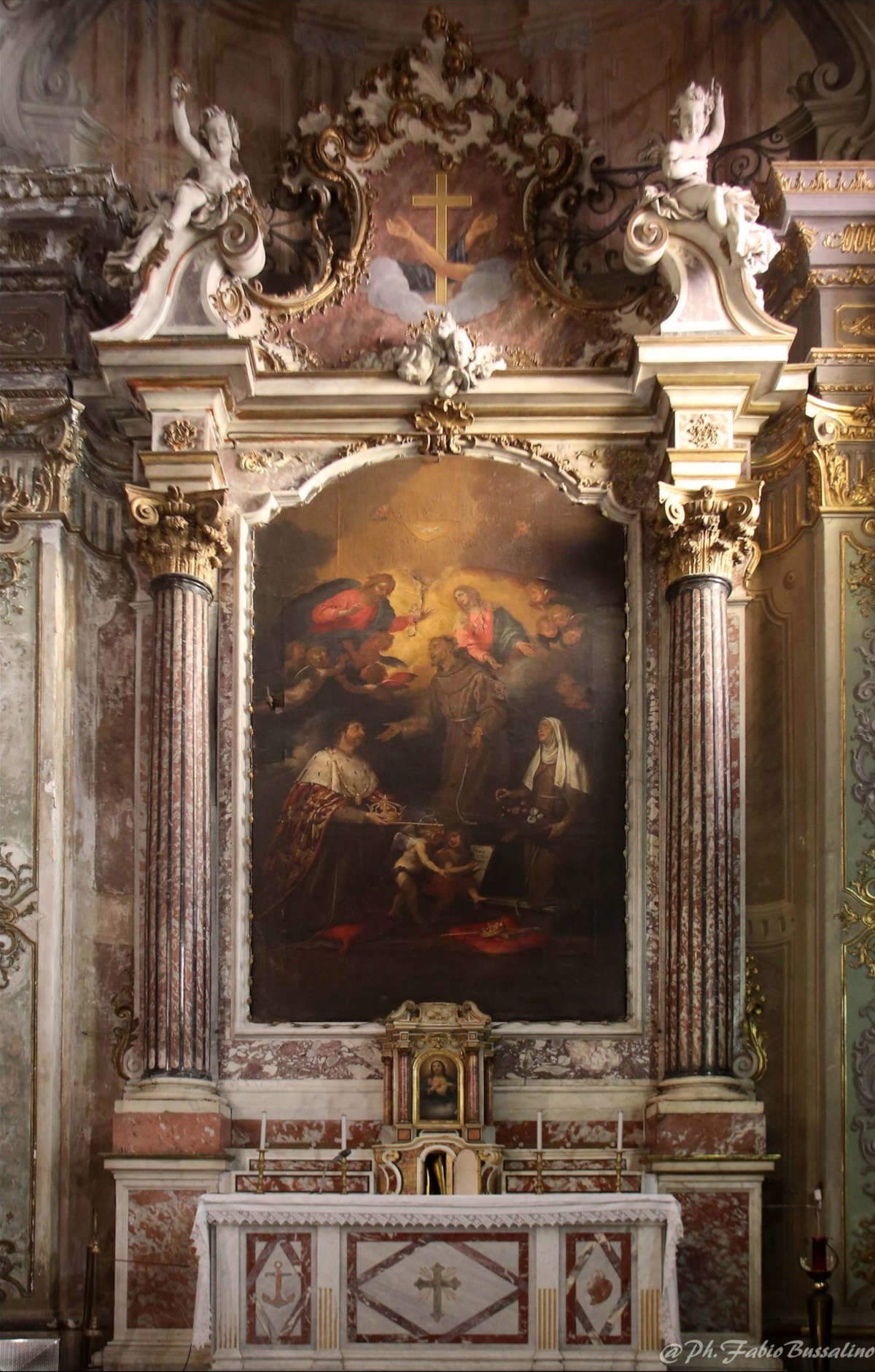
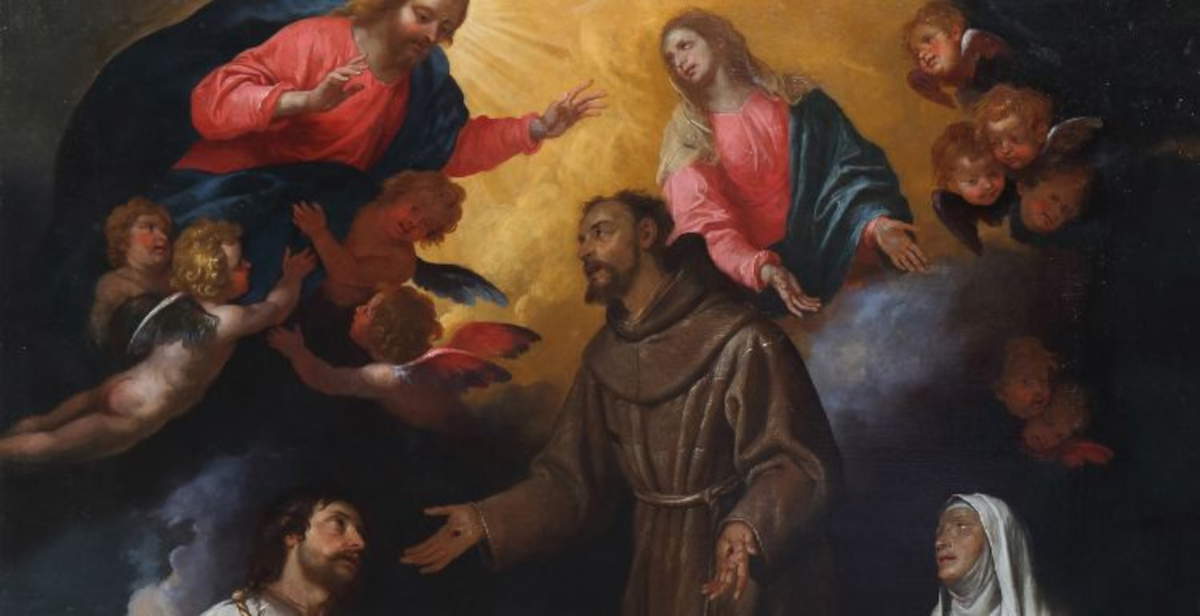
Genoa is rediscovering a masterpiece that was in danger of being lost, thanks to a community-supported restoration following a mobilization that began in 2024 after art historian Giacomo Montanari, now the Ligurian capital’s culture alderman, reported. At the center of the initiative was the monumental altarpiece St. Francis Presents to Christ and the Virgin the patron saints Louis IX King of France and Elizabeth Queen of Portugal, executed in 1637 by Giovanni Andrea De Ferrari (Genoa, 1598 - 1669), which had been in a precarious state of preservation for some time: the intervention allowed the completion of a significant operation of recovery and enhancement of the Genoese artistic heritage. And after being restored, the work is presented to the public in an exhibition that brings together works rarely visible to the public, bringing attention back to the painter. From Feb. 20 to May 3, therefore, the Strada Nuova Museums - Palazzo Bianco in Genoa are hosting the exhibition Giovanni Andrea De Ferrari restored. Unpublished Paintings and Drawings around the San Nicolosio Altarpiece, curated by Raffaella Besta, Martina Panizzutt and Margherita Priarone, with the collaboration of Giulia Pilosu.
“The exhibition dedicated to Giovanni Andrea De Ferrari is also an important opportunity to highlight a restoration project that has given us back a significant work of the Genoese seventeenth century,” says the mayor of Genoa, Silvia Salis, “it is the result of a shared work that has involved institutions, scholars and citizens, demonstrating how much the care of heritage can become a collective commitment. Palazzo Bianco thus welcomes the San Nicolosio altarpiece along with previously unpublished paintings and drawings, offering the city an itinerary that interweaves art, history and cultural identity.”
“This exhibition represents much more than a temporary exhibition: it is a concrete sign of a community that recognizes itself in its heritage and chooses to take care of it,” explains Culture Councillor Giacomo Montanari. “When we launched the appeal to save the Giovanni Andrea De Ferrari altarpiece, we asked the Genoese for a gesture of trust and shared responsibility. The response has been extraordinary. Returning a 17th-century masterpiece to the city today in its full legibility means restoring memory, identity and awareness. Palazzo Bianco thus becomes the symbolic place of a return: that of a work that tells of Franciscan spirituality, urban history and the great season of Genoese painting. It is an achievement that shows how collaboration between institutions, scholars, restorers, foundations and citizens can generate lasting cultural value.”
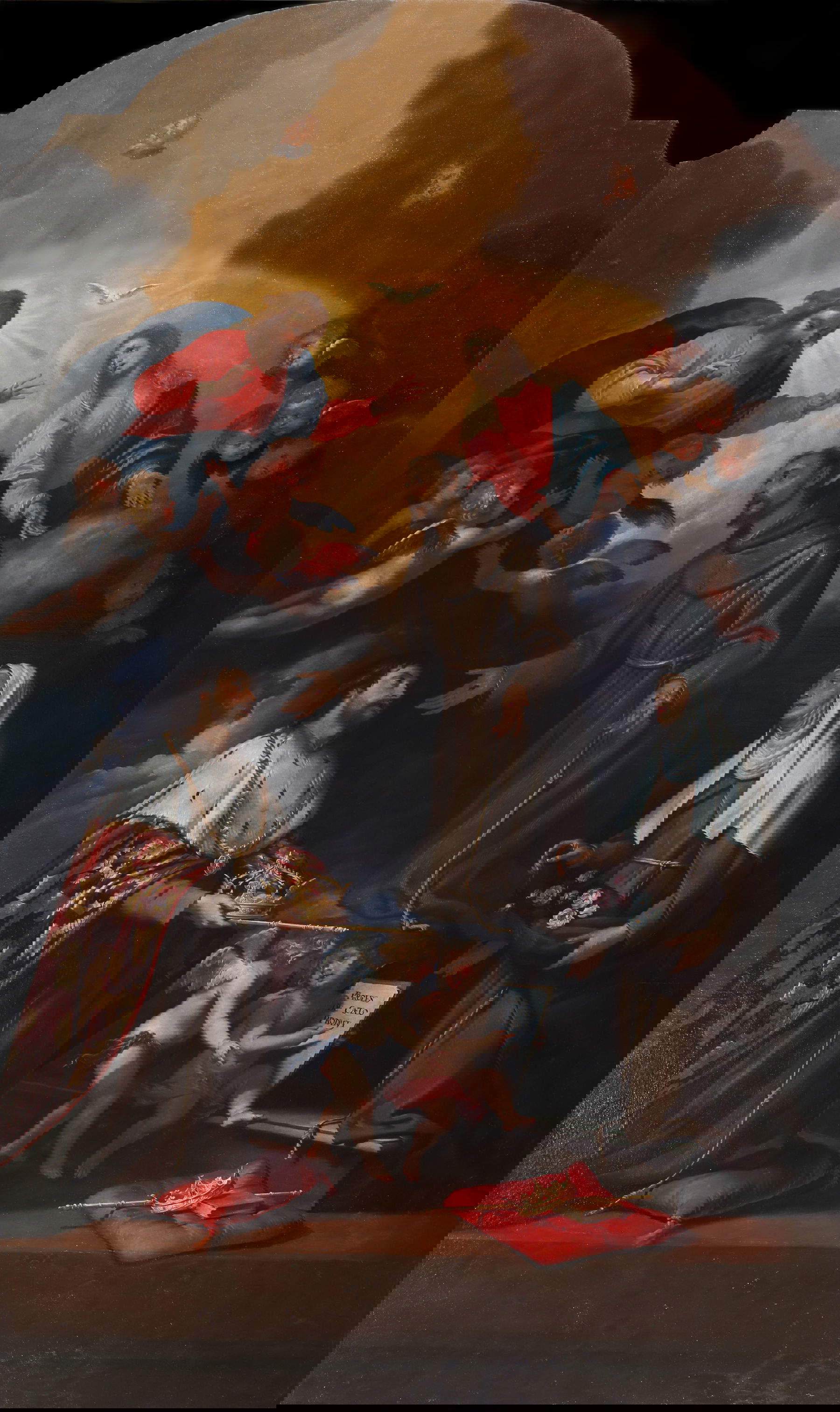
Let us briefly review the history of this important recovery. In November 2024, at the request for help of the Franciscan Third Order and on the initiative of Giacomo Montanari, the newspaper Il Secolo XIX promoted a fundraiser aimed at restoring the work. In little more than two weeks, also thanks to the contribution of the Passadore Foundation, the financial goal was reached. The intervention, carried out in Nino Silvestri’s workshop, restored legibility to the pictorial surface, bringing to light the chromatic brilliance and luminosity of the original layout. The altarpiece belongs to De Ferrari’s mature phase, in which the intensity of color derived from his experience alongside Bernardo Strozzi and the luministic modulations that look to Anton van Dyck merge, with ignitions of reds and deep blues structuring the scene.
Commissioned in 1637 for the Oratory of the Franciscan Third Order, founded in 1625 and dedicated to Saints Louis IX of France and Elizabeth of Portugal, the canvas followed the vicissitudes of the confraternity. After the Napoleonic suppressions and the demolition of the oratory, located under the church of San Francesco di Castelletto, the work was transferred to the church of San Nicolosio in 1804. On the occasion of the move, the altarpiece was enlarged on all four sides to fit the new high altar. The intervention altered the original compositional arrangement and involved moving the dove of the Holy Spirit upward. Recent restoration has allowed the element to be relocated to the position intended by the artist. The choice of Palazzo Bianco as the exhibition venue responds to a historical as well as a logistical motivation. In fact, the building was born as a “homeland museum” intended to house also works from suppressed churches and convents and stands behind the old Franciscan oratory. The exhibition precedes the return of the painting to the church of San Nicolosio and is part of the celebrations for the eighth centenary of the death of St. Francis of Assisi.
Alongside the restored altarpiece, the itinerary presents previously unpublished paintings and drawings by De Ferrari from the civic collections, largely restored for the occasion. The project thus aims to offer an in-depth look at the artist’s production, expanding knowledge of a leading figure of early 17th-century Genoa through rarely exhibited materials.
The exhibition also includes two large allegories of the cardinal virtues, Justice and Temperance, created by De Ferrari for a 17th-century decorative cycle intended for the doge’s private chamber in the Ducal Palace. The works were part of a set that also included Andrea Ansaldo ’s Fortitude and Domenico Fiasella’s Prudence. Normally kept in the Sala Giunta Vecchia in the Palazzo Doria-Tursi, the canvases have been exceptionally brought together in the exhibition following conservation work, allowing a close comparison between three central interpreters of seventeenth-century Genoese figurative culture. Completing the project is the nucleus of works preserved at the Museo dell’Accademia Ligustica di Belle Arti, which is participating with some masterpieces from its permanent collection. The works are presented in two rooms with a new layout curated by Giulio Sommariva, in dialogue with the itinerary set up in Palazzo Bianco.
 |
| De Ferrari rediscovered: restored altarpiece and unpublished works at Genoa's Palazzo Bianco |

Warning: the translation into English of the original Italian article was created using automatic tools. We undertake to review all articles, but we do not guarantee the total absence of inaccuracies in the translation due to the program. You can find the original by clicking on the ITA button. If you find any mistake,please contact us.














 IT
IT FR
FR DE
DE ES
ES CN
CN