





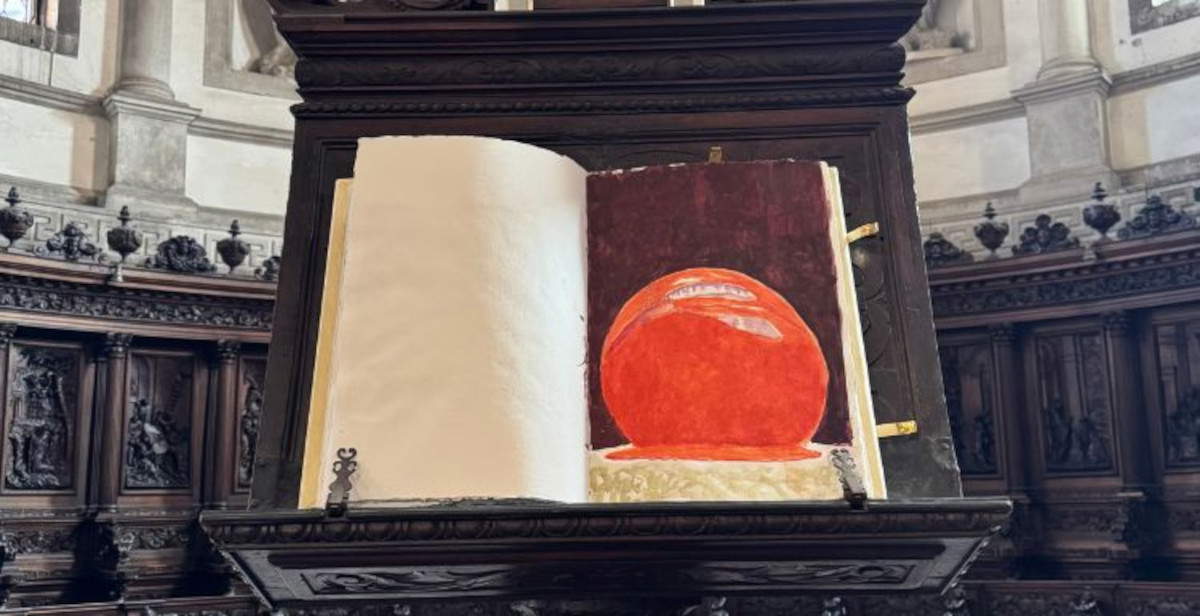
The collection of contemporary illuminated manuscripts at theAbbey of San Giorgio Maggiore in Venice is enriched by a new chapter: artist Luc Tuymans, one of the great names in contemporary world painting, has created a manuscript commissioned by the Benedictine community and destined to become part of a singular project on the international scene. The work will be on view until Feb. 22, 2026, inside the Basilica, where it dialogues with the two canvases Heat and Musicians, also by Tuymans, designed to temporarily replace Jacopo Tintoretto’s large presbytery canvases, now undergoing conservation restoration. The manuscript is placed on the wooden badalone lectern in the center of the choir of the high altar, a space historically dedicated to the choral books used by the Benedictine community during the Liturgy of the Hours. The exhibition choice allows a direct comparison between the liturgical tradition and the contemporary interpretation of Tuymans, who in his painted pages reinterprets a centuries-old practice through dense images, characterized by a strong poetic and conceptual component.
The exhibition is curated by Carmelo A. Grasso, Director and Institutional Curator of Abbazia San Giorgio Maggiore - Benedicti Claustra Onlus, by Corinna Otto, Director of the Draiflessen Collection - Foundation patron of the project, and Ory Dessau, independent curator. At the end of the exhibition, the work will be acquired by the collection of contemporary illuminated manuscripts promoted by Benedicti Claustra Onlus, a nonprofit branch of the Abbey, consolidating a path begun in 2019 that combines contemporary art, spirituality and historical heritage. The collection was built by inviting internationally prominent artists to reinterpret the Benedictine tradition of choral books. From 2019 to the present, Sean Scully, Ai Weiwei, Álvaro Siza, Berlinde de Bruyckere, and Nicola Samorì have contributed to a corpus in which artistic research confronts liturgy and sacred architecture. Each manuscript testifies to a dialogue between different eras, showing how contemporary art can interact with a millenary tradition without limiting itself to decorative functions.
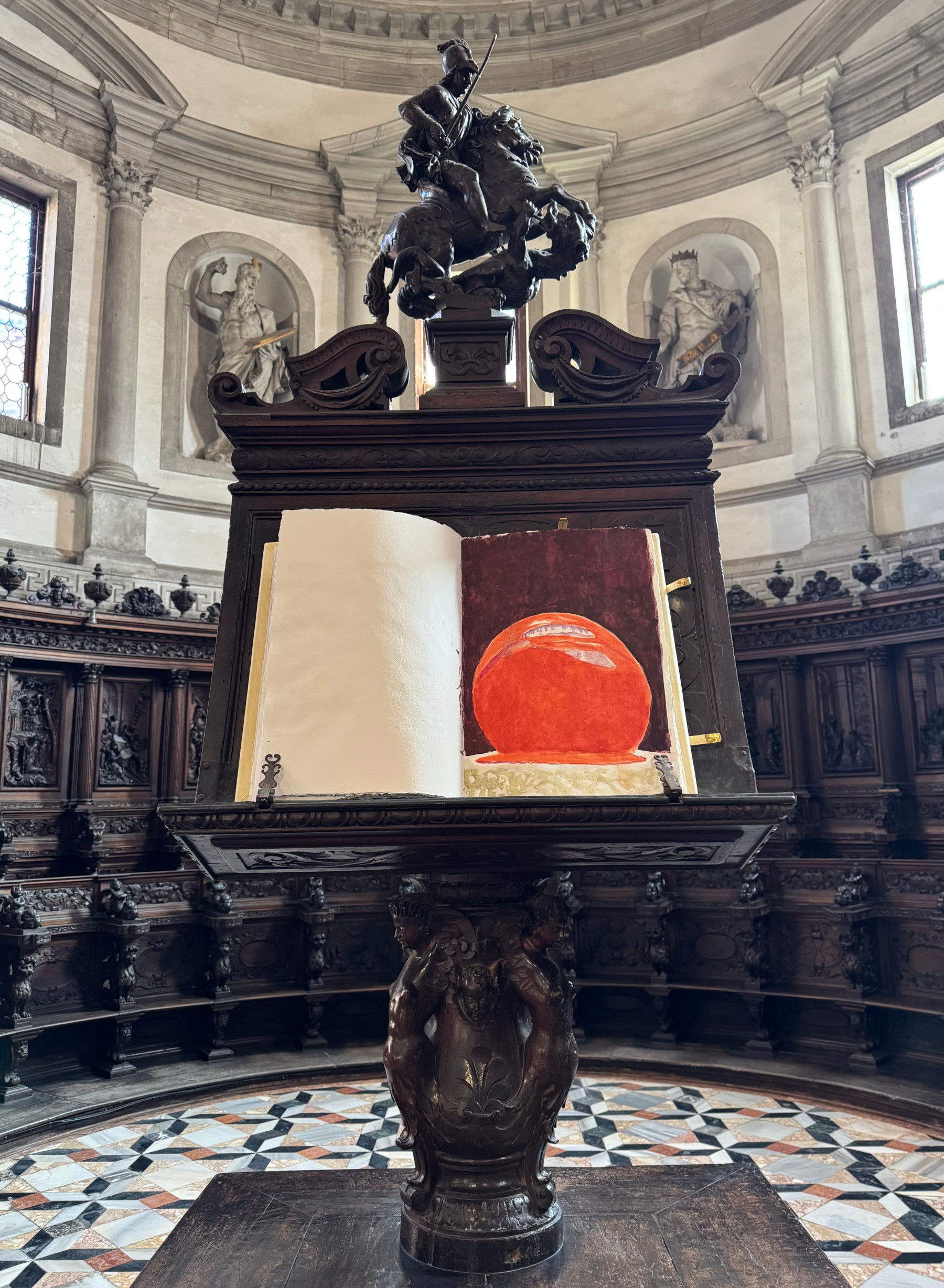
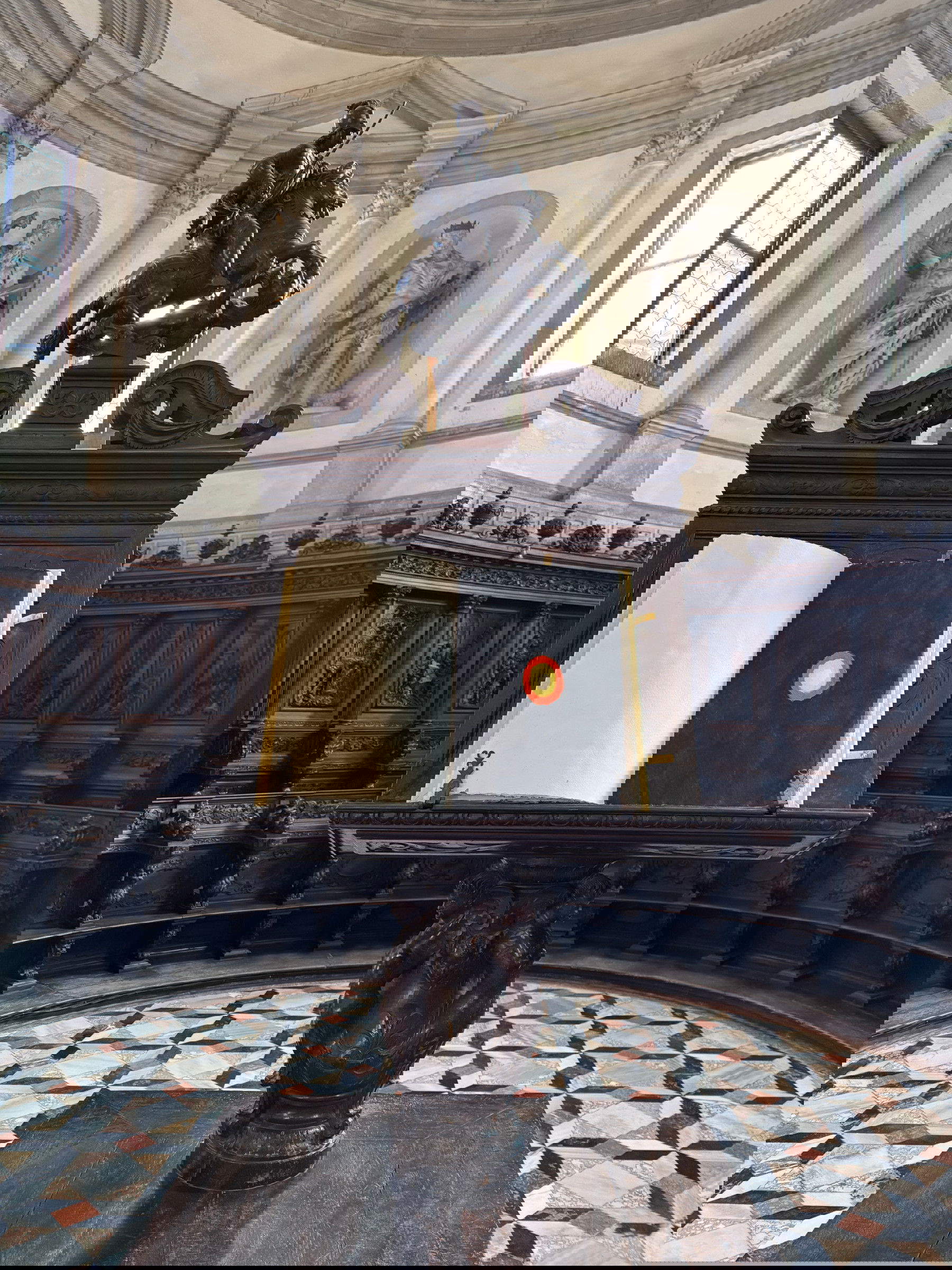
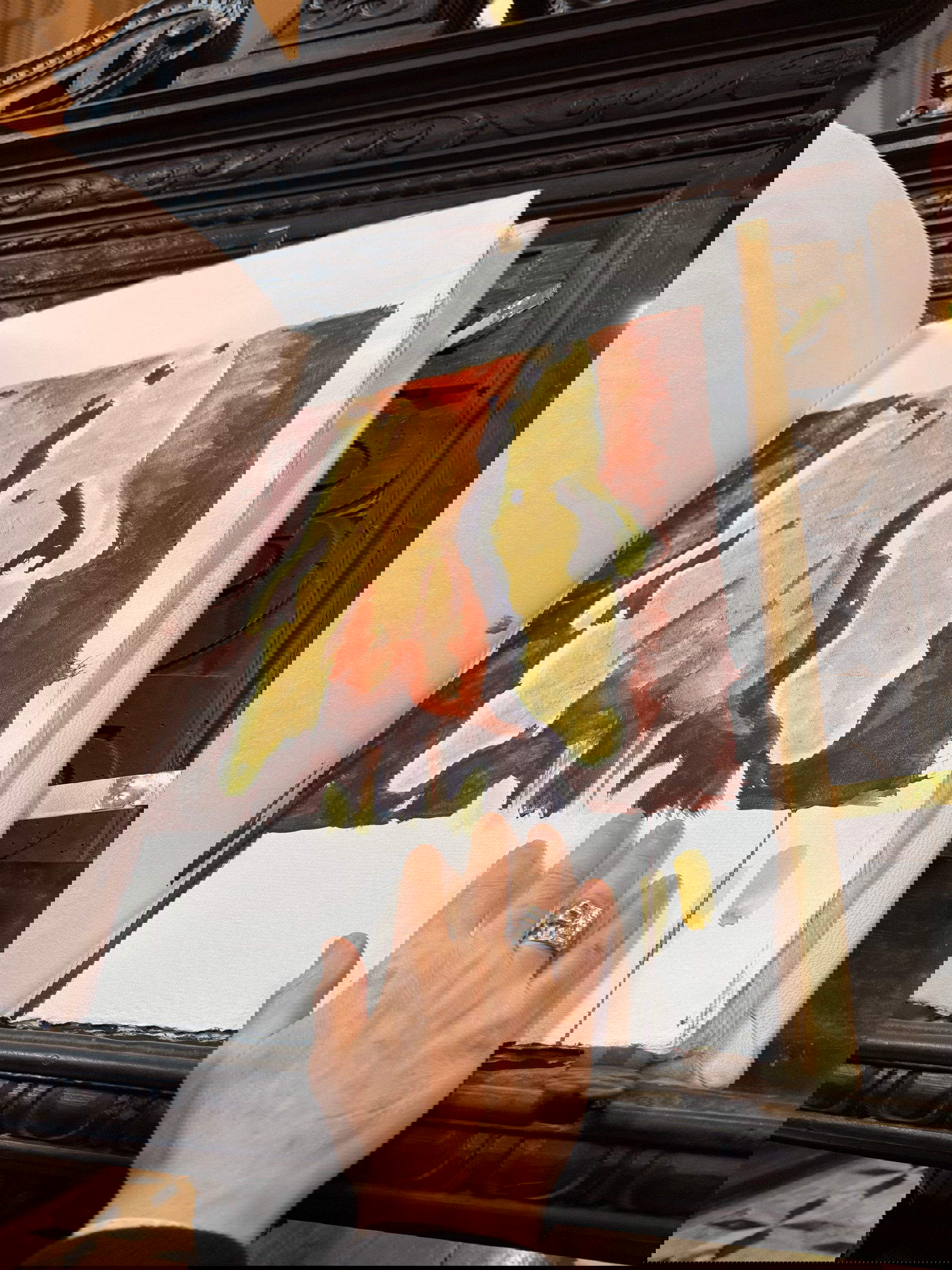
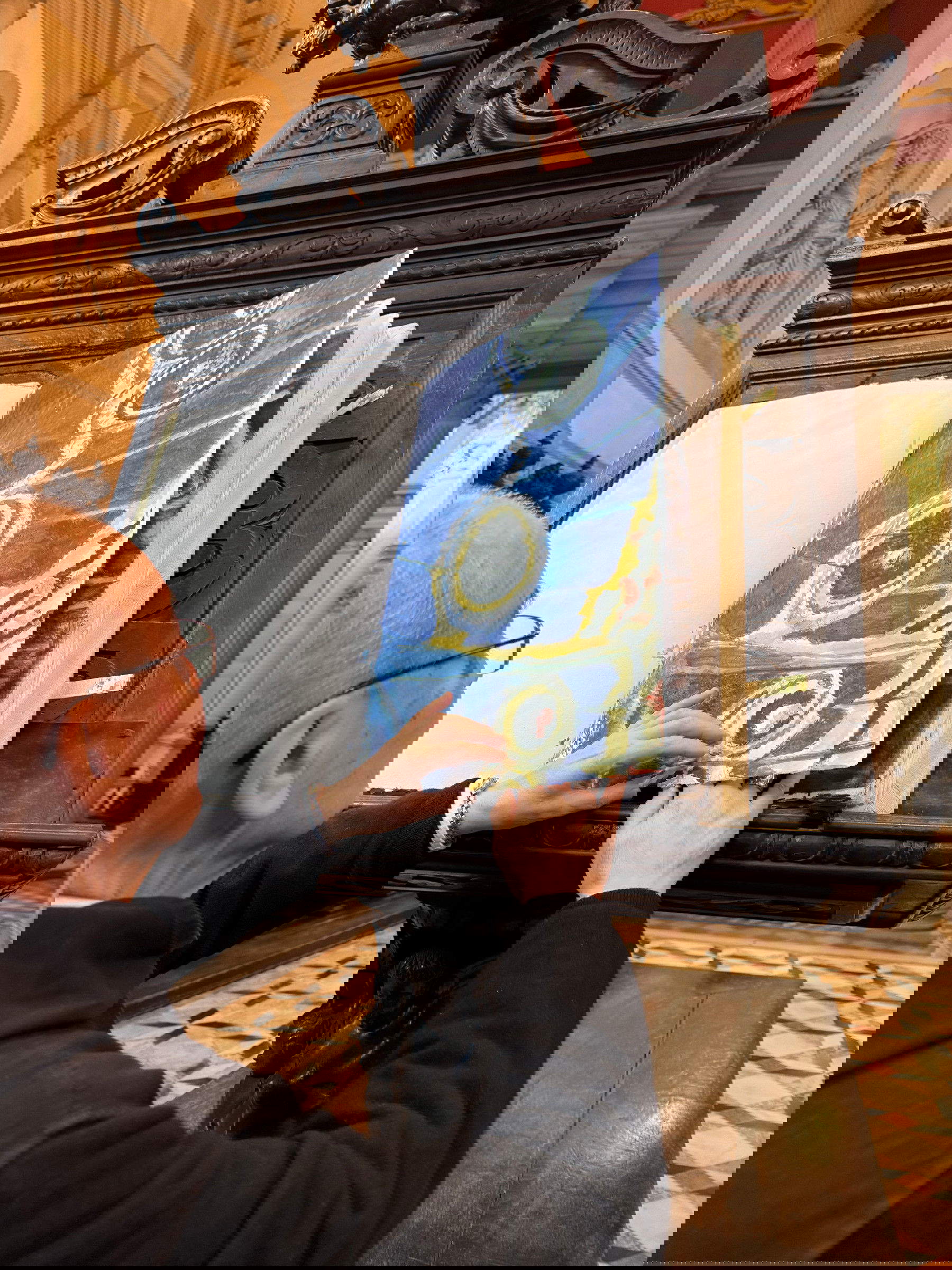
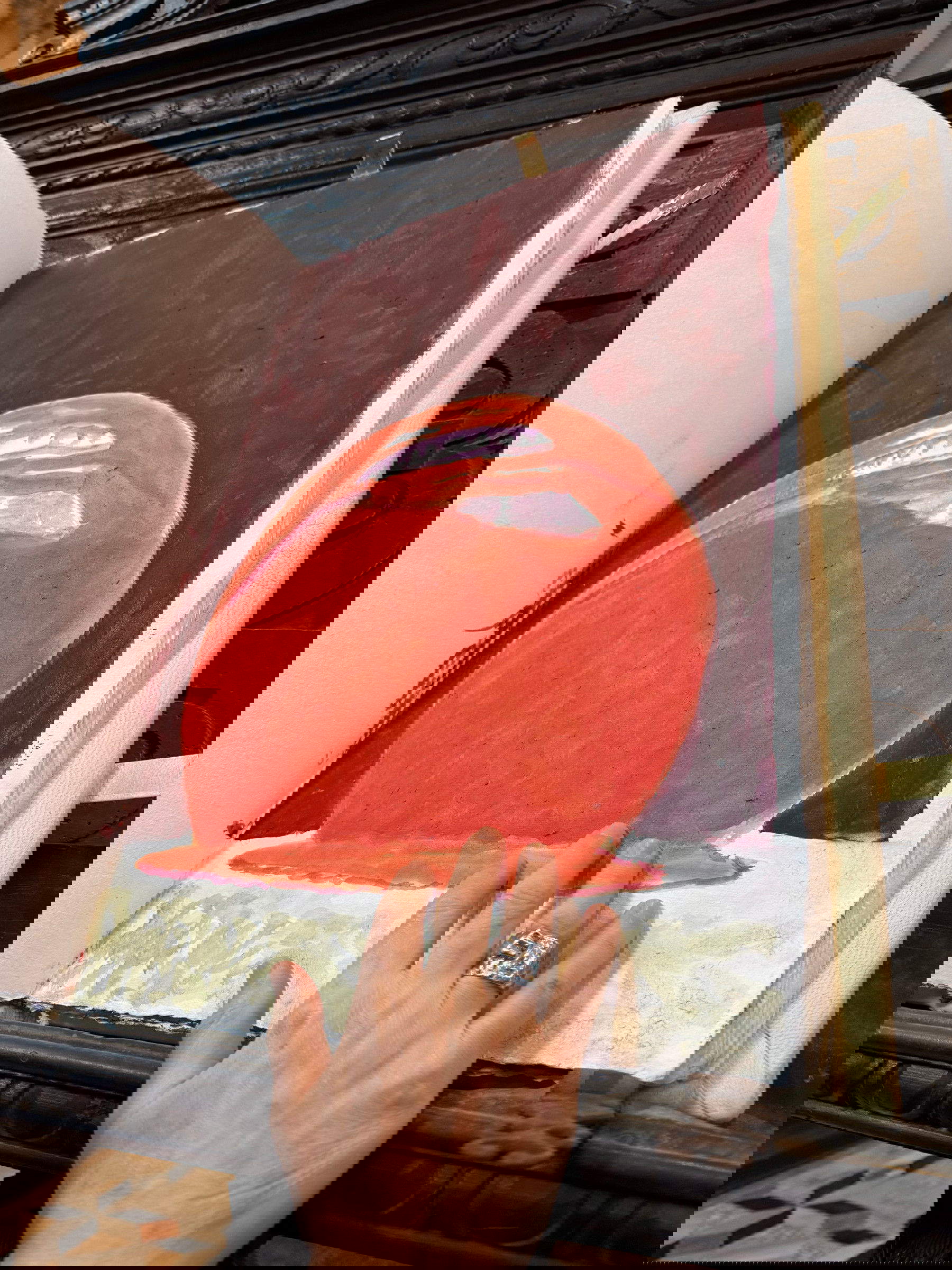
In the historical context, the Church has always played a central role in the promotion of the arts, contributing to the formation of heritages that still constitute a cultural and aesthetic reference. Over time, the Church’s presence as a patron has diminished, making dialogue with contemporary art less frequent. The illuminated manuscripts project, however, offers a chance to renew this relationship, proposing works capable of communicating as much with the audience of the faithful as with those who approach sacred spaces for different cultural or spiritual reasons. Tuymans’ work fits into this context as an example of continuity and innovation. Placing the work at a central point in the choir allows the manuscript to be perceived as an integral element of a spiritual and cultural experience that connects the religious community, art history, and contemporary audiences.
Luc Tuymans, a Belgian artist living and working in Antwerp, is considered one of the most influential painters of his generation. His works have been exhibited in major cities around the world, including Frankfurt, New York, Toronto, Chicago, London, Philadelphia, Paris, Osaka, and Beijing. In his painting, Tuymans frequently deals with themes related to traumatic historical events, such as the Holocaust(Gaskamer, 1986), Belgian colonialism(Mwana Kitoko, 2000) and terrorism(Still Life, 2002), using representations of everyday life to evoke a sense of disorientation in the audience and stimulate personal and critical reflection. Tuymans’ first participation in the Venice Biennale was in 1997, at the 47th International Art Exhibition, with the painting Illegitimate II. In 2001 he was chosen to represent the Belgian pavilion at the 49th Biennale, presenting Mwana Kitoko. Beautiful White Man, a project focused on Belgian colonial history and the path that led to Congo’s independence in 1960.
In Italy, the artist’s first solo exhibition was La Pelle, presented in 2019 at Palazzo Grassi, which brought together more than eighty works created since 1986. Last year Tuymans created four murals entitled L’Orphelin at the Rotonde Valentin de Boulogne in the Louvre Museum, confirming his constant focus on historical and social themes through an essential and powerful pictorial language.
 |
| Luc Tuymans creates illuminated manuscript for the Abbey of San Giorgio Maggiore |

Warning: the translation into English of the original Italian article was created using automatic tools. We undertake to review all articles, but we do not guarantee the total absence of inaccuracies in the translation due to the program. You can find the original by clicking on the ITA button. If you find any mistake,please contact us.




















 IT
IT FR
FR DE
DE ES
ES CN
CN


