



by Redazione 07/12/2025



Categories: Exhibitions / Disclaimer
From December 6, 2025 to May 3, 2026, the Mart in Rovereto presents a major retrospective on Luigi Bonazza, a leading figure in Trentino art between the 19th and 20th centuries. Three hundred works including paintings, engravings, and drawings recount the influence of the Viennese Secession and the original synthesis with the Déco style.
The Mart in Rovereto celebrates Luigi Bonazza (Arco, 1877 - Trento, 1965), an important name in art at the turn of the 19th and 20th centuries, exploring the influence of Vienna and the unique fusion of Secessionist and Déco languages, in ua exhibition, entitled precisely Luigi Bonazza between Secession and Déco, which illustrates the artist’s personal style and ideal of the total work of art.

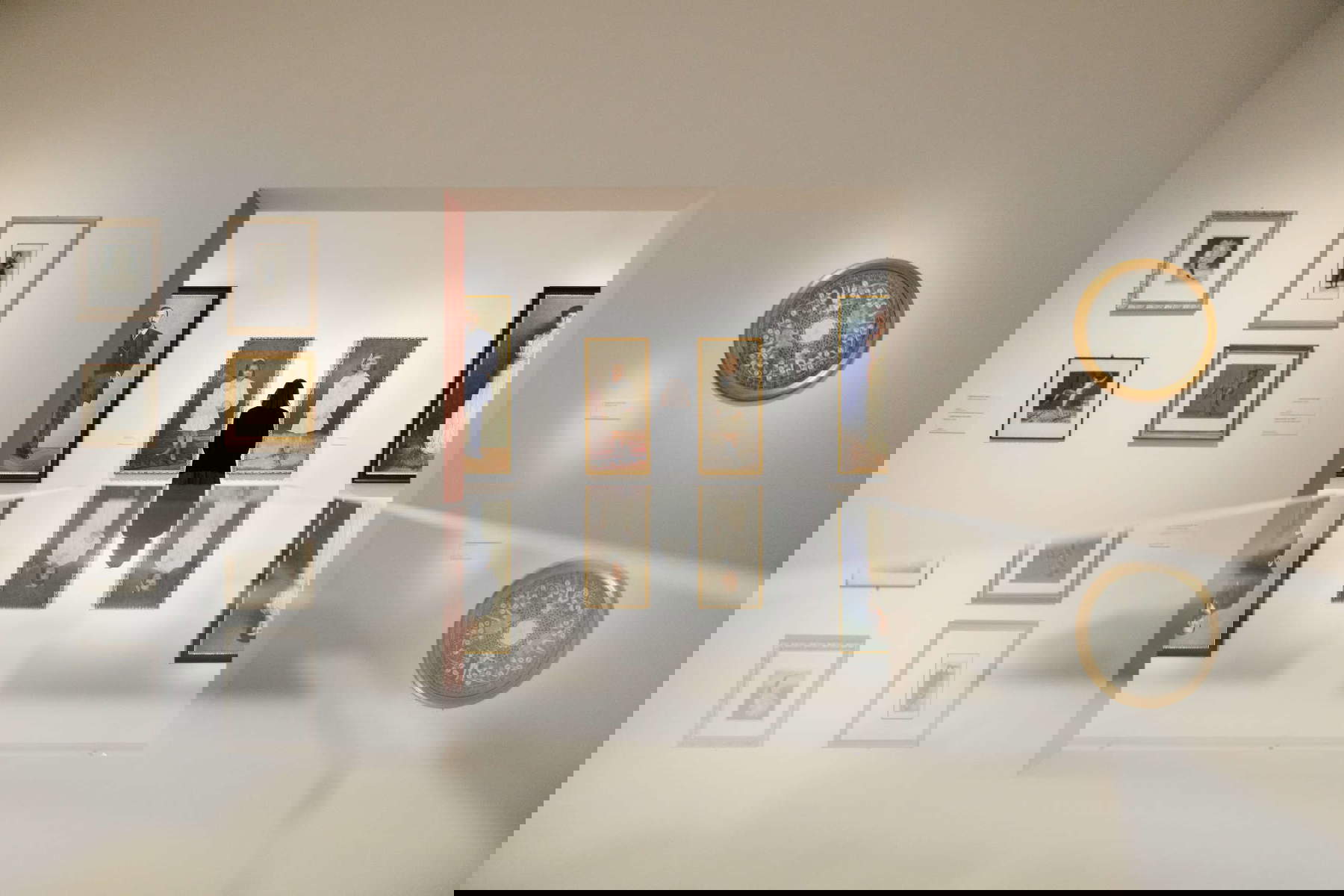
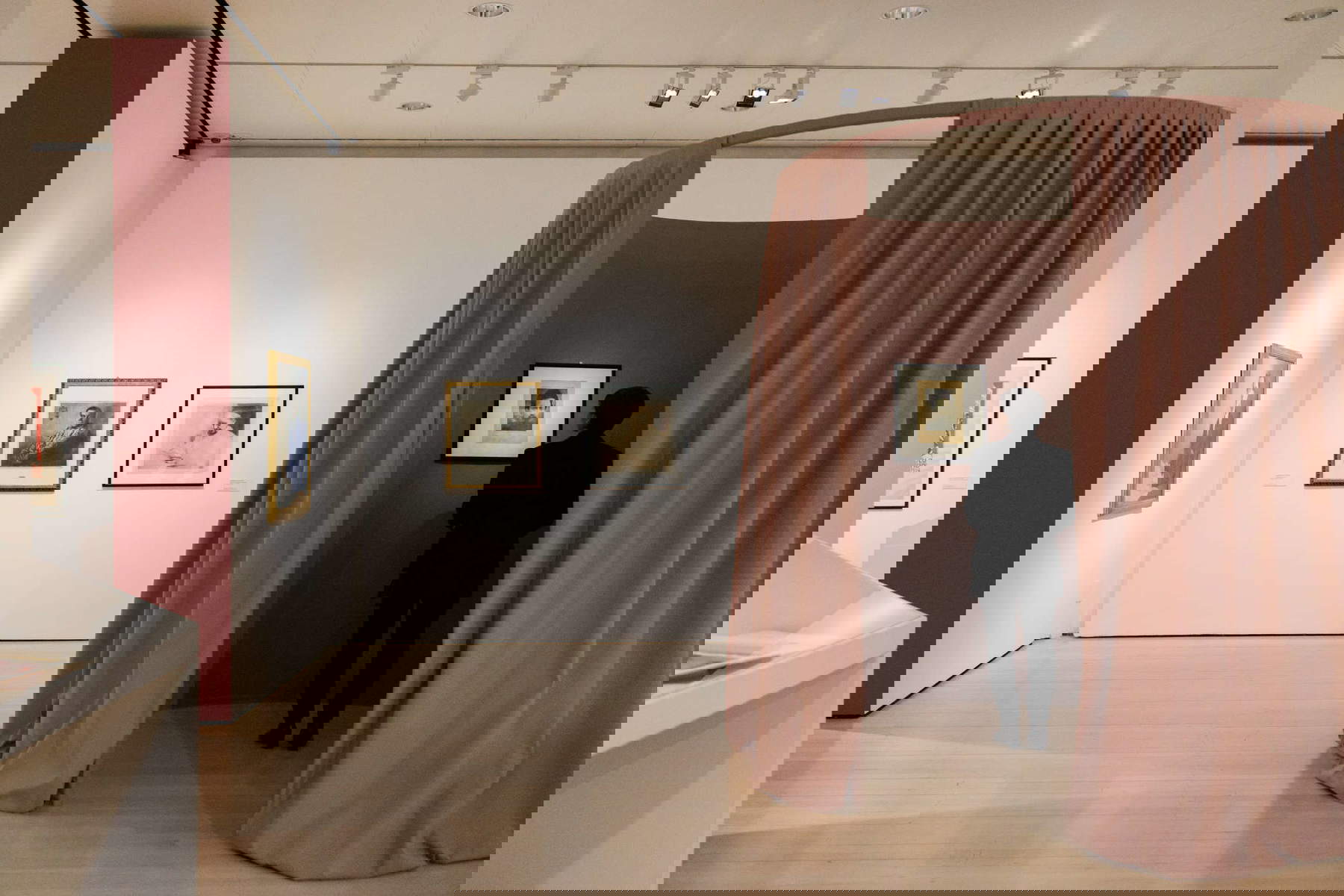
From Dec. 6, 2025, to May 3, 2026, the Mart will present an extensive retrospective on Trentino artist Luigi Bonazza, a protagonist of an era of profound cultural and historical transformation. The exhibition, curated by Alessandra Tiddia, aims to enhance one of Trentino’s most significant heritages, partly preserved by the Autonomous Province of Trento and partly spread among private collections, public buildings and places of worship. The exhibition, curated by Ruffo Wolf, displays about three hundred works, including paintings, drawings, engravings, objects and a selection of archival documents. The entire exhibition is divided through ten sections that follow a chronological-thematic approach to illustrate Bonazza’s artistic and human evolution.


Viennese training and Secessionist influence
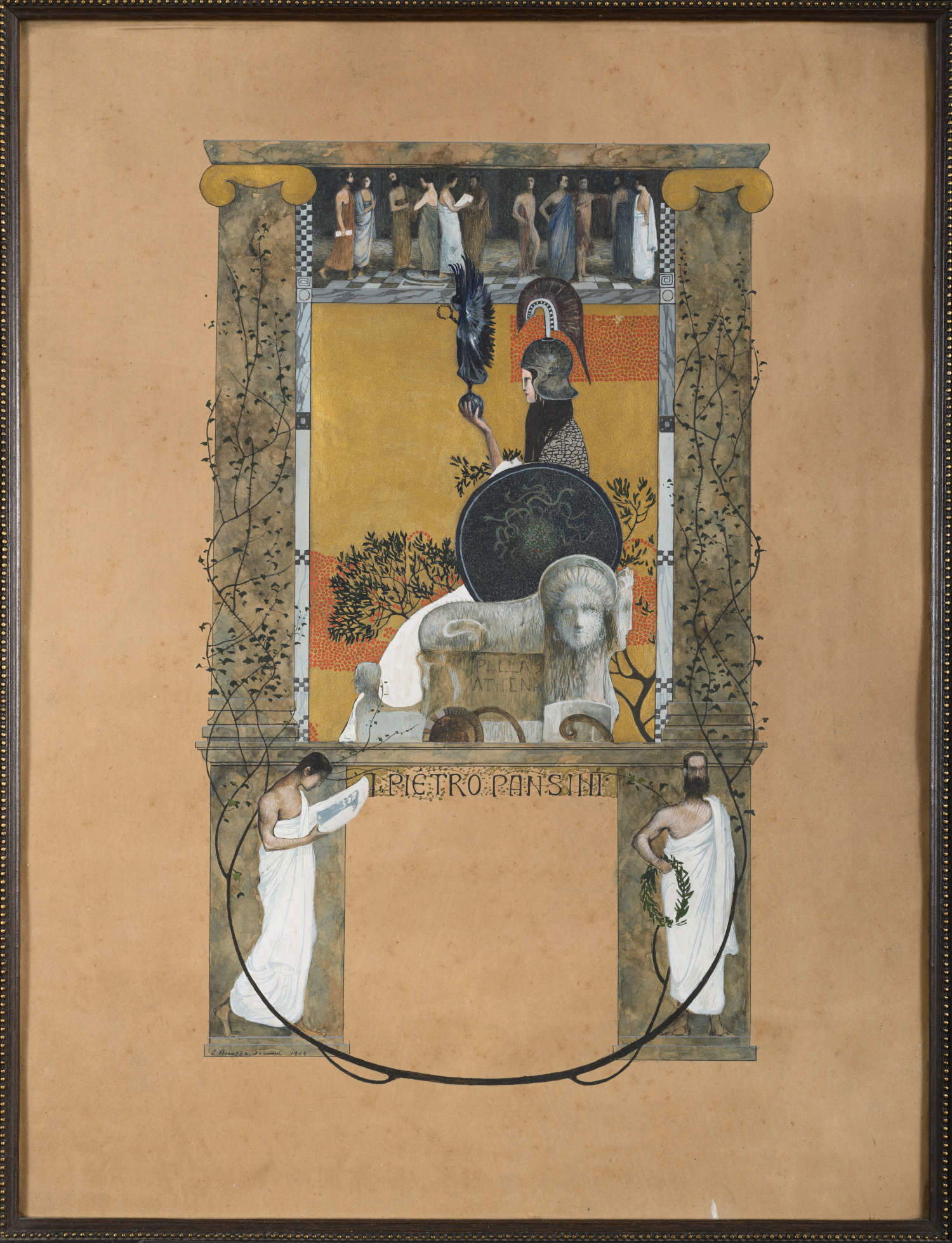
Bonazza, trained in the climate of the Viennese Secession, was a key figure in the cultural ferment of the early 20th century in a Trentino that served as a hinge between different but interconnected cultural worlds. After graduating from Rovereto, the artist moved to Vienna in 1897, where he attended courses at the Kunstgewerbeschule, the School of Applied Arts attached to the Austrian Museum for Art and Industry, successfully graduating in 1901. During those crucial years, Bonazza absorbed Secessionist models and interpreted the ideal of the Gesamtkunstwerk, or total work of art, a stylistic principle that aimed to break down hierarchies among the arts by experimenting with techniques and codes of expression. Although he studied painting and drawing with Franz von Matsch, who maintained a style more in keeping with the academic tradition, Bonazza was more influenced by the artists exhibiting at Secession exhibitions.
His infatuation with the art of master Klimt and his teacher von Matsch never abandoned Bonazza’s style, both in his Viennese and his Trent phase. The exhibition anticipates the encounter with the artist by displaying a “Viennese gallery” that outlines the cultural context through works by Secession masters such as Ludwig Heinrich Jungnickel, Ferdinand Hodler, Franz Jaschke, Rudolf Junk, and brothers Gustav and Georg Klimt. This section features prestigious reproductions, from the Klimt-Foundation, collected in the Heller Album soon after Gustav Klimt’s death, including Danae, Pallas Athena, Nuda Veritas, and Water Snakes II. The itinerary continues with the dialogue between Bonazza and his masters and contemporaries, as in the case of Franz von Matsch’s sketch for Jurisprudence, which interacts with panels of Bonazza’s Legend of Orpheus and period reproductions of Gustav Klimt’s Medicine and Philosophy, confirming the close thematic and stylistic affinity. A further reminder of the Secessionist masters is provided by Georg Klimt’s copper plates, whose decorative details were taken up by Bonazza in the complex frame of the Orpheus triptych.

The Legend of Orpheus and the Evolution of Language.
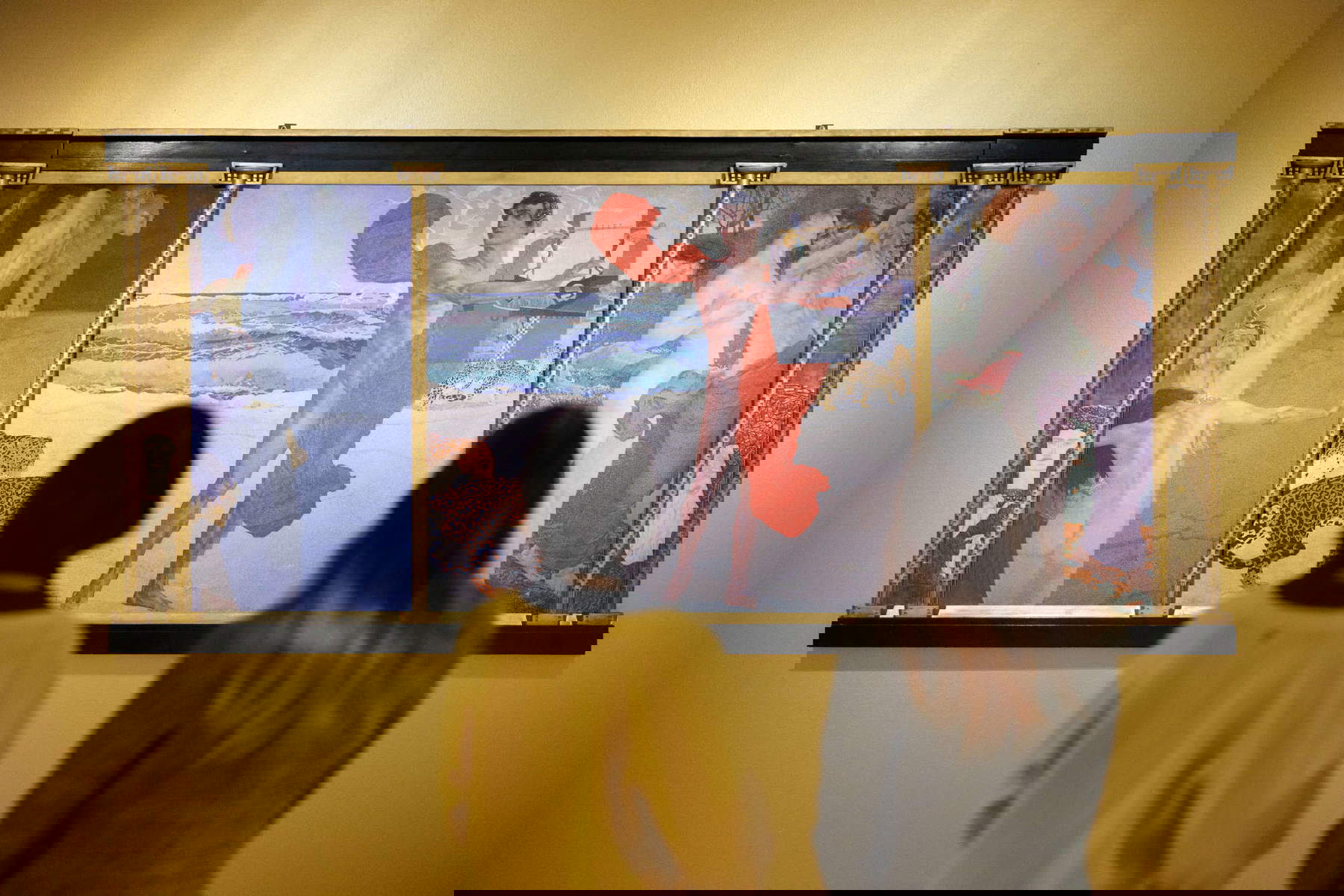
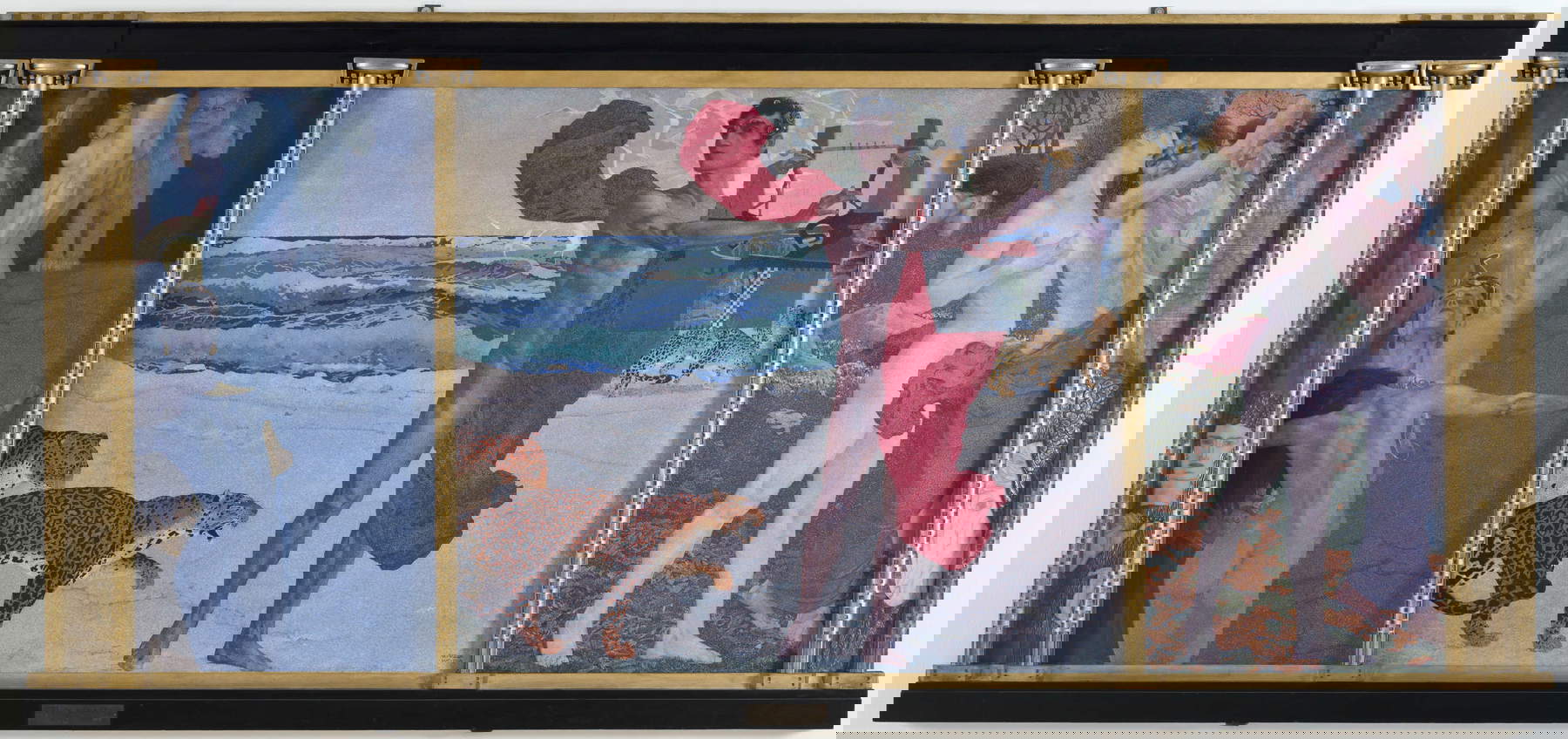
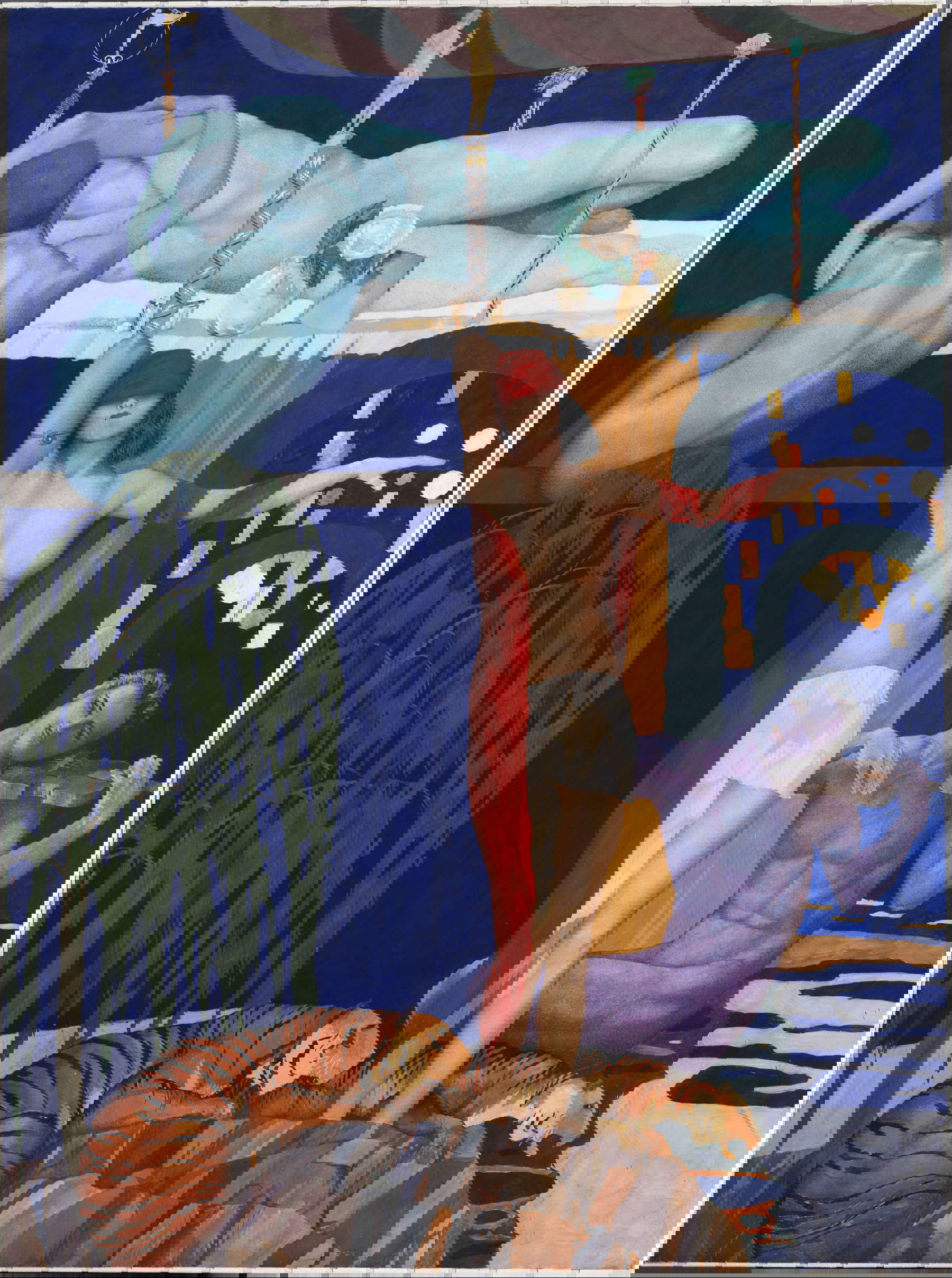
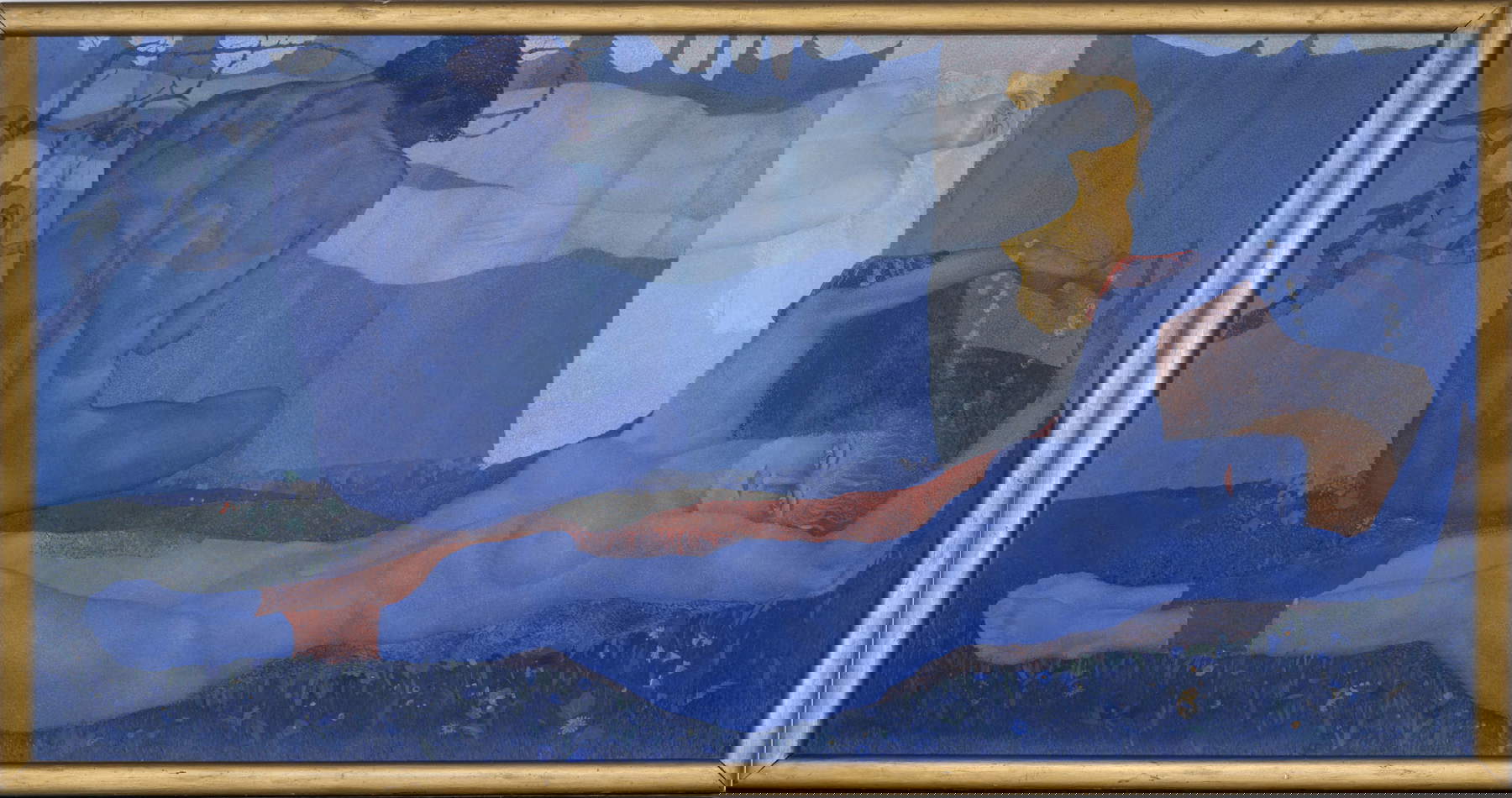
After passing through the room dedicated to the Secession, the public can admire Bonazza’s masterpiece, The Legend of Orpheus, a triptych created in 1905 that is generally part of the Mart’s permanent exhibition itinerary. This seminal work was presented internationally, gaining acclaim, at the International Exhibition in Milan in 1906 and later at the XXIX Secession exhibition in Vienna in 1907, as well as in Berlin and Munich. The triptych, which later became the “centerpiece” of the Villa Bonazza in Trento, is an example of how the artist reinterpreted the models he learned in Vienna, recognizing in them suggestions from artists such as Hodler, Jungnickel and Klimt. The work recounts the legend of Orpheus, a myth that fascinated poets and painters alike, symbolizing the extraordinary power of art set against human frailty. The center panel celebrates Orpheus’ talent as a musician and poet, the left panel depicts his attempt to rescue Eurydice in Hades, and the right panel depicts his death at the hands of the Bacchae.
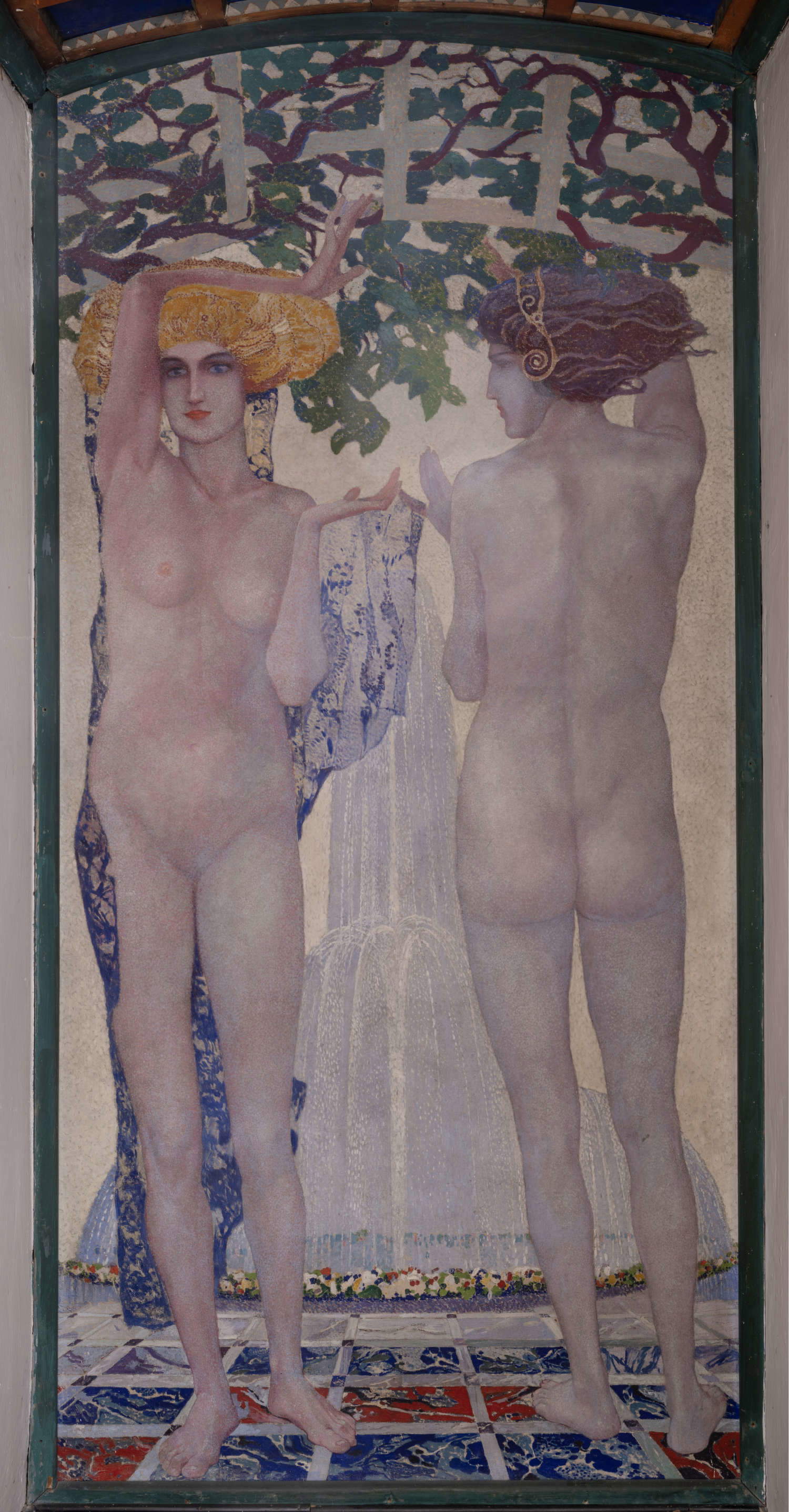
As the title of the exhibition suggests, Bonazza’s attention to the decorative led him to an original synthesis of Secession and Déco. The Déco taste that characterized the 1920s, 1930s, and 1940s drew from Secessionist forms, transforming and crystallizing them into a unique and personal language. This decorative emphasis is manifested in both the artist’s early and late works, finding a fulfilled manifestation in the decorative cycle of his Trentino residence.
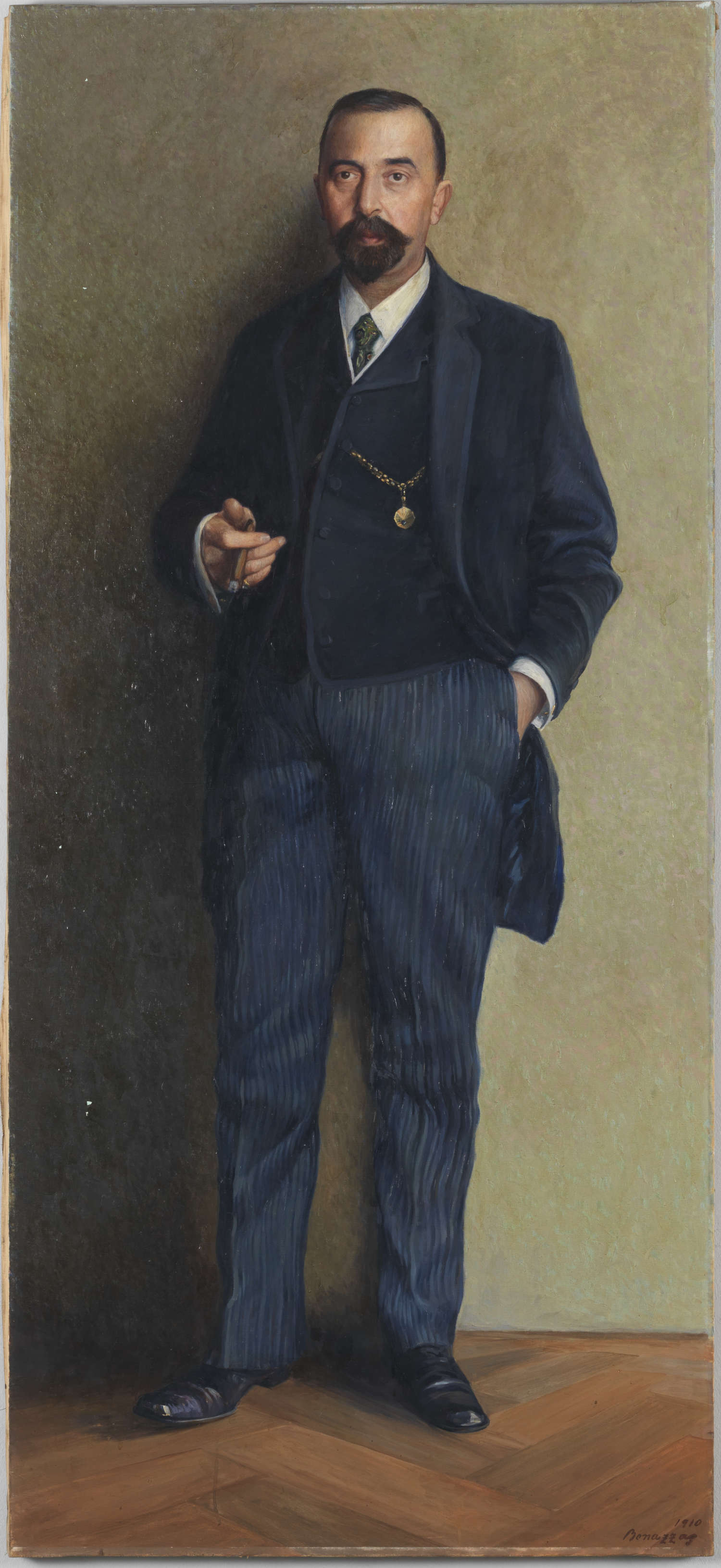
From engraving to drawing: the body and the studio
The context of the Vienna Secession attached great importance to graphic techniques and illustration. Between 1906 and 1908, Bonazza devoted himself to the production of six etchings collected in the portfolio Jovis Amores, for which he also designed the frontispiece with typically Secessionist lettering. The series illustrates Jupiter’s transformations to meet his lovers (Europa, Io, Leda, Dione and Danae) and is introduced by an allegory of the god wounded by Eros’s arrow. The exhibition presents prints from this cycle, along with the original matrices. The female nude is also featured in the Allegories of the Day cycle, completed in 1920, where the woman’s body embodies the sequence of the solar cycle. Bonazza’s nudes, including those in the Allegories and the 1908 Ballerina , for which the model Poldi posed, are imbued with an erotic tension typical of Symbolist culture. However, the nude in Bonazza’s work, as it appears in the Villa Bonazza decorations, is often understood as the manifestation of a classical idealization, a concept of beauty that is removed from earthly reality.
The section devoted to drawings illustrates the meticulous study process that preceded the finished works. These studies of anatomy, poses, and details demonstrate Bonazza’s great graphic talent, which used chiaroscuro enhanced by white-pencil highlights to lend a plastic quality to the figures. Unlike Klimtian graphic art, which favors the fine line, Bonazza’s drawings, such as the sketches for Eurydice in theOrpheus, show a strong reference to the academic tradition and the art of the past.
Heroes, Irredentism and D’Annunzio
The hero myth is widely represented in Bonazza’s work. In 1915, to avoid enlistment in the Austrian army, the artist took refuge in Milan, where he spent the years of the conflict working as a draftsman at Officine Caproni, founded by aviation pioneer Gianni Caproni. Drawings, engravings, and watercolors from this period document bombing triplanes and biplanes. Later, the Trentino Emigration Commission in Milan commissioned Bonazza to paint a portrait of the irredentist Cesare Battisti, who was executed in 1916. The portrait, which depicts Battisti against the background of the Adige Valley with the gallows symbol, was widely reproduced for propaganda and commemoration of Trentino martyrs, which also included portraits of Fabio Filzi and Damiano Chiesa.
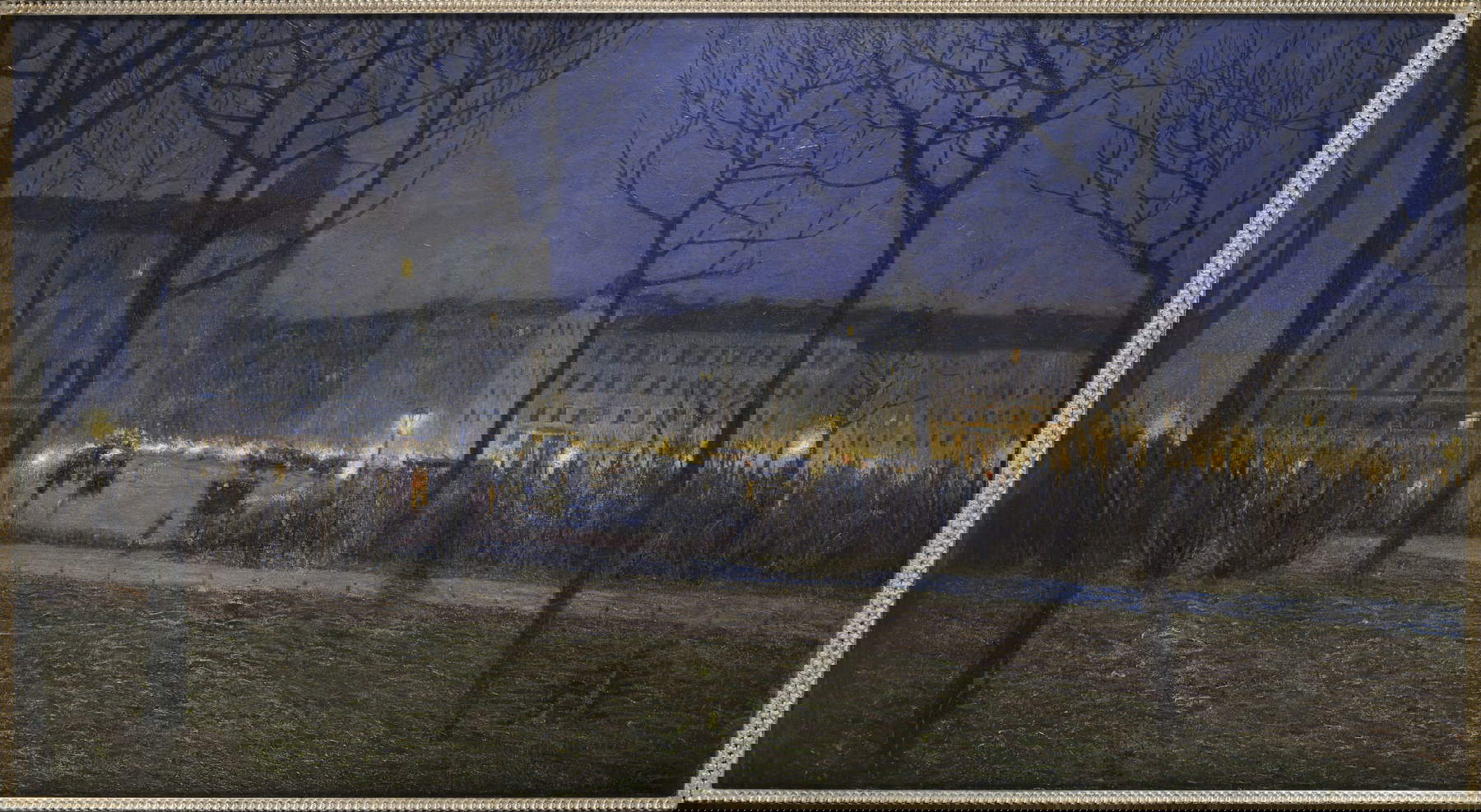
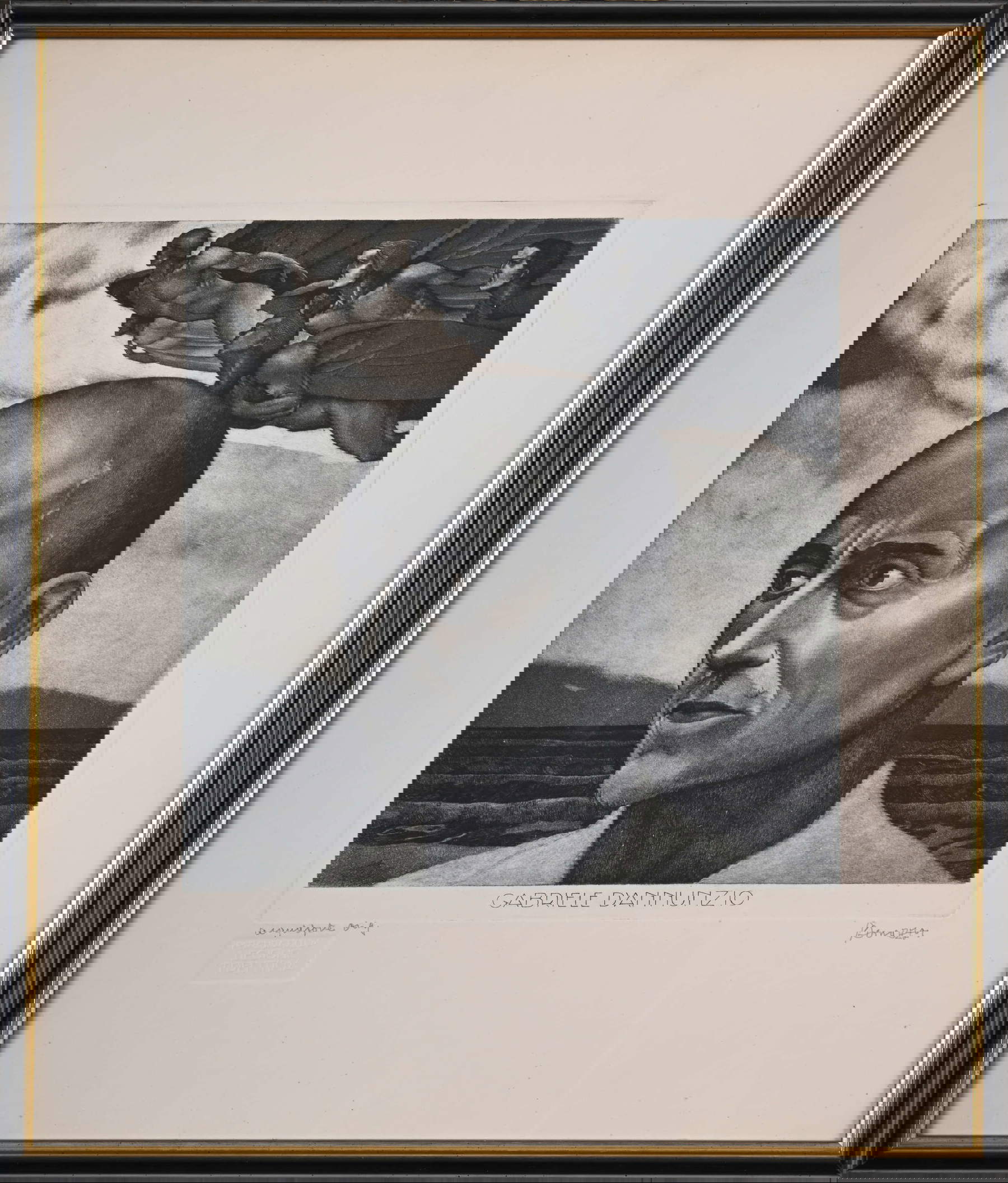
A significant contribution that the exhibition brings to the research is an in-depth examination of the close relationship between Bonazza and Gabriele D’Annunzio. The friendship between the two is confirmed by a recent find at Bonazza’s heirs: the 1918 photograph Asceta del Carnaro with a dedication by the Vate. This fertile relationship, along with a visit to the Vittoriale degli Italiani in 1925, profoundly influenced the artist’s work, which constantly recalled themes and figures from D’Annunzio’s epic. Bonazza demonstrated his admiration for the poet by giving him a Portrait of Dante Alighieri. The triptych The Legend of Orpheus resurfaces in other of Bonazza’s paintings, including Summer Night and Nocturne, which reflect his interest in D’Annunzio’s masterpiece Nocturne, written in a period of distress and published in 1921.
Portraits, landscapes and public art
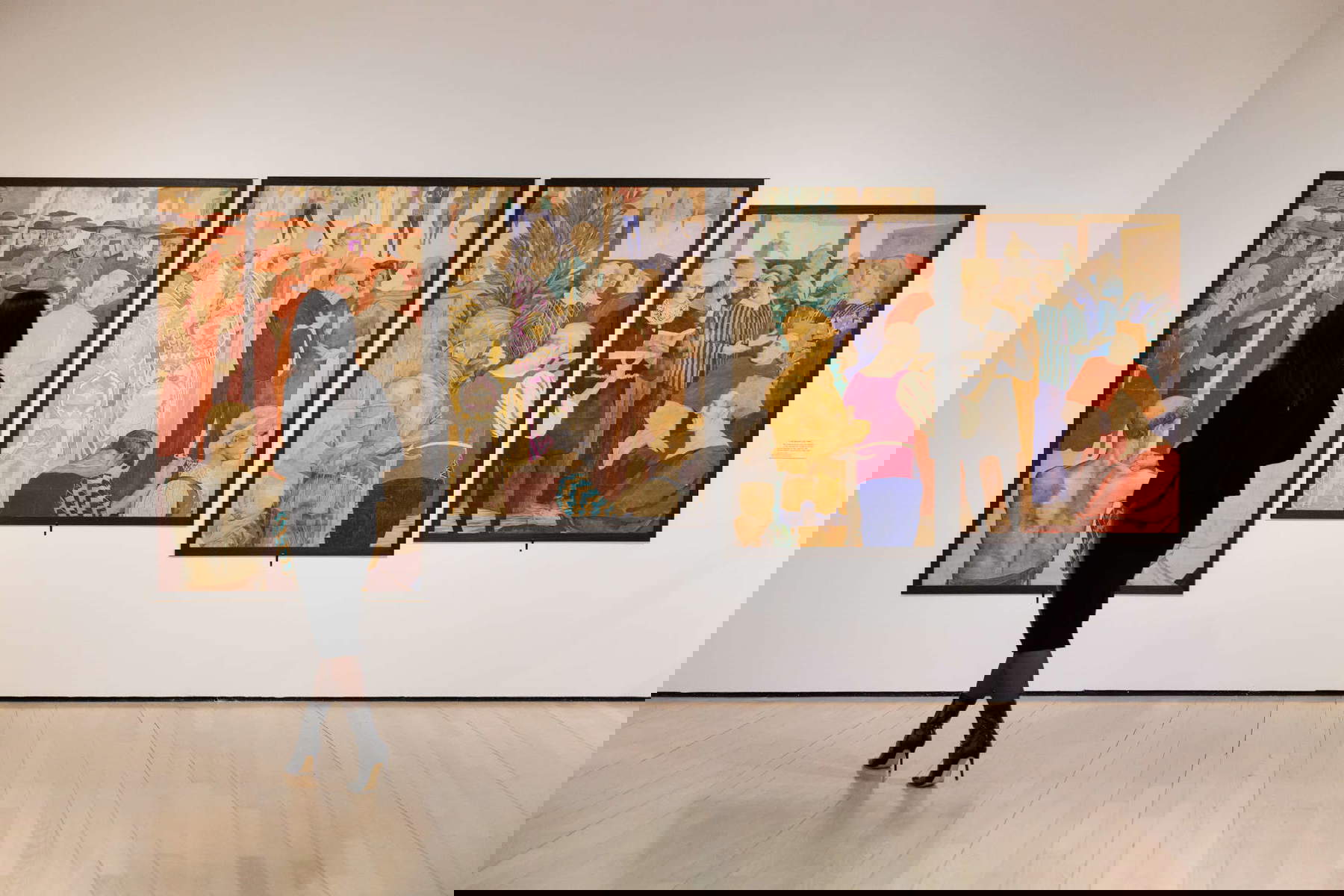
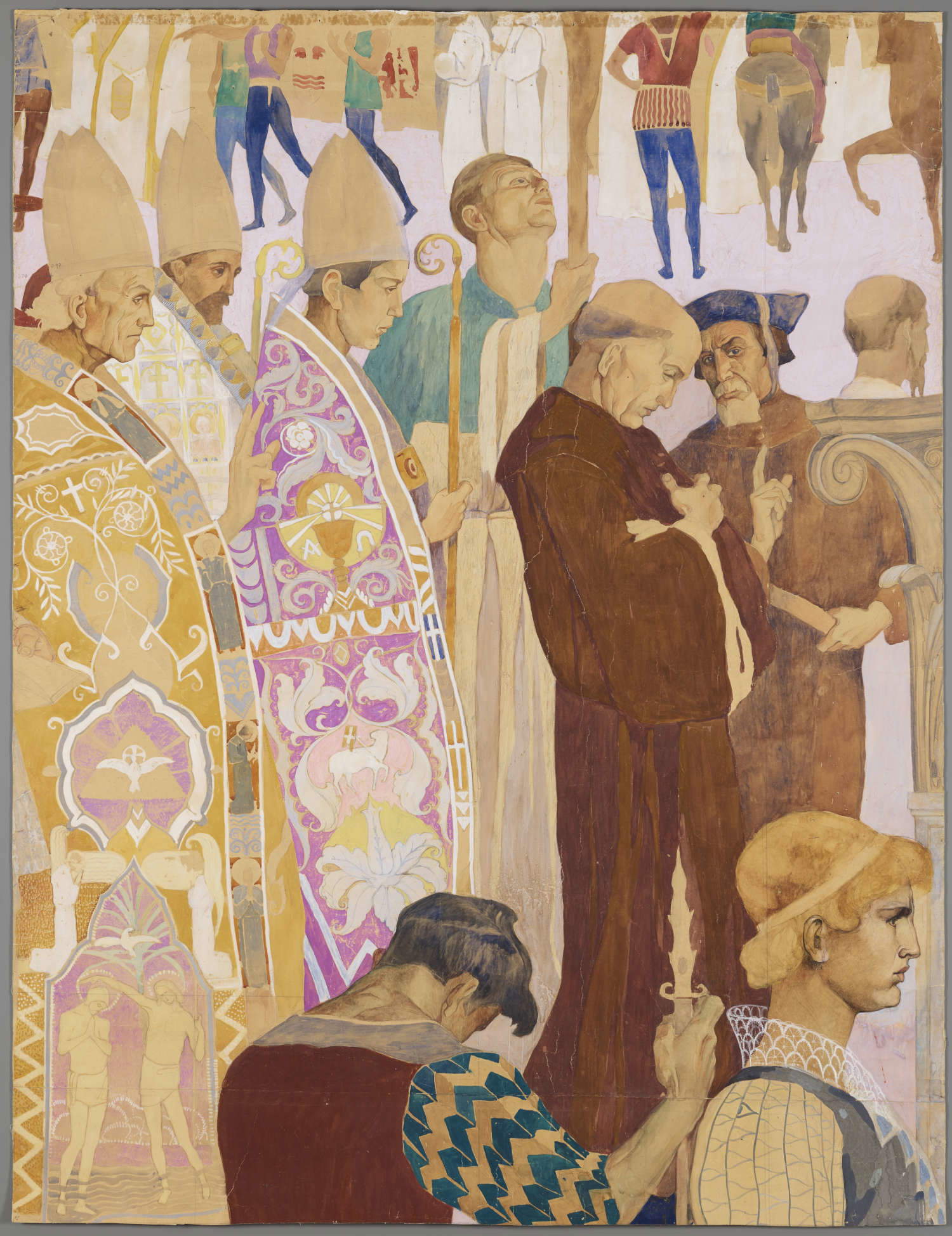
Bonazza, who settled in Trent in 1912, was also engaged in the field ofpublic art, producing several works between the two wars. Among his most prestigious commissions was the fresco for Trento’s Palazzo delle Poste, designed by Angiolo Mazzoni. Bonazza won the competition in 1931 and was engaged for two years in the creation of The Reception of Three Cardinals in the Palazzo a Prato in Trento at the time of the Council, a historical scene of neo-Renaissance taste inspired by the building’s glorious past. The preparatory cartoons for this fresco are on display in the exhibition. The artist’s sacred activity is evidenced by numerous interventions made in various techniques in Trentino, including sketches for the church in Tezze di Grigno, and works such as the Immaculate Conception for the church of Sant’Ilario in Rovereto.
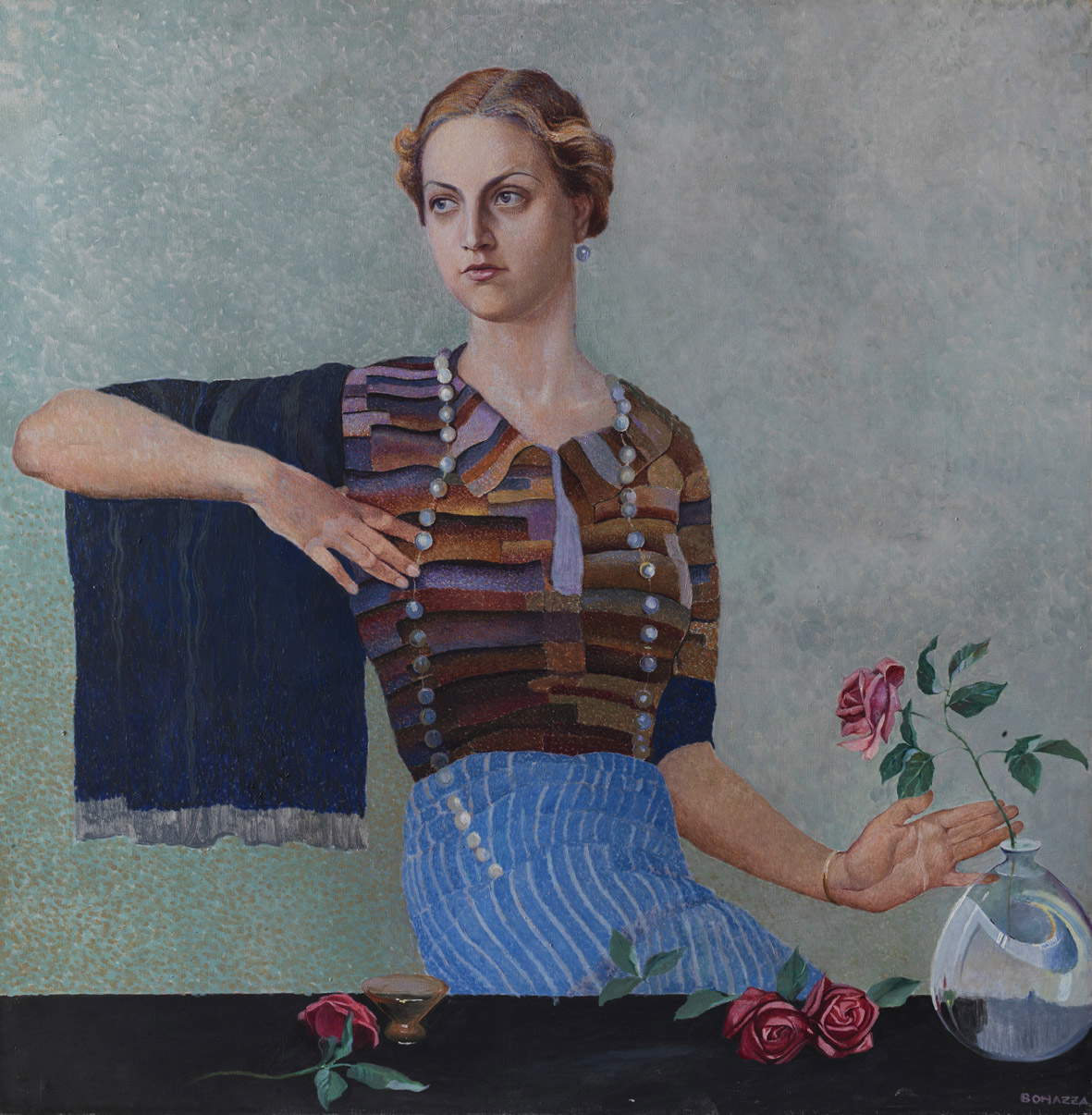
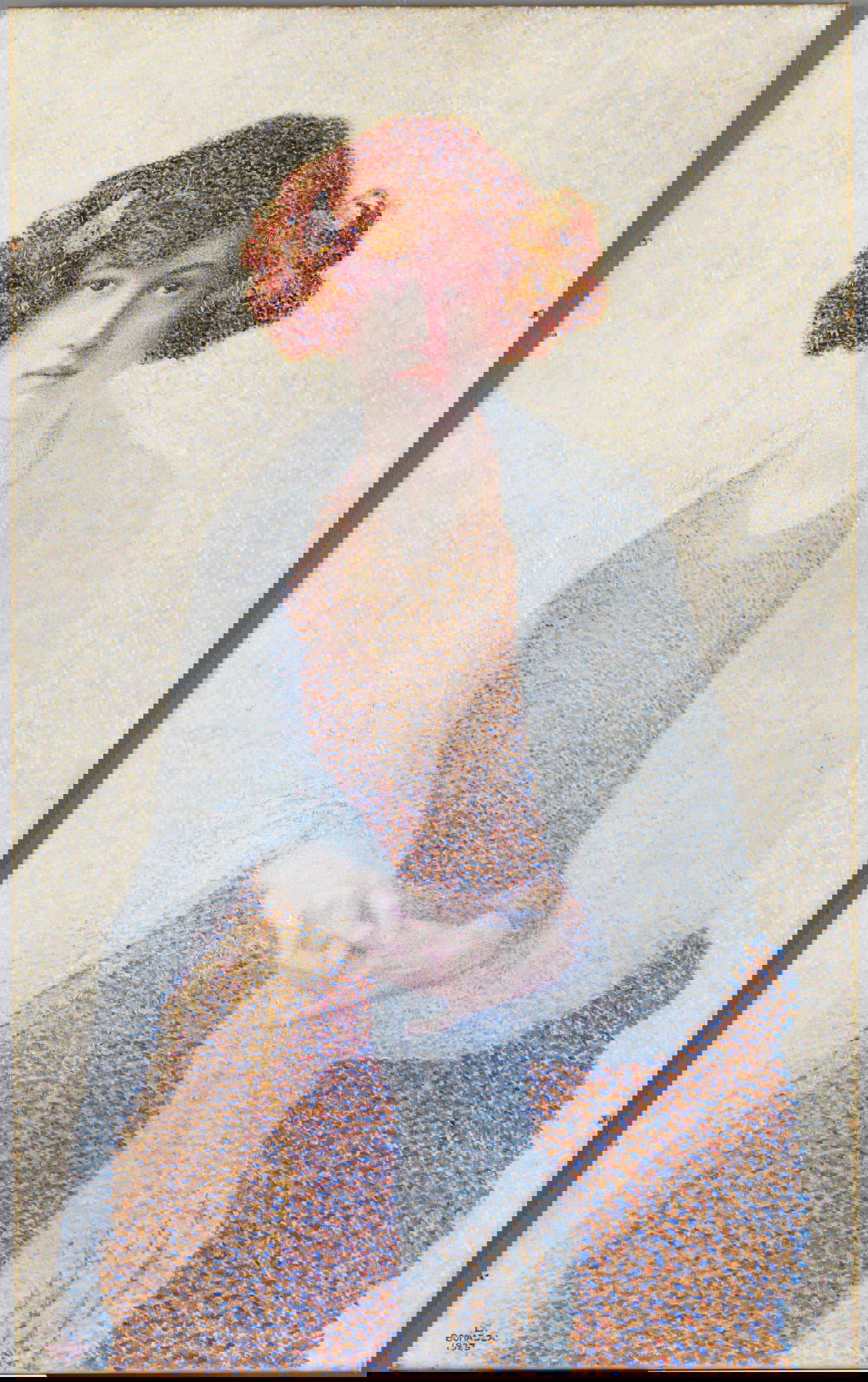
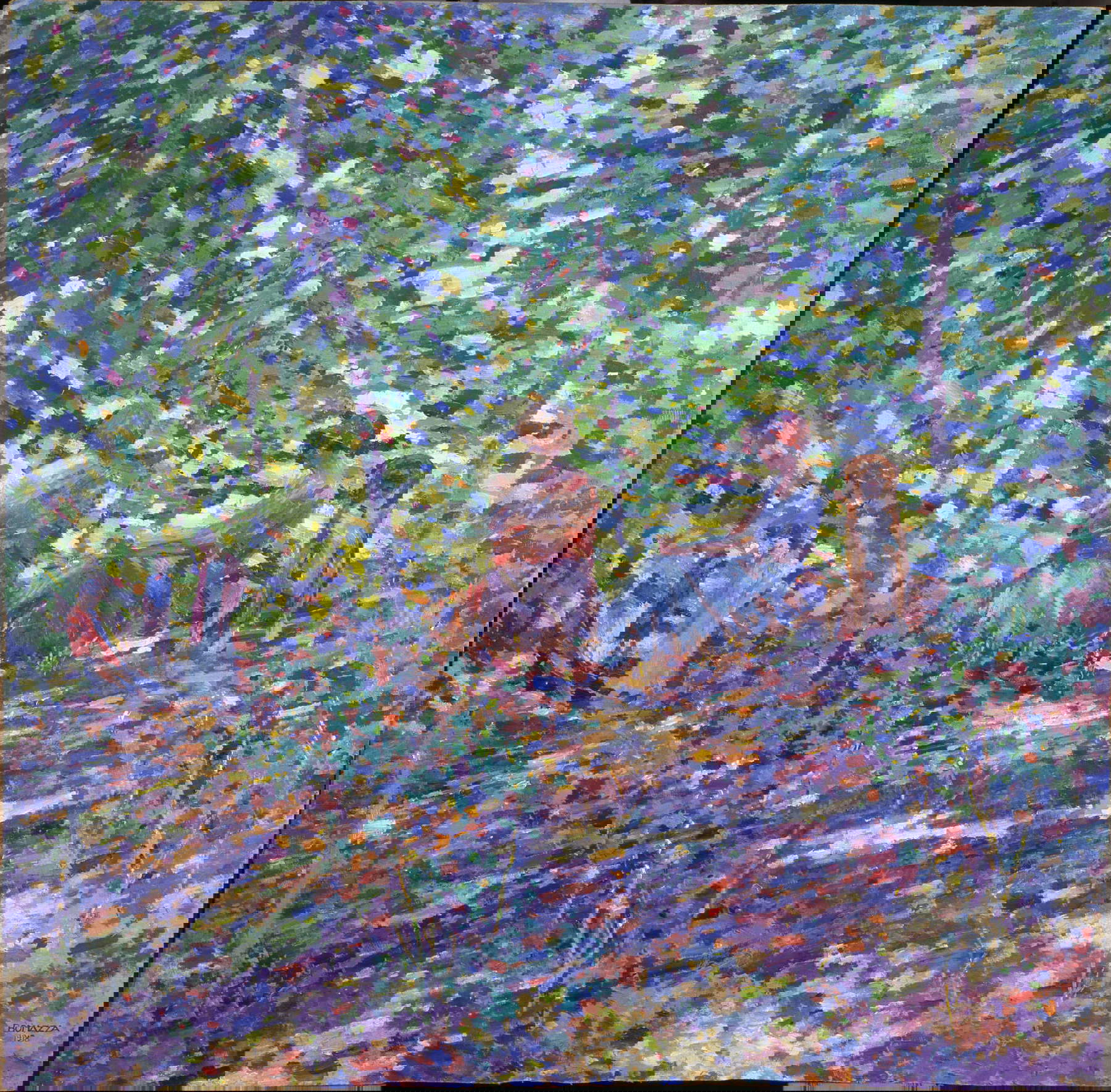
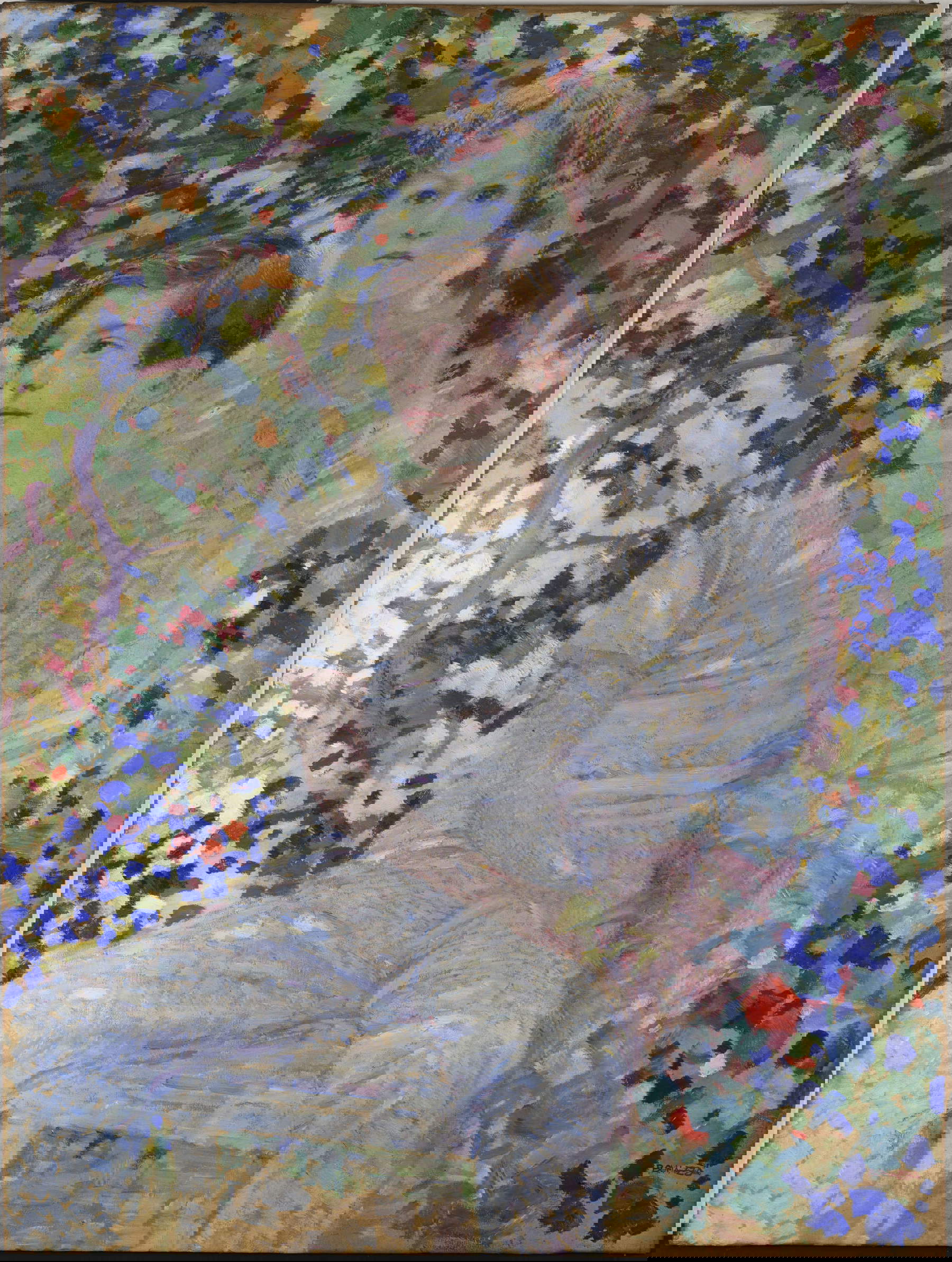
The portrait section brings together works such as the 1905Self-Portrait, a portrait of Alcide De Gasperi, and portraits of members of the Cavagna family, Bonazza’s Viennese patrons. Female portraits after the 1920s, such as the famous Portrait of Italia Bertotti, share a Divisionist technique that juxtaposes minute brushstrokes of pure hues, creating vivid flashes reminiscent of French Pointillisme or the Divisionism prevalent in Nordic countries. These portraits are characterized by a lack of psychological introspection, where attention to decoration transforms the subject into a precious art object. The exhibition also features two never-before exhibited works, Brothers in the Garden.
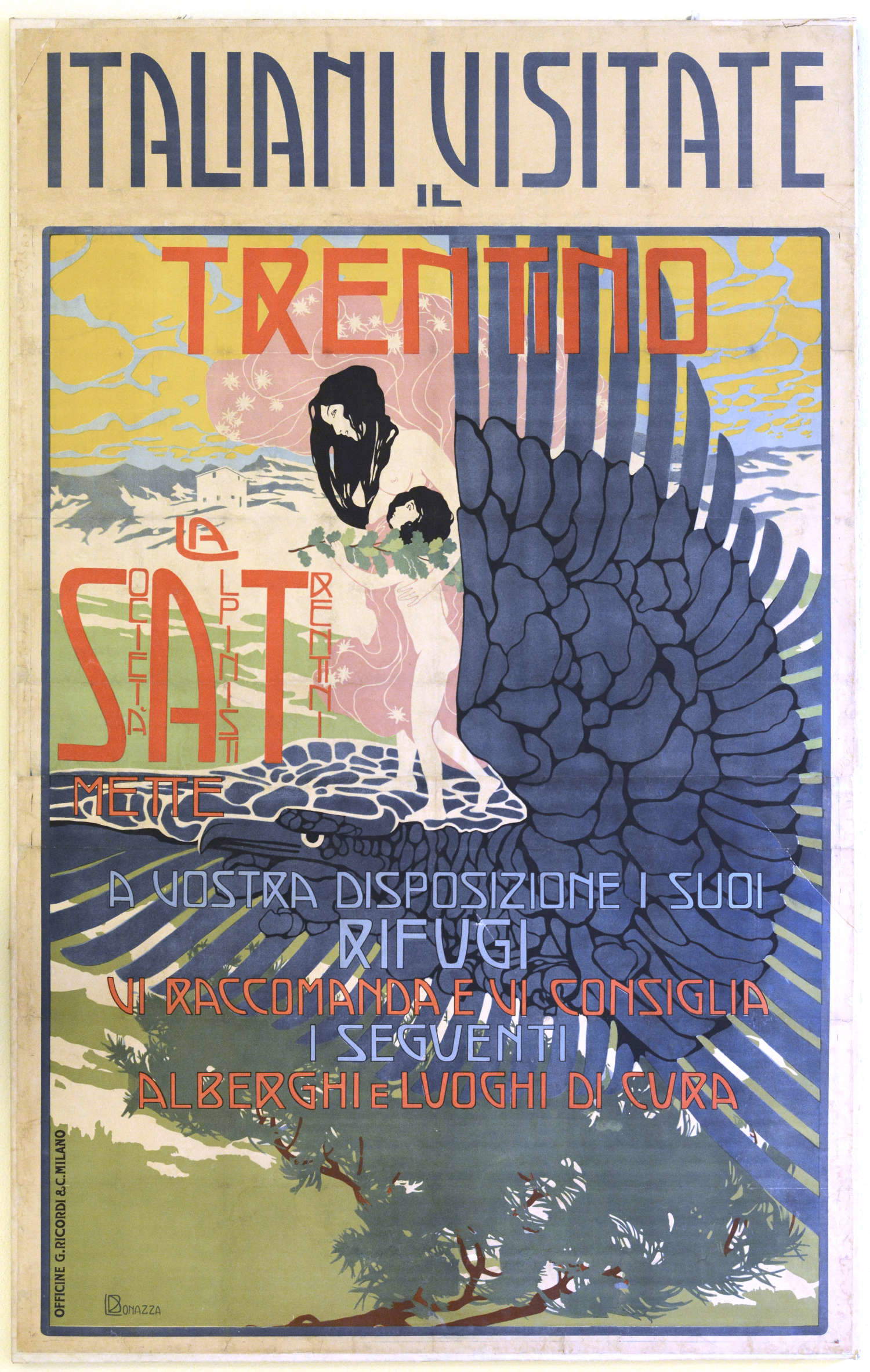
Landscape painting was central to Bonazza throughout his career, becoming the genre on which he focused most in later life. As early as 1903, Bonazza manifested his affiliation with mountain culture by winning the competition of the Società degli Alpinisti Trentini (Society of Trentino Mountaineers) with the Jugendstil-style advertising poster Italiani visitate il Trentino! The landscapes of the 1920s and 1930s express a strong attachment to the Trentino landscape, with views of the lakes and mountains surrounding Trento, characterized by a dynamism of light and color achieved through vibrant brushwork and the juxtaposition of touches of pure color.
Widespread heritage and collaborations
The exhibition not only promotes Bonazza, but also enhances the Mart’s heritage through dialogue with the works of his contemporaries, masters and heirs. The concluding section is dedicated to artists from Trentino who, like Bonazza, reconciled Italic content with a Nordic style, including Dario Wolf, Luigi Ratini, Giorgio Wenter Martini, Francesco Trentini and Stefano Zuech. Exceptionally exhibited are works from private collections, such as Perseus by Luigi Ratini and The Musician and Elevation by Dario Wolf, a student of Bonazza’s at the Technical Institute of Trent.
An additional element of interest is the opportunity to virtually explore the artist’s residence, Villa Bonazza, which the artist designed and decorated to reflect his ideal of unified art. Thanks to a collaboration between the Mart and the Bruno Kessler Foundation, visitors can access a 3-D street view of the Villa, which remained intact after the artist’s death, via a touch screen. Twelve works on display come from Villa Bonazza, including the paintings Deposition, Sirens and Nocturne.
Important local institutions (such as the Castello del Buonconsiglio, the Museo Storico Italiano della Guerra in Rovereto, the MAG Museo Alto Garda and the Biblioteca Comunale di Trento) and international institutions, particularly from Vienna (including the Belvedere and the MAK - Museum für angewandte Kunst), have contributed significant loans to the exhibition. The exhibition is accompanied by an ambitious catalog published by Moebius, which includes critical texts, in-depth essays by numerous scholars and reproductions of the works.
|
| Luigi Bonazza between Secession and Deco: the Trentino genius on display at Mart |
Warning: the translation into English of the original Italian article was created using automatic tools. We undertake to review all articles, but we do not guarantee the total absence of inaccuracies in the translation due to the program. You can find the original by clicking on the ITA button. If you find any mistake,please contact us.