




by Redazione 02/01/2026



Categories: Exhibitions / Disclaimer
The National Gallery of Umbria in Perugia celebrates the 800th anniversary of the death of St. Francis of Assisi with the major exhibition Giotto and St. Francis. A Revolution in Fourteenth-Century Umbria, from March 14 to June 14, 2026.

From March 14 to June 14, 2026, the National Gallery of Umbria in Perugia celebrates the800th anniversary of the death of St. Francis of Assisi with the major exhibition Giotto and St. Francis. A Revolution in Fourteenth-Century Umbria, curated by Veruska Picchiarelli and Emanuele Zappasodi, promoted and organized by the National Museums of Perugia - Regional Directorate National Museums Umbria, in collaboration with the National Committee for the Celebrations of the Eighth Centenary of the Death of St. Francis ofAssisi, the Superintendence of Archaeology, Fine Arts and Landscape of Umbria, the Region of Umbria, the General Custody of the Sacred Convent of St. Francis, the Seraphic Province of the Friars Minor of Umbria and Sardinia, the Archdiocese of Perugia - Città della Pieve, the Municipality of Perugia and Confindustria Umbria. The event has the collaboration of the State Archives of Perugia and contributions from the Umbria Region, Perugia Chamber of Commerce, Perugia Foundation, Fondazione Cassa di Risparmio di Terni e Narni, Fondazione Cassa di Risparmio di Foligno, ARVEDI AST and Nestlé; with RAI Umbria as media partner.
The exhibition focuses on one of the most decisive moments in the history of Western art: the encounter between the Franciscan charism and Giotto’s figurative innovation, which gave rise to a profound transformation of artistic language, marking the transition from the “Greek manner,” still tied to Byzantine models and stylized forms, to a new representation capable of restoring emotions and affections in a new way.


This change took shape in the building site of the Upper Basilica of St. Francis in Assisi beginning in 1288. It was precisely in this context that the young Giotto, first with the Stories of Isaac and later with the cycle of the Franciscan Legenda, elaborated a new figurative code destined to exert a profound influence on14th-century Italian art, quickly assimilated also by artists active in Umbria. The centrality of Assisi and the Franciscan factory remained firm in the following years, thanks to the presence of important masters such as Simone Martini, engaged in the chapel of St. Martin and the right transept of the lower church, Pietro Lorenzetti, author of the Stories of the Passion in the left transept, and the Master of Figline, who was responsible for the decoration of the sacristy and some of the stained glass windows of the Franciscan basilica.


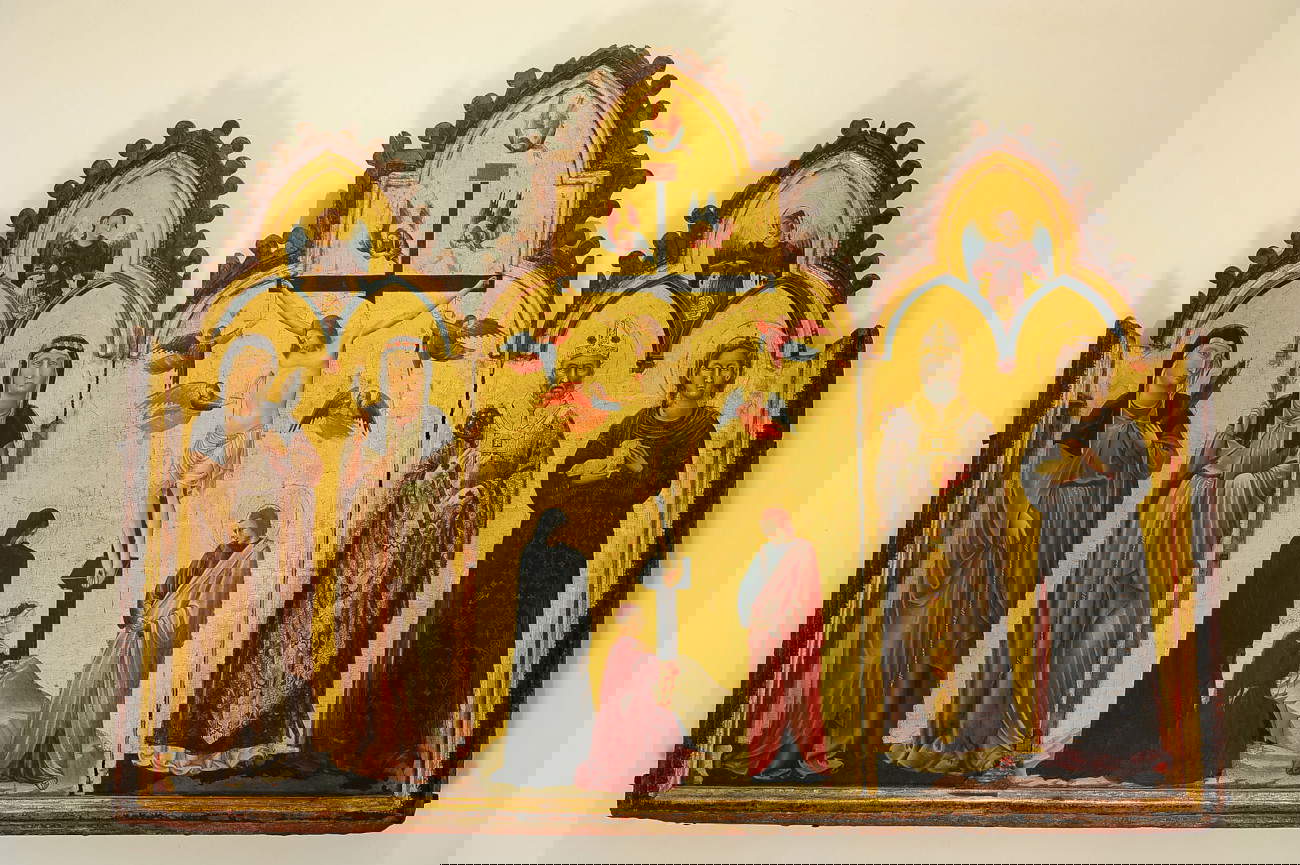
The exhibition aims to recount this extraordinary artistic season through more than sixty works by its most significant protagonists, including Giotto, Simone Martini and Pietro Lorenzetti, created during the years of their activity in Assisi. The exhibition will also highlight the intense influence exerted on numerous local artists, who were able to transpose and reinterpret with originality the innovations introduced by these masters. This is an important opportunity to highlight Umbria’s rich artistic heritage, spread throughout the region, including lesser-known areas.
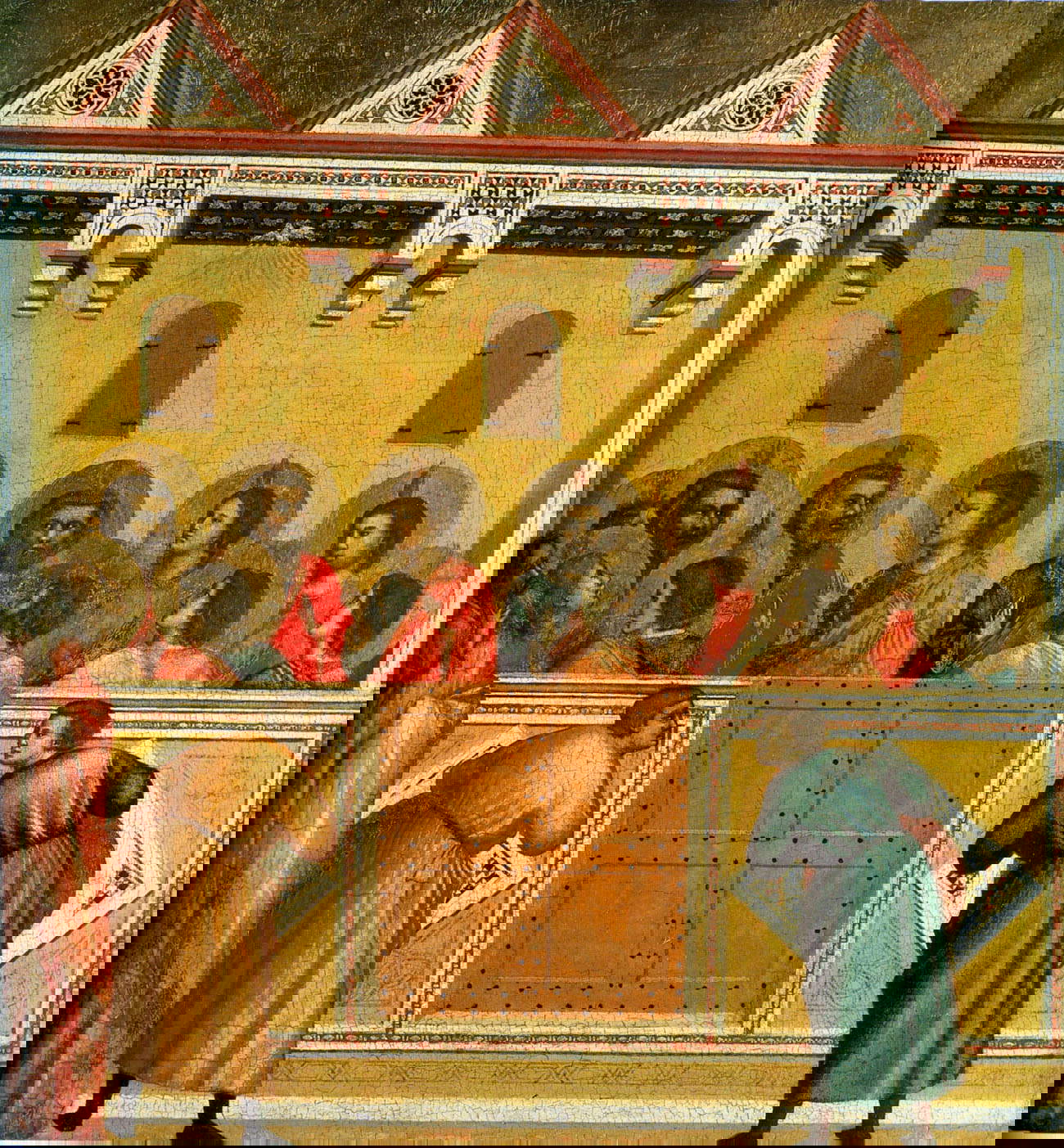
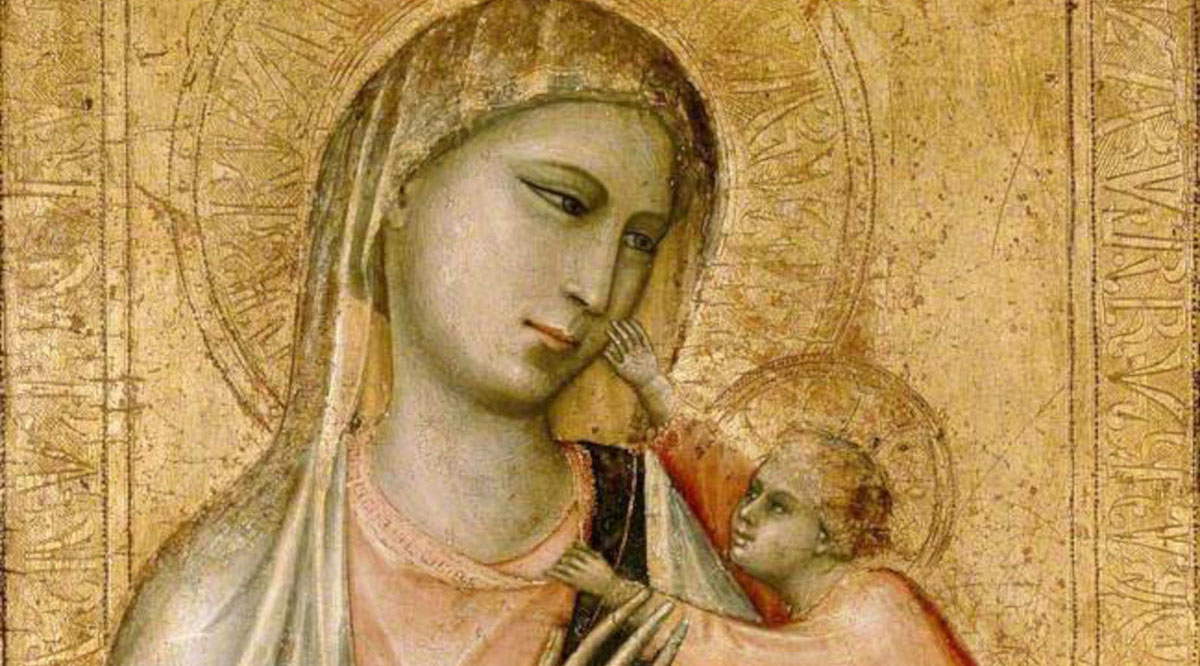
The exhibition itinerary will retrace the different phases of Giotto’s activity in the Basilica of San Francesco through coeval works. It will start from the beginnings, documented by the Madonna and Child from the Pieve di San Lorenzo in Borgo San Lorenzo and the Madonna and Child with Angels from San Giorgio alla Costa, to arrive at the most mature phase, represented by the fragment of a fresco with an Allegorical Figure, from the lower church of San Francesco and now preserved at the Szépmüvészeti Múzeum in Budapest. Also contributing to the master’s stylistic evolution are masterpieces such as the Madonna and Child from the Ashmolean Museum in Oxford and the panel with Pentecost from the National Gallery in London, originally part of a Franciscan dossal.
The tour in the rooms of the National Gallery of Umbria will continue by illustrating the Gothic turn introduced by the Giottesque revolution and the continuation of the basilica’s decoration thanks to the interventions of Simone Martini, whose works from Orvieto are brought together, Pietro Lorenzetti, present with some early panels from the Diocesan Museums of Cortona and Pienza, and the Master of Figline, whose ambitious reconstruction of the polyptych of Umbrian provenance now dispersed among important museums and international collections is proposed.


Giotto’s legacy, as well as that of Simone Martini and Pietro Lorenzetti, had a profound impact on painters of Umbrian origin, trained in the context of the Franciscan workshop and in the region’s main cultural centers, from Perugia to Gubbio, Assisi to Montefalco, Foligno to Spoleto and Orvieto. The exhibition aims to bring these artists who have long remained in the shadows back to the attention of the general public. The different exhibition sections will delve into fascinating, often anonymous figures, such as the Master of the Cross of Gubbio, the Master of Cesi, the Master of the Farneto, Marino di Elemosina and Palmerino di Guido, the so-called Expressionist of Santa Chiara, Giotto’s collaborator in the building site of the lower basilica. For the more advanced phases of the 14th century, specific insights are devoted to Puccio Capanna, the Master of the Cross of Trevi, and the refined productions of the Master of Fossa and the Master of the Silver Cross.
The exhibition itinerary will find its ideal completion in the frescoes created by the artists featured in the exhibition in the Basilica of St. Francis in Assisi and in the Museum of the Treasury of the Sacred Convent, where the precious chalice made by the goldsmith Guccio di Mannaia and donated to the shrine by Pope Nicholas IV, promoter of the rapid pictorial decoration of the upper church, is kept.


The aim of the exhibition is to offer a significant contribution to the study of these fundamental themes of art history, through initiatives such as reconstructing dismembered complexes, exhibiting works that have never been shown to the public, carrying out restorations and diagnostic investigations, and creating an immersive video dedicated to the Basilica of St. Francis in Assisi, which restores, thanks to the most advanced technologies, the visual paths that were designed for pilgrims headed to the tomb of the saint to pray.
Giotto and Saint Francis. A Revolution in Fourteenth-Century Umbria benefits from the scholarly collaboration of highly specialized international scholars, including Alessandro Bagnoli, Caroline Campbell, Laura Cavazzini, Donal Cooper, Andrea De Marchi, Gabriele Fattorini, Cecilia Frosinini, Francesca Pasut, Mirko Santanicchia and Carl Brandon Strehlke.
Catalog by Silvana Editoriale.
 |
| Perugia celebrates Giotto and St. Francis with a major exhibition |
Warning: the translation into English of the original Italian article was created using automatic tools. We undertake to review all articles, but we do not guarantee the total absence of inaccuracies in the translation due to the program. You can find the original by clicking on the ITA button. If you find any mistake,please contact us.