




by Redazione 26/02/2026



Categories: Exhibitions / Disclaimer
The Musée d'Orsay dedicates an exhibition to the first two decades of Pierre-Auguste Renoir's work, offering a reinterpretation of his work in light of the theme of love as a key to interpreting modernity.


From March 17 to July 19, 2026, the Musée d’Orsay in Paris presents the exhibition Renoir and Love. Happy Modernity (1865-1885), curated by Paul Perrin, chief curator and director of conservation and collections at the museum, with the collaboration of Lucie Lachenal-Tabellet, head of documentary research at the Musée d’Orsay. The exhibition will focus on the two decades from 1865 to 1885, the period of the artist’s full affirmation, offering a reinterpretation of his work in light of the theme of love as an interpretive key to modernity.
Pierre-Auguste Renoir’s bright and festive paintings, famous for their scenes of outdoor cafes and popular dances, earned him the nickname “painter of happiness.” A definition that, while it enshrined his fame, sometimes helped marginalize him in the debate about modern painting, which is often associated with melancholy or disenchanted tones. Renoir himself observed how difficult it was to get people to accept the idea that a painting could be both joyful and grand. Yet his output offers an original reflection on modernity, understood through the prism of love: a force that governs human relationships and a sentiment that directs the artist’s gaze toward his models and the world.


For the first time, a significant nucleus of the so-called Scenes of Modern Life, large compositions with figures immersed in contemporary contexts, made in the first two decades of his career, is brought together. The centerpiece of the exhibition is the famous Dance at the Moulin de la Galette (1876), a masterpiece in the museum’s collections that is celebrating its 150th anniversary.
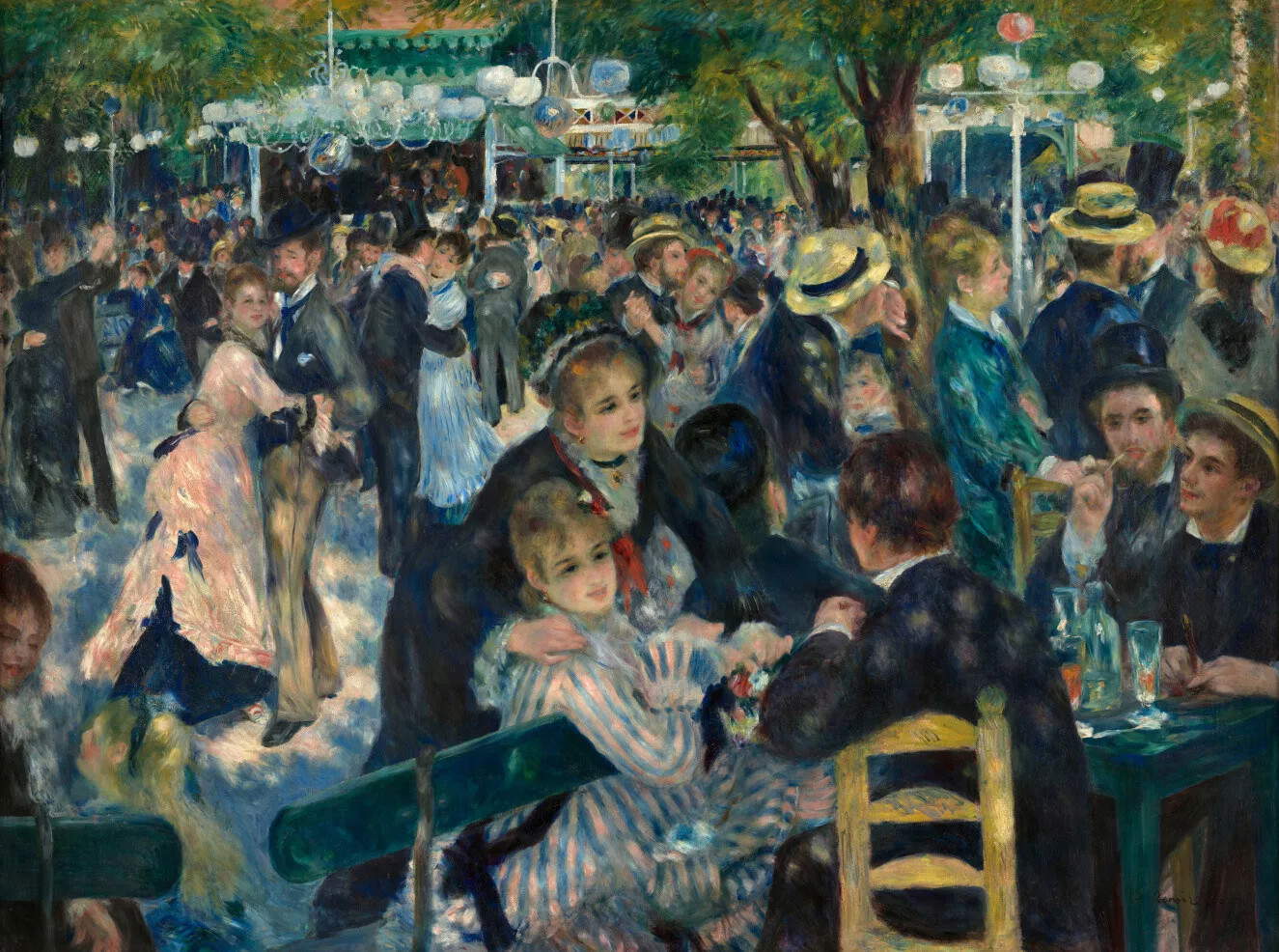
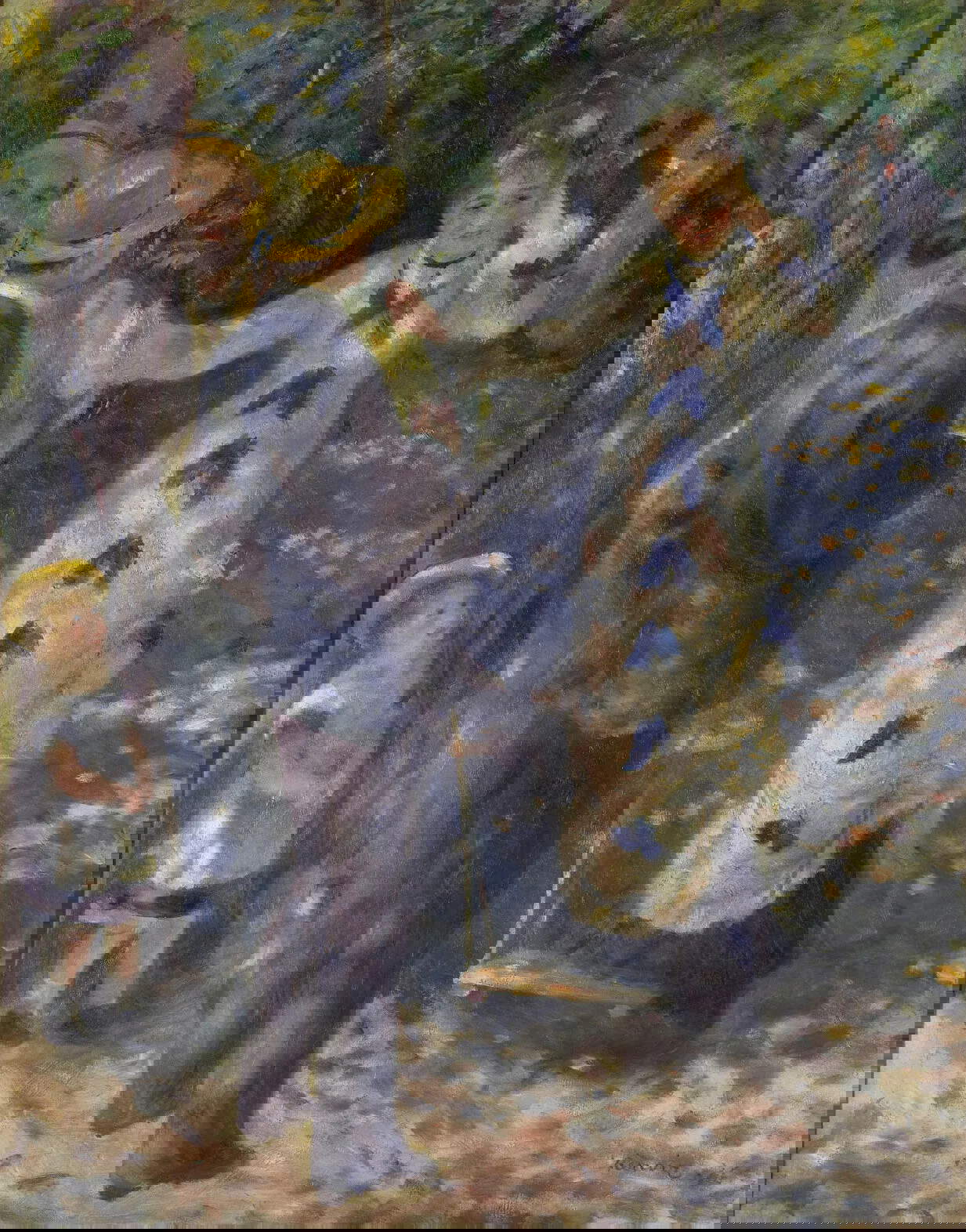
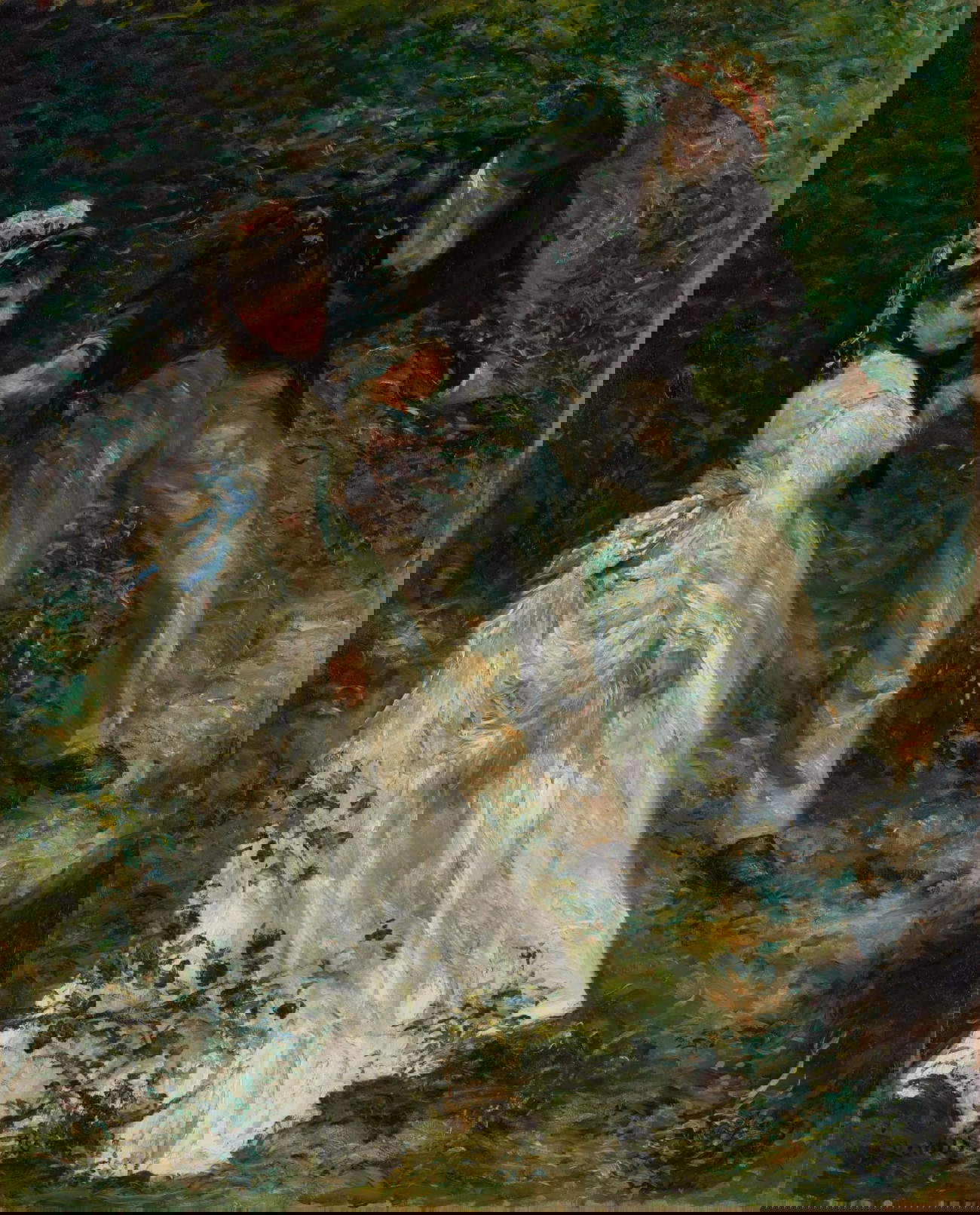
In those years Renoir participated in the birth of a new painting alongside Édouard Manet, Claude Monet, Berthe Morisot, Edgar Degas and Gustave Caillebotte. He distinguished himself, however, by a special empathy and constant wonder for the subjects depicted, choosing happy scenes and always enhancing the protagonists of his canvases. This “loving” gaze translates into a painting attentive to connections: conversations, shared meals, dances and convivial moments are united by enveloping light, balanced color harmonies and fluid brushstrokes that blend figures and environment into one vibrant atmosphere.
The exhibition also aims to delve into the frequent depiction of young couples, dismantling the cliché of a purely sentimental painting. Indeed, Renoir avoids emotional excesses, explicit romantic narratives or erotic scenes, preferring an allusive and delicate tone. An admirer of eighteenth-century French masters such as Antoine Watteau, François Boucher and Jean-Honoré Fragonard, he recovered the spirit of the fêtes galantes, proposing a vision of affective freedom and greater gender balance in Paris between the end of the Second Empire and the beginning of the Third Republic.
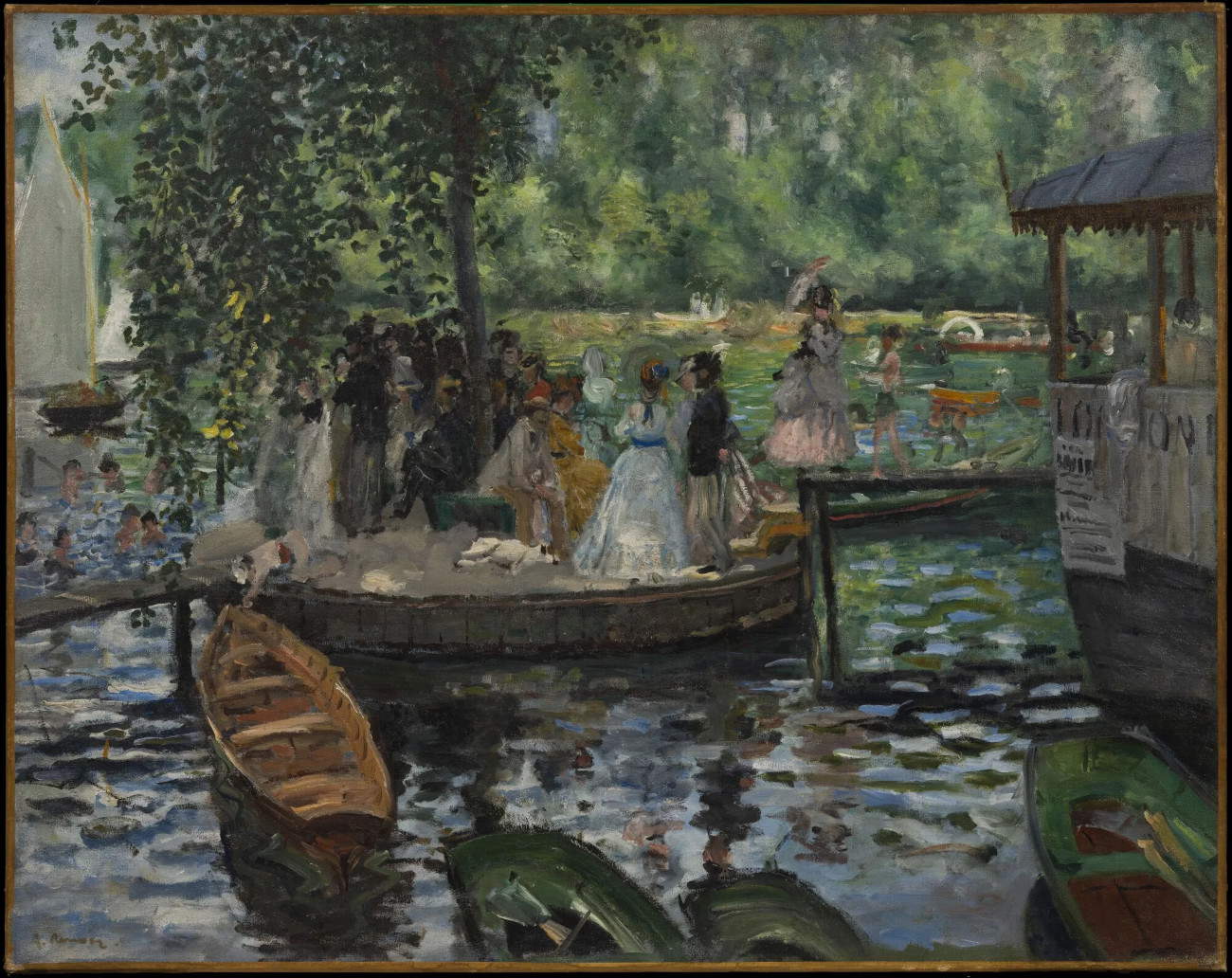
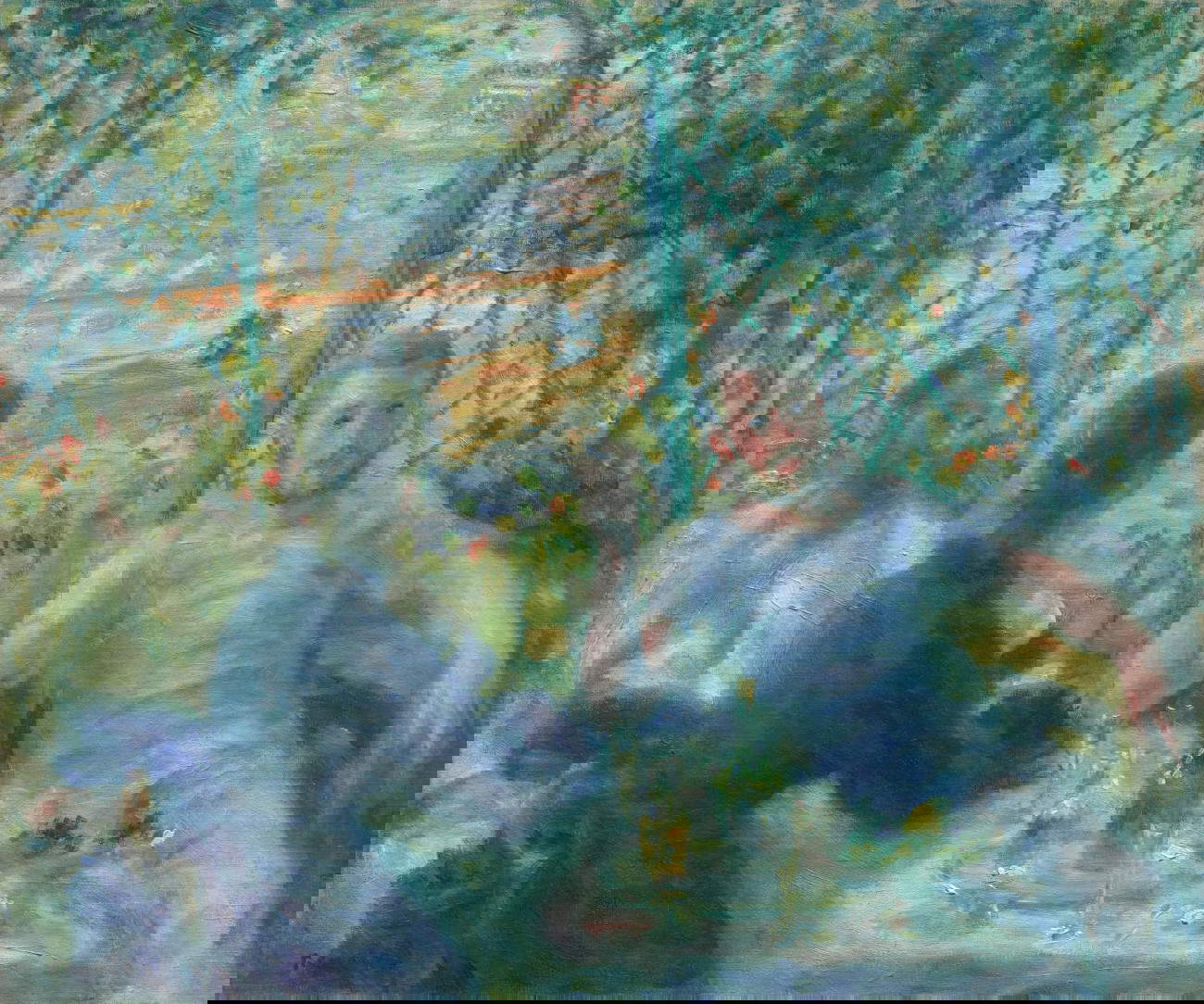
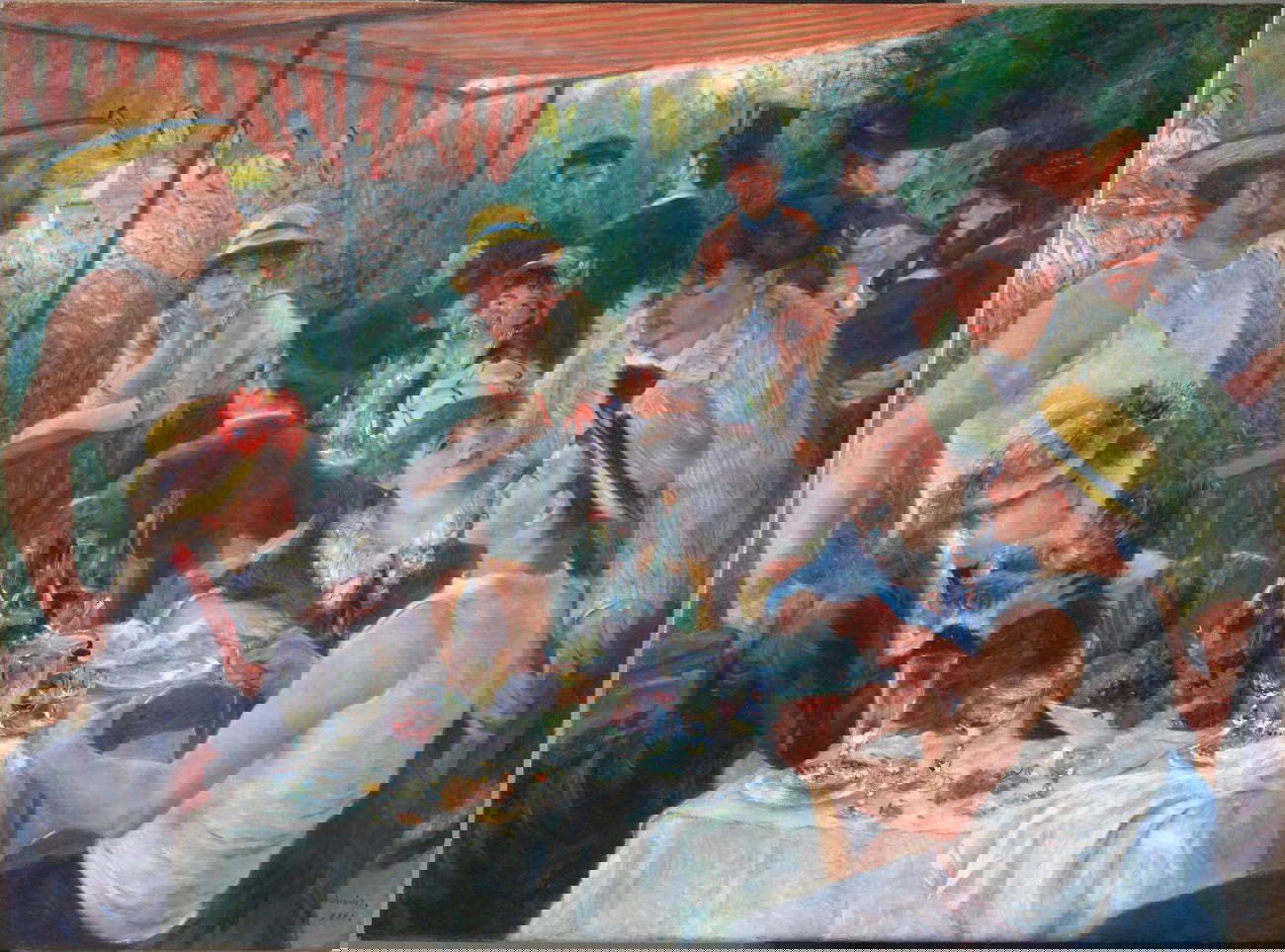
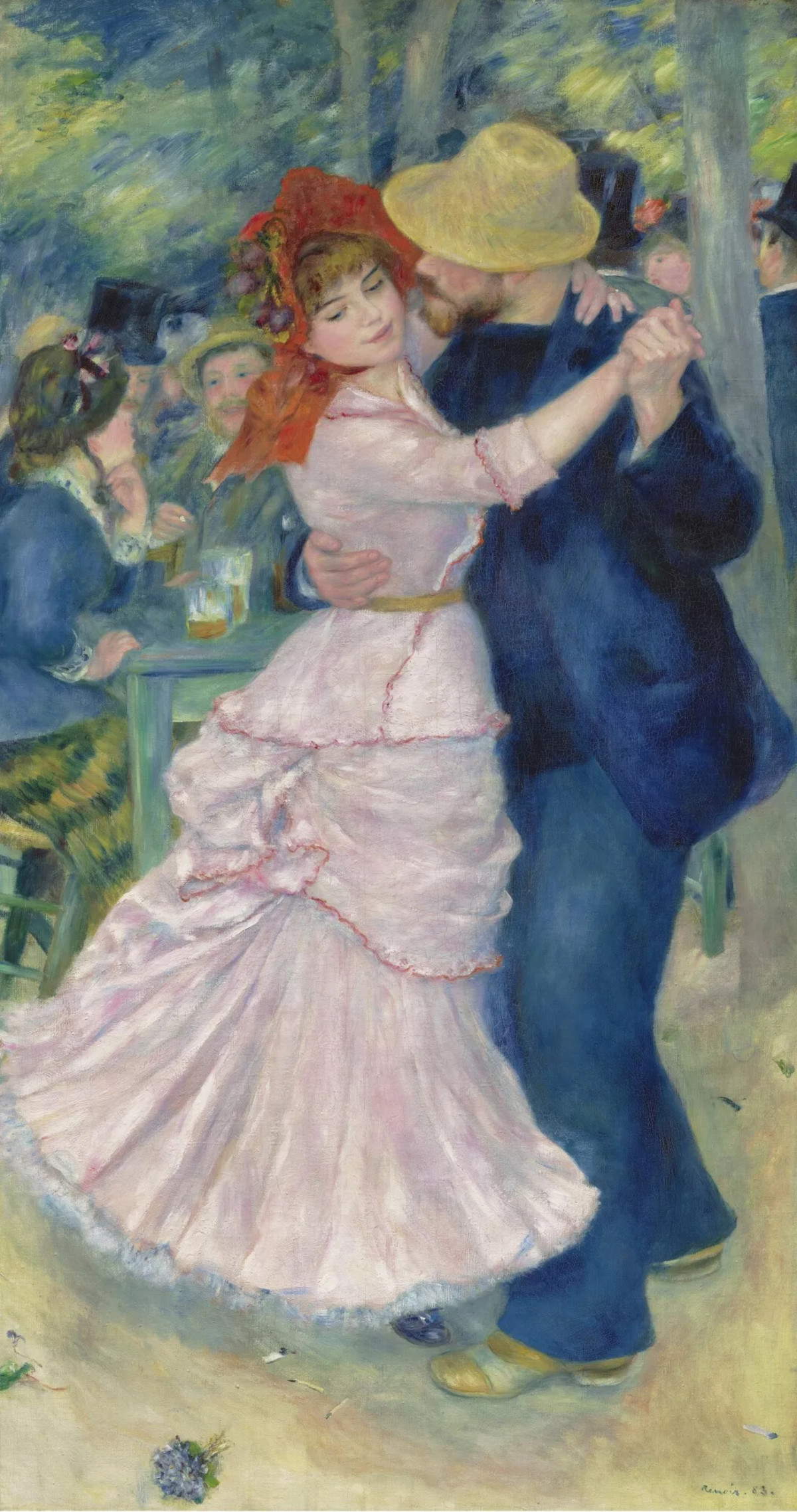
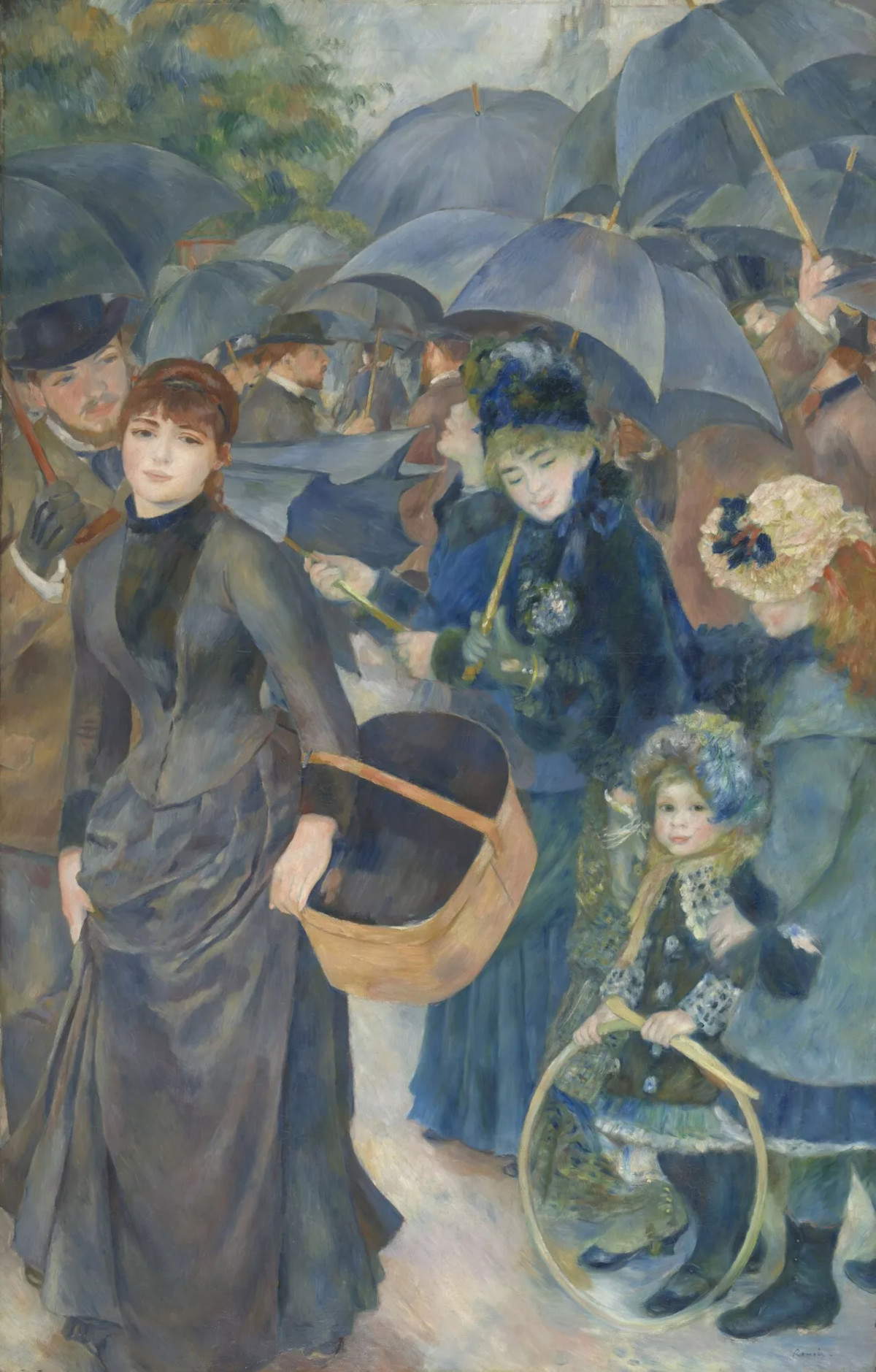
Organized in collaboration with the National Gallery in London and the Museum of Fine Arts in Boston, the exhibition aims to offer a renewed look at celebrated works whose innovative scope today risks being taken for granted. For the first time since 1985, the year of the last major Paris retrospective devoted to the artist, some fifty paintings from the early phase of his career are brought together, including masterpieces such as La Grenouillère (1869) from the Nationalmuseum in Stockholm, Les Parapluies (1881-1885) from the National Gallery in London, La Promenade (1870) from the J. Paul Getty Museum in Los Angeles, La Danse à Bougival (1883) from the Museum of Fine Arts, Boston, and Le Déjeuner des canotiers (1880-1881), exceptionally loaned from the Phillips Collection in Washington.
An opportunity to reread Renoir in the light of a happy modernity, in which love becomes an aesthetic principle and worldview.
|
| The Musée d'Orsay brings together for the first time Renoir's most famous works from the first two decades of his career |
Warning: the translation into English of the original Italian article was created using automatic tools. We undertake to review all articles, but we do not guarantee the total absence of inaccuracies in the translation due to the program. You can find the original by clicking on the ITA button. If you find any mistake,please contact us.