



by Redazione 13/02/2026



Categories: Exhibitions / Disclaimer
From April 25 to October 19, 2026, the Peggy Guggenheim Collection in Venice presents the largest museum exhibition ever devoted to Peggy Guggenheim's London period and her first gallery, Guggenheim Jeune.
The Peggy Guggenheim Collection in Venice presents from April 25 to October 19, 2026 Peggy Guggenheim in London. Birth of a Collector, the largest museum exhibition ever devoted to Peggy Guggenheim ’s London period and her first gallery, Guggenheim Jeune, active at 30 Cork Street between 1938 and 1939. Curated by Gražina Subelytė, curator of the Peggy Guggenheim Collection, together with Simon Grant, guest curator, the exhibition traces a decisive phase in her biography, one that was destined to define in a lasting way her role as collector and patron of twentieth-century art.
During its brief but intense activity, the gallery contributed decisively to the transformation of the British art scene in the interwar period, fostering the dissemination and reception of contemporary art in a still strongly conservative context. Alongside spaces such as the Redfern Gallery, the Mayor Gallery, and the London Gallery, Guggenheim Jeune challenged dominant conventions and offered an essential point of reference for the avant-garde. Those years were also crucial in defining Peggy Guggenheim’s identity as an advocate for the arts, animated by a plan to found a museum of modern art in London-an idea that would later find fulfillment in Venice. In just eighteen months the gallery established itself as a major center of the avant-garde, distinguishing itself through bold, experimental programming and the promotion of British and international artists, many linked to Surrealism and abstraction. Between January 1938 and June 1939, Peggy Guggenheim organized more than twenty exhibitions, with major curatorial firsts: the first UK solo exhibition of Kandinsky, a monographic survey of Jean Cocteau, the first British exhibition devoted entirely to collage, a controversial exhibition of contemporary sculpture, and a group show of works made by children, which included a painting by the very young Lucian Freud, marking his exhibition debut.


The exhibition brings together about one hundred significant works from prestigious international institutions and private collections. It features works presented in the gallery’s historic exhibitions, alongside coeval works and works by artists that Peggy Guggenheim would later include in her own collection. These include Eileen Agar, Jean (Hans) Arp, Barbara Hepworth, Vasily Kandinsky, Rita Kernn-Larsen, Piet Mondrian, Henry Moore, Cedric Morris, Sophie Taeuber-Arp, and Yves Tanguy. The itinerary includes paintings, sculptures, works on paper, photographs, puppets and archival materials, restoring the richness and variety of languages welcomed by the gallery and recounting a season of extraordinary creative experimentation, shot through with profound social and political tensions on the eve of World War II. Particular attention is also paid to the network of relationships built by Peggy Guggenheim in London, highlighting the role of her friendships and collaborations with central figures of modernism, including Arp, Samuel Beckett, Marcel Duchamp, Roland Penrose, Herbert Read and Mary Reynolds, as well as the importance of her contacts with gallerists and intellectuals active in those years.
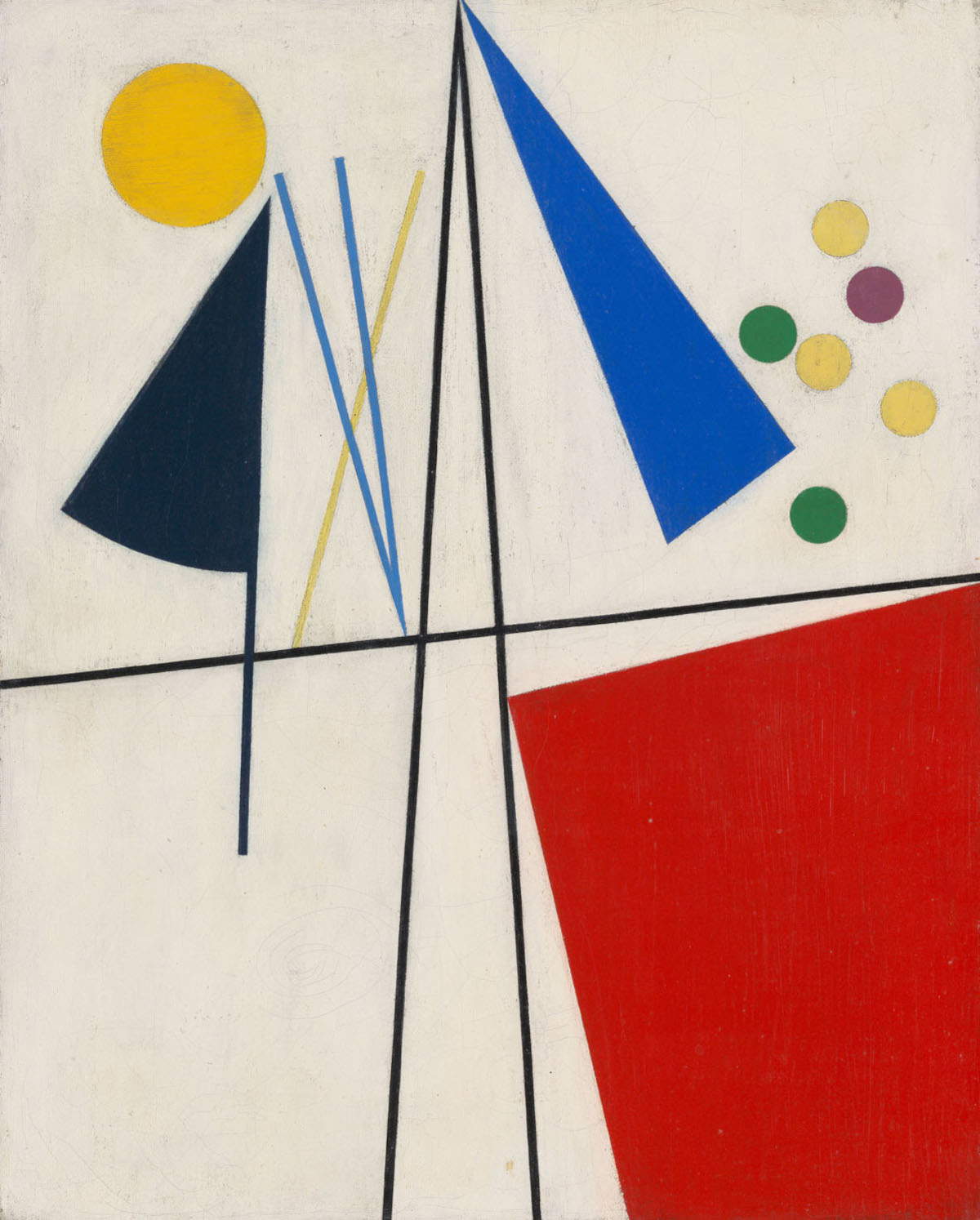
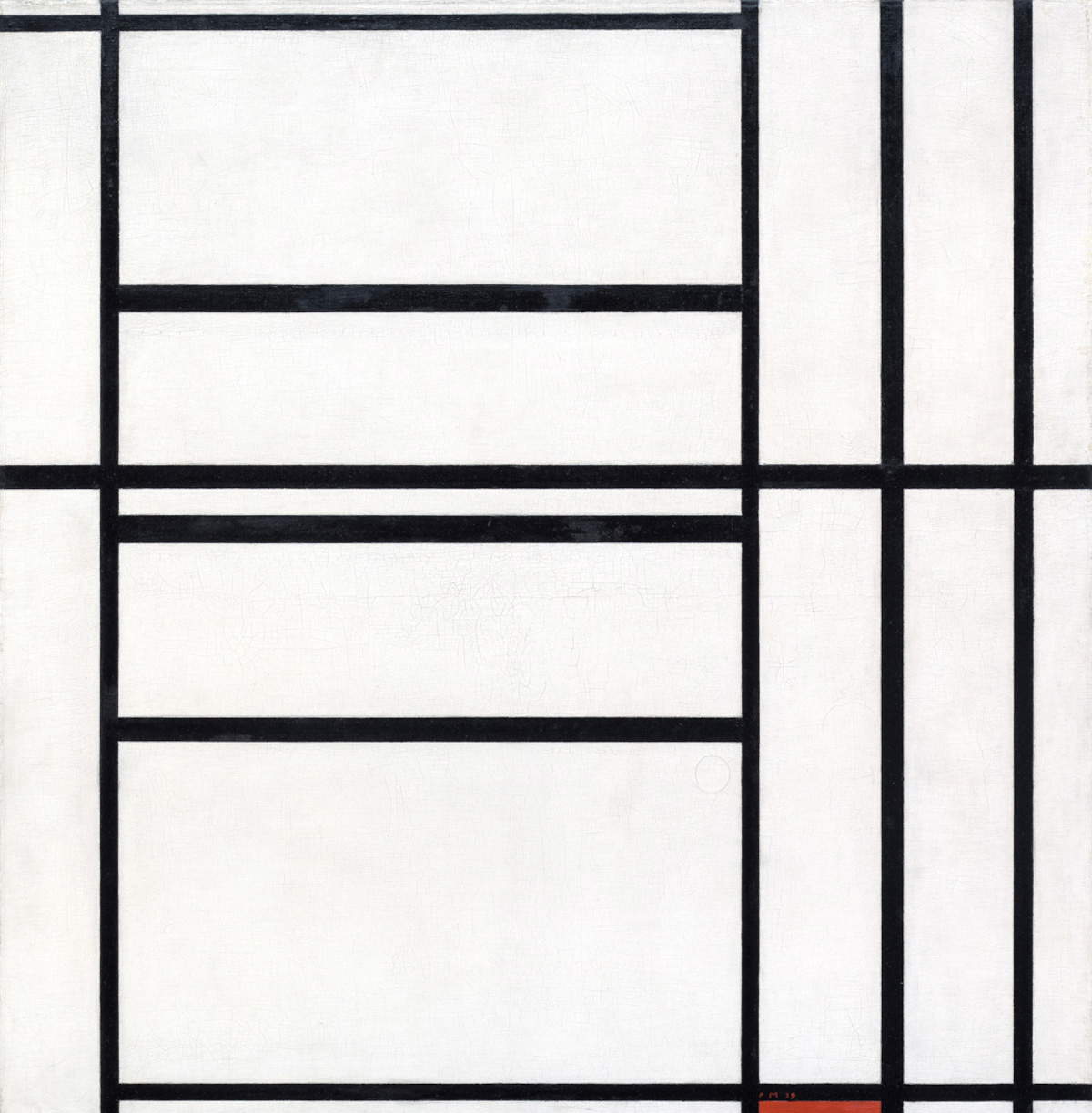
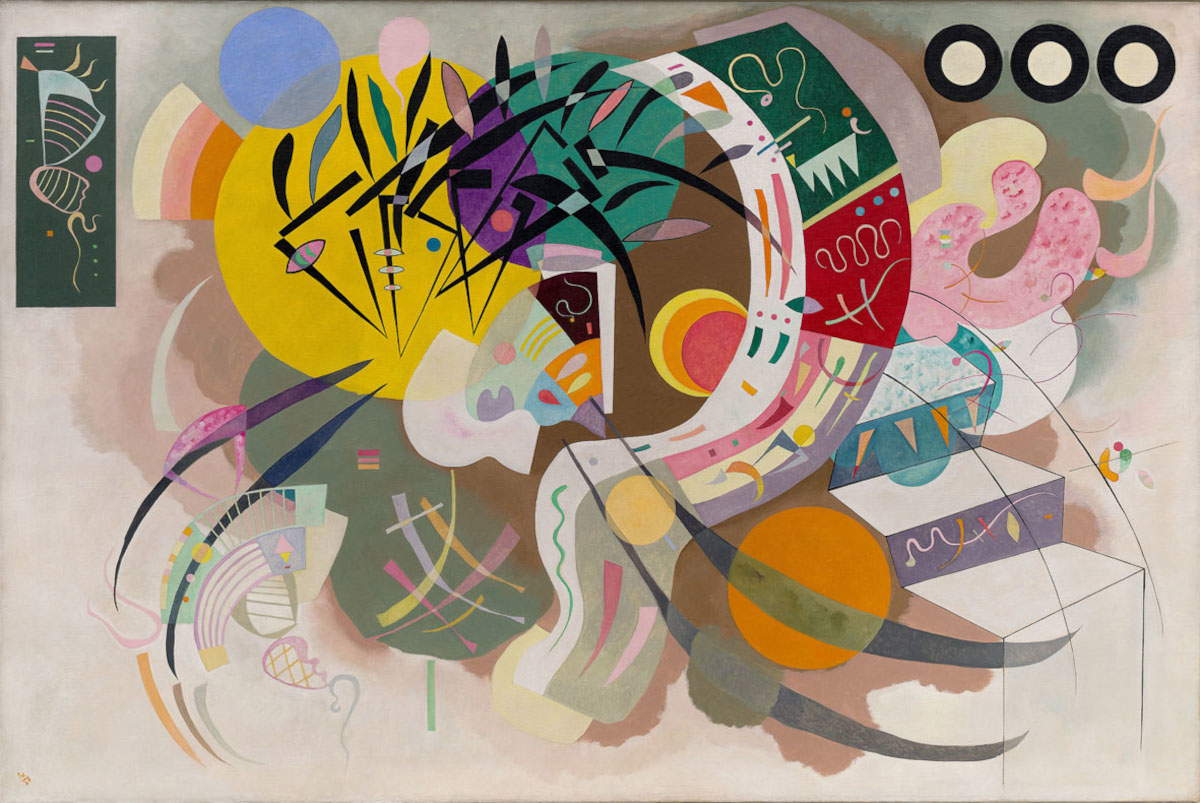
The exhibition opens with emblematic works ofabstraction and Surrealism presented by Guggenheim Jeune, representative of the guidelines of its program. Subsequent sections delve into individual exhibitions held in the London space, including those devoted to Kandinsky, Russian artist Marie Vassilieff, known for her “art dolls” and transdisciplinary approach, and the celebrated exhibition of contemporary sculpture, a major event in prewar London that confirmed Peggy Guggenheim’s commitment to promoting modern and abstract art in England. This is followed by portraits of Cedric Morris, a central figure of the British avant-garde, and a room devoted to exhibitions by American painter Charles Howard, German sculptor Heinz Henghes, and Studio 17, a printmaking workshop founded by Stanley William Hayter. A tribute is reserved for the historic Abstract and Concrete Art exhibition, with works by Mondrian, Taeuber-Arp and Van Doesburg. There is also a space devoted to Gisèle Freund’s color photographic portraits, originally presented at Guggenheim Jeune in the form of projections. Finally, the concluding rooms bring together works by artists featured in the collage exhibition and in the various exhibitions devoted to Surrealism, including Kernn-Larsen, André Masson, Reuben Mednikoff, Wolfgang Paalen, Grace Pailthorpe, Man Ray, Tanguy, and John Tunnard.
The initiative is also a tribute to the deep bond that united Peggy Guggenheim with England, which she considered a true spiritual home.
The exhibition will be accompanied by an extensive illustrated catalog, published by the Peggy Guggenheim Collection and distributed by Marsilio Arte, which includes new critical contributions by scholars, historians and art critics.
Following the Venetian presentation, Peggy Guggenheim in London. Birth of a Collector will arrive at the Royal Academy of Arts in London from November 21, 2026 to March 14, 2027, and then be hosted at the Guggenheim in New York in the spring of 2027, consolidating the international dialogue around a central figure in 20th-century art history.
|
| Venice hosts the largest museum exhibition ever devoted to Peggy Guggenheim's London period |
Warning: the translation into English of the original Italian article was created using automatic tools. We undertake to review all articles, but we do not guarantee the total absence of inaccuracies in the translation due to the program. You can find the original by clicking on the ITA button. If you find any mistake,please contact us.