




by Redazione 01/12/2025



Categories: Exhibitions / Disclaimer
From Jan. 30 to May 4, 2026, Milan is hosting the exhibition "Wonders of the Grand Tour," featuring Giovanni Paolo Panini's painting "Ancient Rome" from the Metropolitan Museum in New York and a short film by Ferzan Ozpetek.

The Poldi Pezzoli Museum in Milan will open its halls, from January 30 to May 4, 2026, to Wonders of the Grand Tour, an exhibition conceived by Alessandra Quarto and curated by Lavinia Galli of the Poldi Pezzoli Museum and Xavier F. Salomon of theMuseu Calouste Gulbenkian. The initiative is held under the patronage of the Ministry of Culture (MIC), the Lombardy Region, the City of Milan and the U.S. Consulate General in Milan, and is organized by Federica Manoli and Arianna Pace as part of the Milan Cortina 2026 Cultural Olympiad. The exhibition is being developed with the contribution of technical sponsors such as AON, Kerakoll and Molteni & C, main sponsor Famiglia Pascuzzi, and with the support of Media Partner Grandi Stazioni Retail and sponsors including the Associazione Amici del Museo Poldi Pezzoli, DGPA&Co and Kaleon Heritage Management. The catalog is edited by Dario Cimorelli Editore, while the coordinated image was created by Viva!


“Given the importance that the Winter Olympics will hold for the city of Milan,” says Alessandra Quarto, director of the Museum, “the Poldi Pezzoli wishes to present a cultural project developed through an international collaboration with one of the most prestigious museums in the world such as the Metropolitan Museum in New York. A gift for the many tourists who will come to the city but also an opportunity to relive the emotions and experiences of the grand tour through a dialogue with the Museum’s collections.”


“We are very happy to collaborate with the Poldi Pezzoli Museum for the exhibition dedicated to the Grand Tour, an initiative that contributes to delving into one of the most fascinating chapters of European culture with a loan that enters into dialogue with the Museum’s prestigious house collection,” says Stephan Wolohojian, chief curator of European Painting at the Metropolitan Museum.


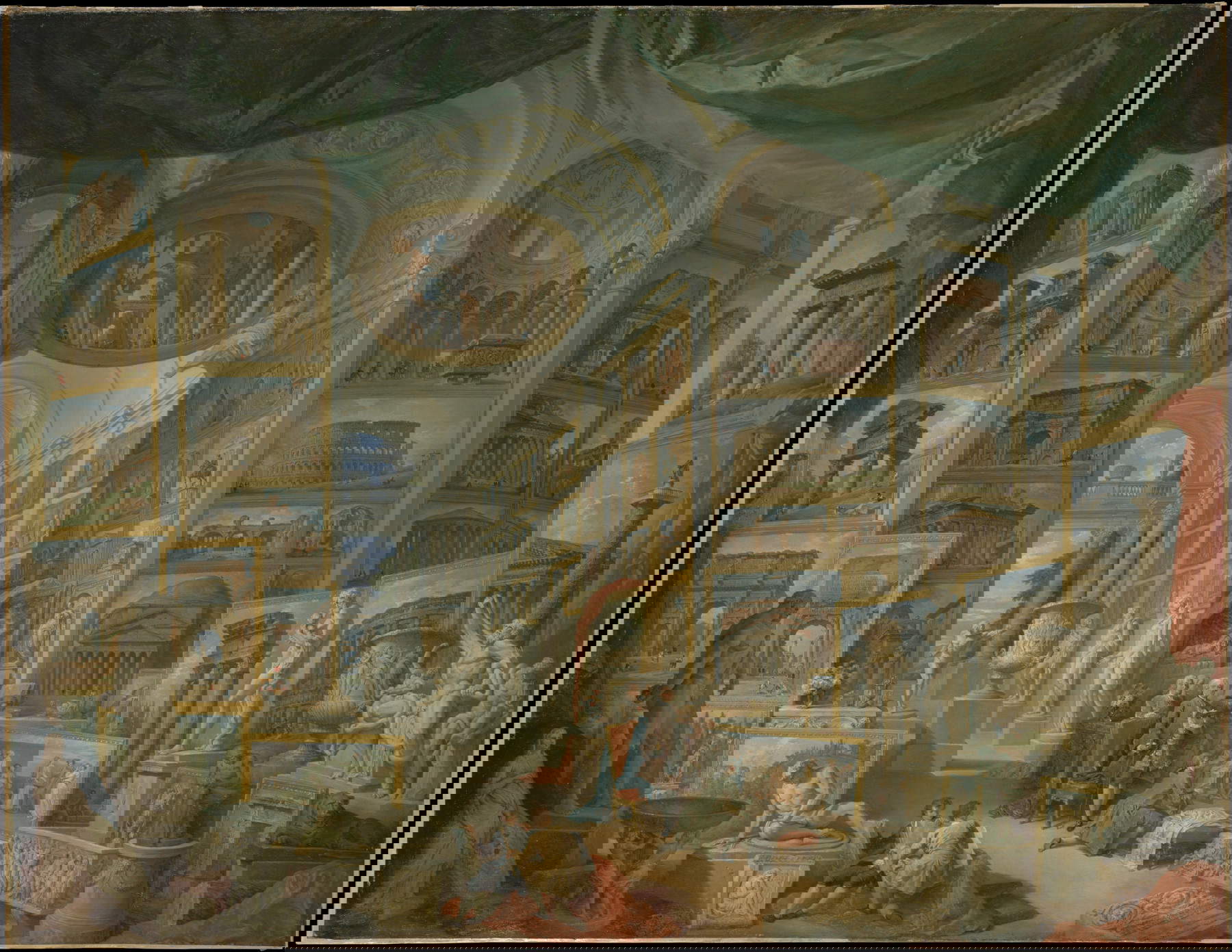
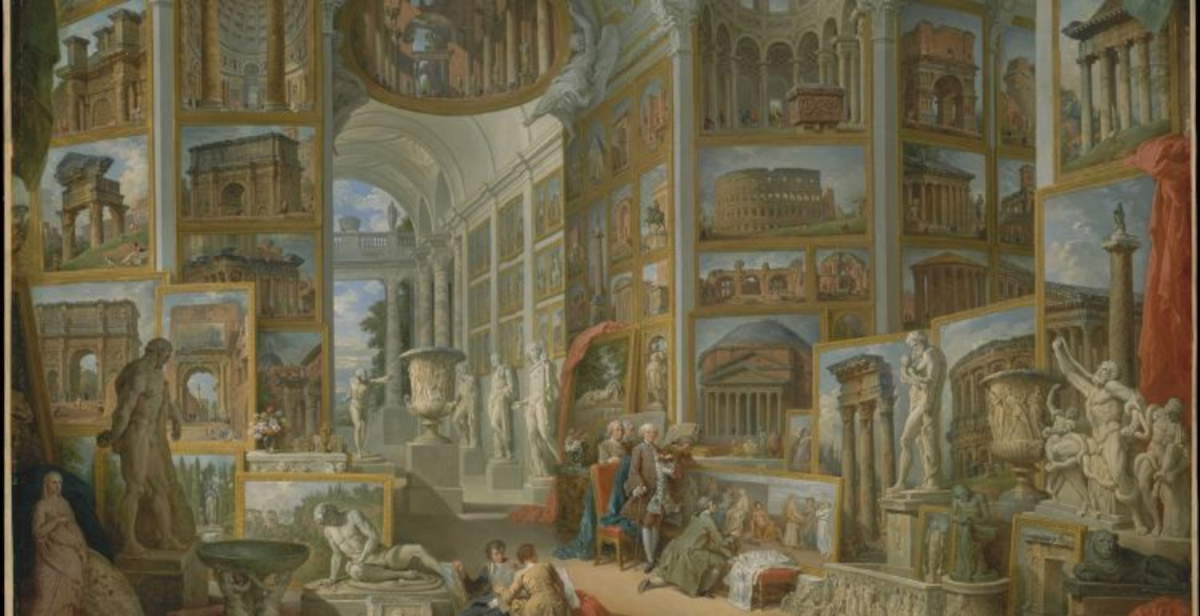
The star of the exhibition is the painting Roma Antica by Giovanni Paolo Panini (Piacenza 1691- Rome 1765), from the European collections of the Metropolitan Museum in New York. The work, dated 1757, represents one of the greatest examples of meta-painting, in which the artist sets up an imaginary gallery containing more than fifty of his paintings and views of Roman ruins, combining perspective precision and architectural theatricality. The scene is populated by statues, monuments, and recognizable figures, including Panini himself and the painting’s patron, the Count of Stainville, French ambassador to Rome. The exhibition is conceived as a true journey through the Grand Toureuropean, a cultural initiative that, beginning in the late 16th century, introduced English, German, Scandinavian and American travelers to Italian and French art and culture. Visitors are invited to explore the canvas in great detail and observe the works represented in the composition, ideally entering the painting and confronting the theatrical reproduction of ancient Rome.
Alongside the loan from the MET, the exhibition includes the exquisite Interior of the Pantheon by Panini himself, dated 1743 and acquired by the Poldi Pezzoli Museum in 2024 thanks to the donation of Giovanna Zanuso. This acquisition represents a remarkable opportunity for Milan, as there are no works by Panini in the city’s public collections. The exhibition also includes two views by Gaspar Van Wittel, the father of Vedutism, acquired on long-term loan from the Peloso family: Panoramic View of Rome from Villa Medici and Panoramic View of Rome from Trinità dei Monti. Like the ancient canvas, these works were prized souvenirs of Grand Tour travelers. The tour continues with artifacts from the Roman era, including a recently restored third-century AD sarcophagus and the sculptural group of Laocoon and His Children, currently in the Vatican Museums, presented in hard porcelain reproduction by the Ginori Manufacture of Doccia in 1749. The exhibition also offers the first opportunity for public display of the Grand Tour collection of fans, which became part of the museum’s collections in 2005 thanks to a bequest from collector Carlo Borgomaneri. The objects, decorated with monuments and ruins from Rome, Naples, Herculaneum, Pompeii and Paestum, testify to the taste of travelers and the widespread interest in ancient art in the 18th and 19th centuries.
Completing the experience are a short film made by director Ferzan Ozpetek, produced in collaboration with Fondaco Italia, which offers the public a contemporary reading of the Grand Tour through the language of film, and a series of meetings entitled Conversations on the Grand Tour, curated by Lavinia Galli. The appointments, which will take place between February 12 and May 4, 2026, feature experts in art history, music, photography and collecting. Among others, the program includes talks by Xavier F. Salomon on Panini, a lecture-concert by Fabio Sartorelli dedicated to the musicians of the Grand Tour, speeches by Alessandro Morandotti on the civilization of travel, Adriano Aymonino on the taste of the Grand Tour and Marco Carminati on travel tales between itineraries and dangers. Completing the cycle are Salvatore Settis with a reflection on art materials and Muriel Prandato with Giorgio van Straten, who will explore the photography of travel before the advent of postcards.
“This Corto is, for me, the emblem of the Grand Tour: with a single picture you pay homage to an entire museum, to all the memory and beauty it holds,” says Ferzan Ozpetek. “In Panini’s Roma Antica there is the idea of a journey that is not only geographical but also interior: every ruin, every light, every face is a feeling. I wanted the film to be born from a simple gesture-the light of the Pantheon illuminating the face of a sleeping woman-to tell how art can still awaken us today, surprise us, make us feel alive.”
The exhibition aims to offer an integrated reading of art, collecting, history and travel culture, reconstructing the Grand Tour experience through both original works and copies, souvenirs and iconographic materials. The exhibition allows visitors to observe the combination of painting and theatrical architecture that characterizes Panini’s production, to compare ancient views with modern ones, and to understand the role of travelers in spreading artistic taste. Ozpetek’s short film and scholarly conversations add further keys to understanding, enhancing the connection between historical heritage, visual experience and cultural memory. With Wonders of the Grand Tour, the Poldi Pezzoli Museum proposes an in-depth reflection on the perception of the eternal city and the art of travel, integrating works from international and local collections and materials ranging from painting to sculpture, from porcelain to fans. The initiative traces three centuries of European cultural mobility and allows us to observe how artistic heritage was reinterpreted by travelers through souvenirs, copies and images, offering the Milanese public a comprehensive perspective on the Grand Tour phenomenon and eighteenth-century taste. The exhibition highlights the importance of donations and loans in enriching public collections, and enhances the interaction between historical objects and contemporary storytelling.
 |
| Wonders of the Grand Tour at Milan's Poldi Pezzoli Museum with works by Panini and Ozpetek |
Warning: the translation into English of the original Italian article was created using automatic tools. We undertake to review all articles, but we do not guarantee the total absence of inaccuracies in the translation due to the program. You can find the original by clicking on the ITA button. If you find any mistake,please contact us.