





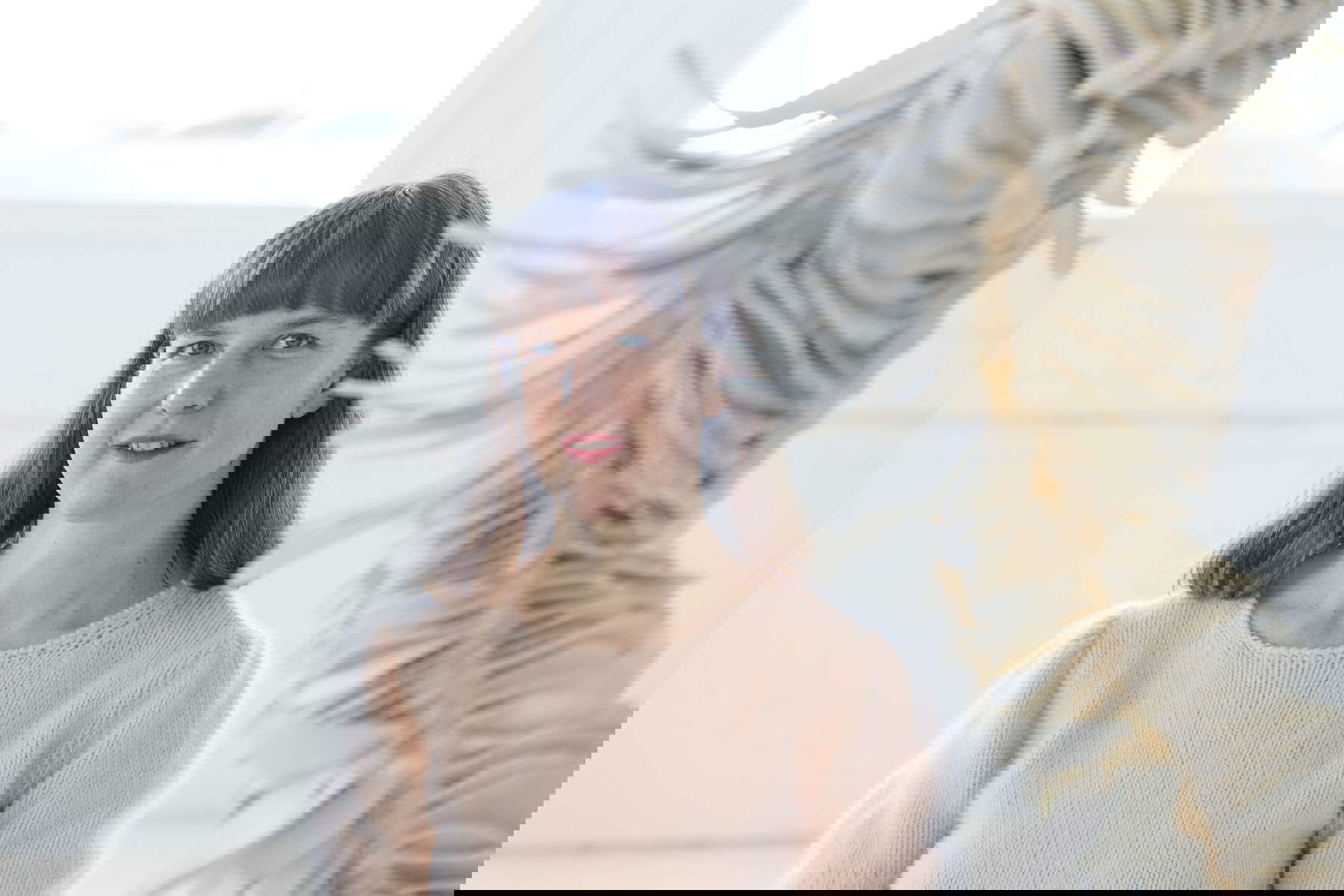
GL. For most artists, childhood is the golden age when the first signs of an interest in art begin to appear. Was that the case for you too? Tell us.
DB. Yes, I think my interest in materials and making started very early. I grew up in a family where working with your hands was highly valued. My mother was trained as a seamstress, so there were always fabrics, threads and tools around the house. She taught me how to sew and work with textiles and for me it felt very natural to create things with my hands. At the same time I was fascinated by the human body. I remember looking into anatomy books as a child and being amazed that these complex and fragile structures exist inside our own body. That early fascination with the strength and vulnerability of the body is still present in my work today.
What studies did you do?
I first studied fashion-textile-design and linguistics in my hometown Paderborn in Germany, and later completed a Master’s degree in textile design at HAW Hamburg. Later I moved to Norway and did a Master in Fine Art at the Art Academy in Bergen. That was a decisive moment for my practice, because during my studies there I encountered ceramics for the first time. Combining textile and ceramics opened up completely new possibilities for me, and since then these two materials have become central to my work.
Did you have a first artistic love?
Yes, one of the first artists who inspired me was Eva Hesse. She practiced in the 1960s and set a contrast to the works of minimal art, which were made of smooth industrial materials. I love how she uses soft or flexible materials in sculpture. She worked with unconventional materials such as latex, fiberglass, rope - materials that could sag, bend, wrinkle and often change over time. Because of these qualities, her sculptures often appear fragile, bodily and slightly unstable. Her work also encouraged me to experiment with similar qualities in my own practice. In the beginning I worked with latex myself, exploring its soft, skin-like properties. From there I gradually moved towards very thin, transparent fabrics that also have a skin-like character and can stretch and react to the forces of the materials they hold.
Were there any important encounters during your training?
One important influence was a workshop with the Japanese textile designer and artist Hiroyuki Murase, where I learned the Japanese resist dye technique Shibori. This technique involves tying and manipulating the fabric before dyeing it, and I became very interested in the sculptural potential of tying. I started tying objects into the fabric and heating the textile so that it kept the memory of the form that had been inside it. Later, when I discovered ceramics, everything suddenly made sense because I could start creating my own forms to tie into the textile.
How has your work developed over time?
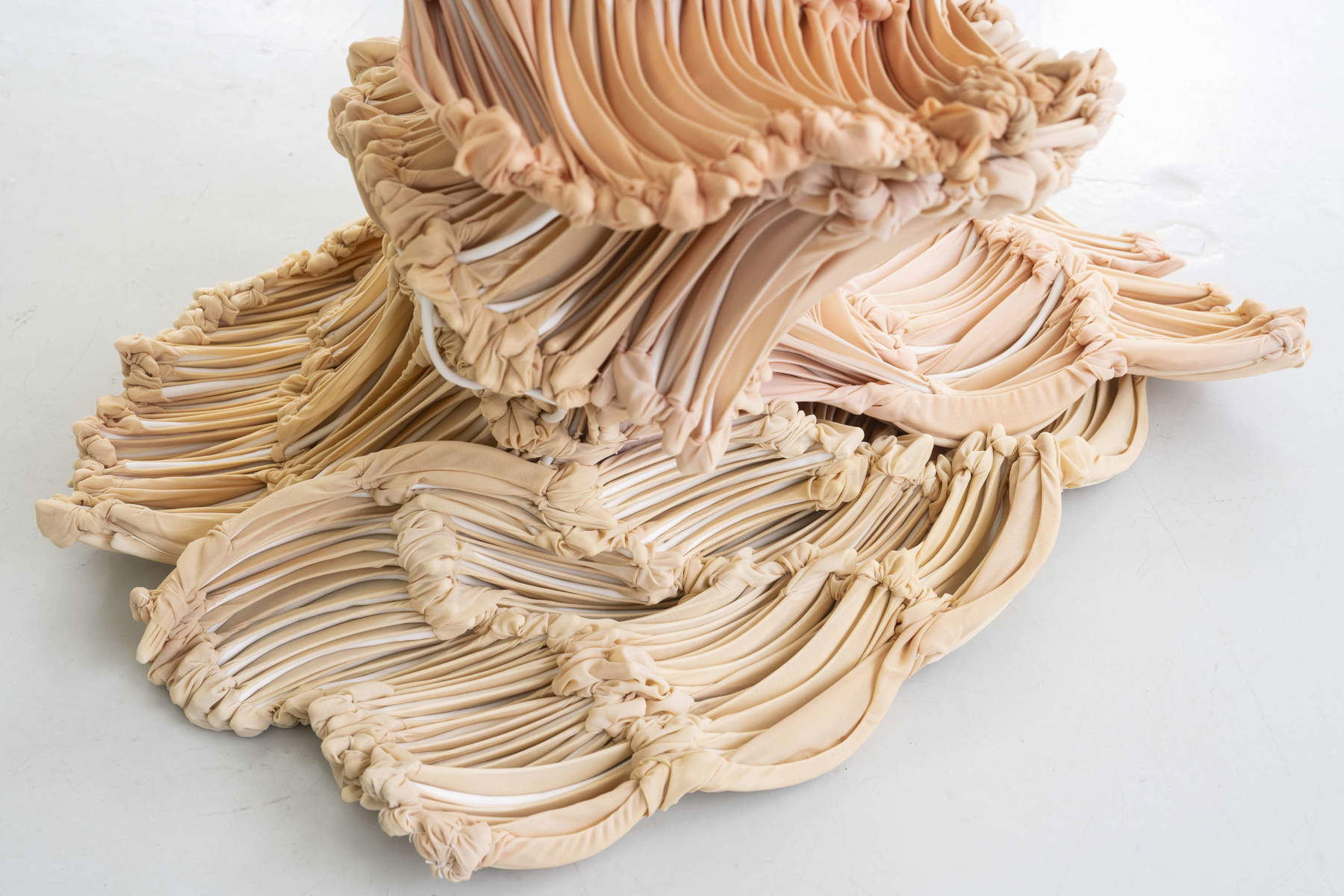
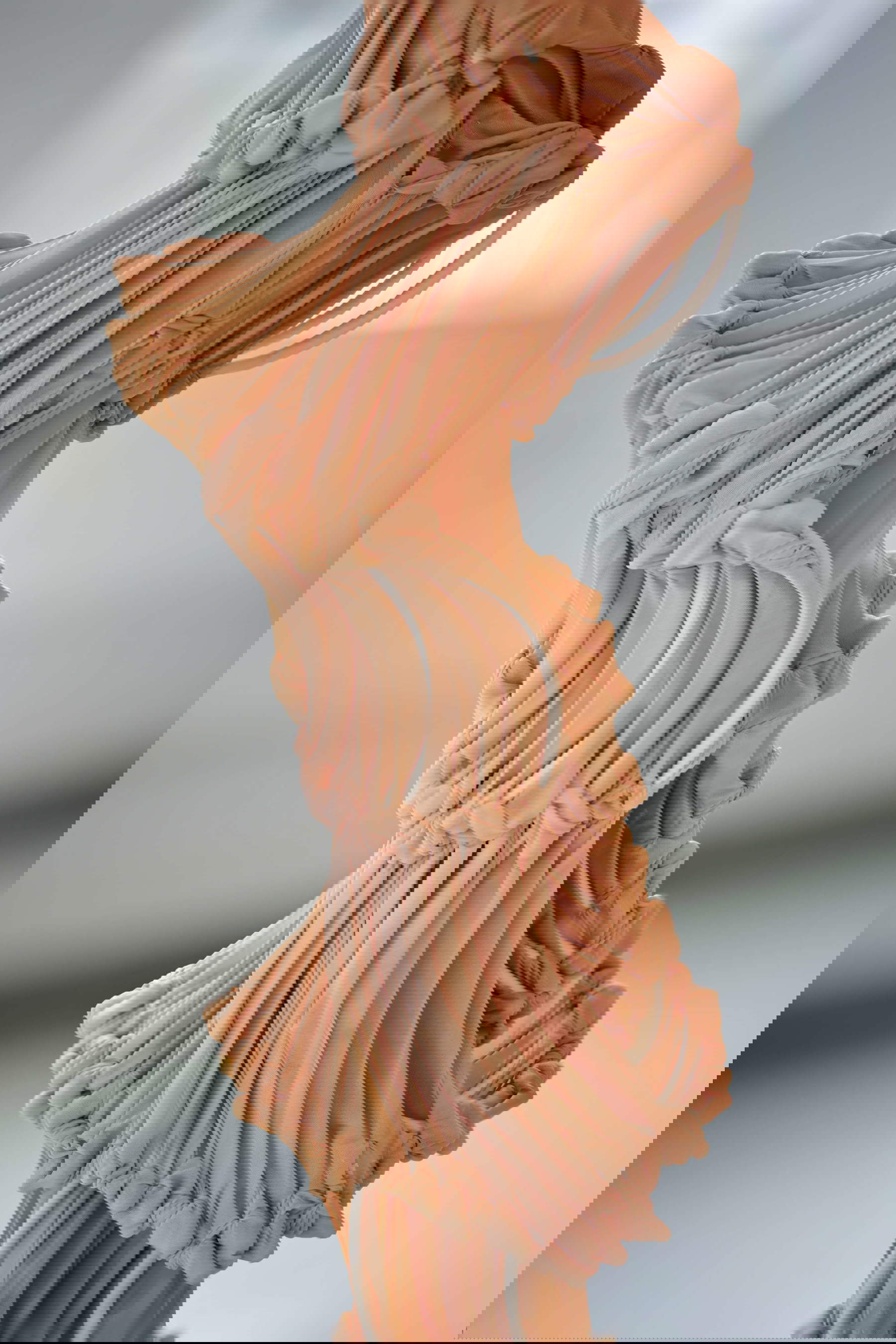
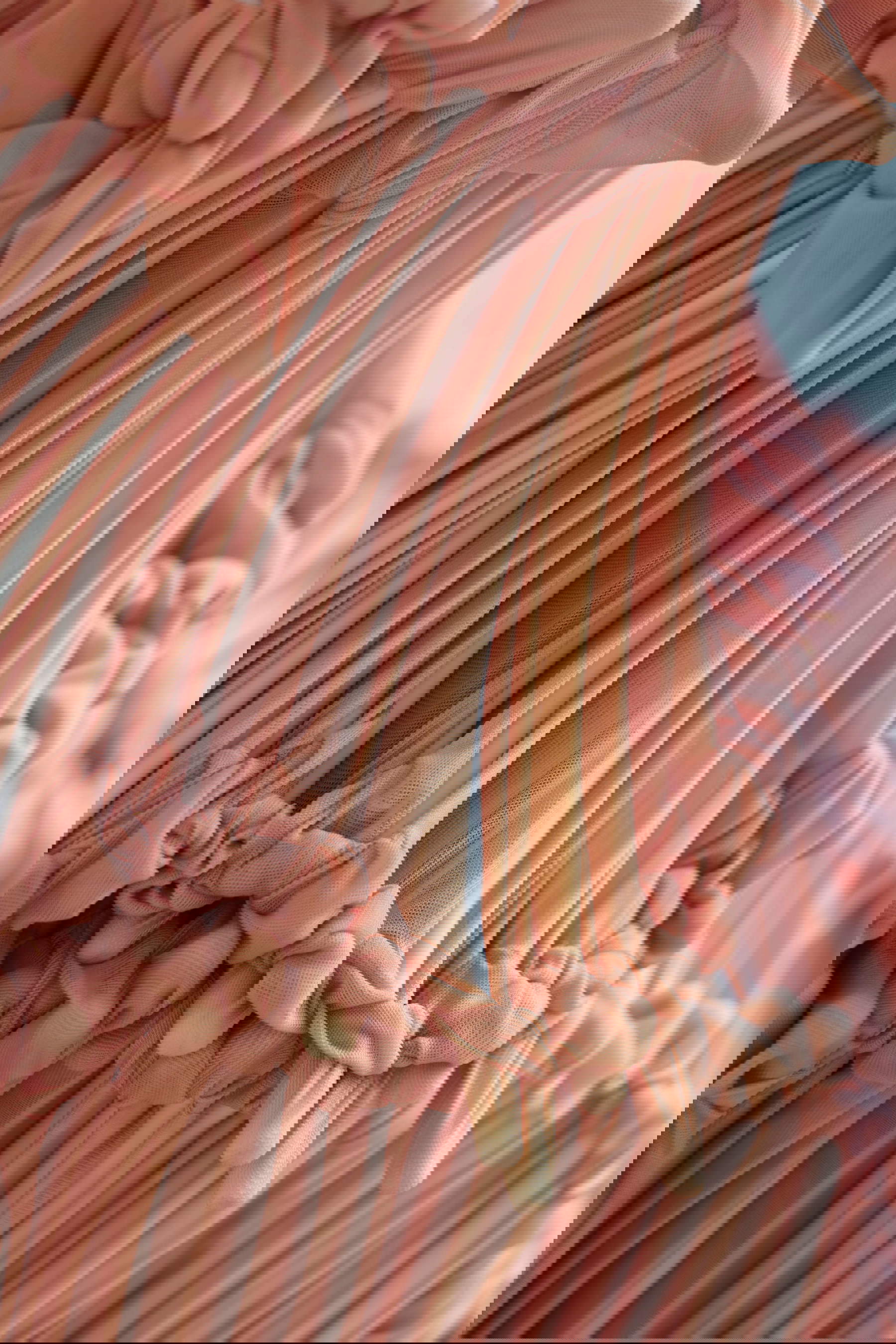
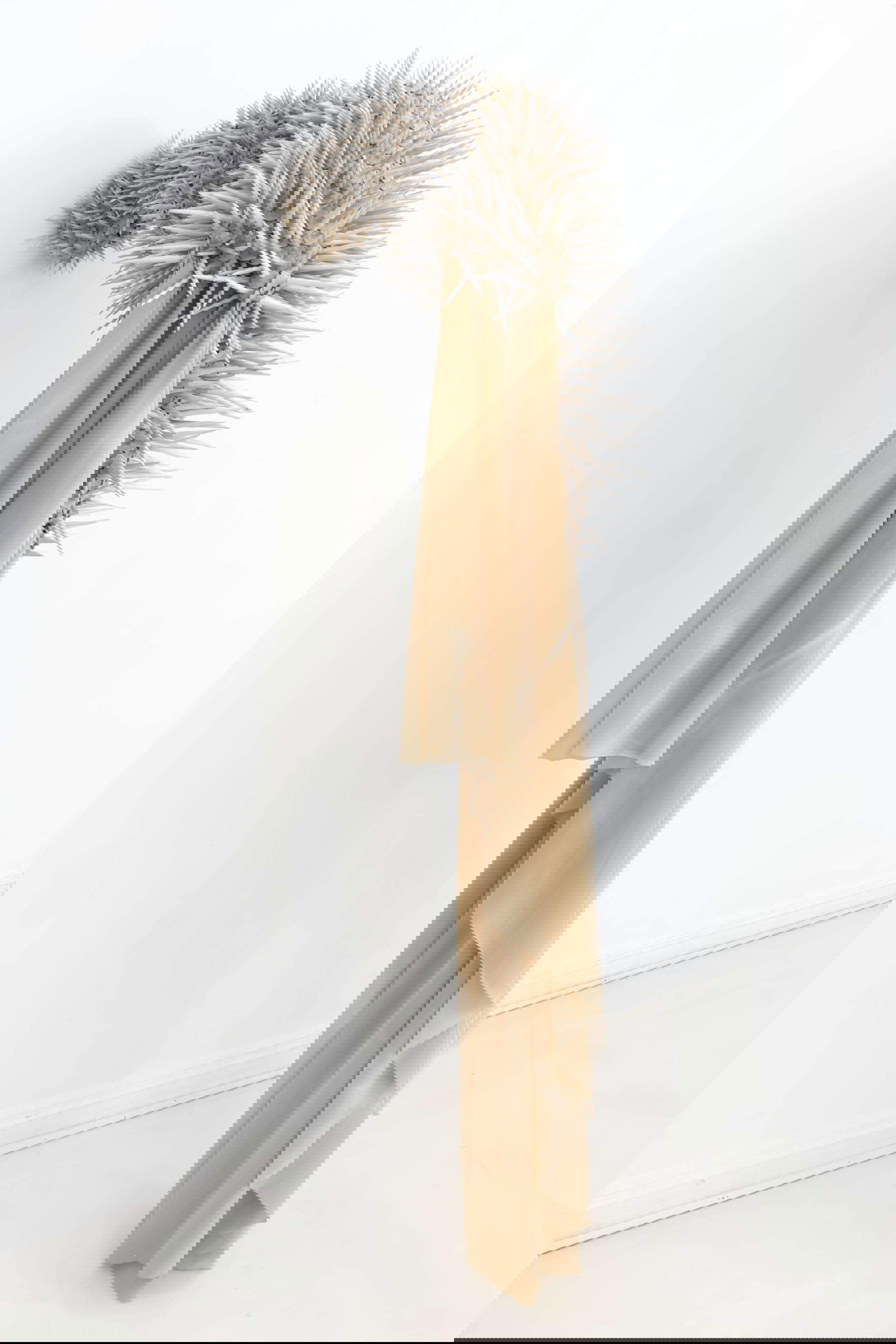
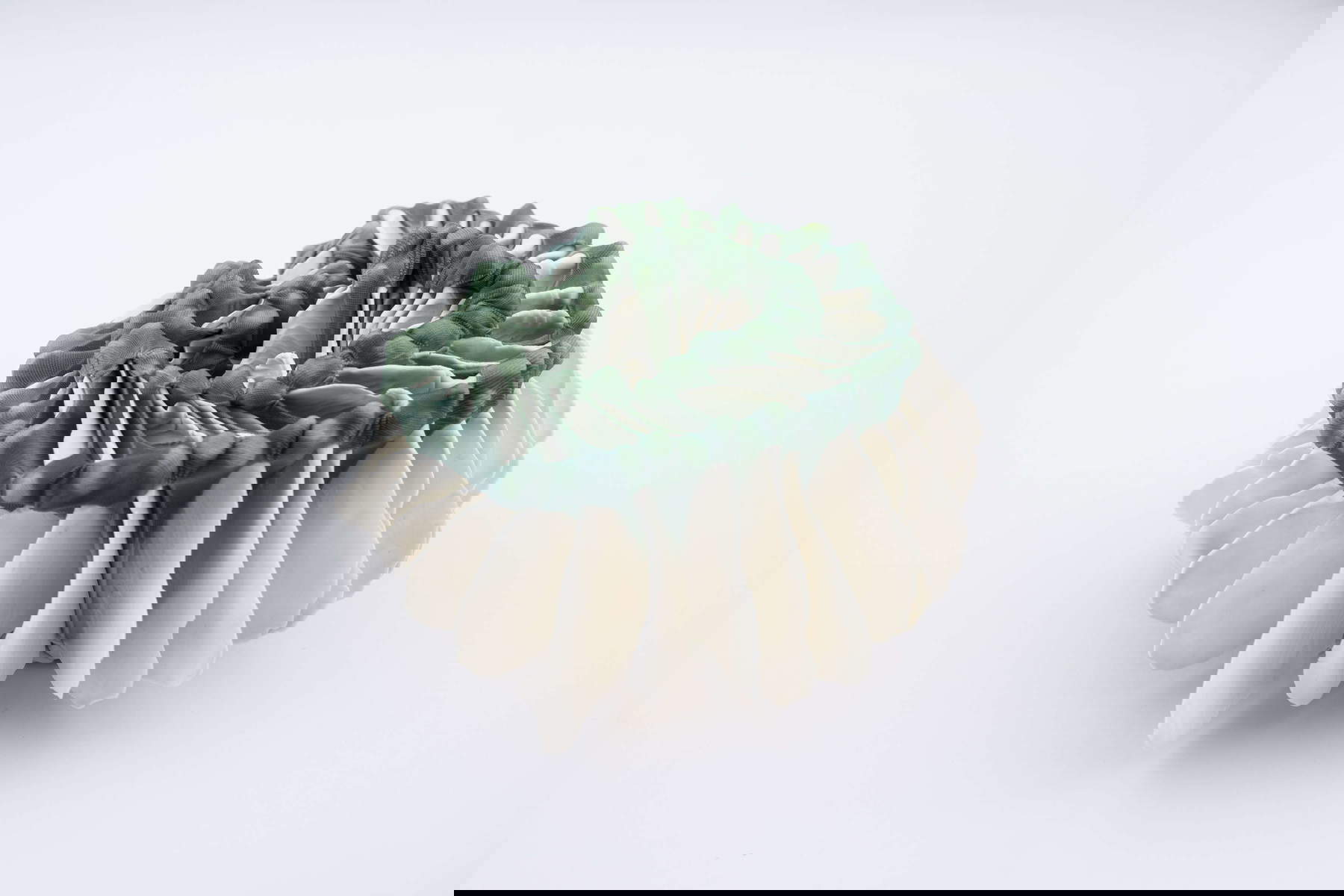
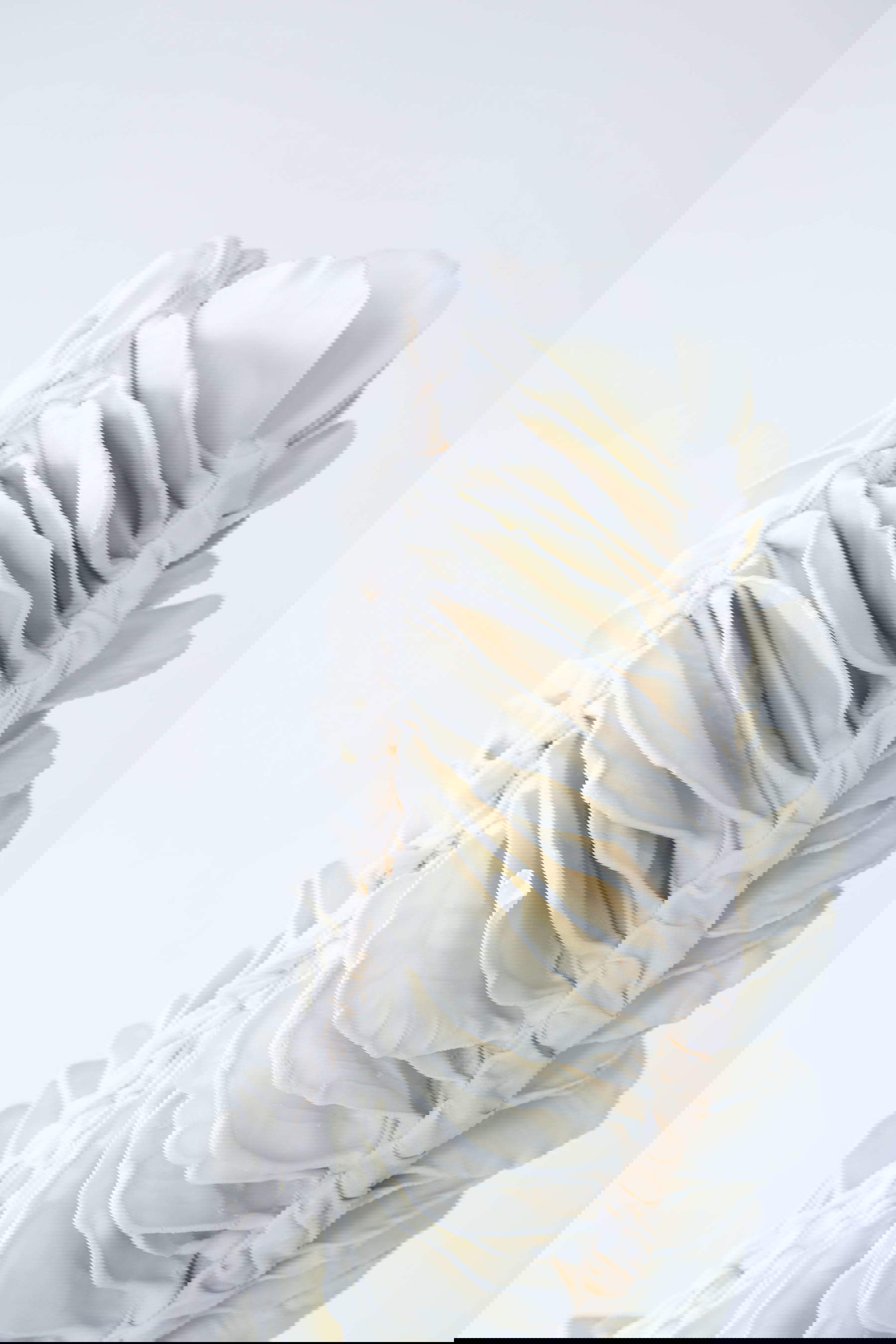
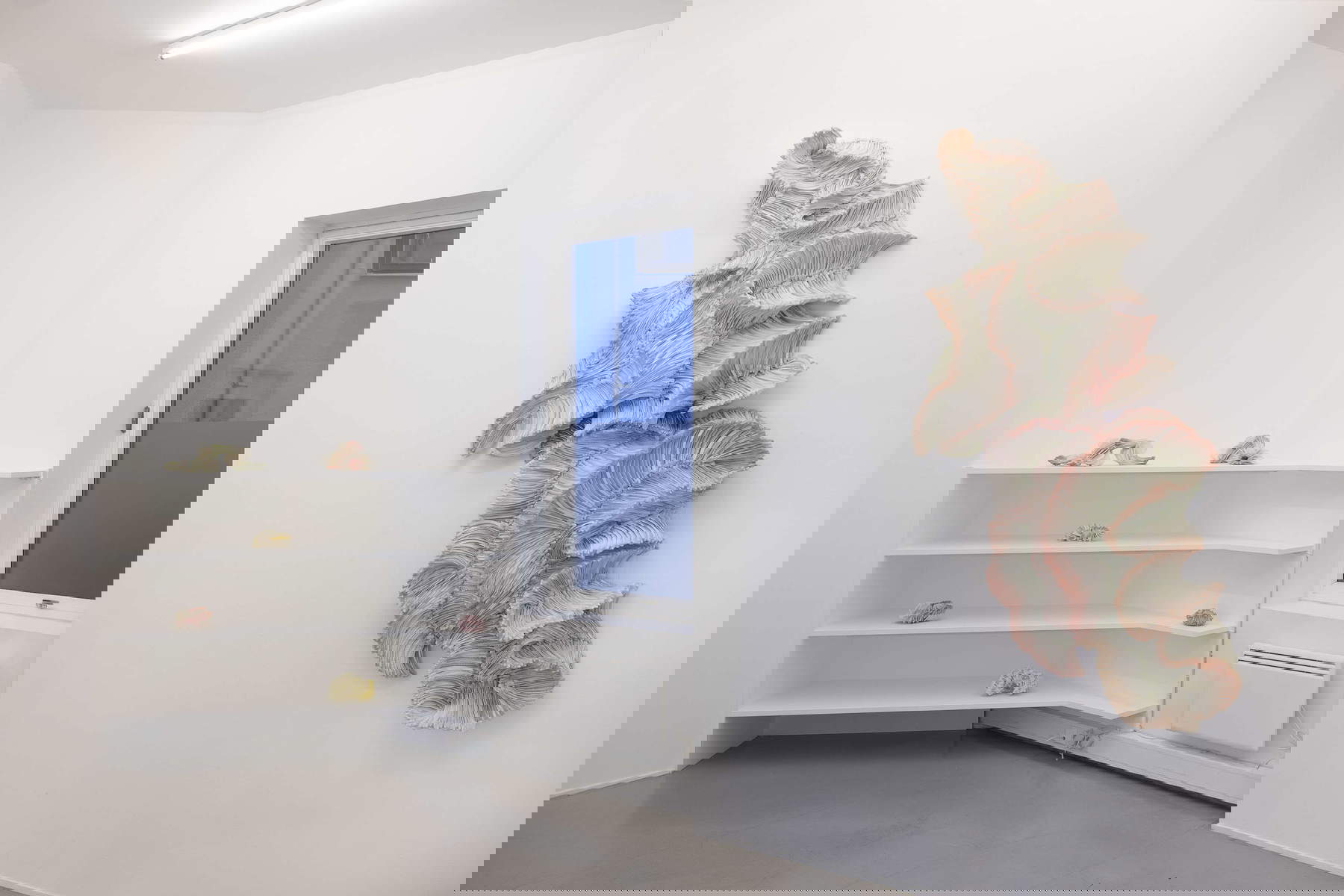
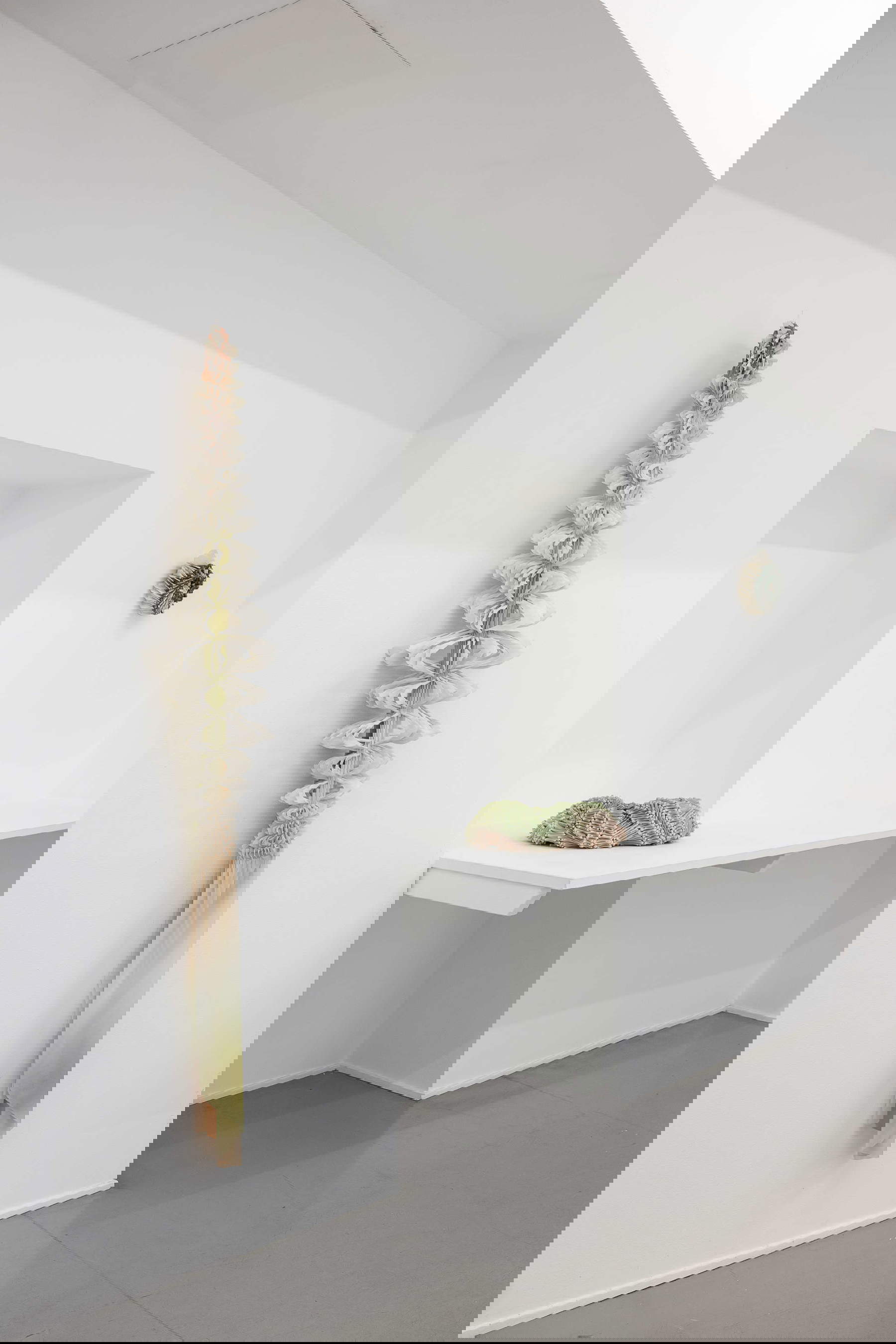
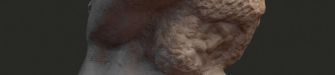
My earlier works were mainly textile-based. I experimented with burning, shaping and manipulating the material with heat to create sculptural surfaces. When I began working with clay during my master’s studies in Bergen, ceramics became part of my practice. At first I tied unfired clay into the fabric, allowing the elastic textile to follow the expansion of the wet clay. Later I began using fired porcelain elements that I tie into the fabric one by one. Over time the works have become more sculptural and more clearly related to the body. I now create large hybrid sculptures where porcelain elements act almost like bones while the textile becomes the skin that holds everything together.
What is the origin of the images you work with?
The images in my work often come from organic structures, from the body, from plants, or from microscopic and geological forms. I am not interested in directly depicting something recognizable. I prefer forms that shift between abstraction and figuration. I like this ambiguity, because our brain automatically tries to interpret what we see based on our memory. When a form cannot be clearly identified, it activates imagination and personal associations.
How important is the spatial relevance of your work?
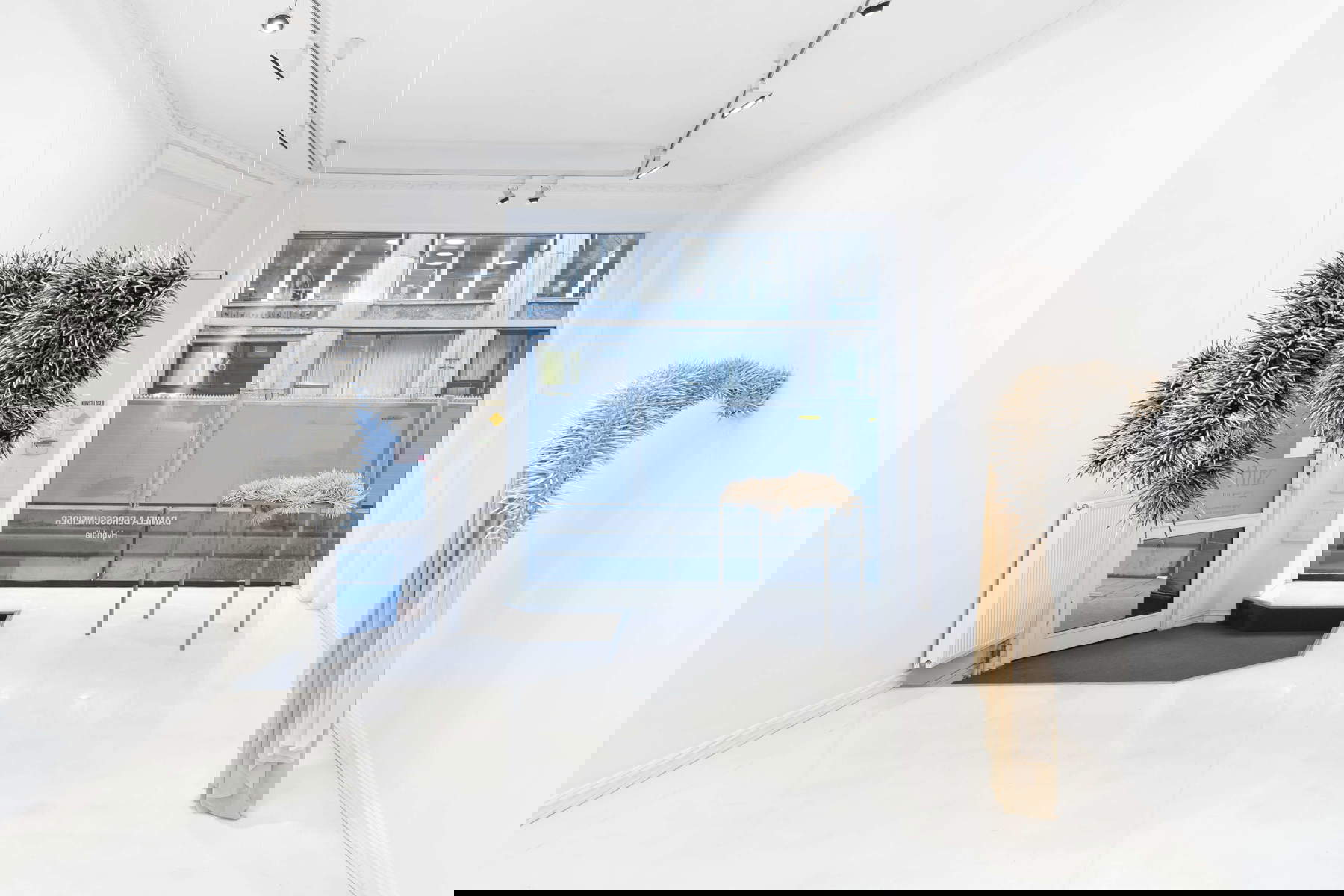
Space plays an important role in my sculptures. I am interested in creating works that feel almost like living organisms occupying the same space as the viewer. Because of their size and the way they grow or spread across the wall or the floor they may seem that they are competing with us for space and air. Many of my works are attached to the wall, which allows them to defy gravity and expand into the room. In some of my more recent works, the sculptures rise up from the ground and grow vertically into the space. I like this movement because it gives the pieces a bodily presence. When the works extend into the height of the room, sometimes even above the viewer, they create a stronger physical relationship with the viewer’s body.
What is your understanding of time in relation to the way you conceive of space in your work?
Time plays an important role in my work, both conceptually and physically. The sculptures are built from hundreds of small porcelain elements that I shape by hand and later tie individually into the textile. This is a very slow process. Through this repetition and manual work, time becomes a physical presence in the works. I also like the idea that the works seem to be in a state of growth or transformation, as if they are still evolving within the space and that their final state is not reached yet.
The techniques and expressive modes you adopt are reminiscent of the feminine. Is this a question of identity or a political issue for you?
For me it is not primarily a question of identity or a political statement. I am aware that textile is historically associated with the feminine and with domestic work, but it’s not something I focus on in my artistic work or want to reproduce. My interest in textile comes more from its material qualities. Of course, viewers might still read those historical associations into the work, and that is completely fine. But for me the starting point is always the material and the sculptural process.
What is your understanding of nature?
I do not see a clear separation between humans and nature. I think of us as part of the same system. In my work, nature appears less as a direct representation and more as a set of processes: growth, tension, pressure, gravity or decay.
Does the idea of landscape interest you?
Yes, but again in a rather abstract way. Some works that lie on the floor can evoke geological landscapes, cracked desert earth. You can see this in my work “A moment between” (2019). At the same time the work can also resemble skin or living organisms. I enjoy this shifting scale where something might appear both as a landscape and as a bodily surface.
What importance does colour have in what you do?
Colour plays an important role in my work, both in shaping emotional responses and in guiding the associations that arise around the sculptures. I often choose colours that are linked to the body, such as pinks and fleshy tones. Recently, different shades of green have entered my practice, expanding the associative field of the works towards the botanical. I am very interested in how colour and shape work together. The same colour can feel very different depending on the shape it is paired with. For example, a pink colour on a shape that reminds people of the human body can feel strange or unsettling, while the same pink on a flower-like shape can feel completely different. Shape and colour go hand in hand, and the meaning or feeling of a piece comes from how they are combined.
Are you interested in the spiritual dimension in your work?
I would not describe my work as spiritual in a religious sense, but I am interested in experiences that go beyond language. I hope the viewer can sense the work in their own body before fully understanding it intellectually. This kind of sensory or emotional response is important to me.
When you start a work, do you already have a clear idea of how it will develop or is there spaces for changes along the way?
I rarely begin with a fully fixed idea. I like to say that I think through making. My studio is like a laboratory where I experiment with materials and shapes and I create many material sketches. Through these experiments I discover forms that fascinate me enough to develop them further into larger sculptures that are growing in my hands. I remain open to small encounters I have on the way that can shift the work’s direction.
Do you work in series, do you concentrate on one work at a time or do you make several at once?
I usually work on several pieces at the same time. The sculptures consist of many individual elements and the work sometimes takes months to be finished. I enjoy developing variations in parallel, as it keeps me from getting bored or fixated on one thing. Working simultaneously on different sculptures also allows ideas to travel between them, and new variations often emerge unexpectedly during the making process.
What kind of dialogue do you seek with the viewer in front of your work?
I hope that the viewer experiences the work in a bodily way. I am very interested in “visual tactility”, the idea that you can almost feel the texture and physicality of the sculpture just by looking at it. If we see an object we can imagine how much it weighs, how its surface feels, how warm it is, how it would behave if it were lifted or moved. I like to use materials that are on one hand easy to identify but that transform into something that is alien to the viewer. By creating the desire in the audience to touch my pieces, I also create a gap between eye and hand. This gap needs to be filled out with the viewer’s embodied experiences, the experiences that are informed from our sensual and physical experiences with material.
What happens to the works when there is no one there to observe them, can the existence of a work of art be independent of the presence of an observer?
That’s an interesting question. I believe that the work is completed when the viewers relate to it through their gaze, body, and imagination. The works need the viewer’s perception to be activated.
Some artists stand to the side of what they do others such as performers are often the centre of it, then there are those who look at their work from the top down or the other way around... How do you stand in relation to what you do?
There is no hierarchy between me and the works. I don’t look up to them or down on them, but see them as counterparts, standing opposite me, with their own autonomy. In the process of making I have a strong physical connection to my works, shaped through the scale of my hands in the porcelain, the repetitive process of knotting, and touching the sculptures hundreds of times. I invest so much love and energy into them. Sometimes they feel like extensions of my own body. A shift happens when I take them out of my studio, they become more autonomous and independent and develop a life of their own.

The author of this article: Gabriele Landi
Gabriele Landi (Schaerbeek, Belgio, 1971), è un artista che lavora da tempo su una raffinata ricerca che indaga le forme dell'astrazione geometrica, sempre però con richiami alla realtà che lo circonda. Si occupa inoltre di didattica dell'arte moderna e contemporanea. Ha creato un format, Parola d'Artista, attraverso il quale approfondisce, con interviste e focus, il lavoro di suoi colleghi artisti e di critici. Diplomato all'Accademia di Belle Arti di Milano, vive e lavora in provincia di La Spezia.Warning: the translation into English of the original Italian article was created using automatic tools. We undertake to review all articles, but we do not guarantee the total absence of inaccuracies in the translation due to the program. You can find the original by clicking on the ITA button. If you find any mistake,please contact us.




















 IT
IT FR
FR DE
DE ES
ES CN
CN