




The new communication campaign of the Ministry of Culture, entitled Happiness, dedicated to the National Museum System and launched last February, is part of an articulated strategy that aims to redefine the relationship between museums and the public through digital tools, contemporary languages and an inclusive narrative. At the center of the initiative is theMusei Italiani app, a digital platform developed by the Directorate General for Museums as part of the PNRR Accessibility, designed to bring together in a single digital environment information, services and tools useful for visits. Outlining goals and prospects is Director of the Directorate General for Museums Massimo Osanna, who frames, through an interview for Finestre sull’Arte, the campaign as an integral part of a system transformation process aimed at improving the visitor experience.
NC. The campaign presents the museum as a space capable of generating emotions and community participation. How does the Directorate General for Museums intend to measure the real impact of this kind of communication in terms of increasing cultural participation and new audiences involved?
MO. The Happiness campaign was created with the aim of strengthening the relationship between museums and people, presenting cultural places as living, accessible and participatory spaces capable of generating emotions and involvement. The spot recounts this vision through a choral fresco, constructed as an immersive sequence of images and movements within nearly forty cultural places distributed throughout the country, representative of the plurality of the National Museum System, from large museum poles to widespread territorial contexts, in a perspective of integration and strengthening of the network. In this sense, communication becomes a strategic tool to make visible the spread and richness of Italy’s cultural heritage, of which the app represents the main digital access point. The commercial’s narrative is articulated in a contemporary and experiential dimension, in which museums are presented as spaces of relationship, participation and well-being, capable of generating involvement and a sense of belonging. Shaping this narrative are talents from different fields (music, cinema, dance, sports, and the digital world) together with people and realities engaged in social work, who traverse the places of culture, returning a plurality of glances and experiences. Their presences do not have a merely representative function, but activate a direct relationship with the spaces, helping to build an accessible and inclusive narrative. In this way, the protagonists become interpreters and mediators of the heritage, concretely testifying to the value of accessibility, inclusion and participation and strengthening the role of museums as open, shared public spaces capable of positively affecting people’s lives. The impact of this communication is monitored through a plurality of indicators: the growth of visit flows to cultural venues, the level of interaction on digital channels and, in particular, the use of the Musei Italiani app. The app represents a central tool in this strategy, because it allows us to observe access and fruition patterns in a timely manner. We monitor downloads and use of the different features, which offer a simple, official and reliable access point to the museum system: up-to-date information, accessibility hours and conditions, ticket purchases, current exhibitions and suggested itineraries. Looking forward, the introduction of accompanying visit content, such as audio guides, will provide an even better understanding of the behaviors and needs of different audiences. Alongside quantitative data, we pay special attention to the ability to intercept, increasingly, new and wider audiences, including through contemporary languages and digital tools. The goal is not only to increase numbers, but to encourage more widespread and aware participation, reaching in particular younger people and those approaching museums for the first time. In this sense, communication is not separate from the visiting experience, but constitutes its first access: a tool to orient, facilitate and accompany the public, helping to make the museum increasingly in tune with the society that lives it.
How can highly visible initiatives, such as the campaign, translate into a real strengthening of the National Museum System, preventing the narrative of cultural excellence from remaining focused only on the best-known places?
The campaign is part of a broader strategy concerning the National Museum System, understood as an articulated network of state, civic and private institutions spread throughout the territory. The goal is to enhance the cultural heritage in its complexity, overcoming a vision focused exclusively on the best-known places and restoring the variety and spread of the Italian cultural offer. This approach is also present in the commercial, which places iconic sites alongside lesser-known places, proposing a choral and inclusive narrative. The campaign thus contributes to building an image of the museum as an accessible and contemporary space, capable of speaking to different audiences and activating new forms of participation. A fundamental role is played by the Musei Italiani app, which translates this narrative into a concrete orientation tool. Through features such as suggested itineraries, reporting of exhibitions and enhancement of museums in the territory, the app accompanies the public to discover even less frequented places, facilitating access to a wide and distributed offer. In this way, communication initiatives are integrated with operational tools that allow strengthening the network as a whole, encouraging a more balanced fruition and helping to make the National Museum System increasingly recognizable, connected and accessible.
The Musei Italiani app, developed as part of the PNRR Accessibility, aims to bring together information, services and ticketing for the country’s museums in a single digital environment. So what are the platform’s development prospects and how will it concretely strengthen the network of the National Museum System, also involving non-state institutions and private realities?
The Musei Italiani app was conceived as a unified digital infrastructure at the service of the National Museum System, with the aim of making the enjoyment of cultural heritage easier, more accessible and integrated. The prospects for development go in the direction of strengthening this function, gradually transforming the app from an information tool to a platform capable of accompanying the public in all phases of the experience, before, during and after the visit. In this evolution, a central role will be played by the introduction of new accompanying tools, such as integrated audio guides, based on scientifically validated content and designed for different audiences and, thanks to a conscious use of artificial intelligence, through a dedicated model, will also be interactive. This will be complemented by systems for personalizing the experience, which will allow audiences to be oriented according to their interests, needs and modes of enjoyment, along with increasingly advanced features for visit planning, including information on the reachability of places. A qualifying element is the focus on accessibility, understood in a broad sense: not only physical, but also sense-perceptual, cognitive and linguistic. The app integrates tools and content designed for different audiences, with detailed information, dedicated filters and a constantly expanding multilingual offer, so as to make heritage truly accessible to all, including internationally. From a system perspective, the platform helps strengthen the network of museums by making it more visible and connected. Through features such as geolocation, thematic itineraries, and dynamic content enhancement, the app makes it possible to connect different institutions, encouraging the discovery of even less frequented places and overcoming a fruition focused on major attractions. In this perspective, the goal is to gradually extend the platform to the entire National Museum System, involving also non-state institutes and private realities, so as to offer a unified and recognizable access to the Italian cultural heritage. The app is thus configured as a tool for connection and public service, capable of integrating information, services and content in a single digital environment and contributing to a broader, more balanced and aware enjoyment of heritage.
The Happiness campaign thus inaugurates a defined digital sharing strategy designed to intercept different audiences through the institutional channels of the Ministry and Italian museums. To enhance the initiative and promote the app as a tool for accessing and discovering cultural heritage, the project is developed around a video/film created by the General Directorate for Museums, written and directed by director Luca Finotti together with art director Paola Manfrin. The film proposes a narrative of Italy’s cultural heritage through a large communal fresco shot in nearly forty cultural venues, with an initial core of locations destined to gradually expand.
“The project was born a year ago, in February, thanks to the PNRR plan, with the aim of telling all the accessibility projects that will be implemented in the coming months,” the video’s director, Luca Finotti, tells us. “The commercials made are a condensation of many short films, in which different initiatives are presented. For example, in Florence there is a service that, on Mondays, accompanies home autistic children or families who do not have the possibility to visit museums, allowing them to participate in cultural activities. We found many similar projects in the area, and the choice was to work with people from different accessibility backgrounds, involving local talent and local resources.”
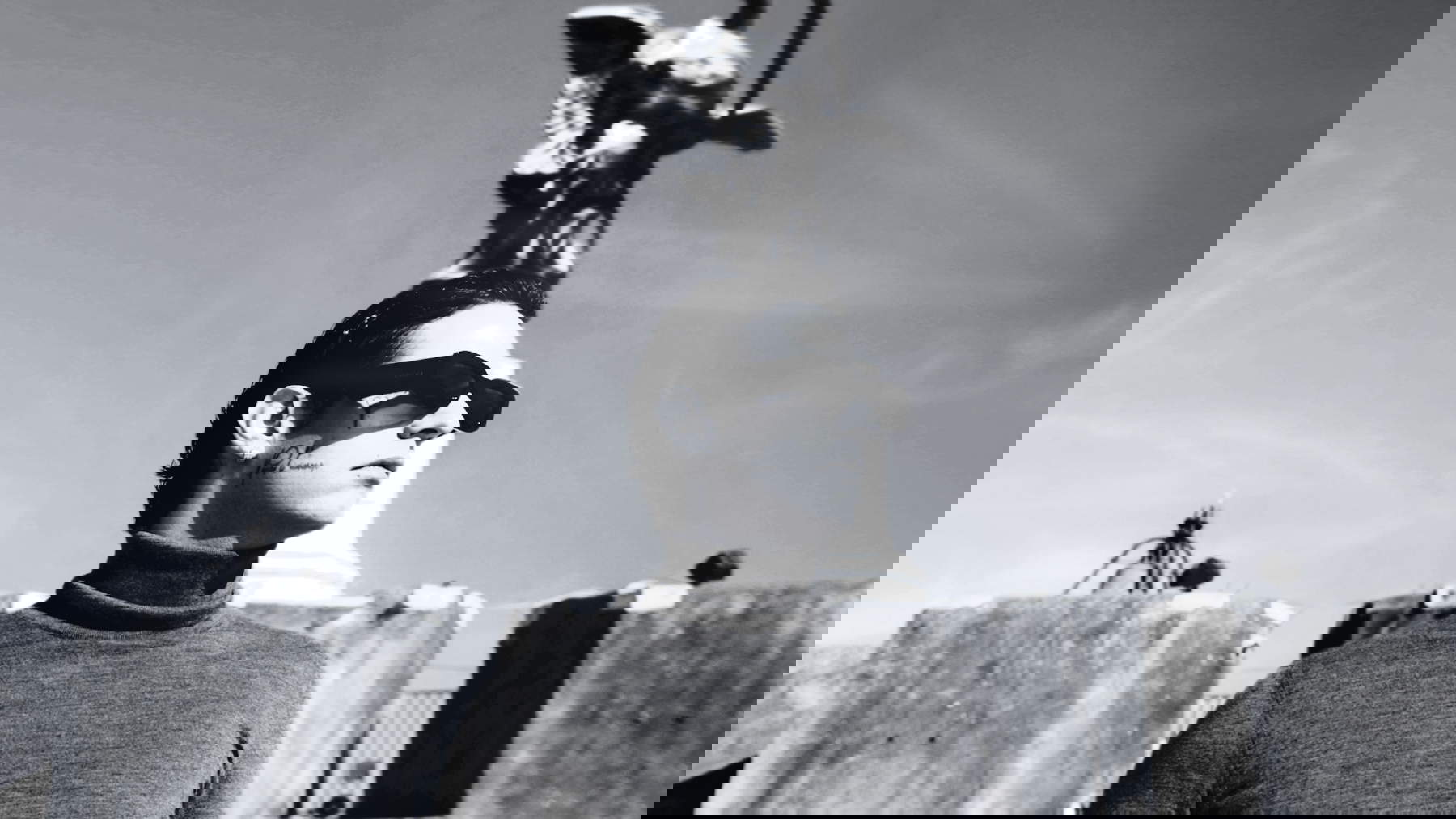
Opening the spot for the entire campaign is Achille Lauro, filmed from the top of the National Museum of Castel Sant’Angelo. Surrounding the sequence is a set of presences that include personalities from the worlds of music, film, dance, sports and the web, along with citizens of different ages and backgrounds. Participants include Olympic and Paralympic athletes such as Ambra Sabatini, Alessandro Ossola, Assunta Legnante, Sandra Truccolo, Daniele Scarpa, and Niccolò Pirosu. Also featured are dancer Alessandra Tripoli and dancer Giacomo Luci, as well as actors Nyle DiMarco, Sebastiano Pigazzi, Beatrice Fiorentini and Michelangelo Placido. A digital cameo by actress Alba Rohrwacher pays tribute to the figure of Pauline Bonaparte at the Borghese Gallery.
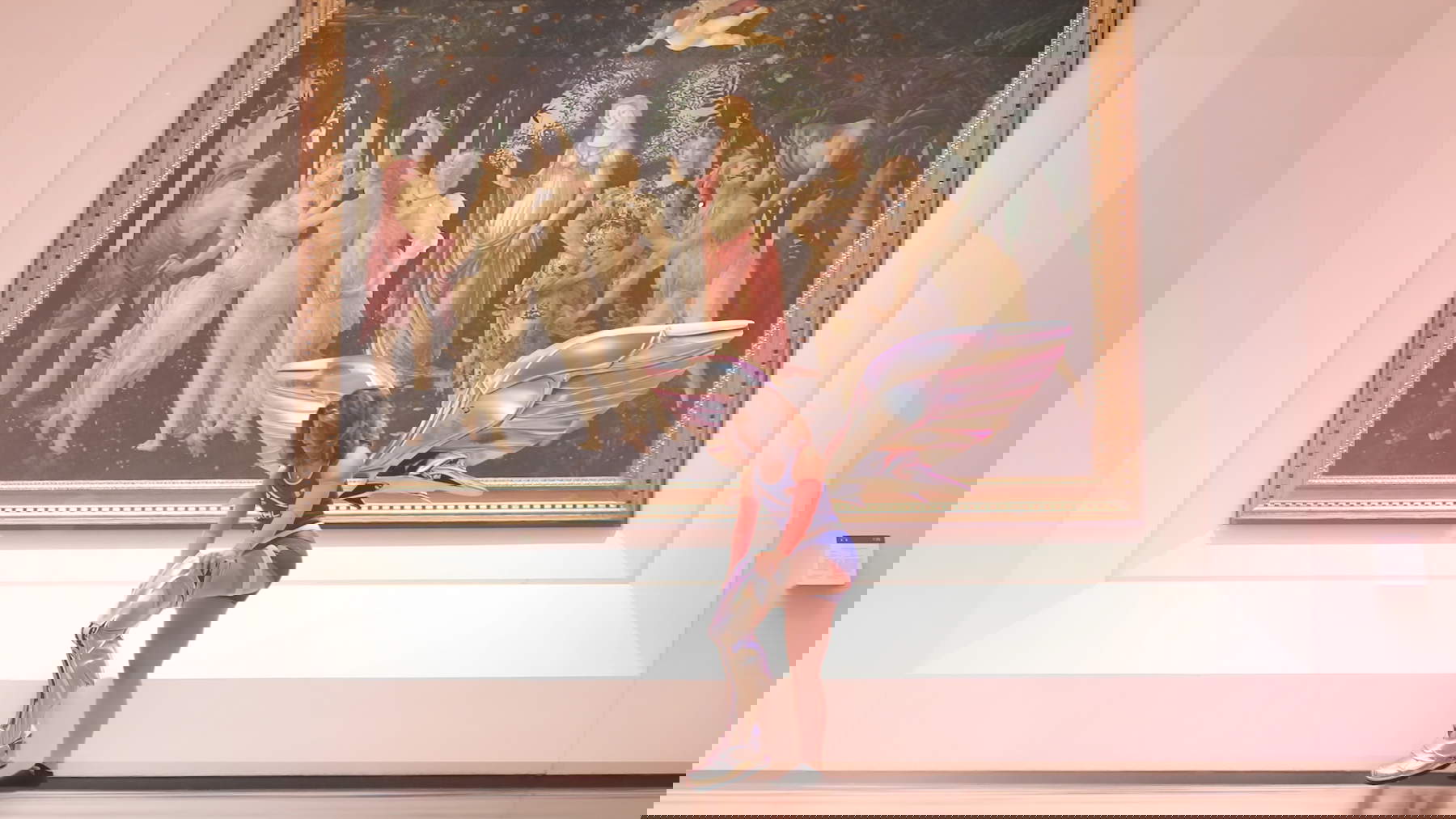
The protagonists also include Daniele Sibilli and the “Women in Pink,” a group composed of twenty women who have dealt with cancer, with a reminder of the relationship between art and health and the role of museums as spaces of well-being and possibilities for personal reworking. The project involved twenty cinematographers, local workers and twenty-five international graphic studios and digital artists, with an articulated production that covered the entire country. The film is accompanied by the song Felicità, tà, tà by Raffaella Carrà.
The director-directed shoot was also made possible thanks to the flexibility of the facilities involved and the direct support of parents, talent and operators, which simplified the logistical organization and made the project independent and quick. In the Happiness campaign, different forms of accessibility thus emerge as dynamic elements, characterized by different needs and interpretations. The narrative is thus constructed through personal stories, which take a central role in defining the visual imagery. A relevant element also concerns the use of digital technologies in the post-production phase. Twenty-five international studios worked on the images of Italian artworks, reworking them according to different perspectives. The process, which lasted several months, produced a dialogue between external gazes and national heritage.
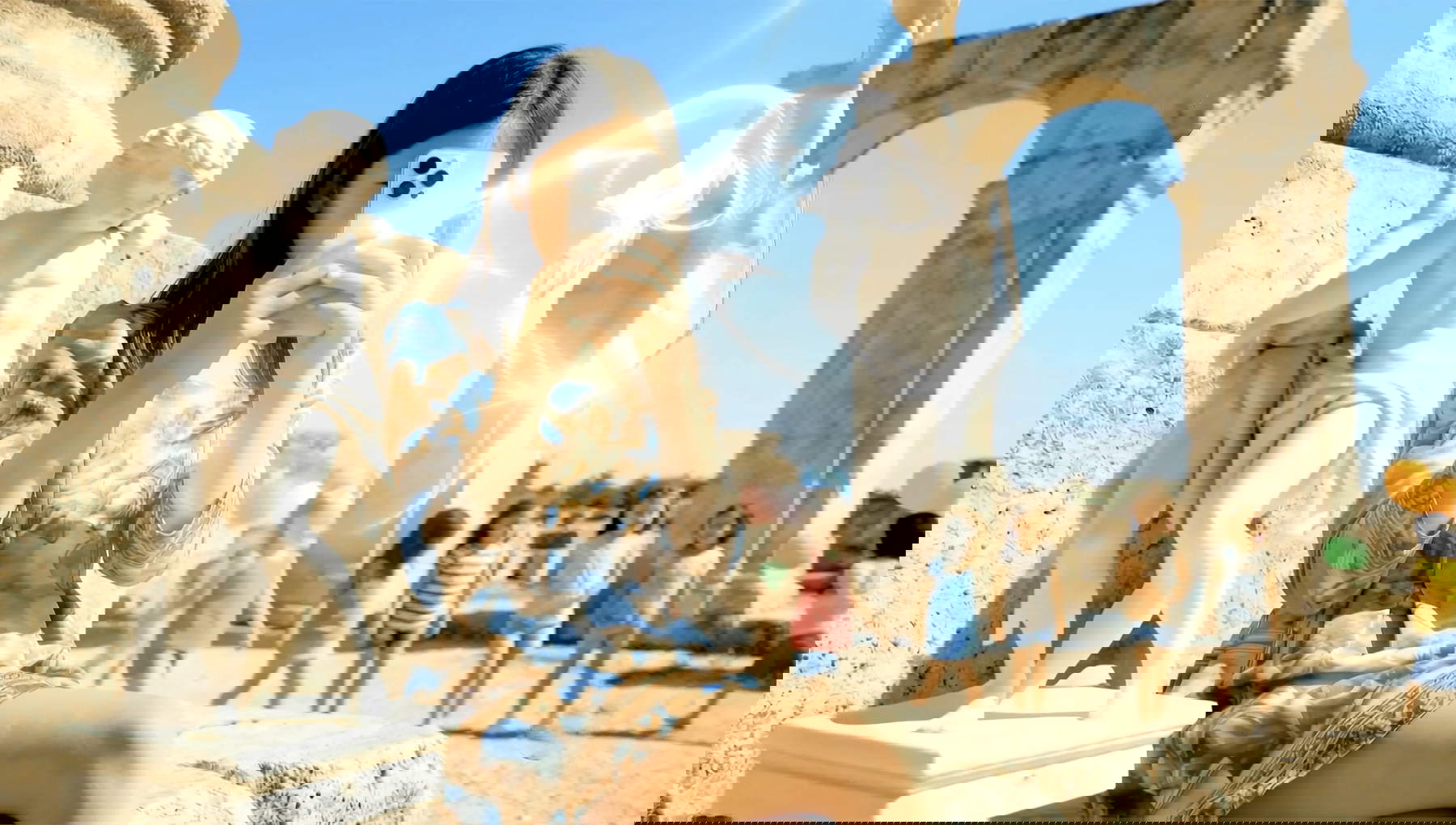
“We collaborated with local cinematographers,” Finotti continues. “In Sicily, for example, we worked with a young filmmaker who normally makes wedding videos, giving her the opportunity to participate in a professional project and gain experience. All the invited artists contributed as cultural ambassadors, building their own scene together. Some talents asked not to be filmed at certain times, to respect their independence, while others wanted to include those who support them in their daily lives, enhancing the role of the figures. One example is Andra Sabatini, Paralympic athlete and flag bearer for Italy. Her participation stems from admiration for her story. We created an image to represent her in a different artistic context, without privileging running, but showing the value of time and teaching. For Achille Lauro, we decided instead to shoot at Castel Sant’Angelo, on the highest point in Rome, creating an image of freedom and power. The whole work was collaborative in nature: it was about listening to artists and representing their stories. We involved people with disabilities, athletes, children, teenagers, local and international artists, creating a link between Italy and the world. The videos were also developed with the contribution of 25 international studios, using archival images of Italian artworks and advanced post-production tools, to return an inclusive fresco. The stories that emerge are extraordinary: from the Omero Tactile Museum, where two blind directors were able to experience art through touch, to the presentation of athletes with disabilities, such as a blind albino boy who trains every night to compete. Each participant contributed his or her own experience, enriched the project by allowing the creation of a multicolored painting in which art and accessibility manage to meet.”
In this perspective, Happiness is configured as a cultural device capable of redefining the very role of the museum in the present. The integration of storytelling, technology and participation builds a model in which access to heritage is extended to a widespread and conscious experience. It no longer coincides only with a physical visit. The Italian Museums app therefore represents the convergence point of the process: we are therefore talking about a tool destined to evolve together with its audiences.

The author of this article: Noemi Capoccia
Originaria di Lecce, classe 1995, ha conseguito la laurea presso l'Accademia di Belle Arti di Carrara nel 2021. Le sue passioni sono l'arte antica e l'archeologia. Dal 2024 lavora in Finestre sull'Arte.Warning: the translation into English of the original Italian article was created using automatic tools. We undertake to review all articles, but we do not guarantee the total absence of inaccuracies in the translation due to the program. You can find the original by clicking on the ITA button. If you find any mistake,please contact us.



















 IT
IT FR
FR DE
DE ES
ES CN
CN