





The Rothschild Mahzor, one of the most important medieval illuminated Hebrew manuscripts ever to appear on the market, has sold for $6.4 million. The adjudication took place in New York at Sotheby’s, where the codex was offered with an estimate of between $5 million and $7 million. The sale brought a masterpiece of early 15th-century book art back into the spotlight, but also an emblematic story of persecution, dispersal and restitution spanning six centuries of European history.
Dated 1415, the Rothschild Mahzor is a monumental prayer book for the morning liturgies of Rosh Hashanah, the Jewish New Year. It is one of the rarest examples of its kind: the tradition of illustrated Jewish prayer books flourished in the southern German area from the mid-13th century, but fewer than 20 are known to survive today. Of these masterpieces, the Rothschild Mahzor is one of only three still in private hands and is only the second medieval illuminated mahzor to come on the market in over a century. Its appearance follows the historic sale of the Mahzor Luzzatto, which was sold by Sotheby’s in 2021 for $8.3 million, a figure that set an auction record for an illustrated Hebrew manuscript.
The manuscript is named after its famous 19th-century owners, the Rothschild family of the Vienna branch. It was Salomon Mayer von Rothschild, who was born in 1774 and died in 1855, the second son of Mayer Amschel Rothschild, who purchased it in 1842 in Nuremberg for 151 gold coins as a gift for his son Anselm Salomon von Rothschild. The pride of family ownership was enshrined in the addition of a title page adorned with the Rothschild baronial coat of arms and a dedication in Hebrew, in which Solomon Mayer recalled the purchase and gift, wishing that the Torah would remain on their lips forever. The manuscript remained in the family, passing from Anselm to his son Nathaniel and then, in 1906, to his grandson Alphonse Rothschild, becoming part of one of Europe’s most celebrated art collections.
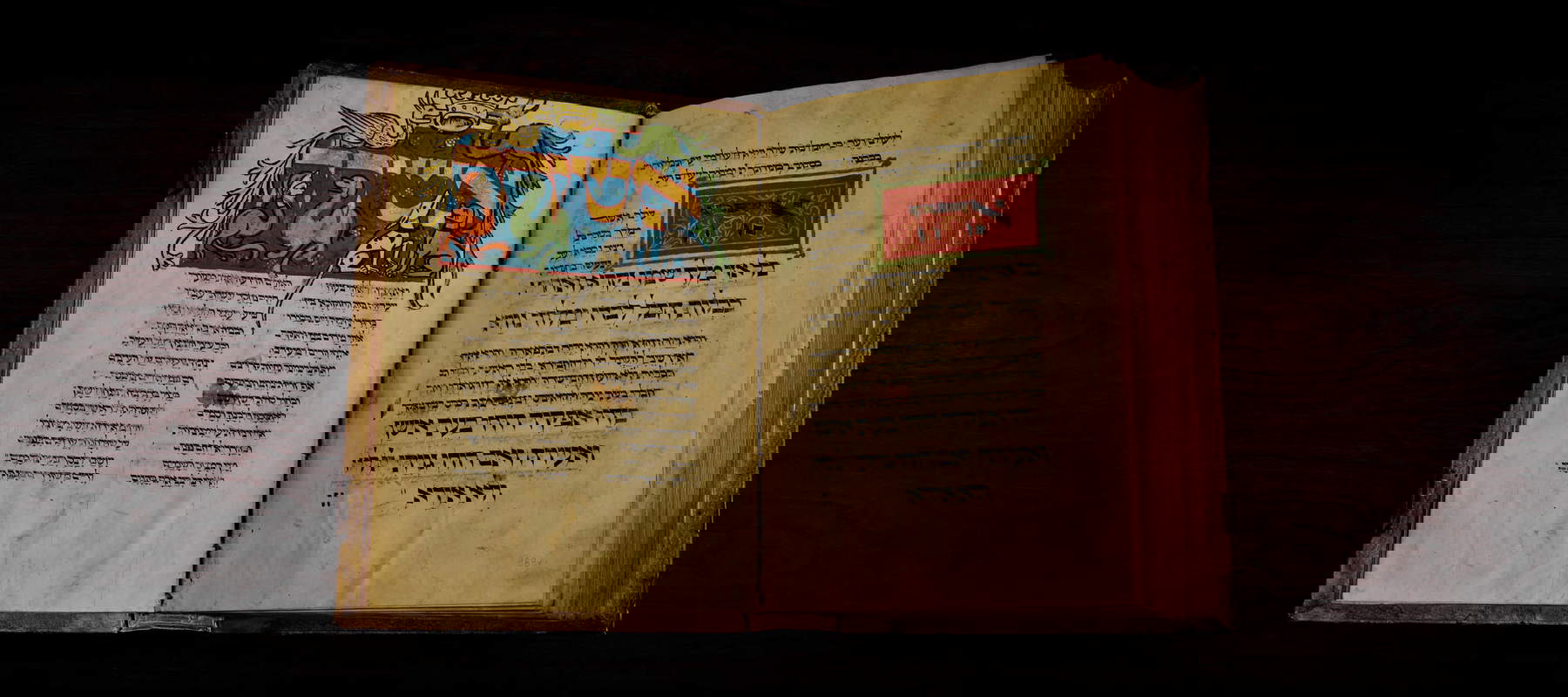
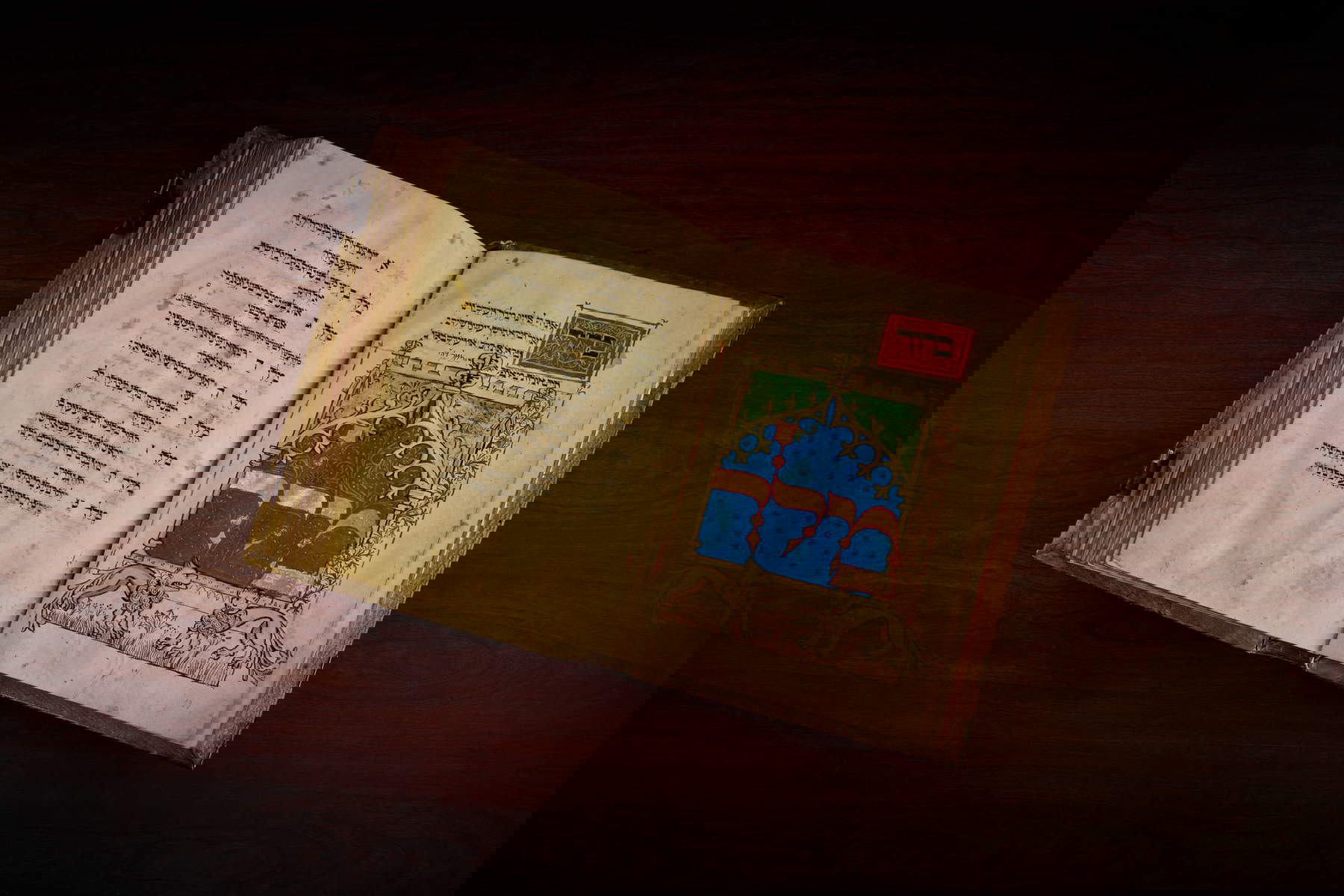
The Mahzor’s history took an abrupt turn with the rise of Nazism. After the Anschluss on March 12, 1938, the Rothschild Palace in Vienna, the residence of Alphonse von Rothschild and his wife Clarice, was seized by Nazi authorities. The couple were in England, having spent the previous year in Switzerland. On March 18, the regime formally deprived Alphonse of ownership of his property. The art collections and library were inventoried and dispersed: some works went to museums, others ended up on the market. A small part of the library, including the Mahzor, was instead transferred directly to the Austrian National Library without a detailed inventory and remained there for decades, unrecognized as property confiscated by the Nazis.
The codex, lacking obvious confiscation marks, was not returned after World War II. Transferred several times within the collections of the National Library, its original path remained untraceable for a long time, even when in 1998 Austrian legislation reopened the possibility of returning works taken during the Nazi regime. It was only between 1998 and 1999, thanks to the Center for Jewish Art’s systematic research of illuminated Hebrew manuscripts preserved in Vienna, that the Mahzor’s provenance was precisely reconstructed, identifying the Rothschild coat of arms and dedication.
The manuscript resurfaced publicly in 2021, when it was loaned for an exhibition at the Jewish Museum Vienna dedicated to the Viennese branch of the family. Then, in June 2023, after extensive provenance research and pursuant to the Austrian Art Restitution Act of 1998, amended in 2009, the Restitution Advisory Committee formally recommended the return of the Mahzor to the heirs of Alphonse and Clarice Rothschild. The decision symbolically recomposed a historical divide, returning the manuscript to the family whose collection had represented a pinnacle of Jewish cultural patronage in Europe. The heirs underscored the profound significance of this restitution, recognizing it as an act of justice and remembrance, while being aware that the injustices of the past cannot be erased.
Artistically speaking, the Rothschild Mahzor represents a pinnacle of medieval book art. Completed in 1415 by the Jewish copyist and artist Moses, son of Menachem, the manuscript was intended for communal use during Rosh Hashanah and Yom Kippur. The liturgical customs in it point to Vienna as the place of production, while the monumental scale, decorative opulence and quality of execution confirm a collective rather than private commission.
The pages are richly ornamented with fantastic animals and creatures set in Gothic arches, interwoven plant motifs, and panels with initial words in burnished gold. The carefully prepared parchment accommodates mineral and organic pigments in intense tones: deep lapis lazuli blues, coppery greens, and cinnabar reds, the brilliance of which has remained surprisingly alive after six centuries. The decoration reveals the influence of the Lake Constance miniature school, which developed in the 14th century between southern Germany, Switzerland and Austria, characterized by architectural panels, intricate foliage and hybrid figures animated by a rich palette of blues, reds and yellows. One hypothesis suggests that Jewish refugees from that area, devastated by the plague of 1348-49, brought their illuminated manuscripts to Vienna, making the Mahzor an artistic descendant of that tradition.
History, however, soon burdened the Viennese Jewish community. Between 1420 and 1421, less than a decade after the completion of the codex, the community was hit by persecution, forced conversions, expulsions, and the execution of more than two hundred Jews, an event that effectively marked the end of the medieval Jewish presence in Vienna. The Mahzor continued to travel, and later annotations appeared in its margins adapting the prayers to Western Ashkenazi rites, evidence of new readers and new contexts.
Prior to the New York sale on Feb. 5, the manuscript had been on display at Sotheby’s in New York at the Important Judaica auction Dec. 11-16, then in Los Angeles Jan. 12-16, and again in New York at the house’s new global headquarters in the Breuer building during Masters Week Jan. 30-Feb. 3.
|
| Sold for 6.4 million euros the Rothschild Mahzor, one of the most important Hebrew manuscripts |

Warning: the translation into English of the original Italian article was created using automatic tools. We undertake to review all articles, but we do not guarantee the total absence of inaccuracies in the translation due to the program. You can find the original by clicking on the ITA button. If you find any mistake,please contact us.




















 IT
IT FR
FR DE
DE ES
ES CN
CN


