




by Noemi Capoccia 10/02/2026



Categories: Museums / Disclaimer
Achieved the goal of the British Museum's campaign launched last October to acquire the Tudor Heart, the gold pendant linked to Henry VIII and Catherine of Aragon. Decisive contribution from the National Heritage Memorial Fund and public donations.
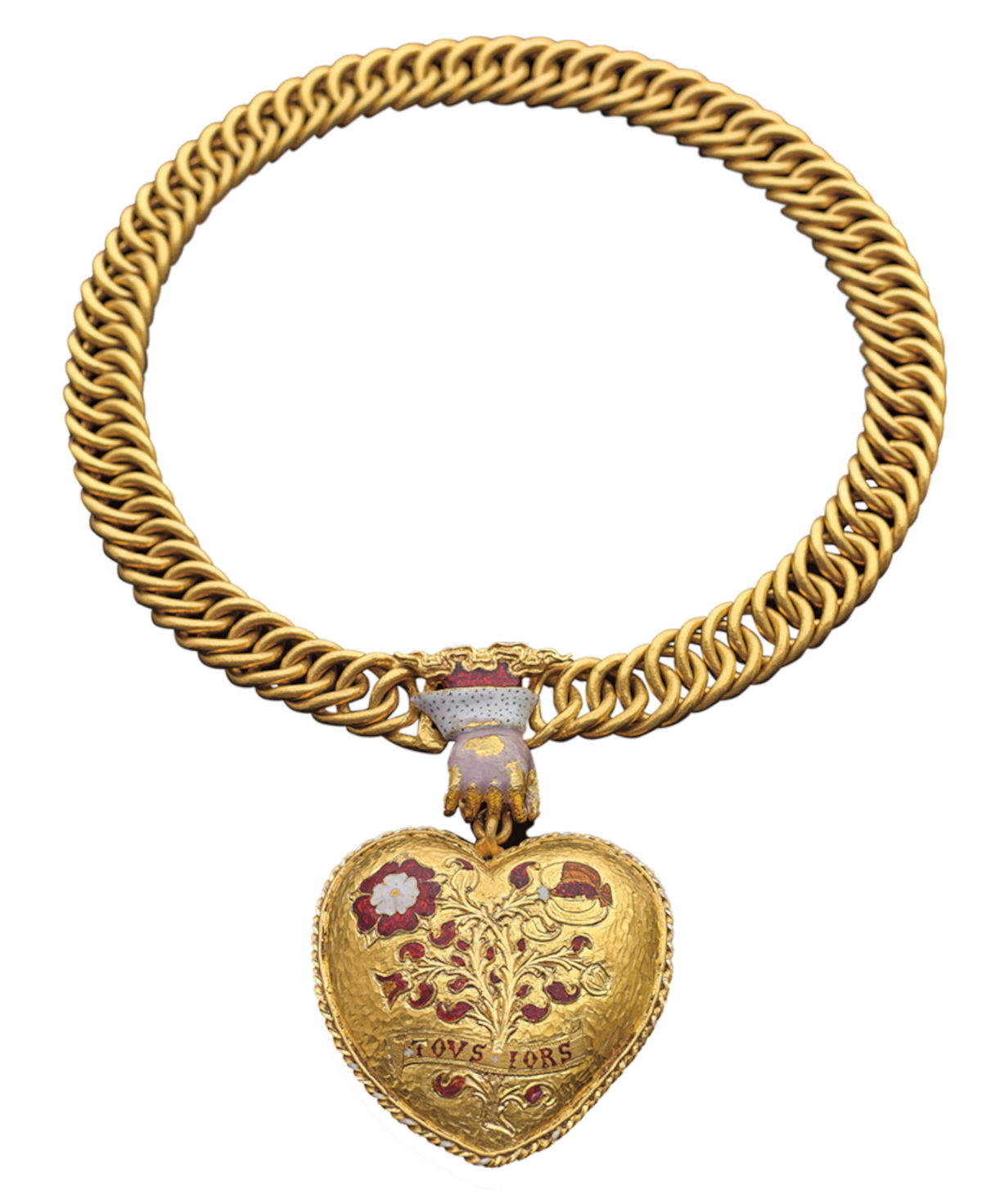
The British Museum has announced that it has raised the £3.5 million (about 4.1 million euros) needed to acquire the Tudor Heart or Tudor Heart and secure its entry into the institution’s permanent collection. The transaction ensures that one of the very rare surviving artifacts related to the reign of Henry VIII and his marriage to Catherine of Aragon will also be secured for the public in the future. The fundraising campaign had been launched in October last year(we talked about it here) with the goal of reaching the necessary amount by April 2026, so as to prevent the pendant, a 24-carat solid gold jewel, from leaving the public collection circuit. The goal was reached early, coinciding with Valentine’s Day week, thanks in particular to a £1.75 million contribution from the National Heritage Memorial Fund.
Support from the fund, which celebrates its 45th anniversary in 2025 as the instrument of last resort for the protection of the UK’s most significant cultural heritage, was matched by a wide-ranging response from cultural bodies, private foundations, and individual donors. According to the museum’s announcement, the combination of institutional funding and individual donations made it possible to reach the full amount requested before the deadline. Public participation also played a significant role. More than 45,000 people contributed to the campaign with individual donations that, in total, exceeded 380,000 pounds, or more than 10 percent of the entire amount raised. These were supplemented by larger contributions from parties already active in supporting British and international cultural heritage. Major funders included the Julia Rausing Trust, with a donation of £500,000, Art Fund, which contributed £400,000 also through the Rought Fund, and the American Friends of the British Museum, which supported the operation with £300,000. The campaign was also publicly supported by actor Damian Lewis and leveraged in its communication to the public the history associated with the pendant, presented as material evidence of the relationship between Henry VIII and his first wife, Catherine of Aragon. According to the British Museum, participation in the fundraiser reflects a widespread perception of the role of museums as natural custodians of cultural heritage and the need for objects of particular historical significance to remain accessible to the public.


In parallel with the acquisition, the museum is already working on an exhibition project that envisions a future nationwide exhibition program of the Tudor Heart. The stated goal is to allow the public to see the jewel, including a presentation in Warwickshire, the area where the pendant was found. The artifact had in fact emerged in 2019 thanks to a metal detector operator and, since its discovery, has been considered an object of exceptional historical interest. The British Museum will also work with the Department for Digital, Culture, Media and Sport (DCMS) to pay the reward due to the finder and the owner of the land, with the aim of formalizing the Tudor Heart ’s entry into the collection by the end of the year. The pendant will remain on permanent display in Room 2: Collecting the World. To celebrate the acquisition, the British Museum Press will publish an accessible introduction to the jewel in May 2026, entitled Object in Focus: The Tudor Heart, edited by Rachel King. The publication will be available in paperback for £8, ISBN 9780714123547.
History of the Tudor Heart
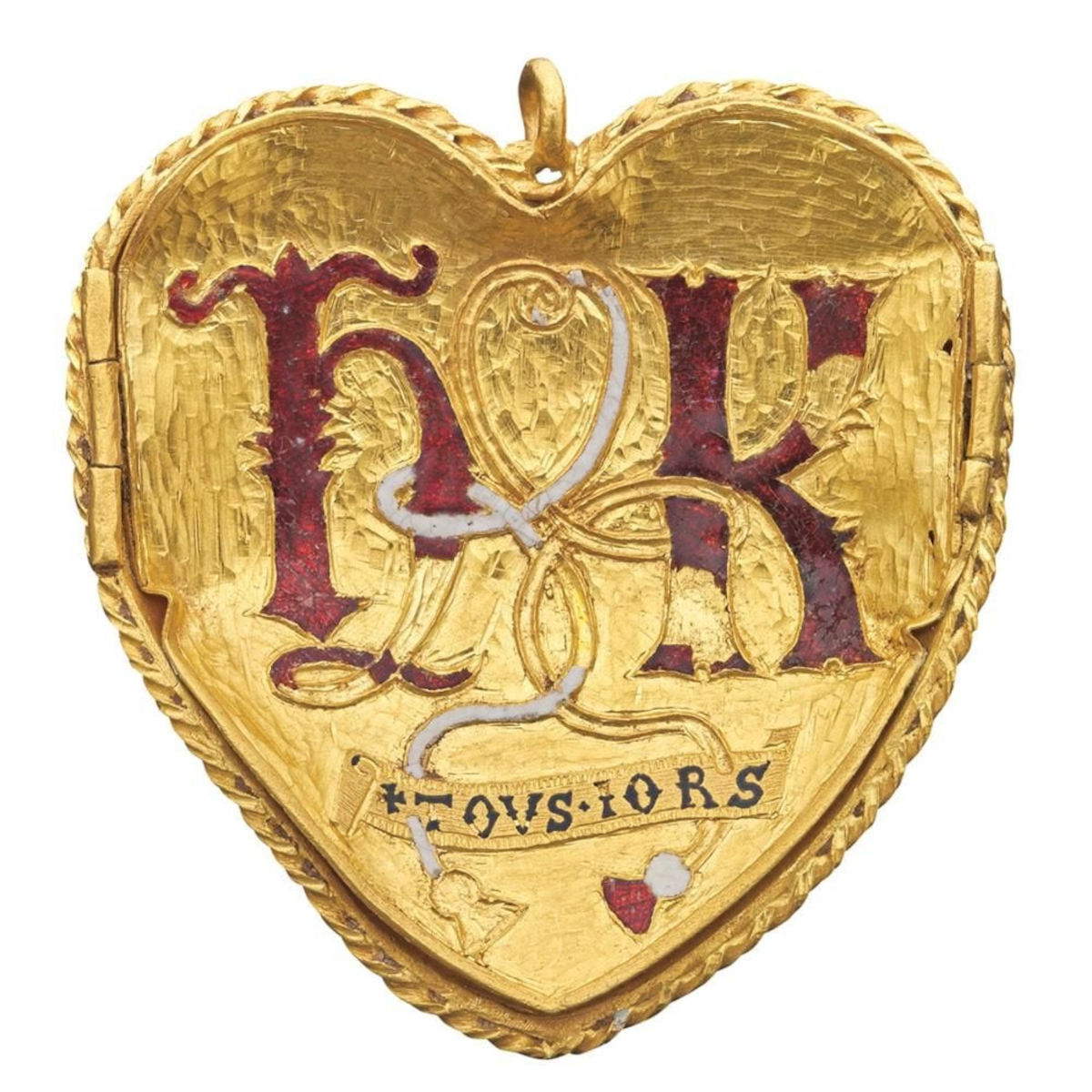
The Tudor Heart is a heart-shaped pendant made of 24-karat gold and is believed to be a one-of-a-kind example from the period of the marriage between Henry VIII and Catherine of Aragon. The front depicts the Tudor rose flanked by the pomegranate, Catherine’s personal symbol, while a band with the inscription “tousiors,” an Old French term meaning “always,” appears on the underside, an iconographic element that has been interpreted as a declaration of lasting bond. The marriage between Henry VIII and Catherine of Aragon, celebrated in 1509, was in fact the longest of the ruler’s life, lasting twenty-four years. During that period Catherine played a central role in the early Tudor court, even going so far as to assume the role of regent during her husband’s absences. In this context, the pendant is regarded by scholars as a material demonstration of the early phase of Henry VIII’s reign, characterized by an image of dynastic stability and a strong focus on the symbolic representation of power.
According to the British Museum, very few objects that have come down to the present day explicitly celebrate the relationship between Henry and Catherine. Many artifacts related to that phase of the Tudor court have been lost over the centuries, partly due to the political and religious transformations that marked the ruler’s reign, culminating in the annulment of the marriage in 1533. The Tudor Heart thus makes it possible to document both the luxury of the early part of Henry VIII’s reign and the centrality of a union that would have profound consequences for English history. Research at the British Museum also suggests that the pendant may have been made at a tournament held in October 1518 to celebrate the engagement of Henry and Catherine’s daughter, Princess Mary, to the heir to the French throne. In those years, the sovereign used to commission London goldsmiths to make jewelry to be worn at official events and court celebrations. These were often ornaments designed for temporary use, worn by members of the court to amplify the impression of wealth and magnificence during ceremonies and diplomatic occasions.
Statements
“I want to say a heartfelt thank you to everyone who supported our campaign and to the National Heritage Memorial Fund for so generously awarding £1.75 million,” says Nicholas Cullinan OBE, director of the British Museum. "The success of the campaign shows the power of history to stimulate the imagination and why objects like the Tudor Heart should be in a museum. This beautiful survivor tells us about a piece of British history that few of us knew, but which we can all now share. I look forward to saying more soon about our plans to tour the UK in the future."
"It has been a huge privilege to share the story of the Tudor Heart and its discovery with the world," says Rachel King, curator of Renaissance Europe and Waddesdon Bequest. “I have been enormously touched by the positive response to the Museum’s campaign. Thanks to the spectacular generosity of many, people will have the opportunity to enjoy the object forever and, I hope, unravel the mysteries of who wore it and why and how it was buried.”
"The Tudor Heart is an extraordinary insight into the culture of Henry VIII’s court, and I’m delighted that the Memorial Fund’s support will allow it to go on public display, where people can enjoy it and learn what it tells us about this fascinating period in our history," says Simon Thurley, chairman of the National Heritage Memorial Fund. "The Memorial Fund exists to save the UK’s most exceptional heritage and make it accessible to the public, in memory of those who gave their lives for the UK. We have supported nearly 1,500 acquisitions since 1980 and are delighted to count the Tudor Heart as part of the growing and timeless collection of British heritage that belongs to all of us forever."
"The success of the Heart Tudor campaign is a powerful reminder of what can be achieved when public generosity and philanthropic support come together," says Jenny Waldman, Art Fund director. “Art Fund is proud to have supported the British Museum with a major grant of £400,000, thanks to our National Art Pass members. This extraordinary object, so rich in history and significance, can now inspire wonder for generations to come thanks to the collective efforts of so many who believe in the importance of keeping our shared heritage accessible to all.”
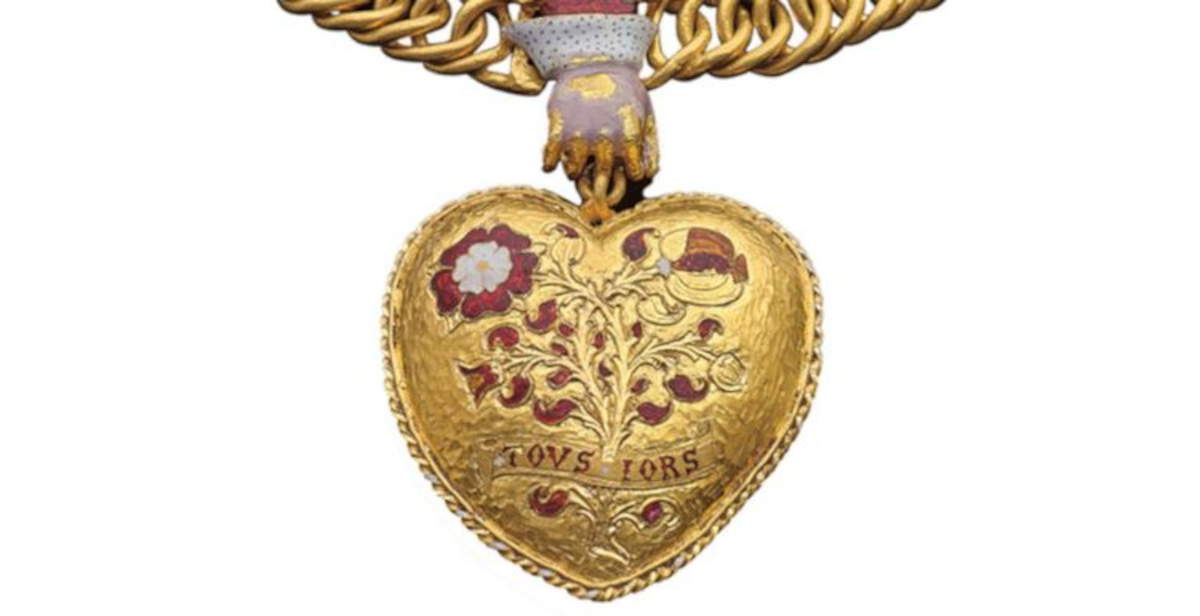 |
| British Museum acquires the gold Tudor Heart of Henry VIII and Catherine of Aragon |
Warning: the translation into English of the original Italian article was created using automatic tools. We undertake to review all articles, but we do not guarantee the total absence of inaccuracies in the translation due to the program. You can find the original by clicking on the ITA button. If you find any mistake,please contact us.