




by Redazione 30/01/2026



Categories: Museums / Disclaimer
Starting Feb. 1, the museum tour of the Brancacci Chapel and cloister of Santa Maria del Carmine includes the Sala della Colonna, a space previously accessible only occasionally, with frescoes, sinopites and works by Lippi, Nelli, Starnina and Masolino.

The Sala della Colonna, a space hitherto accessible to visitors only on limited occasions, will be permanently open to the public starting Sunday, Feb. 1, as part of the Brancacci Chapel and Cloister tour of Santa Maria del Carmine in Florence. The management of the itinerary, which is part of the Florentine Civic Museums circuit, is entrusted to the City of Florence and the MUS.E Foundation. The inclusion of the Sala della Colonna expands the cultural offerings of the Carmelite complex, allowing visitors access to works that until now have not been available on a continuous basis.
Located in the first cloister of Carmel, between the ancient and new refectory, the Hall takes its name from the large 14th-century column at the center of the room. On the walls, detached frescoes and sinopias from the cloister and church are displayed for their historical and artistic significance. These works constitute some of the most important evidence of the early decoration of the Carmelite complex, which resurfaced during research and restoration campaigns between the 19th and 20th centuries. Among the earliest works is a fresco by Pietro Nelli depicting the Madonna and Child Enthroned, flanked by four saints and two genuflected donors, dated around 1381-1385 and found during searches for Masaccio ’s lost Sagra conducted in 1859-1860. From the same search campaign comes another work, identified as The Confirmation of the Carmelite Rule or Episode of Hermitic Life, attributed to Fra Filippo Lippi, then a young adept of the convent.


The Hall also houses the remains of the fresco decoration of the chapel of St. Jerome, created between 1402 and 1404 by Gherardo Starnina. These fragments, elegantly depicting saints within architectural aedicules, survived the seventeenth- and eighteenth-century transformations of the chapel and were discovered in 1932 during investigations conducted by Procacci. Vasari had already emphasized Starnina’s elegance and lightness of expression, defining his painting “as one who was ghiribizzando around the things of nature.”
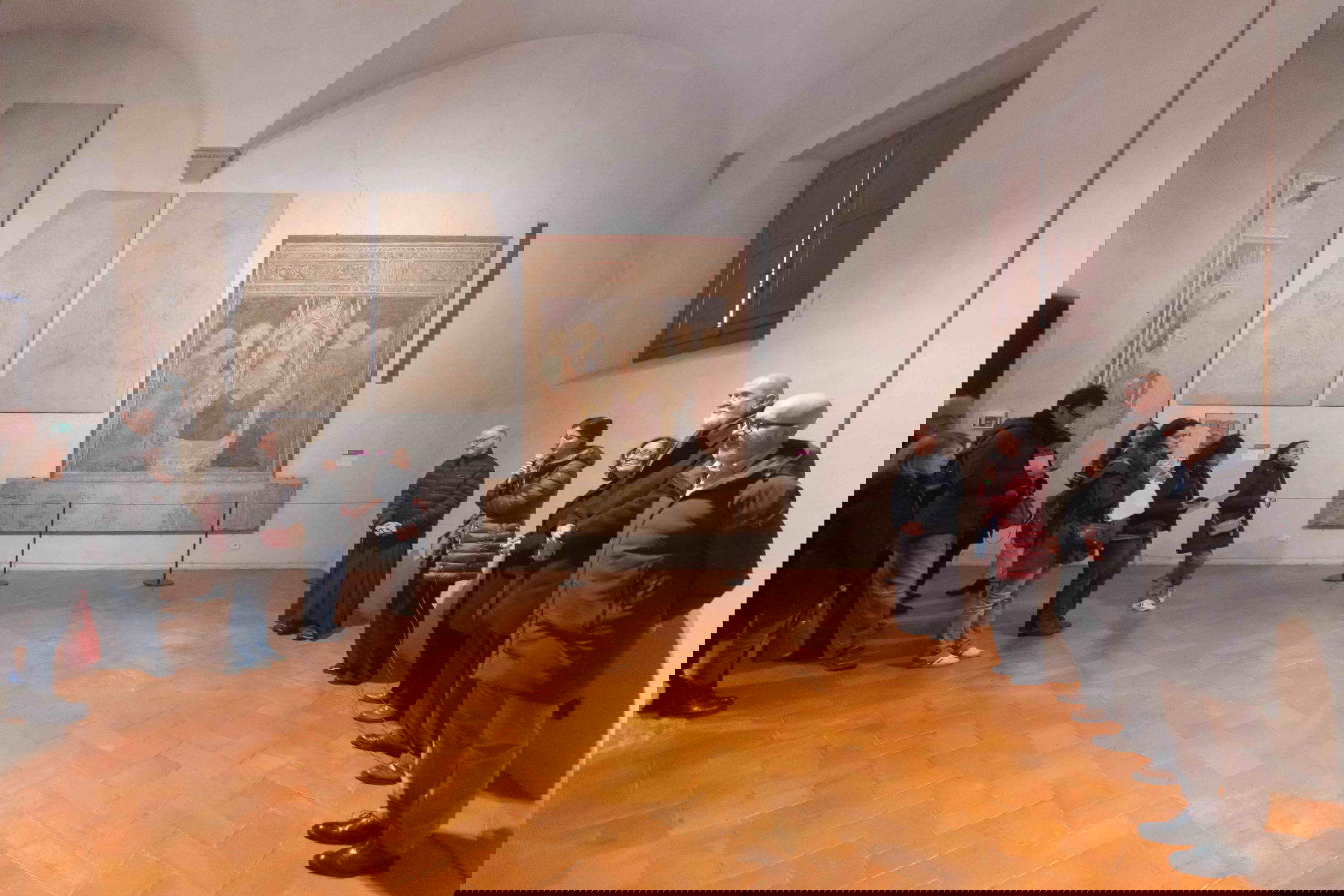
On another wall are displayed two sinopites, preparatory sections of the original frescoes in the Brancacci Chapel, which were detached during restoration work in the 1980s. These drawings, representing Peter’s Repentance and Pasce oves meas, can be traced back to the hand of Masolino da Panicale, who in 1424 began the decoration of the chapel from the vault sails with the four Evangelists. Completing the collection in the Sala della Colonna is the fresco depicting Christ Crucified with three Carmelite friars at his feet, attributed to Paolo Schiavo and datable to around 1425, which was found under the plaster during restoration after the 1966 flood.
The tour of the Brancacci Chapel and the cloister of Santa Maria del Carmine, which includes the Sala della Colonna, will be accessible every day it is open, with guided tours scheduled each day and opportunities to learn more about the historical and artistic connections of the Carmelite complex. On the first Sunday of each month, visits will also include the Corsini Chapel and the adjacent chapels of the transept, restored thanks to funding from the PNRR Mission M1C3, Culture 4.0, Investment 2.4, under the coordination of the Ministry of Culture and the Ministry of the Interior - Fondo Edifici di Culto, and the execution entrusted to the Interregional Superintendency for Tuscany, Marche and Umbria in collaboration with the Soprintendenza Archeologia, Belle Arti e Paesaggio of Florence. The works on display, some of which are the property of the Fondo Edifici di Culto, remain a reference for knowledge of the painting of the period and the Carmelite complex.
The opening hours of the Hall of the Column coincide with those of the museum tour: Mondays, Wednesdays, Thursdays, Fridays and Saturdays from 10 a.m. to 5 p.m., Sundays from 1 to 5 p.m., with closing on Tuesdays. Information and reservations are available by contacting info@musefirenze.it or at 055-0541450.
Statements
“On Sunday, Feb. 1, on the occasion of Metropolitan Sunday, Florence celebrates a real ’conquest’ for its cultural heritage: the stable opening to the public of the Sala della Colonna, a real treasure chest, in the complex of Santa Maria del Carmine,” said Councillor for Culture Giovanni Bettarini.“This is an extraordinary achievement that is the result of a valuable agreement with the community of Carmelite friars and made operational thanks to the direction of the Florentine Civic Museums with Fondazione MUS.E. This environment, which in the past was accessible only occasionally, now becomes an integral and permanent part of the visit itinerary of the Florentine Civic Museums, enriching the offer that already boasts absolute masterpieces such as the Brancacci Chapel and the Corsini Chapel. Thanks to the synergy between the City, the Fondo Edifici di Culto and the important support of the PNRR for the restoration of the Corsini Chapel, we offer citizens and tourists a complete and increasingly fascinating path of discovery.”
“As soon as I took office, I sought contact with the religious community of the Carmine to evaluate together the possibility of including the extraordinary set of works of art housed in the Sala della Colonna in the tour itinerary,” said Municipal Museums Superintendent Carlo Francini, “and as of today we can return this room to the Florentines and the international community thanks to the commitment of colleagues at the Florentine Civic Museums and the MUS Foundation.E, and thanks to the extraordinary willingness of the Carmelite community.”
“Visiting the Brancacci Chapel allows one to appreciate one of the most beautiful outcomes of the Florentine Renaissance,” explains Valentina Zucchi, head of cultural mediation at Fondazione MUS.E, “however, the experience takes on its fullest meaning if the frescoes painted by Masolino, Masaccio and Filippino Lippi are read in the context of the church and the Carmelite complex. The opening to the public of the Hall of the Column, located in the cloister of the convent and full of masterpieces connected with the place, contributes to the narration of an ever-expanding story in which art and religion are intertwined, testifying to how much the complex of Santa Maria del Carmine has been and is a hub for the city and the community.”
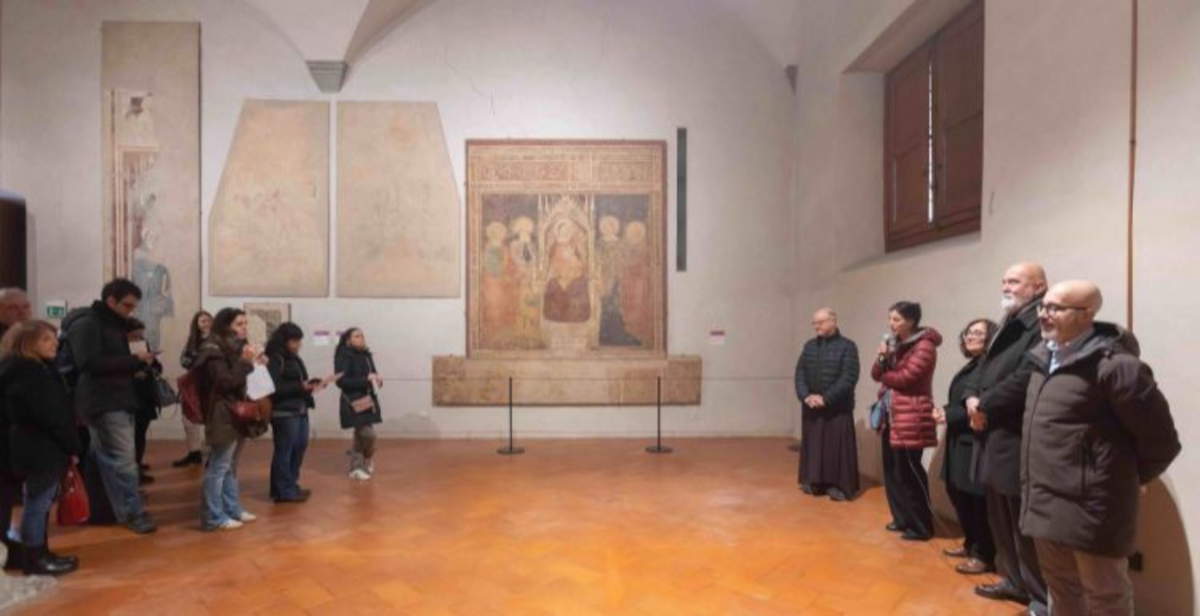 |
| Florence, the Hall of the Column will be included in the Brancacci Chapel tour route |
Warning: the translation into English of the original Italian article was created using automatic tools. We undertake to review all articles, but we do not guarantee the total absence of inaccuracies in the translation due to the program. You can find the original by clicking on the ITA button. If you find any mistake,please contact us.