




by Redazione 18/12/2025



Categories: Museums / Disclaimer
The Museum of the Ancient Palace of Bishops of Pistoia will inaugurate its new archaeological itinerary on Friday, December 19, 2025, at the conclusion of a major restoration and refurbishment, carried out thanks to the support of Fondazione Caript.

The Museum of the Ancient Palace of Bishops in Pistoia will open its new archaeological itinerary on Friday, December 19, 2025. The opening marks the conclusion of a major restoration and rearrangement project, carried out thanks to the support of Fondazione Caript, which makes the underground rooms of the historic building accessible to the public. The project is carried out by Fondazione Pistoia Musei under the direction of Monica Preti and curated by Cristina Taddei, archaeological conservator. On the occasion of the opening, Fondazione Caript and Pistoia Musei will offer free admission to the museum until Jan. 6, 2026. The initiative is also made possible thanks to the contribution of Conad Nord Ovest.
The new archaeological itinerary fits as a new piece in the broader process of recovery and renovation of the museum displays housed in the medieval building, a space that, through its own transformations, has accompanied the millennial history of Pistoia, interweaving different eras and communities through a rich heritage of works and testimonies. One of the main novelties of the new layout is the Introductory Room, conceived as the start and key to the entire museum itinerary. Here the history of the palace and its collections is told, which can be consulted thanks to an interactive multimedia table, and an in-depth study dedicated to two ancient sculptures, emblematic examples of the complex vicissitudes of use, transformation and change of meaning that characterize works from the past, is offered.


The first museum display of the ancient bishop’s residence dates back to 1981, when the Cassa di Risparmio di Pistoia e Pescia promoted the return of the palace to the city, enhancing its historical and identity role. Although it was not initially opened systematically to the public, the museum immediately established itself as a place for research and experimentation. Indeed, the archaeological excavations conducted during the restoration work by a group of young female archaeologists made it possible to create an innovative exhibition facility, among the first in Italy to present ancient, medieval and modern finds in their original context of discovery. Since its origins, the history of the palace has been used as an interpretive tool to understand that of the city and the evolution of its urban fabric. The narrative of Pistoia’s origins, entrusted to the materials of the archaeological area, is flanked by that of the Cathedral, documented by the precious goldsmithing and artifacts preserved in the museum, including the famous millefiori Tapestry, now on display on the third floor.
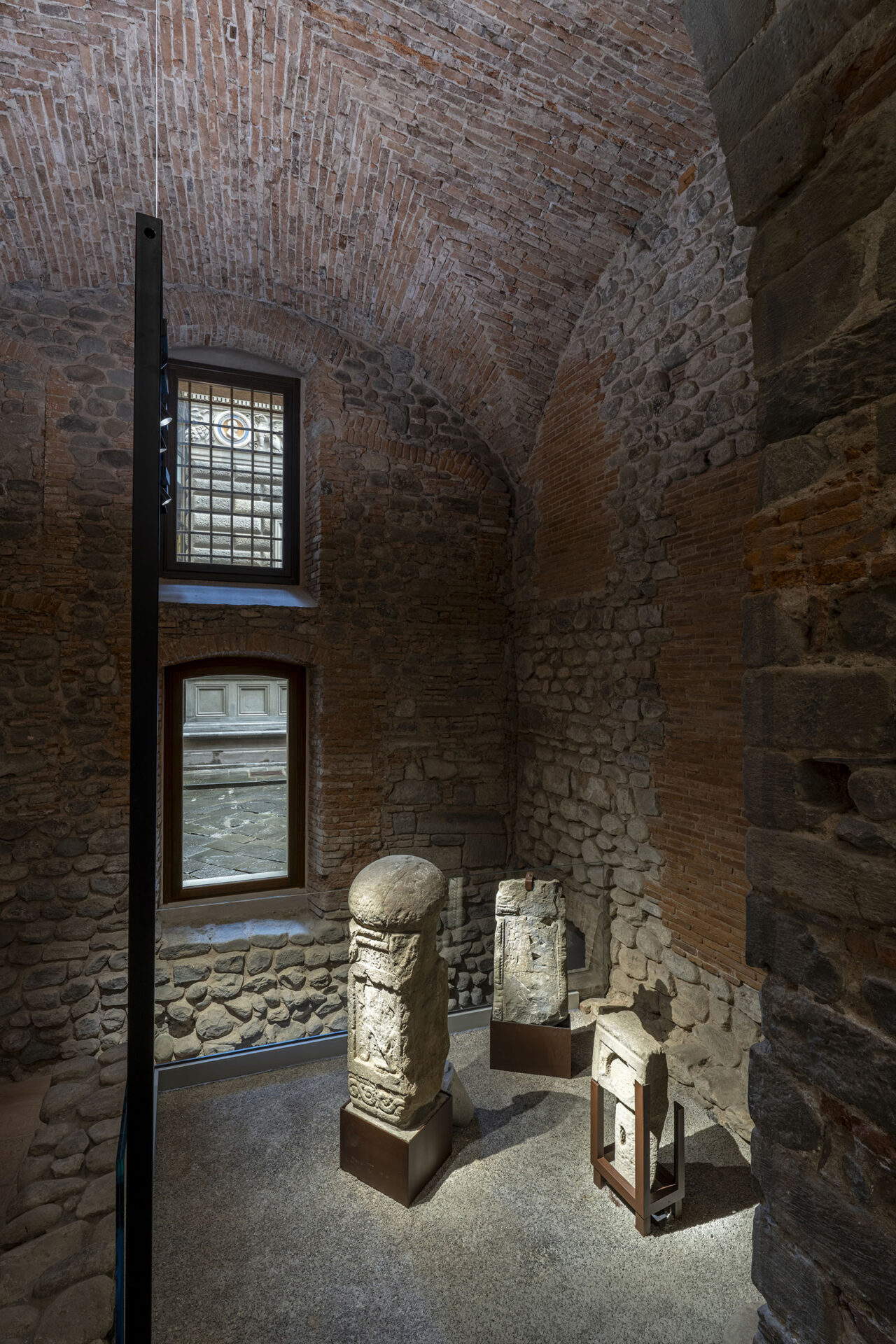
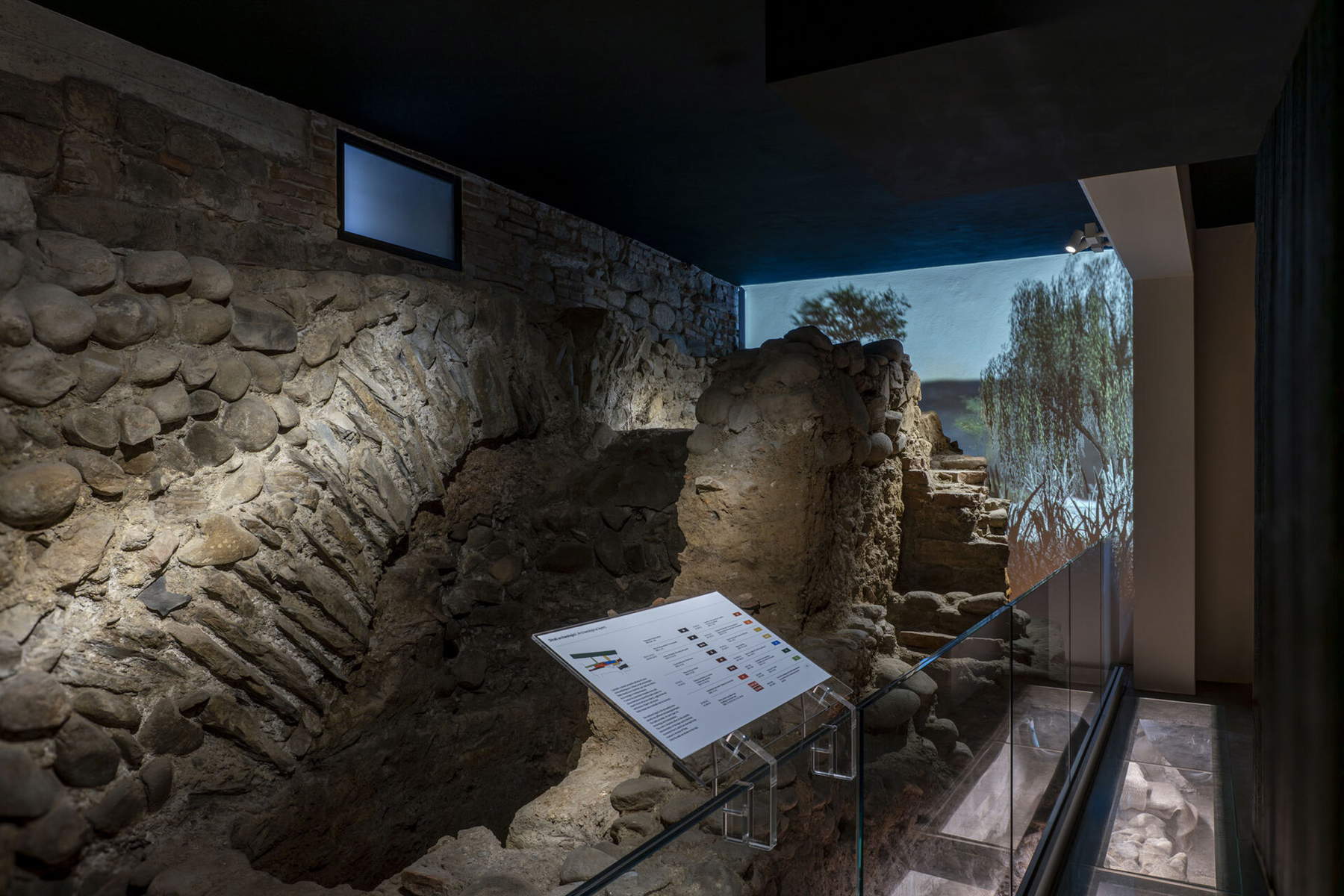
The archaeological route, developed from research coordinated by Guido Vannini, former full professor of Medieval Archaeology and founder of the chair at the University of Florence, and the group involved in the restoration directed by Natale Rauty, represented one of the first Italian examples of the musealization of stratigraphies and finds preserved in situ. Among the most significant discoveries was the identification of an ancient road axis, used for centuries, on which the palace was built in the 11th century. The narrative of the transformations of this road still accompanies visitors today, through texts, images, and sound and visual environments that pick up and update the insights of the first exhibit.
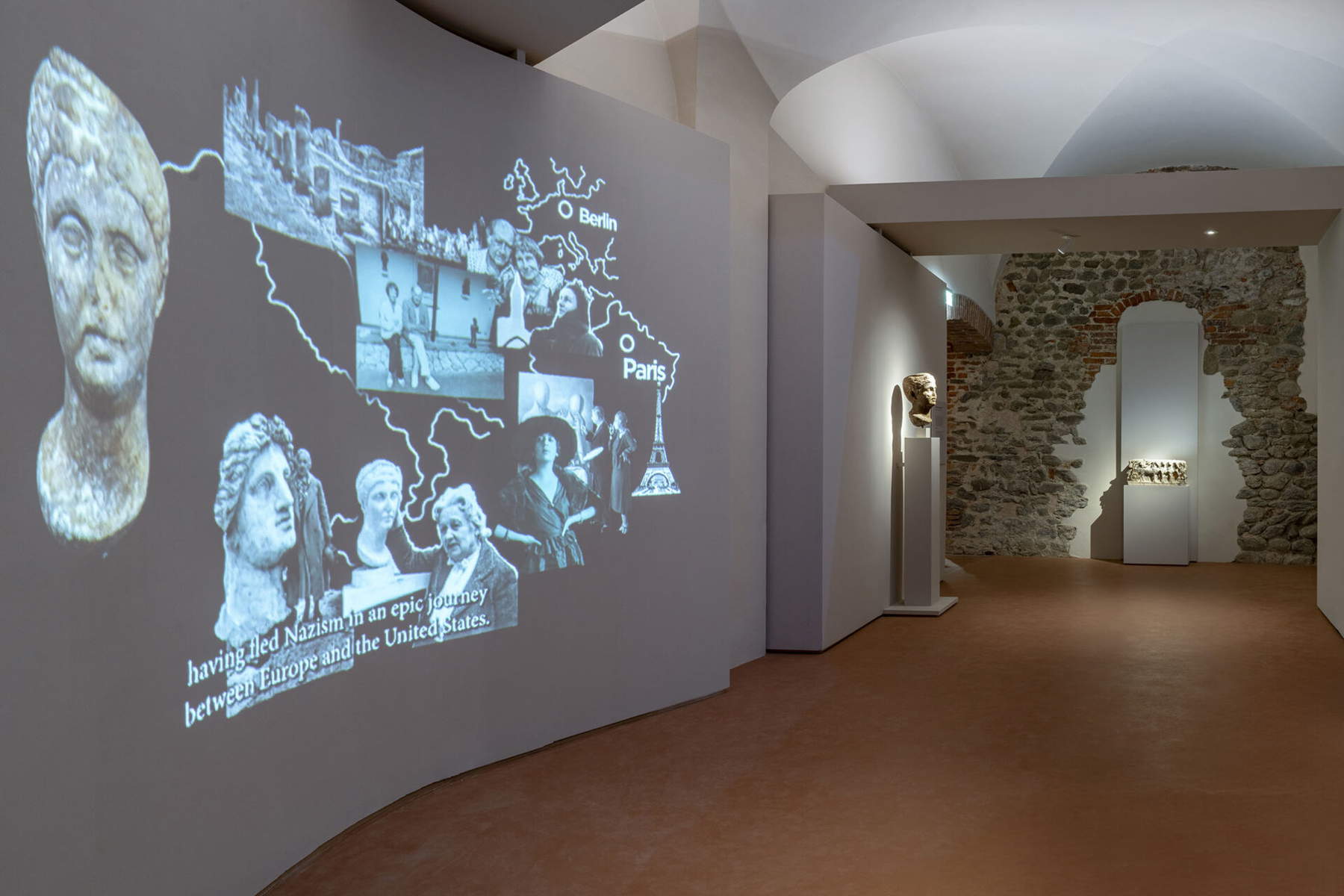
The Introductory Room also houses two works of particular note: anEtruscan urn fromVolterra from the 2nd century B.C., reused in the Middle Ages as the reliquary of Saint Felix in Pistoia Cathedral, and a Roman portrait head of Faustina Maggiore, found in Ostia, passed into the Bermann Fischer collection and later acquired by the Cassa di Risparmio di Pistoia e Pescia for the museum. These artifacts introduce the visitor to the multiplicity of stories, functions and meanings deposited around ancient objects over time. Past this first room, the tour continues in some rooms on the second floor and especially in the building’s subsoil, where an extensive archaeological area documenting the earliest phases of Pistoia’s history is preserved. The area has become accessible again thanks to a complex restoration of structures and stratigraphies, and has been equipped with microclimatic control systems to ensure its proper preservation. The work was carried out under the supervision of the Soprintendenza Archeologia, Belle Arti e Paesaggio for the Metropolitan City of Florence and for the provinces of Pistoia and Prato, and the Soprintendenza for the provinces of Lucca, Massa Carrara and Pistoia, and is part of the Etruscan Project 85/25 promoted by the Tuscany Region.
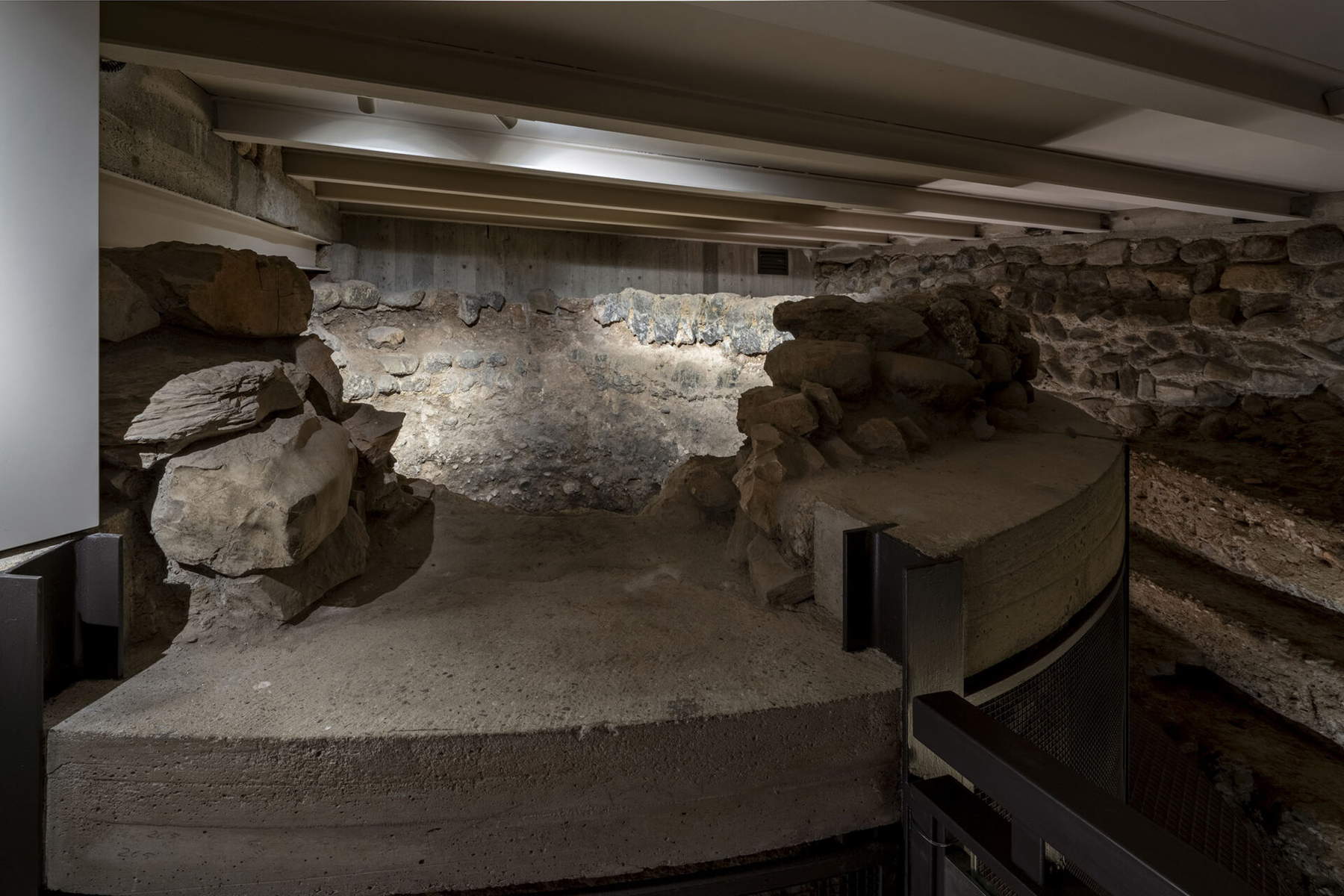
The new exhibit, also enriched by multimedia installations, reconstructs the long history of the site on which the Ancient Palace of the Bishops stands, from the first settlements of the Roman age to the medieval construction and the transformations that took place in the following centuries. The visitor is thus invited on a journey into the material dimension of Pistoia’s history, through stratigraphies and artifacts that tell of the continuous relationship between human communities and this place, long before the construction of the palace began in the 11th century.
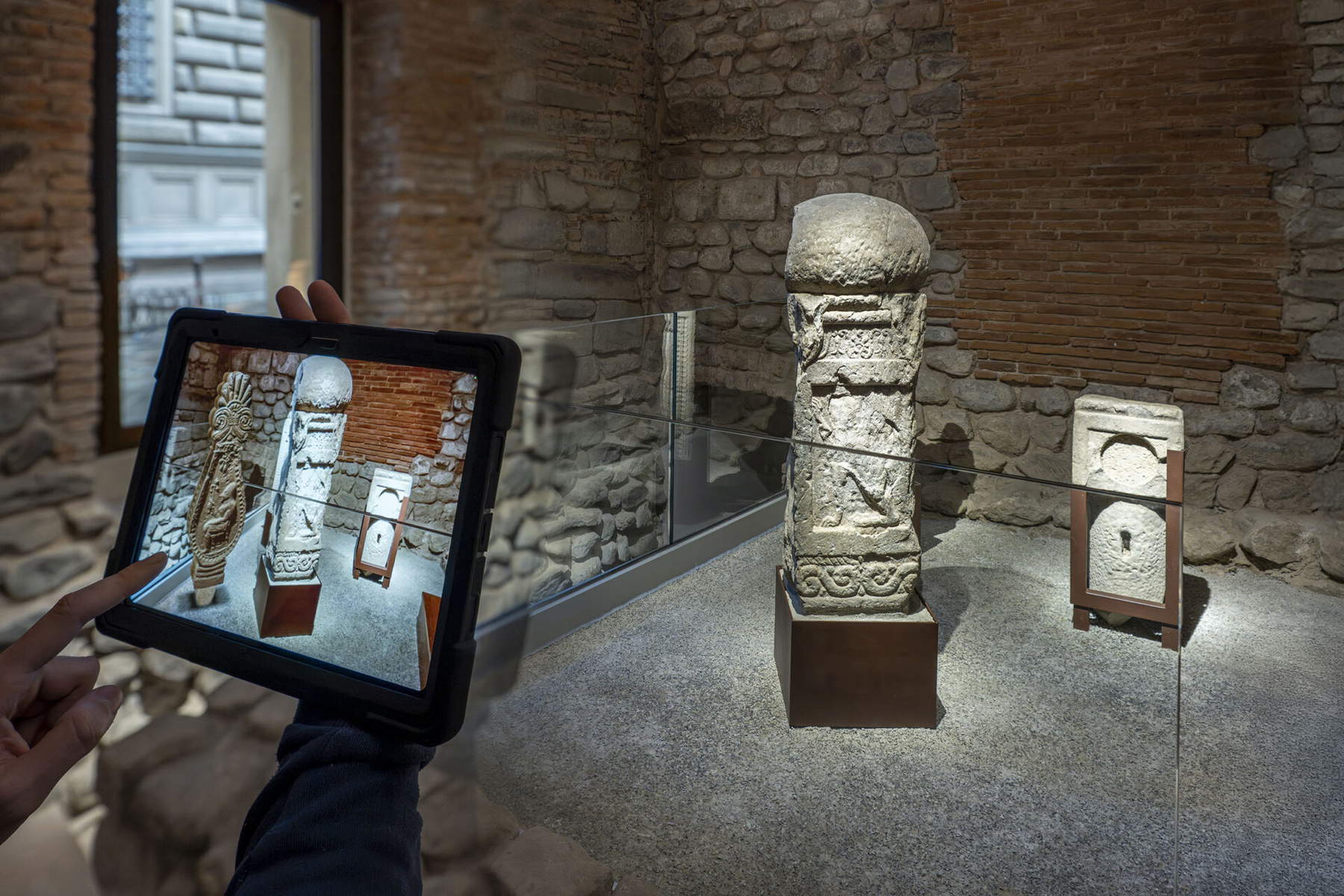
The itinerary begins with the Etruscan evidence found in the urban area: a stele and two tombstones datable between the 6th and 5th centuries B.C., belonging to the group of so-called “Fiesole stones.” Exhibited together for the first time thanks to the collaboration between Fondazione Pistoia Musei, Soprintendenza, Comune and Tribunale di Pistoia, these monuments, side by side with the materials that emerged in the excavations of the 1970s in the subsoil of the palace, restore the image of an area frequented and inhabited long before the medieval construction.
The second stage of the itinerary leads to the base of the ancient episcopal tower, where the remains of a well from the Longobard period, opened along the road and used before the building of the palace, are on display. An important core of Longobard ceramics, used both to draw water and as filter elements inside the well, is also housed here. An immersive sound environment evokes the atmosphere of Longobard Pistoia, a period when the city assumed a prominent role, even becoming the seat of a mint that minted the gold tremisse under the name Flavia Pisturia. Continuing on, we reach the first visible excavation area, one of the five so-called “excavation witnesses,” where traces of the first Roman settlement and subsequent phases of construction and destruction are legible. Also in this space, images and sounds help to reconstruct the natural environment prior to the birth of the ancient city, as documented by the paleoenvironmental investigations carried out during the excavations.
From here, the path leads into the rooms devoted to the formation of the Roman city. In the next excavation area, the remains of a cobblestone road from the Imperial age emerge, which remained in use for centuries and along which buildings and workshops overlooked. Pottery, oil lamps, tools and metal objects testify to a dense network of trade that connected Pistoia to the Mediterranean, integrating local productions and imported materials.
An additional room documents the existence of a Roman kitchen garden, active before the construction of the medieval palace, and the later presence of the cathedral’s early medieval cemetery. In this area the large Etruscan cippus was found in 1972, which initiated the rediscovery of the entire archaeological stratification.
The itinerary continues with a room devoted to finds referable to the phases immediately preceding and following the construction of the Bishops’ Palace, from the Middle Ages to the 19th century. These are ceramic and glass fragments from the building’s external areas, wells and masonry, belonging both to objects of daily use and to artifacts of particular value, such as the glass of Hedwig, made in the Syro-Palestinian area. These materials are complemented by additional artifacts that tell the story of life inside the building and the city: work tools, game pawns, slag from glassmaking, coins and animal osteological remains.
The conclusion of the tour is entrusted to the evocative presence of a medieval lime kiln, unearthed during excavations. Traces of the production processes, which also involved the reuse of ancient marble and limestone, are still visible in the combustion chamber and upper structure, testifying to continuity, transformation and reuse of materials over time.
The new archaeological itinerary is enriched by the multimedia project Pistoia Moving Stories, created with NANOF / Filippo Garzella and Filippo Macelloni, winner of the TOCC/PNRR call for proposals and recognized with the EssilorLuxottica Digital Award. Pistoia Moving Stories introduces advanced digital tools, such as 3D models of the palace and selected artifacts, flanked by interactive narratives usable on tablets in scrollytelling format, combining text, images, video, augmented reality and virtual reconstructions. The multimedia journey is complemented by original sound environments created by Marco Bianchi Bandinelli (2eMMe studio). The production of the digital content also benefited from the contribution of the University of Genoa, which was responsible for the study and three-dimensional survey of the palace and artifacts.
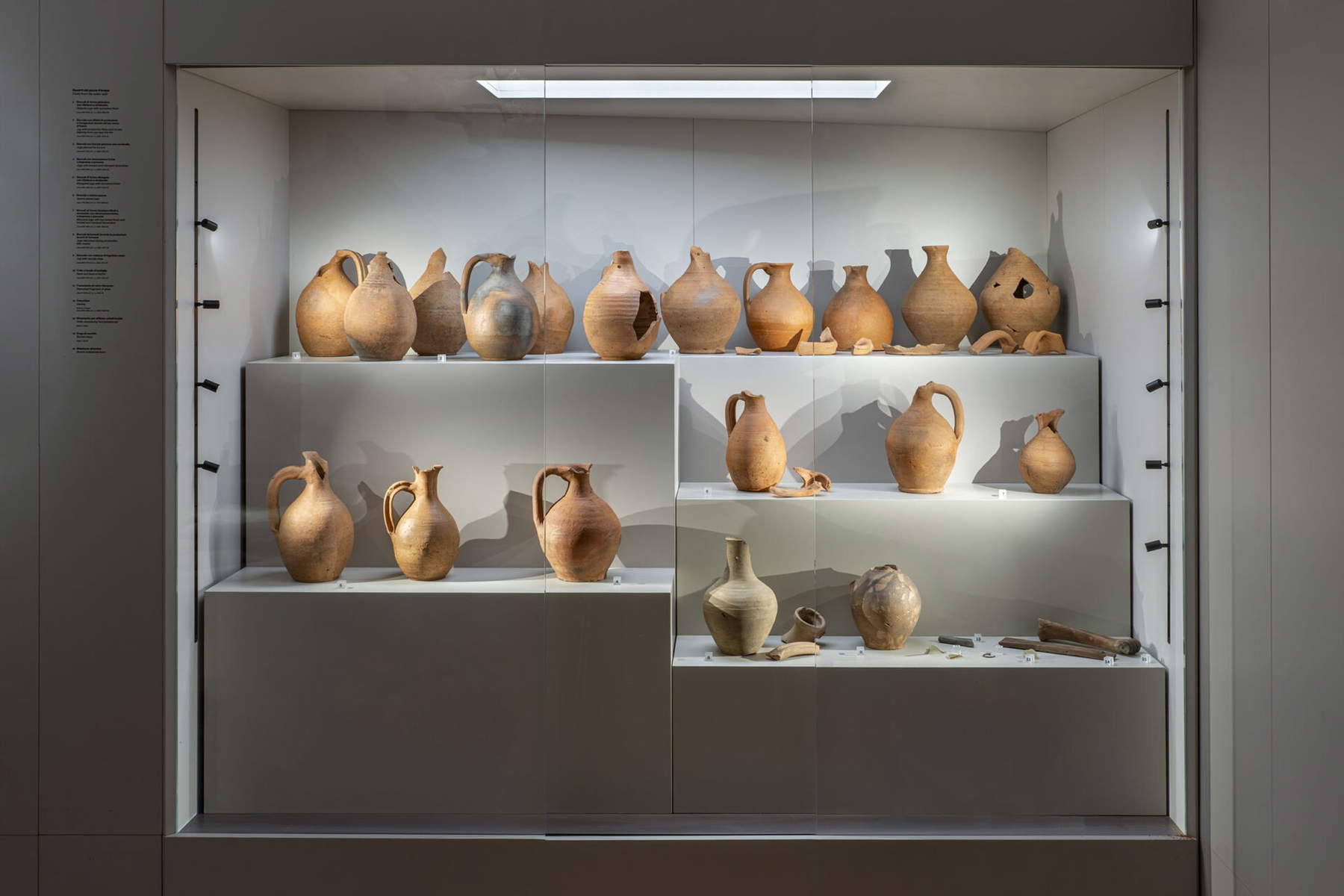
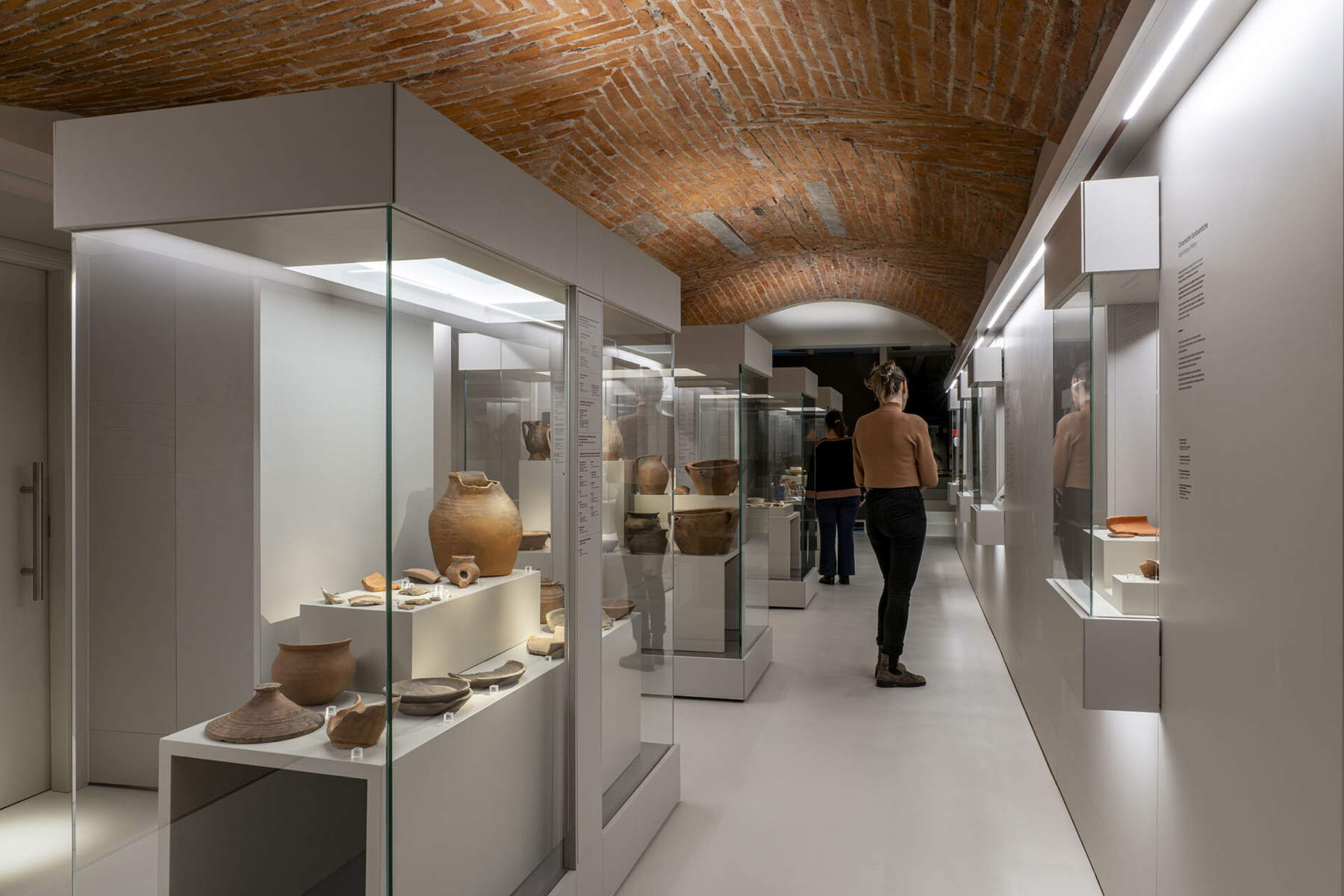
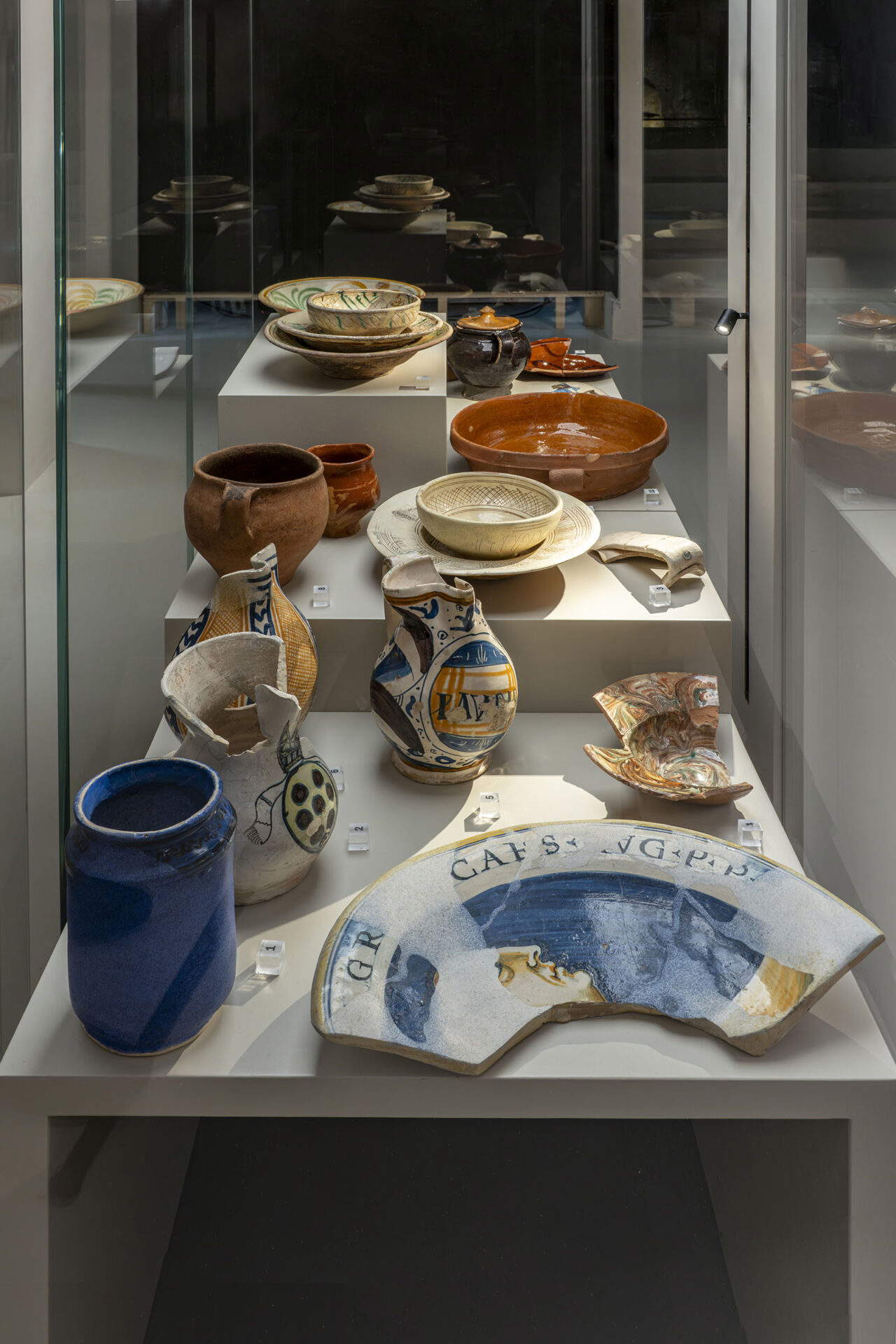
The Ancient Palace of the Bishops also allows the visit to continue in the other rooms of the museum, offering access to the most representative rooms of the building. The itinerary presents a significant selection of works from the Cathedral, Intesa Sanpaolo and Fondazione Caript, historically housed in the museum and entrusted to the management of Fondazione Pistoia Musei. Among the masterpieces on display are medieval sculptures, goldwork and frescoes, theMillefiori Tapestry of Pistoia, tempera paintings by Giovanni Boldini, seventeenth-century Florentine paintings from the Piero and Elena Bigongiari Collection, and canvases by Giacinto Gimignani. The visitor experience is further enhanced by the palace’s historic architecture: the sacristy of San Jacopo, the chapel of San Nicola, the cathedral’s sopraportico, and the overlooks to the cathedral square.
To complete the installation, Fondazione Pistoia Musei will accompany the reopening of the archaeological route with a comprehensive cultural program that will extend throughout 2026. The “Dialogues of Archaeology,” a series of scientific meetings dedicated to themes that have emerged from the most recent excavations and research, with the participation of scholars and academic institutions, will return.
On the weekend of January 24-25, 2026, the museum will also host a special event dedicated to Agatha Christie, on the occasion of the 50th anniversary of her death. The initiative, organized in collaboration with the Giallo Pistoia Association, will include guided tours, lectures, readings, role-plays and a concluding performance, also exploring the writer’s connection with archaeology. The full program connected with the reopening will be announced in the new year.
Finally, the opening of the archaeological route will be accompanied by a wide range of educational activities aimed at schools, families, youth and adults, with the goal of fostering knowledge and strengthening the museum’s role as a participatory and integrated space in the city’s cultural life. The program for schools is already available at www.pistoiamusei.it
All of Fondazione Pistoia Musei ’s initiatives are made possible thanks to the support of Intesa Sanpaolo, main partner of the exhibition activities, and Pistoia Musei’s Corporate Membership: CMSA Società Cooperativa Muratori Sterratori e Affini, Conad Nord Ovest, Confcommercio Pistoia e Prato, Consorzio Leonardo Servizi e Lavori, Del Pinto e Associati Studio Legale, Diddidino, D.R.E.Am. Italy, FABO Tape Solutions, Florence One, Formitalia, Publiacqua, Tosco Data, Vannucci Piante and El.En.
.
|
| Pistoia, the Museum of the Ancient Palace of Bishops opens its new archaeological trail |
Warning: the translation into English of the original Italian article was created using automatic tools. We undertake to review all articles, but we do not guarantee the total absence of inaccuracies in the translation due to the program. You can find the original by clicking on the ITA button. If you find any mistake,please contact us.