




by Redazione 02/02/2026



Categories: News / Disclaimer
The National Gallery of Modern and Contemporary Art in Rome has reportedly declared some donations of historical archives null and void. After protests from scholars and intellectuals, the case has reached Parliament, and there is also a proposal from City Hall I to prevent the dispersion of a heritage that is central to the history of 20th-century Italian art. What is happening?


The National Gallery of Modern and Contemporary Art in Rome is at the center of an affair that is stirring wide debate in the Italian cultural and academic world. The case was raised on January 19 by an editorial by Dacia Maraini published in the Corriere della Sera: “A letter from the new director Cristina Mazzantini is circulating,” the writer explained, “declaring the closure of the historical archives donated by artists and their heirs due to the nullity of the act. The donors, of whom there are many, are asked to take back the material given to the prestigious Gallery, which is no longer able to maintain them. These are thousands of documents, including letters, drawings, and photographs that have been accumulated in the Gallery Archives over the years and belong to the memory of the city and the country. The archive was opened by Palma Bucarelli in 1946 and has become an important documentation center for students doing theses, for scholars preparing books on art criticism. It is a bioiconographic archive that scholars from all over the world have referred to. We are talking about 33,250 names of artists. The reason for the closure? Security. And again for security, the employees who worked there were sent away. Donations are considered void. For those unwilling or unable to take the valuable material to their homes, it is recommended that everything be transferred to the State Archives. But the donations were made to the Gallery of Modern Art, not to the State Archives, which is wide-ranging, with different purposes. The committee on historical studies at La Sapienza University protested, stating that entire doctoral theses were skipped due to the inability to access the archive. Painters, critics, historians and students challenged the decision. But it doesn’t seem to have helped.”


So, apparently an official communication departing from the museum’s management and addressed to the heirs of artists, critics and scholars declared null and void or nonexistent some donations of historical archives made over the past decades, inviting the families to take back the material handed over. A decision that has ignited controversy, raised legal questions and prompted institutions and intellectuals to intervene to avert the dispersion of a heritage considered essential to the memory of modern and contemporary art in the country. A heritage that has nurtured degree theses, doctorates, scientific publications, exhibitions and seminars, becoming an international point of reference for the history of 20th-century Italian art.


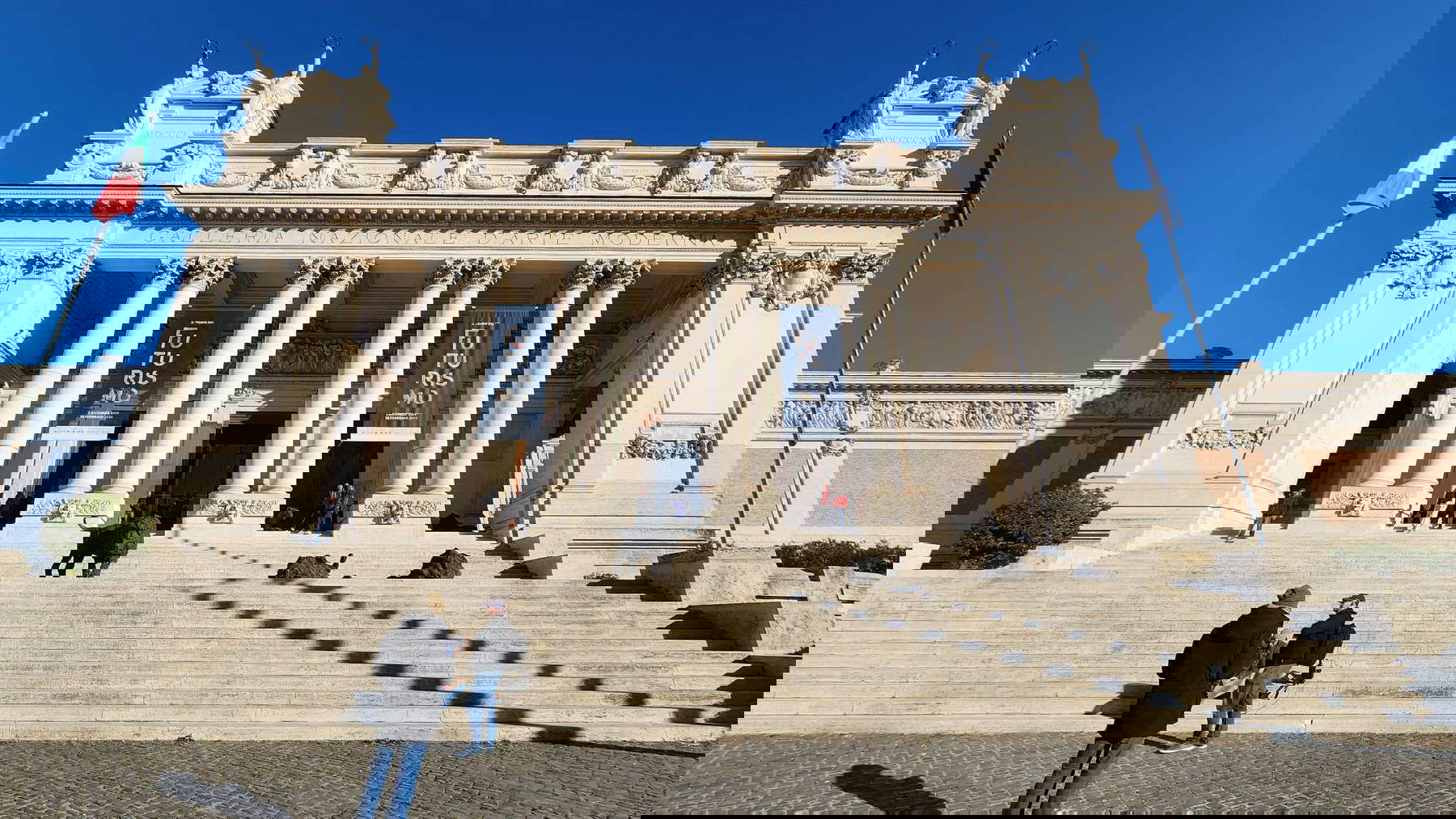
Today that neuralgic sector is at a standstill. Since 2024 the archives have been closed to the public for renovations, with heavy consequences for scholars and researchers, some of whom have had to modify or interrupt their research: in 2025 the former director of the GNAM Archives, Claudia Palma, had said that this closure is causing enormous damage to research and art. The project concerns the Cosenza Wing, destined to become, after decades, a finally usable and multipurpose space, designed by Mario Botta, with an investment of about 15 million euros. At the moment, however, the area is still an open construction site.


To the physical closure of the archives has now been added the legal-administrative issue. According to information from the museum’s management, headed by Renata Cristina Mazzantini, some donations would have procedural flaws that would make them null and void. Hence the invitation to the heirs to withdraw the material or, alternatively, to transfer it to the State Archives. A prospect that raised strong concerns, since the donations had been made specifically to Gnamc, an institution endowed with autonomy and a different cultural mission than the State Archives, which operate on a territorial basis with different purposes.
Reactions were not long in coming. Intellectuals, art historians and students have challenged the decision, denouncing the risk of irreversible fragmentation of archival collections that, by their nature, derive value from their unity. According to Dacia Maraini, asking donors to take back their archives is tantamount to disowning a decades-long history and weakening the public function of a cultural institution. A position shared by many scholars, who point out that the state has already incurred significant costs for the transfer and preservation of these funds, and how their eventual return would entail new expenses, as well as the risk of legal disputes.
The matter has also reached Parliament. Last Wednesday, Jan. 28, MP Matteo Orfini of the Democratic Party submitted a written question to the Minister of Culture, asking for clarification on the legitimacy of the declaration of nullity of the donations and what steps the ministry intends to take to prevent the dispersion of a heritage of significant public interest. The act recalls the historical role of the Gallery and the irreplaceable value of its archives, used by generations of Italian and foreign scholars.
Meanwhile, from the Roman territory came a concrete proposal to prevent the archives from ending up dismembered or returned in a fragmentary way. The councillor for Culture of the I Municipio, Giulia Silvia Ghia, has sent an appeal to the Ministry of Culture and Gnamc, offering the City of Rome’s willingness to temporarily and conditionally take charge of the funds. The idea is to house them in the spaces of the Capitoline archival system, from the premises of Villa Torlonia to the Capitoline Historical Archives, guaranteeing continuity of preservation, professional management and public access while awaiting the necessary administrative clarifications.
Ghia stressed that this is not an opposition between entities nor an improper amnesty, but an act of institutional responsibility aimed exclusively at protecting the public interest. The stated goal is to avoid irreversible choices that would erase a fundamental piece of Italian artistic memory and keep alive the consultability of materials that include documents by artists such as De Chirico, Guttuso, Carrà, Manzù, Morandi, Balla and Burri.
At the heart of the debate remains an underlying question: is it more important to rigidly adhere to procedural quibbles or to safeguard and enhance a heritage that has already, in the past, received awards of cultural interest and has been entrusted to Gnamc in a climate of institutional trust? For many observers, if there are indeed flaws in administrative acts, the high road would be to heal them, through a shared review and a clear political will, rather than to disperse archives that constitute primary sources of 20th-century art history. Thus, the future of the archives of the National Gallery of Modern and Contemporary Art remains uncertain, suspended between open construction sites, bureaucratic checks and pressure from the cultural world. But the case has already had the merit of bringing back to the center of attention the value of memory and the responsibility of institutions in preserving it and making it accessible to future generations.
|
| Gnam, archives at risk: the case of donations that makes scholars debate |
Warning: the translation into English of the original Italian article was created using automatic tools. We undertake to review all articles, but we do not guarantee the total absence of inaccuracies in the translation due to the program. You can find the original by clicking on the ITA button. If you find any mistake,please contact us.